
Sometimes It Really Is a Children’s Game
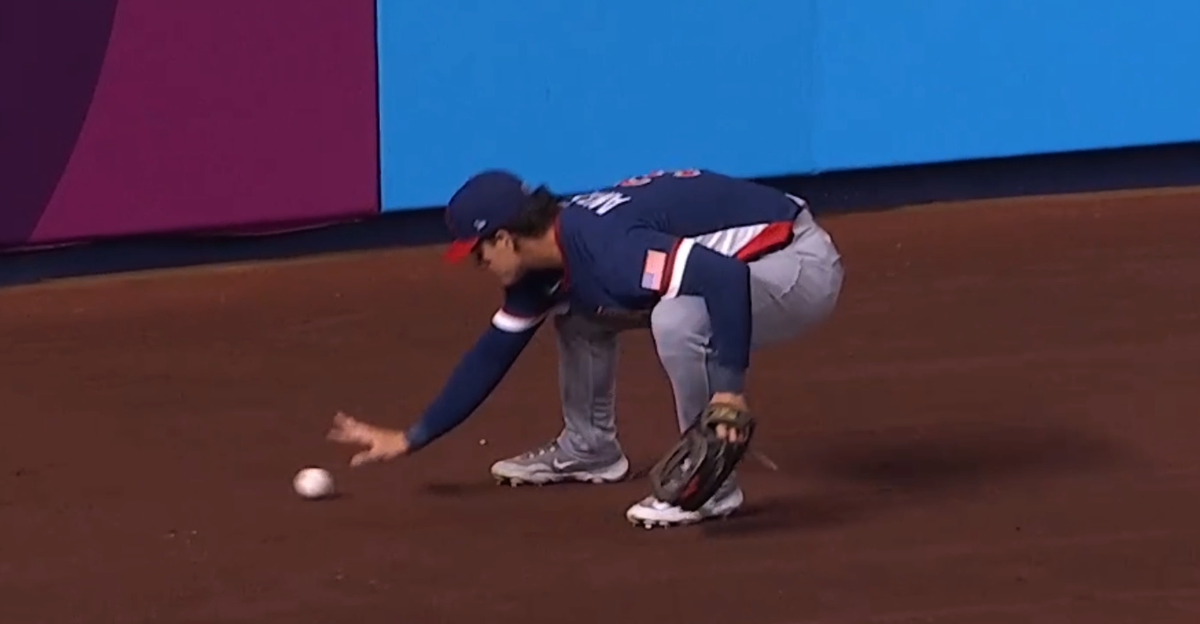
The hardest-hit ball of the World Baseball Classic semifinal between the United States and the Dominican Republic only traveled 191 feet. Vladimir Guerrero Jr.’s fourth-inning double left the bat at 116.1 mph, but it was just the 23rd-longest batted ball of the game, a few feet behind a Ketel Marte popout that was hit more than 40 mph softer. None of this was necessarily shocking. After the play, John Smoltz revealed even he was aware that sabermetric types wish Guerrero would find a way to lift the ball more often and turn some of his scorched groundouts into extra-base hits and extra-base hits into home runs.
This decade, 26% of balls hit 116 mph or harder have gone for home runs, and the lowest launch angle among those home runs was 15 degrees. Guerrero hit his double at just five degrees, and over the past five years, he ranks fourth in baseball with 28 non-homers of at least 116 mph. Five degrees is not the optimal launch angle if your goal is to do damage, but hitting a ball that low and that hard can have other benefits.
One benefit is that the ball can really slow down on its way to the wall. When you hit a screaming line drive or a high fly ball to the wall, it maintains much of its velocity and bounces off hard. When you hit a low liner or a grounder, all that contact with the outfield grass slows it down. Hard as it was hit, this ball didn’t have all that much velocity left, and the padding on the wall absorbed much of the remainder. It rolled back across the warning track and likely would have stopped entirely as soon as it encountered the grass. The outfielder has to wait back, wary of a hard carom bouncing past them, so when the ball dies like that, they need extra time to go get it, giving you more time to coast into second or stretch for third.
A weak carom also carries aesthetic benefits. When a ball is moving that slowly, you can’t field it normally. Below a certain velocity threshold, gloves are more hindrance than help. If you’re picking up a stationary baseball, or one moving at anything below a brisk walk, say 5 mph, it’s harder to pick the ball up off the ground with a glove than it is with your bare hand. Stiff leather fingers aren’t as sensitive or as flexible as real fingers, and the ball doesn’t have enough momentum to roll up into the pocket. Since you have to get the ball to your throwing hand anyway, you’re better off cutting out the middle man and barehanding the ball. It happens every day, but usually it happens for infielders who are dealing with bunts or squibbers. They charge hard, then scoop up the ball and throw it in one motion. It’s a thing of beauty, but it works quite differently in the outfield.
How much have you thought about the word toddler? As you can deduce, it means one who toddles, walking “with short tottering steps in the manner of a young child,” according to Merriam-Webster. The word first appeared in the early 16th century. There were tots, and the way they got around became tottering and tottling, which then became toddling. Finally, a good 300 years later, those tots who toddled became known as toddlers. (Who knows, they may have even enjoyed the occasional hot toddy. It was a different time.)

Of course, toddling isn’t the only hallmark of a toddler. Our balance, motor skills, and proprioception evolve (and then devolve) over time, so we end up moving very differently at each stage of life. For example, when adults bend over to pick something up off the ground, they bend at the waist, but they also tend to put one foot in front of the other and go into a slight lunge to bring their torso closer to ground level. Toddlers have a different approach, getting into a deep crouch and reaching for the item while it’s still way out in front of them. They tuck their chests against their knees and they have to stick their elbows out to make room. Because they’re not yet champions of spatial awareness, they don’t often nail the location of their squat, which is the reason they often end up reaching way out or way across their bodies.
I bring all this up because when Roman Anthony, playing left field for the United States at the time of Guerrero’s blistering low-launch-angle double, loped out to the warning track to field the ball, I couldn’t help but notice that he didn’t exactly look like the Greek god, top-prospect-in-baseball, uber-athlete we’ve come to expect. He looked, uh, different.
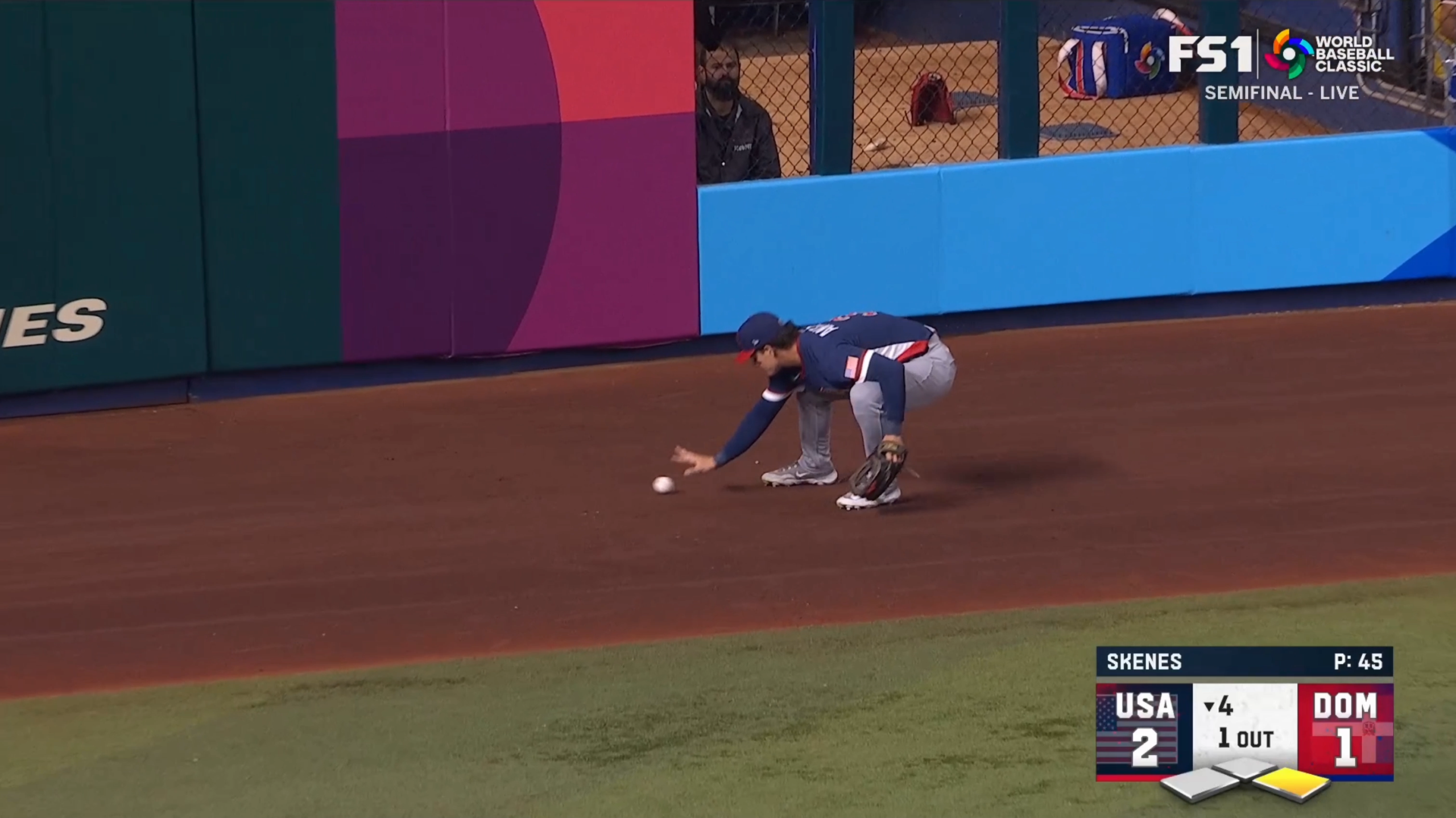
Anthony looked either like a toddler playing with a toy dump truck or a grown man doing a pretty convincing impression of an anteater. I’m going to be honest with you. I went through a bunch of pictures of my nieces and nephews, and it didn’t take long to find a photo of a niece in the exact same pose. She’s two years old, and she’s not wearing a shirt or pants because she was just playing in the sprinklers. She’s crouched down to pick up a worm from the garden. She looks exactly like Anthony in the picture above, and I wish I could show you the two side-by-side in the Miami outfield, which I absolutely mocked up in Photoshop. Alas, I cannot do that to my niece, who is no longer two years old.
How did Anthony get into this position? For starters, in the outfield, you’re no longer scooping the ball up gracefully and firing it on the move. The weak carom is the only situation where you have to barehand the ball, and you’re always moving away from the infield to get it, which means you’re running, stopping to pick up the ball, then reversing your momentum to throw it into the infield. It’s a halting, graceless maneuver at the best of times. But other outfielders seem to manage it. Here are Anthony’s Red Sox teammates, Nick Sogard and Wilyer Abreu, making similar plays.
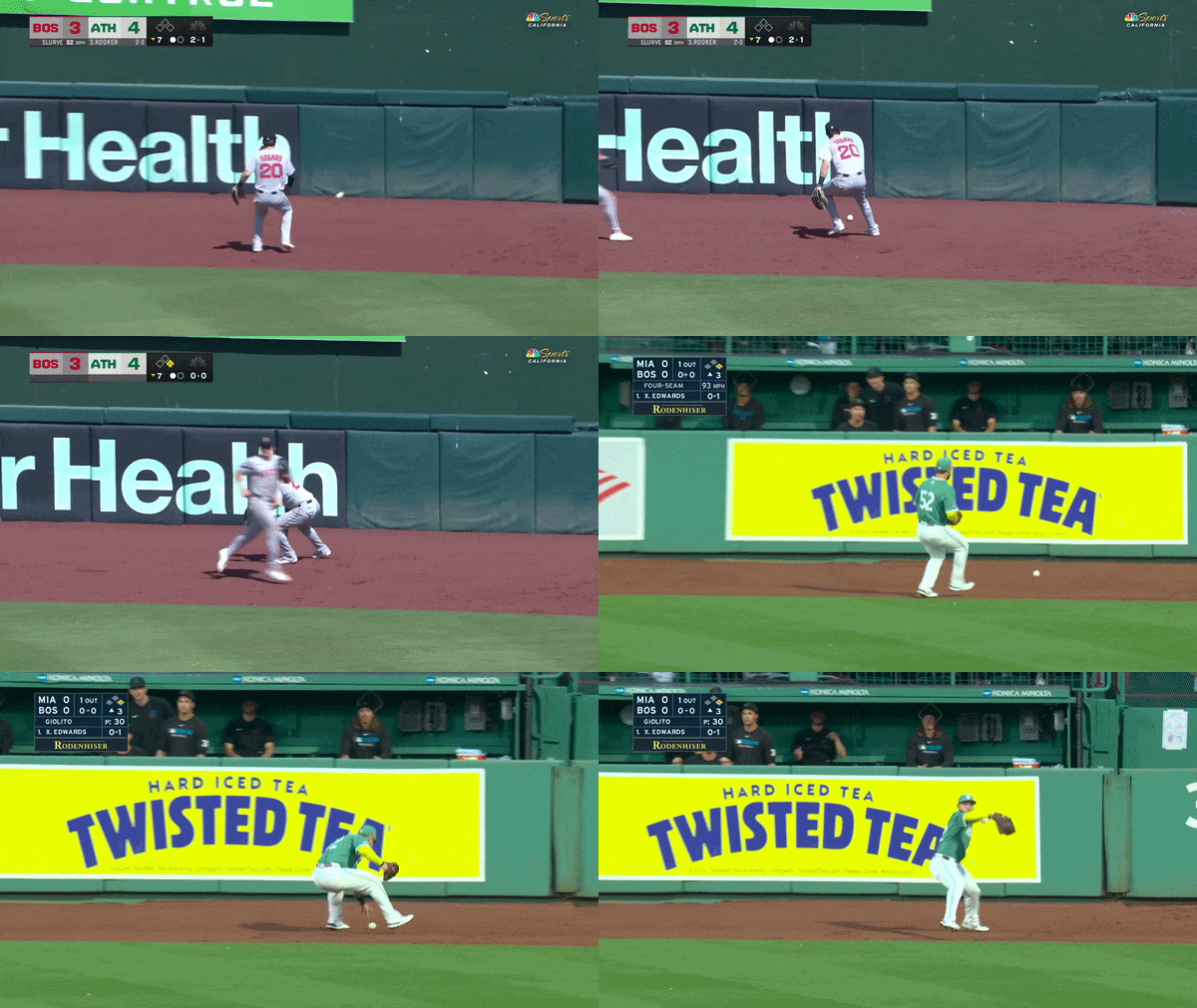
They chop their steps and time things so that the ball arrives between their feet rather than way out in front of them. They get low to field the ball, but their chests aren’t tucked tightly against their knees. They still look like athletes. To be fair, they’re also benefitting from a more flattering angle, but let’s break down the video of Anthony on Guerrero’s double frame by frame just to make sure we understand the progression.
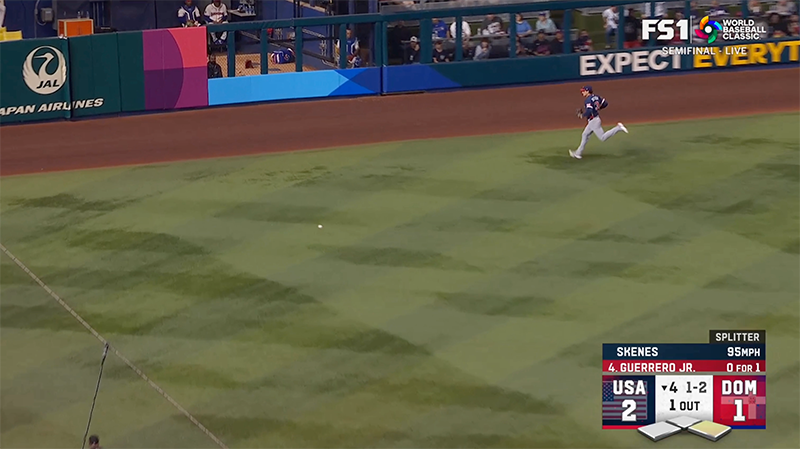
Here’s Anthony running after the ball with his trademark long, graceful strides. He’s a 6-foot-3 miracle with a 55 current value on his run tool.
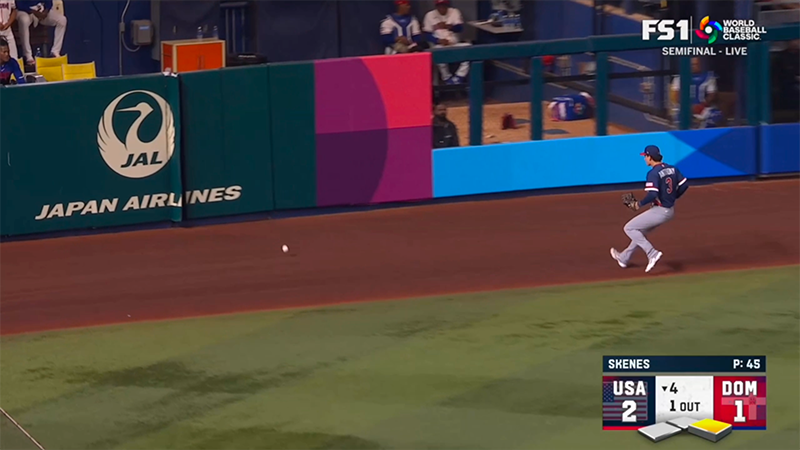
Next, here he is putting on the brakes. He may be slowing down, but the picture is still alive with movement as he powers down into a hover.
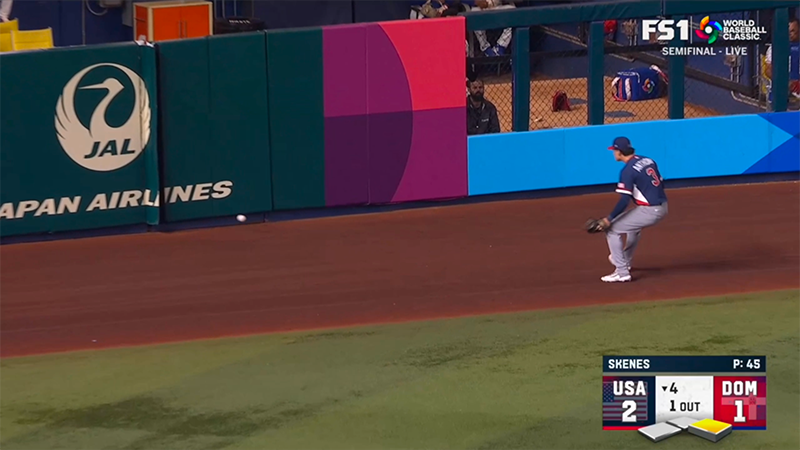
And here Anthony is, settling into a defensive crouch as he awaits the carom off the wall. He’s low, he’s alert, he’s ready for anything. Wherever this ball decides to bounce, he’s about pounce.
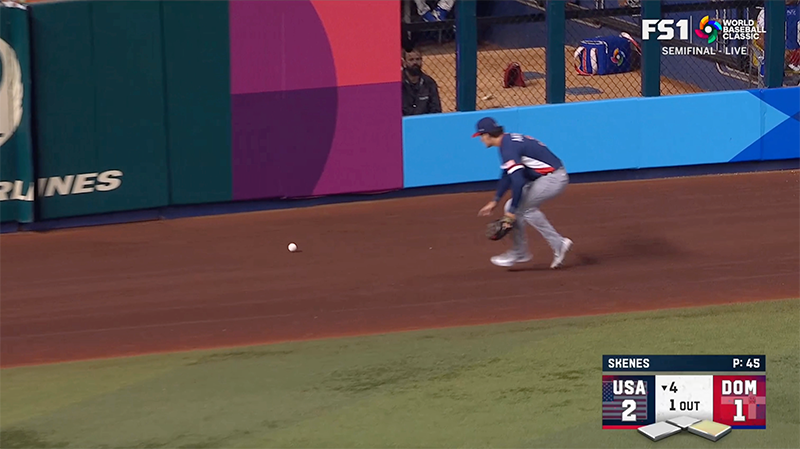
Um, so this is Anthony scuttling like a crab. He’s scuttling like a crab now. The ball didn’t so much bounce off the wall as it did die on the wall, and Anthony just kind of stayed in the crouch and started – sorry, scuttling is really the only word I can think of that applies here – toward it.
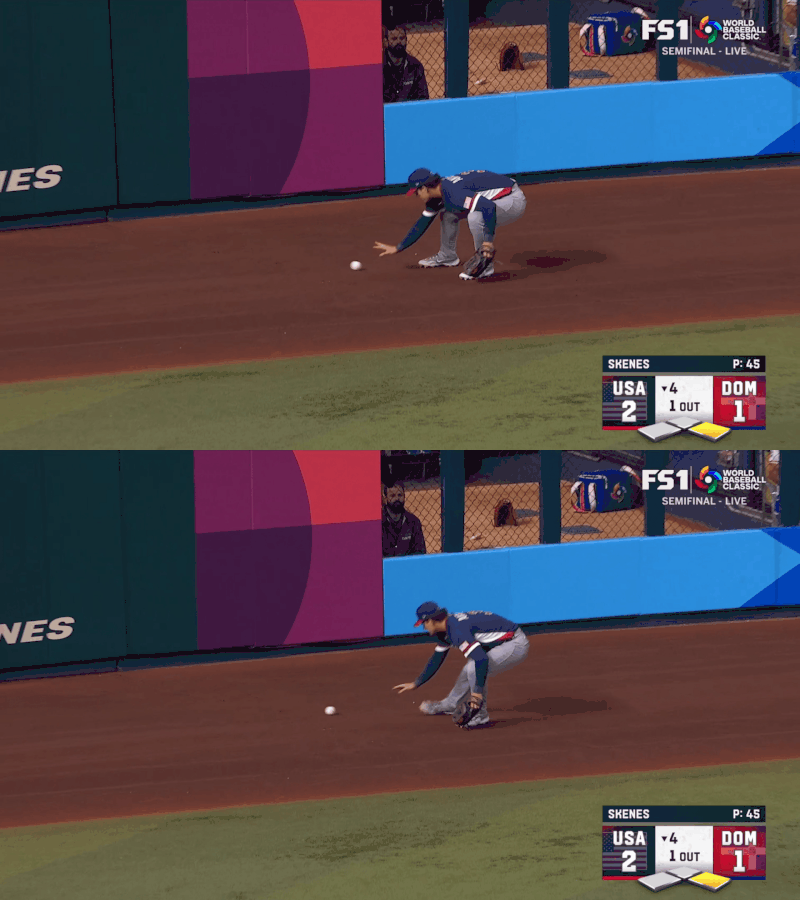
So this is the difference between a professional athlete and a toddler. When the right leg is still extended, planted in the ground for maximum leverage, the foot digging into the dirt at an angle, Anthony is a force to be reckoned with. Once the right leg is bent, he’s completely flat-footed, knees to his chest, left elbow stuck way out to the side so he can wrap his arm around his leg; he’s everyone’s nephew, powerless to stop himself from befriending a worm.
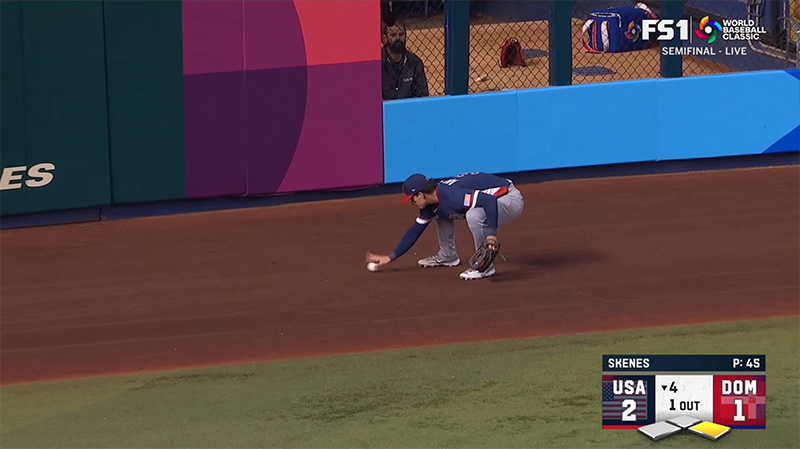
This is the frame that really takes it over the toddler top. For some reason, Anthony doesn’t grab the slow-moving ball with his fingers. He reaches out with his hand angled back. It looks like he doesn’t know what to do, so he’s just going to slap the baseball. He lets it get deep into his palm and grabs it with his whole hand. Professional baseball players do not grip the baseball that way. They have enormous hands and get a four-seam grip, holding the ball with their fingertips. There’s air between the ball and their palm. When Anthony finally picks up the ball, he holds it the way you might cradle a melon.
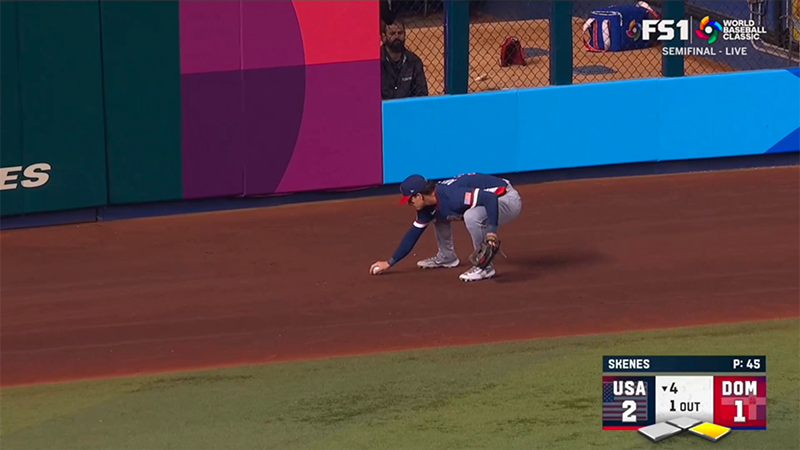
After that, sadly, Anthony returned to his usual status as a fearsome baseball warrior blessed with grace and agility.
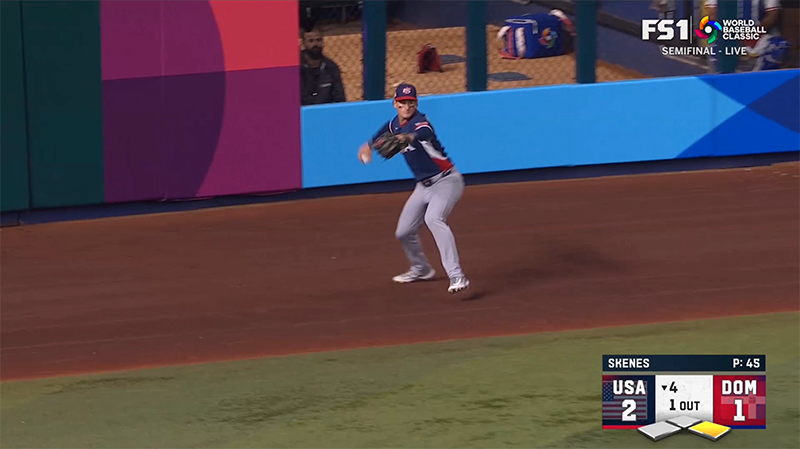
Anthony has a long career ahead of him, and he will awe us with many astounding feats of power and dexterity. For now, though, let’s make sure we treasure this memory of him as an adorable toddler before he hits the terrible twos.
Davy Andrews is a Brooklyn-based musician and a writer at FanGraphs. He can be found on Bluesky @davyandrewsdavy.bsky.social.
Delightful analysis.