
Arizona Diamondbacks Top 56 Prospects
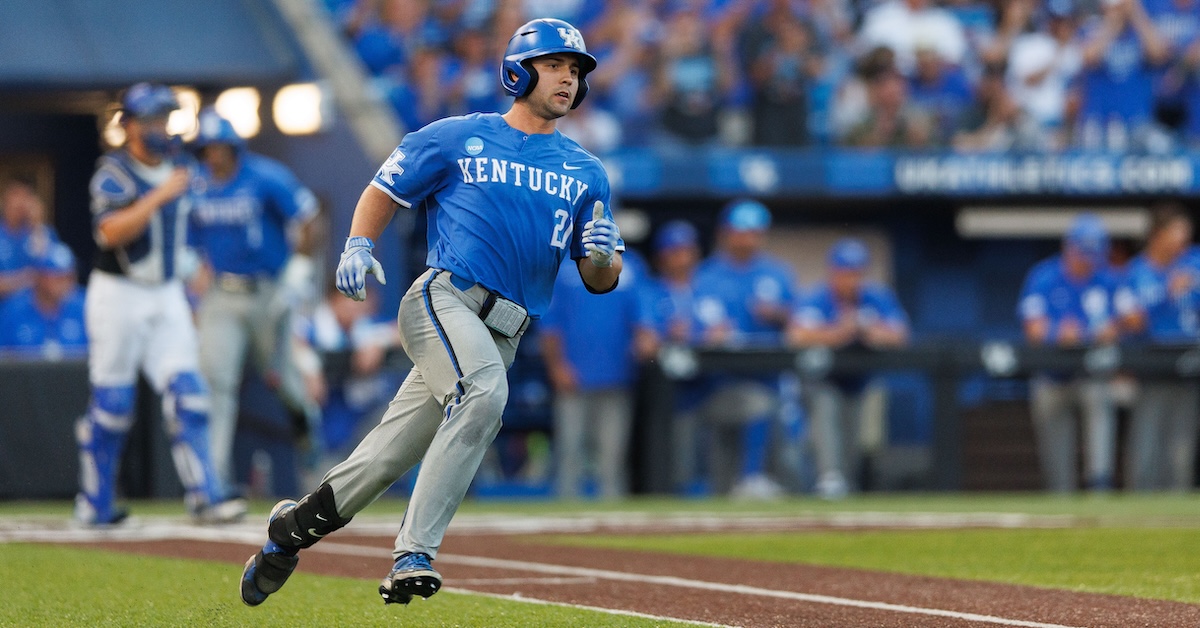
Below is an analysis of the prospects in the farm system of the Arizona Diamondbacks. Scouting reports were compiled with information provided by industry sources as well as my own observations. This is the sixth year we’re delineating between two anticipated relief roles, the abbreviations for which you’ll see in the “position” column below: MIRP for multi-inning relief pitchers, and SIRP for single-inning relief pitchers. The ETAs listed generally correspond to the year a player has to be added to the 40-man roster to avoid being made eligible for the Rule 5 draft. Manual adjustments are made where they seem appropriate, but we use that as a rule of thumb.
A quick overview of what FV (Future Value) means can be found here. A much deeper overview can be found here.
All of the ranked prospects below also appear on The Board, a resource the site offers featuring sortable scouting information for every organization. It has more details (and updated TrackMan data from various sources) than this article and integrates every team’s list so readers can compare prospects across farm systems. It can be found here.
| Rk | Name | Age | Highest Level | Position | ETA | FV |
|---|---|---|---|---|---|---|
| 1 | Ryan Waldschmidt | 23.2 | AA | LF | 2026 | 50 |
| 2 | Tommy Troy | 23.9 | AAA | 2B | 2026 | 50 |
| 3 | Jansel Luis | 20.8 | A+ | 3B | 2027 | 45+ |
| 4 | JD Dix | 20.2 | A | 2B | 2029 | 45+ |
| 5 | Demetrio Crisantes | 21.3 | A+ | 2B | 2028 | 45+ |
| 6 | Yilber Díaz | 25.3 | MLB | SIRP | 2026 | 45+ |
| 7 | Kayson Cunningham | 19.5 | A | 2B | 2030 | 45 |
| 8 | Daniel Eagen | 23.1 | AA | SP | 2027 | 45 |
| 9 | LuJames Groover | 23.7 | AA | 3B | 2026 | 45 |
| 10 | Cristian Mena | 23.0 | MLB | SP | 2026 | 45 |
| 11 | Kohl Drake | 25.4 | AAA | SP | 2026 | 45 |
| 12 | Ashton Izzi | 22.1 | A+ | SP | 2027 | 40+ |
| 13 | David Hagaman | 22.7 | A+ | SP | 2027 | 40+ |
| 14 | Patrick Forbes | 21.4 | R | SP | 2027 | 40+ |
| 15 | Brandyn Garcia | 25.5 | MLB | MIRP | 2026 | 40+ |
| 16 | Dean Livingston | 19.3 | R | SP | 2029 | 40+ |
| 17 | Junior Ciprian | 20.5 | A | SP | 2029 | 40+ |
| 18 | Hunter Cranton | 25.1 | A+ | SIRP | 2026 | 40+ |
| 19 | Adriel Radney | 18.5 | R | RF | 2030 | 40 |
| 20 | Mitch Bratt | 22.4 | AA | SP | 2026 | 40 |
| 21 | Slade Caldwell | 19.5 | A+ | CF | 2028 | 40 |
| 22 | Yassel Soler | 19.9 | A | 3B | 2028 | 40 |
| 23 | Brian Curley | 22.5 | R | SIRP | 2027 | 40 |
| 24 | Daury Vasquez | 19.7 | A | SP | 2029 | 40 |
| 25 | Mason Marriott | 23.3 | A+ | MIRP | 2027 | 40 |
| 26 | Kristian Robinson | 25.0 | AAA | RF | 2026 | 40 |
| 27 | Cristofer Torin | 20.6 | AA | 2B | 2027 | 40 |
| 28 | Druw Jones | 22.0 | A+ | CF | 2027 | 40 |
| 29 | Carlos Virahonda | 20.0 | A | C | 2029 | 40 |
| 30 | Andrew Hoffmann | 25.9 | MLB | SIRP | 2026 | 40 |
| 31 | Hayden Durke | 23.6 | AAA | SIRP | 2026 | 40 |
| 32 | Yordin Chalas | 21.9 | AA | SIRP | 2027 | 40 |
| 33 | Sandro Santana | 20.8 | A | SIRP | 2028 | 40 |
| 34 | Gavin Conticello | 22.5 | AA | RF | 2026 | 40 |
| 35 | Yu-Min Lin | 22.4 | AAA | SP | 2026 | 40 |
| 36 | Alberto Barriga | 21.1 | A | C | 2028 | 40 |
| 37 | Christian Cerda | 23.0 | AA | C | 2027 | 40 |
| 38 | Chung-Hsiang Huang | 20.1 | A | SP | 2028 | 40 |
| 39 | Caden Grice | 23.5 | A | SP | 2027 | 40 |
| 40 | Jacob Steinmetz | 22.4 | A+ | SP | 2029 | 40 |
| 41 | Elian De La Cruz | 18.2 | R | RF | 2031 | 35+ |
| 42 | Jose Fernandez | 22.2 | AA | SS | 2027 | 35+ |
| 43 | Blake Walston | 24.5 | MLB | SP | 2026 | 35+ |
| 44 | Spencer Giesting | 24.5 | AAA | MIRP | 2026 | 35+ |
| 45 | Dylan Ray | 24.6 | AAA | SP | 2026 | 35+ |
| 46 | Joe Elbis | 23.2 | AA | SP | 2027 | 35+ |
| 47 | Sawyer Hawks | 22.5 | A | SIRP | 2027 | 35+ |
| 48 | Jose Cabrera | 23.5 | AA | MIRP | 2028 | 35+ |
| 49 | Landon Sims | 24.9 | AA | SIRP | 2026 | 35+ |
| 50 | Kyle Amendt | 25.7 | AAA | SIRP | 2026 | 35+ |
| 51 | Gian Zapata | 20.3 | R | RF | 2030 | 35+ |
| 52 | Ivan Luciano | 19.1 | A | C | 2030 | 35+ |
| 53 | Tytus Cissell | 19.7 | R | SS | 2030 | 35+ |
| 54 | Pedro Blanco | 18.6 | R | 1B | 2030 | 35+ |
| 55 | Walvin Mena | 20.2 | R | SIRP | 2029 | 35+ |
| 56 | Samuel Gonzalez | 20.9 | R | SP | 2029 | 35+ |
- All
- C
- 1B
- 2B
- SS
- 3B
- LF
- CF
- RF
- SP
- SIRP
- MIRP
50 FV Prospects
1. Ryan Waldschmidt, LF
| Age | 23.2 | Height | 6′ 2″ | Weight | 205 | Bat / Thr | R / R | FV | 50 |
|---|
| Hit | Raw Power | Game Power | Run | Fielding | Throw |
|---|---|---|---|---|---|
| 40/50 | 55/60 | 45/55 | 50/50 | 45/55 | 50 |
Waldschmidt’s college career took off after transferring to Kentucky before his sophomore season. He quickly established himself as a big prospect, was selected late in the first round of the 2024 draft, and has surged past several earlier selections and made himself a no-doubt Top 100 prospect on the strength of his bat. While he lacks a signature plus-plus tool, the 23-year-old does just about everything you want at the plate and he looks the part of a bat-first future regular in the box.
Waldschmidt’s mechanics are low maintenance. He hits with his feet spread very wide apart — this was initially his setup with two strikes, and then he reportedly went to it full-time after noticing his max exit velos didn’t diminish at all — and needs only a small load to generate plus power. His swing is steep and he doesn’t have crazy bat speed, so there is a bit of a hole in the upper and outer part of the zone. He otherwise covers the plate well, though, and the discerning approach that helped him sail through the minor leagues should compensate for the swing and miss.
Waldschmidt started his amateur career on the infield, but has played on the grass exclusively as a pro. His feel for the outfield has matured to the point where he projects above average in a corner. He’s played a handful of games in center, but isn’t really a fit there. No matter. The bat should carry Waldschmidt to a productive career, and he projects as a middle-of-the-order hitter. It’s a power-and-OBP-over-hit skill set, and at the low end of his range of outcomes, he may just strike out too much to be more than a part-time player. But Waldschmidt’s median outcome is as a regular, and there’s 30-homer upside if everything clicks. He should arrive in the desert early in the 2026 season.
2. Tommy Troy, 2B
| Age | 23.9 | Height | 5′ 10″ | Weight | 197 | Bat / Thr | R / R | FV | 50 |
|---|
| Hit | Raw Power | Game Power | Run | Fielding | Throw |
|---|---|---|---|---|---|
| 40/45 | 45/50 | 40/50 | 60/60 | 45/50 | 50 |
Troy shrugged off a disappointing and injury-plagued 2024 season, and re-established himself as one of Arizona’s top farmhands. He has a well-rounded collection of tools and skills that should help him contribute in some capacity, though there are enough other things going on here that I thought long and hard before projecting him as an average regular.
As usual, we’ll start with the good. An early-season hiccup in 2024 aside, Troy has hit all throughout his career, and posted above-average line on the season. As the hit and power grades suggest, he’s providing in-game damage without selling out. Under the hood, his swing, chase, and whiff rates are all acceptable to good. Even the bad stuff is trending positively, as he’s still vulnerable against spin, but whiffed significantly less often than a year ago, and against better competition to boot. He’s doing this with an explosive and high-effort swing, which speaks to his ability to find the barrel. His 90th-percentile exit velocities are a shade under the big league average, but his maxes are in line, and while he’s not particularly projectable, we’re rounding up.
Defensively, Troy looks significantly more comfortable at second base than he did at shortstop in 2024, and he stands a chance of being above average at the keystone. Should the bat fall short, he’s already seen time in center field, and while that’s a work in progress, he should have little trouble getting to at least fringy there if he winds up in a utility role. With plus wheels, he’s an asset on the bases as well, where he’s stolen bags at a highly successful clip and shown generally good, if not perfect, instincts.
There are a couple points of concern, however. For a plus runner with a strong, compact frame, Troy isn’t the most graceful player. That shows up in a couple of spots, from some stiffness in his bat path to the way spin can lure him off balance fairly easily. It’s a quick bat with short levers, which is great, but there’s still real hit tool risk here. Troy is a competitor and gets rave reviews for his work ethic, but he can be very hard on himself (he isn’t shy about being visibly frustrated with his own performance on the field) and hasn’t always channeled that perfectly. I suspect there’s more good than bad in that, and that applies to the profile as a whole. We see a 50 at his peak, and while there isn’t huge upside beyond that, Troy’s proximity and floor help us feel comfortable with him in this FV tier.
45+ FV Prospects
3. Jansel Luis, 3B
| Age | 20.8 | Height | 6′ 1″ | Weight | 170 | Bat / Thr | S / R | FV | 45+ |
|---|
| Hit | Raw Power | Game Power | Run | Fielding | Throw |
|---|---|---|---|---|---|
| 30/50 | 45/55 | 30/50 | 55/55 | 45/55 | 55 |
Luis is a switch-hitting infielder with plus athleticism and projectable power. He has fast hands and an accurate barrel head from both sides of the plate. His swing is lofted and isn’t short, but he’s quick enough to catch heat at the top of the zone and can drive pitches in all quadrants. His pitch recognition and strike zone judgement lag behind the tools and will likely sand down his batting average, but his pure bat-to-ball ability is pretty good.
For good and for bad, Luis isn’t a finished product. There’s exciting physical projection ahead, as he’s still just 20 and has an enticing blend of present strength, athleticism, and room to get stronger without compromising his mobility. The raw power projection is appropriately optimistic, reflecting the potential for significant growth here. But while I want to give young players with aggressive approaches a lot of rope to figure things out, Luis’ is raw enough that I’m a little concerned. He has one of the highest swing rates in the whole org and a correspondingly worrying tendency to expand and miss on the soft stuff. This has to get at least a little better for him to make noise at the higher levels.
Luis also probably isn’t an everyday shortstop. He has the speed, range, and arm strength to make it work, but his instincts and throwing accuracy weren’t good when I saw him, and other sources also see him as more of a second or third baseman. Luis definitely has everyday upside at those spots, but there are enough outstanding questions about his approach and defensive home to hold him back in the “Pick to Click” tier and below our threshold for a Top 100 talent.
4. JD Dix, 2B
| Age | 20.2 | Height | 6′ 2″ | Weight | 180 | Bat / Thr | S / R | FV | 45+ |
|---|
| Hit | Raw Power | Game Power | Run | Fielding | Throw |
|---|---|---|---|---|---|
| 30/50 | 45/55 | 25/50 | 60/60 | 40/50 | 40 |
Drafted in the first round out of a Wisconsin high school, Dix was among the top position players on the Arizona complex last summer and then more than held his own in a two-month stint in Low-A. Quick enough for the middle infield and with a frame and swing that suggests 20-plus homer upside, there are a lot of ways this profile can go.
At the plate, Dix shows feel to hit from both sides. There’s some length to the path on each side (a tick more from the left), and with his lever length comes risk that he’ll struggle to cover the upper part of the zone. So far, so good, and he has enough bat speed to make it work, but you can see why the power grade is ahead of the bat. A plus runner, Dix is also a terror on the bases, and he stole 28 of them in 89 games. He’ll need to calm his tendency to run like hell at the first opportunity, though there’s a chance he just needs to make a few mistakes against better competition before adjusting.
The defensive picture is a little murky. Normally, someone with Dix’s athleticism and speed would at least deserve a shot at short, but lingering effects from a high school labrum injury have rendered his right arm a noodle. Presently, it’s both weak and inaccurate, and one scout went as far as to say “if that’s not a 20 arm, what is?” Sources within the D-backs say they’ve seen significant improvement this winter, which is encouraging, but we’ll need to wait and see. I almost don’t know what to do with all of this. Shortstop might be a possibility if Dix regains strength, and center field could be in play if things don’t improve at all. For now, let’s hedge and assume it rounds into form enough for him to play an average second base. There’s everyday upside at each spot, but Dix has to show he can grow into that projected power and carry it into games before we really inflate this balloon. You can also imagine him turning into a versatile utility player if the bat falls short.
5. Demetrio Crisantes, 2B
| Age | 21.3 | Height | 6′ 0″ | Weight | 178 | Bat / Thr | R / R | FV | 45+ |
|---|
| Hit | Raw Power | Game Power | Run | Fielding | Throw |
|---|---|---|---|---|---|
| 40/60 | 40/45 | 35/45 | 50/50 | 45/55 | 45 |
Crisantes has a case as the best pure hitter in the D-backs system. He’s quick to the ball with a manipulable bat path that lets him barrel pitches all over the zone. He makes a ton of contact, tends to hit it in the air, and while he doesn’t have big raw power, the quality of his contact should allow him to chip in his share of extra base hits. He’s also got a very mature approach for his age. Visually, his zone control and pitch recognition were plus in my look, and the numbers bear this out. Crisantes had one of the lowest miss rates in the org and the very lowest on pitches in the heart of the plate. The huge jump from his overall swing rate to his swing rate on pitches out over the middle is also very encouraging, and highlights the selective aggressiveness you love to see. An average runner, Crisantes is also a good defender. He doesn’t have enough arm for the left side, but his instincts and ability to make accurate throws from different positions warrants an above-average projection at second.
The emerging issue here is that Crisantes’ lack of physicality is starting to bite. Injuries have limited him to 126 games over the past two years, and he missed the last four and a half months of 2025 after suffering a posterior labral tear in his left shoulder. He’s an average athlete but isn’t especially strong, and I have some concerns about his ability to hold up under the rigors of a full season. To tap dance around the problem, Crisantes both projects as a regular if he can find a way to stay healthy, and is ranked here to reflect the risk that he won’t.
6. Yilber Díaz, SIRP
| Age | 25.3 | Height | 6′ 0″ | Weight | 190 | Bat / Thr | R / R | FV | 45+ |
|---|
| Fastball | Slider | Curveball | Command | Sits/Tops |
|---|---|---|---|---|
| 60/65 | 55/60 | 55/60 | 35/40 | 95-97 / 100 |
The 2025 season was a roller coaster for Díaz. He entered the year as the club’s top pitching prospect and earned a spot on our Top 100 list on the strength of three plus pitches and triple-digit velocity. While no sure thing — he barely throws a changeup and his high-effort delivery had relief risk written all over it — Díaz was an arrow-up arm in a system stocked with depth but light on guys with mid-rotation upside.
Díaz’s on-again, off-again relationship with the strike zone hit the rocks immediately. He lost his release point on the fastball especially, often letting the ball go too early and missing wildly above the zone, then over-correcting and scudding the dirt. He soon lost his place in Reno’s rotation, then shipped out to Double-A to try to find a cure.
It took most of the season, but Díaz eventually found himself. He dominated over his last 11 innings in Amarillo, striking out 15, allowing one run, and most critically only walking two in his final 10 outings (including the postseason). He’s continued to miss a ton of bats, albeit with a few more free passes, in the Venezuelan Winter League.
Díaz now projects as a late-inning reliever. His slider and curve are plus hammers, and he’s regularly reaching the upper 90s with his fastball, and the big league batters down in Venezuela look outclassed. He’s always been wild, and 2025’s bout in Reno in particular has me on high alert, but Díaz looks more settled at this point, and has shown the fortitude to be able to work through a dire rough patch. He has a shot to close if everything breaks right from here.
45 FV Prospects
7. Kayson Cunningham, 2B
| Age | 19.5 | Height | 5′ 10″ | Weight | 175 | Bat / Thr | L / R | FV | 45 |
|---|
| Hit | Raw Power | Game Power | Run | Fielding | Throw |
|---|---|---|---|---|---|
| 30/60 | 30/40 | 30/45 | 55/55 | 20/40 | 40 |
Cunningham had one of the most advanced bats on the high school showcase circuit, prompting Arizona to select him with the 18th pick of the 2025 draft. The jump in competition from high school ball to Low-A is a humbling test for anyone, but even amidst a challenging two-week cameo in the Cal League, his quick hands and feel for adjusting the bat head were apparent. Cunningham will need to hit, as he’s neither big now nor particularly projectable, and there aren’t a ton of secondary skills or tools to float the profile. I’m giving him some benefit of the doubt on the raw power projection, and the forecast here is for below-average in-game power.
A lack of polish on the defensive side puts even more pressure on the bat. The gap between where Cunningham is now and where he’ll need to be to play shortstop at the major league level is enormous. Even by the standards of the low minors, his choppy footwork, tentative reads, and misaligned throwing mechanics stood out last summer. The game just looked way too fast for him, and he didn’t seem comfortable. Never say never, but this looks like a case where Cunningham will have to do a ton of work to turn himself into even a second baseman, and left field looks like a real possibility.
All of this points to a longer developmental road than we’re used to seeing from first rounders these days. I’m not letting last summer’s Cal League numbers sour me on the bat at all — the huge gap between the end of a high school player’s season and when he actually gets on a pro field doesn’t do these guys any favors — because even if he’d hit, there’s enough work ahead filling out and improving defensively to think things will progress slowly. Cunningham may well hit .300 some day, and his above-average wheels give him a path to a useful glove at a couple different spots, but we’re tapping the brakes a little bit here.
8. Daniel Eagen, SP
| Age | 23.1 | Height | 6′ 4″ | Weight | 205 | Bat / Thr | R / R | FV | 45 |
|---|
| Fastball | Slider | Curveball | Changeup | Command | Sits/Tops |
|---|---|---|---|---|---|
| 45/50 | 50/55 | 55/55 | 40/50 | 40/45 | 93-95 / 95 |
An under-slot third rounder out of Presbyterian, Eagen vaulted from small-school obscurity to Double-A in his first professional season. Tall and well built, he looks the part of a starting pitching prospect. He’s a downhill thrower with a quick and late-accelerating arm, all of which gives him a tick of deception. His pitch data is interesting, if not so good that it jumps off the page. His fastball tops out at 95 and sits a couple ticks lower, with 18 inches of vertical break and very little tail. The slider and curve don’t have huge spin rates, but both have sharp downward tilt, and the distinct break on each gives him two legitimate weapons to miss bats. He’s started working in a splitter to give him yet another vertical pitch, though this one also tails enough to offer something different.
Will he throw enough strikes to start? He tends to run stuff out of the zone an awful lot, and while the delivery is clean enough, it’s also not so fluid to think that he’s going to have great command. Eagen projects as a backend starter, and could still fit in some kind of impactful multi-inning relief role if the split sputters or strike-throwing issues preclude a true rotation fit.
9. LuJames Groover, 3B
| Age | 23.7 | Height | 6′ 2″ | Weight | 212 | Bat / Thr | R / R | FV | 45 |
|---|
| Hit | Raw Power | Game Power | Run | Fielding | Throw |
|---|---|---|---|---|---|
| 40/55 | 40/45 | 35/45 | 40/40 | 45/50 | 50 |
Groover has hit at every level, and he’s now thoroughly passed the Double-A test. In a little more than two seasons of action, he’s hit .312/.399/.450 with a strikeout rate under 15%. He has impressive pitch recognition and hand eye coordination, and the way he’s able to identify spin, let it travel, and then move the barrel head to hit the ball where it’s pitched stands out in an era where many hitters have a very different and much more one-dimensional plan. He’s the rare guy who opposing defenses will have to play mostly straight up.
The data offers few surprises: Groover doesn’t chase much, takes his walks, and puts the ball in play when he swings. He does expand more often with two strikes, but in his particular case, it’s not alarming, as he’s the type of hitter who can spoil tough pitches in the shadow zone rather than the guy flailing at stuff in the dirt. Pedestrian power limits Groover’s ceiling. His spray approach understandably dims his average exit velocities, but even his top end numbers are fringy, and he’s neither explosive nor projectable; this is probably who he is. He gets it in the air enough to do a little damage, though as more of a doubles hitter than a consistent home run threat.
At third, Groover isn’t flashy, but he gets the job done. He compensates for fringy range with decent instincts, and despite a short stride, his arm is pretty accurate; we’re rounding up to average on the projection. The lack of thump likely makes him more of a platoon or second-division guy than someone we’d be inclined to put on the Top 100, but there’s a path to a few 2-3 WAR seasons if the power exceeds expectations. The floor is fairly low, though, as Groover doesn’t offer much defensive versatility or danger off the bench if the bat falls short of expectations.
10. Cristian Mena, SP
| Age | 23.0 | Height | 6′ 2″ | Weight | 170 | Bat / Thr | R / R | FV | 45 |
|---|
| Fastball | Slider | Curveball | Changeup | Command | Sits/Tops |
|---|---|---|---|---|---|
| 40/45 | 50/55 | 60/60 | 45/55 | 45/50 | 90-94 / 95 |
A shoulder strain in June ended Mena’s season, just a week after he’d been called up from Triple-A Reno. He thus missed a golden opportunity to audition for a spot in the D-backs rotation, as seemingly everyone else on the staff soon succumbed to injury as well. Fortunately, he’s healthy again and should be back in Reno’s starting five to open the 2026 season.
Mena’s profile is well established at this point. As an athletic guy with a clean arm swing, a big frame, and a deep arsenal, he has most of the ingredients you want in a starting pitching prospect. He has great feel to spin two breaking balls, and both he and the D-backs deserve credit for diversifying his mix after they acquired him from the White Sox prior to the 2024 season.
Despite flirting with the upper 90s, Mena’s four-seam fastball isn’t a bat misser at all, and his two-seamer does not reliably generate groundballs. He needs to lean on spin more than most starters, and could perhaps benefit from using his breaking balls even more than he did in 2025, when he threw them a shade under 50% of the time. His change has also taken strides in recent years and flashes plus. Maybe Mena will be able to execute it more consistently when he gets out of the Pacific Altitude League.
Shoulder and forearm strains have limited Mena to 29 starts over the last two seasons. Assuming those injuries are behind him, he should get a chance in the rotation sometime this coming season. He projects as a no. 4 starter long-term, though the spin-heavy nature of his game could push him toward the lower end of the innings volume we expect out of starters, as he tends to run deep counts.
11. Kohl Drake, SP
| Age | 25.4 | Height | 6′ 5″ | Weight | 220 | Bat / Thr | L / L | FV | 45 |
|---|
| Fastball | Slider | Curveball | Changeup | Command | Sits/Tops |
|---|---|---|---|---|---|
| 60/60 | 45/50 | 50/55 | 40/45 | 50/60 | 91-95 / 96 |
Drake’s somewhat marauding amateur career led him to Walters State CC, a school that has produced several big leaguers in recent years, including Hunter Stratton and Brett Honeywell. There, Drake showed enough to get drafted in the 11th round of the 2022 draft, and he’s now poised to become the school’s fifth big league debutant in the last 10 years.
Drake’s game features a lot of “good” and not much “great.” He has both fastballs, touching the mid-90s with distinct, if not special, movement on each. He spins a tight slider and a longer curve, both of which he can backdoor and land in the zone or bury. There’s a functional, if not quite fully fleshed out, changeup. Even though he throws strikes and projects to have average command, he isn’t surgical and a bunch of his pitches tend to wind up in their own location or vector. It helps that Drake is left-handed, but we’re in a tough era for this kind of profile. Fifteen years ago, you’d run him out for 180 innings of about league-average work, but teams are increasingly reluctant to do that, particularly with guys who surrender a bunch of fly balls like Drake does. Like his fellow Texas-to-Arizona migrant Mitch Bratt, Drake has no. 4 upside if everything comes together, but it wouldn’t be shocking if he winds up shunted into a less traditional length role.
40+ FV Prospects
12. Ashton Izzi, SP
| Age | 22.1 | Height | 6′ 3″ | Weight | 165 | Bat / Thr | R / R | FV | 40+ |
|---|
| Fastball | Slider | Curveball | Changeup | Cutter | Command | Sits/Tops |
|---|---|---|---|---|---|---|
| 45/50 | 50/55 | 40/50 | 30/50 | 45/50 | 35/45 | 92-95 / 97 |
Izzi is a good case study in projection, and what we mean when we write things like “projectable command” or that certain pitches “flash.” At any given time, he can rip off one of four big-league quality pitches, and he has stretches where his locations are pretty good. But there’s a lack of consistency that clouds his long-term projection, and we should dive into the why.
The easy part is the physicality. Izzi has an ideal frame and build for logging innings, his arm action is relatively simple and repeatable, and his delivery is compact enough to think he’ll throw enough strikes. That, above-average arm strength, and an ability to spin the ball make for a great foundation for a starter. He isn’t gigantic, but the levers aren’t small, so for a relatively young guy, we’re more encouraged by his ability to generally throw strikes than we are turned off by his susceptibility to miss his spots, particularly over the heart of the plate.
That said, there’s a sizable gap between Izzi’s best secondaries and what they typically look like. His slider occasionally has nasty late bite to the glove side, but he doesn’t always get on top of it well. A lot either break too high or back up, and he’ll also overthrow his fair share. It’s a similar story with the sweeping curve. Izzi’s change flashes even less often, just a handful of times all last year, but his best ones feature the right blend of arm speed and late sink to think he could have an average one at maturity if he commits to throwing it regularly. That doesn’t show up in the numbers — his chase and miss rates on the change were awful — but there are ingredients here to think this pitch could develop.
Izzi has no. 4 upside if everything comes together. He’s far enough away, with enough of a gap between present and future, to think that a backend, hybrid, or relief role are more likely, however. He’s one who could be hurt by the way modern pitchers are developed: Everything about his build suggests Izzi can handle the workload — he missed time with an oblique injury in 2025, but his arm was fine — and he needs reps to iron out the kinks above. Hopefully he gets them.
13. David Hagaman, SP
| Age | 22.7 | Height | 6′ 4″ | Weight | 215 | Bat / Thr | R / R | FV | 40+ |
|---|
| Fastball | Slider | Changeup | Command | Sits/Tops |
|---|---|---|---|---|
| 55/60 | 50/60 | 45/55 | 30/45 | 93-96 / 98 |
Hagaman was Texas’ fourth rounder in 2024 and is another of the arms who moved to Arizona in the Merrill Kelly 켈리 deal. Eric was a fan of him in college, and even though he needed Tommy John surgery, had Hagaman ranked well ahead of where he was ultimately selected. It looks like Eric was right on this one, because Hagaman is throwing strikes and working with three above-average pitches. He’s touching the upper 90s and working comfortably in the 94-96 belt, and the pitch plays up due to its carry and plus extension (Hagaman is a big dude). He’s got distinct curveball and slider shapes, and the curve in particular has lovely depth that should be able to both generate whiffs and also draw called strikes in the zone. His change isn’t as far along, but also isn’t so raw as to give up on it yet.
Despite the stuff, Hagaman is on the starter/reliever line. He’s a slower twitch guy with a long arm path, and he’s pounding the zone without a whole lot of precision. He’s also getting a ton of chase on pitches that, while good, probably won’t entice big leaguers in quite the same manner. A rough AFL look also raises questions about Hagaman’s ability to maintain starter-level stuff over deeper outings and a long season. We still see a shot for Hagaman to do it, and think the upside in relief is pretty high even if it goes that direction. He’s someone who’ll be part of the conversation as a Pick to Click candidate for 2026.
14. Patrick Forbes, SP
| Age | 21.4 | Height | 6′ 3″ | Weight | 220 | Bat / Thr | R / R | FV | 40+ |
|---|
| Fastball | Slider | Changeup | Cutter | Command | Sits/Tops |
|---|---|---|---|---|---|
| 60/60 | 55/60 | 40/45 | 40/50 | 30/40 | 94-97 / 99 |
Forbes started his career at Louisville as a two-way player, and was actually a bigger contributor with the bat as a freshman, but he transitioned to pitching full-time as a sophomore, and it looks like it was the right career move. By the end of his junior season, he’d firmly established himself as the Cardinals ace and notched nearly 15 K/9 amidst a run to the College World Series. The D-backs loved his high-octane stuff and selected him toward the back of the first round of the 2025 draft.
Forbes has a quick and live arm. Working out of a low-three-quarters slot, he sits 94-97 mph and can dial his heater into the upper 90s. It’s a tail-and-carry pitch and the lower release angle has helped him overwhelm college bats with it. His slider flashes plus, a nasty sweeping breaking ball with late depth at its best.
The way Forbes goes about his business suggests he’s going to be a reliever. He doesn’t always get his high-effort and up-tempo delivery synched up right, and he’s a heel grinder, and all of those things contribute to his tendency to periodically miss wildly, particularly to the glove side. He’s also got a pretty shallow arsenal and tends to throw harder out of the gate than what he’s able to hold throughout starts.
The path forward will be interesting to monitor. Though he could move quickly in short stints, the D-backs should probably give Forbes every chance to start, for the reps if nothing else. He could also be quite good in a hybrid, once- or maybe twice-through-the-order job. I’m skeptical that he’ll be a traditional, 150-inning starter type, but everything else is in play, and there’s closer upside if Forbes does wind up in a one-inning role.
15. Brandyn Garcia, MIRP
| Age | 25.5 | Height | 6′ 4″ | Weight | 235 | Bat / Thr | L / L | FV | 40+ |
|---|
| Fastball | Slider | Curveball | Changeup | Cutter | Command | Sits/Tops |
|---|---|---|---|---|---|---|
| 60/60 | 50/55 | 60/60 | 35/50 | 45/45 | 35/40 | 94-97 / 98 |
Garcia always had the look of a reliever, but the Mariners pulled the ripcord earlier than anticipated and transitioned him to the bullpen last spring. He debuted in July and then was dealt to Arizona about a week later, along with Ashton Izzi, in exchange for Josh Naylor. He bounced between Reno and Arizona down the stretch, where he flashed the plus fastball-sweeper mix that made him such an attractive trade target in the first place.
Garcia is a low-slot southpaw with an effortless and yet powerful arm. He touches triple digits with his two-seamer, and generates above-average to plus tail on the pitch. It’s more of a groundball generator than a bat misser, but it’s done its job with aplomb all through the minors. Both the sweeper, long and unusually hard for its shape, and tight slider missed a ton of bats last year and project to continue doing so against big leaguers.
Garcia has probably found his home as a single-inning guy. He’s a fringy athlete with below-average command, and he tended to lose his good gas by the second or third inning of starts anyway. In this role, the stuff is good enough at its best to think he could work the seventh or eighth inning.
16. Dean Livingston, SP
| Age | 19.3 | Height | 6′ 4″ | Weight | 205 | Bat / Thr | R / R | FV | 40+ |
|---|
| Fastball | Slider | Command | Sits/Tops |
|---|---|---|---|
| 45/55 | 40/55 | 20/45 | 92-94 / 97 |
Livingston signed for $1 million as an overslot fourth rounder in the 2025 draft. He has a starter’s build, arm swing, and athleticism, and has reportedly added 10-15 pounds to his lean frame since signing. Working out of a high slot, he has two distinct fastballs with interesting and complementary shapes. The four-seamer has the kind of carry that misses bats, and he had amateur outings where he’d sit 94-96 mph, though he was generally a little below that. While inconsistent, Livingston has also flashed an above-average slider with north-south bite. He’s the furthest away of all the rotation candidates on this list, but he arguably has the most pure upside of the group. He’ll need to stretch out and develop a changeup to reach his mid-rotation ceiling, and he has plenty of time to do so. Livingston will likely start in extended ball next season and is a high-priority visual eval this coming spring.
17. Junior Ciprian, SP
| Age | 20.5 | Height | 6′ 3″ | Weight | 180 | Bat / Thr | R / R | FV | 40+ |
|---|
| Fastball | Slider | Changeup | Command | Sits/Tops |
|---|---|---|---|---|
| 60/70 | 40/55 | 30/50 | 30/50 | 93-96 / 98 |
Ciprian’s grade here is an argument that he’s the most projectable arm in the org. He’s a lanky 6-foot-3, an above-average athlete with a lot of room to get stronger throughout his frame, and particularly in his lower half. This is what big league starters look like before a rigorous strength and conditioning program produces its results. As is, Ciprian already sports an impressive fastball. He’s touching 98 with 18 inches of vertical break, and this could be a monster pitch if he’s able to hold the upper range of his velocity band throughout starts. He pairs it with a tight slider that comes and goes, but flashes above average.
The annoying thing about projectable arms is that you have to do a lot of projecting. We can look at the delivery, like the athleticism, like the clean arm circle, and anticipate better stability and repeatability with time while also acknowledging that, as his 5.10 BB/9 rate this year indicates, there’s a lot of work ahead. I can see Ciprian throw a change in warmups (he’s mostly working on it behind closed doors) and project on it, while also noting that he’s a long way from having a good one; obviously, it may never come. Ultimately, the relief risk and upside are both quite large, and his position here reflects the extreme volatility inherent in this kind of package.
18. Hunter Cranton, SIRP
| Age | 25.1 | Height | 6′ 3″ | Weight | 210 | Bat / Thr | R / R | FV | 40+ |
|---|
| Fastball | Slider | Command | Sits/Tops |
|---|---|---|---|
| 65/65 | 55/70 | 30/40 | 96-99 / 100 |
Seattle’s third rounder in 2024, Cranton only threw 18.1 innings across two seasons before Arizona acquired him as part of the Eugenio Suárez trade. Some of that stemmed from a freak injury last spring when he was hit in the head with a batted ball and then dealt with post-concussion symptoms that held him back for a couple of months. But Cranton also has a violent delivery and shoulder surgery on his CV, which adds a boom-or-bust element to the profile.
On stuff, Cranton has closer upside. He sits 96-99 mph with good shape on his fastball and pairs it with a horizontal slider that has un-be-liev-able late break at its best, the kind that’s going to buckle knees and break bats when it isn’t generating swing-and-miss. The effort in his delivery and length to his stroke will limit his precision, but with stuff this good, all you have to do is hit the box just enough. Cranton does that, and projects as a late-inning reliever.
40 FV Prospects
19. Adriel Radney, RF
| Age | 18.5 | Height | 6′ 3″ | Weight | 180 | Bat / Thr | R / R | FV | 40 |
|---|
| Hit | Raw Power | Game Power | Run | Fielding | Throw |
|---|---|---|---|---|---|
| 20/50 | 40/60 | 20/50 | 55/50 | 40/50 | 50 |
Radney signed for the biggest bonus in Arizona’s 2024 international class, inking a deal for just shy of $2 million. At the time, he projected as a center fielder with a chance to grow into plus power, a prospect with star upside on both sides of the ball.
Radney’s career has started slowly. We can and did give him a pass for a rough 2024 season, as he was quite young and playing through a back injury. It’s more concerning that turn number two through the DSL was just okay. He’s still making contact, running pretty well, and unleashing the occasional violent swing that reminds you why he was such a coveted prospect. But Radney hasn’t reliably turned plus bat speed into in-game damage, and his swing path isn’t conducive to driving the ball yet anyway. He’s also a little less fluid than those initial reports would have you believe and spent the 2025 season largely in right field.
All things considered, the arrow is down a little here. The power projection, bat speed, and contact skill are still intriguing, and he’s a guy I’m definitely keen to watch in Arizona this spring. But I want to see how everything looks, both physically and against stateside pitching, before considering Radney for a top 10 spot in this system again.
20. Mitch Bratt, SP
| Age | 22.4 | Height | 6′ 1″ | Weight | 190 | Bat / Thr | L / L | FV | 40 |
|---|
| Fastball | Slider | Curveball | Changeup | Cutter | Command | Sits/Tops |
|---|---|---|---|---|---|---|
| 45/45 | 45/50 | 45/50 | 45/50 | 50/50 | 55/70 | 89-93 / 94 |
Bratt has been among the best control pitching prospects in the minors since he signed as Texas’ over-slot fifth rounder in 2021. Now a Diamondback, he should start the year in Triple-A, and the club’s lack of rotation depth suggests a 2026 debut.
Bratt’s fastball is a strike 70% of the time, his breaking balls is above 60%, and his change a hair under. Some of that stems from chase, but all of those pitches are in the zone more than half the time. That’s kind of nuts — plenty of prospects don’t have a single pitch that does so — and explains how he’s run sub 3.00 BB/9 rates year after year.
The rub is that some of those strikes head back the other direction a lot more quickly than they came in. Bratt sits in the low 90s with good feel for missing bats up in the zone, but the shape is just okay and if he misses his spot, it’s very hittable. A similar pattern holds for his secondaries. He’s able to move them around and his feel for backdooring the slider stands out, but nothing in his arsenal is especially nasty. He gave up 18 homers in 122 innings in the Texas League in 2025, and that seems like the floor for what big leaguers will do without an adjustment in how he locates. That’s a bit of an issue, because while Bratt has 70 control, thus far he’s had closer to 55 command. He’s painting, just with a hake instead of a liner.
The projection here reflects more of an Erasmo Ramírez-like career path than a Marco Gonzales. Bratt is a backend starter, and he can definitely help in a few roles, but the damage on contact will be high and to me he looks more like a no. 5 or a swingman than a no. 4.
21. Slade Caldwell, CF
| Age | 19.5 | Height | 5′ 9″ | Weight | 175 | Bat / Thr | L / L | FV | 40 |
|---|
| Hit | Raw Power | Game Power | Run | Fielding | Throw |
|---|---|---|---|---|---|
| 30/45 | 35/40 | 20/35 | 70/65 | 45/55 | 40 |
The D-backs like taking high school position players early in the draft and also have no issue with guys who lack prototypical size. Those tendencies led them to Caldwell in the first round of the 2024 draft. He’s a 5-foot-9 Energizer Bunny out of an Arkansas high school with a big swing, plus-plus wheels, and a chance to play a solid center field.
The draft day concern here was that Caldwell was not projectable. It’s both impressive and a little concerning for his long-term future how maxed out he looked in his first pro spring, as there’s essentially no path to further growth without sacrificing the speed. That’s a bit of a problem for a guy with a 101.5 mph 90th-percentile exit velo, and especially troubling for someone who isn’t showing much ability to get to it in games. Caldwell swings hard and isn’t exactly out of control, but there is a fair bit of head movement and he didn’t reliably barrel the ball. He also has a hard time with pitches on the inner half. He’s mostly flipping balls to left, and he only turned on a pitch and drove it hard a couple of times all season. All of this is happening amidst a whiff rate over 20% — hardly fatal, but nothing special for a guy who isn’t hitting for power — and a very passive approach. He’s walking plenty but also swinging at just 59% of pitches over the heart of the plate, which raises plenty of questions about the quality of his approach.
Caldwell’s feel for the outfield is still developing. He’s showing exciting closing speed on balls that hang up, but I have questions about his reads off the bat. He’s one I wish I could have seen in person, as his first step doesn’t look great on video; at this point, I feel better about projecting him as above average than plus despite the speed. Add it all up, and we have a tricky offensive skill set without the no-doubt, plus-plus glove that can carry a light bat. This isn’t just my opinion either, as other scouts I’ve spoken to have been lukewarm on Caldwell as well. The dream here is something like Sal Frelick, but Caldwell is a long way away from that.
22. Yassel Soler, 3B
| Age | 19.9 | Height | 5′ 11″ | Weight | 185 | Bat / Thr | R / R | FV | 40 |
|---|
| Hit | Raw Power | Game Power | Run | Fielding | Throw |
|---|---|---|---|---|---|
| 30/45 | 55/60 | 30/50 | 40/40 | 35/45 | 55 |
Signed for $425,000 in the 2023 international class, Soler has long enticed evaluators for his blend of bat-to-ball skill and projectable power. Better pitching has stress-tested the former — his 73% contact rate is viable but low for an A-ball prospect and a significant drop below the 90% rate he ran in the DSL two years ago — but the power has held up and he’s already on the cusp of plus raw. Mechanically, the swing works. Soler has good bat speed, and while there’s a slight hitch up in his load, the path isn’t so long that he’s going to be fighting from behind against good velo.
The bigger problem here is the gap between his tools and skills. Soler’s approach in particular is not good, and it shows up in both the numbers and his visual evaluation. He’s the kind of player who can watch two teammates walk on four pitches and then chase a 1-0 slider in the dirt. He swings and chases a lot, which makes his very low swing rate on balls in the heart of the plate the kind of stat you just can’t unsee. He’ll need to make progress here because his glove at third is inconsistent, and the lack of feel discussed above is also apparent defensively. Skills can show up later, and I don’t want to write off the power and hand-eye coordination, which are important pieces of the puzzle; perhaps a slow developmental timeline will be the tonic here. Soler projects as a bench bat with pop and defensive flexibility.
23. Brian Curley, SIRP
| Age | 22.5 | Height | 5′ 10″ | Weight | 212 | Bat / Thr | R / R | FV | 40 |
|---|
| Fastball | Slider | Curveball | Command | Sits/Tops |
|---|---|---|---|---|
| 60/60 | 50/55 | 50/55 | 30/45 | 95-96 / 100 |
Curley is a highly entertaining little (Georgia) bulldog righty. He spent two years at Virginia Commonwealth and was drafted in 2024 but opted to transfer to Georgia, where he moved from the bullpen to the rotation during the year. He has a max effort drop-and-drive delivery with a powerful lower body. He sat 95-96 in his starts and has touched 100 mph in relief.
Curley has a couple breaking balls. His strike-stealing curveball has the most consistent shape and is more of a strike pitch in the 75-80 mph range. His slider/cutter is much more variable in terms of movement and location, but has the best chance to miss bats. Both can be nasty even when they’re not located well. He’s athletic enough to start but frankly at his size and effort level, the injury risk seems pretty high in that role. Curley could move quickly in relief, and his feel for the zone could also facilitate a hybrid role.
24. Daury Vasquez, SP
| Age | 19.7 | Height | 6′ 2″ | Weight | 170 | Bat / Thr | R / R | FV | 40 |
|---|
| Fastball | Slider | Changeup | Command | Sits/Tops |
|---|---|---|---|---|
| 55/60 | 45/55 | 30/50 | 30/40 | 94-97 / 98 |
Did you read the Junior Ciprian blurb and think “that sounds nice, but he’s a little too advanced for me?” Well, have I got the pitcher for you. Vasquez is another long and lean Dominican hurler. He generates some of the easiest 97s and 98s you’ll ever see, and both his raw ability to spin the ball and his feel for his change are good, particularly for the level. Complex-level bats were overwhelmed by both of them.
Vasquez is very raw, though. While he’s made strides since his walk-the-world DSL days, he doesn’t have much feel for where it’s going. He’s a hard lander, he gets off balance, and some scouts have said he’s got “darty” arm action, which you can think of as a guy who tends to aim the ball rather than really let it rip. Those issues are also limiting his ability to execute. He hasn’t yet harnessed all that spin into anything more than a slurvy breaking ball, and while there’s a potential plus pitch in him, he’s a long way from finding it. The change is also inconsistent and will need reps to reach its projection. Inevitably, the range of outcomes for a teenager with a great arm is wide, and the top end of it here is a mid-rotation starter with three above average or better offerings. From my vantage, the athleticism and stroke is a little too concerning for that lofty of a projection. Arizona should keep starting Vasquez for the reps and maybe something clicks, but the overall package seems more like a reliever in the end, albeit one with upside in that role.
25. Mason Marriott, MIRP
| Age | 23.3 | Height | 6′ 0″ | Weight | 198 | Bat / Thr | R / R | FV | 40 |
|---|
| Fastball | Slider | Curveball | Command | Sits/Tops |
|---|---|---|---|---|
| 45/50 | 45/50 | 55/60 | 35/55 | 92-93 / 96 |
A sixth-round pick out of Baylor in 2024, Marriott barely pitched in affiliated ball after signing, then exploded out of the gate with High-A Hillsboro this spring. In four starts, he struck out 25 hitters in 19.2 innings while also limiting walks. That was a problem for him in school, and it’s encouraging that his improved control coincided with some small adjustments that have perceptibly calmed his delivery. Marriott’s fastball reaches 95 mph and has enough carry out of a high slot to be a competitive offering despite pedestrian velocity. It also plays a vital role in setting up his curve, a sharp snapper that tunnels effectively with the heat. He has less feel for his slider and change, but both flash and aren’t so raw as to think that he can’t start.
Unfortunately, Marriott’s elbow barked after those four starts and he missed the rest of the season after undergoing Tommy John surgery. He has the same upside as several of the no. 4 or 5 starters listed above, but I’d like to see him throw strikes for a little longer before going all in. For now, we’re holding him down in this tier until he’s back healthy.
26. Kristian Robinson, RF
| Age | 25.0 | Height | 6′ 3″ | Weight | 190 | Bat / Thr | R / R | FV | 40 |
|---|
| Hit | Raw Power | Game Power | Run | Fielding | Throw |
|---|---|---|---|---|---|
| 30/30 | 55/55 | 45/50 | 55/55 | 55/55 | 60 |
Robinson was famously a Top 100 prospect several years ago, before his career stalled due to an incident in which he used high-potency marijuana, wandered along the highway on foot, and then fought a police officer who had stopped to investigate the situation. He was given 18 months probation for assault, which complicated his visa situation. That, along with a missed year from the pandemic, kept him off the field for three seasons.
At points along the way, his career looked to be in serious jeopardy, but it looks like Robinson is going to find his way to the big leagues. A second spin at Double-A in 2025 saw him bring his strikeout rate from “untenable” to “passable,” and then he made even more contact after a late-season promotion to Triple-A. It’s still a 30 hit tool: Robinson’s path is long, his swing is grooved, and even with the aforementioned improvements, there’s probably too much swing-and-miss for him to profile as a regular. He’s dangerous if the ball finds that bat path, though, and far from being overmatched by spin, he’s actually squared it up pretty well in my looks at him. Managers can be creative with how they use him, as he doesn’t need a strict platoon.
Defensively, Robinson is a mixed bag. He’ll show really good aptitude one moment and then take a bad read or clang a ball the next. He has enough speed to cover center, but he’s much better and looks more comfortable in a corner. Good athletes like this are sometimes late bloomers, and those three years away from the game mean Robinson’s baseball age is more like 22 than 25, so he may yet develop into an average center fielder. Ultimately, he’s a player with big strengths and big flaws, one with a lot of variance left in him. Putting it all together, Robinson projects as a fourth outfielder who can help in the right situation if he doesn’t get overexposed.
27. Cristofer Torin, 2B
| Age | 20.6 | Height | 5′ 10″ | Weight | 155 | Bat / Thr | R / R | FV | 40 |
|---|
| Hit | Raw Power | Game Power | Run | Fielding | Throw |
|---|---|---|---|---|---|
| 25/60 | 20/30 | 20/30 | 40/40 | 30/50 | 50 |
Torin is a somewhat polarizing player. He’s an excellent contact hitter with short levers and a swing that gets into the zone quickly. His contact rate is only a little shy of elite, and though he’s not especially speedy, he projects to stay on the infield. He takes his walks and he doesn’t strike out a whole lot. He’s a high-effort player and there are evaluators who see a high-floor utility player with upside as a regular. I get where they’re coming from — though I’ve heard one scout drop a Javier Báez comp that feels completely out of left field to me — particularly those who think Torin’s bat is plus instead of above average.
But the downsides here are pretty scary. Torin is neither strong nor particularly projectable. The power is well below average and he hits a lot of balls on the ground. Those grounders are going to be mostly soft, and with his fringy foot speed, he isn’t going to leg out a ton of hits. Defensively, he has good but not great hands, and he can get rushed when he’s stretched to the peak of his range. He has the arm for short, but I’m not sure he has the range to be any more than fringy there and I think he fits better elsewhere. There are enough skills here to contribute in some capacity, but I have Torin comfortably behind the toolsier infielders, like Demetrio Crisantes and Jansel Luis, who have been promoted alongside him over the past couple of seasons.
28. Druw Jones, CF
| Age | 22.0 | Height | 6′ 4″ | Weight | 180 | Bat / Thr | R / R | FV | 40 |
|---|
| Hit | Raw Power | Game Power | Run | Fielding | Throw |
|---|---|---|---|---|---|
| 20/30 | 40/55 | 20/40 | 70/70 | 70/80 | 50 |
The son of big-league great Andruw Jones, Jones the younger was selected second overall in the 2022 draft. He has since been among the toughest guys to evaluate in pro ball, as he’s a player of extremes and his range of outcomes is as wide as anybody I’ve scouted. He’s a plus-plus athlete and runner with a twitchy and projectable body, and even though it hasn’t arrived yet, he still has a chance to grow into plus power. His feel for center field is incredible, and he seems to have absorbed every bit of wisdom his father could have dreamed of passing on to his son. His ability to accurately read the ball off the bat, step in the right direction, and run a Marvin Harrison-caliber route to the spot is not just great, it’s special.
That pesky bat though. I can’t recall a player who looks less comfortable in the box than Jones. He bails so early and so significantly that he can’t really pull anything unless it’s in off the plate. He clearly doesn’t like it when the ball is inside and often jumps or flinches on front-door spin. The effect is striking and tons of scouts who’ve watched him in recent years speculate that he’s afraid of the ball. The consequences are obvious. He can’t really pull anything, he’s not getting to his power at all, most of his contact is on the ground, he’ll often look helpless on righty spin, and there are major plate coverage issues looming against better stuff and command.
This isn’t the kind of thing that seems likely to slowly but steadily improve: Jone will either flip a switch or he’ll have to deal with the severe limitations his current swing imposes. While we can’t completely discount the former, that possibility looks more remote by the year. At this point, he projects as a glove-first reserve with enough defensive and baserunning skill to merit a roster spot even if he’s one of the worst hitters in the league.
29. Carlos Virahonda, C
| Age | 20.0 | Height | 5′ 11″ | Weight | 180 | Bat / Thr | R / R | FV | 40 |
|---|
| Hit | Raw Power | Game Power | Run | Fielding | Throw |
|---|---|---|---|---|---|
| 30/50 | 40/45 | 30/40 | 20/20 | 50/55 | 60 |
Virahonda isn’t big for a catcher, but he is solidly built, and he should be able to contribute on both sides of the ball. At the plate, he’s short to the ball with a lofted swing. He’s got average bat speed or a tick better and has a knack for adjusting to spin, thanks in part to good balance and a front foot that gets down early. His approach is also coming along nicely for a teenage catcher, and I like how he shortens up a tick with two strikes.
Defensively, Virahonda is a stout receiver with strong wrists and a splayed setup conducive to giving the umpire every chance to call the low strike. He’s got a strong arm, and his accuracy and quick release have helped him hose nearly a third of baserunners throughout his minor league career. The knock here is that he’s not especially projectable. Virahonda has enough pop to drive balls out to left, but it’d be a pleasant surprise if he grew into average power. I like Virahonda and think he’s a bit of a sleeper in this tier, but the responsible projection is that of a good backup.
30. Andrew Hoffmann, SIRP
| Age | 25.9 | Height | 6′ 5″ | Weight | 210 | Bat / Thr | R / R | FV | 40 |
|---|
| Fastball | Slider | Changeup | Command | Sits/Tops |
|---|---|---|---|---|
| 60/60 | 40/45 | 50/55 | 35/40 | 94-96 / 97 |
A 12th-round pick out of Illinois in 2021, Hoffmann was progressing slowly as a depth starter in KC’s system before a recent shift to the bullpen put him on the fast track to the big leagues. He debuted with the Royals in May and made three appearances before Arizona acquired him in exchange for Randal Grichuk.
The Diamondbacks love their over-the-top arms, and Hoffmann fits the mold. He’s thrown significantly harder in relief and now touches 97, though he sat closer to 93-95 in his last few outings with Arizona. He likes to work up in the zone, and the pitch has enough life to miss bats. The changeup is his primary weapon, a big, fading cambio with a ton of movement for how he’s able to maintain his arm speed. He’ll also throw an occasional slider, but it’s fringy and always has been. Can he throw strikes? The delivery isn’t quite violent, but it is high effort. A glove throw and quick arm give him deception and some wiggle room in the zone, but his sub-3.00 BB/9 rate in Triple-A in 2025 was substantially lower than his career norms and doesn’t jive with the visual evaluation. That and some vulnerability in the zone when he hangs a change shade his projection down to lower-leverage relief work.
31. Hayden Durke, SIRP
| Age | 23.6 | Height | 6′ 1″ | Weight | 206 | Bat / Thr | R / R | FV | 40 |
|---|
| Fastball | Slider | Curveball | Command | Sits/Tops |
|---|---|---|---|---|
| 55/60 | 55/60 | 50/55 | 30/40 | 93-98 / 99 |
Durke barely needed 30 innings last year to breeze through Hillsboro and Amarillo. He seemed like a good bet to reach Arizona down the stretch with all the pitching injuries that had piled up but, much like every plane coming into town, things got bumpy in Reno. His strike-throwing, never a strength, backed up considerably, and he spent September trying to iron that out.
There’s nothing subtle to Durke’s game. He’s a rock and fire guy with a high-effort delivery, and while he’s a little wild, he’s not pitching around anyone — he’s just trying to blow the ball by people. He can reach the upper 90s and the pitch has enough carry to miss bats up in the zone. Like many pitchers in the system, he throws a tight bullet slider and also has a sweeper, though this one still needs some seasoning and he’s apt to slow his arm down on it. Assuming last year’s bout of wildness in Reno was just a hiccup, Durke should debut in 2026. He needs to throw more strikes to reach his high-leverage ceiling, but the arm swing is pretty clean and he’s around the plate enough to think that’s possible. As is, Durke would still be a useful part of the pitching staff as an optionable reliever with good stuff.
32. Yordin Chalas, SIRP
| Age | 21.9 | Height | 6′ 3″ | Weight | 175 | Bat / Thr | R / R | FV | 40 |
|---|
| Fastball | Slider | Changeup | Command | Sits/Tops |
|---|---|---|---|---|
| 60/60 | 45/55 | 35/40 | 30/40 | 94-98 / 99 |
Chalas has looked like a stone-cold reliever since he signed, which made Arizona’s decision to start him in 2025 both fun and a bit puzzling. It was less about stretching him out than giving him an opportunity to get more reps, and the D-backs get points for their creativity. By year’s end, he was back in the bullpen, where he projects long-term.
Still, that extra mound time was valuable, as Chalas is a long-levered kid growing into his broad frame and he can use all the reps he can get. He has a quick arm, and in shorter stints can run his fastball into the 98-99 mph range. He’s still more thrower than pitcher, though, as he’s often around the plate but with no precision. His slider flashes above average, but is usually softer than that, and there are scouts who will tell you that they don’t like his breaking ball at all.
The lack of an out-pitch secondary thus makes Chalas more of a middle relief prospect than a high-leverage guy. There’s enough room for growth, both physical and with respect to finding a better grip or shape for his slider, that we can’t rule out a seventh-inning role, particularly if Chalas is sitting in the high 90s in relief rather than just touching them. Lower leverage seems like a safer bet, though.
33. Sandro Santana, SIRP
| Age | 20.8 | Height | 5′ 10″ | Weight | 150 | Bat / Thr | L / L | FV | 40 |
|---|
| Fastball | Slider | Command | Sits/Tops |
|---|---|---|---|
| 50/55 | 50/60 | 35/45 | 93-95 / 96 |
The longer I do this, the more I think that the 18-year-old-or-older arms in the international market offer the best bang for your buck of any player group. Santana fits the mold as a $15,000 signee who has developed into a pretty interesting relief prospect. He’s a low-slot, almost sidearm lefty with a quick arm and a fastball that he can run into the mid-90s. His two-plane slider was above average pretty often by year’s end, and he has nascent feel for working with it both in the zone and below. If you’re feeling optimistic — and let’s live a little here, we’re all about projection in this space — you can dream on average control. Santana is a decent athlete with a chance to throw more strikes if he can build more stability in his lower half and finish his delivery more consistently.
The low release is going to give his fastball a lot of utility even if he doesn’t command it very well, and the guess here is that Santana will have enough pitchability for mid-leverage work. You won’t get rich betting on A-ball relievers, but there’s a lot to like here.
34. Gavin Conticello, RF
| Age | 22.5 | Height | 6′ 3″ | Weight | 200 | Bat / Thr | L / R | FV | 40 |
|---|
| Hit | Raw Power | Game Power | Run | Fielding | Throw |
|---|---|---|---|---|---|
| 30/35 | 55/55 | 45/50 | 55/55 | 45/50 | 55 |
Conticello signed for an overslot $500,000 in 2021 out of the same Florida high school program that produced Anthony Rizzo and Jesús Luzardo. His pro career started slowly, but a strong 2024 season in Hillsboro put him back on the radar, and he followed that campaign with an encouraging performance at Double-A in 2025.
Conticello projects to have above-average power and a classic lefty swing geared to lift pitches down and in. The trouble is that he’s not able to do much else with it, as both his pitch recognition and plate coverage really limit his ability to drive pitches on the outer half. Developing a better approach will be key here, as he likes to turn it loose and produces soft contact on pitches he’d be better served letting go by. How well he can learn to hunt his pitch and spoil everything else will shape his ultimate role. He’s average or a tick better in a corner, good enough to contribute but not so great as to merit playing time if he doesn’t hit. He has the ceiling of a good fourth outfielder.
35. Yu-Min Lin, SP
| Age | 22.4 | Height | 5′ 11″ | Weight | 160 | Bat / Thr | L / L | FV | 40 |
|---|
| Fastball | Slider | Curveball | Changeup | Cutter | Command | Sits/Tops |
|---|---|---|---|---|---|---|
| 40/40 | 50/50 | 55/55 | 40/50 | 45/50 | 40/40 | 88-92 / 95 |
Lin’s been hanging around this list for a few years now and at one point looked like a mid-rotation candidate. His precision has never quite reached the heights needed to justify that projection though, as it now looks like his 40-grade fastball and below-average command will dampen the utility of some pretty interesting secondaries. Lin has impressive body control, but Olympic gymnasts would struggle to repeat his delivery, a long and elaborate motion with a lot of moving parts. It’s amazing he throws strikes at all, and not surprising that he doesn’t really hit his spots. That’s a bad fit for Lin’s fastball, which sits on either side of 90 and without enough sink to reliably miss barrels.
The secondaries aren’t quite good enough to carry the mail on their own. I don’t usually project long, slow, up-out-of-the-hand curves as above average, but this one is so tight and has so much spin that it passes muster. Lin also has an average mid-80s slider with late break that can miss bats if he’s set it up properly. His change is the one piece that could lift him ahead of the grade here, as it flashes plus but is very inconsistent, with big fade that often winds up harmlessly wide of the point a hitter would likely chase it. There’s backend upside if Lin can find his way to a better command grade than I have projected here; as is, he’s more of a low no. 5 or depth option.
36. Alberto Barriga, C
| Age | 21.1 | Height | 5′ 9″ | Weight | 155 | Bat / Thr | R / R | FV | 40 |
|---|
| Hit | Raw Power | Game Power | Run | Fielding | Throw |
|---|---|---|---|---|---|
| 35/55 | 30/40 | 20/30 | 55/55 | 45/60 | 60 |
Barriga can really catch. From strong wrists to plus arm strength, he grades out well in most of the traditional ways we evaluate catchers, and his feel for the position stands out. He’s the type of guy who can see a middle infielder breaking for the bag late on a stolen base attempt and subsequently skip the throw to second to give his teammate an extra beat. Barriga’s transfers are quick and his throws are straight (if at times a little lower than you’d like), both when trying to gun a runner down, and also when fielding a bunt in front of the plate and spinning around to get his man at first. He’s a good watch, too, as the slickness with which he receives and the frequency of his back-pick attempts tend to catch your attention. Barriga can’t really hit, though. It’s a slow bat without much pop and a lot of swing-and-miss. He could stall in the mid-minors if the bat’s a complete zero, but the forecast here is that he’ll learn to do enough to post the kind of generically empty line we’re used to seeing from glove-first backup catchers.
37. Christian Cerda, C
| Age | 23.0 | Height | 6′ 1″ | Weight | 220 | Bat / Thr | R / R | FV | 40 |
|---|
| Hit | Raw Power | Game Power | Run | Fielding | Throw |
|---|---|---|---|---|---|
| 30/40 | 40/50 | 30/40 | 30/30 | 40/55 | 60 |
On paper, Cerda projects as a solid backup with a bit of upside. He’s got power and a cannon for an arm, and he’s put in a lot of work to shore up his framing and blocking. The swing is grooved and he’s a bit of a mistake hitter, but statistically and on tools there’s enough here to project a big leaguer pretty comfortably. Hold that thought for a moment.
By all accounts, Cerda is a well-liked, highly energetic, affable young man. The way that that shows up on the field, however, raises a few questions. Walking to the plate, Cerda’s elaborate pre-pitch routine often takes him so long to roll through that he has to take his timeout before an at-bat begins. He likes to carry on conversations with umpires or the opposing hitter, sometimes doing so when his focus ought to be elsewhere. This summer, I saw him forget the number of outs in the inning, then forget to call a first and third play, and need to do it mid at-bat, all in the same game. In one late-and-close sequence that same series, he gave his pitcher ball one by trying to call timeout when his team was out of them — Cerda tends to burn timeouts early and often — and cost him strike three when Cerda tried to back pick a runner and blocked the umpire’s view. The runner was safe, the batter walked, and his team soon lost.
These sorts of things happen frequently enough to be a real concern. Being a big league catcher requires a good bit of advanced planning and attention to detail — boring but essential stuff — and Cerda’s lack of procedural proficiency in games makes you wonder if he can handle those aspects of the job. There are scouts, and not a small number of them, who are completely out. Others closer to Cerda insist that he’s maturing, that he’s just a young guy going through growing pains, and that he’s well-liked within the clubhouse and popular among his pitchers.
I’m trying to split the difference. I tend to think that big league clubhouses are more tolerant of eccentricities in all forms than they may have been 30 years ago, but I think it’s also fair to evaluate the glove, and the profile writ large, as less than the sum of its parts until Cerda can prove otherwise. Regardless, his development will be fascinating to follow, and he’s a uniquely challenging player to project.
38. Chung-Hsiang Huang, SP
| Age | 20.1 | Height | 6′ 0″ | Weight | 175 | Bat / Thr | R / R | FV | 40 |
|---|
| Fastball | Slider | Curveball | Changeup | Command | Sits/Tops |
|---|---|---|---|---|---|
| 40/45 | 45/50 | 40/50 | 45/50 | 45/60 | 90-93 / 95 |
A native of Taiwan, Huang signed for $210,000 prior to the 2025 season. From a pitchability perspective, he was as advanced as anyone you’ll find on the complex. With a well-honed motion, Huang absolutely peppered the zone with three pitches, showing touch and feel to complement plus control. The stuff is less eye-catching. He’ll touch 95 but sits in the low 90s, and his secondaries project average. The underlying foundation means things could get pretty interesting if he finds a little more velo. I’m not projecting it, though, and see Huang as more of a low-leverage arm.
39. Caden Grice, SP
| Age | 23.5 | Height | 6′ 6″ | Weight | 250 | Bat / Thr | L / L | FV | 40 |
|---|
| Fastball | Slider | Changeup | Command | Sits/Tops |
|---|---|---|---|---|
| 40/45 | 50/55 | 45/50 | 35/50 | 91-94 / 95 |
Grice has recovered from the Tommy John surgery that has kept him out of action since July of 2024 and reportedly looked good this fall, back to his normal 92-94 mph fastball velocity. There’s little other change to the report we’ve had on the site for a year and a half. We’re staying with him as a potential backend starter despite some wildness in 2024; Grice is a former two-way guy, so a little patience is required here. The levers are pretty long too, so even though the arm action is clean, he may just need some time to grow into his body. We’ll see how it all looks this coming spring.
40. Jacob Steinmetz, SP
| Age | 22.4 | Height | 6′ 5″ | Weight | 220 | Bat / Thr | R / R | FV | 40 |
|---|
| Fastball | Slider | Curveball | Changeup | Command | Sits/Tops |
|---|---|---|---|---|---|
| 40/45 | 45/50 | 55/60 | 30/40 | 30/45 | 90-94 / 96 |
Steinmetz is already moderately famous, as he’s attempting to become the first Orthodox Jewish player to pitch in the major leagues. He’s taken the long path since Arizona selected him in the third round of the 2021 draft. He spent his first year-and-a-half on the complex and needed a second spin at Low-A before reaching Hillsboro at the end of the 2024 season. He then missed all of the 2025 season with injuries, including the Arizona Fall League, even though he was initially listed on the roster.
Before the injury, Steinmetz had made big strides in channeling his good stuff into something functional. After walking the world for two years, he posted solid walk rates at both A-ball levels in 2024, which allowed his mid-90s fastball and plus curve to play. There’s still work ahead, but Steinmetz was tracking like a backend starter, and we’re going to maintain our previous grades on him until further notice. He’s a good example of why it makes sense to live through some pretty ugly baseball as talented, but raw and gangly, pitchers try to find their way.
35+ FV Prospects
41. Elian De La Cruz, RF
| Age | 18.2 | Height | 6′ 1″ | Weight | 180 | Bat / Thr | R / R | FV | 35+ |
|---|
| Hit | Raw Power | Game Power | Run | Fielding | Throw |
|---|---|---|---|---|---|
| 20/40 | 50/60 | 25/55 | 40/40 | 30/50 | 55 |
De La Cruz signed for more than $1 million and was the consensus top player in Arizona’s 2025 international class. He’s a physical righty-hitting corner outfield prospect with some of the most advanced raw power in his class, and there are scouts who have put a 70 on his future impact grade. De La Cruz has an odd, shallow load and a short stride, which raises questions about how he’ll hit. He didn’t have much time to answer those, as injuries limited him to 17 games after signing. He was back for instructs though, and perhaps we’ll see him on the stateside complex some time in 2026. Reflecting the uncertainty in his profile, I’ve left his grades from last season intact.
42. Jose Fernandez, SS
| Age | 22.2 | Height | 6′ 3″ | Weight | 185 | Bat / Thr | R / R | FV | 35+ |
|---|
| Hit | Raw Power | Game Power | Run | Fielding | Throw |
|---|---|---|---|---|---|
| 30/40 | 40/45 | 30/40 | 50/50 | 50/55 | 60 |
Fernandez is tall and long-levered for a left-side defender. He isn’t especially twitchy, but his actions, instincts, and arm strength all work, and he projects as an average shortstop with utility elsewhere. He is a bit error prone when he has to hurry, though, which adds a little variance to the projection. He’d never hit much until bashing 17 homers in Amarillo in 2025, and even then it came with an aggressive approach and a fair amount of empty contact. He has the kind of wiry frame to make you think there could still be a little more pop coming even at his age, and you can dream on a utility guy with enough power to be dangerous. More likely, he’s a depth middle infielder.
43. Blake Walston, SP
| Age | 24.5 | Height | 6′ 5″ | Weight | 175 | Bat / Thr | L / L | FV | 35+ |
|---|
| Fastball | Slider | Curveball | Changeup | Command | Sits/Tops |
|---|---|---|---|---|---|
| 30/30 | 50/55 | 50/50 | 45/50 | 40/45 | 87-93 / 95 |
A first-round draft pick in the pre-pandemic era, Walston’s velocity dimmed in pro ball and he progressed slowly with a backend starter’s profile. He debuted in 2024 but also missed a couple months that year with a bone spur in his elbow. Though he returned to pitch a bit down the stretch, the spur was fraying his UCL and he blew out this spring. He missed the entire 2025 season and will not be ready in time for spring training. There’s no change to last year’s report, where he projected as a backend starter or depth arm on the strength of average control of three average or better secondaries. We’ll see how it all looks when he’s back.
44. Spencer Giesting, MIRP
| Age | 24.5 | Height | 6′ 4″ | Weight | 200 | Bat / Thr | L / L | FV | 35+ |
|---|
| Fastball | Slider | Curveball | Changeup | Command | Sits/Tops |
|---|---|---|---|---|---|
| 45/45 | 55/55 | 45/50 | 40/45 | 45/50 | 88-92 / 95 |
Giesting was an over-slot, $400,000 signing out of the 11th round in 2022. He’s moved more than a level per year since, and as a pitchability lefty with a bit of deception out of a low slot, he had success most of the way up the chain. Reno isn’t particularly kind to this sort of skill set, and last summer’s bumpy ride should be viewed with that in mind. Giesting keeps hitters off balance, attacks weaknesses, and has a knack for throwing the pitch hitters don’t really expect. With a fringy fastball and without any sort of out pitch, the ceiling here is pretty low, but he should be able to offer bulk innings in some kind of depth role, and projects as a no. 6/longman type.
| Age | 24.6 | Height | 6′ 3″ | Weight | 230 | Bat / Thr | R / R | FV | 35+ |
|---|
| Fastball | Slider | Curveball | Changeup | Command | Sits/Tops |
|---|---|---|---|---|---|
| 45/50 | 50/55 | 50/50 | 40/45 | 45/50 | 90-94 / 95 |
Injuries kept Ray off the mound at Alabama until he was 21, but he made the most of his one season in school, earning freshman All-American honors and parlaying that into a fourth round selection by Arizona. Like Spencer Giesting, he’s been a year-at-a-time climber since that 2022 draft. The similarities end there. Ray is an over-the-top righty, and his textbook delivery lacks the kind of deception that could help him get away with fringy to average stuff. He’s started every game of his minor league career and may well debut in that role, but he’s probably just an up-down arm as a starter. He’s velocity sensitive — everything plays fine at the very top of his velo band, but he gets hit when he dips — and in my looks his gas has tended to tail off throughout his outing. It’s worth seeing if Ray can add velo and maybe turn his above-average slider into a plus hammer in short stints.
46. Joe Elbis, SP
| Age | 23.2 | Height | 6′ 1″ | Weight | 150 | Bat / Thr | R / R | FV | 35+ |
|---|
| Fastball | Slider | Curveball | Changeup | Command | Sits/Tops |
|---|---|---|---|---|---|
| 40/45 | 50/55 | 50/55 | 40/40 | 50/60 | 90-94 / 96 |
Last year Elbis projected as a low-variance backend starter with a chance to grow into plus command. He’s a classic end-of-rotation arm with a fringy fastball but pretty good feel to spin it, and enough length to eat innings. He then didn’t pitch in 2025. Assigned to Double-A, Elbis was placed on the IL with an unspecified injury and was quickly moved to the Restricted List, where he spent the rest of the season. My sources were either unable or unwilling to answer why that is, and the oft-serious nature of that designation makes me reluctant to speculate on his situation. We’ve left the profile untouched here, with obvious uncertainty clouding the picture.
47. Sawyer Hawks, SIRP
| Age | 22.5 | Height | 6′ 2″ | Weight | 225 | Bat / Thr | R / R | FV | 35+ |
|---|
| Fastball | Slider | Changeup | Command | Sits/Tops |
|---|---|---|---|---|
| 55/60 | 50/60 | 50/55 | 30/40 | 92-95 / 96 |
Hawks, a sixth-round pick, isn’t the most famous guy to transfer from Air Force to the SEC this decade, but he may well become the second big leaguer to do so. He’s a max-effort righty who sits in the low 90s, but between the violence in his delivery and the big vertical break generated from his over-the-top slot, it slayed last year. More pertinent for his long-term future, the slider and change give him pitches that wiggle to either side, and both reliably induce the kind of helpless swings that suggest a batter actively considering retirement. Hawks has thrown strikes throughout his career, and so while it feels a little ambitious to stick a guy with his draft pedigree, delivery, and arm strength on the main section of this list, I’m too scared he’s going to find his way to the big leagues before we course correct to leave him off.
48. Jose Cabrera, MIRP
| Age | 23.5 | Height | 6′ 3″ | Weight | 190 | Bat / Thr | R / R | FV | 35+ |
|---|
| Fastball | Slider | Changeup | Cutter | Command | Sits/Tops |
|---|---|---|---|---|---|
| 50/55 | 45/50 | 45/50 | 45/50 | 40/45 | 92-95 / 97 |
Another older signee out of Latin America, Cabrera and his caffeinated delivery have slowly climbed the ranks, and he’s worked as a starter in all 75 of his professional outings. He has the arsenal depth and strike-throwing ability to do the job, but his stuff is a tick short, fringe to average in a length role. If he can go from touching 95-96 mph to sitting there in shorter bursts, and see a corresponding increase in the sharpness of his two-plane slider, he could move quickly. Cabrera projects as a low/mid-leverage reliever who can offer some length.
49. Landon Sims, SIRP
| Age | 24.9 | Height | 6′ 2″ | Weight | 216 | Bat / Thr | R / R | FV | 35+ |
|---|
| Fastball | Slider | Changeup | Command | Sits/Tops |
|---|---|---|---|---|
| 50/50 | 50/55 | 40/45 | 30/40 | 91-94 / 97 |
A first-rounder out of Mississippi State in 2022, Sims was the Bulldogs’ closer when they won the College World Series the year prior. He transitioned to the rotation the following spring, but blew out after three starts. Arizona took a chance on him in the Competitive Balance round that summer, but the dominant stuff he had in college has looked duller since his return. He’s a relief-only prospect now, and a bit of a fringy one. Sims is getting his low-to-mid-90s fastball above bats and barrels for now, but will probably do so less often against better hitters. The slider is above average with late depth, and it’s effective when he he runs it just off the plate, something he’s able to do reliably when he’s running right. But Sims has to live on the margins of the zone, and his command/control blend is not so special as to think he’s going to be able to play that game well enough to work in the late innings. There are some round-up intangibles — Sims is fearless and seems to love the pressure, etc. — that pushed him up from the Honorable Mentions, but it’s a low-ceiling, low-leverage profile.
50. Kyle Amendt, SIRP
| Age | 25.7 | Height | 6′ 5″ | Weight | 240 | Bat / Thr | R / R | FV | 35+ |
|---|
| Fastball | Slider | Curveball | Command | Sits/Tops |
|---|---|---|---|---|
| 60/60 | 50/50 | 50/50 | 30/40 | 88-92 / 94 |
Amendt throws from a slot that’s as over-the-top as it gets. He’s a monster with a long stride and big extension, and even by Diamondbacks standards, it’s an extreme and deceptive look. Low minors hitters were completely unable to deal with him, and he breezed from the 2023 draft to Triple-A in less than a year. Triple-A bats haven’t figured out how to lift him either, but they are more equipped to let his breaking balls tumble out of the zone without flailing haplessly, and that has stalled his ascent somewhat. He’s still missing bats, but it’s become clearer that while Amendt’s blend of deception, a good fastball, and average breaking balls can get him to the big leagues, he’s probably not going to be a high-leverage guy once he’s there.
51. Gian Zapata, RF
| Age | 20.3 | Height | 6′ 4″ | Weight | 195 | Bat / Thr | L / L | FV | 35+ |
|---|
| Hit | Raw Power | Game Power | Run | Fielding | Throw |
|---|---|---|---|---|---|
| 20/30 | 60/70 | 20/55 | 50/45 | 35/45 | 60 |
Zapata signed for nearly $1 million as an international free agent in 2023 and has developed slowly. He’s a big-framed guy with titanic power, and as you’ve probably inferred from that series of facts, he hasn’t shown much aptitude for hitting. You don’t want to be overly reliant on heuristics, but you do need to be aware of them. Neither “19-year-old still on the complex” nor “30% strikeout rate in the low minors” is a group teeming with future big leaguers, and Zapata has both of those strikes against him. His contact rates are among the lowest in the system, and while he’s athletic enough to handle a corner, he’s raw there as well. Seventy power is 70 power, so we’ll keep an eye out for signs of a step forward, but he’s a long shot to profile at this point.
52. Ivan Luciano, C
| Age | 19.1 | Height | 5′ 10″ | Weight | 185 | Bat / Thr | L / R | FV | 35+ |
|---|
| Hit | Raw Power | Game Power | Run | Fielding | Throw |
|---|---|---|---|---|---|
| 30/50 | 30/45 | 20/40 | 40/40 | 40/50 | 45 |
A second-round pick in the 2024 draft, Luciano is one of the bigger signings out of Puerto Rico in recent years. He’s a hit-over-power catcher with a developing approach and a pretty, connected left-handed swing. A well-rounded player, he’s a solid, if not special, present defender with an above-average arm. Sources within the organization laud his aptitude behind the plate and are impressed with the strides he’s made with the glove since draft day, when he was seen as more of a hitter than a defender. We like the aptitude and instincts here, so even though he’s far away, I’m inclined to project on the bat-to-ball foundation and defensive skill, and see Luciano as a solid backup down the line.
53. Tytus Cissell, SS
| Age | 19.7 | Height | 6′ 2″ | Weight | 185 | Bat / Thr | S / R | FV | 35+ |
|---|
| Hit | Raw Power | Game Power | Run | Fielding | Throw |
|---|---|---|---|---|---|
| 20/30 | 35/50 | 25/40 | 60/60 | 55/60 | 50 |
Cissell was a late-blooming high school prospect in Missouri. He got significantly stronger as an upperclassman, prompting the D-backs to pop him in the fourth round in 2024; he signed for an over-slot $800,000.
It’s not often we start with the glove on these rankings, but Cissell’s is good enough to break custom. He projects as a plus defender with plus wheels, good hands, impressive lateral mobility to either side of the bag, and a knack for the highlight reel play. His fringy arm is the only drawback at this point, and there’s enough runway ahead to project it to average, which would be sufficient given his quick hands and release and, well, everything else written above.
I also started with the glove because there isn’t much going on at the plate yet. It’s not unusual for a cold-weather prep bat to need some time to get going, and as a switch-hitter, Cissell showed up all the greener. He may yet grow into average power, but everything else is a real question mark. His timing isn’t great, his swing can get lengthy, and complex arms beat him up pretty good; he hit just .201 and struck out 37% of the time. I want to stay on the defense and the athlete for now. While there’s a chance that the bat just isn’t good enough to get out of the low minors, Cissell won’t need to hit much at all for his glove to profile. He’s a guy who could really use short-season ball.
54. Pedro Blanco, 1B
| Age | 18.6 | Height | 6′ 2″ | Weight | 180 | Bat / Thr | L / R | FV | 35+ |
|---|
| Hit | Raw Power | Game Power | Run | Fielding | Throw |
|---|---|---|---|---|---|
| 20/40 | 45/60 | 35/60 | 40/30 | 20/30 | 40 |
Blanco was age-appropriate for the Arizona complex this past summer, so he can’t get a complete pass on the ugly swing-and-miss numbers he posted in 2025: His 62% contact rate was near the bottom of the scale for this system. But he’s got nearly plus power already, and all the strikeouts were interspersed with at-bats where he’d show some real feel for moving the bat and driving the ball to different parts of the park. Blanco is very limited defensively. His hands, footwork, and feel around the first base bag are all messy, even for a level where popups are a 60/40 proposition. There’s a ton of pressure on a pretty shaky bat here, and he’ll need to start bringing his power into games more often to stay on the list next season.
55. Walvin Mena, SIRP
| Age | 20.2 | Height | 6′ 1″ | Weight | 195 | Bat / Thr | R / R | FV | 35+ |
|---|
| Fastball | Slider | Command | Sits/Tops |
|---|---|---|---|
| 50/60 | 50/60 | 20/40 | 93-96 / 97 |
Mena is a big, burly Dominican right-hander with tantalizing stuff and limited experience on the mound. At this level, we’re just looking for ingredients, and Mena’s are pretty good. He’s got a quick arm, touches the upper 90s, spins the ball well, and has some clue where everything is going. He’s not exactly on the fast track, as he’s still in rookie ball three years after signing, and even though he reached the Arizona complex this year, he was back in the DR for instructs this fall to pick up innings. Mena looked good and healthy there, though, touching 97 and again flashing the plus slider that he teased in the ACL this past summer. It’s hard to imagine him starting long-term, but you can dream on two plus pitches, and with it, the foundation for an impact relief role.
56. Samuel Gonzalez, SP
| Age | 20.9 | Height | 6′ 3″ | Weight | 185 | Bat / Thr | R / R | FV | 35+ |
|---|
| Fastball | Slider | Curveball | Command | Sits/Tops |
|---|---|---|---|---|
| 40/45 | 45/55 | 45/55 | 40/55 | 90-93 / 95 |
Gonzalez was an older signee (he debuted at 19) and injuries have limited him to 40 professional innings. He hasn’t gotten off the Dominican complex, and he’s already large and near, if not at, physical maturity. Normally that’s a ticket for the Honorable Mentions at best, but there’s enough going on here to merit a full meal.
While Gonzalez touches 95 and has some of the highest spin rates on his breaking balls in the whole org, it’s actually his feel to pitch that stands out. For a big guy, he has great body control. His arm path is quick and loose, the delivery is repeatable, and he’s peppering the plate with his full mix. His heat has a lot of carry, and he’s good at setting it up to get hitters to swing underneath it at the top of the zone. He can run the slider off the front hip of a righty or bury it, and he’s able to sequence his curve and slider off of each other. This level of feel is atypical for the low minors and highly, highly unusual for someone this far away and with such a limited track record. The lack of projectability scares me, but Gonzalez could also probably jump to A-ball right now and move fairly quickly from there. He projects as a length arm in some capacity.
Other Prospects of Note
Grouped by type and listed in order of preference within each category.
DSL Dudes
Mayki De La Rosa, OF
Victor Santana, 3B
Ronny Suarez, RF
Alfredo Benzan, OF
Eybert Sanchez, SS
Johan Calcano, RHP
Naimer Rosario, LHP
Luis Cepeda, LHP
De La Rosa is perhaps the most interesting name here. One of Arizona’s big DSL signings prior to 2025, he’s a good athlete with projectable power. His bat isn’t slow by any means, but it may not be quick enough for the Acuña-like swing he’s deploying. We’ll see how it plays in the ACL, and whether adjustments are required going forward. Santana is a high-waisted, athletic kid who made a lot of contact in 2025. He’s a good candidate to appear on the main section of the list next season. Suarez signed for $550,000. He’s athletic everywhere except the box, where he looks uncomfortable and didn’t show much feel to hit in the DSL this past summer. Benzan has tools and hit much better in his second DSL spin; he’s a long-shot, but let’s stay on the physicality for another year. Sanchez is quick to the ball with standout bat control and a chance to play short; his size and conservative swing suggest a utility profile. Calcano signed at 18 and has neither pitched much nor thrown strikes when he has, but the delivery isn’t bad, he touches 96 with big carry, and there’s a projectable slider. We’ll see. Rosario and Cepeda have performed in the DSL but will need crisper stuff to continue doing so.
Relievers Who Might Throw Strikes
Philip Abner, LHP
Luke Craig, LHP
Luke Dotson, LHP
Tayler Montiel, LHP
John West, RHP
Alfred Morillo, RHP
Roman Angelo, RHP
Abner’s stuff is fringy, but he’s a lefty and hits the box. I’ve stubbornly held out on him even as he rocketed from Hillsboro to the big leagues in 2025. Maybe this time next year I’ll need to take an L here, but he looks like a depth arm to me. Craig missed most of the 2025 season after undergoing Tommy John surgery. Before he got hurt, he was generating plus tail on his two-seamer and flashing an above-average slider. Dotson is a traits bet. Drafted out of Mississippi State and signed for $500,000 this past summer, he’s a low-90s lefty reliever who threw his fastball 85% of the time in college. It has 20 inches of vertical break, and some deception on top of that from extension and an over-the-top slot. His slider is fringy, so the fastball really needs to play. Montiel was a slick find in the 12th round. He’s a sinker-slider southpaw touching 95 with movement that could give lefties fits. West is a gargantuan righty with great body control for his size. He’s miscast as a starter but might have two above-average offerings airing it out in short stints. Morillo has an above-average fastball-slider combo and hopefully can develop 40 control. He’ll be good 40-man depth in short order. Angelo touches 97 with fringy stuff. He could be an up-down guy.
Relievers Who Might Not Throw Strikes
Connor Foley, RHP
Carlos Rey, LHP
Ryan Bruno, LHP
Sam Knowlton, RHP
Ricardo Yan, RHP
Grayson Hitt, LHP
Foley signed for $1 million in 2024. He didn’t pitch until the spring of 2025, when he made a handful of starts before a shoulder strain knocked him out for the year. When healthy, his velo dipped down into the low 90s and he walked more than a batter per inning. At his peak, he flashed a plus fastball-changeup combo, and there are reasons to think the strike-throwing could arrive late, but he’s an arrow-down guy. Rey is a lefty with an above-average sinker-slider mix. A long stroke and lack of balance have limited his ability to throw strikes. I think it’s fixable, but it’s not a small adjustment. Bruno was drafted in 2023 but didn’t make his pro debut until May of 2025. He touches 97 and has three above-average or better pitches, but he’s also a slow-twitch guy without much body control and he was very wild this year. Still, this kind of lefty stuff doesn’t grow on trees; he’ll be on the main section of the list next year if he can find a way to throw more strikes. Knowlton throws really hard and has 20 control. Yan is a long-levered righty with interesting stuff, but a shift to the bullpen did nothing to improve his control, which might just be a 20. On paper, Hitt has a chance for an above-average fastball-slider mix, but the mechanics are really messy.
Starters? In This Economy?
Kyle Ayers, RHP
Adonys Perez, LHP
Jaitoine Kelly, RHP
Ayers relieved at TCU and has pitched sparingly as a pro, but he is going to get a chance to start and has a shot to develop a plus curve and an above-average change. He’s a sleeper if he can stay healthy. A low-slot lefty, Perez spins a good slider and keeps his diet of otherwise fringy offerings mostly out of trouble spots. He projects as up-down depth. Kelly is a long-term project, a fringy athlete with a big body, a good arm, and not much of a breaking ball yet. He’ll be in Visalia’s rotation.
Some Bats, for a Change
Nathan Hall, OF
Angel Ortiz, UTIL
Enyervert Perez, 1B
Kenny Castillo, C
Ruben Santana, 1B
Jack Hurley, OF
Jakey Josepha, OF
Abdias De La Cruz, OF
Hall, the D-backs’ fifth-round pick in 2025, has big league size. He has pop but also some length in the swing, and his odd lack of in-game power gives me enough pause to leave him down here for now. Ortiz is a three-corner guy who can hit a little bit, but probably doesn’t have enough power for more than a reserve ceiling. Perez has above-average power but few secondary skills and tools, not to mention scary swing-and-miss numbers in the low minors. He has a platoon 1B/DH ceiling. Castillo could be a plus defender someday, which should at least get him to the upper levels despite what looks like a 30 bat. Santana could have plus power, but he’ll need to make a lot more contact to reach it. He’s young enough to hold out hope, but he would have benefited from short-season ball. Hurley’s speed and raw power are keeping him on the list, but he got slaughtered by Double-A pitching in 2025, and the visual evaluation of his hit tool isn’t promising. Josepha has stayed rail-thin into his early 20s, dimming his chances of growing into the kind of plus power his twitchy and athletic frame suggests is possible. He’s a flawed hitter, but the blend of performance and projection still warrants a follow. De La Cruz is an intriguing athlete with projectable power, but he didn’t hit at all in Low-A. He’s another guy who could have used short-season league seasoning.
A Few More Upper-Level Guys
A.J. Vukovich, UTIL
Ivan Melendez, 1B
Zane Russell, RHP
Vukovich’s gaudy surface numbers belie huge swing and miss issues and a lack of defensive ability. Melendez’s power-over-hit bat has long seemed like a better fit for the Asian pro leagues, all the more so now that it seems like his raw power has topped out closer to being above average than special. Russell touches 96 with a relatively platoon-neutral mix of average stuff.
System Overview
Before we examine Arizona’s system, a note for readers: This is my first full solo list here at FanGraphs. I have done and will continue to do my best to project and rank players in line with what you’ve come to expect from Eric and his various collaborators over the years. But everybody has their own biases, and I might as well be up front about mine. In the upside/proximity debate, I lean toward the former; if I think a guy can really play, I might as well push him up the queue. The way that teams are strongly prioritizing bats is also reflected here. As a guideline (but not a rule), within a value tier, the hitters tend to go first. Finally, the way good teams have valued elite relievers vis-a-vis backend or even no. 3 or 4 starter types at recent deadlines has in some places pushed high-octane arms with variance ahead of guys likely to derive most of their value from eating innings.
Now the Diamondbacks. The standout characteristic in Arizona is the org’s ability to assemble depth. More than 120 names were considered for this list, and while there’s not as much top-end talent as with the Dodgers and Brewers, there might be more future big leaguers here than in either of those systems. The seemingly endless parade of guys toward the bottom of this list speaks to a healthy knack for finding talent in all pockets. Of course it’s the D-backs who conjured a LOOGY like Tayler Montiel in the 12th round of this year’s draft. And found a 19-year-old pitchability guy like Samuel Gonzalez in the international market’s bargain bin. And identified an outlier slot like Kyle Amendt’s. It’s tidy work. Most of these guys will play small major league roles at best, but odds are that a couple of them exceed their projections and layer even more depth onto the team in a way plenty of orgs aren’t able to do.
The same pattern is reason for optimism with respect to all the rotation candidates in the upper minors. There are several fourth or fifth starter types ready or nearly ready to contribute: Cristian Mena, Kohl Drake, and Mitch Bratt are the ones closest to show time, with Daniel Eagen, Ashton Izzi, and David Hagaman not far behind. You can add Yu-Min Lin, Spencer Giesting, and Dylan Ray to these sweepstakes as well if you’re so inclined. No one of them is likely to exceed expectations like, say, the newly re-signed Merrill Kelly did, but with this many darts to throw at the board, the D-backs give themselves a lot of chances to find a breakout or popup guy.
The cherry on top is conspicuous in its absence. It’s odd to have so many relevant guys without a 55+-FV prospect (Ryan Waldschmidt was close) much less a 60. Perhaps the top of the draft offers a clue as to why. Other than Corbin Carroll, the club’s first-round picks since Dansby Swanson have largely turned into role players. The jury’s still out on Jordan Lawlar, as well as several others on this list, but you’d like to see more potential stars from that group.
Brendan covers prospects and the minor leagues for FanGraphs. Previously he worked as a Pro Scout for the Pittsburgh Pirates.
I’ve been wondering what happened that derailed Yilber Diaz’ season for months now. Glad to have an update.
Just out of curiosity, what makes a prospect “graduated”? I’m just asking so I know what we’re thinking when we look at Jordan Lawlar now
I believe it is when they lose rookie eligibility. 130 AB (not PA, the rules are old), 50 IP, or 45 days on a 26 man MLB roster. IR time doesn’t count towards that.
Quite a fall for Druw Jones as he’s bordering on being a bust putting up a 92 wRC+ in A ball. He needs a big time reboot.
I kept reading this and thinking that he needs a change of scenery. Whatever the player development staff is doing with him right now, it isn’t working. It’s like he has the yips for hitting.
He’ll be eligible for the Rule 5 in a year, as will Tommy Troy, LuJames Groover, Jansel Luis, Demetrio Crisantes, and Ashton Izzi. Is there any organization that has a good track record of working with guys like this?
It’s crazy to see that his dad already had like 17 WAR in the bigs at the same age.
Great list! I love how the detailed player write ups and summary provide insight into the team philosophies.
I’m already noticing some differences from Eric’s lists (not a bad thing to have two competent people with different views) like fewer catchers. Maybe they actually just don’t have any exciting catchers.
About the prioritizing bats that was mentioned in the summary, is this talking about in trade returns/drafting, or in actual potential to be impact players? Are they prioritizing bats because nobody wants to trade pitchers, or because bats have a bigger potential impact?
They’re prioritizing bats at the top of the draft, and at least recently have been prioritizing pitching in trades.
To be clear: This is something I’m personally considering when making this list. Teams in general are putting a premium on bats and I want that reflected in these lists. I apologize if there was confusion, but I didn’t intend that as an Arizona specific comment.
Thanks! Any ideas why they’re doing that?
Pitchers are easier to develop. There are ways to increase velo or manipulate shape, and you can improve command/control by building strength or cleaning up a delivery or just through reps. Hitting is much less malleable. If someone is showing signs they can hit they’re going to be tough to pry away.
Yeah, I’m thinking about how the Yankees seemingly grab someone every year in the middle rounds, and they’re a different guy come spring.
Waldschmidt is pretty clearly the top prospect in this system but I’ll take LuJames Groover at #2. Something is up with Tommy Troy where the tools don’t work together or something like that. He’s fast, at average strength for an MLB player, makes good decisions at the plate, and plays hard, but his performance doesn’t reflect that. Yes, his overall line in AA looks good, but not when you play half your games at Amarillo or Reno. I think that hit tool risk that Brendan identifies must be more of an issue here than it looks.
Meanwhile I think this might be a bit light on Groover’s hit tool, and that’s the most important one. There’s some precedent for players like this succeeding without top-end power like Martin Prado, Brendan Donovan, and Maikel Garcia. Heck, if Miguel Vargas or Jonathan India or Spencer Steer could play an average third base they would be a 2.5 win player (the evidence suggests this won’t happen)
Last year, Eric brought up Matt Vierling as a comp for the way his swing works and as potential overall impact. I still kinda like that – the 2023-24 version of Vierling, not the one that cratered last year. To be clear, I think of that as a positive. Vierling’s been a pretty helpful player for the most part. I guess that fits in line with some of the players you mentioned
The Troy grade is super optimistic to me, I wouldn’t even put a 45 on him let alone a 50. Everything about him screams won’t hit enough to be a regular, even with the speed.
45 seems about right. I get the temptation to put him higher since you don’t want to miss on him if he turns into Whit Merrifield but I just don’t think that’s likely. Feels a lot more likely that we’re looking at a 1-win player than a 2+ win one.
Great write up! As a Rangers fan, i don’t know if it’s encouraging or disappointing that the 3 prospects given up for Merrill Kelly were supposed to be pretty good pitching prospects. Here they are ranked #20, #13, and #11 in this dbacks system, and at best don’t project higher than #4 starters if they make it. I hope they do make it and help the dbacks out this year! Also hope Crisantes gets healthy, he seems like he could be could be great.
Druw Jones’ writeup is one of the more curious writeups I’ve seen. Hard to believe the Dback scouts missed him being uncomfortable in the box. If he’s scared in the box, he really has no chance.
Imagine him facing some of the nastiest RHP on the planet, like a 2015 Jake Arrieta. RHH said it looked like virtually every pitch was going to hit them.
My read on it is that he wasn’t always that way, that his pitch recognition was always not good, which may or may not have contributed to his problems pulling the ball as an amateur. If he’s not able to recognize the pitch early then lots of things can come out of it, and I think this is one of them.
I think you’re missing the part of him being scared of the ball. This isn’t pitch recognition; it’s flinching at anything inside.
Saw Tommy Troy play what had to be his best game on the Cape (if it wasn’t, wow!) and I’ve been in love ever since. It shows, though, the difference between what fans see and what scouts see, because I’d have given him an 80 that game!
Lotta second basemen
No mention of Ben McLaughlin? I thought he had a very good season and got better even as he was promoted to a higher level..
Agreed, really nice season
MLB hitters are so insane. Just saw a video of Troy hitting the hardest ball I’ve ever seen w a metal bat. 124.9 mph, and he is a 45 raw power
It appears clear that, like Eric, Brendan approaches prospects with a nuanced, highly competent lens. I am excited to see what’s next!
I hope I’m not the only one that found it necessary to look up if Elian De La Cruz is related to Elly De La Cruz.
(Cue the Mr. Burns, “I wonder if this Homer Nixon is any relation?”)
Great writeup! Arizona has a difficult farm to evaluate due to Amarillo and Reno. One of the coaches said something to the effect of ‘if a pitcher throws a fastball that woulf normally have 20″ IVB, it moves 15″ in Amarillo. If a pitcher throws a hammer curve, it flattens out in Reno. And on the hitter side, everything flies which you think would make hitters stats better, but it so often develops bad habits to chase HR.’
Not coming up with any excuses, but I think its worth noting the very extreme park factors of both of the upper minor league clubs.
Kristian Robinson still has a chance to be a star IMO. Cant think of another time there has been such a highly rated prospect miss 3 whole seasons of development and so he has fallen off of everyone’s radar. But as someone who watched him play a lot last year, the tools are all still there. Best power and speed in the system. He learned an approach last season as well that could finally allow him to reach more of that pop in game as he has quite chasing as much and is making guys come into the zone. Could be a huge breakout next season leaving many people wondering where the heck he came from.
Brandyn Garcia is currently listed as 60/50 for present/future on both the fastball and curve. What about his profile projects them to perform worse in the future?