
Brewers Crush Cubs, Near Sweep
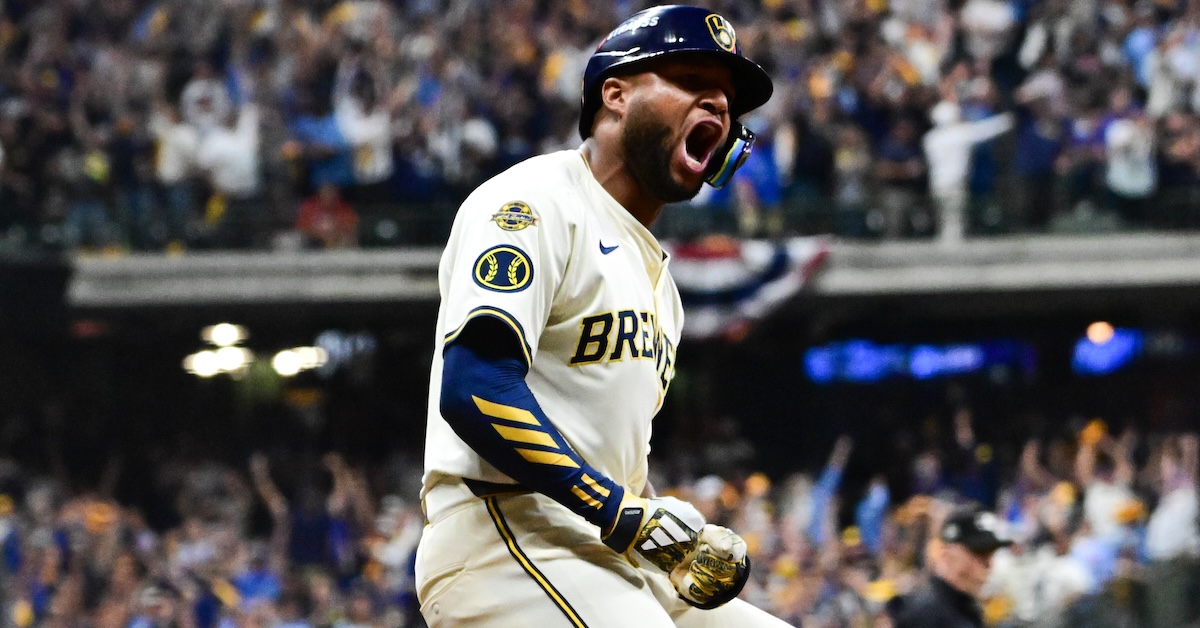
Some playoff games flow like beautiful novels. Two ace starters might have a duel – narratively satisfying. Maybe one pitcher is trying to hold off the opposing offense – who doesn’t like a siege story? Or, perhaps a superstar slugger is on an absolute tear – the great man theory of postseason baseball is alive and well. But Monday night, the Brewers and Cubs played a game that doesn’t fit any of those tropes. The Brewers bullpenned it. The Cubs answered with Shota Imanaga, who gave up 15 homers over his final nine regular season starts, on a short leash. The result? A disjointed game, which can best be captured by a disjointed recap.
Justin Turner, Leadoff Hitter
Justin Turner doesn’t hit leadoff. In his lengthy major league career, he’s racked up exactly 69 plate appearances in the leadoff spot, and only one in the past decade. He’s never hit leadoff in the playoffs. He was well below average at the plate this year – a 71 wRC+ and negative WAR. Naturally, he hit leadoff in the most important game of the Cubs season so far.
Why? Because Chicago manager Craig Counsell is no dummy. The Brewers started Aaron Ashby, who astute observers will note pitched in Saturday’s Game 1. Ashby was just in there as an opener, a southpaw option against Kyle Tucker and the rest of the Cubs lefty contingent. Counsell’s counter-move was straightforward. The other guy starts with a lefty reliever? He’ll start with a lefty-killing righty as more or less a pinch-hitter.
The move didn’t pan out right away; Turner flied out softly to open the game. But the rest of the Chicago lineup immediately went to work – single, walk, massive home run from Seiya Suzuki. It was 3-0 in a blink. Brewers manager Pat Murphy tried to stretch Ashby through a second inning even after the setback, but it just wasn’t happening. Ashby needed 43 pitches just to get through 10 hitters. That’s right, 10 – his last batter was Turner a second time, and Turner flared an easy single to left to chase Ashby. Counsell’s gambit worked to perfection; he somehow got two straight good platoon matchups for Turner in a series where high-octane righties abound.
Bombs Away
Imanaga ended the year in poor form. All those homers ballooned his September ERA to a nasty 6.51. His 6.68 FIP was somehow worse. He appeared against San Diego in the opening round of the playoffs, as a bulk innings option behind opener Andrew Kittredge, and gave up another blast en route to an uneven appearance (four innings, three strikeouts, two walks, one homer, two earned runs). But what was Counsell going to do, not start him?
The Brewers aren’t necessarily a home run-hitting team, but they’re open to the idea if invited. Imanaga’s arsenal is nothing if not inviting; after a pair of two-out singles, Andrew Vaughn turned on a belt-high sweeper and tucked it into the left field stands. It was 3-3 before we left the first inning, but it wouldn’t stay that way long. When the top of the order came up again in the third inning, Willson Contreras demolished a 91-mph fastball to put Milwaukee on top 4-3. Christian Yelich followed with a hard-hit single, and Counsell had seen enough. He went to the pen after 46 pitches and eight outs.
The Miz!
Jacob Misiorowski must eat sugary cereal for breakfast. I say that because I know how I act after I’ve had a bowl of Frosted Flakes, and he was exhibiting similar symptoms when Murphy turned to him to start the third inning. Think his fastball is fearsome at its usual 101 miles an hour? It’s downright terrifying when he ramps it up to 104, as he repeatedly did in his first inning of work.
Misiorowski is pretty much unhittable when he’s on. In the third, he tallied two weak groundouts, an overpowering strikeout – and a four-pitch walk. The second of the groundouts ended the inning, but also showed Misiorowski’s mindset. After fielding it cleanly, he ran to first base himself on a full sprint, perhaps a little too amped up to trust himself with an underhand toss. Then he flexed and roared, exulting in the playoff atmosphere.
The next inning brought more of the same – an amped-up Miz, two strikeouts, and a five-pitch walk where he got increasingly wild with each pitch. Oh yeah, the last of those batters was Michael Busch, in the game for Turner now that the leadoff spot came up with a righty on the mound. Again, though, you don’t so much beat Misiorowski when he’s this keyed up as wait him out. Nico Hoerner finally tallied a hit against him in the fifth, an opposite-field line drive, but there’s just no headway to be had when you’re trying to time up 103-mph fastballs and 95-mph sliders. The other three Cubs that inning managed a strikeout and two weak foul pops.
When Misiorowski finally departed at the start of the sixth, the Brewers led comfortably. The Cubs never looked particularly close to stringing anything together against him. I’m not sure how long he’ll be able to go in his next October appearance, or how many days of rest the Brewers will want to give him after 57 adrenaline-pumping pitches. I am confident that it’s going to be electric to watch, and that the Cubs are desperately hoping that they can somehow pull off a reverse sweep in this series without having to face any more 104-mph heaters. What a performance.
Action Jackson
Jackson Chourio missed almost the entirety of August with a hamstring strain. He looked less explosive upon his return, with less power and a less-adventurous approach to baserunning. Then he aggravated the injury in the first game of this series, putting his availability for Monday night in at least a bit of doubt. His first two at-bats produced two outs against the otherwise reeling Imanaga. His third time up? A towering, 419-foot homer to dead center that put the Brewers up 7-3 in the fourth inning.
Is Chourio back? It depends on how you’d define back. He’s still limping around at times, and it’s clear that the hamstring is bothering him. He bumped into Busch while rounding first base on a sixth-inning play and looked meaningfully slower as he continued to second (speed wasn’t an issue; Dansby Swanson had just sailed a throw into foul territory and there was little chance of a play at the base). But on the other hand, he’s blasting huge home runs and making nifty plays in foul territory, where he turned a foul ball into an out with a smooth, wall-scraping grab. I don’t think he’s at full strength, but he’s still a dangerous hitter, and even if his baserunning prowess is down, the Brewers will happily keep running him out there.
We’ve Got Ice
Caleb Durbin’s batting line in this game doesn’t look particularly impressive. He recorded no hits or walks. He hit into a double play. But in that fateful fourth inning, he saw a Daniel Palencia fastball headed in his general direction and heroically tossed his elbow at it. He caught the ball as flush as you can imagine, a direct hit on his arm, one of those “act like you’re getting out of the way but make sure to do the opposite” moves that grind-and-grit hitters have been using to accrue free bases since time immemorial.
It’s no accident that Durbin led the NL with 24 hit-by-pitches this year, only three off the major league lead. It’s more impressive than that, even; Durbin did it in 506 plate appearances, while leader Randy Arozarena needed 709 to get to 27 HBPs. You might not like this skill, but it’s real, and Durbin is the best in the majors at it right now.
Those free bases don’t always matter. This time, they did. Durbin’s spot in the lineup produced a baserunner instead of an out, which means that when Blake Perkins struck out immediately afterwards, there were two outs instead of three. That meant more pitches for Palencia, and also that Joey Ortiz’s line drive single turned the lineup over. You’ve already read what happened next – Chourio hit the ball to Wauwatosa (a wonderful suburb of Milwaukee, I promise) and gave the Brewers an insurmountable lead.
Lockdown
The Cubs offense might have gone quiet against Misiorowski, but there was still time left. They had 12 outs to play with after Milwaukee’s scariest arm departed, but they couldn’t do anything with them, because the guys behind the Miz are pretty good too. Chad Patrick struck out two Cubs in a perfect sixth. Jared Koenig followed with four straight outs, with huge assistance from Vaughn, who made a nifty play in foul territory behind first base to turn a would-be infield single into an out. All of the sudden, there were only five outs to play with, and Milwaukee hadn’t even gone to its late-inning options.
Even a one-run deficit feels almost insurmountable against the Brewers by the time the eighth inning rolls around. Trevor Megill and Abner Uribe were both spectacular this year, with matchingly gaudy ERAs and strikeout rates. Megill’s health was a question heading into Game 2; his first appearance back from a flexor strain was the regular season finale, and he didn’t appear in the first game of this series. His stuff looked slightly diminished – slower fastball, less-biting curve – but stuff has never really been Megill’s problem. The little stuff heatmaps on our player pages? They don’t get darker red than Megill’s. He looked plenty nasty even sitting down a tick, and he pounded the strike zone with plus command. Good luck, hitters.
No one knew how good Megill would be Monday. There was no such doubt about Uribe’s form. He started 2025 strong and got stronger as the year wore on, blowing lineups away with his trademark sinker/slider duo while halving his walk rate. The Cubs were just the latest victims as he struck out the side on 13 pitches, retiring each batter with a scintillating slider below the strike zone. The Brewers didn’t need a lockdown performance from their bullpen, but with a travel day Tuesday, there was no reason to leave anything to chance; Murphy put the hammer down consistently as soon as he had a lead.
Conclusions
Don’t let the early innings fool you; the Brewers absolutely torched the Cubs today. They were constantly on base, threatening to score in nearly every inning, and only let off the gas at the very end. How in the world are you going to score seven runs against their bullpen? This one wasn’t as close as the not-very-close scoreline. Even before Chourio put things away, the Cubs didn’t seem particularly likely to put anything together against Milwaukee’s endless parade of strong relievers.
I don’t know if a bullpen game is helpful to Milwaukee’s long-term chances, but it’s pretty hard to argue with its effectiveness on a single night. Toss an in-form Misiorowski into the mix, and there just isn’t much time to score runs before the door closes. Even with the nifty Turner-leadoff gambit, the Cubs ended up with a lot of tough matchups against a lot of excellent pitchers. I can imagine a seven-game series blunting the effectiveness of the strategy, and the Brewers will probably tinker with their roster ahead of a potential championship series, but this is a really strong run prevention plan. They might be able to make the entire series out of pitching from Freddy Peralta, a to-be-announced starter (Jose Quintana or Quinn Priester), and a dominant bullpen.
On Chicago’s side, there’s not a ton of strategy to discuss; the Cubs just need to score some runs, and also to give up fewer of them. There weren’t a ton of interesting situations where a different decision might have sent us down a different path, no spots where a pivotal play could have gone Chicago’s way. The Cubs seized on their big chance with a three-run first. It just wasn’t enough. That doesn’t mean that the rest of the series will go the same way – as they always say, momentum is tomorrow’s starting pitcher – but so far, the Brewers have been thoroughly outclassing the Cubs.
Ben is a writer at FanGraphs. He can be found on Bluesky @benclemens.
Jackson Chourio is the 12th player ever with 20+ total bases in his first five career playoff games, and the list of guys ahead of him is a bunch of names like Beltrán, Griffey, Edgar Martinez, Carlos Delgado, Nomar – he could’ve been even higher if he didn’t have to leave Saturday’s game early. Doing this at 20 and 21 years old is wild.
I felt like the baseball community at large was severely underestimating the Brew Crew. You don’t fluke your way into the season they had.
The Brewers are really good but their sequencing during the regular season was always unsustainable. They were repeatedly stringing together multi-hit rallies without hitting home runs. This is a super fun team but it’s vulnerable to pitchers who get even slightly more outs (and teams that can afford to go to the bullpen a lot when runners are on, some starters are worse pitching from the stretch).
The Brewers are still a 95 win team by BaseRuns which is still very good and marks them as a contender, and anyone that good who makes the playoffs has a decent chance. But they’re not one of those 100+ win super teams.
I didn’t think they were, but I feel like people aren’t even treating them like a 95-win team.
IDK, there are a whole bunch of teams that are around that talent level. It’s as even a field as we have seen. You can give them a boost over several others because they didn’t have to deal with the wild card round but it makes sense to me that people would pick them to lose in the NLCS, and if not then in the world series. They only seem to have one starter that they trust and they don’t hit a lot of homers.
Agreed. I feel people were treating them as Guardians of NL going into the playoffs. In The Athletic’s predictions, no staff picked them to win WS, and only 12% picked them to even make it; that’s really low for a team with the best record.
Pythagorean W-L: 99-63, 806 Runs, 634 Runs Allowed
I don’t see how that refutes the argument that their sequencing was unsustainable! They had the ninth-best Off (component of WAR) and wRC+ and the third most runs and the home stadium plays close to neutral.
Sort of surprised that Andruw isn’t on your list, since those are the vibes that I’m getting from early-career playoff Chourio.
Chourio Age 20-21 (1,162 PA | 6.9 WAR)
71 BB+ | 94 K+ | 110 AVG+ | 123 ISO+
????? Age 20-21 (1,174 PA | 7.1 WAR)
70 BB+ | 84 K+ | 111 AVG+ | 131 ISO+
????? = Henry Aaron
I’m not saying Chourio’s gonna hit 755 HR, or that he’ll keep up his literally very best of all time (min. 10 PA) postseason batting line of 556/579/1111 (366 wRC+), but dang if kid ain’t fun to watch.
You can find some pretty amazing players if you just look at players who played most of two seasons at 20 and 21. I set it to a minimum of 850 PAs and did 1951 to the present and only 55 players even came up. 18 of them are Hall of Famers, and Mike Trout, Bryce Harper, Juan Soto, and Andruw Jones are going to join them. Turns out if you debut at 20 either you’re one of the most talented baseball players of all time or you’re Tim Foli.
Jackson Chourio has a wRC+ that places him 24th of that group, just behind Jason Heyward and Justin Upton and just ahead of Terry Puhl and Rick Manning. It would obviously be way better if he hit like Heyward and Upton than Puhl and Manning, but he is also ahead of some really great hitters like Boog Powell, Ron Santo, Manny Machado, Gary Sheffield, and (this one is particularly fun) Robin Yount.
Personally I think the comp of Andruw Jones (mentioned above by Salty Scientist) as a hitter is pretty good (not as a defender), with Jason Heyward representing a bit of an alternative route. Manny Machado, Tony Conigliaro, Rougned Odor, and Ruben Sierra (again, not as defenders) also have some similarities. IMO the overall stat line isn’t anything like Gary Sheffield, Robin Yount, Ken Griffey, or Hank Aaron.
*William Contreras
Pushes glasses up his nose…
Obviously the result ended well for the Brewers so they would do it all over again if given the chance. But I have some real questions about a bullpen game when you have multiple rested starters and you don’t have a day off immediately. The Brewers must be nervous to start Chad Patrick and Quinn Priester. Patrick in particular they seem to have decided is a reliever which is interesting considering that he was pretty good in the regular season by all metrics.
The only explanation I can come up with is that the Brewers think that the Cubs are much weaker against left handed pitching and their plan is to start Quintana in Game 4 and they wanted to give him an extra day of rest. But Priester is listed as the starter for Game 3. And this would be a fairly dubious decision because Quintana is probably their weakest starter and the Cubs’ have no discernible split this year versus right and left handed pitchers.
I know the Brewers might get Woodruff back at some point this postseason but the if the Brewers are this reluctant to use their starters in the playoffs maybe they should get some with a bit more “stuff”? It’s tricky to win in the playoffs when you only trust Freddy Peralta.
Right, Game 2 as a bullpen game coming off your bye is not ideal. I’m fine with Miz as a MIRP right now because I think the uptick in his already great stuff helps mask his major control problems. I’m even okay with Ashby as an opener (though it didn’t work), but then why not just go with a real starter for some bulk work? There’s pretty solid evidence that bullpen overuse in the playoffs leads to decreased effectiveness, so they need to balance saving bullets for the next series with winning this one.
The manager took this roster to the best record in the league, perhaps y’all don’t know more than him?
If woodruff were healthy he would have pitched and personally I would have started Priester but Murphy easily gets the benefit of the doubt. I think he’s trying to keep the bullpen active after the week off and all the days off in this series.
Fangraphs would be really boring if we gave managers of good teams the benefit of the doubt.
eh, Rob Thomson took the Phillies to the second best record in the league, and I’m still pretty certain it was a bad idea for him to bunt yesterday. I don’t know the Brewers roster well enough to judge, but “never question the manager if they’re successful” seems like a bad metric.
I was also really perplexed by the idea of a team that had played one game in the last week throwing a bullpen game. I know SP depth is not the Brewers strength this year, but you would think a 97 win team has more than one guy they trust. This isn’t the 2024 Tigers staff.
I’m of the mind that there are really only about 45 pitchers in MLB you actually want to start in the playoffs, and probably 12 of which are injured at any given time. Freddy Peralta is one of those. Woodruff is likely still one of those, but he’s hurt (forever?).
Only a few teams have 3 playoff-worthy starters ready to go: The Dodgers and Phillies for sure, probably the Mariners, maybe the Yankees and Blue Jays depending on what you think of Schlittler / Yesavage and Gausman. The Padres would have except Michael King was limited. The Reds had two and Lodolo, which isn’t bad and either Lodolo or Burns could establish themselves next year.
But teams wind up starting 2.0 to 2.9 win starters in the playoffs all the time because the medicine is sometimes worse than the disease.
The funny thing is you could make an argument that Patrick and Priester could be those pitchers. Patrick was worth 2.5 wins in 116 innings as a starter, and Priester was worth 2.2 in 131 with a lower xERA and much much lower ERA than his FIP.
Brewers would obviously always start Peralta G1, but after that it made perfect sense with a bullpen game. There is an off day after G2, so you’ll have everyone (Except Mis, and they’ll want to stay away from Ashby) ready to go for G3. Doing the bullpen game early makes more sense than late, you do it while they are fresh and rested. Another off day after G4, should it go to five games, means they’ll have their late-inning guys for all three remaining games still should they need it.
The one downside of doing it is that they could have had Priester available for G5 on regular rest had he pitched G2. But as Murph says, “Win tonight”. Worry about the rest later.
Yup — the day of rest is the key to why they did this now. Once they decided that Peralta + Priester + bullpen was better than Peralta + Priester + Quintana, game 2 was the right time from a rest standpoint, both on the front and the back.
Might also have been some thought to the idea that Priester is a better bet in Wrigley than at home for them.
They do have a day off immediately.
Wait: They have a game on Saturday. Then they have a day off. Then they have a game on Monday. Then they have another day off? Are they going to actually play baseball?
You’re right, but also, this is not good. They’re doing it for the Dodgers – Phillies too.
Travel day to go 90 miles from Milwaukee to Chicago!
I know it is really to go from Philadelphia to LA which does not seem unreasonable, but then why give the NL the off day between game one and two?
Because otherwise there would have been no games yesterday between the AL and NL.
Well of course not, they don’t meet til the World Series! /s
Cardinals won a World Series without ever getting 5 innings from a starting pitcher in either the WS or the NLCS. It can be done. The extra days off make bullpen games or short starts much easier to manage.
With so many off days in in the NLDS, what is the upside of them having one pitcher go 5+innings?
Wisconsin pedant says “Wauwatosa is behind home plate at The Ueck”
Is a homer to CF out towards downtown and the lake? I only visited as a tourist but it’s a much more appealing park in person than on TV. I think. I took a sports bar shuttle bus and my senses were a little bit blunted…
The stadium is far enough west that it is effectively located in Wauwatosa and pretty far from the lake. Not as far away as you can get from the lake and still be in Milwaukee, but that’s a much better descriptor of where it is located than “near the lakefront.”
They built it out there because that’s where the old Milwaukee County Stadium was. I assume they put it out there because it was a great place to have a lot of parking. Doesn’t really do much for the ambiance IMO but if you’re going to do tailgating that’s pretty important.
Miller Park (or whatever it’s called now) was pretty neat when it opened and it’s always nice to not have rainouts but I don’t think it’s a particularly great stadium. And I haven’t been to many of the ones that people think are the best (Petco, PNC, Oracle, Coors).
I still think it’s a better place to see a game than Wrigley, though. Wrigley is super overrated.
Wrigley is fun because of the ambience, but it is not a comfortable stadium at all. Same with Fenway (though I thought it was better than Wrigley). I actually don’t have a ton of park experience. I think Miller and whatever they call Anaheim stadium were pretty equivalent from a game viewing lens. Chavez Ravine was the worst. And that’s all I’ve got.
Fenway is a physically uncomfortable experience and there’s a decent chance some of your view will have a pole in the middle of it. But so many seats are so close to the action, maybe because it’s such a small stadium. It’s definitely the most unique place to catch a game. Bostonians are a pretty rough bunch though, so it’s not a great place to go if you’re rooting for the visiting team.
It’s been 25 years since I last went to a game at Dodger Stadium but I remember loving it. But since then I’ve heard a lot of stories from non-Dodger fans who went to the game and saw some pretty serious aggression. They’re not the only fans with a reputation for aggression (Phillies, Yankees, Red Sox and Mets also do) but this sounded more serious.
Are we sure that ball didn’t really travel 24,000 miles and change?
Yeah, Tosa is northwest of the stadium, and Chourio’s home run headed southeast. Over the years (probably because Wauwatosa is a fun name to say), national broadcasters have often said that long home runs landed in Wauwatosa.
Yeah, but then I wouldn’t get to mention Tosa in an article and it’s so fun to say
was expecting pedantry on “wonderful suburb”
(I was only living in Milwaukee for one year so I may have missed out)
Given Milwaukee’s reputation as lacking power as a team, I did want to look up how many times this season they hit 3+ HR in a game as a team. They did so 15 times — two of which were in Colorado. But they also had done it to the Cubs twice before this season.
They were also one of two teams this season to win all of their games with 3+ HR; the other was KC, who did it one more time than the Brewers.
The Yankees led all of baseball with 42 such games; Pittsburgh was dead last with seven. Only two teams finished with a <.700 win pct in such games: the Rockies (6-6) and the Angels (16-10).
Kudo’s to Brewers. I get why Turner was inserted in lineup. Nit dyer about leadoff, but he had to bat in first 3 positions, and is double play candidate, so why not leadoff. The real question in my mind was starting Imagana who since August 1st performed so bad that he would have been placed in middle relief on any other team making the playoffs. What did the analytics team not see in his last 8 starts? Total miss…
People said the same thing about Boyd game 1. Who would you rather have start? Taillon would have been on short rest. Your options after that are Rea or Assad. Do either of those inspire confidence?
The fact of the matter is that no choice of starters for this series would make up for Horton being injured + Steele having elbow surgery + the failure to secure a playoff starter at the trade deadline.
Obviously they both entered the game after Milwaukee already had a comfortable lead, but interesting that ex-Brewers Aaron Civale and Colin Rea (CivalRea?) combined for 7.2 IP | 0 R | 7 H | 2 BB | 3 K.
All other Cubs pitchers have 8.1 IP | 16 R | 17 H | 5 BB | 10 K in the first two games.
It’s wild seeing Aaron Civale end up as a long reliever for the Cubs after being traded because he thought that role was going to be bad for him. I think he could find a major league deal somewhere but his Stuff+ grades are down and he didn’t have much to lose. It feels like he’s the kind of pitcher who might thrive overseas.