
Chicago White Sox Top 40 Prospects
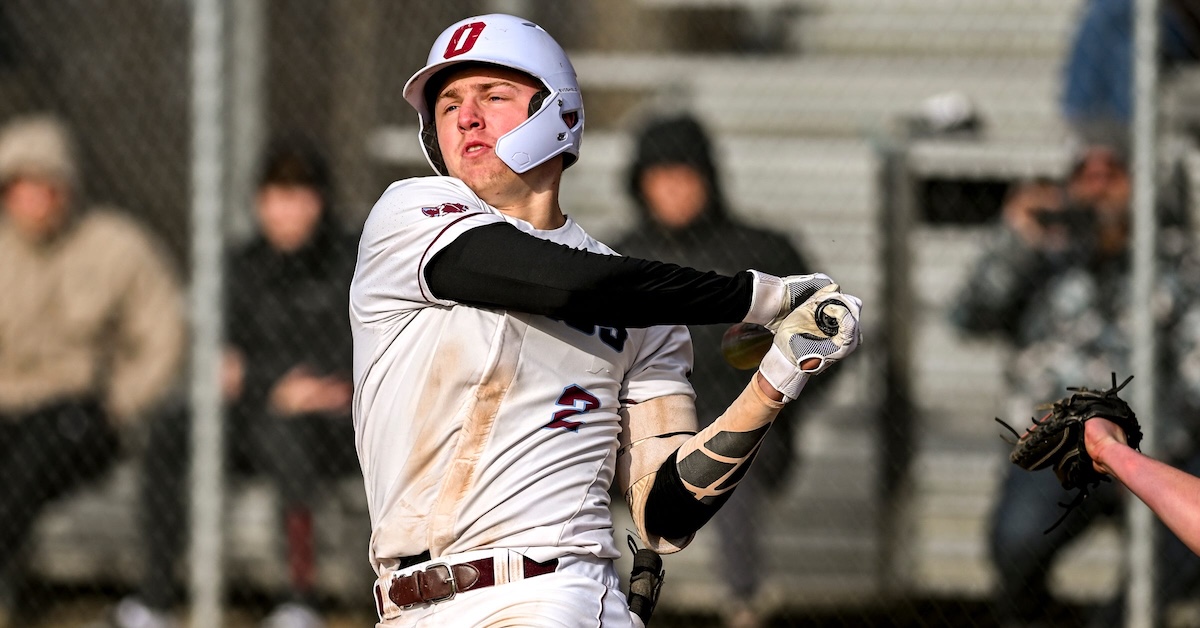
Below is an analysis of the prospects in the farm system of the Chicago White Sox. Scouting reports were compiled with information provided by industry sources as well as my own observations. This is the sixth year we’re delineating between two anticipated relief roles, the abbreviations for which you’ll see in the “position” column below: MIRP for multi-inning relief pitchers, and SIRP for single-inning relief pitchers. The ETAs listed generally correspond to the year a player has to be added to the 40-man roster to avoid being made eligible for the Rule 5 draft. Manual adjustments are made where they seem appropriate, but we use that as a rule of thumb.
A quick overview of what FV (Future Value) means can be found here. A much deeper overview can be found here.
All of the ranked prospects below also appear on The Board, a resource the site offers featuring sortable scouting information for every organization. It has more details (and updated TrackMan data from various sources) than this article and integrates every team’s list so readers can compare prospects across farm systems. It can be found here.
Editor’s Note: David Sandlin (no. 9) was added to this list after he was traded to the White Sox from the Red Sox along with Jordan Hicks. Gage Ziehl, who was formerly ranked 34th in Chicago’s system, was sent to Boston in the move; his report can now be found on The Board. Fernando Graterol (no. 24) and Sebastian Romero (no. 40) were added to this list after signing in January as part of the 2026 international amateur class. Truman Pauley (no. 38) was added to this list after he was traded to the White Sox from the Mets as part of the return for Luis Robert Jr.
| Rk | Name | Age | Highest Level | Position | ETA | FV |
|---|---|---|---|---|---|---|
| 1 | Caleb Bonemer | 20.3 | A+ | 3B | 2029 | 50 |
| 2 | Noah Schultz | 22.5 | AAA | SP | 2026 | 50 |
| 3 | Hagen Smith | 22.5 | AA | SP | 2027 | 50 |
| 4 | Christian Oppor | 21.5 | A+ | SP | 2027 | 50 |
| 5 | Braden Montgomery | 22.8 | AA | RF | 2027 | 50 |
| 6 | Tanner McDougal | 22.9 | AA | SP | 2026 | 50 |
| 7 | Billy Carlson | 19.5 | R | SS | 2030 | 45+ |
| 8 | Jedixson Paez | 22.1 | A+ | SP | 2026 | 45 |
| 9 | David Sandlin | 25.0 | AAA | MIRP | 2026 | 45 |
| 10 | Jaden Fauske | 19.2 | R | LF | 2030 | 40+ |
| 11 | Sam Antonacci | 23.0 | AA | 2B | 2026 | 40+ |
| 12 | Aldrin Batista | 22.8 | A+ | SP | 2027 | 40+ |
| 13 | Kyle Lodise | 22.3 | A+ | SS | 2029 | 40 |
| 14 | Mason Adams | 26.0 | AAA | SP | 2027 | 40 |
| 15 | Ky Bush | 26.2 | MLB | SP | 2026 | 40 |
| 16 | Juan Carela | 24.2 | AA | MIRP | 2027 | 40 |
| 17 | William Bergolla Jr. | 21.3 | AA | SS | 2027 | 40 |
| 18 | Jeral Perez | 21.3 | A+ | 2B | 2028 | 40 |
| 19 | Tanner Murray | 26.4 | AAA | UTIL | 2026 | 40 |
| 20 | Zach Franklin | 27.3 | AAA | SIRP | 2026 | 40 |
| 21 | Duncan Davitt | 26.4 | AAA | SP | 2026 | 40 |
| 22 | Tyler Schweitzer | 25.4 | AAA | MIRP | 2026 | 40 |
| 23 | Samuel Zavala | 21.6 | A+ | CF | 2028 | 40 |
| 24 | Fernando Graterol | 17.3 | R | C | 2032 | 40 |
| 25 | Blake Larson | 20.0 | R | SP | 2029 | 35+ |
| 26 | Alexander Alberto | 24.3 | A+ | SIRP | 2027 | 35+ |
| 27 | George Wolkow | 20.1 | A | RF | 2028 | 35+ |
| 28 | Landon Hodge | 19.0 | R | C | 2029 | 35+ |
| 29 | Mathias LaCombe | 23.7 | A | SIRP | 2028 | 35+ |
| 30 | Jairo Iriarte | 24.2 | MLB | SIRP | 2026 | 35+ |
| 31 | Javier Mogollon | 20.3 | A | 2B | 2028 | 35+ |
| 32 | Riley Gowens | 26.3 | AA | MIRP | 2027 | 35+ |
| 33 | Ben Peoples | 24.8 | AAA | SIRP | 2026 | 35+ |
| 34 | Tyler Davis | 27.4 | AAA | SIRP | 2026 | 35+ |
| 35 | Jacob Gonzalez | 23.7 | AAA | UTIL | 2026 | 35+ |
| 36 | Shane Murphy | 25.1 | AAA | MIRP | 2026 | 35+ |
| 37 | Grant Umberger | 24.3 | A+ | SP | 2027 | 35+ |
| 38 | Truman Pauley | 22.1 | A | MIRP | 2029 | 35+ |
| 39 | Carson Jacobs | 24.5 | AA | SIRP | 2027 | 35+ |
| 40 | Sebastian Romero | 17.4 | R | LF | 2032 | 35+ |
Other Prospects of Note
Grouped by type and listed in order of preference within each category.
Injuries Have Interfered
Alexander Albertus, 3B
Casey Saucke, OF
Jarold Rosado, RHP
Wilfred Veras, OF
Nick McLain, OF
Albertus came to the Sox alongside Jeral Perez and Miguel Vargas in mid-2024 when they shipped out Erick Fedde, Tommy Pham and Michael Kopech in a three-team trade, but he has been limited to eight rehab games on the complex since the swap due to recurring issues from a left tibia fracture. Saucke got an aggressive draft year assignment to High-A after getting nearly $165,000 over his fourth round slot value, and showed some warts (below-average in-zone contact, excessive chase) but not much of the power that will need to drive his corner outfield profile before TJ wiped out his 2025 season. Acquired at the 2024 deadline straight up for Paul DeJong, Rosado looked like a future seventh inning guy upon arrival. But he showed up to camp underweight with backed up stuff and never got on track in his 40-man platform year. There are other reasons Veras’ above-average raw juice hasn’t actualized than just repeated hamstring strains, but they certainly haven’t help. McLain put up big numbers at ASU, but looks like a bit of ‘tweener and has hit tool concerns. The bigger problem is back issues limiting him to 13 pro games since the Sox popped him in the third round of the 2024 draft.
Relievers Who Have a Little Something
Pierce George, RHP
Eric Adler, RHP
Seth Keener, RHP
Luis Reyes, RHP
Gabe Davis, RHP
Phil Fox, RHP
Tommy Vail, RHP
Lucas Gordon, LHP
Jake Palisch, LHP
Nick Altermatt, RHP
George is 6-foot-6, 240 pounds, built like a brick wall, and touched 100 mph last year, but it plays down due to a stiff lower half that limits his command and extension. Adler entered 2025 with stuff good enough for 40-man protection consideration, but his fringy control backed up and he walked 31 in 36.2 innings with a demotion to Double-A thrown in. Neither Wake Forest nor the White Sox have found the magic bullet fastball tweak to allow Keener’s promising secondaries to drive a potential relief future, and the former third-round pick has a 6.01 ERA in pro ball. Reyes was a $700,000 signee in 2023 under the previous international staff, which struggled to produce much pitching from the DR but saw the right-hander a lot against stateside competition as an amateur. He made big strides in his strike-throwing to slide below a 10% walk rate in 87 Low-A innings as a 19-year-old, but Reyes’ long arm action and hittable fastball give him a relief look. The Sox just gave Davis $50,000 over slot in the fifth round for premium raw ingredients — he touched 100 mph and has a lanky 6-foot-9 build and a potentially plus slider — with an emphasis on raw, given his 5.61 ERA over three years in Stillwater and myriad delivery issues. Vail and Fox are both relievers with low-90s four-seamers that carry special ingredients. Vail is a lefty with 20 inches of induced vertical break, and Fox is a 5-foot-9 righty with a low slot that gets an uphill angle. Gordon sits in the low 90s and drops a good changeup out of funky high slot that he gets to with a peculiar-looking delivery. Palisch is a tightly-wound undrafted lefty who got a cup of coffee last year in a testament to the value of pumping strikes. Altermatt is a 26-year-old pure reliever with a choppy delivery, but there’s something funky about his 92-95 mph heater; A-ball hitters have no answer for it.
Utility Profiles
Matthew Boughton, INF
Ben Cowles, SS
Ryan Burrowes, INF
Dru Baker, OF
Rikuu Nishida, 2B/LF
Boughton was an 11th round prep pick this past July who turned 20 just after draft day. He played in a small parochial conference with light competition, and his swing could be a slow-burn development project, but he’s a champion long jumper with enough athleticism to dream on a six-position reserve future. Cowles was half of the Cubs’ return for flipping Mark Leiter Jr. to the Yankees, and was claimed off waivers after being DFA’d in September. He can cover shortstop and has some thump, but hit tool issues have re-emerged in a big way since a wrist fracture in his breakout 2024 season. Burrowes’ graceful athleticism doesn’t translate to his hit tool, where his swing still underperforms against in-zone velocity despite a couple of tweaks to simplify his operation. He’s made real plate discipline gains, but a super-utility future is clouded by shaky glovework on the dirt. Acquired last May for Matt Thaiss as the Rays were shuffling through backup catchers, Baker has fifth outfielder versatility but lacks an average offensive tool. Nishida is a delightful pint-sized slash-and-dash menace to minor league defenses. He has bottom-of-the-scale power and 2B/LF utility.
Complex Dudes
Christian Gonzalez, OF
Yobal Rodriguez, RHP
Marcelo Alcala, OF
Alejandro Cruz, IF
Frank Mieses, OF
Osniel Castillo, OF
Diego Perez, RHP
Alexander Martinez, RHP
Gonzalez is a stout contact maven with precocious plate discipline who hit his way to a midseason stateside promotion to the ACL, but he has below-average power and limited projection. Rodriguez is a teenaged Cuban right-hander who was a late addition to the last international class under a new staff. He topped out at 93 mph this past year, but has some projection and flashed a plus changeup. Alcala’s hit tool issues (37.5 K% in the ACL) are very out in the open, but the 19-year-old Venezuelan has compelling speed and raw power potential. Cruz got $2 million in last year’s class as a projection bet that added strength would develop his offensive tools to match his present defensive acumen. That hasn’t come to pass yet, but the soon-to-be 19-year-old Cuban showed good zone discipline in his pro debut. Mieses has his own hit tool questions, but he’s an impressive athlete in center and has been a precocious performer (.285/.410/.415 as a 17-year-old in the DSL) thus far. Castillo is a bat-to-ball merchant who slashed .375/.444/.542 in a tiny DSL sample. Perez is small and slight but has a big 2,500 rpm curveball that was dominant out of his high arm slot. Martinez is a large human (6-foot-5, 210 pounds) who flashed 96-97 mph at instructs.
System Overview
Major league organizations, even ones with more modest budgets and international reach, are massively complex organisms that pull in talent in multitudinous ways. But boy howdy, do these guys love their Area Codes team. For the annual scouting showcase, the White Sox are responsible for scouring the Midwest to build out a roster of the best prep prospects from what is essentially their backyard, and when draft day rolls around, they still feel every ounce of ownership over the territory that such a term implies. The Midwest is not the nation’s premium talent hotbed, but with Noah Schultz, Caleb Bonemer and Christian Oppor all taking big steps forward from some initially risky-looking draft day profiles, this list offers some testament to the value of finding something to try to dominate and committing to it.
Another read is that the White Sox have racked up three consecutive 100-loss seasons with a correspondingly spiraling big league payroll, which has no immediate signs of rebounding. In response, their player acquisition process has made a hard pivot toward taking big shots on high-ceiling athletes, in lieu of ever expecting to be able to sign top talent in free agency. With the major league team not good enough to think about the short-term, more picks are aimed toward addressing their long-term plight. Tanner McDougal was selected out of a Las Vegas-area high school in 2021, the same year Colson Montgomery broke a streak of eight straight White Sox first round picks spent on college players. Under new leadership, the international staff is pursuing seven-figure agreements with Dominican teenagers in future classes, this from a franchise that previously used its pool money on advanced and experienced Cuban players. The recent signing of Japanese slugger Munetaka Murakami, pouncing when his market fell into Chicago’s price range because of hit tool concerns, fits within the methodology of an organization that feels like it must accept risk to unlock access to elite tools.
In this vein, an area where the Sox are already by nature scouting heavily has served to become their most popular route to taking shots on prep talent. The Jaden Fauske pick seems like it fits into the pattern of Midwestern prep stars like Bonemer and George Wolkow, with Blake Larson still living in Iowa when he emerged as target, and there’s even the well-known story that the Sox offered six figures to Chicago Bears tight end Cole Kmet when he was still at nearby St. Rita High School. But their most recent draft could also make Fauske look a bit like the outlier from a singular focus on up-the-middle teenage athletes like Billy Carlson, Landon Hodge and Matthew Boughton.
Of course, this is a rebuilding team, so a lot of the prospect population here is still just the wages of fencing established big leaguers. And since the deals that flipped Dylan Cease, the trio of Erick Fedde, Michael Kopech and Tommy Pham, and finally Garrett Crochet, were all spread pretty evenly across the buildout of a new front office group, there’s a general idea that you can slowly see baseball ops getting better, and operating off better information. Crochet was also just the most valuable piece of the three, but all four players in the prospect package for him have a pretty good chance of holding down major league roles, while Drew Thorpe’s recovery from TJ represents the best hope of finding value from this group’s first blockbuster.
As with the farm systems of previous White Sox rebuilds, this is quite a top-heavy group that could see most of its 50-FV players graduate in the coming season, downgrading it to middling before the big league product has returned to playoff contention. Unlike previous iterations, however, when the farm system’s high points were largely enabled by trading frontline starters on team-friendly contracts in their prime, or pushing all of their international resources towards a single player, the manner in which some of the team’s best talent has emerged provides a road map for how they might build a strong system again.
They will probably shop local.
Thankfully, we have the top pick to replenish the system, since short of Robert, there’s no one worth trading.
They get to see a bunch of 50s by the end of 2026. That’s useful. Plus Murakami and whatever they get for Robert
Guys I am higher on:
Braden Montgomery: I know I am totally out on a limb with this but to me he is a 60 fv and a top 25 prospect, the tools are that loud and he’s performed well enough.
Caleb Bonemer (I get that on the surface his tools aren’t crazy loud, but a guy his age performing like he did in full season ball is impressive)
Sam Antonacci: The performance speaks for itself
Guys I am lower on:
Tanner McDougal: He still screams reliever to me, and not the special 2 + fwar type but more the solid 1 fWAR type.
Mason Adams: I think he is no more than org depth and even as a 6th/7th starter is stretched, the stuff just isn’t good enough, and he lacks plus command to make up for it.
I like Tanner McDougal and think he’s got the right grade.
I also think the guys you like more than this are graded right, although I’m definitely rooting for Antonacci. And Bergolla and Wolkow. I cannot tell you how fun a team would be that had Chase Meidroth, Bergolla, and Antonacci in the lineup, and then if it also had Wolkow?
I think I am slightly higher on Zavala–decent platoon outfielders who can play a 55 in CF are useful, and that’s what he looks like to me. Same with Lodise, who I think has the look of a competent utility infielder. I definitely wouldn’t hang anything higher than a 45 on either one, though, and maybe not even that.
Updated
Mil: 253.5
LAD: 246
CHW: 190.5
AZ: 171
Cin: 170
I looked it up and last year the 5th farm was done on January 7th, so as of now we are considerably above pace. Hopefully a vast majority can be done before the season starts
Probably helps spreading the workload to 3 people.
Man I had Christian Oppor as a second rounder back in 2023 and even I’m surprised to see him with an FV50. I thought I was the high person on him!
The stuff is great but he’s absolutely on the starter / reliever line. If he reaches his potential then Aaron Ashby or Matt Strahm seem like good comps as a reliever, or a young Andrew Heaney or Robbie Ray as a starter, before Ray went to Toronto and reinvented himself. That’s more like what happens if it all works out, and the risks for a pitcher in High-A are huge. I’d put him behind Bishop Letson and Christian Zazueta, although maybe with the same grade.
Hagen Smith seems even more likely to be a reliever. I would definitely not give him a 50. He’s probably going to be a reliever with nasty, nasty stuff. I don’t know whether we’re talking about Tanner Scott in 2021-2022 or Tanner Scott in 2023-2024, but if unless you’ve thought “maybe Tanner Scott would do well as a starter” at some point in the last five years it’s hard to buy that Hagen Smith is going to be a starter either. As a starter, he’d look more like DL Hall or Ken Waldichuk. I think I’d put him behind Adam Serwinowski, but maybe the same grade.
The White Sox have a track record of getting hard throwing lefties on that line to start but (1) the player dev / coaching team is different than it was in the past, which is mostly good and (2) these grades are independent of an organization. I
I like McDougal and Schultz though. Schultz was hurt this year and McDougal’s got the right pitch mix to succeed even though his command is just okay.
Jim Callis was saying how good Hagen Smith looked in the AFL, and he seemed pretty confident he can stick as a starter. Hopefully he’s right.
I’m looking at his stats right now. The good news is that hitters couldn’t buy a hit when he was on the mound. 2.57 ERA, 0.93 WHIP, .143 AVG. A lot of this is that he struck out 21 batters in 14 innings, that’s something like a K/9 of 13.5 right? That’s incredible, and in line with what he was doing at AA except he had better results on contact.
The medium news is that he walked six guys in 14 innings. That’s not great, but Walking six guys per 14 innings isn’t an outlier ether. Jose Soriano was a functional pitcher this year walking more than that; Cease and Kikuchi had a little less.
The bad news is that he hit 2 batters. In 14 innings! That’s awful. Unless a pitcher has the yips, I don’t believe any pitcher is Lucas Sims-level dangerous to batters unless proven for sure otherwise. If you average that out with his 2025 numbers (which brings it down, by a lot) he hit 9 batters in 90 innings. And there are pitchers who have succeeded while hitting batters at that rate, like Charlie Morton, and Morton’s walk rates were in the 3.5 per 9 range those years. But pretty much everyone in that area is a reliever.
So…I guess he’s got a shot?
Is there a list of the White Sox’s–or anyone’s–Area Codes teams? I have heard the Brewers also like signing guys in the 11th-20th rounds from their Area Codes teams, and it wouldn’t surprise me if there were others.
James… Very pedantic of me to mention this about a football player you named in passing, but I feel compelled to point out that Cole Kmet went to St. Viator High School, not St. Rita!
I’d be forgiving except James is of course a native South Sider himself… don’t get Arlington Heights’ St. Viator & the Southwest Side’s St. Rite aren’t quite the same scene!
For a team that’s drafted 15th, 5th, and 10th in the last three drafts, and traded Cease, Bummer, Crochet, and Fedde/Kopech in the last two years this farm system is disappointing. I know Thorpe, Teel, and Meidroth are all on the MLB roster, but Thrope blew out and I have major concerns about Meidroth as a regular. Complaining about six 50 FV (seven if you wanna throw Carlson in there) probably isn’t becoming, but considering how bad they’ve been the last four years and that they’ve traded away good to great MLB pitching at the same time, it’s a very underwhelming system imo.
They really could use someone popping beyond 50 FV — Braden Montgomery is the most likely but we’ll see if Carlson shows something at the plate — and hopefully they’ll nail 1/1 this year. They’ve historically done very well developing pitching (a CV of Sale, Cease, Rodon, and Crochet is pretty amazing) so maybe Smith or Schultz turn into all-stars, but both have huge red flags right now.
The international signings remain among the bottom fifth of MLB teams, if not worse (Javier Mogollon at a 35+ FV is the highest rated international player signed by the Sox here) though it seems like they might be expanding their international scouting beyond the latest and greatest to leave Cuba. Progress I guess.
For all the talk of a new FO and scouting outlook and whatever else this org tries to sell; they’re still owned by Jerry Reinsdorf and the teams he owns (I’m including the Bulls here) are lazy, uncreative, and penny wise but pound foolish. The White Sox have been behind the curve for decades at this point, didn’t take advantage of their last rebuild to its fullest, and I have no reason to believe anything has changed here. One can only hope Justin Ishbia won’t run the team like his brother runs his NBA team…
They are definitely short on international signees. They fired their international director and all scouts and apparently have some high priced agreements in the ’29 and ’30 classes. They also are building a new Dominican academy.
As for the draft, Bonemer is apparently their first non-first-round top 100 position player prospect since Marcus Semien, who snuck into one BA list.
Jacob Gonzalez was a pretty big whiff, am both a bit shocked at how bad his production as a pro has been and also amazed that he’s considered a 40 run, watching him at Ole Miss felt like he had concrete shoes on. Somehow doesn’t impede his defense too much, but any little bit of edge case value like baserunning can help soften the blow of a bat that’s more bad than average.
It feels like Montgomery is either going to be a 60 or a 45 this time next year. He’s simply not going to hit if he’s like this, but if he does he’ll be a classic TTO right fielder.
I’ve seen many of these guys play and most are vastly overrated- lots of tools but few real impact players.
Not mentioned here, but Bob Prevost really popped this year. I had a 40+ FV on him, but seeing him turn into an 80 was a pleasure.
Given his biggest-league debut was in May, he’s no longer rookie-eligible. Look for him on the Graduates list.
The Pope plays for the Sox?
I think the top of this list is a little stuffed. Not sure I go 50 on any of the pitchers,
The good news is Roch is coming
Roch is almost surely the pick, but as a fan of him, it would be nice for someone else to somehow go #1 so Roch isn’t playing for that org
Things can change in between now and then, but if the draft was held today he would likely be the consensus #1. We haven’t seen a college shortstop prospect this good since Dansby Swanson and Alex Bregman back in 2015. College hitters who are locks to stick at shortstop and who are slashing .353 / .480 / .710 don’t come along that often.
Here’s the reason he might not go #1: The tools are “good” with at least four 60s (hit, power, arm, field) but aside from field he might not have a tool above that. And for that, the White Sox might see if someone else in the top 5 of their board will cut a deal. There are a whole bunch of guys just after him who also have a lot of 60s on their scouting reports.
Still, he’s my pick. This is a guy where if it clicks he looks a lot like Carlos Correa / Tulo level stuff, guys who were hurt a lot and still put up 25-30 fWAR between their age 23 and age 29 seasons. If Cholowsky is healthy, watch out.
You can make a case we haven’t seen a college SS this good further back than bregman/dansby. Dansby didn’t completely breakout offensively till his junior year and even then he didn’t hit as well as Roch, though it is obviously fair to point out the gap in pitching for the sec vs big ten.
Better than the guys who went #1 and #3 in the draft?! I don’t know that we’re going to find another shortstop that far back. High school shortstops who are Top 20 picks out of high school and locks to stick there usually sign and never make it to college. Tulo went #7; everyone thought the Mariners would take him at #3, but he was regarded as a “safe pick”. Before that, we have…Jeff King* in 1986? Barry Larkin, who went 4th in 1985?
———
*King wasn’t terrible, but I bet the Pirates wish they had that one back, the next three picks were Greg Swindell, Matt Williams, and Kevin Brown.
Yes better than the guys that went 1/3. Barring a step back Roch will certainly get the biggest bonus in the draft, nobody even touches him (and I like lebron to be clear). The raw tools (power) exceed both bregman/swanson.
SEC pitching when Bregman and Dansby were there vs whatever UCLA is facing right now is vastly different. I know you pointed it out but it’s a chasm. Go to a weekend series vs Ohio State for example.