
Houston Signs Tatsuya Imai… At Least for Now
Yesterday, the New York Post’s Jon Heyman reported that Japanese pitcher Tatsuya Imai has agreed to a three-year, $54 million pact with the Houston Astros (ESPN’s Jesse Rogers had the length). The deal includes opt outs after each of the first two years, essentially a “prove it” contract that gives Imai the opportunity to re-enter free agency should he quickly demonstrate that he’s better than the open market seemed to think he was during this posting period. Speaking of the posting system, note that the Astros will also pay Imai’s Japanese club, the Seibu Lions, just shy of $10 million under the current MLB/NPB posting agreement’s formula (20% of the contract’s first $25 million, 17.5% of the next $25 million, and 15% of anything over $50 million). The deal also features $9 million in escalator clauses that kick in as Imai approaches and crosses the 100-inning threshold during his first two seasons, bringing Houston’s total potential expenditure to roughly $73 million.
This deal is shorter and less lucrative than was generally expected by pundits (including yours truly) when it became known that Imai would be posted; Ben Clemens forecast a five-year, $100 million deal, while our median crowdsource estimate was for four years and $64 million before the posting fee. Imai is 27-years-old, he’s coming off of his best pro season after multiple consecutive years of improved strike-throwing, and he checks several of the visual scouting and data analytics boxes you want from a mid-rotation starter. What could be the reason(s) for the discrepancy between our collective expectations and Imai’s actual payday, and where does he fit into Houston’s rotation?
Let’s revisit the background on Imai. He was the Seibu Lions’ 2016 first round pick out of a high school in Utsunomiya City, a metro roughly the size of Tucson that’s about 80 miles north of Tokyo. He spent a year in the minors and then hopped right into the Lions rotation as a 20-year-old in 2018. Throughout his early and mid-20s, Imai was a walk-prone (but effective) starter. He dealt with multiple ailments in 2022 (including a right adductor injury), then took a step forward as a strike-thrower and an innings-eater in each of the next three seasons, becoming one of NPB’s best arms. Across the 2022-25 seasons, Imai halved his walk rate (from the 14% area to 7%), expanded his repertoire, and improved his fastball velocity even as his innings count grew to north of 160 frames. He’s had four consecutive seasons with an ERA under 2.50 (even while he was wild), and in 2025, he posted a 1.92 ERA and 2.01 FIP.
And Imai might not be done improving. He has a loose, whippy sort of athleticism that helps him generate big, deceptive arm speed (his arm stroke actually tends to be a little late), and while he’s clearly a gifted lower-body athlete, he doesn’t always look like he’s getting down the mound as far as he’s probably capable of. He may be a tweak away from having better stuff than his already solid five-pitch mix. A nasty mid-80s slider with sharp two-planed movement performed like a plus pitch in 2025 and is the best of those offerings. Imai throws both a splitter and a changeup (the splitter is the newer of the two, and its usage backed up late in 2025) with less consistent execution than his fastball and slider. On rare occasions, he’ll dial down the velo to shape his breaker to play more like a curveball.
Some of these pitches (especially the changeup) are discernible early in their flight, which is another thing that might improve with a change to Imai’s place on the rubber or to his stride direction, both of which are common year-to-year alterations for big league pitchers to make.
You can quibble with Imai’s relative lack of size (he’s listed at 5-foot-11) or aspects of his delivery, but he certainly looks like a big league starter from a raw stuff and athleticism standpoint, he has demonstrated MLB starter-quality stamina and strike-throwing for the last several seasons, and he could conceivably take another step forward if even one aspect of his delivery can be polished in his late 20s. I had him graded as a good team’s fourth starter at the start of the offseason. From a pure value matching standpoint, that assumed Imai would command something in the $20-$25 million AAV range, probably (I thought) on a longer-term deal because of his age. While the combined value of the entire potential contract and posting fee ($73 million over three years) is in that range, the deal’s relatively short length perhaps signals that teams were more apprehensive about Imai’s matriculation, while the opt out clauses point to a gap between Imai and Co.’s self-assessment and that of his suitors, with Imai and Boras Corp clearly thinking there’s a chance he out-pitches the deal right away and can make more on a longer contract next offseason.
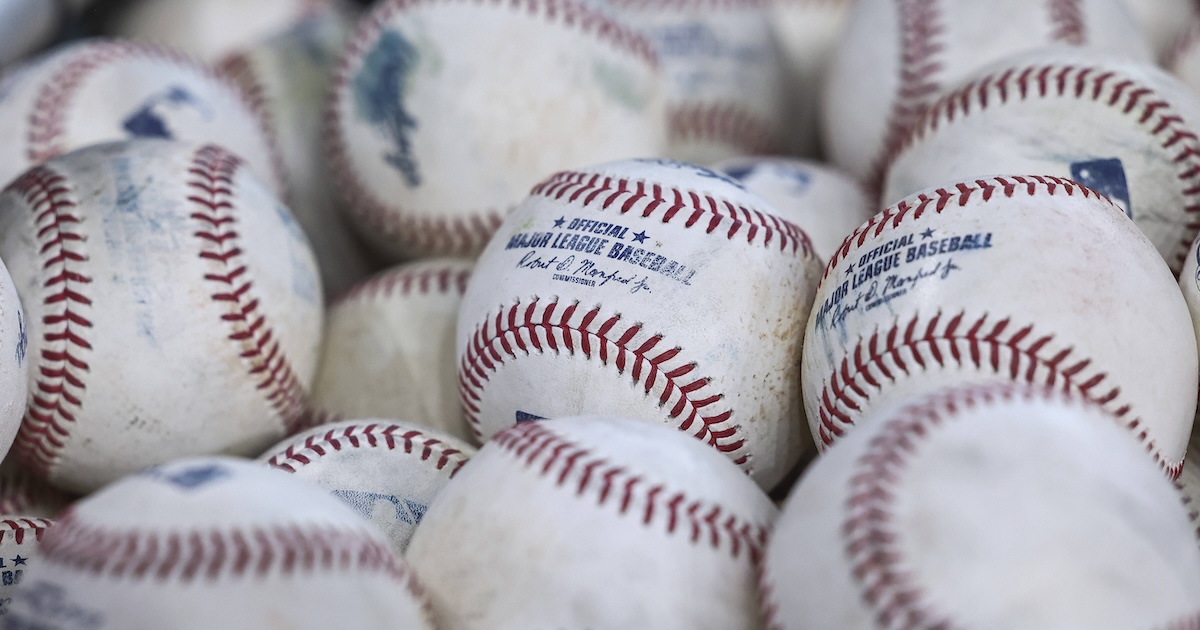
What might be causing that gap? For one, whenever we’re talking about a Japanese pitcher who relies heavily on his breaking ball to generate whiffs, there’s an added element of risk and variability because the MLB and NPB baseballs are slightly different. Subtle changes to the seam height or the tackiness of the baseball might impact the quality of a pitcher’s stuff, or at least force them to make an adjustment, and it’s generally assumed this applies most to breaking pitches. Imai’s slider is his most destructive offering (a nearly elite 47% miss rate with a 41% chase rate), and if you think that there’s risk of that pitch playing closer to average with an MLB ball, I could see being worried that he won’t strike out a batter per inning over here like he was in Japan.
Perhaps most importantly, we can question whether Imai’s command has truly improved over the last few years, or whether he’s at risk of being walk-prone on our shores. The chase rate in NPB across the entire league is 32%, compared to 28% in MLB. Hitters over there are simply more likely to bail out pitchers who aren’t operating in the strike zone, and when you elevate your fastball with rare velocity (for NPB, anyway) the way Imai does, it’s possible to overperform as a strike-thrower relative to your true talent. Imai’s arm stroke is often a little late relative to when his front foot lands, which is frequently a trait of pitchers whose fastballs sail on them. That said, I’m personally optimistic about Imai’s athleticism and fluidity, and think this is something that can be tweaked if it turns out to be a problem.
Finally, there’s the question of the cadence of an MLB pitcher’s workload (once every five days) versus what Japanese pitchers experience (once a week), though this applies to every pitcher coming over and not just Imai. Whether or not the Astros plan to have a bigger rotation to accommodate this and allow Imai to continue pitching once a week, or how he’ll perform if asked to work more frequently, we just won’t know until the season starts.
The Astros have now added two prominent new faces to their stable of starters in Imai and trade acquisition Mike Burrows, three if you count KBO kickback arm Ryan Weiss, who James Fegan and I had evaluated more as a swingman. With Hunter Brown and Cristian Javier as the anchors, Imai currently needs to perform like a no. 3/4 starter for Houston’s rotation to feel like a contender’s group. That’s on the high end of what I think is feasible for him, and if Imai ends up pitching that well (like he’s a 3-4 WAR starter rather than the 2-2.5 WAR guy I think he is), then he’ll only be a one-year solution in Houston, as performing to that level will give him incentive to opt out and re-enter the market a year from now.
Eric Longenhagen is from Catasauqua, PA and currently lives in Tempe, AZ. He spent four years working for the Phillies Triple-A affiliate, two with Baseball Info Solutions and two contributing to prospect coverage at ESPN.com. Previous work can also be found at Sports On Earth, CrashburnAlley and Prospect Insider.
I’m guessing he took a shorter opt out-laden deal because he did not get the level of contract he wanted from one of the teams he preferred, probably those within a stone’s throw of the western ocean.
I think it’s pretty clear he did not get the long-term deal he wanted or else he would have taken that. Earlier in the offseason Boras was comparing him to Yoshinobu Yamamoto, and I think that probably scared off teams from even bothering. He’s older than Yamamoto but an equivalent deal at Yamomoto’s age would be something like $250M. That is richer than even the most optimistic team would have wanted to pay. I don’t think I even saw a single prediction within $70M of that.
I don’t know if he had a preferred team, but the Astros are a great landing spot for him. They have a decent track record of working with pitchers so they can help him adjust to MLB pretty well, they’ve got all the pieces to play meaningful games in September and make a postseason run, and they had a huge glaring hole in the rotation so they can’t demote him if things don’t work out. If he’s going to a team on a prove-it deal this is an awfully good place to be for that.