
Luke Weaver Transfers At Grand Central, Heads To Queens
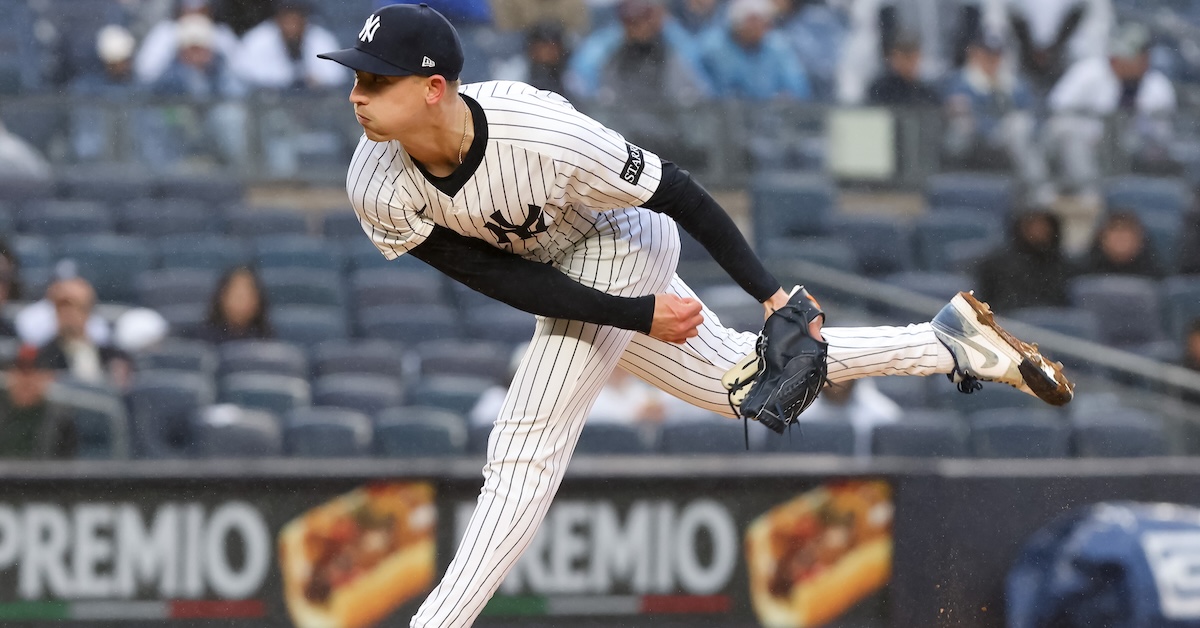
Is Luke Weaver good? I’m asking for a friend of mine who will remain anonymous, initials D.S. It’s a matter of some urgency, he told me. Perhaps – and I, of course, wouldn’t want to speculate – it might be related to a news item first reported by Will Sammon of The Athletic. Weaver and the New York Mets are in agreement on a two-year, $22 million deal that continues to overhaul their bullpen.
Eleven million a year for a quality reliever is a solid rate. Eleven million for a guy who is only a season removed from nearly carrying the Yankees to a World Series title? A screaming buy. Thus, the question in evaluating Weaver’s free agency is simple: Is he the guy who dominated in 2024, or the one whom Aaron Boone launched down the bullpen hierarchy and eventually gave up on in the 2025 postseason?
When the Weaver experience is firing on all cylinders, you watch him pitch and wonder why everyone can’t do it like this. He starts things off with a model-friendly four-seam fastball, 94-95 mph and with prototypical backspinning movement. The combination of velocity, movement, and command turn what might seem like an ordinary pitch into a great primary option. As a starter, Weaver’s fastball was plus but not unhittable. It was held back by subpar velocity, but that was the only shortcoming of an otherwise solid offering. His star turn in 2024 was driven largely by that pitch, with a few ticks of velocity making it a monster instead of merely good.
When Weaver isn’t pounding the strike zone with his fastball, he’s snapping off one of the best changeups in baseball. The superlative cambio has always been his top offering. He broke into the majors as a starter and used the change to survive, throwing it more than a quarter of the time without any other solid secondaries to speak of. It’s so good that it’s no mere platoon pitch, and it’s gotten better since his transition to the bullpen. The same few ticks of extra juice that turned his fastball unhittable also gave batters nightmares with his offspeed offerings.
Those two pitches were all Weaver needed for his marvelous 2024 season. They’re also pretty much all he used this season, though, and therein lies the rub. Despite a fairly similar plan of attack, Weaver’s results got meaningfully worse this year. His strikeout and swinging strike rates declined notably. He surrendered more runs with worse secondary indicators. Some batted ball luck helped hide his decline early on (.173 first-half BABIP), but by the second half of the season, the Yankees had quietly pushed Weaver down the bullpen ladder. When the playoffs rolled around, he didn’t have Boone’s trust, and deservedly not. He faced seven batters in the postseason and retired exactly one of them.
Which Weaver is the real one? That’s the difficulty of assessing relievers. The 56 batters he faced in the 2024 postseason reached base 10 times. The seven he faced in 2025 reached base six times. Rivera-like dominance or unplayable; at least Weaver doesn’t do anything in half measures.
The Mets don’t need Weaver to handle closing duties for them. They have another Yankees cast-off coming off a rough 2025 campaign handling that role already. Devin Williams is just an amped-up version of Weaver: harder fastball, nastier offspeed pitch, bigger collapse. But after Williams, there’s a lot of room to stretch out in the Queens bullpen. Longtime closer Edwin Díaz is a Dodger. Reed Garrett had Tommy John surgery in October. Ryne Stanek, Tyler Rogers, Gregory Soto, and Ryan Helsley all left in free agency; José Buttó left in New York’s trade for Rogers at the deadline. That’s not to say there are no options – David Stearns is perpetually acquiring interesting arms who might turn into late-inning options someday – but this is a clear area where the Mets are looking to improve, and also an area where they can improve without displacing an incumbent.
Still, that doesn’t answer our initial question: Is Luke Weaver good? I can talk you through his past exploits all day. Naming some departed Mets pitchers? Also pretty easy. But that doesn’t change the calculus at the center of this deal. If Weaver’s 2025 downturn – and especially his late-year struggles – don’t persist, this contract will be a smash hit. If they do, it’s an overpay. Evaluating the contract isn’t about describing his past, it’s about estimating the likelihood of his future performance.
For my part, I’m skeptical that Weaver can repeat his 2024 form ever again. Yes, I think he’s gotten meaningfully better now that he throws for an inning or two at a time instead of five, but I think that he also benefited that year from variance in a few places that are unlikely to persist. His fastball was really good – but I don’t think it’s as good as it played that season. The 75.9% zone contact that pitch produced wasn’t just a career-best mark for Weaver; it was one of the best marks in the majors, period, 12th among pitchers who threw at least 300 fastballs. Guys who miss bats that frequently mostly throw 100 with nasty movement. That zone contact rate worsened to roughly league average in 2025. I’m not saying league average is the right place for this pitch, but neither was “basically Mason Miller.” Throwing your fastball past hitters in the strike zone will turn any pitcher elite; if you don’t think Weaver has that skill, you should shade his results down accordingly.
In addition to the kind of one-year fastball dominance that I don’t expect to return anytime soon, Weaver also got the kind of batted ball luck that you simply can’t count on. He posted a .223 BABIP allowed in 2024. He followed up with a .226 mark, driven by a spectacular start to the 2025 season, but his BABIP spiked to .288 in the second half. (He’s at .311 for his career.) As a fly ball pitcher, he’s always capable of stringing together long runs of “In play, out(s)” notifications, but as a guy who doesn’t throw particularly hard and yet attacks the strike zone doggedly, he’s always capable of getting lit up too.
You’ll note that while I mentioned some areas of Weaver’s 2024 that he’s unlikely to repeat, I shied away from talking bad about his changeup. I love his changeup. I’m incredibly excited to watch Mets opponents swing through changeups for two straight innings – though to be fair, I said that about this year’s Yankees and it didn’t end up sparking much joy for their fans. But the changeup is likely to remain as advertised, in my opinion. Sure, 2024 marked a career-high swinging strike rate for the pitch, but he wasn’t far off of that mark this year, and there’s nothing particularly unsustainable about any of the component plate discipline metrics I track there. “Good changeup is good” is generally what the numbers are telling me.
In fact, maybe Weaver’s 2025 is just what he’s going to be going forward. He wasn’t bad in the aggregate, despite the season-ending collapse. Sometimes relievers just don’t have it for a month or two. It’s an occupational hazard. His full-year numbers – 3.62 ERA, 3.89 FIP, 27.5% strikeout rate – were perfectly fine. This wasn’t a case of ERA not capturing his effect on the game, either; he notched 1.67 WPA, and had 32 shutdowns to 12 meltdowns. Even though there were parts of the season where he looked completely lost, the overall numbers were serviceable for a middle reliever, good even. The issues were twofold: Expectations were high after 2024, and Weaver saved his worst performance for the most important part of the season.
Steamer and ZiPS projections mirror my general view: They both have Weaver as within hailing distance of league average next year. There are big error bars around that estimate, obviously. The Mets and Yankees both have heralded pitching development systems, but sometimes new voices drive changes in ways that existing coaches simply couldn’t communicate. Weaver might unlock a new gear in Queens, or he might equally struggle to maintain the improvements he made in the Bronx in 2024.
Still, in the long run, predicting that a 32-year-old who had a career year at 30 won’t repeat that form is a good bet. That also makes Weaver a strange fit for this incarnation of the Mets. My mental model of the Stearns era in New York is that he’s trying to tie together the mastery of the fringes of the roster he showed in Milwaukee – good pitching development, finding useful role players in the upper minors, an ensemble approach to the bullpen – with Steve Cohen’s financial might. That kind of plan doesn’t generally include deals like this.
A Brewers-ier solution for the bullpen would be to try to find bargains and breakouts for all but the top job, saving offseason resources for less-volatile positions where you’re unlikely to spike a few years of excellent performance out of a cheap free agent signing of an under-heralded prospect. It’s not exactly that the Mets are payroll-constrained, but everyone has some limit, and spending on Weaver leaves them less money elsewhere. It’s not backbreaking, merely a marginal future downside, but running a front office is largely about accumulating small edges on the margins, not doing the inverse.
Could this deal work out for the Mets? Oh, most definitely. “Setup ace” is easily within Weaver’s range of potential outcomes for 2026, and the bullpen really is a weakness for this team. The Mets are surely desperate to make the playoffs after their late-season swoon, which makes “we can fix it in July if it’s broken” a less compelling argument. Everyone deviates from long-term tendencies to shore up short-term uncertainties from time to time. Though that lens, this is just Stearns doing what’s necessary to reconcile his vision for the future and the exigencies of now. I just don’t love it, that’s all; I would have signed a few cheaper relievers before giving Weaver this deal.
Ben is a writer at FanGraphs. He can be found on Bluesky @benclemens.
So Yankee fans wanted to run Devin Williams and Luke Weaver out of town, but they only got them to leave the borough.
And they’re not replacing them with anyone better lol