
Reliever Roundup: Milner, Leiter, and Holderman Sign New Deals
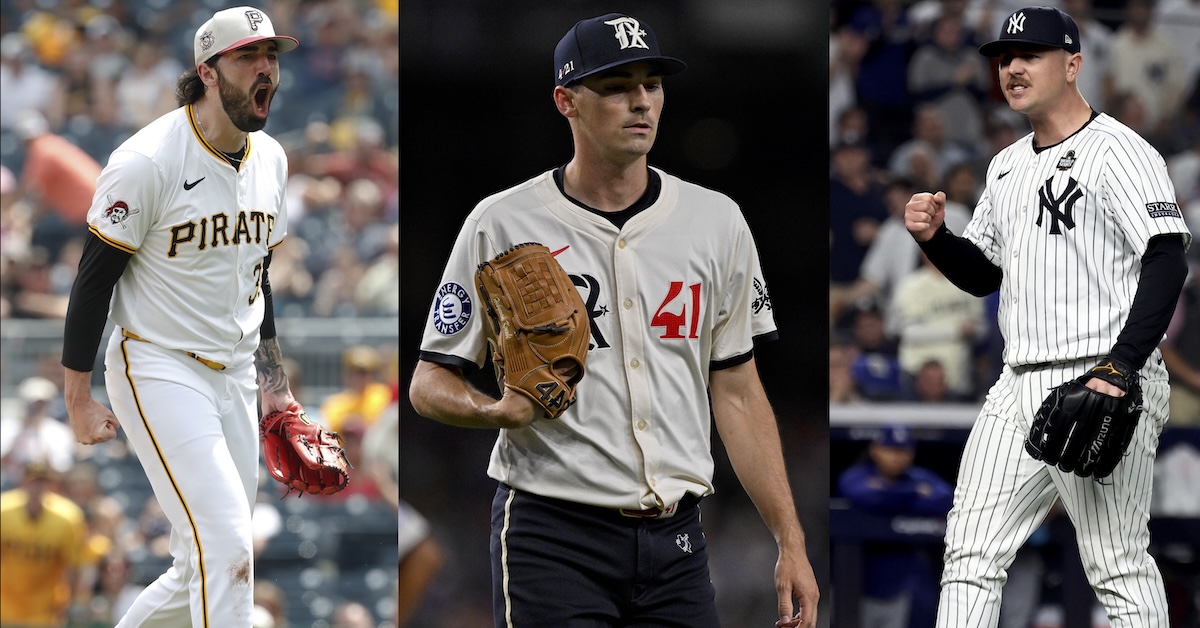
Every winter, the shiniest free agents on the market capture the attention of baseball fans everywhere. “Ooh, could you imagine Kyle Tucker in my team’s colors?” That’s a fun conversation regardless of which team you root for. But most teams aren’t going to sign Kyle Tucker. Most teams aren’t going to sign a top 10 free agent, period. Indeed, come June and July, there’s a good chance that the free agent signing you’re going to either laud or rue will involve some reliever you’d never heard of six months prior. So let’s meet a batch of pitchers who are going to make fans remember their name, one way or another, in 2026: Hoby Milner, Mark Leiter Jr., and Colin Holderman.
I used to think of Hoby Milner as one of the unending wave of Brewers who looked unbeatable in navy and gold and unspectacular elsewhere, but as it turns out, that was unfair to him. He departed the upper Midwest for the first time since 2020 last winter, signing a $3 million deal with the Texas Rangers after Milwaukee non-tendered him. Far from crashing out, though, he spun another solid season, his fourth in a row, while handling 70.1 innings of the highest-leverage work of his career. He finished the season with a 3.84 ERA and a 3.39 FIP, pretty much a dead ringer for his career numbers.
Why, then, is his deal with the Chicago Cubs for just one year and $3.75 million? It’s because he’s an extreme lefty specialist, and that skill set generally comes with a limited market. Milner isn’t a traditional late-inning reliever, a matchup-proof flamethrower. He has enormous platoon splits, triple the league average for lefty pitchers over a fairly substantial sample. It’s for exactly the reason you’d expect: Milner throws sidearm and with little velocity, relying on a sweeper that he throws nearly half the time against lefties to tie them into knots.
Against righties, he has no plus options, so he mixes his bread-and-butter sinker/sweeper with a so-so four-seamer/changeup combination to at least give them a few things to think about. That plan does not work particularly well. Righties slugged .445 against him in 2025, and that’s actually lower than his career mark. That means that he resorts to walking them quite frequently rather than giving in. In his career, he has sported a 4.7% walk rate against lefties, verifiably elite, and an 8% mark against righties. He walked more than 10% of the righties he faced in 2025, in fact.
This is a good spot to mention that I ranked Milner 46th on my Top 50 Free Agents list and projected a bigger contract than he received. Sure, he shouldn’t face righties too often. Sure, he’s not a closer. But we’re talking about a reliever who throws 65-plus innings year after year with good run prevention numbers. That kind of production is hard to find, regardless of how it’s shaped. Milner has repeatedly proven himself capable of retiring major league hitters in large quantities. Fitting his skills to a team’s needs just falls on his manager.
In Chicago, that’ll be just perfect. Craig Counsell managed Milner in Milwaukee, and he’s generally agile and adaptable when it comes to getting the most out of his bullpen. I think this is a great fit, particularly given how few other lefty relievers the Cubs have on their roster. Combine that with my high estimation of Milner overall, and I would have been willing to offer him more than this to secure his services if I were the Cubs.
A few time zones away, the Athletics signed a similarly unheralded reliever to a similarly short deal. Mark Leiter Jr. is headed to West Sacramento for one year and $2.85 million. Like Milner, Leiter has been far better against lefties than righties in his big league career. Unlike Milner, he’s right-handed; he achieves his mastery of southpaws thanks to a nasty splitter that he spams relentlessly against them.
That splitter is the key to Leiter’s success. The rest of his arsenal is nothing to write home about. He sits 92-94 with a shapeless, dead zone sinker that opponents have peppered mercilessly in recent years. He mixes in a big slow curve, 74 mph and with big 12-6 break, to keep hitters from sitting on that fastball/splitter combination. It’s so slow that batters seem to be able to identify it, though; they only chased the curveball out of the zone 20% of the time in 2025, continuing a career-long trend for the pitch.
Using Leiter effectively is a managerial challenge. The huge splits suggest a specialist’s role, but you can’t just apply that logic willy-nilly. After all, he’s a righty who relies on one very particular pitch to get lefties out; everything else he throws is pretty bad against them. He’s best used against low-power righties and lefties without great plate discipline; unlike a Milner-type specialist, Leiter relies heavily on chases and strikeouts to beat lefties.
I like Mark Kotsay’s chances of getting some good innings out of Leiter, but it’s surely not riskless. After a mid-season trip to the IL in 2025, he fell precipitously in the Yankees’ leverage hierarchy, to the point where he didn’t appear in their first postseason series and didn’t even make the roster for the second. I don’t think the same will be true for the A’s, who are desperate for lefty-stopping relievers, but the point is that if you’re looking for LOOGY certainty, Leiter isn’t quite as good as Milner.
Another way of putting it: Leiter’s second act in the majors started in 2022. He’s racked up a 112 ERA- and 103 FIP- in that span; he’s a little worse than average, in other words, a filler arm who can give you acceptable innings. Milner has an 87 ERA- and 77 FIP- over the same four years, in far more innings. I know which of the two I’d rather have, and it’s not close. But Leiter is still an interesting arm, and for a budget-constrained A’s team, I see the appeal.
Those two deals both felt to me like reliever-needy teams checking boxes. The last signing of this article is something else entirely: the Guardians signed Colin Holderman to a one-year, $1.5 million deal after the Pirates non-tendered him rather than go to arbitration. Unlike the Cubs and the A’s, the Guardians aren’t desperate for relief help. Even with Emmanuel Clase likely never to return to the field, Cleveland had one of the best bullpens in the majors in 2025.
Meanwhile, saying that Holderman had a rough 2025 undersells it. After struggling with command in 2024 but posting good results anyway, things fell apart for him this past year. A 12.8% walk rate is of course disastrous, but even worse, his 14.4% strikeout rate was a career low and led to an unending string of disastrous outings. He ran up a 7.01 ERA with peripherals to match (5.86 FIP, 5.70 xERA, and so on) and also hit the IL twice with knee and thumb injuries. Even after Pittsburgh traded away most of the team’s best relievers at the deadline and called Holderman back up from a post-injury minor league assignment, he didn’t stay on the roster for long. By September, the Pirates had optioned him back to the minors.
So what does Cleveland see in Holderman? Probably what I do: a reliever whose results didn’t match his underlying stuff, and in a minuscule 25-inning sample besides. Try to model Holderman’s strikeout and walk rates using his underlying statistics, and you’ll fail. He drew more chases than league average, threw in the strike zone more than league average, and allowed a below-average contract rate. He posted solid first-strike and swinging strike rates. He doesn’t have great command, but both of our pitch-level models think that his command was about as good as always in 2025, and his stuff still jumps off the page, highlighted by a nasty slider and a sinker that he runs up into the upper 90s.
If you didn’t show me Holderman’s on-field results from this season, I’d be pretty excited about his chances of being effective in 2026. And given that he threw all of 25.2 innings, I’m more apt to believe the underlying process statistics than the results. Any outcome is possible in such a short stint. Sometimes relievers just stink for a year before bouncing back like nothing was wrong. Sometimes it’s a canary in a coal mine situation, and they’re never good again. If I told you I knew which of the two paths Holderman would follow, I’ll be lying. But if he returns to his peak form, it’d hardly be a shock; he basically threw all the same pitches as always in 2025, after all.
You might be wondering how a team with playoff aspirations can afford to take that kind of risk. Two mitigating factors make me love this signing for Cleveland. First, Holderman has options remaining. In fact, we don’t even project him to make the Opening Day roster at this point, though that’s of course subject to change in the coming months. Reliever volatility is far easier to stomach when you can stash a guy in the minors if he starts slowly.
More importantly, the Guardians don’t need Holderman. Their bullpen is already great. If he’s a mid-4.00 ERA filler arm, that’s fine; he didn’t cost much and he won’t be around for long. If he’s terrible, no problem; he can just spend 2026 in the minors. If he’s great, though? If one of the best teams in the majors at pitching development can coax him back to his early-career form? Then it’s a windfall gain, another late-inning arm to help their bullpen-heavy game plan.
That works partially because Holderman has options and partially because Cleveland just has so many alternatives. I’m not exactly sure who in their bullpen will step up in 2026, but at this point, I expect the system to work and for some more Guardian I’ve never heard of to excel. That vaunted pitching development system clearly creates a high floor for the bullpen. Thus, signing someone like Holderman, with a volatile range of outcomes, is an excellent complement. The bad results are no big deal because someone else can handle the workload in those cases. The good results? They’re excellent for a $1.5 million investment. Even though I think the most likely outcome is that Holderman never turns into a late-inning monster, I like the idea of signing him and finding out whether he can bounce back.
Are any of these deals likely to be season-altering? No. But getting the little deals right matters, particularly for teams like the A’s and Guardians that try to make a lot happen on a shoestring budget. I like the Cubs’ signing the most of the bunch – they got a very good reliever for a clear role and paired him with a manager who knows how to execute that plan. I like all three, though, because each fills a specific role for the signing team. When you’re filling out the fringes of your roster from the bargain bin section of free agency, that’s all you can ask for.
Ben is a writer at FanGraphs. He can be found on Bluesky @benclemens.
If Leiter can command the split, he’ll have a good outing. If dudes are spitting on it, get someone else warming immediately.