
Royals Expand Their Comfort Zone With a Pair of Weekend Transactions
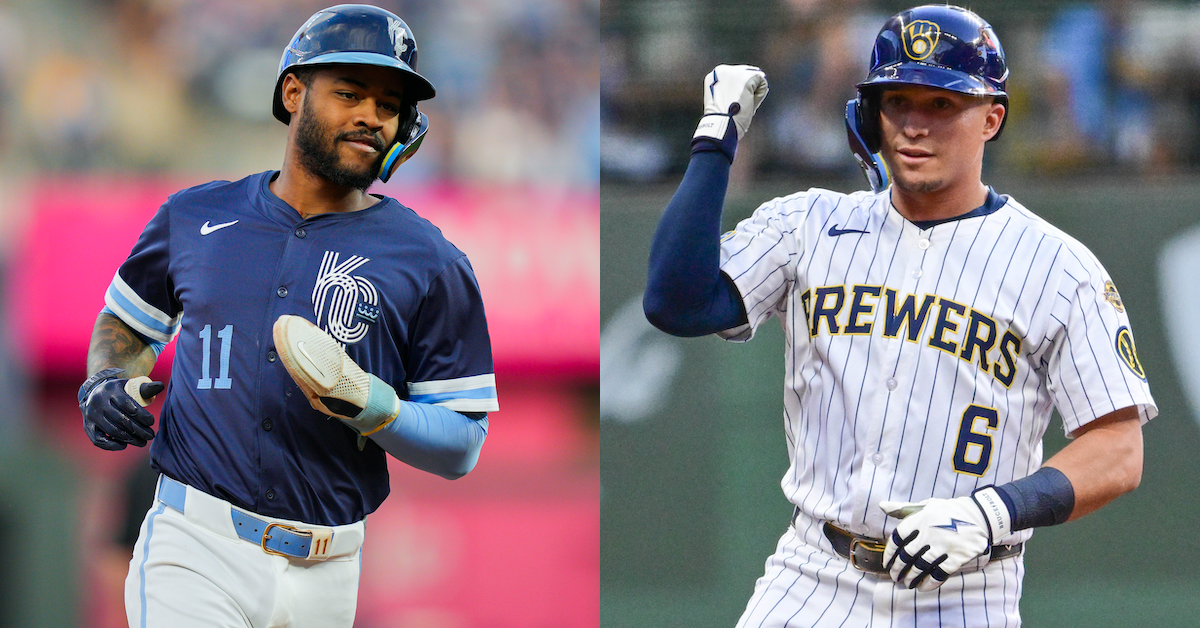
The Royals had themselves a productive weekend. The kind where you re-organize the garage and get your meal prep done for the week before the Sunday Scaries set in. On Friday, news broke that the team was finalizing a deal to extend third baseman Maikel Garcia. The contract spans five years, including all four of Garcia’s arbitration-eligible seasons, with a guaranteed value of $57.5 million that could reach $85 million with options and escalators. He will make $4 million in 2026, $7 million in 2027, $10 million in 2028, $13 million in 2029, and $19 million in 2030, and the team holds a $21 million club option for 2031, with a $3.2 million buyout. Then, following the news of the Garcia signing, ESPN’s Jeff Passan reported on Saturday that the Brewers were sending outfielder Isaac Collins and right-handed reliever Nick Mears to the Royals in exchange for left-handed reliever Angel Zerpa. We’ll get into a more detailed discussion of both moves in a minute, but first let’s put this in the larger context of the Royals as an organization.
A lot of sitcoms have that one oddball character that doesn’t quite fit with the rest of the cast. The person that requires viewers to suspend their disbelief, because in real life, there’s no way the other main characters would associate with this weirdo. Your Phoebes, your Kramers, your Kimmy Gibblers, etc. These characters are a part of the main cast or have regularly recurring roles, and though they frequently find themselves integrated into the show’s primary conflicts, they’re typically situated off to the side doing their own thing. Writers insist on including these characters because they provide interesting narrative texture to group dynamics. In real life, we tend to gravitate toward like-minded people with common interests, which is great for forming meaningful connections but makes for boring TV.
Fortunately, MLB teams behave more like TV characters than real life besties, which makes for better entertainment. And with 30 teams, the league doesn’t limit itself to just one Phoebe. Several squads are singing about fetid felines and boycotting Pottery Barn, and among them we have the Royals. Kansas City has never seemed tempted to jump on the latest trends in roster construction or follow the crowd as it attempts to implement whatever the “new Moneyball” is at any given point in time. No, the Royals tend to stay true to themselves, even if that means zigging while everyone else zags or using unorthodox tactics to make sure everyone in the organization stays focused on baseball.
The World Series-winning Royals of 2015 used a distinct brand of small ball, paired with a trio of relievers that became known as their three-headed monster out of the bullpen. It wasn’t a philosophy many believed in before those Royals won it all, and since then, it’s turned out to be a difficult formula to replicate. Despite the best efforts of the 2025 Brewers, no other team has found the same degree of success.
When it comes to roster construction, Kansas City skews significantly more homegrown relative to its peers. The current squad employs the fifth-most homegrown players, sits mid-pack in terms of players acquired via free agency, and rates among the bottom third of the league based on the amount of players brought over in a trade. And though the Royals are more likely to extend players already on the roster than they are to make a splash in free agency, they aren’t known for handing out large contracts, be it in terms of years or money. Their largest extensions have gone to Bobby Witt Jr. (11 years, $289 million) and Salvador Perez (four years, $82 million). Their largest “free agent” signing went to Alex Gordon (four years, $72 million), who tested the open market following the Royals’ title run in 2015, but wound up re-signing with the team that drafted him. Aside from Gordon, Kansas City’s most sizable free agent contract went to Seth Lugo, whom the club signed to a three-year, $45 million deal heading into 2024.
So, for the Royals to offer Garcia a contract north of $50 million is saying something. Through his first three full seasons in the majors, he has proven himself a strong defender at third, but he’s posted just one season of above-average offense. And while this isn’t the decade-long commitment the team extended to the other young player who holds down the left side of the infield, Kansas City is buying out all four of Garcia’s arbitration years, plus another season or two, depending on whether it picks up the option. If Garcia regresses back to a defense-first third baseman with an 80 wRC+, that’s a player most teams would non-tender, not one they’d commit to paying tens of millions of dollars. Clearly, the Royals believe the career-high marks Garcia set on offense in 2025 are real and sustainable moving forward.
Back in August, Davy Andrews detailed the factors fueling Garcia’s surge at the plate. The TLDR is that Garcia paired his already excellent plate discipline with a light re-vamp of his swing mechanics that improved his body control and timing in a way that allowed him to both pull and lift the ball more. He also got stronger, which amped up his bat speed. His harder and more refined swing improved his contact quality across the board, allowing him to do damage on a broader range of pitch velocities and movement profiles.
Those skeptical of Garcia’s offensive turnaround might note that he does most of his damage over the heart of the plate, and that pitchers pounded the zone against him in 2025. His Zone% was 14th highest among qualified hitters. So what if pitchers adjust and stop throwing him quite so many cookies? Well, here’s the thing: They can’t. Because Garcia ranked 11th in O-Swing%. They can throw him more pitches out of the zone, but he’s probably not going to swing at them. Then they’ll have to throw him a strike. And, moreover, he’ll know they have to throw him a strike. Meaning the adjustment for pitchers isn’t as simple as throwing fewer strikes, it’s throwing more pitches that can fool a batter with an exceedingly sharp eye — a much taller task.
With the Royals likely feeling pretty comfortable with the deal, what’s in it for Garcia? As noted, the first four years of the contract cover Garcia’s arb years. MLB Trade Rumors projected Garcia to earn $4.8 million in 2026, his first year of arbitration. Players don’t typically receive a pay cut during their arb years, and as long as they maintain production and make marginal improvements here or there, they’ll typically get a pay bump of a few million dollars each year. The first four years of Garcia’s contract largely mimic this structure, meaning he’ll earn roughly what he would have gotten in arb without having to endure the stress and uncertainty that comes with the arbitration process. If he were to improve dramatically over his current baseline, then perhaps he’s leaving some money on the table, but that’s likely a risk he’s willing to take to have a guaranteed contract in the here and now. His annual salary gets a larger year-over-year increase in the final guaranteed year, which partially accounts for the way salaries tend to spike when players hit free agency, as Garcia would have in that final year. Then, since Garcia’s first full season was at age 23, he’ll still be fairly young when he does reach free agency (30 or 31) and have the opportunity to realize his earning potential with a hefty long-term deal.
With Garcia, Witt, and Vinnie Pasquantino in the fold for at least the next three seasons, the Royals have a solid core on the infield to go with a pitching staff that ranked sixth in ERA- in 2025. Their weakest link heading into the offseason was in the outfield. The group played average defense on the whole, but ranked dead last in wRC+. So despite its lack of a track record in transacting on the trade market, when the opportunity to add an outfielder knocked, Kansas City came to the door. In 2025, Collins finished fourth in NL Rookie of the Year voting, just behind his Milwaukee teammate, Caleb Durbin. He posted a 122 wRC+, stole 16 bases, and led the league in OAA among left fielders, which is where he’s projected to play in Kansas City. His arm is just average, which could make life difficult given the size of Kauffman Stadium’s outfield, but Collins remains an upgrade over the 15-headed mutant that manned left field for the Royals in 2025. (That’s not an exaggeration, they really had 15 different defenders in left field. I counted.)
It’s worth wondering if Collins can replicate his rookie campaign, or something reasonably close to it, moving forward. His expected stats are noticeably lower than his actual numbers, but not catastrophically so. He can endure a bit of a sophomore slump/regression to the mean and still remain a productive player, especially given what the Royals sacrificed to get him (basically nothing) and their existing in-house options (again, basically nothing). And like Garcia, Collins has a good eye at the plate, rarely chasing, avoiding whiffs, and posting a 98th-percentile walk rate. Perhaps the Royals hitting coaches are hoping Collins can benefit from the same mechanical tweaks they applied to Garcia that led to a boost in his contact quality.
The reliever portion of the trade feels like largely a straight-across swap. Both Zerpa and Mears threw around 60 innings in 2025 and posted comparable (x)ERAs and (x)FIPs. Mears did better by ERA and FIP, while Zerpa had the edge in xERA and xFIP. Adjusting for ballpark, Zerpa was roughly average by ERA-, while Mears was 16% above average. By FIP-, they both came in just above average at 93.
If you’re wondering why teams would bother exchanging middle relievers with such similar production, the answer lies in the shape of the production and team fit. In particular, the surface stats imply the Brewers are giving up a decent middle reliever for a slightly worse middle reliever, and they’re throwing in a productive outfielder with five years of team control to sweeten the deal. But it’s actually not that hard to figure out why Milwaukee would prefer Zerpa over Mears. To start, Zerpa has an extra year of team control remaining. Next, his groundball rate was 62.4% in 2025, which ranked fifth among qualified relievers in the majors. Meanwhile, the Brewers ranked seventh league-wide in infield defense by FRV. Considering the Royals ranked first in that same metric, it’s unlikely that the Brewers expect Zerpa to vastly improve just by showing up in Milwaukee, but you can see why they’d rather have him instead of Mears, who is coming off a year in which he posted career lows in groundball rate (34.0%) and strikeout rate (20.8%) and may have gotten a little lucky with his career-best HR/FB rate (9.2%), given his expected stats and the homer-friendly nature of Milwaukee’s home ballpark.
On top of that, this part of the trade also might not end up being a swap of middle relievers, because the Brewers might end up using Zerpa as a starter. As President of baseball operations Matt Arnold told the Milwaukee Journal Sentinel’s Curt Hogg, the team is “open to” moving Zerpa to the rotation:
“We have some scouts that think he can do it. He has done it in the past,” Arnold said. “This guy also has postseason experience, too, which we obviously value a lot. Having a guy with that kind of versatility and experience in big games is something we think will really help us.”
But even understanding why the Brewers would want to acquire Zerpa, it’s still difficult to rationalize the trade as a whole from Milwaukee’s perspective using only publicly known information. It’s possible the Brewers don’t believe that Collins can sustain his rookie output, and though he was, to this point in the offseason, their best option to start in left field, they also have a glut of outfielders on their 40-man roster and likely needed to move someone, and Collins was the most tradable. By trading Collins, they at least were able to make a small upgrade in the bullpen, and none of the other potential trade candidates were likely to fetch much anyway. Further, the two-for-one nature of this deal also suggests the Brewers might have had an immediate need to free up a 40-man roster spot. Perhaps another trade or signing is nearing completion, and they are proactively making room for an incoming player. Regardless, it still feels like Kansas City came out ahead on this one.
The Royals and Brewers are both teams that tend to curate their own distinct strategies rather than participating in the copycat nature of the league. They don’t just break the mold, they shape themselves in a new mold and operate solely within it. And while the Brewers have remained fairly Brewers-y so far this offseason, the Royals have acted moderately out of character in both handing out a substantial contract and getting active on the trade market. One of the perks of a narrative with quirky characters who buck convention is that when they do choose to act more typically, that’s interesting, too. Maybe the Royals will get really wild and sign Cody Bellinger next.
Kiri lives in the PNW while contributing part-time to FanGraphs and working full-time as a data scientist. She spent 5 years working as an analyst for multiple MLB organizations. You can find her on Bluesky @kirio.bsky.social.
even if milwaukee internally values zerpa that much, is 1 extra year of a middle reliever really all they could get for collins?
if that’s the market rate it would explain why boston is content fielding a roster with 17 outfielders