There’s paint on the field, bunting on the steel, and hoopla in our feels. It’s Opening Day no doubt. Well, the third one, at least.
The most iconic trapping of Opening Day is the fleet of excellent starting pitchers who take the mound. Each team sends their best, or at least, their healthiest. For some, it’s the reigning Cy Young winner. For others, it’s a precocious prospect. These starters, true to their name, carry the burden of the new season in their shoulder.
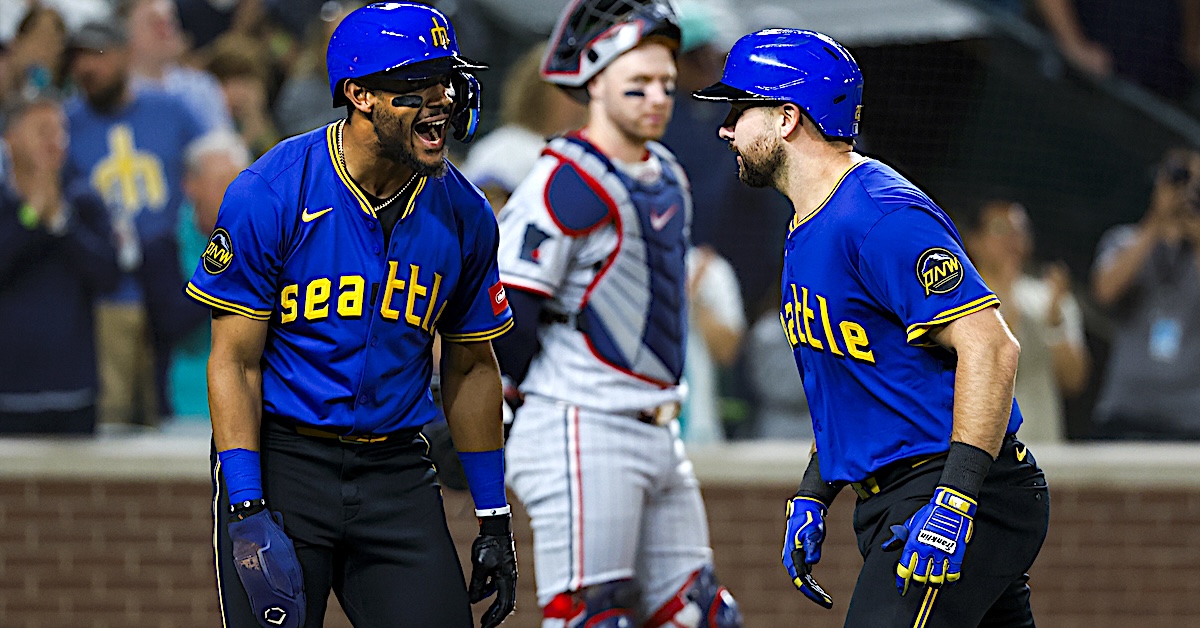
Since their first season together in 2022, Raleigh and Rodríguez have combined for 44.2 WAR. At 11.1 wins per season, that’s “on pace” for the best duo in team history, just ahead of Ken Griffey Jr. and Alex Rodriguez (65.9 WAR over six years), Griffey and Edgar Martinez (119.3 WAR over 11 years), and all sorts of other combinations from the star-studded squads of the 90s. Raleigh and Rodríguez certainly have much more to achieve before approaching these all-time greats, individually or together. But as the Mariners enter their 50th season, it appears the legacy of the franchise may finally be moving beyond its past. Read the rest of this entry »
Yes, every once in a while a team will pretend to have four or six slots, but that team must inevitably confront the truth: Starting rotations have five slots. It’s a matter of policy, preference, and just plain practicality, Mariners general manager Justin Hollander said last year in an interview with Lookout Landing.
“The unfortunate thing about the roster rules is you only get 26 spots, and you only get 13 pitchers. And when you add a sixth starter, you take away a reliever. When you add a sixth starter, sometimes your starters pitch every six days, sometimes they pitch every eight or nine days. Starting pitchers are fussy. They don’t like that. They like to stay on a regular schedule. They like to know when they’re pitching.”
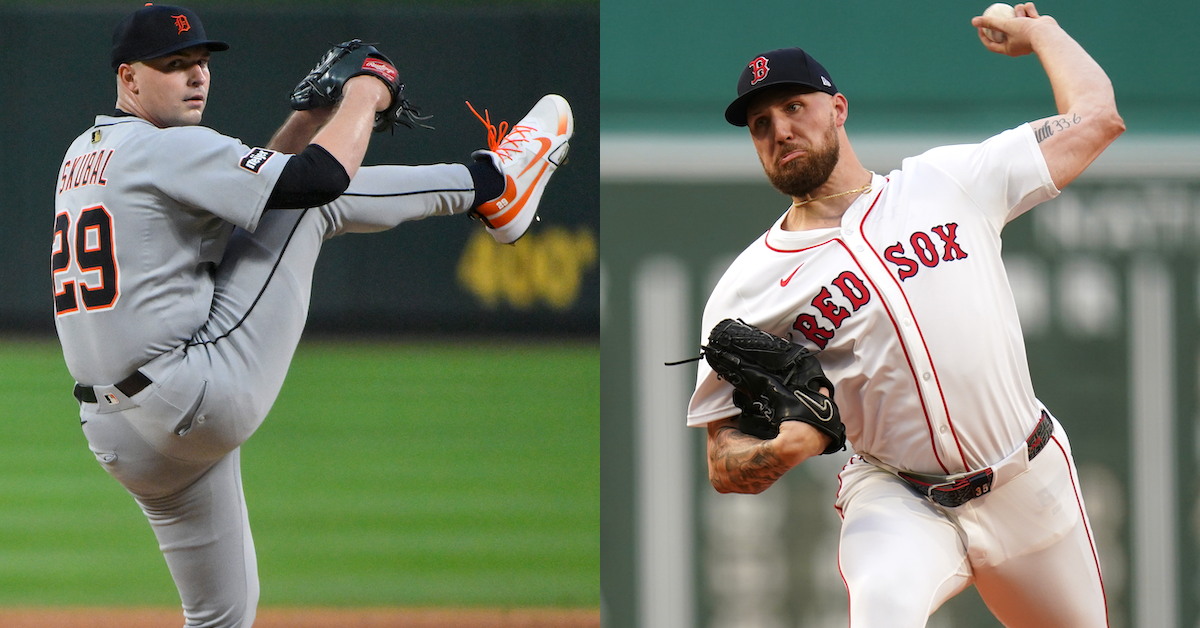
I’ve been thinking about the fixed-nature of rotations lately after reading this discussion between Eno Saris and Jen McCaffrey in The Athletic. They compare the rotations in Detroit and Boston by assigning each pitcher a label (one, two, three, four, five), sizing them up horizontally and vertically, and confronting the trade-offs in quality and depth. This reflects how many of us compare rotations in the abstract, and I wanted to see if this could be applied more broadly. Read the rest of this entry »
Teel is set to begin the season on the injured list. He pulled his hamstring while legging out a double for Team Italy last week at the World Baseball Classic. The diagnosis is a Grade 2 strain, which could keep him out for most of April. It’s an unfortunate start to what was meant to be his first full big league season.
In some ways, this answers a crucial question for the White Sox: Who will start at catcher on Opening Day? Teel, 23, would have been the obvious choice for most rebuilding organizations. He was a top 100 prospect last year before his debut in June, and he then posted a 125 wRC+ in 297 plate appearances. He’s at the forefront of Chicago’s burgeoning prospect pipeline and a key figure as the organization searches for its next core.
But the same can also be said for Edgar Quero, a similarly rated prospect who debuted last year at just 22 years old. Quero is now set for the starting job right out of camp, and he’ll have the first chance to showcase his development in 2026. Read the rest of this entry »
The Angels haven’t changed. It’s Mike Trout who is worse.
The Angels are bad. It’s the truest thing about them. Their hitting is bad, their pitching is bad, their fielding is bad, and everything else is bad, too. This isn’t breaking news. They’ve finished below .500 each year since 2015, the only team not to make the postseason in that time. But expectations have reached a new low as we enter 2026:
Angels Preseason Projections
Year
Playoff Odds
Projected Wins
Projected WAR
2026
5.2%
72.5
27.2
2025
9.5%
75.1
32.1
2024
16.8%
77.6
30.6
2023
48.0%
83.5
37.7
2022
44.7%
83.3
38.2
2021
39.5%
84.7
36.7
2019
19.5%
82.3
36.0
2018
27.1%
82.5
37.7
2017
33.3%
82.7
36.2
2016
26.5%
80.7
32.9
Source: Depth Charts, Steamer
I was initially skeptical of these figures, or at least the direction of them. How could the Angels possibly be going backwards? They don’t seem to be rebuilding, and their depth chart looks the same as ever: a few truly good players, a few players who would be good if they were playing a different position (or perhaps in a different organization), a few players who were drafted far too recently, a few aging veterans who were nearly All-Stars at one point, and Trout. Read the rest of this entry »
This is Ryan Blake’s first piece as a contributor for FanGraphs. He is a former newspaper reporter in the Inland Northwest and a current writer for Lookout Landing, where his work on the batter’s eye at T-Mobile Park was nominated for a 2026 SABR Analytics Conference Research Award.
A bottom-ranked pitching staff got a little deeper this weekend.
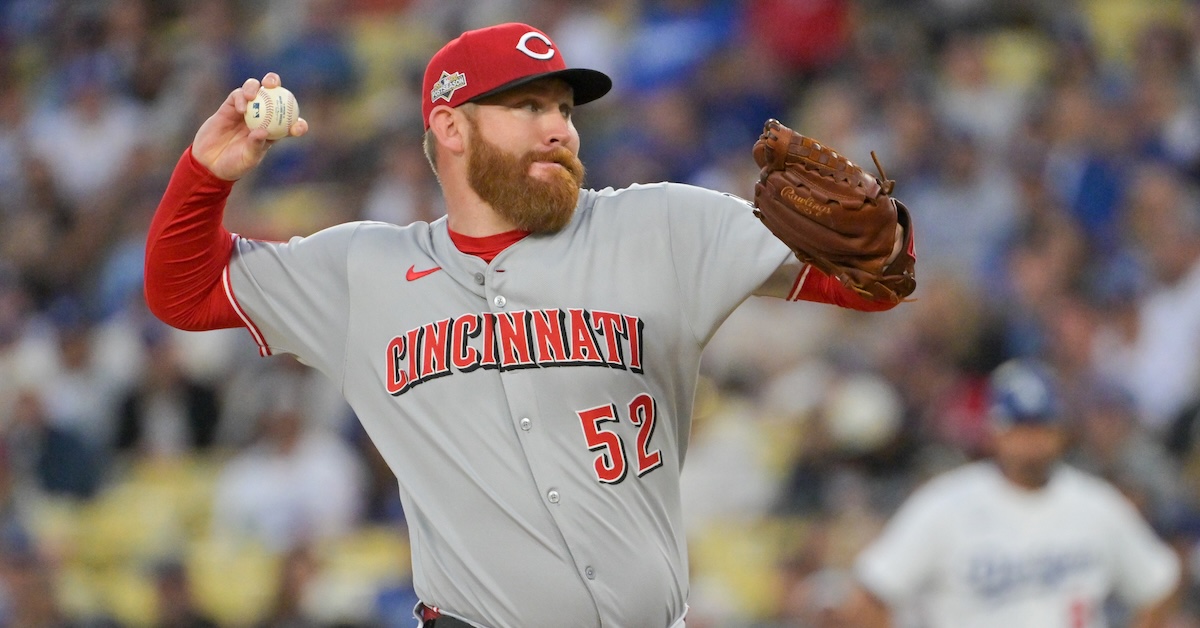
Zack Littell and the Nationals have agreed on a one-year contract, as several outlets reported Sunday. The price tag is currently unknown, though the deal includes a mutual option for 2027. Littell, 30, ranked next-to-last on our Top 50 Free Agents list this offseason. As it happens, he is also next-to-last to sign (only Lucas Giolito remains available).
Littell threw a career high 186.2 innings in 2025 across 32 starts for the Rays and Reds. Only 10 pitchers threw more innings last year. His 3.81 ERA was above average among qualified starters, and his 4.2% walk rate was the best in the majors. On the other hand, his 4.88 FIP, 17.1% strikeout rate, and 1.74 HR/9 each ranked in the bottom five. It was a mix of strengths and weaknesses that, taken together, made him the 88th-most valuable starting pitcher by WAR — useful depth for most organizations. Read the rest of this entry »