Archive for World Baseball Classic

Who To Root for in the World Baseball Classic: Pool D
Thomas Cordy, Palm Beach Post/USA Today Network via Imagn Images

The World Baseball Classic is officially back! We’re been running preview content for the last several weeks, but now that the tournament is actually underway, you’ve got to pick a team to root for. You may even want to pick one team from each of the four pools. To help you decide on your favorite, I’ll be offering a reason to cheer for each of the 20 teams in the field. We started with Pool C earlier today, and we’ll run Pools A and B tomorrow.

Dominican Republic

Listing teams alphabetically has us starting with the powerhouse of the group. How’s this for a lineup?

C: Austin Wells
1B: Vladimir Guerrero Jr.
2B: Ketel Marte
SS: Geraldo Perdomo
3B: Manny Machado
LF: Juan Soto
CF: Julio Rodríguez
RF: Fernando Tatis Jr.
DH: Junior Caminero
P: Cristopher Sánchez

This isn’t just a lineup without any weak spots. It’s a dream team, and it still leaves stars like Jeremy Peña and Oneil Cruz on the bench!

The real reason to root for the Dominican Republic, though, is that they’ll be out for revenge. They won the 2013 WBC, but in 2023, losses to Venezuela and Puerto Rico left them 2-2 in pool play, and the run differential tiebreaker kept them from advancing. The Dominican Republic didn’t even make it out of pool play! Manager Rodney Linares heard about it in a big way. Albert Pujols is at the helm now, and he knows he’s got to do better.

Pool D is a bit softer this time around, with the Netherlands taking the place of Puerto Rico, but the this team might not care. They’re out for blood, and it’s not hard to envision them going scorched earth and running up the run differential as much as they can. With that lineup, they’ll have more than enough firepower. They just hung 12 runs on the Tigers on Tuesday. If what you’re looking for in a WBC team is a high likelihood that watching them play will feel similar to watching a Rambo movie, then the Dominican Republic is your squad.

Israel

Look, I don’t know if we’re going to see Robert Stock pitch, or how much he’ll throw even if we do, but he’s the kind of guy you cheer for. I wrote an article about his journey last year, but it’s worth digging even deeper, because it really puts the “World” in “World Baseball Classic.” No less an authority than Baseball America named Stock the best 13-year-old player in the country in 2003, the best 14-year-old player in 2004, and then the overall Youth Player of the Year in 2005. “The 6-foot, 180-pound 15-year-old was tossing 90-mph fastballs by the time he was 14 and has been known to connect on 400-foot home runs, using a wood bat,” wrote Alan Matthews. Stock enrolled at USC as both a catcher and a pitcher so that he could become draft eligible when he was 19.

The Cardinals took him in the second round in 2009, but things were a lot harder in the pros. After three years of trying to make it as a catcher, Stock switched back to pitching. After three more years, Stock still hadn’t advanced to Double-A, and the Cardinals released him. He bounced to the Astros, then the Pirates, then the Reds, and finally to the Padres, who finally promoted him to the big leagues in 2018. Still armed with an upper-90s fastball as a 28-year-old rookie, Stock made the most of the chance. He ran a 2.50 ERA and 2.71 FIP across 32 appearances and 39 2/3 innings.

The success was fleeting. Stock struggled in 2019 and kept bouncing, to the Phillies, the Red Sox, the Cubs, and the Mets. In 2022, he landed with the Doosan Bears of the KBO as a starter, running a 3.60 ERA and earning another shot despite running a 11.5% walk rate. He went to Driveline, started 2023 pitching for Israel in the WBC and reported to Triple-A Nashville on a minor league deal with the Brewers, but after just three starts, Milwaukee let him go. He finished the season with the Long Island Ducks of the independent Atlantic League.

Stock threw a no-hitter in Long Island, but his overall numbers weren’t great. He spent 2024 pitching for Tecolotes de los Dos Laredos of the Mexican League, but before he did, he completely overhauled his mechanics. He dropped his arm angle from right around the league average to a sidearm slot. He went from throwing the four-seamer more than half the time to being an east-west sinker-slider guy with 40 inches of break differential between the two pitches. He was an entirely new pitcher. He went 9-4 with a 3.39 ERA with Dos Laredos, and then the won the pitching Triple Crown in the Mexican Winter League, going 10-2 with a 1.60 ERA.

Stock returned to the Red Sox in 2025, putting up solid numbers in Triple-A but struggling in two big league appearances. He’s now in minor league camp with the Mets, where he’s struck out six batters and allowed just one baserunner across three scoreless innings. Stock is now 36 years old with just 75 1/3 major league innings under his belt but a whole lot of miles.

Netherlands

The Netherlands boast a lot of familiar Curaçaoan faces. They’ll have stars like Ozzie Albies, Xander Bogaerts, and Kenley Jansen. They’ll have old friend Didi Gregorius, the only Didi in major league history, who last appeared in the majors in 2022 and has been playing in the Mexican League. They’ll even have brothers of familiar faces in Jeremi Profar and Sharlon Schoop. But Ceddanne Rafaela is the wild card here.

Fresh off a Gold Glove, Boston’s center fielder already has two home runs and a 224 wRC+ in spring training and – you know what? I’m going to have to stop there. I love to watch Rafaela play. He’s exciting in ways both good and bad. He makes you scream when he does something spectacular with his glove, and he makes you scream when he waves at yet another slider in the dirt. But Kiri Oler already nailed the thing that should make us root for the Netherlands in her Pool D preview. It’s this song, “Honkbal Hoofdklasse (On My Radio Tonight)” by Johannes Vonk and the Clogheads, which I listened to on repeat as I wrote this section:

Just to be clear, Johannes Vonk and the Clogheads are not an actual band. This song was recorded in 2020 by Milo Edwards and Nate Bethea of the comedy podcast “Trashfuture,” and jokingly attributed to the fictional 80s band with the 80-grade name. I don’t know much about Trashfuture, but this song is perfect, and after listening to it 10 times in a row, I am ready to run through a brick wall (or even a dam) for the Netherlands and their merry band of honkbalers.

Nicaragua

Nicaragua went winless in 2023, and if the team is going to win a game this time around, it will be on the shoulders of New York Met Mark Vientos. Along with Carlos Rodriguez of the Brewers, he’s one of two current major leaguers on the Nicaraguan roster (free agent Erasmo Ramírez is also suiting up), and although he struggled to a 97 wRC+ in 2025, it’s hard to get the image of his three-win 2024 season, in which he ran a 132 wRC+ and blasted 27 homers in just 111 games, out of your mind. After five spring training games, Vientos somehow has an average exit velocity of 96 mph (!) and a batting average of .077 (?!). He has a 110-mph lineout, a 109.9-mph double play, a 105.2-mph fly out, and then another double play at 104.7 mph. Playing against the Mets in an exhibition game on Tuesday, Vientos did finally get a ball to touch grass, ripping a 108-mph single.

The only logical(ish) conclusion I can draw is that Vientos has been saving all of his luck for team Nicaragua. He’s planning on running a BABIP of .850 in the WBC, blooping and blasting his country past the rest of Pool D and into the knockout round, relying on the wisdom of manager Dusty Baker to hit ‘em where they ain’t.

If you’re a Yankees or Phillies fan and you don’t feel comfortable rooting for a Met, maybe you can root for Jeter Downs, who is still not Mookie Betts, but is thriving with the Softbank Hawks of the NPB, running a 123 wRC+ in 2025.

Venezuela

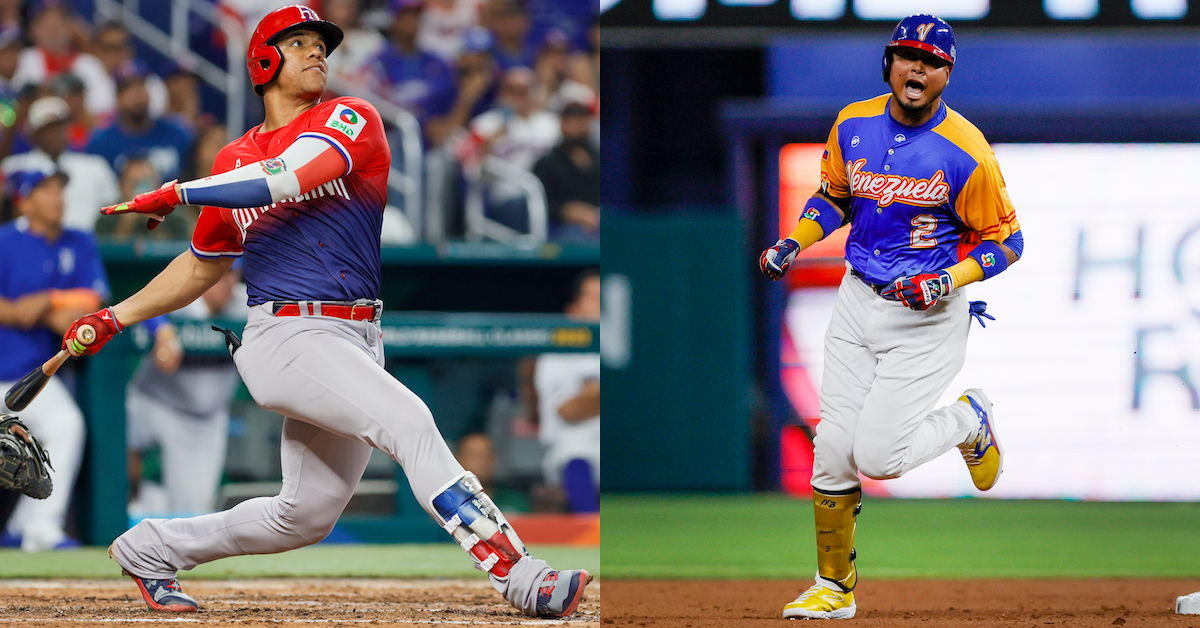
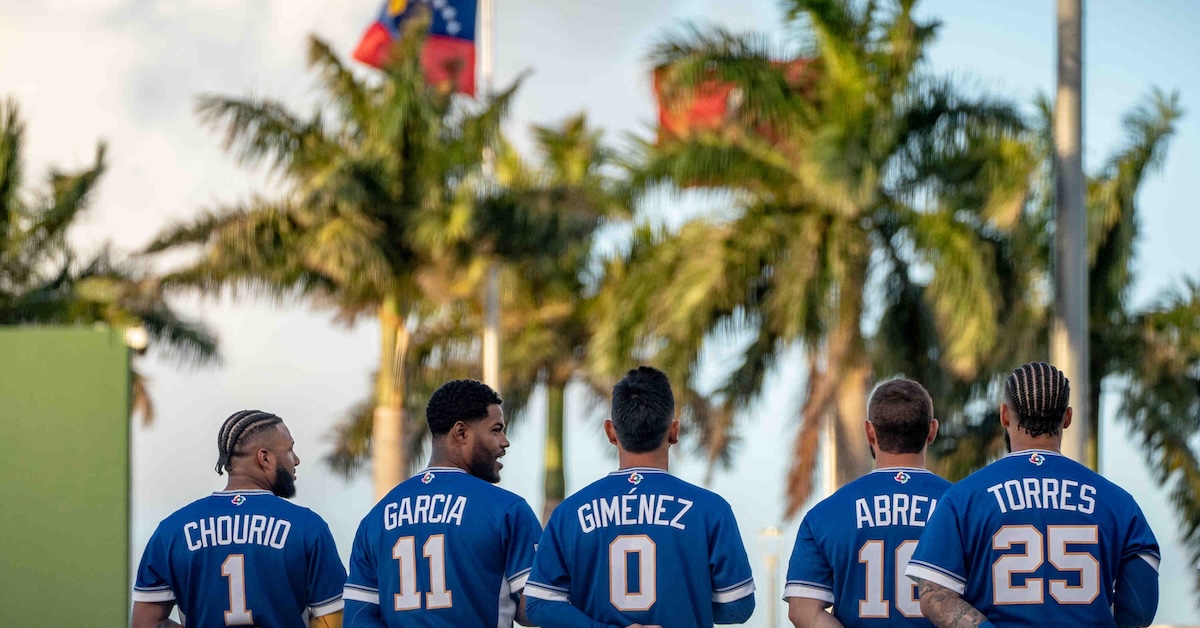
I’m not telling you anything you don’t know here, but Venezuela’s lineup is extremely good. They’ve got Ronald Acuña Jr., Jackson Chourio, and Wilyer Abreu in the outfield. They’ve got Willson Contreras, Luis Arraez, Eugenio Suárez, Maikel Garcia, and Andrés Giménez on the infield. They’ve got William Contreras and Salvador Perez behind the plate. That’s a lot of great bats and great gloves. Garcia and Abreu both won Gold Gloves in 2025, and Giménez is a three-time winner who took home the Platinum Glove in 2024. Honestly, maybe the exciting thing should be the glovework. But what I’m most excited about is the bullpen.

Venezuela doesn’t have much starting pitching depth behind Ranger Suarez, but pitching in the WBC is an all-hands-on-deck enterprise, and Venezuela has a whole lot of big arms to choose from. Daniel Palencia ran a 2.91 ERA and saved 22 games last year, with his four-seamer averaging 99.6 mph. Angel Zerpa’s sinker averaged 96.6. Anthony Molina, Antonio Senzatela, Luinder Avila, and José Buttó were all above 95 mph. Eduardo Rodriguez and Yoendrys Gómez don’t bring as much heat, but their four-seamers were both well above the league average in terms of whiff rate.

Not all of these guys are standouts, but that’s a really deep ‘pen. Venezuela may well mash their way to the knockout round, but they could just as easily make it there by putting up zero after zero.
Who To Root for in the World Baseball Classic: Pool C

Jayne Kamin-Oncea-Imagn Images

The World Baseball Classic is officially back! We’re been running preview content for the last several weeks, but now that the tournament is actually underway, you’ve got to pick a team to root for. You may even want to pick one team from each of the four pools. To help you decide on your favorite, I’ll be offering a reason to cheer for each of the 20 teams in the field. We’re starting with Pool C because it’s kicking off today. So is Pool D, whose reasons will run a little later this afternoon. Pools A and B aren’t getting underway until tomorrow, so that’s when we’ll run their excitement primers.

Australia

Australia was one of the big surprises of the 2023 WBC. In the first game of pool play, the Australians took down South Korea in an 8-7 barnburner. Both teams lost to Japan and won all their other games, which was enough to push Australia into the knockout round and keep South Korea out. Australia lost to Cuba by just one run in the quarterfinals. This time around, their final game in Pool C will be against – you guessed it – South Korea, and if the seeds hold true, then that game will once again decide who moves on to the knockout round and who goes home. It should be an exciting one!

I was going to overthink things and talk about Tim Kennelly here. The guy is 39 and made it to Triple-A with the Phillies, and then he went back home and laid siege to the Australia Baseball League record books. He’s the all-time league leader in hits, homers, and RBIs, and he’s second in stolen bases. But we should keep things simple and talk about Travis Bazzana. Read the rest of this entry »


Let’s Make Hasty Judgments About Mark DeRosa’s Lineup

Mark J. Rebilas-Imagn Images

On Tuesday, Team USA played its first tuneup game before the World Baseball Classic, thrashing the Giants 15-1 in a scheduled 10-inning exhibition. This came on the heels of Monday’s announcement lining up the American rotation for pool play in the WBC.

The WBC is a bit unusual for an international best-on-best sporting tournament in that it takes place during the preseason, rather than during a dedicated break (as in Olympic ice hockey or the 2022 FIFA World Cup) or the offseason. Therefore, the best active managers and coaches for each country are unavailable to coach in the tournament, as they would be in hockey and soccer.

For the first four tournaments, USA Baseball got around this by hiring either unemployed or recently retired managers — Buck Martinez, Davey Johnson, Joe Torre, and Jim Leyland. Highly successful and well-respected managers, in the latter three cases. For 2023, they went with Mark DeRosa. Read the rest of this entry »


Teammate Connections During World Baseball Classic Pool Play

Steven Bisig-Imagn Images

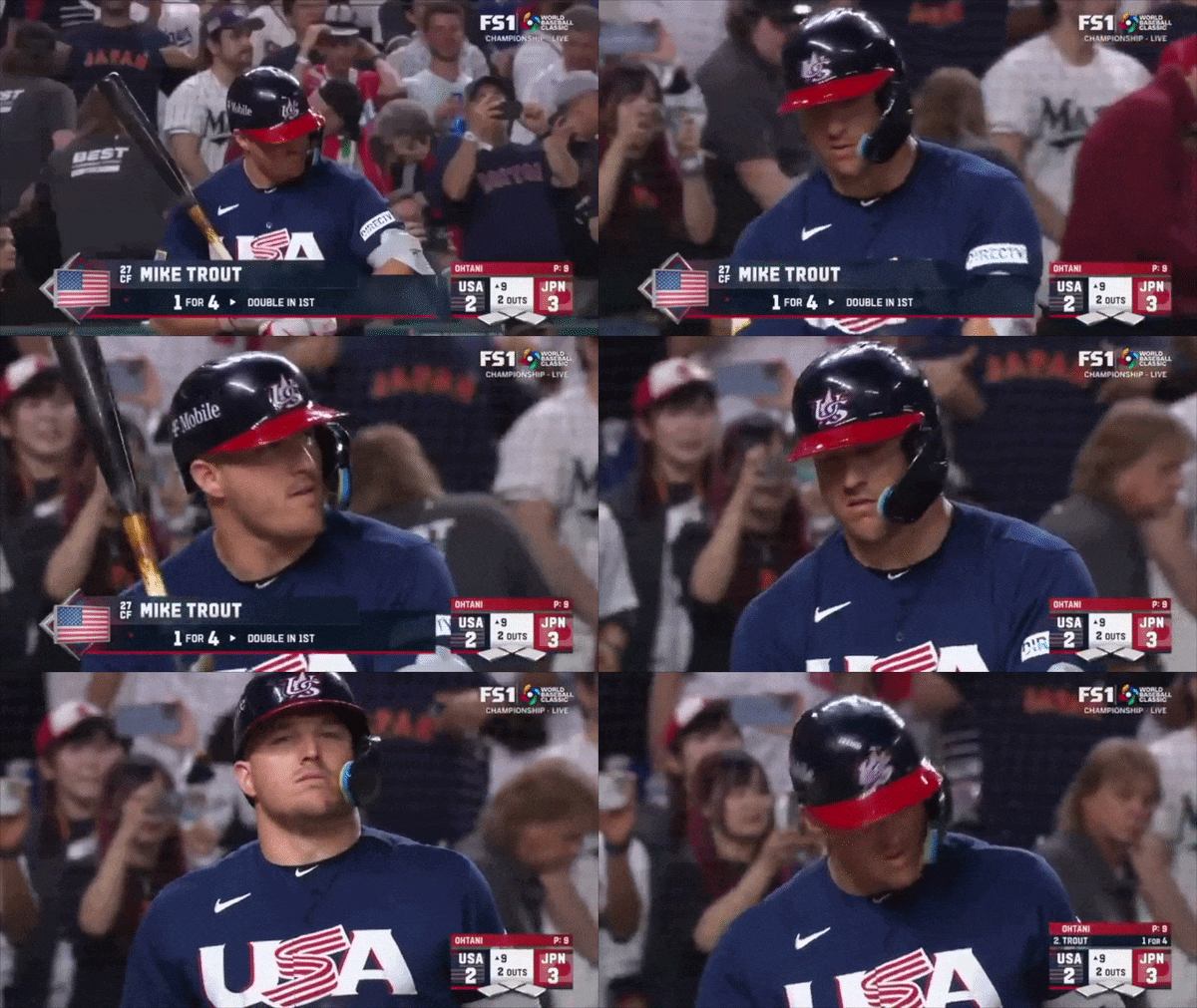
Everybody remembers the biggest moment from the 2023 World Baseball Classic. In the championship game, with Japan leading the United States 3-2 in the top of the ninth, Mike Trout stepped into the box as the tying run. Even though he was the Mike Trout – the surefire Hall of Famer with 71 WAR to his name who was coming off a 176 wRC+ in 2022 – he looked a little nervous. Before he even dug his cleats into the dirt, he sneaked four different peeks out toward the pitcher’s mound.

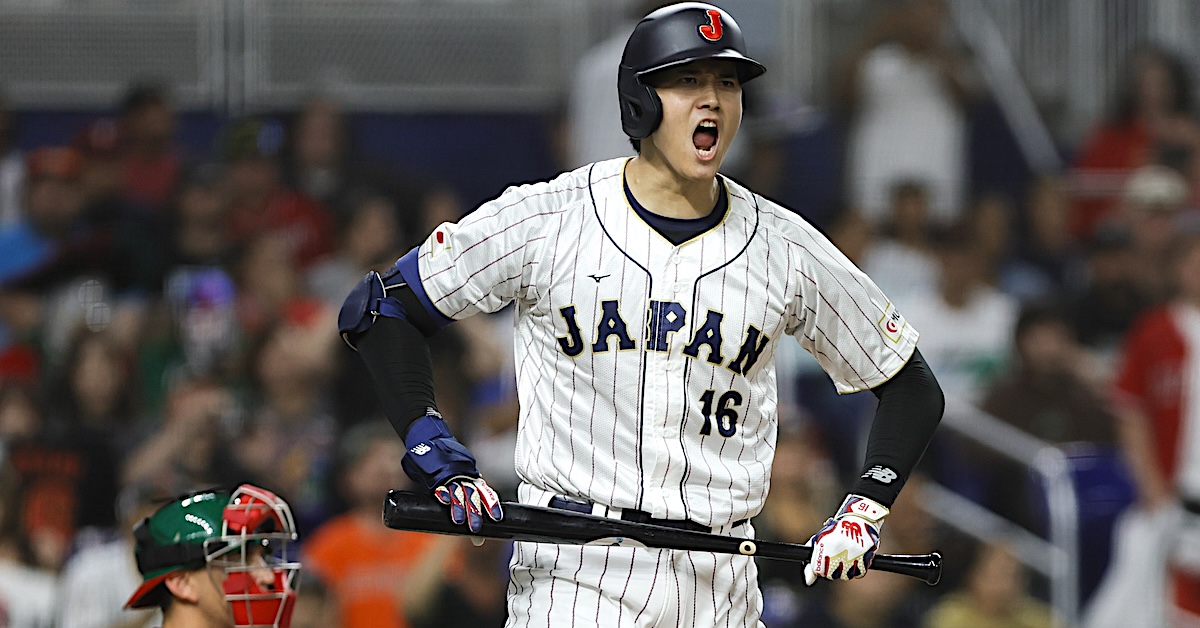
He did so for good reason. Out on the mound was Shohei Ohtani, the most fearsome player in the game, as well as Trout’s teammate. The endgame was a chess match. Ohtani started Trout with a ferocious sweeper just below the zone, but Trout took an absurdly easy take. No longer nibbling, Ohtani blew a center-cut fastball right by Trout at 100 mph. He touched 102 on the next pitch. At the end, with the count full, Ohtani threw a sweeper that started out over the heart of the plate and then took a left turn so sharp you’d think it had just read A People’s History of the United States. Trout couldn’t lay off it. Japan had won. Pandemonium reigned in the Tokyo Dome.

We could easily get another best-on-best matchup to end the 2026 WBC. Whether you believe that the best pitcher in baseball right now is Tarik Skubal or Paul Skenes, either one of them could find himself trying to close out the championship against Ohtani or Juan Soto (or Ronald Acuña Jr., or Vladimir Guerrero Jr., or Fernando Tatis Jr.; those Juniors really can hit). We could just as easily see Yoshinobu Yamamoto or Cristopher Sánchez facing down Aaron Judge. Read the rest of this entry »


Woo Joo Jeong Is Skating the River

Mark J. Rebilas-USA TODAY Sports

A key part of developing as a baseball analyst is knowing one’s own scouting blind spots. So here’s one of mine: I will go absolutely berserk for any prospect who shows even a hint of life against older competition in international play. I can’t help myself.

Brett Lawrie makes the Canadian Olympic team just out of high school in 2008, and plays regularly in the tournament. (This tournament featured lights-out pitching by 21-year-old Hyun Jin Ryu and 20-year-old Stephen Strasburg, the latter the only college player on Team USA.) Lawrie then plays for Canada again in the 2009 WBC, before making his professional debut.

Also on Team Canada in 2009: 20-year-old Single-A right-hander Phillippe Aumont comes into a jam with the bases loaded and nobody out against Team USA, and blows up David Wright, Kevin Youkilis, and Curtis Granderson in succession. Read the rest of this entry »


Diving Deep Into World Baseball Classic Pool D

Sam Navarro-Imagn Images

The rosters for the 2026 World Baseball Classic were announced earlier this month, so aside from changes due to injuries or insurance eligibility decisions, we now know who will be suiting up for each country when the tournament begins in early March. In this series of posts, you’ll find a team-by-team breakdown, with notable players, storylines to monitor, and speculation on the serious stuff, such as how the squad will fare on the field, as well as commentary on some of the less serious stuff, like uniforms and team aura.

If you missed the post covering Pool A, or you need a quick refresher on how the WBC works, you can catch up on that here. The post covering Pool B is right over here, and for Pool C click here.

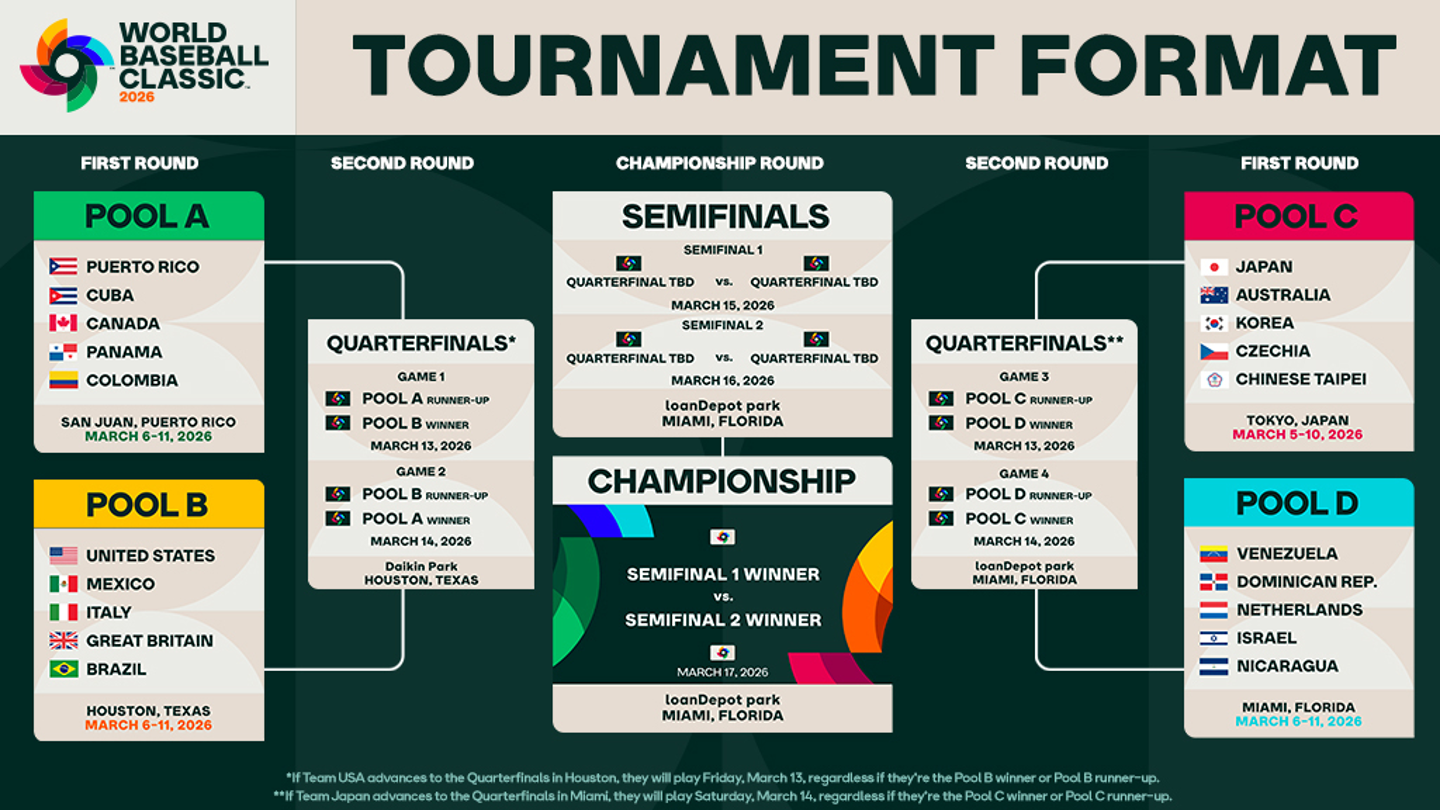
The five teams competing in Pool D — Venezuela, the Dominican Republic, the Netherlands, Israel, and Nicaragua — will play their games in Miami from March 6 to March 11. The two clubs with the best records after playing each of the other four will advance to the Knockout stage, where they will compete in a single-elimination bracket against the six teams that advance from the other pools. Read the rest of this entry »


Beneath the Surface of World Baseball Classic Pool C

Sam Navarro-USA TODAY Sports

The rosters for the 2026 World Baseball Classic were announced late last week, so aside from changes due to injuries or insurance eligibility decisions, we now know who will be suiting up for each country when the tournament begins early next month. In this series of posts, you’ll find a team-by-team breakdown, with notable players, storylines to monitor, and speculation on the serious stuff, such as how the squad will fare on the field, as well as commentary on some of the less serious stuff, like uniforms and team aura.

If you missed the post covering Pool A, or you need a quick refresher on how the WBC works, you can catch up on that here. And the post covering Pool B is right over here.

The five teams competing in Pool C — Japan, South Korea, Australia, Czechia, and Chinese Taipei — will play their games in Tokyo from March 5 to March 10. The two clubs with the best records after playing each of the other four will advance to the Knockout stage, where they will compete in a single-elimination bracket against the six teams that advance from the other pools. Read the rest of this entry »


Splashing Down in Pool B of the World Baseball Classic

Rhona Wise-USA TODAY Sports

The rosters for the 2026 World Baseball Classic were announced late last week, so aside from changes due to injuries or insurance eligibility decisions, we now know who will be suiting up for each country when the tournament begins early next month. In this series of posts, you’ll find a team-by-team breakdown, with notable players, storylines to monitor, and speculation on the serious stuff, such as how the squad will fare on the field, as well as commentary on some of the less serious stuff, like uniforms and team aura.

If you missed the post covering Pool A, or you need a quick refresher on how the WBC works, you can catch up here.

The five teams competing in Pool B — the United States, Mexico, Italy, Great Britain, and Brazil — will play their games at Daikin Park in Houston from March 6 to March 11. The two clubs with the best records after playing each of the other four will advance to the Knockout stage, where they will compete in a single-elimination bracket against the six teams that advance from the other pools. Read the rest of this entry »


Jumping Into the World Baseball Classic’s Pool A

Sam Navarro-USA TODAY Sports

Final rosters for the 2026 World Baseball Classic were announced late last week, so aside from small changes due to injuries or insurance eligibility decisions, we now know who will be suiting up for each nation when the tournament begins early next month. In this series of posts you’ll find a team-by-team breakdown with notable players, storylines to monitor, and speculation on the serious stuff, such as how the squad will fare on the field, as well as commentary on some of the less serious stuff, like uniforms and team aura.

First, a quick refresher on how the WBC works and all the important details for this year’s edition. Twenty nations qualify for the tournament based on performance either in pool play during the previous WBC or during qualifying events last spring. The 20 teams are divided into four pools of five teams for the first stage of the tournament, which runs from March 5 to March 11. Team pool assignments were made last April and attempted to prioritize competitive balance (understanding that final rosters were not yet known), with host nations assigned to pools playing in their home countries. This year, pool play will be conducted at Hiram Bithorn Stadium in San Juan, Daikin Park in Houston, the Tokyo Dome in Tokyo, and LoanDepot Park in Miami.

During pool play, each team plays the other four teams in its assigned pool, and the two teams with the best record in each pool advance to the Knockout stage. During the Knockout stage, the remaining eight teams are placed into a single-elimination bracket that will determine the overall winner. The first round of bracket play will take place on March 13 and 14, with the semifinals on March 15 and 16, and the championship game on March 17.

Read the rest of this entry »


Baseball Belongs to the World

Japan World Baseball Classic
Rhona Wise-USA TODAY Sports

By its very definition, the World Baseball Classic is a global baseball tournament; it’s right there in the name after all. It also feels obvious: Japan won the WBC for the third time, led by the best player on the earth, with a lineup and rotation and bullpen full of NPB All-Stars, and did so by beating Team USA and its All-MLB roster. The United States is the sport’s birthplace and the home of its premier professional league, but the game long ago left its borders, and through the WBC, we’ve gotten to see just how strange and great and flat-out joyful it can be around the world.

If you’ve watched the WBC before, you’ve known this, or at least gotten glimpses of it. If this WBC was your entry point into baseball beyond our shores, then you saw it damn near every day — not just through Japan overcoming its competition but through Mexico almost upsetting them on the way to that title, or through the Dominican Republic and Puerto Rico and Venezuela playing with their motors revved all the way up, or through just how many times the United States, with Mookie Betts and Mike Trout and Nolan Arenado (I could literally just list the entire ridiculous lineup), was pushed up against a wall and forced to fight its way free. That they did is a testament not just to the absurd collection of talent assembled on that roster but also to how good the rest of the world now is, and while it’s too early to declare the results of this year’s tournament to be a sea change, it’s also no overreaction to note that the WBC is a genuine competition with multiple viable contenders and not just a slower version of The Dream Team stomping wildly overmatched countries by double digits.

That fact can get lost given the understandably and disproportionately heavy focus that the United States and MLB receive in the history of the sport. Baseball in other countries is framed primarily as “Here’s when Americans introduced the game,” and foreign players are usually assessed on a basis of “When will they come to MLB, and how good will they be?” (We here at FanGraphs are as guilty of the latter as anyone else.) The rest of the world, in the minds of most American fans, exists as a feeder for MLB, and by default, the rest of the world will always be a step behind, producing greatness but never overtaking the United States as the center of the baseball universe.

By virtue of the money it makes and the level of competition, MLB is the peak of the mountain, and no number of WBC wins by Japan or any other country will change that. Tuesday night didn’t provide a sneak peak at our new NPB overlords. But forget about that hierarchy and its demand that the only game that matters is the one that takes place from April to October on one continent, or the blinkered myopia that unless a team is hoisting a World Series trophy at the end, then it was all for nothing. There’s more to baseball than the narrow confines of MLB, and the sport itself will only grow and improve the more America’s place atop the pyramid is challenged — the more that places like Japan and Cuba and Mexico but also Great Britain and Colombia and Taiwan produce star players at any level.

More than anything, that was the message of the WBC: baseball is global, and baseball is better by being global. No culture, society or art has ever been better for being closed off, or for shunning the wider world. Baseball is no different. Diversity breeds innovation, and innovation keeps the game from getting stale. We should celebrate the version of baseball in which America isn’t the unquestioned champion, in which other countries get to see themselves finding the kind of success that this country tends to monopolize when it comes to organized sports. Spread the joy and receive plenty in return; open the world and delight in who walks in the door. Be happy when the competition gets better and stronger and pushes us to do the same.

The 2023 WBC was roaring Dominican and Puerto Rican fans in Miami, sellout crowds in Taipei and Tokyo, unexpected star turns from Czech and Nicaraguan and British players. It was a sign of how far the game has spread and how deep it lies in the DNA of so many disparate places, with no common culture or connectors other than a bat, a ball, and four bases. It was a celebration of all the different ways that fans enjoy the game, and if you ever doubt that, think about the brass bands and ringing chants in the stands backing Japan or the Latin American fans turning LoanDepot Park into a week-long block party or the videos of people around the world, watching in bars or at home in the darkest hours of the night or at dawn or in the middle of the afternoon, tuning into an exhibition in which the only prize was national pride. It was proof that baseball is more than MLB.

You saw that made plain on Tuesday night, when Shohei Ohtani struck out Trout in a moment so laden with symbolism that you could probably build a book around it, or at least a short 30 for 30 episode. (Fittingly and deservingly, it was Ohtani who was named the tournament MVP.) It’s too soon to tell if that at-bat is one of those hinge points in history, around which baseball empires fall and new ones rise and the course of the sport’s existence is inexorably and irretrievably altered. But that moment doesn’t have to be so lofty or ponderous. It can simply be a reflection of a truth that the WBC made crystal clear: Baseball belongs to the world.