Cincinnati Reds Top 39 Prospects

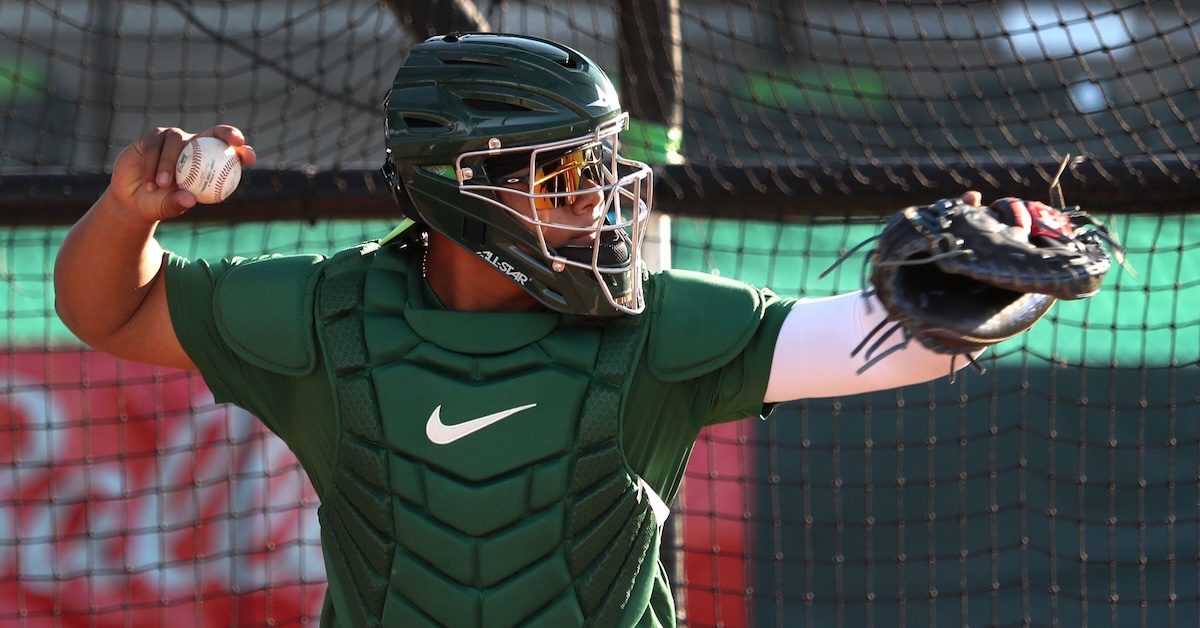
Alfredo Duno Photo: David TuckerNews-Journal/USA TODAY NETWORK

Below is an analysis of the prospects in the farm system of the Cincinnati Reds. Scouting reports were compiled with information provided by industry sources as well as my own observations. This is the sixth year we’re delineating between two anticipated relief roles, the abbreviations for which you’ll see in the “position” column below: MIRP for multi-inning relief pitchers, and SIRP for single-inning relief pitchers. The ETAs listed generally correspond to the year a player has to be added to the 40-man roster to avoid being made eligible for the Rule 5 draft. Manual adjustments are made where they seem appropriate, but we use that as a rule of thumb.

A quick overview of what FV (Future Value) means can be found here. A much deeper overview can be found here.

All of the ranked prospects below also appear on The Board, a resource the site offers featuring sortable scouting information for every organization. It has more details (and updated TrackMan data from various sources) than this article and integrates every team’s list so readers can compare prospects across farm systems. It can be found here.

Reds Top Prospects
Rk Name Age Highest Level Position ETA FV
1 Alfredo Duno 20.0 A C 2028 55
2 Sal Stewart 22.0 MLB 3B 2026 50
3 Rhett Lowder 23.8 MLB SP 2026 50
4 Steele Hall 18.4 R SS 2030 45+
5 Héctor Rodríguez 21.8 AAA RF 2026 45
6 Jose Franco 25.1 AAA SP 2026 45
7 Cam Collier 21.1 AA 1B 2027 45
8 Zach Maxwell 24.9 MLB SIRP 2026 40+
9 Chase Petty 22.7 MLB SP 2026 40+
10 Carlos Jorge 22.3 A+ CF 2027 40+
11 Tyson Lewis 20.0 A SS 2029 40+
12 Hansel Jimenez 19.0 R 3B 2030 40+
13 Liberts Aponte 18.1 R SS 2031 40+
14 Aaron Watson 19.0 R SP 2031 40+
15 Mason Morris 22.3 A MIRP 2029 40+
16 Edwin Arroyo 22.3 AA SS 2026 40
17 Leo Balcazar 21.5 AA SS 2027 40
18 Jirvin Morillo 19.0 R C 2030 40
19 Arnaldo Lantigua 20.0 A LF 2029 40
20 Luke Holman 23.0 A SP 2028 40
21 Julian Aguiar 24.6 MLB SP 2026 40
22 Sheng-En Lin 20.3 A SP 2028 40
23 JeanPierre Ortiz 21.8 A SP 2028 40
24 Iker Redona 18.0 R SP 2030 40
25 Nick Sando 24.6 AA SIRP 2027 40
26 Drew Pestka 21.6 A SIRP 2027 40
27 Anyer Laureano 23.0 A SIRP 2028 40
28 Tyler Callihan 25.5 MLB 2B 2026 35+
29 Ryjeteri Merite 20.0 R SP 2029 35+
30 Kevin Abel 26.8 AAA MIRP 2026 35+
31 Jay Allen II 23.1 AA CF 2026 35+
32 Victor Acosta 21.5 A+ SS 2027 35+
33 Kyle Henley 21.0 A CF 2030 35+
34 Yerlin Confidan 23.0 A+ RF 2027 35+
35 Adolfo Sanchez 19.3 R RF 2030 35+
36 Alfredo Alcantara 20.2 A 2B 2029 35+
37 Simon Miller 25.3 AA SIRP 2027 35+
38 Deivi Villafana 22.6 R SIRP 2028 35+
39 Ty Floyd 24.3 A SP 2028 35+
Reading Options
Detail Level
Data Only
Full
Position Filter
All

55 FV Prospects

Signed: International Signing Period, 2023 from Venezuela (CIN)
Age 20.0 Height 6′ 2″ Weight 235 Bat / Thr R / R FV 55
Tool Grades (Present/Future)
Hit Raw Power Game Power Run Fielding Throw
20/40 60/70 25/65 50/40 40/60 60

After his first two seasons were marred by multiple injuries (elbow and rib), Duno’s absurd physical gifts were on display in 2025, as he slashed .287/.430/.518 with more walks than strikeouts, led the FSL with 18 homers (only one other player had more than 11), and then struggled in the Arizona Fall League until he went nuclear in the postseason. Duno is one of the freakier prospects in baseball, a tool shed 6-foot-2 catcher with enormous power and rare twitch for such a big guy. His titanic size and strength, as well as his remarkable agility, give Duno extraplanetary power potential and allow one to forecast huge growth for him on defense. His ability to explode out of his crouch is incredible, and make him a threat to turn an errant pitch into an opportunity to hose a runner who underappreciates his quickness. Though he isn’t a great pitch framer right now, catchers with this kind of physicality tend to develop into good ones over time as they get a feel for how to leverage their size. Technical refinement should yield an eventually plus defender.

Though he cut his strikeout rate from 28.8% in 2024 to 18.4% in 2025, Duno is probably going to punch out quite a bit in the big leagues. His swing features a ton of effort, and his underlying contact rate (69%) is in a yellow flag territory, with most of his misses coming against elevated fastballs. But don’t let your fastball leak toward Duno’s hands, or he’s going to rip it into the parking lot. He is still getting a feel for his volcanic bat speed and bodily verve, and his timing at the dish improved throughout 2025; his skill as a hitter should continue to improve and his hit tool is going to play up a bit because of how hard he puts the ball in play. This is a college-aged catcher with 30-plus homer power, plus plate discipline, and a profile saturated with freak factor thanks to Duno’s size and athleticism. He plays the game with a youthful affability and enthusiasm, which can be a double-edged sword at catcher and result in some bloopers, but that’s common for a prospect this age. There’s a chance that Duno could be a top five overall prospect in 12 to 18 months if his contact rate can just hold around 70% as he climbs the minors.

50 FV Prospects

2. Sal Stewart, 3B

Drafted: 1st Round, 2022 from Westminster Christian HS (FL) (CIN)
Age 22.0 Height 6′ 3″ Weight 240 Bat / Thr R / R FV 50
Tool Grades (Present/Future)
Hit Raw Power Game Power Run Fielding Throw
50/55 55/55 40/55 30/20 30/40 45

I had questions about Stewart entering 2025 that he emphatically answered. He tends to be late on fastballs and is rarely on time to pull them in the air, and I worried his contact ability would dip as he faced better velo, and that this would make his overall production more demure, especially if/when the immobile Stewart moves to first base. Though he still has a stark inside-out batted ball profile, he’s made mechanical tweaks to preempt this potential issue, and he is such an exceptional hitter in basically every other way that he is arguably as sure a thing as a bat-first prospect can be after torching the upper minors (.309/.383/.524) and comporting himself well during an 18-game cup of coffee in the big leagues.

You Aren't a FanGraphs Member
It looks like you aren't yet a FanGraphs Member (or aren't logged in). We aren't mad, just disappointed.
We get it. You want to read this article. But before we let you get back to it, we'd like to point out a few of the good reasons why you should become a Member.
1. Ad Free viewing! We won't bug you with this ad, or any other.
2. Unlimited articles! Non-Members only get to read 10 free articles a month. Members never get cut off.
3. Dark mode and Classic mode!
4. Custom player page dashboards! Choose the player cards you want, in the order you want them.
5. One-click data exports! Export our projections and leaderboards for your personal projects.
6. Remove the photos on the home page! (Honestly, this doesn't sound so great to us, but some people wanted it, and we like to give our Members what they want.)
7. Even more Steamer projections! We have handedness, percentile, and context neutral projections available for Members only.
8. Get FanGraphs Walk-Off, a customized year end review! Find out exactly how you used FanGraphs this year, and how that compares to other Members. Don't be a victim of FOMO.
9. A weekly mailbag column, exclusively for Members.
10. Help support FanGraphs and our entire staff! Our Members provide us with critical resources to improve the site and deliver new features!
We hope you'll consider a Membership today, for yourself or as a gift! And we realize this has been an awfully long sales pitch, so we've also removed all the other ads in this article. We didn't want to overdo it.

Stewart tracks pitches exceptionally well and can guide his barrel all over the zone to impact them. His deft hands can strike the baseball with power even when Stewart is forced to adjust to breaking stuff mid-flight, and he can drive pitches into the gaps without taking his best swing. He’s an exceptional bad ball hitter, and makes lots of high-quality contact even when he’s chasing soft stuff below the zone. The major league average contact rate on pitches outside the zone is 54%, while Stewart’s in 2025 was an incredible 66%. Pitchers’ best chance of beating Stewart is to try to rip fastballs past him at the top of the zone, as he swings underneath enough of these that his in-zone contact rate was merely average in 2025, even after making a relevant adjustment. Whiffs against pitches like this were the primary reason I was apprehensive about stuffing Stewie last year; his front foot was often late getting down in 2024. He now simply doesn’t continue to close his stride when he sees an elevated fastball; he just hauls off and hacks with his front foot landing more toward third base. That Stewart can ID pitches and adjust his footwork accordingly like this is pretty special. He’s still often late on fastballs, but not so late that he misses them altogether. He simply keeps the second baseman and right fielder busy by driving them the other way. His splits against high-velocity heaters were very favorable: In a 225-pitch sample against pitches 94 mph and above in 2025, he had an 1.042 OPS.

Stewart’s third base defense isn’t great. He’s a husky kid with poor range and a mediocre peak-effort throwing arm, but his hands and actions allow him to make some nice plays, and his short-area, wrist-flick throws are crisp. He isn’t unplayable at third but is definitely below average, and he’s pretty likely to end up primarily at first as he ages. It’s going to be important for Stewart to work to stay agile, as it’s possible that things could go sideways for him athletically given the makeup of his build. The contagious competitive fire and intensity Stewart brings to the field every day needs to extend to his conditioning to help preserve his talent as a hitter for as long as possible. So long as that happens, he’s going to be a really good hitter and a corner infield piece the Reds can build around.

Drafted: 1st Round, 2023 from Wake Forest (CIN)
Age 23.8 Height 6′ 2″ Weight 200 Bat / Thr R / R FV 50
Tool Grades (Present/Future)
Fastball Slider Changeup Command Sits/Tops
50/50 60/60 45/50 45/50 92-95 / 97

Lowder’s performance steadily improved throughout his college career, which ended with a bang. He went 15-0 in 17 starts for Wake Forest prior to the 2023 College World Series and posted a sub-1.00 WHIP and sub-2.00 ERA during his draft spring. He was drafted seventh overall as a quick-moving, strike-throwing, three-pitch starter, and in his first full pro season, Lowder was exactly that. He ascended all the way to Cincinnati, where he made six starts at the end of the year, not enough to lose rookie eligibility. His 2025 season was derailed by injuries. A preseason forearm strain kept him shelved until May, and after a few starts back, Lowder strained his oblique and was out until late August. He was only able to work 9.1 regular season innings and then nine more in four Arizona Fall League starts.

A gangly, unspectacular athlete with a theatrical, cross-bodied delivery, Lowder clearly works hard to keep his somewhat awkward frame in great shape. His bow-legged front side, as well as the stiffness in his hips and lower back, contribute to a funky operation that aids in deception, albeit via an atypical look for a starter. Lowder’s stuff isn’t overwhelming, but the pieces of his repertoire fit together nicely, and while imprecise, he fills the zone with them. His best pitch is his mid-80s slider, which has considerable length for a breaking ball that hard and spins at roughly 2,800 rpm. The sink/tail action of his fastball limits its bat-missing ability in the strike zone, but its movement pairs nicely with his slider, and it’s hard for hitters to cover both sides of the plate when those two pitches are located well in sequence. Lowder’s changeup has enough tail and sink to miss the occasional bat, but it more frequently induces groundballs, which is true of his entire repertoire. This is the stuff of a low-variance fourth starter whose profile now has a little bit more volatility because of the injuries.

45+ FV Prospects

4. Steele Hall, SS

Drafted: 1st Round, 2025 from Hewitt-Trussville HS (AL) (CIN)
Age 18.4 Height 6′ 0″ Weight 190 Bat / Thr R / R FV 45+
Tool Grades (Present/Future)
Hit Raw Power Game Power Run Fielding Throw
20/45 40/50 20/45 70/70 45/60 50

Hall reclassified from the 2026 graduating class and became one of the youngest players available in the 2025 group, as he turned 18 a couple weeks after the draft. Because he reclassified late in the fall, he was scouted less intensely in the summer of 2024 (when teams didn’t know he’d be eligible) and more during the spring of 2025. Hall became much, much stronger throughout the summer of 2024 — his arms grew more than the Grinch’s heart during that span — but he was still more a catalyst with a slash-and-dash style and an oppo gap tendency than a slugger. His contact performance in a relatively limited underclass showcase environment was only fair, as breaking balls evaded him at a concerning rate. I had him ranked 35th on the 2025 Draft Board, but Hall was selected ninth overall and was signed away from a Tennessee commitment for a whopping $5.75 million.

Hall has breathtaking speed and was one of the fastest players in his draft class. He reaches top speed in the blink of an eye, will post some 4.00 run times to first, looks like he’s floating from base to base, and maintains top speed as he changes direction. He has game-changing wheels, even compared to big leaguers, and this speed plays on defense, too, as Hall has superb range and athleticism. We’ll learn more about whether his swing’s length will prevent him from making a meaningful offensive impact in pro ball in 2026 as he faces pro stuff. He has a realistic low-end regular shortstop floor, with more ceiling than that if it turns out Hall can shorten his swing enough to catch pro velocity. His look during bridge league and instructs in this regard was mixed.

45 FV Prospects

Signed: International Signing Period, 2021 from Dominican Republic (NYM)
Age 21.8 Height 5′ 8″ Weight 200 Bat / Thr L / R FV 45
Tool Grades (Present/Future)
Hit Raw Power Game Power Run Fielding Throw
40/50 50/50 40/50 45/45 45/50 50

Rodríguez, who came over from the Mets in the 2022 Tyler Naquin trade, has performed at a high level (he’s a career .289/.337/.463 hitter) despite being one of the most aggressive, chase-prone hitters in pro baseball during the last half decade. He spent 2025 split between Double- and Triple-A and slashed a combined .283/.336/.450, and though his performance slipped while he was in Louisville (85 wRC+), the Reds still added Rodríguez to the 40-man roster after the season.

Though he’s a small athlete with roughly average bat speed, Rodríguez packs a pretty good punch for a hitter his size. He’s a compact 5-foot-10, 200 pounds or so, but he has above-average measurable raw power at age 21 (though his bat speed is more average) and he was able to muster an above-average hard-hit rate (46%) in 2025. He maneuvers the barrel around the zone well, and his short levers help him stay on time to pull and lift the baseball, and make Rodríguez a threat to golf out middle-in pitches. It’s tough to totally buy into Rodríguez’s long-term production because of his epicurean approach. This guy swings at everything, and no matter the pitch type or situation, his chase rates are multiple standard deviations worse than the major league average.

Given how apt he is to expand the zone, it’s incredible that Rodríguez has consistently maintained low strikeout totals, which speaks to his excellent bat control. But there’s a pretty good chance that he ends up a sub-.300 OBP hitter, and now that the Reds have stopped deploying him in center field (he’s still playing there for Escogido), it’s tough to project Rodríguez as a consistent impact performer when compared to his corner outfield peers. Instead, his projection is that of a righty-mashing platoon outfielder with added variance coming from the volatile chase/OBP portion of his skill set. Jake Fraley‘s departure clears the runway for Rodríguez a bit, and he’ll now likely compete with Will Benson and Tyler Callihan for reps.

6. Jose Franco, SP

Signed: July 2nd Period, 2018 from Venezuela (CIN)
Age 25.1 Height 6′ 2″ Weight 257 Bat / Thr R / R FV 45
Tool Grades (Present/Future)
Fastball Slider Curveball Changeup Command Sits/Tops
60/60 50/55 50/55 30/40 45/50 94-97 / 99

Franco signed in the fall of 2018, and his career got off to a relatively slow start due to the timing of the pandemic and a few injuries. Until June of 2024, he’d spent the better part of three seasons at Low-A Daytona; since then, he’s been ascendant. He split 2025 between Double-A Chattanooga and Triple-A Louisville and posted a 3.11 ERA across a career-high 110 innings. Most impressively, Franco and his hulking 257 pound frame were still generating mid-to-upper-90s velo at the very end of the year. He generates plus velo with ease and balance, allowing him to throw lots of strikes even though he lacks precise feel for location.

What complicates Franco’s profile is his lack of a true weapon with which to attack lefties. His changeup lacks movement and his feel for it is just okay. His breaking pitches run together in the 83-88 mph range, with some looking like sliders and others looking more like curveballs, but from a measurable movement standpoint, they’re all pretty similar. Because of how well Franco hides the baseball, his breaking pitches played like 55- or 60-grade offerings in 2025, but visually both are closer to average. His ability to pair elevated fastballs with surprise breakers in the zone gives him the attack foundation of a backend starter, and in Franco’s case it’s fair to say he’s going to have a plus fastball now that he’s shown he can hold big velo all year. He’s a threat to root into the back of Cincinnati’s rotation at some point in 2026 and projects as a long term no. 4/5 starter.

Drafted: 1st Round, 2022 from Chipola JC (FL) (CIN)
Age 21.1 Height 6′ 2″ Weight 230 Bat / Thr L / R FV 45
Tool Grades (Present/Future)
Hit Raw Power Game Power Run Fielding Throw
30/40 55/60 30/55 40/30 30/40 60

Collier graduated high school early in order to attend a junior college and turn pro at an especially young age. He was signed for a massive over-slot bonus of $5 million at pick 18 in 2022, and though he’s been in pro ball for four years, he is still barely 21 years old. Collier was coming off a career-best season in 2024 — .248/.355/.443 line with 20 homers as a 19-year-old at High-A Dayton — when he tore the UCL in his left thumb during spring training. It necessitated surgery and kept Collier out until mid-May. He spent two weeks rehabbing in Arizona, then another couple back in Dayton before the Reds felt comfortable promoting him to Double-A Chattanooga, where he hit a modest .263/.377/.347 with just two homers in 74 games. He had a similar low-slug line in the Arizona Fall League.

Collier’s difficulty accessing his power in 2025 might reasonably be explained by the nature of his injury, as hand/wrist issues tend to linger even after hitters return to action. But Collier’s issues are more mechanical in nature. He has lovely-looking low-ball power, but for most of its journey, his bat path is on a downward trajectory that limits his ability to cover the top of the zone, and makes it difficult to launch and slug even though he’s hitting the ball hard. His measured exit velocities remained excellent — he has above-average raw power already and should have plus raw at peak — but Collier’s ability to do damage is limited to the lower third of the zone. He has skillful feel for adjusting his hands and body posture to make flush contact with these pitches, and he has the power to hit fastballs hard to the opposite field, but when you’re talking about a first base prospect, any kind of offensive flaw looms large in the player’s overall profile.

Collier was drafted as a third baseman but spent two-thirds of his defensive innings at first base in 2025. His stout build and lack of mobility made him a well below-average third baseman, but he’s a natural-looking first baseman with plus hands, scoopability, and ball skills. He’ll add some value on defense even though he’s going to be relegated to first base, but because it’s going to be tough for Collier to tap into his raw power with this swing, he’s going to be a lower-end regular there.

40+ FV Prospects

8. Zach Maxwell, SIRP

Drafted: 6th Round, 2022 from Georgia Tech (CIN)
Age 24.9 Height 6′ 6″ Weight 275 Bat / Thr R / R FV 40+
Tool Grades (Present/Future)
Fastball Slider Cutter Command Sits/Tops
70/70 70/70 50/55 30/35 98-101 / 102

An absolute unit, Maxwell is the size of some NFL linemen at a whopping 6-foot-6, 275 pounds. He spent most of 2024 and 2025 at Triple-A Louisville and made his big league debut in late August. Maxwell wields triple-digit heat and can reach back for 102. He hides the ball well and creates backspinning action on his fastball, but his inability to command it to effective locations prevents it from being a truly elite pitch. The same is true of his slider, which has plus two-planed movement at plus-plus velocities. He’ll throw it as hard as 93 mph (it usually sits 88-89), and it has power finish that often embarrasses hitters. A new cutter in 2025 gave him a way of inducing weak contact when he falls behind in the count.

This is late-inning stuff. Maxwell has K’d 14 hitters per 9 IP throughout his pro career, and if he had even average command, he’d be a slam dunk setup man or closer prospect. But his walk rates have tended to live in the 13-16% range, his career WHIP is just shy of 1.60, and he hasn’t been totally dominant because a lack of feel for location undermines his performance. Maxwell is a pretty tightly wound athlete and isn’t especially fluid, so this isn’t something I’d expect to improve all that much. He’s still going to be an impact reliever, but he’s a better fit as a good bullpen’s third option rather than its first or second.

Drafted: 1st Round, 2021 from Mainland HS (NJ) (MIN)
Age 22.7 Height 6′ 3″ Weight 190 Bat / Thr R / R FV 40+
Tool Grades (Present/Future)
Fastball Slider Changeup Cutter Command Sits/Tops
30/55 50/55 40/50 45/60 40/45 94-97 / 100

Petty, who touched 102 mph in high school, came to the Reds from Minnesota during the spring of 2022 in a trade for Sonny Gray. After missing time with an elbow issue in 2023, he had a healthy and complete 2024 season in which he worked 137 innings spent mostly at Double-A Chattanooga, many more frames than he had thrown in any year prior. At the very end of the season, after Petty had been promoted to Louisville, his fastball was still sitting 94-97 mph, and he has carried that into 2025 and had a great first three months of the season that included a three-game big league cameo. He posted a 2.86 ERA at Louisville through June, as both his slider and changeup were missing bats at a plus rate. In the second half, though, Petty got shelled. From July on he had an ERA over nine, his fastball was very vulnerable to hard contact, and he was bounced from several starts before he could get out of the third inning.

Petty’s fastball shape has never been great, but his velocity and lower arm angle has tended to aid its effectiveness. In the latter half of 2025, it was getting crushed even though Petty was still throwing plenty hard. His secondary pitches’ bat-missing ability also took a dip. A year ago Petty looked like a near-ready no. 4 starter. His 90 mph gyro slider acted like an effective cutter, his 84-88 sweeper is a bat-misser when located well, and his huge arm speed allowed for changeup projection. In 2025, his fastball was less sink-oriented and Petty’s breaking ball spin rates lost a couple hundred rpm. He had no IL stints or obvious mechanical change, his stuff just wasn’t as good as before.

What might indicate that Petty will get back to his 2024 look? For one, he’s a very special athlete whose body unwinds like a tornado during his delivery. He powers down the mound and creates huge hip/shoulder separation. The potential for a total bounce-back, or a leap in his stuff if Petty is moved into the bullpen, is priced into his FV grade here. It’s important not to lose sight of Petty’s special athleticism or arm strength and overreact to a bad year, but it’s also important to acknowledge that if his 2026 stuff looks like his late-2025 stuff, his prospectdom is in trouble.

Signed: International Signing Period, 2021 from Dominican Republic (CIN)
Age 22.3 Height 5′ 10″ Weight 180 Bat / Thr L / R FV 40+
Tool Grades (Present/Future)
Hit Raw Power Game Power Run Fielding Throw
30/40 45/50 35/45 60/60 50/60 60

The biggest development for Jorge across the last year or so has been his wildly successful transition to center field. In 2024, he moved from second base (where he wasn’t very good) to center, and he has very quickly turned into an impact defender there. He’s much more comfortable going back on balls hit over his head than he is attacking ones hit in front of him, but his speed and guile around the wall have helped him make a bunch of highlight reel plays out there as he goes full tilt into the gaps. The full-body style of throwing outfielders are more often able to use has turned out to be a better fit for Jorge as well, and he has lethal arm strength when he beats the ball to the spot and can set himself to throw, which he often does. This defensive ability gives Jorge an extra outfielder’s floor.

The amount of offense he’s going to produce is likely to be limited by his size. Jorge is yoked for a 5-foot-9 guy, but you can only be so strong when you’re that small. His full-body swing is wildly entertaining, but be careful not to mistake all that effort for big bat speed, as Jorge’s is closer to average. The uppercut style helps generate loft from pole to pole, though Jorge’s wall-scraping power is more dangerous when he can drop the bat head and golf something out to his pull side. Though his 2025 line (.251/.342/.355) was unexciting and his tools are modest, this is a well-rounded hitter without an issue that might cause his entire profile to bottom out. Though he wasn’t added to the Reds’ 40-man roster during the offseason, Jorge continues to project as a glove-oriented fourth outfielder.

11. Tyson Lewis, SS

Drafted: 2nd Round, 2024 from Millard West HS (NE) (CIN)
Age 20.0 Height 6′ 2″ Weight 200 Bat / Thr L / R FV 40+
Tool Grades (Present/Future)
Hit Raw Power Game Power Run Fielding Throw
20/30 60/70 30/55 70/70 40/45 50

So cut that he appears to have been sculpted from marble, Lewis is the type of athlete who looks like he could believably play just about any sport at a high level, from college wrestling or swimming to football. After signing out from under an Arkansas commitment for a little over $3 million, Lewis had one of the weirder full season pro debuts in 2025, as he generated the measurable power of an apex power-hitter and the contact performance of a total non-prospect. He hit multiple balls over 118 mph during the season and generated a 109-mph EV90, which was top 50 in all of pro baseball. That said, only a few big league hitters have a contact rate as low as the 63% mark Lewis posted against low-level minor league arms. That’s down in Gabriel Arias territory, a player who’s also a good comp for Lewis in terms of physicality and power, though Arias is a much better defender right now.

The hitting environment in Arizona allowed Lewis to thrive despite whiffing a ton, and he had a .928 OPS when he was promoted to Low-A Daytona for the final six weeks of the season. Lewis’ strikeout rate exploded to 35.4% there, but he still hit for enough power to post an above-average overall batting line, at times cutting his stride completely in an effort to be on time. Lewis has great bat speed once his hands get moving, but he’s usually late, he doesn’t track pitches especially well, and he’s quite chase-prone. His showcase tools are deafening and exciting enough to hold Lewis in a fairly valuable FV tier just in case things improve, but hitters who whiff this much in rookie and A-ball tend to be low-probability prospects.

12. Hansel Jimenez, 3B

Signed: International Signing Period, 2024 from Dominican Republic (CIN)
Age 19.0 Height 6′ 1″ Weight 195 Bat / Thr R / R FV 40+
Tool Grades (Present/Future)
Hit Raw Power Game Power Run Fielding Throw
20/30 55/70 25/55 50/40 35/55 55

Jimenez is stacked intentionally right behind Tyson Lewis because the two are very similar: extreme power-over-hit prospects whose bat speed and power is exciting enough to make them a valued player despite red flag strikeout issues. In Jimenez’s case, he K’d at a 25.9% clip in his second DSL season, though he barely played in 2024. He flashed big bat speed and pull power in Arizona during the fall and was sent to play Winter Ball in Australia with the Sydney Blue Sox.

The way Jimenez’s body unwinds as he swings is explosive and beautiful. Even on swings where he doesn’t take a well-executed stride, he’s still able to produce power because of this brand of athleticism, which at times includes him dropping to a knee to lift the baseball. Jimenez’s underlying data reinforces that he has precocious power, with a hard-hit rate of 45%, a 113 mph max exit velocity, and a 106 mph EV90 in 2025, all above the big league average on a teenage hitter. He doesn’t have Corey Seager’s physical projection or anything, but Jimenez’s size and athleticism look like that of a dangerous big league power hitter. Still, his contact performance is scary. Hitters with a sub-70% contact rate in rookie ball tend not to pan out, and Jimenez posted a 64% mark in 2025. He has the tools of a high school prospect taken in the second round of a draft and might be a big arrow up guy in 2026 if he can make more contact in Arizona.

13. Liberts Aponte, SS

Signed: International Signing Period, 2025 from Venezuela (CIN)
Age 18.1 Height 6′ 0″ Weight 170 Bat / Thr R / R FV 40+
Tool Grades (Present/Future)
Hit Raw Power Game Power Run Fielding Throw
20/40 30/45 20/40 55/55 45/60 55

Aponte was considered a glove-first shortstop when he signed for $1.9 million in January of 2025, but his DSL debut was more encouraging than anticipated on offense. Namely, Aponte has a little more juice than his amateur reports suggested. His wrists are strong through contact and help him generate above-average bat speed. He was tied for 15th among DSL hitters with seven homers in 45 games, and he still has room for strength on his spindly frame, so much so that it wouldn’t be shocking if the Reds left Aponte in the DSL for a second season because he’s not necessarily strong enough to compete on the Goodyear complex just yet. Aponte is very twitchy and has great hands and actions, so he’s still tracking as a viable shortstop and was an arrow-up prospect in this system throughout 2025.

14. Aaron Watson, SP

Drafted: 2nd Round, 2025 from Trinity Christian Acad. (FL) (CIN)
Age 19.0 Height 6′ 5″ Weight 205 Bat / Thr R / R FV 40+
Tool Grades (Present/Future)
Fastball Slider Changeup Command Sits/Tops
40/50 50/60 30/45 25/60 92-94 / 96

The Reds tend to be very active in Florida during the draft, whether that’s scouting the JUCO scene or properly assessing signability, and signing Watson away from a Florida commitment with a $2.7 million bonus is in that vein. Watson has a huge 6-foot-5 frame and sits about 93 mph with tail and downhill angle from a low-three-quarters arm slot. His arm stroke looks awkward at times, but Watson commands all three pitches, and a mid-80s slider with big glove-side length benefits the most from his polished feel. Right now, his changeups often sail on him. His size and pitchability foundation gives him a higher floor than most prep pitchers form the 2025 draft class, but his fastball shape might cap his ceiling. He’s a pretty standard second round high school developmental project.

15. Mason Morris, MIRP

Drafted: 3rd Round, 2025 from Ole Miss (CIN)
Age 22.3 Height 6′ 4″ Weight 230 Bat / Thr R / R FV 40+
Tool Grades (Present/Future)
Fastball Slider Cutter Command Sits/Tops
60/60 60/60 60/50 30/45 94-97 / 99

Morris was used in a long relief role at Ole Miss but ranked 50th on the 2025 Draft Board because he’s an obvious candidate to be upcycled into a starter prospect in pro ball. Morris would often go three or more innings in relief, he has starter’s size at 6-foot-4 and 225 pounds, and his secondary pitches are nasty enough that he might not need a good changeup to get lefties out because his cutter/slider combo is a nightmare in on their hands. Morris sat 96 mph from high-three-quarters slot in college, and he was 94-98 in his two post-draft appearances at Daytona. Morris also has starter-quality feel for consistent glove-side location, but he really only works to that half of the plate, which might have to change against pro hitters. Whether or not he has season-long starter stamina is a black box right now because he hasn’t done it, so I’m sticking with a long relief projection here since we at least know he can do that at a high level, but this guy should be developed as a starter.

40 FV Prospects

Drafted: 2nd Round, 2021 from Central Pointe Christian (FL) (SEA)
Age 22.3 Height 6′ 0″ Weight 175 Bat / Thr R / R FV 40
Tool Grades (Present/Future)
Hit Raw Power Game Power Run Fielding Throw
30/40 40/45 35/40 60/60 45/60 60

One of the Mariners prospects sent to Cincinnati in the Luis Castillo trade, Arroyo slashed .248/.321/.427 as a 19-year-old at High-A in 2023, with 49 extra-base hits in 123 total games on the year. A torn labrum and subsequent surgery shelved him for all of the 2024 regular season. In 2025, he slashed .284/.345/.371 at Double-A Chattanooga and then played winter ball in Puerto Rico. His 2025 batted ball profile was much different than in the years prior to his injury. This is a smaller athlete who took high-effort uppercut swings and was slated to have a below-average hit tool but get to some power by virtue of his style and approach. But in 2025, Arroyo struggled to lift the ball at all. His groundball rates had been in the 36-39% range since coming over from the Mariners, but he had a 50% groundball rate this past season. He was a much less dangerous hitter against pitches on the inner third in 2025, less able to pull stuff in the air from the left side of the dish. He was still able to produce a 107 wRC+ as a 21-year-old at Double-A, and it’s possible this is a temporary issue resulting from his injury and layoff, but his profile is in flux right now.

That extends to Arroyo’s defense. Arroyo is a special athlete who clearly has the range, athleticism, hands, and max-effort arm strength to play a quality shortstop, but his arm accuracy was a mess for the last couple of months of the regular season. He seems hellbent on using a low arm slot for basically every throw, and the further away from first base you get, the less that’s practical and creates risk that the throw sails or tails away from the first baseman. That said, the physical tools to play a good shortstop are here. The Reds gave Arroyo a 12-game run of reps at second base during the year, the first time he played the keystone at all in an actual game since 2021. This guy is athletic enough to play all over the place, and it might make sense for the Reds to move him around even more at Louisville in 2026 (his first option year on the 40-man) to see if Arroyo can play a superutility role.

17. Leo Balcazar, SS

Signed: International Signing Period, 2021 from Venezuela (CIN)
Age 21.5 Height 5′ 11″ Weight 190 Bat / Thr R / R FV 40
Tool Grades (Present/Future)
Hit Raw Power Game Power Run Fielding Throw
30/45 45/45 30/40 50/50 55/60 60

For a while now, Balcazar has been a prospect where the stats and scouting look are incongruous. He’s posted an above-average line at basically every minor league stop, including a successful 2025 season in which he hit 12 homers (double his previous single season high) and cut his strikeout rate in half (13.4%, down from 25% the prior three years). Granted, he was repeating High-A at the start of the year, but Balcazar’s underlying data is similarly strong, as his contact (79% overall, 86% in-zone) and measurable power are both hovering on either side of the big league average.

This is a college-aged shortstop who is already on a 40-man roster, and who has performed pretty well up through the mid-minors. Why then is he graded as more of a low-end utility type? For the most part it’s simply because I struggle to buy that Balcazar’s swing will continue to produce an everyday player’s stats at the big league level. He’s strong for his size but tends to be late to the contact point, and it’s tough for Balcazar to pull fastballs, an issue that will likely be more pronounced against big league velo. He is also a bit of a bucket strider, and swings inside a lot of sliders that finish on the plate. These issues are not so pronounced as to consider Balcazar a bust (his defensive fit ensures he won’t be), but they are concerning enough for me to override what the data alone is telling us about his skill level and project him as more of a fifth or sixth infielder on an active roster. Balcazar doesn’t have the arm strength of a traditional shortstop, but his hands, actions, and exchange are all plus and help him get rid of the ball quickly and accurately. First basemen will need to be on scoop duty when he makes plays in the hole, but he’s otherwise a fit there. That should carry him to a modest big league role.

Signed: International Signing Period, 2024 from Venezuela (CIN)
Age 19.0 Height 5′ 11″ Weight 177 Bat / Thr S / R FV 40
Tool Grades (Present/Future)
Hit Raw Power Game Power Run Fielding Throw
25/55 30/40 20/40 40/40 30/50 55

Morillo is a well-rounded, switch-hitting catcher who excels on both sides of the ball, and he presents an athletic foundation you can dream on. He owns a career .257/.414/.439 slash line in two DSL seasons, and came to Arizona for Instructional League in the fall of 2025, then thrived playing winter ball with the Sydney Blue Sox in Australia.

Morillo does a little bit of everything, and is a “skills over tools” type of prospect right now, but he’s well put together and is poised to add meaningful strength as he matures. If he can add relevant mass (and hopefully the power and catching durability that comes with it), then he’ll have a puncher’s chance to be a regular. RIght now Morillo’s game is about plate discipline and contact. He tracks pitches well and has a rhythmic, graceful lefty swing. On defense, his average arm plays up thanks to a quick exchange. Like most teenage catchers, Morillo is likely to be a slow developmental burn. A recent prospect like him is Blue Jays catcher Brandon Valenzuela, who has been in the minors for eight years and only now has found his way onto a 40-man roster.

Signed: International Signing Period, 2023 from Dominican Republic (LAD)
Age 20.0 Height 6′ 3″ Weight 220 Bat / Thr R / R FV 40
Tool Grades (Present/Future)
Hit Raw Power Game Power Run Fielding Throw
30/40 55/60 25/55 40/40 20/30 40

Lantigua was a two-year DSL performer in the Dodgers system, then was traded to the Reds when Los Angeles was trying to accumulate pool space to pay Roki Sasaki last offseason. His 50% hard-hit rate in 2024 was among the best in all of the minors, but Lantigua generated that repeating the DSL. His 2025 output — .265/.334/.490 split between the complex and Low-A — brought his abilities into greater focus.

Lantigua has above-average bat speed, and his swing and approach help him stay on time to pull the ball consistently. Though his contact performance was in line with the big league average, Lantigua’s feel for the barrel doesn’t look great to the eye. He swings inside a ton of sliders as he tries to execute his pull-heavy approach, and this projection assumes the strikeouts will proliferate as Lantigua faces better breaking balls. He’s tracking like a lefty-mashing corner outfielder and will likely be limited to left field due to below-average feel for defense, foot speed, and arm strength.

20. Luke Holman, SP

Drafted: 2nd Round, 2024 from LSU (CIN)
Age 23.0 Height 6′ 4″ Weight 210 Bat / Thr R / R FV 40
Tool Grades (Present/Future)
Fastball Slider Curveball Command Sits/Tops
40/40 60/60 60/60 35/55 91-94 / 96

Holman is a physical righty who went from Wilson High School in West Lawn, PA (Kerry Collins’ alma mater) to Alabama for two seasons, then to LSU, where he had a dominant junior year (with a sub-1.00 WHIP against SEC hitters) even though his velo was down a tick. After two starts at Daytona in 2025, Holman was put on the IL with a UCL injury that required surgery and cost him the rest of the season. If Holman continues to work with below-average velocity when he returns, his fastball’s lack of in-zone playability is probably going to be an issue. But he has two good breaking balls, led by a huge mid-70s rainbow curveball that looks like it’s headed to the backstop and then bends into the zone. His low-to-mid-80s slider has lateral action and distinct shape from the curveball, and is used as a chase pitch versus righties. Both breaking balls are plus. His delivery looks a little rough but walks were never an issue for Holman in college. He entered pro ball as a high-probability backend starter whose ceiling is probably limited by the line on his fastball.

Drafted: 12th Round, 2021 from Cypress College (CA) (CIN)
Age 24.6 Height 6′ 3″ Weight 210 Bat / Thr R / R FV 40
Tool Grades (Present/Future)
Fastball Slider Changeup Command Sits/Tops
45/50 45/50 45/55 50/55 93-95 / 97

Aguiar looked like a future Top 100 prospect in 2022 and 2023, as the former junior college infield convert mowed through both A-ball levels and spent the back half of the latter season at Double-A Chattanooga. That year, he worked 125 innings of 2.95 ERA ball, posting a 1.10 WHIP, a 26.8% K%, and a 7.2% BB%. In 2024, his stuff backed up and he needed Tommy John after the season, which cost him all of 2025.

None of Aguiar’s pitches generated even an average rate of miss in 2024. Before, his semi-erratic changeup (though it has been Aguiar’s best pitch on pure stuff) and well-commanded low-80s slider were both playing as above-average offerings, and his fastball was sitting 93-95 while touching 97. If the 2024 version of Aguiar was compromised by injury the whole time, then hopefully he’ll bounce back in 2026 and reclaim a no. 4/5 starter projection. But that 2024 version was more of a fringe 40-man prospect.

Signed: International Signing Period, 2023 from Taiwan (CIN)
Age 20.3 Height 5′ 11″ Weight 185 Bat / Thr L / R FV 40
Tool Grades (Present/Future)
Fastball Curveball Changeup Command Sits/Tops
45/50 50/55 45/55 25/60 90-94 / 95

Lin was a two-way amateur prospect who signed for $1.2 million, and while he has played the infield or DH’d for at least part of his three pro seasons, his future is clearly on the mound. After he hit .172 on the complex in 2025, it’s likely he’ll solely be a pitcher going forward. To that end, Lin looks like a backend starter. Though his fastball was in the 93-96 mph range during the fall of 2024, he was more in the 90-94 mph range in 47 innings of work throughout 2025. Lin’s fastball has plus carry and real utility as a chase pitch even at these velocities, but his secondary stuff isn’t nasty or consistent enough for him to pitch backward effectively and sustain his 3.06 ERA and 31.8% strikeout rate from the most recent season. His curveball and slider run together a bit and tend to be slow, often in the mid-to-upper-70s. Lin is a good athlete with a balanced and consistent delivery, he throws strikes, and he has a fairly robust four-pitch mix for a guy who has been a two-way player. But as he’s a relatively squat, 5-foot-11 righty, he offers little in the way of the physical projection that might yield more velo. This is a spot starter’s FV grade.

Drafted: 17th Round, 2023 from Chipola JC (FL) (CIN)
Age 21.8 Height 6′ 0″ Weight 180 Bat / Thr R / R FV 40
Tool Grades (Present/Future)
Fastball Slider Changeup Command Sits/Tops
50/55 50/55 30/45 30/50 91-95 / 97

Ortiz was a famous Puerto Rican high school two-way player (mostly a shortstop) who participated in a lot of the marquee national showcase events as an upperclassman. Ortiz was originally drafted by Washington coming out of high school but didn’t sign. He went to Chipola JC in Florida and played both ways there, then was the Reds’ 17th rounder in 2023 as a “draft and follow,” a long-defunct (and from 2007 to 2021, dormant) roster maneuver that allows clubs to pick a player and retain their rights into the next calendar year, well beyond the usual signing deadline. Ortiz went back to Chipola for the 2024 season, then signed for the max D&F amount of $225,000 in May of that year.

Ortiz has been deployed as a pitcher since turning pro and though he’s yet to exit Low-A, it’s going pretty well. He had a 2.86 ERA across 91.1 innings in 2025, and his fastball velocity grew throughout the year. By the end of the season, he was sitting 94 and reaching back for 96-97 at times, and his slider was generating plus-plus chase thanks mostly to JeanPierre’s feel for glove-side location more than pure nastiness. Ortiz is a little undersized for a pitching prospect, but he’s a plus on-mound athlete, his velocity is growing, and his secondary stuff and command have both rep- and athleticism-based projection. If one of them becomes plus, then Ortiz should be a fine reliever. If both of them become average or better, then he’ll have a long-term shot to start.

24. Iker Redona, SP

Signed: International Signing Period, 2025 from Mexico (CIN)
Age 18.0 Height 5′ 11″ Weight 170 Bat / Thr L / L FV 40
Tool Grades (Present/Future)
Fastball Slider Curveball Changeup Command Sits/Tops
40/50 40/50 40/50 45/60 25/60 88-92 / 94

Redona put up video game numbers in his first DSL season — 0.86 ERA, 0.67 WHIP, 36.8% K%, 2.6% BB% in 31.1 IP — thanks almost entirely to his mature command of a deceptive riding fastball. He doesn’t throw all that hard, but the pitch averages 18 inches of vertical break and Redona commands it with machine-like precision to the top half of the zone. His fastball represented 70% of Redona’s pitch deployment. His silky smooth arm action helps him sell a precocious changeup, and he will show you an average breaking ball anywhere in the 77-84 mph range, but this is more a prospect with a shot to have special command than one who’ll grow into elite stuff. He’s a priority name to know from rookie ball even though he’s much more likely to be Tom Milone than Tom Glavine.

25. Nick Sando, SIRP

Undrafted Free Agent, 2023 (CIN)
Age 24.6 Height 6′ 2″ Weight 205 Bat / Thr L / L FV 40
Tool Grades (Present/Future)
Fastball Slider Changeup Command Sits/Tops
50/50 50/55 40/45 40/50 91-93 / 94

Sando thrived as a junior reliever at Santa Clara and then struggled as a senior starter and spent his first full pro season in the bullpen. After an early-2025 demotion to Low-A, he pitched so well that the Reds not only elevated him back to Dayton, but also moved him into the rotation there. Sando thrived, twirling some impressive six-inning outings late in the year, and was again promoted, this time to Double-A.

Sando is a control-over-command southpaw with a low-three-quarters delivery that helps his fastball play up. He bullies the zone with uphill fastballs and can land both his slider and changeup for strikes, but neither of those pitches is especially nasty. You could consider Sando a swingman candidate for 2027, though it’s more likely he winds up as a bullpen’s second or third lefty.

26. Drew Pestka, SIRP

Drafted: 18th Round, 2023 from John A. Logan Col. (IL) (CIN)
Age 21.6 Height 6′ 5″ Weight 245 Bat / Thr R / R FV 40
Tool Grades (Present/Future)
Fastball Curveball Cutter Command Sits/Tops
50/50 60/60 45/55 35/50 92-95 / 96

Pestka was one of a couple Reds’ 2023 draft-and-follow prospects who played amateur ball in 2024 before agreeing to a deal with Cincy that May; Petska was committed to Tennessee and would have pitched there in 2025 had he not agreed to a deal. Instead he pitched in Daytona for a second summer and worked 54 innings in 31 relief outings. Petska has a great curveball and good feel for locating his pitches. He isn’t a great athlete, but his delivery is easy and repeatable, and he located his fastball consistently in 2025 even though he was throwing two ticks harder than in pro ball the year before. Petska’s pure breaking ball quality is the kind commonly seen in big league bullpens. His curveball freezes opposing hitters and is an effective strike-one offering, preceding elevated fastballs. A new cutter rounds out a deep mix of breaking balls that should eventually facilitate a middle relief role. Consider Petska a candidate for accelerated promotion in 2026, as his 40-man platform year is already upon us.

27. Anyer Laureano, SIRP

Signed: International Signing Period, 2021 from Dominican Republic (CIN)
Age 23.0 Height 6′ 2″ Weight 188 Bat / Thr R / R FV 40
Tool Grades (Present/Future)
Fastball Slider Changeup Command Sits/Tops
60/70 45/55 30/40 20/40 96-99 / 100

Laureano is a potential late-inning reliever who missed all of 2025 after undergoing elbow surgery, though when it happened is a little cloudy. He was put on the IL late in 2024 after his stuff slipped, and then placed on the full season IL in March 2025; somewhere in there, he went under the knife.

Healthy Laureano sits in the mid-to-upper-90s and will touch 100. His delivery is incredibly explosive and athletic, with huge hip/shoulder separation, as well as trunk tilt that creates a high-three-quarters arm slot. Laureano’s fastballs have plus riding life and generated plus-plus miss against A-ball hitters in 2024. His slider is often short and cuttery, but it played like an elite offering when he was last healthy, perhaps because hitters at that level were forced to sit fastball just to have a chance to make contact with it. Every once in a while Laureano will also show you a good power-sinking changeup. He’s a pure relief prospect with high-leverage stuff and command that’s well below average.

35+ FV Prospects

Drafted: 3rd Round, 2019 from Providence HS (GA) (CIN)
Age 25.5 Height 6′ 1″ Weight 215 Bat / Thr L / R FV 35+
Tool Grades (Present/Future)
Hit Raw Power Game Power Run Fielding Throw
30/40 55/55 40/45 50/50 40/40 50

Callihan was a high-profile high school prospect who signed for about $1.5 million in the 2019 third round. He was divisive due to questions about his defense, which have more or less persisted for the last half decade as Callihan has played a below-average second base and gotten reps at first base and in left field. Cracks in Callihan’s approach were evident early in pro ball, but he’s been more selective the last two seasons, though he is still apt to chase high fastballs. Lefty bat speed like Callihan’s tends to play in the big leagues. He has above-average power and is geared to pull. A hole in his swing against elevated fastballs has limited his ability to make contact, and he’s run sub-70% contact rates for the last couple of seasons. At the positions he can actually play, that puts Callihan more on the 40-man fringe. He made his big league debut in late April of 2025 and, after just a few games, broke his forearm careening into the left field wall chasing after a Matt Olson fly ball. He missed the rest of the year. He’ll enter 2026 as a potential platoon partner for Matt McLain and perhaps Spencer Steer.

29. Ryjeteri Merite, SP

Signed: International Signing Period, 2024 from Netherlands (CIN)
Age 20.0 Height 6′ 3″ Weight 165 Bat / Thr L / L FV 35+
Tool Grades (Present/Future)
Fastball Curveball Changeup Command Sits/Tops
40/55 45/55 30/45 30/45 91-94 / 95

Perhaps the prospect across baseball most likely to yield a Google “Did you mean…?”, Merite is a projectable and deceptive Dutch lefty who DSL hitters couldn’t touch in 2025, his second pro season. Merite had an 0.81 ERA and 1.14 WHIP in 33.1 innings, but what he brings to the table from a visual scouting standpoint is why he made the list, even though he’s roughly a half decade away from the bigs.

Merite is a lanky 6-foot-3, and his arm stroke is very whippy, difficult for hitters to parse. He’ll frequently bump 95 mph in the early innings of his starts, and even though his curveball features very little raw spin, hitters don’t pick it up out of hand and Merite dominated with it in a limited sample. There are lots of starter-y elements to Ryjeteri. He’s built and moves like a starter, his fastball plays, and he has some nascent changeup feel that should become more important as he matriculates to the U.S. in 2026. For now, he’s a good developmental starter, the kind who’d easily be on the scouting radar were he just wrapping up his freshman season at a college in the U.S.

30. Kevin Abel, MIRP

Drafted: 7th Round, 2021 from Oregon State (CIN)
Age 26.8 Height 6′ 1″ Weight 195 Bat / Thr R / R FV 35+
Tool Grades (Present/Future)
Fastball Slider Changeup Command Sits/Tops
40/40 50/50 60/60 40/40 91-94 / 95

Here we have an “old dog, new tricks” situation as, at age 26, the former College World Series hero Abel overhauled his delivery to include extreme drop-and-drive elements. He’s cut about six inches from his release height because of how deep he’s sitting into his back side as he builds energy for his delivery. His arm slot has also come down a bit. It has given his low-90s fastball a bit of a lift (literally), and considering how Abel has basically always been walk-prone, it wasn’t as if the Reds were rolling the dice with that aspect of his profile by changing his mechanics. Abel’s new fastball lets him be pretty loose with his command in the zone, and it hasn’t impacted the quality of his plus sinking changeup, which remains his best pitch. The lower slot has robbed him of some breaking ball depth and made that pitch more important to command in order to keep it out of trouble. The changes Abel made have turned him into a prospect again. He is still starting at Double-A, but he projects as a low-leverage long reliever in the bigs.

Drafted: 1st Round, 2021 from John Carroll HS (FL) (CIN)
Age 23.1 Height 6′ 2″ Weight 205 Bat / Thr R / R FV 35+
Tool Grades (Present/Future)
Hit Raw Power Game Power Run Fielding Throw
20/30 45/50 30/40 60/60 55/60 50

Allen missed meaningful portions of each of his first few seasons with oblique and thumb injuries, making it tough to gauge his offensive abilities with real clarity, then turned in a career-best offensive season in 2024. He regressed a bit in 2025, as he hit .224 at Chattanooga. Allen continues to track like a fringe 40-man guy who could be rostered due to his glove. He has plus range and ball skills to both gaps, and does a great job communicating with his corner outfielders. Though he has dangerous pull power against pitches down and in, he struggles to cover most of the rest of the zone and isn’t likely to hit enough to get a ton of big league playing time.

32. Victor Acosta, SS

Signed: International Signing Period, 2021 from Dominican Republic (SDP)
Age 21.5 Height 5′ 11″ Weight 170 Bat / Thr S / R FV 35+
Tool Grades (Present/Future)
Hit Raw Power Game Power Run Fielding Throw
30/40 20/30 20/20 60/60 45/55 60

Acosta, who was acquired from San Diego a couple years ago for Brandon Drury, continues to track like a fringe 40-man infielder based on his defensive ability and versatility. He now has experience at three infield positions (third base was new in 2025) and is a capable shortstop with a huge arm. It’s possible he may be exposed to the outfield at some point in the future because versatility is going to be an important aspect of his rosterability. Acosta is a fine contact hitter but has so little power that it’s tough to consider him anything more than the last infielder on a bench. But when prospects can play defense like this, especially at shortstop, they tend to find their way onto a big league roster at some point, even if it’s just in the Sergio Alcántara, “Have Glove, Will Travel” role.

33. Kyle Henley, CF

Drafted: 13th Round, 2023 from Denmark HS (GA) (CIN)
Age 21.0 Height 6′ 2″ Weight 180 Bat / Thr R / R FV 35+
Tool Grades (Present/Future)
Hit Raw Power Game Power Run Fielding Throw
20/20 35/50 20/30 70/70 45/70 40

Henley, who signed for just shy of $400,000 rather than go to Georgia Tech, is an amazing young center field defender with elite long-term body and athleticism projection, but he’s very unlikely to make enough contact to be anything more than an extra outfielder. He K’d at a 31.9% clip at Low-A Daytona in 2025 and was so consistently late to the contact point that Henley was only able to pull a handful of pitches in the air all season. On defense, though, the way he glides into the gaps is a thing of beauty, and he has the long speed and ball skills to be a Gold Glove-caliber defender. Henley’s future is as a pinch-runner and defensive replacement.

Signed: July 2nd Period, 2019 from Dominican Republic (CIN)
Age 23.0 Height 6′ 4″ Weight 220 Bat / Thr L / L FV 35+
Tool Grades (Present/Future)
Hit Raw Power Game Power Run Fielding Throw
20/30 60/70 35/55 50/40 30/50 60

Confidan is a huge-framed lefty power bat who has had trouble adjusting to new levels upon promotion. You could argue he shouldn’t be on this list at all, as he has struggled two of the last three seasons, he’s a bottom-of-the-scale contact performer against secondary pitches, and his swing lacks loft. But lefty-hitting prospects with this kind of size and power are rare: Confidan has plus all-fields raw power right now and might have 70-grade juice at peak. He’s had a 50% hard-hit rate each of the past two seasons, destroys pitches around the belt, and has hit balls as hard as the 113-115 mph range. His issues against spin are bad enough that Confidan’s overall offensive skill set is in the Quad-A player area — he might a candidate for Korea eventually — but there’s just too much power and size here for him not to have a little bit of prospect value.

35. Adolfo Sanchez, RF

Signed: International Signing Period, 2024 from Dominican Republic (CIN)
Age 19.3 Height 6′ 3″ Weight 200 Bat / Thr L / L FV 35+
Tool Grades (Present/Future)
Hit Raw Power Game Power Run Fielding Throw
20/35 45/55 25/50 50/50 30/50 50

Sanchez was one of the top prospects in the 2024 international class and signed with Cincinnati for $2.7 million. I had him graded above what is typical for a corner-only defender in that market because he had a very exciting combination of present power and power projection, and my sources were rather confident in his contact hitting ability, but Sanchez struggled in his first pro season. He slashed .216/.356/.345 and struck out 33.9% of the time in the DSL, which is an enormous red flag. His second stint there was much better, as Sanchez slashed .339/.474/.504 and cut his strikeout rate to 13.6% in 2025, though his build is rapidly maturing to the point where he is likely approaching his raw power ceiling more quickly than most hitters his age. He improved enough in 2025 to justify inclusion on the main section of the list, but it’s important for him to continue to hit well when he gets to the domestic complex level in 2026.

Signed: International Signing Period, 2023 from Dominican Republic (CIN)
Age 20.2 Height 5′ 9″ Weight 185 Bat / Thr R / R FV 35+
Tool Grades (Present/Future)
Hit Raw Power Game Power Run Fielding Throw
20/35 50/55 25/50 60/60 30/40 45

Alcantara is a 5-foot-9-ish quarter stick of dynamite whose swing is big, elaborate, and very powerful for a hitter of his stature. In his second ACL season, he cut his strikeout rate from a disqualifying 36.1% to a more reasonable 23.3%, which he sustained after a late-season promotion to Daytona. Built like a college running back, Alcantara is a patient hitter whose swing features a ton of movement. It’s typical for hitters with these kinds of swings to end up with below-average contact output, and that’s likely for Alcantara, but if he’s walking a ton and getting to some of his impressive power, it’ll be okay if he is striking out at an elevated clip.

What will be important for Alcantara is to develop on defense. He’s seen action all over the infield but was struggling to throw accurately from third base at the end of the season. The likelihood that Alcantara produces enough offense to be an everyday second baseman is low, and for now he projects as a bat-first utility guy whose profile features some risk that his bat-to-ball improvement is a level-repeating mirage.

37. Simon Miller, SIRP

Drafted: 12th Round, 2023 from UT-San Antonio (CIN)
Age 25.3 Height 6′ 3″ Weight 230 Bat / Thr R / R FV 35+
Tool Grades (Present/Future)
Fastball Slider Command Sits/Tops
55/55 60/60 30/35 93-96 / 97

Miller began his college career at LSU Eunice, which often acts as a feeder school for some of the powerhouses in the Southeast. In Miller’s case, he transferred to UT-San Antonio, where he became the school’s closer and was eventually one of the higher priority senior signs in the 2023 draft. He spent all of his second full pro season at Double-A, where he K’d 11 per 9 IP for the second consecutive year. Miller pitches off a vertical slider in the 86-90 mph range and tries to get ahead with that before elevating mid-90s fastballs in an attempt to get chase. A long, violent arm swing adds to Miller’s deception but also makes it tough for him to command his pitches. Scattershot control will likely limit him to lower-leverage relief.

38. Deivi Villafana, SIRP

Signed: International Signing Period, 2024 from Dominican Republic (CIN)
Age 22.6 Height 6′ 4″ Weight 175 Bat / Thr R / R FV 35+
Tool Grades (Present/Future)
Fastball Slider Changeup Command Sits/Tops
45/55 45/55 30/45 40/50 93-97 / 99

Villafana signed in the middle of the summer of 2024 and barely pitched with the Reds’ DSL teams that year. Then, as an older rookie baller, he came to the U.S. in 2025 and led the complex roster in innings. Though Villafana’s strikeout and walk rates were favorable, he gave up 78 hits in 46.2 innings, an indication that his fastball is hittable even though it’s hard. His movement data corroborates this, as his heater has equal parts horizontal and vertical movement much of the time. Villafana is a projectable 6-foot-4 and might have more velo in the tank, especially if he moves to the bullpen eventually. He’s an arm strength dev project toward the bottom of this system.

39. Ty Floyd, SP

Drafted: 1st Round, 2023 from LSU (CIN)
Age 24.3 Height 6′ 2″ Weight 200 Bat / Thr R / R FV 35+
Tool Grades (Present/Future)
Fastball Slider Curveball Changeup Command Sits/Tops
45/50 40/45 40/40 45/55 30/50 90-93 / 94

Floyd was a two-year starter at LSU whose stock exploded during the 2023 College World Series when he struck out 17 Florida Gators in a single game, topped out at 98 mph, and bent in sliders that were suddenly much harder than usual. Floyd struck out 120 hitters in 91 innings as a junior using mostly his riding mid-90s fastball. He was ranked 48th on the 2023 draft board and was picked 38th overall. He set a career-high in innings prior to the draft and was shut down for the rest of the summer, then in 2024 he began having elbow discomfort, which spiraled into a shoulder injury that required surgery. His missed all of that season and made his pro debut at Low-A Daytona at the start of 2025. After just a few outings, his elbow barked again and required surgery, which occurred close to the middle of the season, late enough that a big chunk of his 2026 will likely be missed as well. He’s purely a bounce-back candidate at this point.

Other Prospects of Note

Grouped by type and listed in order of preference within each category.

Intriguing Power, Beaucoup Whiffs
Ethan O’Donnell, OF
Ricky Cabrera, 3B
Ruben Ibarra, 1B
Mason Neville, OF
Kien Vu, OF

O’Donnell is a lefty-hitting outfielder drafted out of Virginia in 2023. He’s already risen to Double-A, but has been in the honorable mention section of Reds lists since debuting because of the huge hole in his swing against fastballs up and away from him. His measurable contact (30-grade) and power (50-grade) are in the “org depth” area for a corner outfielder. Cabrera signed for $2.7 million back in 2022. He’s a free swinger and below-average defender who has had some underlying red flags related to his chase and contact, even back in rookie ball when his surface line was great. He missed most of 2025 with a knee injury. Ibarra, 26, is a XXL first baseman with plus raw power. He posted a 136 wRC+ with Chattanooga in 2025 but had a sub-70% contact rate, which isn’t going to cut it at first. Neville was a toolsy high schooler who ended up at Arkansas, where he struggled to get on the field. He transferred to Oregon and K’d a ton there as a sophomore before improving as a junior to the point where he went in the fourth round and got a bonus just under $700,000. I don’t think he’s going to hit. Vu is a little lefty-hitting outfielder from Arizona State with a big uppercut swing. He hit for power at ASU and in A-ball after the 2025 draft (he was the Reds’ ninth rounder), but he faces questions about whether this swing will allow him to make a viable rate of contact as he climbs.

Balanced (But Quiet) Offensive Skill Sets
Carlos Sanchez, 3B/SS/CF
Anthony Stephan, LF/1B
Peyton Stovall, 1B/2B
Francisco Urbaez, 2B
Johnny Ascanio, UTIL

Sanchez has been a good surface-level stat performer during a couple of his pro seasons, including 2025, when he slashed .277/.379/.412 across both A-ball levels. His swing’s length makes me skeptical he’ll be able to continue to perform like this. He added center field into his defensive mix in 2025. Stephan posted an above-average, OBP-driven line at Dayton even though the corner bat slugged under .400. His 2025 season was good enough for him to get on the radar, but Stephan is a tad undersized and under-tooled for a hitter who plays left field and first base. Stovall is a contact-oriented 2B/1B who has struggled to produce at all in two pro seasons despite plus underlying contact rates; he’s a career .199 hitter. Urbaez, 28, is a good contact hitter who seems to have solved Triple-A, as he has a 125 wRC+ there each of the last two seasons. He has a low-end utilityman’s offensive skill set but lacks the defensive versatility to play that kind of role on a big league roster, as he’s pretty limited to second base. Ascanio is an undersized 22-year-old infielder who reached Double-A in 2025 and made an above-average rate of contact. He’s really only capable of playing second base and doesn’t have the power to profile there.

DSL Hitters
Angel Salio, 3B
Pablo Nunez, OF
Naibel Mariano, INF
Diorland Zambrano, INF
Jordan Ouanyou, 1B
Yojanser Calzado, CF

Salio is a projectable, lefty-hitting third baseman who had an OPS over .900 as a 17-year-old debutant. His swing has low ball path, but it’s so long that he averaged -4 degrees of launch in 2025 because he’s too often very late to the contact point and drives the ball into the ground. His feel for the barrel is okay and he has pretty exciting raw power for his age; he’s a potential breakout candidate in 2026 if added strength makes him shorter to the ball. Nunez is a tiny but toolsy outfield prospect who K’d at a 4% clip in 2025, but he needs to prove he has the physical prowess to handle more mature opponents before he can join the main section of the list. Highly-ranked as an amateur, Mariano had a much better second DSL season than his value-crushing debut, and he still has exciting bat speed and physical projection. His tendency to chase is still too great to consider him listable on the main section, but readers should consider him back on the radar after a better 2025. Zambrano is a versatile, 19-year-old Venezuelan infielder who, in his second DSL stint, struck out just 6% of the time. His swing is very similar to Spencer Steer’s, Zambrano is just scaled way down in terms of size and power. Ouanyou is less notable for his performance right now, and more because he’s from Paris and stomped onto the radar during a U-18 World Cup tournament with Team France. He’s a big-framed, lefty-hitting first baseman who was likely always going to need multiple years to adjust to pro quality pitching (just imagine how bad the pitching he faced in France was) and it wasn’t shocking that he hit .196 in his debut. Calzado is a speedy little outfielder who floats from base to base and picked up 41 steals in 42 games during his second DSL season.

DSL Lanzadores
Dony Aguilera, RHP
Jonathan Santana, RHP
Anthony Aquino, RHP

Aguilera is a 19-year-old Venezuelan righty who posted a 1.70 ERA in his second DSL season with a mature three-pitch mix headlined by a fading low-80s changeup. This guy can pitch; Aguilera can create depth on a curveball and his delivery is balanced and consistent, but he’s a bit less athletic and projectable than the main section of the list demands of a DSL pitcher. Santana, 18, is a 6-foot-5 Dominican righty who sits about 90 with big natural cut. He’s really wild right now, but if he ends up growing into his body and throwing really hard with this kind of cut, he might be something. Aquino is a wild 19-year-old Dominican righty who sits 93-98.

Relief-Only Sleepers
Joseph Menefee, LHP
Mike Villani, RHP
Luke Hayden, RHP
Joel Valdez, LHP
Gabe Starks, RHP
Jose Montero, RHP
Beau Blanchard, RHP
Cole Schoenwetter, RHP
Bryan Salgado, RHP
Dominic Scheffler, LHP

Menefee is a lefty out of Texas A&M with a plus changeup and slider, but 30-grade fastball velo and control. Villani was acquired from the Dodgers in exchange for a DFA’d Alexis Díaz and sent to Daytona. At the time of the trade, he was touching 97 on the backfields, but his velo tanked after the deal and Villani sat 92 in Florida during the rest of his season. He turns over a plus tailing changeup that might allow him to profile in a relief role, provided the velo returns. Hayden signed for just shy of $200,000 out of Indiana State in 2024 and struggled as a starter in 2025. He sits 93-97, but his fastball doesn’t miss bats, and a lack of feel for location hurts his otherwise nasty slider’s effectiveness. He should move to the bullpen soon. Originally a Phillie, Valdez was traded to the Yankees as part of the 2021 Nick Nelson deal and then acquired by the Reds via the minor league phase of the Rule 5 draft after the 2024 season. He’s a low-ish slot lefty who has an average fastball/slider combo, on the fringe of the 40-man. Starks is a 23-year-old cross-bodied A-ball reliever who’ll touch 98 and bend in the occasional plus slider. He’s at least one full grade away from having viable control. Montero is a 22-year-old righty A-ball starter whose low-90s fastball and changeup both have big sink. He doesn’t throw enough strikes to be on the main section of the list right now.

Blanchard just kept plugging away after four college seasons (three at New Orleans, one at Louisiana Monroe) with stints in the MLB Draft and Frontier Leagues. The Reds signed him away from the Florence Y’alls (who have pretty cool merch) and sent him to Daytona, where his breaking balls generated plus miss. He’s a deep relief sleeper in this org. Schoenwetter was signed away from a UC Santa Barbara commitment for nearly $2 million (he’d have been in the same rotation as Tyler Bremner and Jackson Flora), but he hasn’t thrown strikes or been able to exit A-ball yet as a pro. He has a great curveball but needs to throw strikes before he’s considered a prospect again. Salgado is a 5-foot-10 teenage righty reliever whose heater was in the 94-97 range and touched 98 during his very brief window of health in 2025. He was shut down in May with an elbow sprain and didn’t pitch the rest of the year. Scheffler, 21, is a 6-foot-4 Swiss lefty who signed for 165,660 Swiss Francs in 2023. If he makes it to the bigs, he’ll be the first Swiss-born spieler since Otto Hess, who pitched for Cleveland and Boston in the early 1900s. There’s a fantastic 30-minute German-language documentary about Scheffler’s first year in pro ball on YouTube (readers can monkey with the closed captions so that they’re in English). The highlights: Scheffler played amateur ball in Zurich and Regensburg, and for a time was an exchange student in Japan. He was signed knowing he’d need TJ, which he returned from in 2024. He likes to play MarioKart with his buddies, but felt homesick in Phoenix when he first came over here. He has nice breaking ball and a non-zero chance to reach the bigs.

Depth Starters
Jose Acuna, RHP
Stharlin Torres, RHP
Tristan Smith, LHP
Adrian Herrera, RHP

Acuna is another of the prospects acquired from the Mets for Tyler Naquin a few years ago. His fastball has plus riding action and plays like a 55 even though it has 40-grade velocity, but the rest of the 23-year-old’s stuff is below average. Torres is a stocky 19-year-old righty who held 92-95 mph fastball velocity as a complex level starter (just under 40 frames) in 2025. Mechanical effort and a lack of projectability keep him relegated in this tier until we get a better idea as to whether he can sustain this arm strength across 100 or more innings. Smith signed for $600,000 as the team’s fifth rounder in 2024 and missed most of 2025 due to a knee injury. In college, he had three average pitches and below-average control. Herrera, 21, is a former two-way high schooler who has moved to the mound in pro ball. He has maybe the most picturesque delivery in this entire system, but his arm strength and control are both below average.

System Overview

The Reds system is a shade below average on pure talent and will probably fall into the bottom 10 throughout 2026 because so many of their best prospects (eight of the top 10 here, in fact) are on the cusp of the big leagues and projected to graduate from rookie status during the next two seasons. That’s not entirely bad news. Graduating prospects because you’ve turned them into big leaguers is kind of the point, though here we’re talking more about nice role players than stars. Aside from Sal Stewart, who is poised to make an everyday impact in the big league lineup, most of the players who will be contributing soon are set to do so in supporting roles.

The high-upside hitters in this system are years away, and they’re incredibly volatile. As much as I love Alfredo Duno, he’s risky. Reds fans know all too well how injuries can impact the performance and longevity of catchers; they’ve lived through the rise and fall of Devin Mesoraco (through no fault of his own) and watched Tyler Stephenson lose chunks of seasons to injury. In addition to the occupational hazard of catching, Duno’s skill set is one of extreme variability because of his chase and contact flaws. But the mere possibility that he’s talented enough to turn into a better-gloved Gary Sánchez makes him a very important prospect.

Tyson Lewis (crazy tools, red flag strikeout risk) and several of the DSL hitters (especially the ones in the 40+ FV tier) are also of this ilk. Steele Hall, who simply wasn’t as seasoned on the showcase circuit as most top 10 picks, is as well. The Reds’ risk tolerance in the amateur market is notable. Most of these guys aren’t going to make it, but if any of them turns into Elly De La Cruz, it will have been worth it to take this approach to drafting and signing players. The only way the Reds seem capable of acquiring franchise-altering talent is to do so in the draft or through the international amateur market; they’re not going to sign a Juan Soto, so it makes sense for them to take some high-dollar chances in those spaces.

The Reds’ international approach is also a lot of fun because they’re active in so many different countries. They sign players from Europe and Asia, and send players to develop in Australia during the winter. I think there’s value in embedding your team’s colors in the collective consciousness of baseball-playing youths in locations where the game is growing, and there are several instances of that in the Reds system.


Eric Longenhagen is from Catasauqua, PA and currently lives in Tempe, AZ. He spent four years working for the Phillies Triple-A affiliate, two with Baseball Info Solutions and two contributing to prospect coverage at ESPN.com. Previous work can also be found at Sports On Earth, CrashburnAlley and Prospect Insider.

7 Comments
Oldest
Newest Most Voted
Inline Feedbacks
View all comments
sadtromboneMember since 2020
1 hour ago

I can see why scouts go crazy for Duno. The FV on each of his tools is like if you took JT Realmuto and Gary Sanchez and took a strong blend of each: Sanchez’s power and arm, Realmuto’s hit, field, and run. But teenagers that far from the big leagues aren’t likely to make it there in one piece so there’s no way you can put a grade on him higher than Eric does here.

mattMember since 2023
40 minutes ago
Reply to  sadtrombone

I think you absolutely can put a 60 on him. The tools are that great as was his performance this past year.