

Cubs, Nico Hoerner Keep Extension Train Going
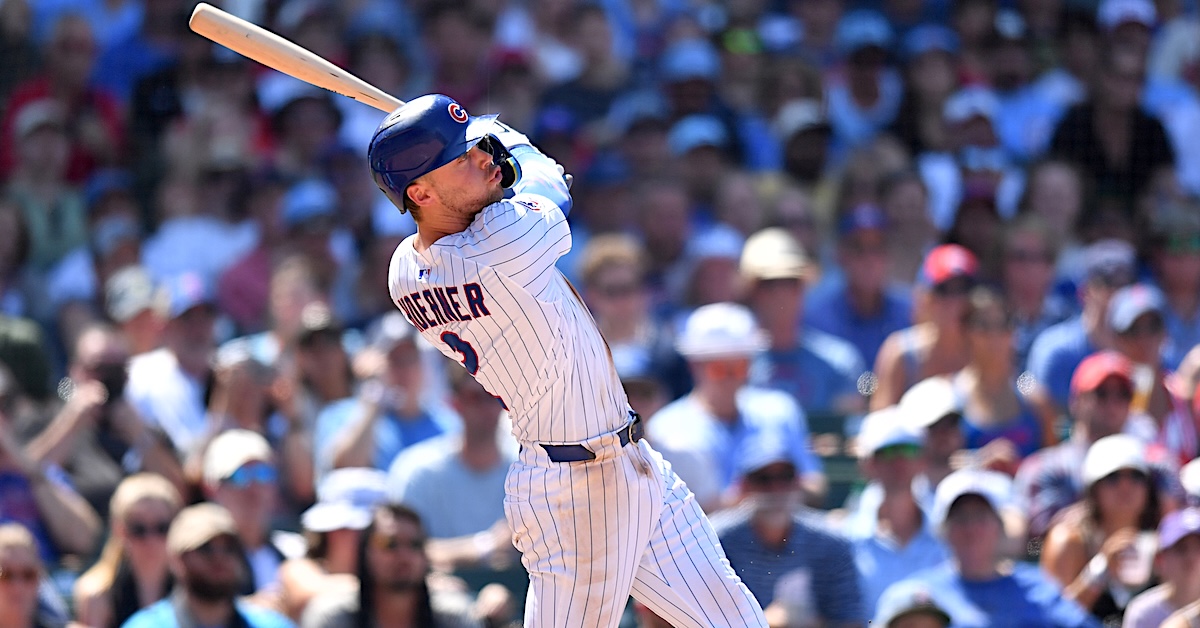
A week ago, the Cubs roster was light on long-term commitments. Only Alex Bregman and Dansby Swanson held guaranteed contracts that extended past 2027, and only two others – Phil Maton and Shelby Miller – even had guaranteed years in 2027. But as it turns out, Chicago payroll commitments abhor a vacuum. On Tuesday, Pete Crow-Armstrong signed a six-year extension. On Thursday, Nico Hoerner followed suit with a six-year pact of his own, as Michael Cerami first reported. The deal starts in 2027 and is worth $141 million, with minor deferrals that drop the total present value to the mid-130s.
If you don’t catch many Cubs games, it’s easy to overlook Hoerner. His offensive game is most notable for its lack of extremes. He doesn’t walk much. He doesn’t strike out much. He doesn’t hit for a ton of power. He’s not excessively swing happy like so many contact hitters. He doesn’t pound the ball into the ground, but he equally doesn’t sell out to lift and pull. He’s produced low-power, solid-OBP seasons for four years running, and they’ve been almost metronomically consistent: his seasonal wRC+ marks of 108, 103, 102, and 109 work out to a 105 average.
That’s the 105th-best batting line among hitters over that span. That doesn’t sound particularly impressive. Hoerner is wedged between Jake Cronenworth and Mike Yastrzemski, solidly in nice-but-forgettable territory. He’s 57th in OBP over that span, which is a little bit more exciting, but truthfully, he is not a star at the plate.
The fun starts when you get into the rest of his game. Over that same time frame, from 2022-2025, Hoerner is the sixth-best baserunner in the majors. The guys in front of him – Corbin Carroll, Bobby Witt Jr., Trea Turner, Jarren Duran, and Elly De La Cruz – are famed for their exploits on the bases. Hoerner is the slowest of that group by a fair margin, but he makes up for it with excellent instincts and great reads. He’s fifth in the bigs in steals during that span, and his 85% success rate is better than everyone in front of him on the list. When he gets on base, he’s a threat to steal, and yet he almost never gets thrown out.
That’s not even Hoerner’s greatest skill. Defensively, he’s a very good shortstop playing second base, which means he’s an even better second baseman. He’s won two Gold Gloves and a Fielding Bible award in the past three years. He’s been around 30 runs above average defensively in that span. He was a +10 shortstop in his full season there in 2022, and he’s continued to look good at short when backing up Swanson.
That means that despite Hoerner’s near-average hitting, he’s one of the most valuable hitters in baseball after considering the sum of his contributions. The 105th-best batter in baseball over the last four years ranks 19th in WAR among position players, right between Bregman and Marcus Semien. He and Semien are of a piece, in fact; durable, versatile second basemen who get as much value from the rest of their game as they do from their bat.
The Cubs never openly dangled Hoerner in trade talks this winter, but this still feels like a change of direction. When the aforementioned Bregman signed a five-year deal this winter, the team went looking for a new role for top prospect Matt Shaw. Shaw is a power-hitting infielder with a plus glove. With Hoerner approaching free agency, his spot at second was a natural backup plan for Shaw.
That didn’t happen, clearly. Shaw played right field on Opening Day, in place of the injured Seiya Suzuki. I think that speaks to the position the Cubs are in right now. You could convince me that Shaw is likely to be a better “deal” than Hoerner, in terms of WAR accrued per dollar spent. That’s not a very good metric for trying to build a winning team, though. Or at least, it doesn’t seem like the appropriate one to use here, and I think the Cubs did well to recognize it.
Hoerner is one of the best players on the Cubs today, and he’s only 29. He fits into their competitive window quite well; he’s great right now, which lines up with Bregman and Swanson, and he’s also young enough that he and Crow-Armstrong can help to secure the team’s up-the-middle defense for the next half decade. That’s the kind of guy you want to keep around regardless of the way your farm system lines up. It’s not even that a bird in the hand is worth two in the bush; it’s that Hoerner is better than any prospect in the Cubs system projects to be. He’s averaged four wins a season for the last four years!
I’m sure the Cubs would prefer a world where they could sign a top free agent, extend one of their best players, and still have somewhere for their 2025 top prospect to play. That’s a bummer, no doubt. Shaw is going to either turn into a superutility player in Chicago or get traded; there just aren’t enough plate appearances in the infield for him. But letting Hoerner leave because you hope you can replace most of his production in the aggregate is small thinking, and I applaud the Cubs for opting against it.
An interesting subplot to this deal: Defensive WAR has come cheaper than offensive WAR in free agency in recent years. If you plug Hoerner’s deal into the most recent estimates I have for free agent contracts, though, his deal is bang on fair value. This implies that the Cubs are valuing his contributions slightly higher than the rest of the league would; generally speaking, bat-first players beat my model by a bit and glove-first players fall short.
Another way of putting it is that I think the Cubs paid Hoerner a small premium over what he could expect to receive in free agency to secure his services a year in advance. That’s backwards to how extensions normally work. Here, though, I think that Hoerner had more leverage than the club. He’s not your average extension candidate; having already signed a short pact with the Cubs earlier in his career, he has $42 million in career earnings banked and was headed to free agency at the conclusion of this season.
Meanwhile, the Cubs had payroll room but not enough stars under contract. You can see the bad case for them here pretty easily; Hoerner leaves, Shaw doesn’t pan out in time, and a weak free agency class means that the team runs out a weaker-than-planned lineup in 2027 and beyond. Having few players under contract beyond this year has some upside, but it also comes with the big risk that a core player leaves without a good replacement lined up. I think Chicago paid up slightly to mitigate that risk – a wise choice, in my estimation. The Cubs were going to give someone a handsome contract this winter. Why not give it to the hometown guy now and skip all the uncertainty inherent in an auction process? The winter is likely to be even messier because of a potential lockout; this feels like a place where taking a safer option is preferable, even if they had to pay a few million dollars more for that certainty.
Another interesting note on this trade: It might make the Cubs better at pitching in the medium term, too. Shaw is clearly still a good player, and I’m fairly certain that front offices across the league still covet him in trade. The Cubs have a well-rounded offense, with six positions in the top 10 of our positional power rankings and another coming in 12th. But their rotation and bullpen are relatively weak; we have them down for the sixth-best position players and 20th-best pitchers.
If they decide to go out and acquire pitching during the season – Joe Ryan is the headliner, but hardly the only good arm who might be on the move – Shaw is now a perfect trade chip. He’s highly regarded, still young, and doesn’t have a place to play right now. For what it’s worth, it’d behoove the Cubs to act sooner rather than later if they take this route; we’re projecting Shaw for a mere 278 plate appearances this year, and former top prospects wither on the trade value vine quickly if they don’t get playing time.
Detailed roster questions aside, I think the simplest interpretation of this deal is also the strongest. The Cubs have a great second baseman, perhaps their best position player of this recent run. He was going to hit free agency after this year, weakening the team at a time when they still plan to be competitive. But money can be exchanged for goods and/or services, and they had money, so they handed Hoerner some to keep him in town for some future fun times.
You can layer as many stories as you want on top of that. It’s about the differential cost of value based on whether it’s accrued at the plate or in the field. It’s about who has the leverage in contract negotiations. It’s about roster flexibility and prospect hugging. It’s about windows of competition and using payroll flexibility to extend homegrown players. Maybe it’s about sunk cost and prioritizing continuity. If you try hard enough, you can twist business buzzwords around to describe pretty much anything.
At the end of the day, though, the Cubs handed one of their core players a six-year extension because they want to keep winning baseball games. They did it a few days after handing another one of their core players a six-year extension, also because they want to keep winning baseball games. Sometimes baseball analysis is easy.
Ben is a writer at FanGraphs. He can be found on Bluesky @benclemens.
With Happ and Suzuki entering their walk years I can see Shaw taking over in one of the corner positions next year.
Shaw doesn’t have the power to be a corner outfielder. His average EV last year was below every qualified outfielder in baseball. The only players close to him are Frelick (plus defender with elite contact skills), Steven Kwan (ditto), and Altuve (probably shouldn’t be an outfielder). He needs to either pull the ball a ton, drastically improve his contact skills, or become a plus defender to justify taking up an outfield spot, particularly with Kevin Alcántara in the wings.