
Emerson Hancock Became Less Efficient And More Effective
Pitchers can do all sorts of things to change their lot in life — launch plyo balls, rig up a Trackman, add a kick change — but motor preferences tend to be a fixed fact. Most pitchers fall into one of two buckets: pronator or supinator. Pitchers with high spin efficiency (say, 95% and up) on their four-seam fastball belong to the pronator class, while those below 90% can be considered supinators. (As a reminder, spin efficiency is the measure of how much spin is “useful;” a fastball thrown with perfect backspin would have 100% spin efficiency.) These mechanical biases tend to remain constant throughout a career. I took 185 pitchers who threw at least 25 fastballs in both 2023 and 2026; over that three-year span, the r-squared between their spin efficiency was 0.65.
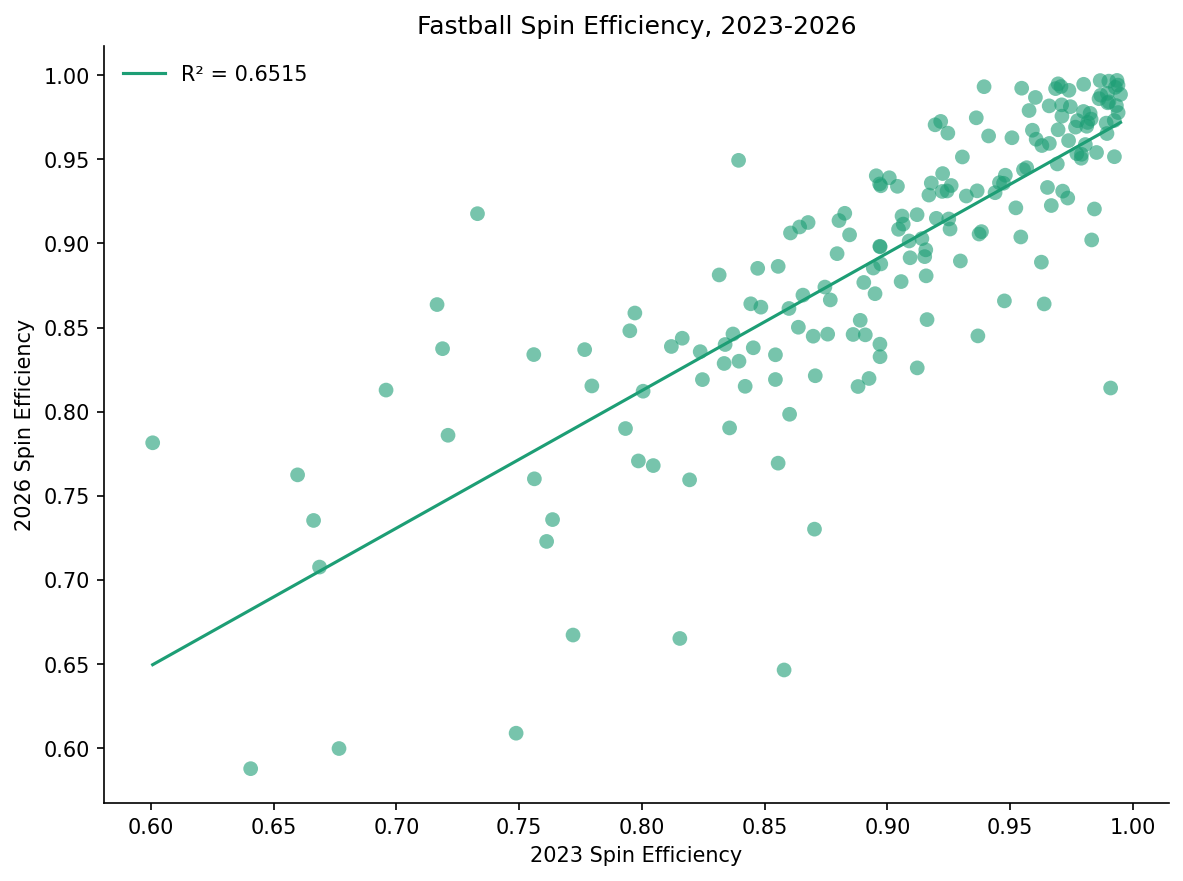
On that plot above, you’ll see, as there always are, a few outliers. One is Joe Boyle. The tale of Boyle is relatively well known at this point, at least in certain social media pitching circles. Over the last three years, Boyle went from throwing from an over-the-top arm angle (53 degrees) to a distinct side-arm slot (26 degrees.) The arsenal, in turn, transformed alongside it. This dramatic slot change coincided with his fastball spin efficiency declining from 86% in 2023 to 67% in 2026, one of the largest drops in that span.
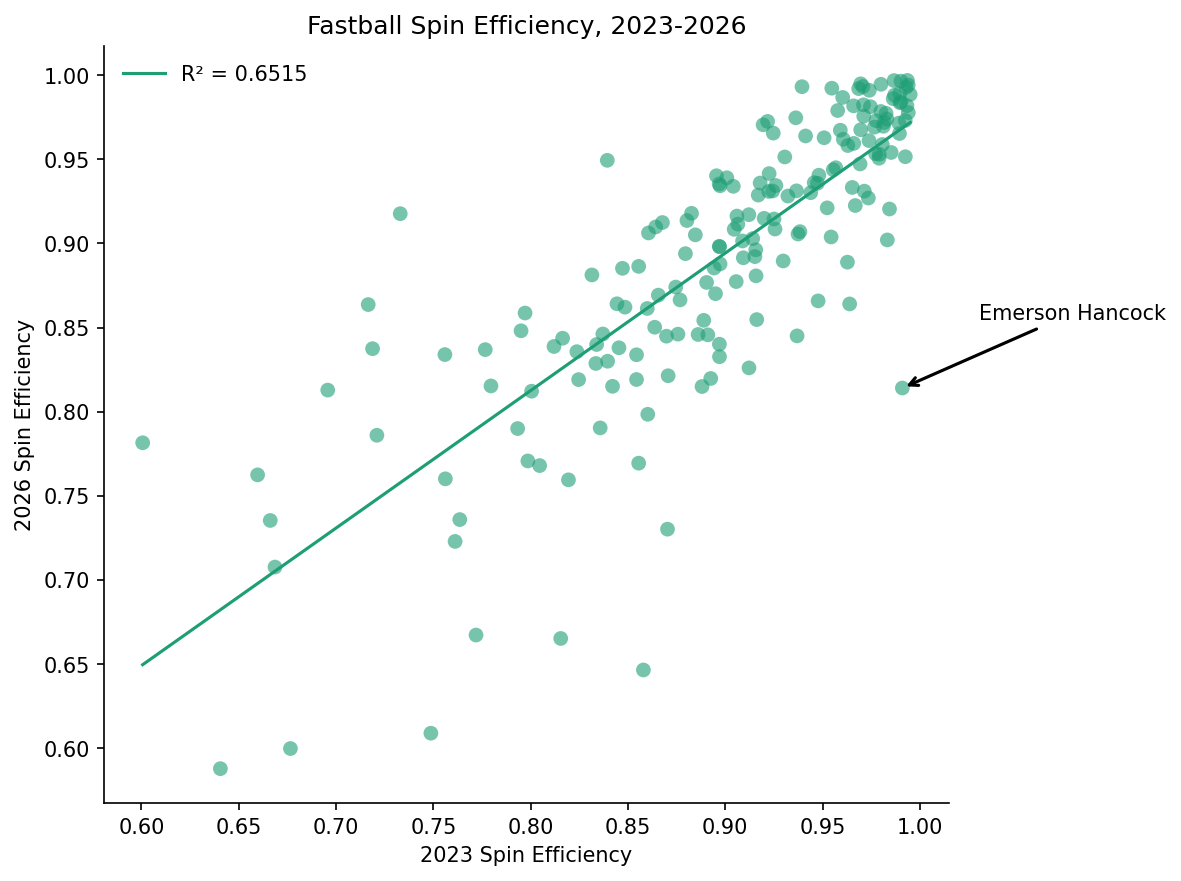
Boyle belongs to that collection of dots on the left of the plot that went from low spin efficiency to even lower spin efficiency. And then there’s one little dot all alone on the right side of the plot. That’s Emerson Hancock.
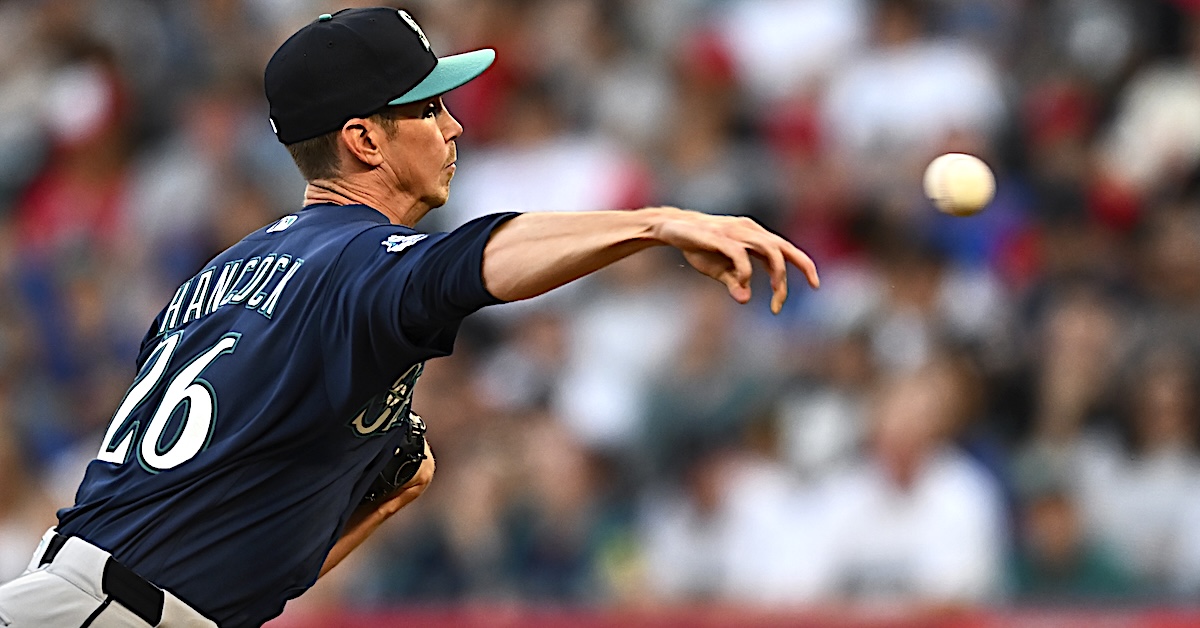
Hancock is, of course, one of this year’s early sensations. Through three starts, he’s posted a 2.04 ERA and 2.38 FIP, striking out 30.6% of batters in his 17 2/3 innings of work. His last start — on Friday, against a red-hot Astros offense — was his worst yet; he ran into some trouble in the second and gave up three runs on a bases-clearing double that barely snuck past the third baseman. Still, it was five innings, four hits, three runs, and a demonstration of the qualities fueling this breakout. One-third of his pitches on Friday were sweepers; as recently as two years ago, that pitch did not exist in his arsenal.
When it comes to cutting the ball, Hancock is a bit of a different case than Boyle. Even in his high-slot past, Boyle was a clear supinator; his highest-ever spin efficiency was 86%. In 2023, Hancock’s fastball was thrown with 99% spin efficiency. Pitchers with a tendency to spin the ball that pure usually generate good ride on their heaters, but struggle to throw breaking balls to their glove side — such as sweepers — without sacrificing considerable velocity. In order to leverage the seam-shifted wake that makes a sweeper move, the pitcher needs to impart some gyro spin for the seams to catch the air. If a ball is thrown with pure backspin or pure topspin, it won’t take off horizontally like Nolan McLean’s frisbees.
Hancock had a big problem at this phase of his career, back in 2023, when his spin efficiency was so high. He was a dreaded low-slot pronator. Life is hard for a low-slot pronator. As I wrote about Nathan Eovaldi last year, “pronation bias blunts their ability to throw hard glove-side breakers, and the low arm angle obviates the pronator’s nominal advantage, killing the carry on their fastball.” Eovaldi has found a way to make it work; almost nobody else can say the same.
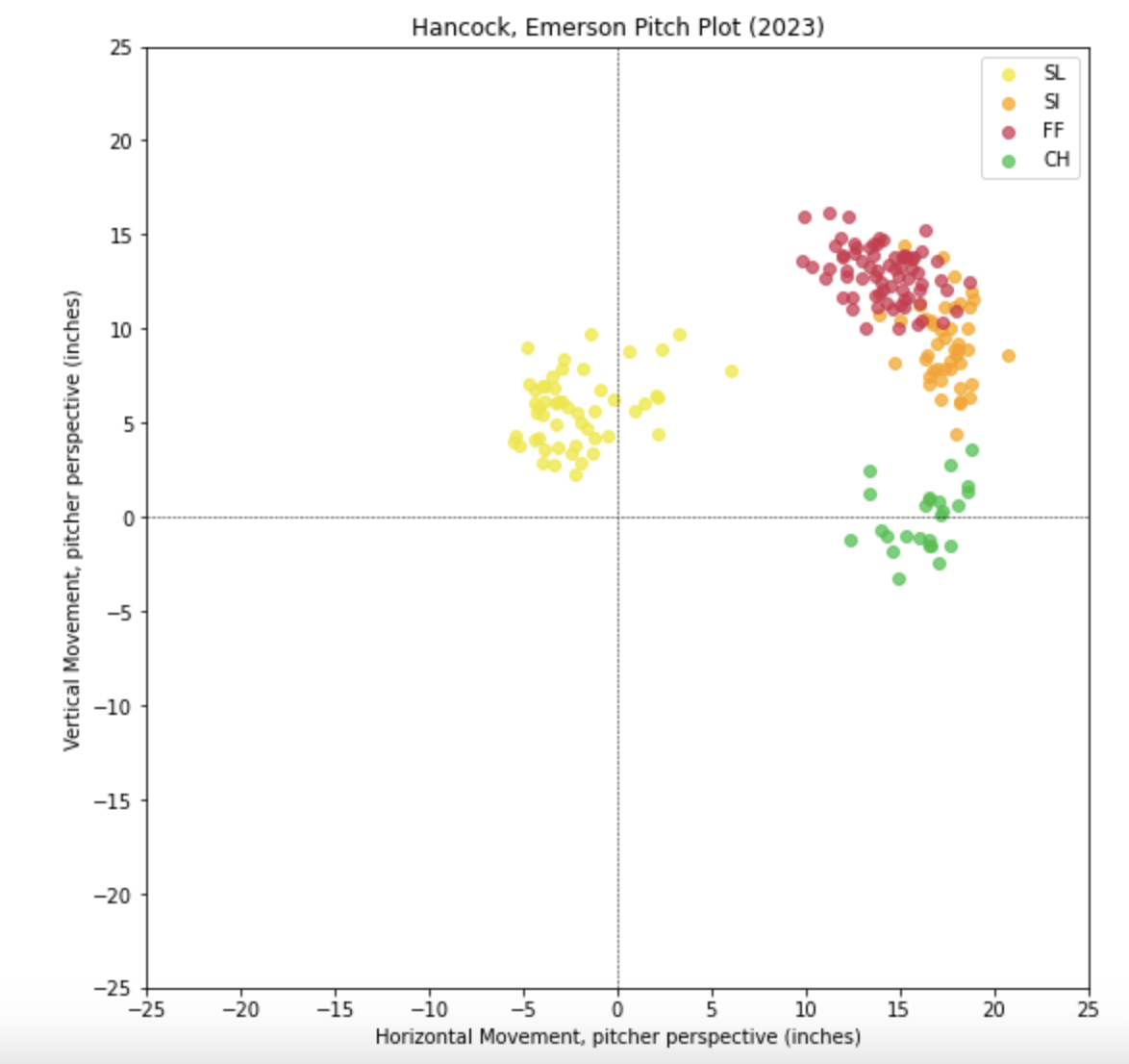
Take Hancock’s pitch plot from 2023. What you’ll see here is the classic pronator’s triangle, as Mario Delgado Genzor defined it for Baseball Prospectus. While supinators have options to expand their arsenal, pronators generally must work within this triangle, maximizing their skills to the best of their abilities without significant alterations to their pitch shapes.
Unless, somehow, you manage to completely shift your motor preference. This year, Hancock became a full-fledged supinator, sharpening the angle on his fastball while adding a glove-side breaking ball with sweep and lift. Clearly, unlocking a better shape on his fastball and a big sweepy breaker was to his benefit; the results in this small sample bear it out. But if it is the case that spin efficiency tends to be immutable and can only be altered by significant slot adjustment, how did Hancock pull this off? Yes, his arm angle is down 10 degrees, from 23 degrees in 2023 to 13 degrees in 2026. I figured that couldn’t be the entire explanation. How did Hancock escape low-slot pronator jail?
This was above my pay grade, so I turned to some experts on the subject. I spoke with Spenser Davis, a pitching coach at Southern Virginia University, who suggested that the change in spin efficiency may have something to do with Hancock’s delivery. He noticed that this year Hancock is landing more crossbody.
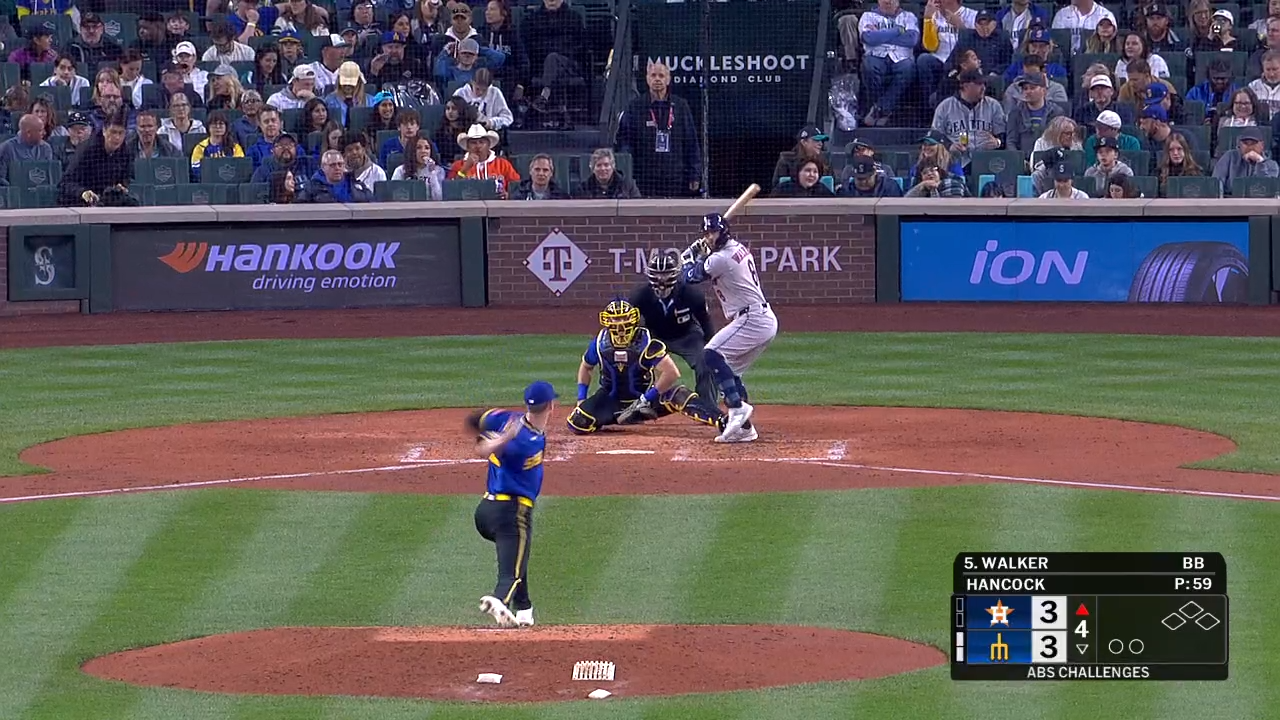
Every pitcher pronates at some point during their delivery. Those with higher four-seam spin efficiencies pronate earlier in their throws, while supinators delay that pronation for a handful of milliseconds longer than the pronators. As Davis explained to me, a crossbody delivery allows the plant foot to land sooner than in a full uninterrupted delivery. When Hancock lands more crossbody, the rotation phase is shortened. his trunk decelerates earlier in the delivery, cutting off his tendency to pronate and leading to a less spin-efficient pitch.
The difference between the landing position is subtle but clearly noticeable. In 2024, for example, he was landing to the left of his back foot:
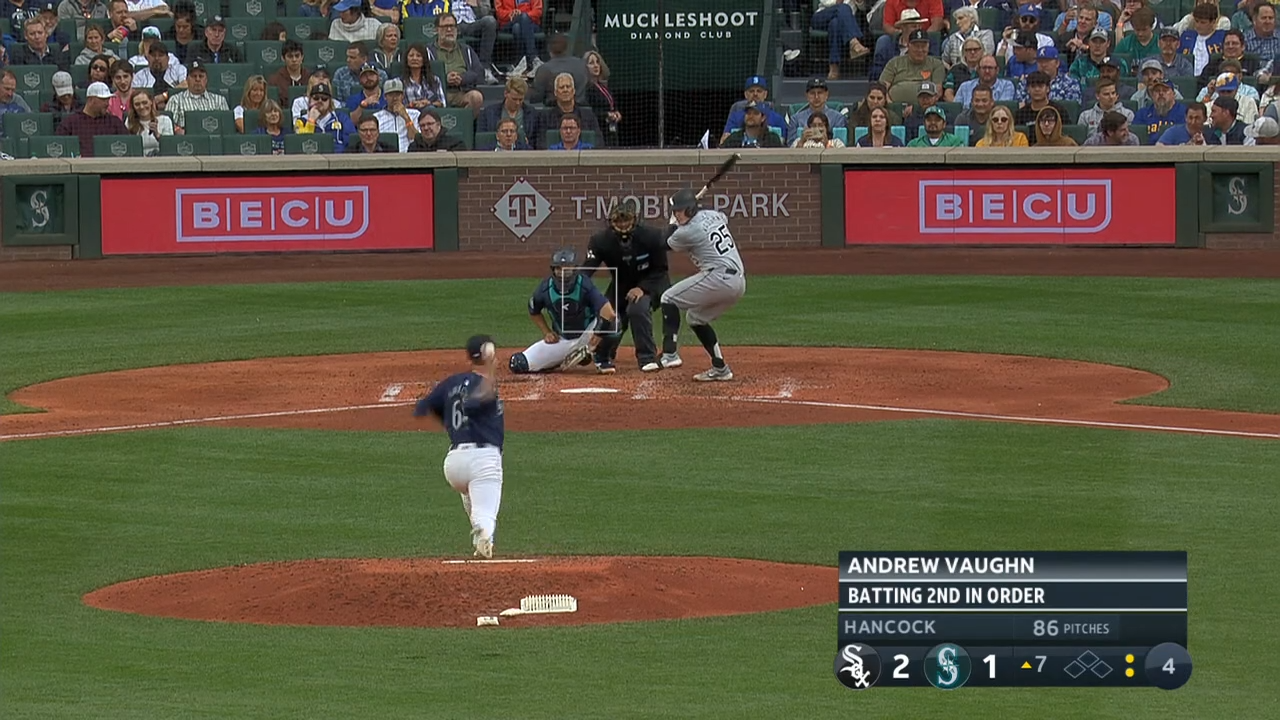
This season, he’s landing to the right of his back foot, while starting from the same position on the rubber:
I also spoke to Connor White, Driveline’s director of pitching. He theorized that Hancock’s spin efficiency decline was connected to his change in arm angle, but not in the way I might have imagined. At Baseball Savant, the arm angle measurement is derived from a single point on the pitcher’s shoulder. Savant arm angle captures the rough picture, but as White pointed out, there are many more variables involved in arm angle than a single point. “The arm is not one fixed lever,” he told me. Hancock could be altering his wrist angle, or bending his elbow further, or changing his humerus angle, and none of those factors would necessarily impact the arm angle statistic seen on Savant.
Pitching analyst Lance Brozdowski scooped me on this very topic in a video he posted Friday. (As usual, it’s a great video. He even spotlighted Hancock as a perfect case study for this phenomenon.) In one section, Brozdowski provided some further explanations for how pitchers like Hancock manage to cut their spin efficiency so dramatically. Throwing a cutter more frequently could unintentionally shift motor preferences over time; on the intentional side, he reported that teams will alter grips and cues to change the orientation of a pitch, or encourage pitchers to use tools like plyo balls or even footballs to change their delivery style.
Which of these apply to Hancock? Some combination of all, or perhaps none of the above. It’s a bit secretive, and the lack of high-definition slow-motion video prevents any further investigation into grip changes. What’s known are the results: a lower arm slot, a newfound capacity to cut the ball, and some of the best shapes Hancock has featured since he surfaced in the majors three years ago. His four-seam fastball once sat in the dreaded “dead zone.” By lowering his arm angle and increasing his vertical break, it now grades as an average pitch, at least according to the stuff models. It doesn’t sound like much, but it might be a necessary condition to carve out a viable big league career.
As Brozdowski reported, this sort of mechanical alteration appears to be something of an organizational strategy for the Mariners. Hancock is one of four pitchers — Luis Castillo, Logan Gilbert, and Andrés Muñoz are the others — who have actively cut their fastballs more in 2026. Could this grow into a league-wide trend? There are developmental risks to messing with someone’s slot, Brozdowski said. I’ve also heard from sources that this is a tough pattern to break: Once you go supinator, it’s hard to go back.
For Hancock, the risk seems worth the reward. At the end of last year, he was stuck in sixth-starter purgatory, struggling to break into a loaded rotation. Now he’s turned the tables, forcing the Mariners to find him a rotation slot. By nerfing his spin efficiency, he’s found a way to belong.
Michael Rosen is a transportation researcher and the author of pitchplots.substack.com. He can be found on Twitter at @bymichaelrosen.
Love when there’s a graph, you pick the dot you think will be highlighted based on the title and early information provided in the article, you scroll down and blam! You’re spot on with your dot picking.