
February Free Agent Watch: Framber’s Off the Board But Rotation Options Abound
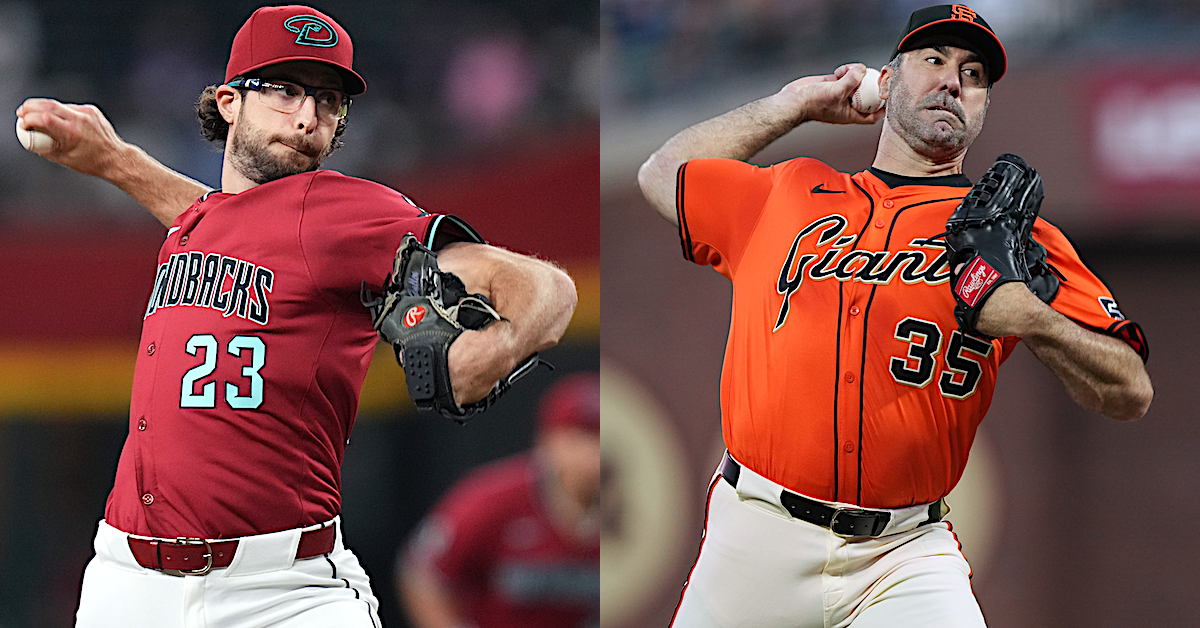
Two years ago, Zac Gallen was one of the top pitchers in baseball. Building upon a breakout 2022 season in which he finished fifth in the NL Cy Young voting, he went 17-9 with a 3.47 ERA, a 3.26 FIP, and 5.2 WAR in 210 innings for the Diamondbacks, making his first NL All-Star team, helping an upstart Arizona squad reach the World Series — where he took a no-hitter into the seventh inning of his Game 5 start — and placing third for the Cy Young. Since then, however, it’s been mostly downhill. After hitting free agency on the heels of a season in which his ERA ballooned to 4.83 and his WAR dipped to 1.1, the 30-year-old righty remains unsigned, and pitchers and catchers are due to report to spring training camps next week.
With Wednesday’s news that Framber Valdez signed a three-year, $115 million deal with the Tigers, Gallen is the only remaining free agent from among the nine who declined $22.025 million qualifying offers. He’s also the best-available player remaining on our Top 50 Free Agents list — where Ben Clemens placed him 19th — but hardly the only one. In fact, one can almost cobble together a passable rotation out of the starters still on the market, namely Gallen (19th), Chris Bassitt (35th), Lucas Giolito (36th), Zack Littell (49th), and Justin Verlander (50th). They’d be a stronger unit if we turned the clock back to 2022 or ’23, but for ’26 those five project to combine for 9.1 WAR, which would tie the White Sox for 27th on our Depth Charts. With Valdez instead of Giolito in my first draft of this article — going by 2026 projected WAR, the latter’s ranking doesn’t match where Ben placed him — the quintet projected to produce 11.4 WAR, which would rank 19th, ahead of three playoff teams from last year, namely the Cubs, Guardians, and Padres. Neither of those totals includes reinforcements who would have improved their standing a bit, since no team gets by on just five starters alone.
In parallel with Tuesday’s roundup of the best position players still available, what follows here is a run through the best free agent starters who’ve yet to sign. I’ll be working in order of projected WAR.
Zac Gallen, RHP (2.4 projected WAR)
As noted above, Gallen has produced diminishing returns in each of the past two seasons. After delivering 9.4 WAR across 394 regular season innings for the Diamondbacks in 2022–23, he totaled just 3.9 WAR in 340 innings in ’24–25. He did throw 192 innings in 2025, tied with Valdez for eighth in the majors, but his 4.83 ERA and 4.50 FIP both ranked 45th out of 52 qualifiers. Since 2023, his strikeout rate has slipped from 26.0% to 21.5%, while his walk rate has increased from 5.6% to 8.1% and his home run rate has spiked from 0.94 per nine to 1.45. Just about the only thing that kept his ERA below 5.00 was an improved contact profile, with his xwOBACON dropping from .410 to .374.
While Gallen’s four-seam fastball hasn’t lost any velocity, both of our pitch modeling systems see his stuff as notably diminished. Not only has he gotten fewer swings and misses in the past two years than before, but batters are making more contact against him in the zone; in fact, his 91.2% zone contact rate was the highest among qualifiers. By Statcast’s run values, his changeup was his only above-average secondary pitch.
According to the New York Post’s Jon Heyman, the Diamondbacks remain in the mix for Gallen’s services, along with the Cubs and Orioles, with the Angels and Padres having checked in on him as well. Perhaps he can rebuild value with a change of scenery and a pillow contract; in any event, a short-term deal seems likely given that only two starters, Dylan Cease and Ranger Suárez, have signed for longer than three years this winter.
Chris Bassitt, RHP (2.0 projected WAR)
Bassitt is about as consistent as they come. For the fourth year in a row, he made at least 30 starts, struck out just over 22% of batters, finished with a slightly better-than-average FIP, and totaled between 2-3 WAR. In this case, he put up a 3.96 ERA and 4.01 FIP in 170 1/3 innings, offsetting a rise in home run rate (from 0.95 per nine to 1.16) with a drop in walk rate (from an anomalously high 9.2% to 7.1%). Inflammation in his lower back knocked him off the Blue Jays’ roster for the Division Series, and he spent the rest of the postseason pitching out of the bullpen. He did quite well in that capacity, allowing just one run and three hits in 8 2/3 innings while striking out 10.
Bassitt more or less replicated his recent performances despite his average sinker velocity dropping from 92.5 mph in 2024 to 91.6 in ’25. He’ll turn 37 on February 22 and his stuff is trending downward, but so far he’s proven the ability to adapt. While he expressed a desire to return to the Blue Jays after they lost the World Series, the additions of Cease and Cody Ponce along with the return of Shane Bieber (who exercised his player option) have probably shut that door. The Braves and Tigers have shown interest, though the addition of Valdez likely means Detroit’s shopping for a full-time starter is done.
Nick Martinez, RHP (1.9 projected WAR)
Though he set career highs in starts (26) and innings (165 2/3, with 20 2/3 coming in 14 appearances as a reliever), Martinez’s second season in Cincinnati was not as good as his first. Both his 4.45 ERA and 4.31 FIP were over a run higher than in 2024, as his strikeout rate slipped from 20.4% to 17.0%, his walk rate nearly doubled from 3.2% to 6.1%, and his home run rate spiked from 0.82 per nine to 1.20. Batters gained nearly two miles per hour in average exit velocity against him relative to 2024 while adding 38 points of slugging percentage against his slider, 40 against his cutter, 98 against his changeup, and (gulp) 186 against his fastball.
As his recent production (3.4 WAR in 2024, 2.1 in ’25) and current projection suggest, the 35-year-old Martinez is still a very useful pitcher who can help either at the back of the rotation or in the bullpen, where he’s put up a 2.07 ERA and 3.21 FIP in 74 innings over the past two seasons. The Yankees and Tigers have been connected to him, but most pitching staffs could probably find room.
Justin Verlander, RHP (1.7 projected WAR)
There were points last season when it looked as though the future Hall of Famer might be cooked. After all, the 42-year-old Verlander was coming off a 5.48 ERA in 90 1/3 innings with the Astros in 2024, having additionally missed over two months due to a neck injury. Through July 18 of last year, he had gone 0-8 with a 4.99 ERA and 4.29 FIP for the Giants while striking out only 18.9% of hitters. Winless, and up against an opponent — Father Time — who remains undefeated.
Lo and behold, Verlander pulled it together by making several adjustments, moving toward the third base side of the rubber, pulling the ball from his glove earlier in his delivery, raising his release point, dialing back the use of his fastball, and integrating a newish sweeper against which batters hit just .053 and slugged .105. He put up a 2.60 ERA and 3.36 FIP with a 22.8% strikeout rate in 72 2/3 innings over his final 13 turns, making him one of the majors’ 20 most valuable starters over that span.
Last September, Giants president of baseball operations Buster Posey expressed interest in bringing Verlander back. Considering he’s 43 years old, Verlander would fit San Francisco’s current modus operandi of short-term deals, but the two sides apparently haven’t found common ground. The only other team to which he has been publicly linked is the Orioles, whose president of baseball operations Mike Elias knows Verlander from their time together in Houston. As the Orioles had been one of the teams connected to Valdez, the fall of that domino may mean Verlander has an opening. One way or another, expect him to pitch somewhere in 2026.
Zack Littell, RHP (1.7 projected WAR)
The 30-year-old Littell has only two seasons of full-time starting experience under his belt. He’s developed into a solid-but-unspectacular backend starter, one who doesn’t miss many bats but has shown pinpoint command and an ability to avoid hard contact using a slider/splitter/four-seam/sinker repertoire. In a season split between the Rays and Reds, he posted a 3.81 ERA and 4.88 FIP in 186 2/3 innings across a full complement of 32 starts. While he struck out just 17.1% of the hitters he faced (sixth lowest among qualifiers), his 4.2% walk rate was the best in the majors.
Unfortunately, Littell’s 1.74 homers per nine allowed was the second-highest mark among qualifiers. Moving out of the AL East — he served up 12 of his 36 homers over just 23 2/3 innings in Boston and Toronto — could help, though so far the only reported interest in him has been a possible reunion with the Rays. Somebody cut this guy a break!
Max Scherzer, RHP (1.4 projected WAR)
As with Verlander, at times during the 2025 season it appeared that Scherzer was done. In the first half of his age-40 season with the Blue Jays, he missed nearly three full months due to inflammation in his right thumb, and ended up making just 17 starts totaling 85 innings, that on the heels of a season in which he made just nine starts. Though he did string together five straight quality starts against a comparatively tough slate in late July and August, he never got his FIP below 4.50, and finished the season with a 5.19 ERA and 4.99 FIP, both career worsts. He put up the majors’ highest ERA in the first inning (12.96), had issues with tipping pitches, and after allowing eight homers and 25 runs in his final 25 innings, missed the cut for Toronto’s Division Series roster. Despite going three weeks between starts, he turned in a gritty 5 2/3-inning effort against the Mariners in Game 4 of the ALCS, along with two wobblier outings in the World Series against the Dodgers.
After the Blue Jays’ loss, Scherzer said he plans to pitch in 2026. More recently, he told The Athletic’s Ken Rosenthal that while he is healthy and ready to sign with the right team, he could wait until after Opening Day to do so, à la Roger Clemens circa 2007.
Lucas Giolito, RHP (1.3 projected WAR)
After missing all of 2024 and the first month of ’25 following a UCL internal bace procedure, Giolito made a successful return, posting a 3.41 ERA in 145 innings for the Red Sox. Another elbow injury — described vaguely as “flexor irritation and a bone issue” — prevented him from pitching in the postseason and led the Red Sox to call upon a rookie who’d made just four major league starts, Connelly Early, in an elimination game. “[W]ithin three days, my elbow felt 100 percent fine again,” Giolito told WEEI.com’s Rob Bradford in November.
For as superficially impressive as Giolito’s ERA was, it was far ahead of both his FIP (4.17) and his xERA (4.99), which comes as a concern. His 19.7% strikeout rate was six points below his mark from a messy 2023, and nearly 13 points below his full-season best from ’19. Meanwhile, his 90.3-mph average exit velocity, 9% barrel rate, and 41.1% hard-hit rate were all subpar, with percentile rankings ranging from the 22nd to the 45th. The good news was that at least he kept the ball in the park, cutting his home run rate from a ghastly 2.00 per nine in 2023 to 1.06 in ’25.
While Giolito had expressed interested in returning to the Red Sox, he acknowledged that the late-season injury may have spooked them, and they appear to have moved on without him. As of last month, the 31-year-old righty had reportedly received interest from the Orioles, Braves, and Tigers.
Brooklyn-based Jay Jaffe is a senior writer for FanGraphs, the author of The Cooperstown Casebook (Thomas Dunne Books, 2017) and the creator of the JAWS (Jaffe WAR Score) metric for Hall of Fame analysis. He founded the Futility Infielder website (2001), was a columnist for Baseball Prospectus (2005-2012) and a contributing writer for Sports Illustrated (2012-2018). He has been a recurring guest on MLB Network and a member of the BBWAA since 2011, and a Hall of Fame voter since 2021. Follow him on BlueSky @jayjaffe.bsky.social.
I keep thinking Giolito and the Giants are a match.
Would love that as an owner of Giolito in Ottoneu.