
It’s a Good Day To Be PCA’s CPA
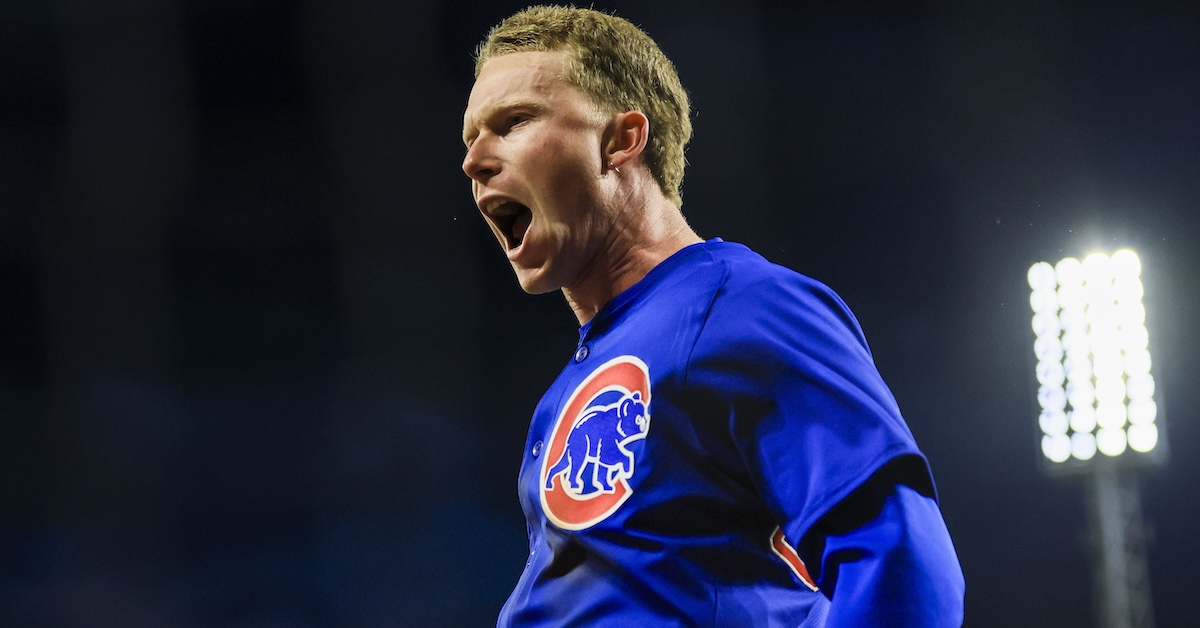
Late last night, Jeff Passan of ESPN reported that the Cubs and star center fielder Pete Crow-Armstrong had reached an agreement on a long-term contract extension. That deal, worth $115 million over six years, keeps one of baseball’s most popular young stars in the fold through 2032.
This extension, the largest ever for a player with so little service time, begins in 2027, buys out two of Crow-Armstrong’s free agent years, and includes escalators that could increase the value to $133 million. But shockingly, (and to the immense relief of those of us who are still parsing the inscrutable Julio Rodríguez extension), it does not include any option years. Whatever happens, Crow-Armstrong can still hit free agency after his age-30 season.
Crow-Armstrong, who turns 24 tomorrow, has already played 293 highly productive games in the majors, in which he’s socked 41 home runs, stolen 64 bases, and roped in untold highlight-reel catches in center field. Crow-Armstrong is a dynamic athlete, the likes of which the American youth baseball setup usually loses to football, with a compellingly flashy style of play. This dude was born to be a star; the longer he plays on a good team in a big market, the hotter he’s going to get.
I once wrote that the young Fernando Tatis Jr. made lots of mistakes on the field, but not from a lack of concentration or effort; rather, he played like he was testing the boundaries of the sport, as if he believed limits were for other people. Crow-Armstrong plays that way too, and when a player like that falls into your lap, you do whatever it takes to keep him around.
Baseball teams run on production, not vibes, and “he’s so cool” doesn’t exactly fly as a reason to give a ballplayer $115 million. The good news is that Crow-Armstrong is genuinely really good. He led a good Cubs team in WAR last year, and with 31 homers, 35 steals, and plus-17.5 defense at a premium up-the-middle position, he’s an impact player in every phase of the game.
He is, however, not a perfect player. Acknowledging that players who post 5 WAR or more in their age-23 seasons usually go on to long and productive careers, there’s more uncertainty — for good and ill — around PCA than most players who fit that description.
For that reason, I’ve written about this guy a lot over his brief career, so I’ll try to keep the review of previous material as brief as possible.
In short, Crow-Armstrong was built in a lab to be overhyped as a prospect: Elite athlete with a memorable bit of trivia in his personal bio. First-round pick out of a talent factory high school, turned down a scholarship to Vandy to play for the Mets, who then let him go in a brutal trade that led to a nightmarish meltdown. (Both “brutal” and “nightmarish” even by the Mets’ standards.)
On the field, the stuff Crow-Armstrong does well is both exciting and easy to spot, while his deficiencies aren’t apparent on a highlight reel. Plus-plus speed, strength, power… but the hit tool and batting eye were then, and are now, relative weaknesses. Easy enough to spot if you can see the .287 on-base percentage he posted last year; less easy to explain to the talk radio caller or the loudmouth at the bar.
Any discussion of Crow-Armstrong’s game has to start with the glove; this has been special throughout his career. But fast guys with plus-plus defense in center field are fairly common, and the difference between Cristian Pache and prime Lorenzo Cain can be vanishingly small.
Since arriving in the majors, PCA has made steady improvements on this front. Plenty of great defensive center fielders have put up a few All-Star-level seasons with a slap-hitting, ground-and-pound approach, but that’s never been his game. He’s always been fairly strong and hit a decent number of balls in the air.
Crow-Armstrong has made three changes to his game (or maybe one change, with three distinct effects) that allowed him to evolve from Zoomer Kevin Kiermaier to American J-Rod.
First: He’s swinging the bat harder. Crow-Armstrong’s average bat speed jumped from 70.6 mph in 2024 to 72.7 mph in 2025, and his fast-swing rate improved from 8.0% to 28.5%. Swing harder and you’ll hit the ball harder; Crow-Armstrong’s EV90 climbed from 101.8 mph in his first full season to 105.2 in his second.
That’s decent, but I don’t know if I’d call it plus power or anything; Crow-Armstrong’s EV90 in 2025 was 81st out of 145 qualified hitters. That’s where the other two changes come in. As a rookie, PCA had a 79.2% Z-Contact%. Anything below 80% in that mark is survivable, but it’s hard to thrive in that range without truly elite power. In 2025, he raised his in-zone contact rate to 83.8%.
Third: He is getting the absolute maximum out of what contact he makes. The most valuable batted balls, in general, are hit in the air and to the pull side. In 2024, Crow-Armstrong put 19.3% of his batted balls in that direction, which is above average, even good. In 2025, that number was 30.2%, which was the seventh-highest figure out of 251 players on Baseball Savant’s leaderboard.
Crow-Armstrong hit 31 home runs last year because he got the absolute maximum out of his plate discipline and quality-of-contact numbers. Add in the defense and the baserunning, and I think this might literally be the best all-around baseball player you could have with a 4.5% walk rate and a .247 batting average.
But he’s still a player with a .247 batting average and a 4.5% walk rate. Or, to use the more legible figure I mentioned above, a .287 OBP. Last year, Crow-Armstrong made more outs per plate appearance than Nick Castellanos, Lenyn Sosa, and Ke’Bryan Hayes. Is it possible to be a franchise player if that’s true? We’ll find out.
And that’s the big question going forward.
On one hand, Crow-Armstrong is already a five-win player who’s made huge strides in a brief big league career. He’s shown the capacity to learn and adapt at the major league level, which bodes well for his future development. Again, he’s younger than 15 of the 110 prospects on our preseason Top 100 list.
But the path to sustained superstardom with a 4.5% walk rate is steep, narrow, and full of snakes. I mentioned this last offseason, just before another young star center fielder, Jackson Merrill, parlayed a five-win season into his own nine-figure extension.
Merrill is nowhere near as good a runner or defender as Crow-Armstrong is, but he’s a far better hitter overall. And rather than taking a step forward in Year 1 of his new contract, Merrill’s Z-Contact% dropped into that dreaded mid-to-upper-70s range, his batting average fell 28 points, and his wRC+ dropped from 130 to 116. An ankle injury hobbled the Padres’ young star, and limited him to 115 games; that contributed to his drop from 5.3 WAR to 3.0, but even on a per-game basis, Merrill wasn’t as good in 2025 as he had been in 2024.
That’s the risk: That a drop in bat speed or contact rate, or an adjustment from opposing pitchers, could send the whole house of cards tumbling down. Maybe even more so for PCA than for Merrill, because he’s already picked off so much low-hanging fruit to get to this point as a hitter. If anything, I’d be more cautious to extend him because of this, because his years of peak athleticism are already under team control.
Or he could add a little more muscle, learn to draw the occasional walk, and turn into Ken Griffey Jr. Best to lock him up now, just in case that happens.
Michael is a writer at FanGraphs. Previously, he was a staff writer at The Ringer and D1Baseball, and his work has appeared at Grantland, Baseball Prospectus, The Atlantic, ESPN.com, and various ill-remembered Phillies blogs. Follow him on Twitter, if you must, @MichaelBaumann.
“This extension, the largest ever for a player with so little service time”
How can this be true in light of the Julio extension?
Even if you assume that both parties decline the 2030 option (which seems very unlikely), it’s still $117 mil, signed during his rookie season
What about Wander Franco? I thought he had less service time and a bigger deal?
Do accountants work on commission or something? I have never noticed that in my life but I also haven’t ever signed a contract that paid me over $100M over six years.
No, but his CPA would certainly charge a lot more than your average middle class or upper middle class CPA. These people pay a lot to CFPs and CPAs to try and protect and grow the money.
Never let the facts get in the way of the joke.
I guess “It’s a good day to be the new CPA that charges five times as much as PCA’s old CPA” isn’t much of a joke
I don’t really know how this is going to turn out for the Cubs. I do know that quality center fielder defense is something that crashes pretty hard since you turn 30 and it sure looks like this contract ends in his age 29 season?
Since 2007 there have been only 26 seasons where a 30 year old or older center fielder has had at least 450 PAs and put up a Def value greater than the CF positional adjustment. Two of them are from Marlon Boyd, who got busted for PEDs. Another handful are from players who crashed almost immediately after turning 30 like Andruw Jones, Ian Desmond, and Paulo Orlando. There are some good names in there like Lorenzo Cain and Mike Cameron but for the most part, center fielder defense falls off pretty hard later.
For that reason I think the fact that this ends just before age 30 matters a lot. It’s still a super good deal for Crow-Armstrong because in the likely event that he regresses or hurts himself he’s now set for life. There’s not a ton of upside in this deal for the Cubs but they can absorb the hit if it goes wrong and they have him for a couple extra years which would have been super expensive if he keeps doing this.
The contract looks pretty great if you resist the urge to pile onto it later.
If they wait, and if he’s good at all, you just aren’t getting his age 28-29 seasons without also taking a few 30+ ones, too.
And the option years cost money. Players don’t give them away for free. It seems to Cubs did very well to get the choicest parts of PCA’s career for a high but manageable cost, and aren’t too worried about his 30s, which is probably smart.
I see now it’s his age 29-30 seasons, but that changed very little. Still looks good. Makes the decision to not pay for options an even better one.
Yeah the challenge here is the same as every other team who signs short term deals or has opt-outs: They have to resist the urge to give them another deal that costs at least that much later.
In terms of what I *actually* think is going to happen…the comp of Jackie Bradley Jr that Eric made seems very fitting. PCA and JBJ both showed a lot of power for an elite defensive center fielder but the hit tool isn’t good so there are ups and downs. I would guess that PCA’s 80th percentile outcome is a lot like what we saw in 2025.
The scenario where he develops a plus or double plus hit tool does not turn him into Griffey. That’s simply not realistic at all. He swung at almost 60% of his pitches last year, ran a 73.3% contact rate, and ran a 16% swinging strike rate. In his age 23 season, Griffey hit 45 homers and walked more than he struck out. But it might turn him into something sort of resembling Grady Sizemore, who was a 7 win player at his peak. That’s at least a 90th percentile outcome.
I don’t think this contract ages well – but as a fan of baseball, the Cubs, and PCA boy do I love it. An electric player with a ceiling this high, working for an organization that prints money, should absolutely get showered with cash.
Another angle: the Cubs won a World Series with Jason Heyward under a similar contract. PCA could put up 12 total WAR over the next 6 years and it wouldn’t prohibit the franchise from being competitive if they wanted to.
I think though in the grand scheme of contracts in the MLB, this one is low risk? $115M really isn’t THAT much when we talk about deals that last 5+ years. It’s what the DBacks just paid Ketel Marte (on the dot), Robbie Ray had the same dollars but a year less, Jung Ho Lee got 6/$113M, etc.
If all those players went to zero in talent tomorrow, I don’t think it would cripple their teams. Especially with the Giants and Cubs here, who can fairly easily absorb $18M in “dead” payroll for a few years.
I think for the Cubs, who obviously love the player, this is fairly low risk/high reward for them all things considered. I mean, would they love to have signed him for 6/$50M? Yeah sure, but that wasn’t happening. I think this is a good deal that even if it doesn’t age well, it won’t matter for Chicago. And the PCA star has shined bright enough that if they needed to trade him, someone would bite.
PCA is a fascinating case of extremes. He is extremely good with the glove. And he has an extreme amount of uncertainty with the bat. Will we ever see the MVP-caliber player from the first half of the season again, or is PCA closer to the guy who couldn’t lick a stamp at the plate (44 wRC+) over has final 197 plate appearances?
Time will tell if he becomes the Cubs edition of Jackie Bradley Jr. with better wheels or a legit annual 30/30 threat. I think it’ll be one extreme or the other. PCA will either overcome his hitting red flags…or he won’t. At least either way, the golden hue from that glove of his will always be blindingly shiny
I’m curious how much precedent there is for improving chase rate and if there are player types or swing types that are more likely to be able to do it. PCA gets compared to Javy Baez too often, and you see assumptions made that his chase issues are all mental. Maybe it’s more a function of his swing path? He is a guy that pulls the ball in the air by catching it out front. To do that you need to beat the pitcher to the spot- either with bat speed or by starting early. The earlier you start the more susceptible to chase you’ll be. So- is it a mental adjustment or a mechanical adjustment that allows a player with high chase rates to improve? Have the ones who have improved adjusted swing decisions, timing, bat path or all the above?
As a Cubs fan, I’m happy with the deal. First, it’s not my money. Second, even without the bat, he’s a 3 WAR player from the glove and speed, and that’s not a big overpay for that production, especially when you consider how much the fans love him and how much merchandising he sells. But I think the bat will be better than bad. Will it consistently be the first half of 25? Unlikely. But he’s still really young, and even some improvement in his mental approach (not getting too wrapped up in big moments, for example) can help significantly.
I’m a non cub fan but generally agree. It’s hard to find good CF defenders who can hit at all. Even if he’s a boom and bust guy with 25 homers and a .285 on base percentage, the glove and speed (combined with those occasional bombs) will keep him an above average player for the life of the deal most likely. And he could figure out the hitting thing. In which case he’s a MVP candidate (I think this is less than 10% chance but it is not impossible).
How much does 1-WAR cost in free agency these days, 8-11 million? By those standards, PCA’s 2025 season was worth anywhere from 40-55 million. I get that they’re buying out theoretically cheaper pre-arb + arbitration years, but they rightfully view him as a franchise cornerstone. Even though he’s streaky at the plate, he’s a 5-win player with a wRC+ of 100-110.
I think this is worth it for the Cubs. It’s a steal if he keeps producing around his 2025 level, and I absolutely think he can, even if it’s going to be unusually volatile. He’s also clearly already beloved in Chicago, and is going to be the face of the post-2016-core era of the Cubs. Even if he flames out, I expect that in 15 years, a billion slop accounts on social media are going to farm engagement by saying, “Remember prime Pete Crow-Armstrong?”
I haven’t done extensive research on the subject, but on the surface PCA seems to me a player that could be replicated in the aggregate without much to-do, hence the Cristian Pache reference from Michael’s article. There are scores of glove-first OFs with wheels, just as there are lots of low-average sluggers with ghastly strikeout rates. Is it an oversimplification to conclude this is the sum of PCA’s parts?
That said, I think this is a low-risk investment for the team and a prudent move for the player.
If you can play Wheels in the field and let Slugsy bat for him every time, and then Wheels gets to pinch run, and together they get you to 5 WAR – yeah, pretty easy to replicate 🙂