
Matrix Reloaded: December 12, 2025
Happy Friday (and Sad End of Winter Meetings Week), everyone. For those keeping score, my final coffee-consumed-to-transactions-completed ratio in Orlando (including airport coffee and transactions) was 132 ounces to eight transactions. In between kibitzing with my FanGraphs colleagues and the folks in the media who I only get to see once a year or had never met, the Matrix was humming along as always.
As ever, I’ll get into the big happenings of the last seven days, starting with bigger signings and funneling down to the smallest ones, and then going over trades.
Significant Signings
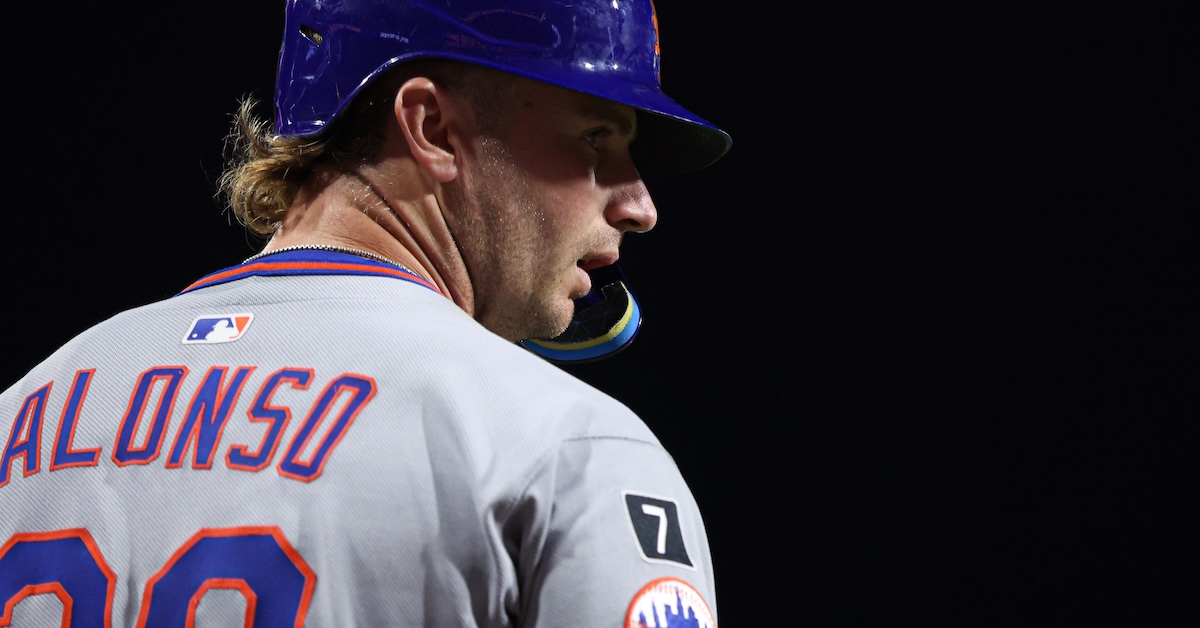
Orioles Sign Pete Alonso for Five Years, $155 Million
Effect on the Orioles
The Orioles made their desire for a big bat well known even after trading Grayson Rodriguez for Taylor Ward, and they sure made good on those efforts by bringing Alonso down to Camden Yards for five years.
Baltimore has an embarrassment of riches on the offensive side, with only four defensive positions looking settled on an everyday basis: Alonso at first, Gunnar Henderson at shortstop, Ward in left, and Jordan Westburg at third base. New manager Craig Albernaz will be tasked with figuring out how to divvy up playing time at the other five positions, as well as determining how often lefties Jackson Holliday, Colton Cowser, and Samuel Basallo will be platooned. There’s also the puzzle of what to do with Adley Rutschman, who hasn’t hit much at all over the last season-and-a-half but is far better than Basallo behind the plate.
Most directly, the addition of Alonso affects fellow righty first basemen Coby Mayo and Ryan Mountcastle (coincidentally, Alonso’s signing broke on Mayo’s birthday). There isn’t a good way to fit both of them on the roster, and frankly, rostering a second first-base-only guy behind Alonso would be tough, too. It would be wholly unsurprising to see them both floated in trade rumors for the rest of the offseason.
Effect on Other Teams
The elephant in the room is the New York Mets and where they turn without Alonso. There isn’t a righty power bat as good as Alonso on the free agent market or realistically acquirable via trade, but that doesn’t mean the Mets are completely devoid of pivot options, either. Mark Vientos rebounding to closer to his 2024 level of production would go a long way by itself, but expecting that would be foolish, even if he has shown prodigious game power in the past.
As for first base itself, the Mets may fill that position more modestly; they’ve reportedly at least toyed with the idea of moving Jeff McNeil over to first and signing Paul Goldschmidt to platoon with him. (From my point of view, Miguel Andujar and Ty France also make sense as fits there.) That would create an opening in the outfield, whether for Kyle Tucker, Cody Bellinger, or a more modest addition. Alternatively, the Mets could use Vientos at first and sign Kazuma Okamoto from Japan to play third base. They’ve also expressed interest in St. Louis’ Lars Nootbaar, and are reportedly talking with the Cardinals about Willson Contreras as well. There are also almost surely a plethora of unreported names they’ve looked into. All of this is to say: Just because the Mets haven’t done anything doesn’t mean they won’t, and it doesn’t mean they’re not busy trying.
As for other teams, Jon Heyman reported that the two non-Orioles teams that met with Alonso in Orlando were the Red Sox and Cubs. (I also love the detail that nobody spotted him and he got to use a freight elevator, by the way.) The Cubs are especially interesting in that Alonso wouldn’t have been a very clean roster fit with Michael Busch already at first, but Alonso could have split time with Busch there and DHed some provided he was willing to stay off the field more often than he was as a Met. The Red Sox are already pivoting to a plethora of righty power bats now that Alonso has signed.
Effect on Similar Players
With Alonso and Kyle Schwarber (much more on him below) finding deals, there isn’t anyone left in free agency who fits the “defense be damned” bruiser role at such an expensive price. But Alonso taking a job could get the market going for the first basemen expected to sign for more modest sums, of which there are still options aplenty. Ryan O’Hearn (who can also play the outfield), Luis Arraez (who can also play second), Goldschmidt, Josh Bell, and Rhys Hoskins are all unsigned.
Phillies Sign Kyle Schwarber for Five Years, $150 Million
Effect on the Phillies
This is an easy one: There was one move the Phillies really wanted to make, and they made it. Trea Turner-Schwarber-Bryce Harper is up there among the best 1-2-3 punches in the game. The hard part is figuring out exactly how much the Phillies are willing to spend to buttress the top three, because the lineup gets shallow in a hurry.
On the Matrix, you’ll see the Phillies interested in reunions with J.T. Realmuto and Harrison Bader, though bringing back either or both of those players is likely to do more for the defense than offense. They’ve also been connected to Munetaka Murakami and Bellinger, both of whom carry risk but also might be transformative in the middle of a lineup. On the trade front, could this finally be the offseason for an Alec Bohm trade? That would allow the club to more cleanly roster someone like Ketel Marte or Brendan Donovan, both of whom have been linked to Philly on the Trades/Claims tab of the Matrix.
A version of the 2026 Phillies that’s as good or better than the 2025 iteration is probably one that’s also more expensive, with $21 million to go before hitting 2025’s $291 million payroll. Offloading Bohm and/or at least a little bit of Nick Castellanos’ $20 million salary would create some space, but would also open another starting lineup spot in addition to the catcher they so clearly need, Realmuto or otherwise. Philadelphia also has its annual need for a reliever or two, and may want a swingman-type if not a full-fledged starting pitcher as well.
Effect on Other Teams
Ken Rosenthal was kind enough to write up the other offers Schwarber had on the table in the immediate aftermath of his signing, with the big highlight being that the Orioles not only offered Schwarber the same deal he signed with Philadelphia, but that they may have been the catalyst for the Phillies upping their offer to that amount. The Pirates also offered Schwarber a similar average annual value but one fewer year, while the Reds were at five years but in the $125 million range.
The Orioles, of course, immediately pivoted to signing Alonso to a nearly identical deal, proving that they were serious about playing at the top of the market beyond Schwarber. The same can’t be said for the other two teams: The Reds believed spending big on Schwarber would be worth it because the Ohio native would boost ticket sales appreciably, and while the Pirates are looking for offense, they’ve never been (and probably shouldn’t be) considered reasonable options for Tucker, Alonso, Alex Bregman, or Bo Bichette. On the Matrix, you can see the Pirates have reported interest in Murakami, but evaluations for him are all over the map and he may not end up requiring even half the outlay Schwarber did.
Effect on Similar Players
There aren’t direct comparables for Schwarber on the open market, in that he’s a pure DH who was viewed as the best hitter on the market but was never the best player (that’s Tucker, unanimously) since he’s limited to batting and will be in his age-33 season. Additionally, Schwarber’s $30 million average annual value was about as expected for him, and I’d chalk up the extra year to Philly adjusting to a strong market, something that’s often individualized to the player rather than an outcome I’d extrapolate to other players.
Dodgers Sign Edwin Díaz for Three Years, $69 Million (Approx. $63.3 Million in Present Value)
Effect on the Dodgers
You didn’t have to watch many Dodgers games this October to come to the conclusion that if there’s anything this team needed, it was bullpen help. Six Dodgers pitched in Game 7 of the World Series, and only two, Justin Wrobleski and Emmet Sheehan, weren’t starters during the playoff run (and those guys are still starting pitchers!). Roki Sasaki closed for much of the postseason, but he wasn’t the team’s exclusive closer, and he’s expected to return to the rotation in 2026 anyway.
This represents the Dodgers’ second consecutive offseason with a large financial outlay to a reliever. Tanner Scott got the largest reliever contract last offseason with his four-year, $72 million deal, and Díaz will likely end up with this offseason’s largest when all is said and done. Scott had a rough first go-round as a Dodger, missing time with left elbow inflammation before he went unused for the entire playoff run because of a lower-body abscess procedure. Manager Dave Roberts believes that 2025 was an outlier for Scott — not that he’d say anything different about a player under contract for three more years — and if he’s proven correct, Scott could be one of the game’s best setup men.
Joining Scott in setting up for Díaz will be Alex Vesia, Blake Treinen, Brusdar Graterol, and Anthony Banda.
Braves Sign Robert Suarez for Three Years, $45 Million
Effect on the Braves
Despite signing the second-largest reliever contract of the offseason, Suarez is expected to set up for Raisel Iglesias, who re-upped with the club on a $16 million contract after a sparkling finish to his season.
Having two closers affords the Braves the luxury of resting Iglesias more if they’d like, knowing that they’ve got a powerful arm with closing experience aplenty to back him up. Additionally, locking Suarez down for three years gives the Braves an obvious successor to Iglesias whenever that relationship ends. There’s not much space for the Braves to make bullpen additions, with Dylan Lee the only arm in the projected ‘pen who can be optioned to the minors, though a José Suarez or Joey Wentz DFA can’t be ruled out.
Effect of the Díaz and Suarez Signings on Other Teams
By far the biggest topic of discussion in the aftermath of Díaz heading west (more so than how he impacts the Dodgers!) is how this affects the Mets. The Mets had a slightly lower offer out to Díaz, but would have gone higher if Díaz had circled back, which he didn’t.
Losing Díaz led to a minor revolt in some corners of Mets internet, which as someone with a slightly sadistic streak when it comes to reading fanbase crash outs on social media, I’ll admit I couldn’t look away from. While I understand the disappointment, it’s important to remember that the Mets did sign Devin Williams, an excellent arm who could very well be better than Díaz next year and indeed over the course of the next three.
That said, it’s completely understandable to look at the Mets’ current bullpen and think that they’ve got work to do to fill it out. Williams and lefties A.J. Minter (if healthy to start the season) and Brooks Raley are the only locks, with plenty of question marks thereafter. Ryan Helsley (Orioles) and Gregory Soto (Pirates) have already chosen new teams in free agency, and Tyler Rogers and Ryne Stanek could also ultimately sign elsewhere. There’s a clear need for another leverage righty, and the Mets seem well aware of that considering they were in on Díaz until the end.
Suarez reportedly had interest from the Blue Jays (who were also interested in Díaz), and with the top three relievers off the board, there’s nobody left who would definitely take the closing job away from Jeff Hoffman, though Pete Fairbanks would have a good chance to. He may well want that assurance when signing with a team, with the widespread interest in him affording him the leverage to ask.
Effect of the Díaz and Suarez Signings on Similar Players
Nobody left on the market has as high of a ceiling as Díaz or is as accomplished at racking up saves in recent years as Suarez. But I’d argue that there are relief pitchers who have a higher floor than either, considering Díaz’s propensity to lose the zone and Suarez’s age — and they’ll be cheaper to boot.
Fairbanks, Rogers, Brad Keller and Kenley Jansen won’t sniff the big contracts signed by Williams or Díaz, though that trio may well have earned themselves three-year deals of their own.
Braves Sign Mike Yastrzemski for Two Years, $23 Million
Effect on the Braves
Outside of shortstop, where Mauricio Dubón may yet get pushed into a utility role by another addition, the starting position player group looks set for the Braves. Yastrzemski should play most every day against righties and be shielded almost entirely from lefties, with Sean Murphy a natural platoon partner, albeit one who would create some positional shuffling (Jurickson Profar from DH to left field, Drake Baldwin from catcher to DH). Having also reinforced the bullpen by bringing back Iglesias and signing Suarez, Atlanta may already be done with its heaviest lifting.
Effect on Other Teams
The only other club with publicly reported interest in Yastrzemski was the Royals, for whom Yaz performed well after being acquired at the trade deadline. The Royals’ gaping outfield holes are obvious and well-documented even after signing Lane Thomas (see his section below), and Yastrzemski would’ve been a reasonably priced and familiar option. Someone like O’Hearn would help to lengthen the lineup, but he isn’t a great fit for Kauffmann Stadium’s huge outfield. If the Royals buy that Bader’s power surge is legit, he could man left field with Thomas platooning with Kyle Isbel’s fantastic glove in center.
Effect on Similar Players
Yastrzemski signed for significantly more money than expected (I thought he’d get something like one year at $11 million, same as the median prediction for him on the Total Spending Projection tab). That ought to be good news for Bader and O’Hearn — both of whom were going to sign for more than Yastrzemski anyway — and could help rise the tide for lesser options like Austin Hays and Max Kepler as well.
Tigers Sign Kyle Finnegan for Two Years, $19 Million
Effect on the Tigers
Finnegan reinvented himself in Detroit, increasing his splitter usage from 30% with the Nationals before the trade deadline to a whopping 55% once the Tigers got their hands on him. That led to a fabulous final couple months of the season, with the righty putting up a 1.50 ERA in 18 innings (backed up by a 1.97 FIP and 2.17 xERA), in which he struck out 23 batters while walking just four. That preceded an iffier postseason where he struck out just three of 30 batters he faced.
There was mutual interest in a reunion from the get-go, so it’s not surprising to see the Detroit native head back to the city where he was born. He could share closing duties with hard-throwing righty Will Vest, since A.J. Hinch historically likes flexibility in the bullpen rather than anointing one closer.
Effect on Other Teams
As I mentioned in the Díaz section, there are still plenty of righty relievers available with closing experience. The aforementioned Keller, Fairbanks, and Jansen could all sign deals larger than Finnegan’s in average annual value, with Keller drawing interest from teams as a starting pitcher, and Fairbanks and Jansen owning stronger credentials as lockdown closers over the course of their careers. Teams could quickly pivot to them in Finnegan’s Wake.
Effect on Similar Players
Finnegan signed for a little bit better than expected (the median prediction was 1.5 years at an AAV of $9.67 million), which may well be good news for those previously-mentioned second-tier closers. Jansen will surely want to sign somewhere where he’s the unequivocal closer so he can continue to chase 500 saves, and Fairbanks should also find himself a team for which he’ll finish games. Considering their respective résumés relative to Finnegan, who has picked up saves but hasn’t actually been particularly good for more than a couple of half-seasons, I’d expect higher AAVs for Jansen and Fairbanks.
Rays Sign Steven Matz for Two Years, $15 Million
Effect on the Rays
The first thing for the Rays to consider — and something they’ll likely consider throughout the rest of the offseason and into spring training — is how exactly to deploy Matz. Per Marc Topkin of the Tampa Bay Times, Matz wanted the opportunity to return to starting, but it’s as yet unclear if that’ll materialize for him as a Ray. He was excellent in his first season as a reliever, proving especially stingy at issuing free passes, a skill that should translate well in a return to rotation work.
Drew Rasmussen, Ryan Pepiot, Shane McClanahan (if finally healthy), and Shane Baz should have four rotation spots handled, with Matz competing with Joe Rock, Ian Seymour, Joe Boyle, and Ty Johnson for the fifth starter job. If he loses out there, he’ll still be valuable to the Rays as a reliever with the flexibility to go long.
Effect on Other Teams
The group of free agent righty relievers is pretty deep, but the same can’t be said for the southpaws. With Matz, Soto, and Hoby Milner (more on those two later) signed, the best remaining lefties are Caleb Ferguson, Caleb Thielbar, Sean Newcomb, Danny Coulombe, and Justin Wilson. There are some interesting arms in there, but it’s a group that should continue to shrink in the coming days and weeks.
Effect on Similar Players
Of the above relievers, Newcomb is the one who’s similar to Matz in that he has starting experience; he began the season in the Red Sox rotation before getting DFA’d and ended the year on a nice run out of Sacramento’s bullpen. A two-year deal may be unlikely considering his relative lack of a track record in recent years and his middling K-BB%, but a one-year version of Matz’s deal (something in the $6 million to $8 million range?) could come to fruition.
Rapid-Fire One-Year Deals
Pirates Sign Gregory Soto for One Year, $7.75 Million
While the Pirates were unable to reel in Schwarber, uh, at least they didn’t leave the Winter Meetings empty handed? Dennis Santana established himself as a legitimate closer after David Bednar was traded to the Yankees at the deadline, but the bullpen beyond him grows thin quickly. Colin Holderman and Dauri Moreta were non-tendered, and Isaac Mattson and Carmen Mlodzinski pitched exceptionally well, but Mlodzinski was in more of a hybrid/piggyback role than he was working as a true leverage arm (which isn’t to say he couldn’t).
Soto provides the ever-important Veteran Presence behind Santana, and has been fabulous against lefties his whole career. Rookie Evan Sisk had been the club’s top option from the left side, and now Soto projects to be the one getting key outs against big lefty bats.
Diamondbacks Sign Michael Soroka for One Year, $7.5 Million
For the second straight offseason, Soroka signed a one-year “prove it” deal with a team willing to give him a chance to start, inking a pact with Arizona that amounts to a $1.5 million pay cut from his Nationals contract last offseason. I (and the median contract prediction on the Total Spending Projection page) thought he’d do quite a bit better, but it’s plausible that he simply wasn’t evaluated as highly as I thought (i.e., I was wrong! I’ll admit it!), or that he left cash on the table to guarantee a rotation spot and get a deal done earlier in the offseason.
Remember, Soroka ended the season in the Cubs bullpen after he ran out of time to stretch back out to starting after being on the IL with a shoulder injury, so perhaps teams were interested in him as a reliever. He’ll slot in towards the back of the rotation behind Ryne Nelson, Brandon Pfaadt, and Eduardo Rodriguez.
Tigers Sign Drew Anderson for One Year, $7 Million
Anderson wasn’t on the radar as a former big leaguer who was definitely going to return to MLB from overseas, but he was fabulous for the SSG Landers of the KBO in 2025, at least on paper. Our prospects team graded Anderson as a low-risk, bottom-of-the-rotation 45 FV; Cody Ponce, a 50 FV, signed with the Blue Jays for three years and $30 million.
Anderson’s relief experience in both the majors and minors helps the Tigers maintain flexibility, and he won’t definitely be assured of a rotation spot. Tarik Skubal, Jack Flaherty, Casey Mize are set in stone, with Reese Olson having a leg up for the fourth starter job. That leaves one spot for Anderson, Troy Melton, Keider Montero, Ty Madden, and Sawyer Gipson-Long.
Royals Sign Lane Thomas for One Year, $5.25 Million
Bouts of plantar fasciitis wrecked Thomas’ 2025 season, during which he played just 39 games and was absolutely dreadful during them. But he was worth a respectable 5.7 WAR from 2022-24, and the Royals had such an outsized need for outfielders that this is a perfectly fine dice roll.
Thomas currently projects as the starting left fielder, but he could end up platooning in left or center if the Royals add another lefty bat.
Cubs Sign Hoby Milner for One Year, $3.75 Million
Milner signed for significantly less than I thought he would; I had him getting more like two years for $12 million total, so he didn’t even come close to matching the average annual value. Perhaps teams were leery of Milner’s age and declining strikeout numbers, but he should still be a useful middle reliever for the Cubs at a very low price. He’ll join Daniel Palencia and fellow offseason addition Phil Maton at the back of the Cubs bullpen, and Chicago could still add another reliever or two.
A’s Sign Mark Leiter Jr. for One Year, $2.85 Million
With an exciting nucleus of younger hitters, pitching was always going to be at the top of the list for the A’s this offseason. Leiter, their first addition of the winter, had an uneven season-and-a-half with the Yankees, but his peripherals show a considerably better pitcher than his ERA would indicate. He probably won’t be the best reliever joining Sacramento this offseason, but for now he’s projected to share closing duties with Hogan Harris and Michael Kelly.
Guardians Sign Colin Holderman for One Year, $1.5 Million
“Hard fastball, sharp slider, horrible results” certainly sounds like a Guardians’ reclamation project. Holderman was a useful reliever from 2022-24 before the wheels came off this year, and if the Guardians can right the ship, they’ll have a very cheap middle reliever who’s under club control through 2028.
Marlins Sign Christopher Morel for One Year ($ TBA)
Morel has tried and failed to play just about every position well, but first base will be a new one (and also the last one, unless he wants to dabble in catching). His prodigious bat speed — he ranked 15th of the 275 hitters with at least 500 swings the year — and previous success (42 homers and a 115 wRC+ from 2022-23) give the Marlins something to dream on while they hope he manages better at the position that’s lowest on the defensive spectrum. He’s got two more years of arbitration ahead of him if his performance merits sticking around.
Trades
Mariners Acquire Jose A. Ferrer from Nationals for Harry Ford and Isaac Lyon
- Brendan Gawlowski’s Write-Up of the Deal
- Updated Mariners Roster Projection
- Updated Nationals Roster Projection
Effect on the Mariners
The Mariners were known to be hunting for lefty relief help, and the Seattle Times‘ Adam Jude correctly clocked Ferrer as a name they were potentially considering when reporting the club’s interest in southpaw slingers.
Ferrer’s 4.48 ERA is quite misleading — FIP, xFIP, SIERA, and xERA all thought he did considerably better work this year — but he’s not without warts for the Mariners to try to remove. His strikeout rate is a shade below league average, and while, say, adding a four-seam fastball could have negative impacts like increasing his hard contact allowed, one would think the Mariners might attempt to tweak his pitch mix to get more whiffs. Additionally, Ferrer was fantastic against lefties (.228 wOBA against, 21.8% K-BB%), but struggled at times against righties (.341 wOBA, 14.5% K-BB%), though some of the problems with righties were enhanced by a ludicrously high .405 BABIP.
Ferrer has four seasons of club control remaining and will help to set up Andrés Muñoz alongside fellow lefty Gabe Speier and righties Matt Brash and Eduard Bazardo.
Effect on the Nationals
The 2029 Nationals may well be in the playoffs and wish they had Ferrer getting big outs in his final year of club control, but acquiring six years of a highly-regarded catching prospect (and a not-insignificant low-level arm in Lyon) made giving up the left-hander more than palatable for new president of baseball operations Paul Toboni.
The Nationals unequivocally view Ford as a catcher, and while he’s not a finished product, there are enough above-average tools in his catching toolkit to make our Eric Longenhagen think he can stick there, too. The Mariners had toyed with the idea of moving him to left field since he was blocked by Cal Raleigh, but that won’t be a problem in Washington.
Keibert Ruiz’s extension isn’t actually an albatross since the $6.25 million average annual value of his contract is so low, but he hasn’t even played up to that modest salary. He’s been worth -1.9 WAR over the life of the contract, and with each successive year there’s less merit in saying “well, he’s still young!” and more merit in saying “well, maybe this is just who he is.” Perhaps the new coaching staff — specifically hitting coach Matt Borgschulte and catching coach Bobby Wilson — will be able to improve him, but it’ll take a lot of added value to make him even an average regular.
The Nationals haven’t yet specified how likely it is that Ford could win the Opening Day catching job, though it’s certainly possible that he could start outright or at least end up in a timeshare with Ruiz. Riley Adams signed a $1 million contract to avoid arbitration, but only half of that is guaranteed, and the Nationals certainly won’t use $500,000 as a reason to keep him around if he can’t show he’s more than the third option.
Angels Acquire Vaughn Grissom from Red Sox for Isaiah Jackson
Effect on the Angels
The Angels’ second and third base jobs are wide open with Yoán Moncada and Luis Rengifo hitting free agency, and the out-of-options Grissom is a new entrant to the competition at both spots. He never made an impact in Boston after being acquired for Chris Sale, but he was above-average in Triple-A Worcester this year. He played all four infield positions so he could win either of the two open jobs, barring other moves.
Effect on the Red Sox
Jackson, the Angels’ eighth-rounder in this year’s draft, is a depth outfielder. With Grissom off the 40-man, Boston’s bench puzzle is easier. For now, Romy Gonzalez has a spot, with the versatile Nate Eaton and Nick Sogard penciled into the other two non-catcher reserve spots.
Jon Becker manages RosterResource's team payroll pages, assists with all other aspects of RosterResource, and also dabbles in creating new features as a Junior Developer. Follow him at your own peril: @jonbecker_ on Twitter and @becker.fangraphs.com on Bluesky.
Really good work here, Jon. I would love to see the Mets get Contreras.