
On Second Thought, Let’s Call Konnor Griffin Up After All
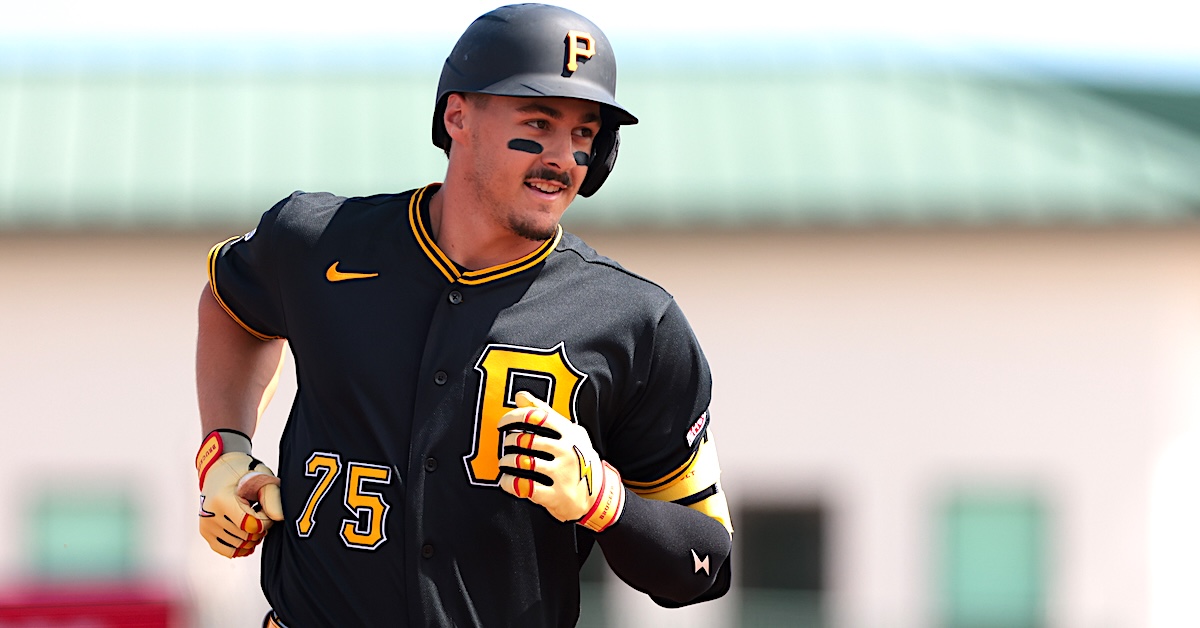
It feels incredibly weird to say this but… it’s a good time to be a Pirates fan? Because Konnor Griffin is coming to the majors. He’ll make his major league debut in Pittsburgh’s home opener on Friday.
Griffin was the Pirates’ first-round pick in 2024, ninth overall, and quickly emerged as the no. 1 overall prospect in baseball. A team that’s been as bad as the Pirates, for as long as they’ve been bad, will have some familiarity with the ballyhooed prospect debut, but I’m not sure even they’ve seen anything like this. I was as big a Paul Skenes fan as anyone, and as pumped as I was to see him hit the majors, he’s surpassed even my expectations.
Well, now Skenes is in the majors to stay. So is Bubba Chandler. The Pirates flirted with spending some money this past offseason, and while a 3-3 record is the definition of unremarkable, the Pirates just went on the road and played the Mets and Reds — two of their erstwhile NL playoff rivals — to a draw. The Pirates might be kind of OK. Life hasn’t been this good, genuinely, in more than 10 years.
But Griffin’s debut is the main event. Because as big as the hype around Skenes was, the expectations for Griffin are even greater.
You don’t have to get far into Eric Longenhagen, Brendan Gawlowski, and James Fegan’s Top 100 post to understand what Griffin’s deal is. The fourth, fifth, and sixth words in the capsule on Griffin are “freaky five-tool superstar.” He was the only prospect to get a 70-FV grade in the past two years, and his component tool grades are all 60s and 70s across the board, including 70s for speed and power.
But Griffin is also a plus defensive shortstop who hit .333 across three minor league levels last year — his first in professional baseball — with 65 stolen bases in 122 games. That last part is hard to believe, because I have trouble wrapping my head around the idea of someone that big being that quick.
I interviewed Griffin at the combine two years ago. It was a pleasant enough conversation; he said he was learning to cook in preparation for moving out of his parents’ house. I encouraged him to purchase a crockpot.
I bring this up because while Griffin is not the largest teenager I’ve ever seen up close, that’s only because I covered football for the student paper when I was in college. Griffin is not as big as an SEC offensive tackle, but his vastness is unsettling. He is tall, he is wide, and every extremity, including his neck, is replete with muscle. And he’s put on 20 pounds of beef since I saw him last.
In the Effectively Wild predictions game, Meg advanced the proposition that Griffin could produce more WAR as a rookie than Mike Trout did in 2012 (10.1). (I took the under, not just because Meg’s prediction was outlandish by design, but for reasons I’ll get into later in this post.) In terms of all-around five-tool polish and athleticism, that’s the kind of territory we’re talking ourselves into. Certainly, Trout is one of the few recent ballplayers with a similar physical presence to Griffin’s, though even Trout is not quite this big.
As good as Griffin was in 2025, and as quickly as he moved through the minors, I never really considered an April major league debut as a serious possibility. Even avid baseball fans can forget how long the developmental arc is for a draft pick, especially a high schooler. Griffin could genuinely have been that promising a talent and not broken into the majors until 2027 or later.
He will be the 10th player from his draft class to reach the majors, and the 2024 draft was notable for being extremely heavy on college guys who were expected to move quickly. JJ Wetherholt and Carson Benge only beat Griffin to the majors by a week. In regular-season terms, Trey Yesavage, an extremely polished college pitcher who’s almost three years older than Griffin, has only three more weeks of big league experience. Charlie Condon and Travis Bazzana are still in the minors.
It’s unthinkable that Griffin would get here so quickly. Assuming he’s in the lineup on Friday, he will become just the 14th position player since 1995 to make his major league debut before he turns 20. The first 13 players on that list include two Hall of Famers and three nailed-on future first-ballot Hall of Famers. Five of the other eight players made at least one All-Star team; four made at least three. The median career WAR among this group belongs to another Pirates infield prospect, Aramis Ramirez, at 38.5.
In short, if you knew nothing about Griffin other than the fact that he was set to reach the majors at 19, you could set Hall of Very Good as a median outcome. As a single biographical datum to project from, being a teenage major leaguer is way better than being the no. 1 overall pick.
But if you just look at how these players performed in their first season in the big leagues, they tend to have another thing in common: They weren’t that good.
| Name | Team | Year | G | PA | HR | BB% | K% | AVG | OBP | SLG | wRC+ | WAR |
|---|---|---|---|---|---|---|---|---|---|---|---|---|
| Juan Soto | WSN | 2018 | 116 | 494 | 22 | 16.0% | 20.0% | .292 | .406 | .517 | 146 | 3.7 |
| Bryce Harper | WSN | 2012 | 139 | 597 | 22 | 9.4% | 20.1% | .270 | .340 | .477 | 121 | 4.4 |
| Jurickson Profar | TEX | 2012 | 9 | 17 | 1 | 0.0% | 23.5% | .176 | .176 | .471 | 60 | 0.0 |
| Mike Trout | LAA | 2011 | 40 | 135 | 5 | 6.7% | 22.2% | .220 | .281 | .390 | 87 | 0.7 |
| Justin Upton | ARI | 2007 | 43 | 152 | 2 | 7.2% | 24.3% | .221 | .283 | .364 | 53 | -0.6 |
| B.J. Upton | TBD | 2004 | 45 | 177 | 4 | 8.5% | 26.0% | .258 | .324 | .409 | 91 | 0.2 |
| José Reyes | NYM | 2003 | 69 | 292 | 5 | 4.5% | 12.3% | .307 | .334 | .434 | 102 | 2.2 |
| Wilson Betemit | ATL | 2001 | 8 | 5 | 0 | 40.0% | 60.0% | .000 | .400 | .000 | 67 | 0.0 |
| Adrian Beltré | LAD | 1998 | 77 | 214 | 7 | 6.5% | 17.3% | .215 | .278 | .369 | 75 | 0.2 |
| Aramis Ramirez | PIT | 1998 | 72 | 275 | 6 | 6.5% | 26.2% | .235 | .296 | .351 | 70 | -1.0 |
| Andruw Jones | ATL | 1996 | 31 | 113 | 5 | 6.2% | 25.7% | .217 | .265 | .443 | 79 | 0.0 |
| Edgar Renteria | FLA | 1996 | 106 | 471 | 5 | 7.0% | 14.4% | .309 | .358 | .399 | 106 | 3.5 |
| Karim Garcia | LAD | 1995 | 13 | 20 | 0 | 0.0% | 20.0% | .200 | .200 | .200 | 5 | -0.3 |
Only four of these players were worth more than a win in their debut year, and all of them had significant advanced experience by age 17. Soto, Reyes, and Renteria all signed as amateur free agents at 16 or younger. Renteria actually played on the Marlins’ complex at 15, and spent his age-16 campaign in full-season A-ball. Griffin got drafted at 18 and two and a half months; by the time Harper was that age, he’d played a full season of JUCO ball, including a trip to the national championship series, and he’d gone 12-for-35 in the Arizona Fall League.
Even more advanced prospects struggled early. If there’s a comp for Griffin in the majors right now, it’s Bobby Witt Jr., who had a .294 on-base percentage and posted 2.3 WAR when he got his first big league action at age 22. Witt was a star by Year 2 and a god by Year 3, but in Year 1 he looked like a kid.
For that reason, I was quite comfortable with the Pirates’ decision to leave Griffin off the Opening Day roster. He’d hit four home runs 16 Grapefruit League games, but he’d also batted .171 with 13 strikeouts in 46 plate appearances. That’s not bad at all for a 19-year-old, but it also doesn’t look like Griffin bashing in the portcullis and demanding to be taken north with the grown-ups. There’d be no harm in letting him get an extra layer of seasoning in Triple-A.
Yes, Griffin went 7-for-16 with three doubles in his first taste of action at that level, but five games barely counts as getting taken out of the fridge, let alone being seasoned. No baseball executive since Branch Rickey is going to look at that sample and think Griffin has changed even a little in the past week.
In fact, from a service time or PPI perspective, Griffin’s time in the minors makes no difference at all. It’s still early enough in the year for him to record a full year’s service (assuming he’s in the big leagues to stay), and he can still earn the Pirates a draft pick by performing well enough in award voting.
Griffin and the Pirates have reportedly made some progress on a contract extension. (At this point, any Triple-A shortstop who isn’t talking to his team about an extension must be feeling horribly left out.) Buster Olney’s sources have the two sides within tens of millions of dollars of an agreement on an eight-year contract, with Griffin’s camp asking for something akin to the eight-year, $130 million deal Roman Anthony signed last August.
If that’s true, the Pirates should be leaping over the proverbial table to take that offer, because that price is only going to go up, and rapidly. Especially because Griffin, by virtue of his youth, could hit free agency after his age-25 season, assuming the free agency timeline doesn’t change in the next CBA. Great players get paid almost regardless of age, but apart from Shohei Ohtani, the genuine record-breaking contracts — Alex Rodriguez, Trout, Harper, Soto, Vladimir Guerrero Jr. — go to players who are set to reach free agency young.
If Griffin extends now, every free agent year he gives up could be worth — without an ounce of exaggeration — $60 million or more. If the Pirates can tie Griffin up for what Anthony got (his deal maxes out with a $30 million club option for 2035), they should do it before he changes his mind.
The timing of Griffin’s call-up is so strange, a looming contract extension is the only explanation that explains it to me. The Pirates will get a PPI pick if Griffin wins Rookie of the Year and records a full year of service time, but only if he hasn’t signed an extension first. If an extension is close, or if there’s even a handshake deal in place, the Pirates would need to get Griffin onto the big league roster before they put pen to paper.
I’ve so far focused on what Griffin will mean to the Pirates, and to baseball, in the broadest possible context. Mostly because this isn’t a guy you bring up to play a couple days a week and hit lefties off the bench in the hopes of going from 82 wins to 83. This is a franchise player; I’ve zoomed out because I expect that when all is said and done, you will be able to see his impact from space.
But even if there are growing pains, it’s undeniable that he’ll help the Pirates now.
The Pirates brought in three big (or big-ish) veteran bats this offseason: Brandon Lowe, Marcell Ozuna, and Ryan O’Hearn. All of those players have major defensive limitations, as do incumbent outfielders Oneil Cruz and Bryan Reynolds.
In a perfect world, Reynolds would be a DH, Cruz would be playing right field, O’Hearn would be playing first base, Lowe would be playing at first or in an outfield corner, and shortstop Jared Triolo would probably be playing either second or third base. (If he’s in the lineup at all; Triolo’s 86 career wRC+ is in utility infielder territory.)
But Ozuna has to DH, and while Spencer Horwitz has been OK at first base, he was diabolical when the Blue Jays tried him at second. So O’Hearn is in right field, Cruz is in center (often without his sunglasses, to Skenes’ peril), Lowe is at second base, and Triolo is at short.
The result: FanGraphs editorial policy prohibits me from describing the quality of Pittsburgh’s defense in this forum. I wanted to use a portmanteau involving a popular household pet and what that pet will leave on the carpet if it isn’t housebroken; Matt said I wasn’t allowed.
Griffin’s glove alone would improve this team significantly. And even a conservative evaluation of his offensive game — one which accounts for some growing pains as he adjusts to big league pitching — would have Griffin as a middle-of-the-order bat in this lineup.
I don’t want to get too effusive about Griffin, because players of his inexperience so rarely hit the ground running in the majors. At the same time, that’s a hard urge to resist, because players this talented so rarely get the opportunity to try.
Michael is a writer at FanGraphs. Previously, he was a staff writer at The Ringer and D1Baseball, and his work has appeared at Grantland, Baseball Prospectus, The Atlantic, ESPN.com, and various ill-remembered Phillies blogs. Follow him on Twitter, if you must, @MichaelBaumann.
Both Uptons!
Karim!
Weird coincidence. I checked Garcia’s stats in Albuquerque to see how he was doing before his callup. The three 1995 Dukes with the highest OPS (min. 100 PA) were all tied at .912–Garcia, 28-year-old Ron Coomer, 30-year-old Tom Prince.
Who is Karim Garcia? https://youtu.be/hMchl9zYaew?si=0Vc8lcGJsMD5FEpQ
I just looked at Karim Garcia’s initials and said “uh oh.”
Nobody had better have rubbed a lamp and wished that Griffin would have a career like another KG who debuted as a teenager.
Kevin Garnett? His career was pretty good!
10/13 players were NL, and 6/10 were NL east. Meaningless, but fascinating.
The timing makes sense, build excitement for Pittsburgh’s home opener and get his MLB debut done before signing the big extension (preserving PPI eligibility). It’s crazy to think the Griffin extension will arguably be the most important contract in the long history of the Pittsburgh Pirates
There are very few things that could make me happier right now than reading that Konnor Griffin has signed a long term contract with the Pittsburgh Pirates, then (I am now dreaming) it is followed by an extension with Paul Skenes.
Yeah I think this was the plan. FO wanted him to debut at home for hype and ticket sales. They did the same with having Skenes debut at home as well. Helps sell more tickets and the $ amount of increased tickets is likely a good amount.
The home opener was sold out long before Griffin’s call-up was announced. Hype, yeah, but the only increased $ will be whatever cut they’re getting from StubHub on secondary market sales.
Jimmie Foxx was 17 when he debuted.
…and that season, he had an astonishing 6 hits in 9 at-bats, immediately living up to sky-high expectations from many who heralded him as a right-handed Babe Ruth
By the time they let him pitch more than one inning he was 37 years old. In 22.2 innings over 9 games, he had a 1.59 ERA, albeit against wartime lineups.
Your thoughts on an extension pushing the Pirates to call him up seems to be spot on. Olney reported they are “finalizing” a 9/140 deal, which to me says its practically done but won’t be signed until they can get the potential PPI pick.
If that’s really the deal, Griffin has a pretty good shot of topping the trade value list for a while over the next 5 years.
Has Buster ever broken a big signing or trade in all his years as a baseball writer? He lost his farm once over Springer not going to the Mets. Congrats to Buster for breaking something for once.
Outside of journalists, you’re the first person I’ve ever encountered who gives a hoot about who broke a story.
As a Pirate fan I am glad that Griffin didn’t take Meg’s advice about signing an extension.
I worry that the “fans” and uneducated sports media will start saying that Griffin is a bust if he hits .240 this year as a teenager. In early May last year, one local sports radio host claimed that Skenes was no longer a phenom. We all know how he finished the year.
Who cares?
You gotta remember that the sole job of local sports talk radio hosts is HAWT TAEKS.
I’m getting some Robin Yount vibes here. Unlike Mike Trout or Juan Soto (or even Ken Griffey Jr), Robin Yount was not good when he first got called up. He only slashed .267/.307/.367 in first year with more than 500 PAs, which was actually better than what he did when he first got called up in 1974. Those were his age 18 and 19 seasons. He didn’t have an above-average batting line until he was 22, and he didn’t establish himself as a big time star until he was 24.
…and then he had a 9.8 fWAR season, won 2 MVPs, put up 66.5 fWAR in his career, got 3000 hits, and entered the Hall of Fame.
I’m not convinced it’s going to take that long for Griffin to get going. Other guys like Gary Sheffield and Al Kaline struggled at first but figured it out sooner than Yount did. But these guys sometimes take time. Something similar seems to be going on with Jackson Chourio right now, and he’s actually hit well. People are like “ah, he’s never going to be a star.” There’s a huge long list of players who scuffled in the majors for a year or two before they broke out and became big time hitters.
Here’s a short list of players who didn’t break out and have a monster season at the plate (140 wRC+ or higher) until their age-24 seasons, in addition to Yount:
Ryne Sandberg
Ernie Banks
Mike Schmidt
Tony Gwynn
Jose Ramirez
Bobby Witt Jr
All of whom are Hall of Famers or on a Hall of Fame track. And for many others it happened later (Roberto Clemente, Barry Larkin, Adrian Beltre).
Another way to look at it: The list of players who got 400 PAs in their age-19 season is nuts. There are only 9 players got 400 PAs in their age 19 season since 1951. They are:
Juan Soto (146 wRC+)
Tony Conigliaro (138 wRC+)
Bryce Harper (121 wRC+)
Edgar Renteria (106 wRC+)
Ken Griffey Jr (106 wRC+)
Ed Kranepool (98 wRC+)
Robin Yount (89 wRC+)
Rusty Staub (84 wRC+)
Al Kaline (76 wRC+)
That’s one guy whose career was completely derailed by a freak accident, two guys on a Hall of Fame track, three Hall of Famers, two guys with more than 35 career fWAR, and Ed Kranepool.
Guys who actually make it through something even close to a full season at age 19 have extraordinary career outcomes. Unless they’re Ed Kranepool. I don’t think Konnor Griffin is going to be Ed Kranepool.
Agreed on Jackson Chourio, he just turned 22 and people seem to forget that. Players don’t just stop having a normal age-related improvement because they are now in the majors. People also seem to have forgotten by now that Chourio actually stunk in April/May of 2024, and made a leap over the summer. Development is rarely linear.
Griffin will get a pretty long leash this year I think, the other options at SS for the Pirates are just so uninspiring.
I guess they could move Nick Gonzales back there. He actually hasn’t been bad defensively there and his bat might actually play there as opposed to third base.
That said, they still have to play someone on the left side of the infield if they bench Triolo, and just swapping Triolo and Gonzales offers most of the same downsides without the upside. And if he signs an extension after being promoted it would have to take a monumental disaster for them to send him back down.
The only duo drafted by a single team in a short time span which this enormous ceiling was when Washington drafted Harper and Strasburg. Since the Pirates always lost far more then the won, the Pirates were picking near to the Nationals. The Pirates took Taillon the n3xt pick after the Nationals took Harper. A year earlier, the Pirates took Tony Sanchez with the 4th pick after the Nationals took Strasburg. Unfortunately, like everone except the Angels, they missed out on Trout who was the real gem in this class. This sorry history is one reason Pirates fans speak of ‘Pirates’ Luck’.
These days, the baseball Gods seem to be smiling on us Yinzers. Let us hope KG takes his place with Skenes as the face of the franchise.
I don’t credit Cherington and Co. with a lot, and it’s easy in hindsight to say the Skenes and Griffin picks were no brainers, but at the time there was a lot of noise pushing for Crews (or Langford, or Max Clark) instead of Skenes. And Griffin was by no means a slam dunk at 9, with hit tool risk and Mississippi HS risk. Kudos to them for the picks they made. Hopefully, they continue to stay healthy and meet their full potential.
I prefer hitters in the top of the first round. I wanted the Pirates to take Crews. But watching Skenes mow through everyone during LSU’s run to the title, I begrudgingly became a Skenes fan. This may have occurred before the Pirates. I read somewhere that it came down to the wire before the Pirates took Skenes. That one panned out. I nearly destroyed stuff when they took Griffin. That would have made four first round flops who could not hit. Perhaps this one will hit — if not this season, then next.
Crews was the favorite to go 1-1 at the start of the 2023 season, but Skenes was indeed the consensus choice by the time the draft occurred in July. They deserve massive credit for taking Griffin, however.
This is revisionist history. Look at the draft rankings on this very site post draft! FA graphs had it as Crews/Langford/Skenes. BA had Langford and Skenes swapped. I’m not sure what order Kiley, Law or any other outlet had these guys in.
From memory, most outlets had those three ranked in some order and almost in a tier of their own (not to mention Clark and Jenkins, who were noted to have 1/1 ability in a different draft year). But the fact that all three were bandied about in some order makes it not consensus at all.
No, it isn’t revisionist history. I covered that draft. As I said, coming into the 2023 season there really wasn’t any debate about who would go 1-1, as Crews was the runaway favorite. That was still the case as of mid-March when Dylan was putting up ridiculous numbers against non-conference opponents. The conversation changed during the SEC conference schedule, as Crews showed some contact issues and also didn’t look the greatest in center.
Skenes, meanwhile, put up the most dominant collegiate pitching performance since Strasburg. There’s often an inertia issue in the media where a guy who has been viewed as the 1-1 for so long can stay there in draft rankings and mock drafts, but what Skenes did that season cannot be understated. The Nationals also would have taken him over Crews if they had the chance.
When ESPN did their “who would you pick” draft, Jeff Passan picked Skenes first and Jesse Rogers picked Crews second, then said “This is like the Astros taking Mark Appel, with the Cubs then getting Kris Bryant. Yes, please.” Passan talked trash back at him (and backed it up), but this is a sign that at least one analyst had Crews over Skenes.
Skenes may have been the pretty clear favorite and I was very glad they took him, but it’d be revisionist to say he was the absolute consensus. It wasn’t like a Strasburg or Harper.
To be clear, I am not talking about analysts. I don’t have a clue who Jesse Rogers is. I am talking about organizations. The Pirates, the Nationals, and the Tigers all had Skenes at the top of their board. He was the consensus choice within MLB.
I have no reason to doubt this statement, but there is also a difference between a player being #1 on most team boards and them being a lock for #1. There are other considerations too, mostly around bonus pool management.
And I recall that the consensus in 2023 was even more unified around this being the strongest top of the draft in recent memory rather than it was for a specific player.
I don’t know that we have had any cases where a guy was unequivocally the #1 pick by everyone’s standards since the bonus pools were put in place in 2012 except Adley Rutschman in 2019.
Maybe 2018 with Casey Mize, but I think he would have been no better than fourth in the 2023 draft. Same with Mickey Moniak. The top of the 2023 draft had something like 3 of the top 6 draft-eligible prospects in a 10 year span (2016-2025), and Druw Jones and Bobby Witt went second.
You can mentally adjust that to two of the top six, or three of the top seven if you want. The point still stands.
I’m saying is that it’s possible you are right and the Pirates deserve credit for what they did.
I never said that Skenes was a lock to go 1-1. All I said is that, by July 9th, Skenes was the consensus top talent in the judgment of MLB organizations. I give the Pirates credit for making the right move instead of getting clever and going under slot like they did with Henry Davis. I’m just pointing out that the Griffin pick is the one where they really merit a lot of praise.
2026 will be another one with Roch Cholowsky.
Okay, if that’s what you meant then I think you and your interlocutors are talking about something entirely different.
I agree that Roch Cholowsky has a pretty good chance to be an unequivocal #1. I won’t say that he will, because a lot can happen in between now and then, and Cholowsky could strike out a hundred times between now and then or something like that. But if he keeps doing what he is doing, it is so hard to see who would challenge him.
Potential double-plus shortstop defender who also happens to be above the 95th percentile of hitting performance in his draft class? If the season ended today, there is no way that a team would take any of the other very good college prospects instead of him (like Jackson Flora, Vahn Lackey, Ace Reese, or AJ Gracia). And nobody in the prep class has can’t-miss tools, even if Grady Emerson is a strong prospect himself.
There are some players who you could say are on the same level as him or maybe even outhitting him, but they typically come with hit tool questions like Sawyer Strosnider, Will Gasparino, Daniel Jackson, or Caden Sorrell. It’s going to be hard for them to top him.
We knew the pirates were taking skenes, it had a feeling, but no way that was what every team would do. Your ratio seems to point to your being overly certain of your memory.
Crews hit over .400 in SEC and postseason play with more walks than strikeouts (a K percentage of 16 in that time frame). I’d buy the questions on CF defense, but the contact stuff doesn’t really hold up. I’d love to see where that conversation changed. Crews stayed at the top because he had an incredible season himself and looked the part, aside from being a CF.
As far as early 1/1 candidates staying there, I’d refer you to last season. When Jace LaViolette started 2025 rather poorly and revealed serious warts to his game, he was thrown out of the top spot quickly. In 2023, Kiley McDaniel started with Langford at the top and quickly gave him the boot when he was injured and Crews and Skenes wreaked havoc. Also two weeks before he draft, Kiley had all three college players pretty much even.
Crews hit .446 against non-conference opponents. He was still good in the SEC, just not as good as Langford.
As for LaViolette, he was never the 1-1 favorite in 2025. He had a 26.8% strikeout rate as a freshman and 23.8% as a sophomore.
Memory serves, Law had Crews over Skenes as a hitter over pitcher thing but it was pretty much 1 and 1A.
Is Soto supposed to be one of the three “nailed-on future first-ballot Hall of Famers”? I’d say it’s a bit early to know. I’d be really surprised if he doesn’t make the Hall based on his career so far, but “first ballot” implies he’ll be an all-timer, which we’ll need more career to evaluate.
He’s got 42.6 fWAR at age 27 and he never gets hurt. If that doesn’t look like a first ballot hall of famer to you then i encourage you to spend more time on this wonderful website.
It’s the never getting hurt part that I’m not too sure about. There are many examples of players who are the picture of health until suddenly they aren’t anymore. Trout through his age-26 season had already cleared the “if he dies tomorrow, he’s still a HOFer” bar; Soto hasn’t.
The phrasing “nailed-on” implies that they are already at that point and the only thing left to do is retire and wait 5 years. Trout and Harper are there, but Soto still needs to continue to produce. If he gets plagued by serious injuries, I don’t think he has completely cleared the David Wright/Nomar tier yet. He might be only a season or two of his usual play away from it, but he isn’t quite there yet.
I think you’re right in a technical sense, but you could say the same thing about Harper. To me, Harper will make the hall of fame barring scandal, but he has work to do to be guaranteed first ballot. I’m guessing Soto is a first ballot hall of famer if he has his 20% outcome rest of career, but certainly not if he has his 2% outcome rest of career.
Anything even resembling normal gets them both there which is why I think you’re being a little pedantic even if you are at least arguably correct.
Oh man, I remember Karim Garcia. The Dodgers were in the middle of an epic run of RoYs, and while he never quite figured it out at the MLB level, he played in Mexico until he was FORTY.
So even the “biggest bust” was still a star!
Griffin should wait for the promotion and then be like “oh, yeah, that’ll be $150 million, please and thank you.”
caveat to the extension discussion, they’re taking the USD to the glue factory over the next three years. $100mil per free agent year for PPP with today’s top contracts.
Alex Rodriguez debuted at 18 in 1994. End points
Doesn’t change the article’s argument–he was below replacement in his age 18-19 seasons (-0.6 WAR in 65 PA over two years), then put up 9.2 WAR at age 20 and would be a nailed-on first-ballot Hall of Famer if not for (gestures)
For the Pirates’ sake I hope they get a contract done ASAP, because if context clues are taken to their extreme conclusion, a new CBA’s reduction in controllable years might put him into free agency while he’s still on his parents’ insurance.
Look, this is more money than I will see in my lifetime, and I’d be rushing to put pen to paper. But I’m not a professional athlete with Griffin’s standing. Obviously a risk he gets hurt, but to take even $140M when he could hit free agency at either 25 or 26 as a shortstop is insane to me.
If he signs the extension and develops as anticipated, he’ll still hit FA young enough to sign a half billion contract or more. And if something goes wrong, signing the extension means he still has guaranteed generational wealth. The jump from where he is now to $140 million is a lot more meaningful for lifestyle and security than the jump from $140 million even to a Soto contract.
Nailed it.
“The jump from where he is now to $140 million is a lot more meaningful for lifestyle and security than the jump from $140 million even to a Soto contract.”
I am 1,000% stealing this and using it every time anyone questions why a young player would sign an extension.
Ke’Bryan Hayes says Hi.
And Keibert Ruiz. Imagine if he hadn’t fired Boras and didn’t get the pre-arbitration extension he wanted.
Great stuff Michael thank you, including but not limited to your circuitous description of the Pirates’ defense.
Though if the word he wanted to use is the one I think, isn’t it a straight compound word rather than a portmanteau? A compound combines all of both words, a portmanteau mashes up parts of them. The portmanteau I’d come up with here would be “dugong.”
Exciting times! I’m wondering why Manny Machado didn’t qualify for this list. He played some of his age 19 season for the orioles, but maybe he’d turned 20 by that point?
A bit more searching suggests that is the case. Either way, Manny’s career only strengthens the case that Griffin is probably going to be great.
why wont Matt let you say Doberman-dookie??
His debut for the home opener weekend was pre-ordained. His stint in the minors was mainly a courtesy to the Indianapolis ownership group, so they have a reason to memorialize his brief stopover. For his glove alone, it was obvious from early in spring training that he deserved to be in MLB if he could put up a low-80’s OPS+.
Honestly, if he hits to his ZIPS projection for 130 games, his glove alone will generate at least a couple of WAR. And the turnaround in fan sentiment has been flat-out amazing. The atmosphere in the street outside the ballpark from noon onward was like it was game 1 of the World Series. (I attended all 3 home games of the 1979 World Series, so I have some data points to back it up.)
Also, remember the Cueto game, when the home crowd was so noisy that Cueto dropped the ball while he was on the rubber and was called for a balk. Or look at tapes of home Steeler games from a decade ago when they were perennial Super Bowl contenders. We Yinzers can make a heck of a lot of noise when there’s something to cheer about.
The sports talk shows here are all about the extension. Unfortunately, the ship has sailed on a similar deal for Skenes. But Seth Hernandez is coming, and if things go well for him he could ascent to being a #1 overall prospect. When a 19 year-old pitcher (he’s only a little over 9 weeks younger than Griffin) logs 18 whiffs on 24 swings in his first (3 inning) professional game and hits 102.4 on the radar gun on his first pitch in a competitive spring training game, it’s certainly a lively possibility that he will reach that peak in his minor league apprenticeship.
That scenario would give Ben Cherington three consecutive Rule 4 drafts where his first-round pick became the #1 overall prospect. That should be enough to quiet all the fan rumblings about the otherwise pitiful first six years of Cherington’s tenure. But if you go back to the farm system that Cherington inherited, the past six years have been pretty much what you would have expected.
The Cueto game was absolutely the first thing to come to mind in that second-inning rally.