
Scouting the 2025 Rule 5 Draft
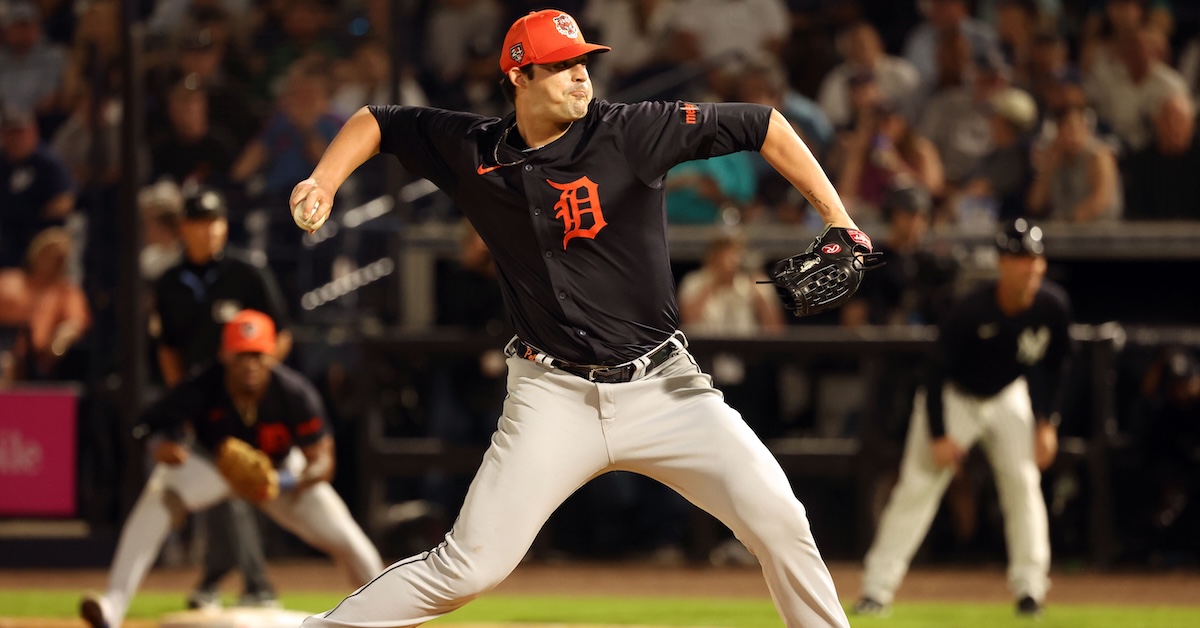
The major league phase of the 2025 Rule 5 Draft was held Wednesday at the Winter Meetings in Orlando and concluded with 13 players being selected to join new organizations. Below are our thoughts on those players. The numbers you see in parentheses represent each team’s 40-man roster count entering the draft.
Before we get to the reports, our annual refresher on the Rule 5 Draft’s complex rules. The draft proceeds in reverse order of the standings from the most recent season. Players who signed their first pro contract at age 18 or younger are eligible for selection after five years of minor league service if their parent club has not yet added them to the team’s 40-man roster; for players who signed at age 19 or older, the timeline is four years. Those clubs that select a player must not only (a) pay said player’s former club $100,000, but also (b) keep the player on their 26-man active roster throughout the entirety of the following season, with a couple of exceptions that mostly involve the injured list. If a selected player doesn’t make his new team’s active roster, he is offered back to his former team for half of the initial fee. After the player’s first year on the roster, he can be optioned back to the minor leagues.
First Round
1. Colorado Rockies (37)
RJ Petit, SIRP, from the Tigers
The ironically named Petit (the 6-foot-8 right-hander sadly pronounces it like it is in Andy Pettitte, not like it is in Yusmeiro Petit) was the Tigers’ 2021 14th rounder out of Charleston Southern and pitched his way to Triple-A Toledo in 2025, amassing a 2.44 ERA across 66.1 innings of work. Petit is a pretty standard mid-90s fastball (94-97 mph, touch 98) and a plus slider reliever. He utilizes his slider in all counts because his size creates hittable plane on his fastball, but the addition of a second fastball type (he throws both elevated four-seamers and in-zone two-seamers) helped limit opponents’ contact quality against his heaters in 2025, as both had a sub-.300 xwOBA against. Petit also creates enough sink on his changeup to keep lefties in check, so his role isn’t at risk of being minimized to that of a righty specialist if he throws enough strikes (no guarantees) to make the Rockies bullpen next spring. — EL
2. Chicago White Sox (35)
Jedixson Paez, SP, from the Red Sox
When Paez is humming, he is among the most entertaining pitchers in the minors, a whippy-armed lower slot guy with an incredibly fast arm action and great secondary stuff. The undersized 21-year-old Venezuelan righty began his pro career as a sinker merchant with precocious control before his secondary pitches and velocity both took a meaningful leap in 2024 and Paez retained his superlative command. A hyper-efficient strikeout and walk performance combined with burgeoning stuff gave him a quick-moving mid-rotation projection and a spot on the Top 100 list. Then in 2025 his release point changed (slightly higher slot, considerably less extension), his fastball lost some of its effectiveness, and Paez only made seven starts because of a calf strain, which might have impacted his ability to drive down the mound. Though he felt like a higher-floored prospect 12 months ago because of the superlative strike-throwing, Paez is now a higher risk and reward prospect because of the injury. He’s slight of build and may not have the physicality to be a big league starter, but he certainly has the command and stuff (92-94 mph, plus raw spin on multiple breakers, plus changeup) to be in the mix as a good team’s no. 4. — EL
3. Washington Nationals (37)
Griff McGarry, SIRP, from the Phillies
A fifth rounder out of Virginia in 2021, McGarry has had helium at various points along his prospect journey, and at one point was in consideration for the Top 100 list here at FanGraphs. He’s been wild in recent seasons, but the Phillies have continued developing him as a starter in the hope that he’d find more mechanical consistency and let his above-average arm strength and deep arsenal play in longer outings.
That feel has proven to be elusive. He walked more than five per nine in 2025, which was both a two-to-one improvement year over year and too wild to justify a spot on the club’s 40-man roster. McGarry has trouble repeating his delivery. His arm slot in particular tends to drift, higher in the aggregate when it comes to spin than his fastballs, but also with substantial variation from pitch to pitch. Perhaps a more simplified approach will be the tonic. He has a little carry on the fastball due to a low slot and release, and if he gets any additional velocity in short stints, you can dream on a plus fastball/slider combination. You can understand why Washington would like to see if they can unlock 40 control. — BG
4. Minnesota Twins (39)
Daniel Susac, C, from the Athletics, traded to the Giants for C Miguel Caraballo
The Athletics’ first rounder out of Arizona back in 2022, Susac was seen as a high-floor selection at the time due to his ability to catch. He has good hands, reportedly works well with the staff, and should be at least an average defensive catcher. The bat hasn’t come along at all, though. Despite decent surface level stats, Susac is overly aggressive, and his slow bat and surround-the-ball swing are unlikely to translate well against elite arms. He projects as a backup or third catcher depending on how much you like the defense. Might a family connection have played a role? Susac is the younger brother of Andrew Susac, who was Giants GM Buster Posey’s backup at one point. — BG
Bonus Trade Report: Caraballo, 17, is a physical switch-hitting catcher with power and on base skills. He is not a very good defender yet. — EL
5. Pittsburgh Pirates (39)
Carter Baumler, SIRP, from the Orioles, traded to the Rangers for Jaiker Garcia
The Rangers picked up Baumler, once a highly touted high schooler who signed for second round money ($1.5 million) in the 2020 draft’s fifth and final round rather than head to TCU. Injuries have defined Baumler’s career to this point, as a Tommy John and shoulder surgeries limited him to 20 or fewer innings in each of his pro seasons until 2025, when he reached Double-A and threw nearly 40 frames even though he dealt with more shoulder and back stuff. Baumler’s fastball velo was way up in 2025, and he was sitting 93-97 with exploding life. He generated fastball miss and chase rates of about 33%, both plus-plus markers. Off of that he bends in a 12-to-6 curveball that pairs nicely with the pure vertical ride of his heater, a pitch best deployed in the strike zone before Baumler elevates his fastball to put hitters away. A mid-80s slider makes the occasional appearance, but Baumler should be able to thrive in a relief role by pitching off his excellent, resurgent fastball. He’s like a diet Hunter Harvey. — EL
Bonus Trade Report: Garcia, 20, is a 6-foot-4 conversion arm who got bombed in his first two DSL seasons on the mound before he finally got some traction in 2025. The hulking drop-and-drive righty is currently pitching in the Venezuelan Winer League, where he’s touched 98 and is flashing a plus changeup, albeit with very crude feel for location. — EL
6. Los Angeles Angels (35)
The Rule 5 talent pool is littered with players similar to the ones the Angels use somewhat high draft picks on — near-ready relief types who are flawed but throw hard —and both of us were perplexed by their decision not to add someone here given how much space they have on their roster and how badly they need talent.
7. Baltimore Orioles (40)
Pass
8. Athletics (39)
Ryan Watson, SIRP, from the Giants, traded to the Red Sox for 2B Justin Riemer
The Dodgers drafted Watson out of high school, but he chose to go to Auburn and later became an undrafted free agent signee with Baltimore. After parts of four seasons, he was traded to the Giants for cash and moved into a relief role, where he has thrived (27% K%, 8% BB%, 1.31 WHIP, 3.68 ERA since 2024), climbing to Triple-A. He sits 93-96 mph, generates seven feet of extension, and generates plus miss with one of those “death ball” sliders that has an abnormally low spin rate, right around 2,000 rpm. He was pitching for Licey in the Dominican Winter League earlier this offseason with slightly reduced stuff (his fastball was down about a tick), but looks like a pretty standard middle relief prospect. — EL
Bonus Trade Report: Riemer is a skilled contact hitter (91% zone contact) who plays multiple positions (2B/3B/LF) but has bottom-of-the-scale power that limits him to an eventual low-end utility role. — EL
9. Atlanta Braves (40)
Pass
10. Tampa Bay Rays (40)
Pass
11. St. Louis Cardinals (39)
Matt Pushard, SIRP, from the Marlins
Pushard has taken the slow lane to the brink of the big leagues. Teammates with Jeremy Peña at the University of Maine, Pushard spent six years in college and was an undrafted free agent signing back in 2022. Though not especially athletic — he’s a big, slower-twitch guy with a long and somewhat stiff arm path — Pushard has always thrown strikes. The stuff is mostly average. He sits in the mid-90s with a hard slider and a distinct curve. Neither is going to reliably generate a ton of chase down and out of the zone, and he’s more of a groundball pitcher than a strikeout guy anyway, but there’s big league utility in pitchers who can get quick outs without walking the world. Whether that’s enough to break camp with the Cardinals remains to be seen, but Pushard should have a big league future somewhere, probably in an up-down or low-leverage capacity. — BG
12. Miami Marlins (39)
Pass
13. Arizona Diamondbacks (40)
Pass
14. Texas Rangers (34)
Pass
15. San Francisco Giants (39)
Pass
16. Kansas City Royals (38)
Pass
17. Cincinnati Reds (39)
Pass
18. New York Mets (39)
Pass
19. Detroit Tigers (39)
Pass
20. Houston Astros (39)
Roddery Muñoz, SIRP, from the Reds
Muñoz is the rare Rule 5 pick who’s already lost rookie eligibility, as the former Brave, Marlin, National, and Cardinal made 17 big league starts in 2024. The Cardinals moved Muñoz to the bullpen in 2025 and his bat-missing results took a leap in the minors, but he struggled to find the zone in his 11 big league innings and after the season (and a few other roster moves) signed a minor league deal with the Reds. Muñoz is one of those guys whose poor fastball movement and lack of command make his heater vulnerable even though he’ll touch 99 mph. In 2025, he became more of a cutter/slider guy and threw his fastball much less often. Some of Roddery’s sliders look like Brad Lidge’s best ones; they’re 90 mph and drop straight off the table with break that looks more like a curveball. He has maybe 20-grade control and it wouldn’t be surprising if he struggled to throw strikes so badly next spring that he can’t stick on the Astros’ roster, but if their coaching staff can dial him in enough, they might have a second Bryan Abreu on their hands. — EL
21. Cleveland Guardians (38)
Peyton Pallette, SIRP, from the White Sox
After finishing his sophomore season at Arkansas, Pallette looked poised to be an early pick in the following summer’s draft, perhaps the first pitcher off the board if things broke right. Unfortunately, Pallette caught a tear instead of a break and missed the season after undergoing Tommy John surgery. He fell to the White Sox in the second round.
Pallette has progressed unevenly since then. He didn’t pitch until the back half of 2023, needed some time to kick the rust off, and had a rough ride as a starter at both A-ball levels. He’s had more success in relief, and reached Triple-A Charlotte in 2025. Some of the underlying foundation that made him a big prospect in college remains. He can run it up to 97 and has good feel to spin both a slider and curve; there’s also a functional change, a pronator’s cambio with big fade. The fastball has always played below the number due to the shape, but Pallette has still used it frequently. Cleveland seems like a solid fit for him, as the club may be better equipped to help him find a better usage balance in his arsenal, and perhaps tweak the shape of his breaking balls to unlock a more reliable swing-and-miss pitch against elite bats. — BG
22. Boston Red Sox (39)
Pass
23. Seattle Mariners (38)
Pass
24. San Diego Padres (36)
Pass
25. Chicago Cubs (31)
Pass
26. Los Angeles Dodgers (38)
Pass
27. Toronto Blue Jays (37)
Spencer Miles, SP, from the Giants
Miles went undrafted when he was first eligible as a sophomore in 2021 and went in the fourth round in 2022 after posting an ERA over 6.00 at Mizzou. Back and elbow issues have cost him all but a few weeks of the last few regular seasons; he has thrown just 14.2 affiliated innings since turning pro. But when Miles has been healthy, he’s looked like a potential mid-rotation starter. Working during 2025 Instructional League and in the Arizona Fall League, Miles was sitting 94-97, topping out at 98, and bending in four distinct pitches, several of which flash plus. Some of his fastballs have hellacious tailing action, while some of his low-90s cutters dart in the opposite direction with equally nasty length, and on occasion, Miles will also show you a good changeup and curveball. His delivery isn’t overly violent and he has fine feel for location (especially of his fastball), but his injury track record suggests he was probably always going to be a reliever, which is all but a done deal now that he’s a Jay. He might be worth stretching back out as a starter in 2027 if he ends up making Toronto’s roster and sticks as a reliever in 2026. — EL
28. New York Yankees (35)
Cade Winquest, SP, from the Cardinals
Of all the pitchers taken in this year’s Rule 5 Draft, Winquest might have the best long-term chance to remain a starter. The former eighth rounder out of UT-Arlington reached Double-A in 2025 and worked 106 total innings with a 3.99 ERA. He’s a bouncy 6-foot-2 and has both starter-quality athleticism and physicality at a well-composed 205 pounds. Plus, Winquest consistently locates his 94-97 mph fastball to the up-and-arm-side quadrant of the zone, where it plays best, and then bends in several different breaking balls — cutters, curveballs and sliders — off of that pitch. Winquest’s fastball spins up around 2,600 rpm on average, but none of his breakers has anything near that kind of grease. He’s better at landing his breakers in the zone than he is at dotting them for chase, and he’s comfortable pitching backwards, which he may need to do against big league lefties due to a lack of changeup. His control gives him a better chance to stick than some of the other draftees this year, but he may not have a second plus pitch in his bag and just end up a fastball-heavy reliever. — EL
29. Philadelphia Phillies (34)
Zach McCambley, MIRP, from the Marlins
McCambley has progressed slowly through Miami’s system since reaching Double-A as a starter in 2022. He has average arm strength and can touch 97, but the round-down shape traits on the heater(s) has pushed him to rely more on his cutter and slider. He took a step forward as a strike-thrower in 2025 and had a good year in Triple-A Jacksonville’s bullpen. His feel for spin, particularly pronounced on the slider, helped him miss quite a few bats this season, and it’s a little surprising Miami never gave him a shot. On the strength of his plus slider, he projects as a low-mid-leverage reliever, whether with the Phillies or someone else down the line if he doesn’t break camp with one of the strong contenders in the NL East. — BG
30. Milwaukee Brewers (39)
Pass
Second Round
2. Chicago White Sox (35)
Alexander Alberto, SIRP, from the Rays
Alberto is built like an Andean condor at a lanky 6-foot-8 and dealt with unspeakable control issues throughout the first half decade of his pro career before he took a meaningful step forward as a strike-thrower in 2025, when he finally exited Low-A at the age of 23. Alberto will touch 100-101 mph, and at times his fastball has nasty cut. He was better able to locate his fastball and cutter toward the bottom of the zone in 2025, where A-ball hitters struggled to elevate them because of their velocity. Alberto’s cutters and sliders have variable direction and quality because his feel for release is still pretty crude, but when he locates them, they’re effective. He’s far from a lock to make Chicago’s roster out of camp next spring, but he has a non-zero shot to end the year as the team’s set-up man if he can continue improving at the rate he did in 2025. — EL
All other teams passed in the second round.
You know it’s bad when you get a scolding write up because you didn’t do anything and everyone else just gets “Pass.”
With 5 open spaces on their 40-man roster? Are they really planning to sign that many free agents? Or is there not a plan at all?
I look at this list alone and their preferences think that they should have taken a shot on Payton Pallette for sure, and I like Ryan Walker a lot too after reading his writeup here. I also think they could have taken a shot on Alimber Santa from the Astros who I really like (I don’t think he got picked). Andrew Baker from the Phillies is also an interesting gamble.
But to answer your question: I’m pretty sure any plan they make is going to get junked the moment Arte Moreno jumps in and demands the team do something else instead. I’m guessing they’ll bring back Jansen and maybe Moncada. If not Moncada, probably someone like Amed Rosario or Adam Frazier. That’s two spots.
They’re also guaranteed to walk out of this offseason with a center fielder. I think they’re probably the favorite for Harrison Bader, and if they miss on him maybe they trade for Garrett Mitchell or Victor Robles or something. That’s a third spot.
And then they currently have Alek Manoah penciled into the 5th spot, which is dangerous enough before we consider that they’re counting on Grayson Rodriguez returning to health. They are definitely going to sign a starter. Maybe they surprise us and sign Framber Valdez or Zac Gallen but I’m going to guess it’s going to be more like them signing Jose Quintana reuniting with Michael Lorenzen. So that’s four.
The skeptic says that all this is meaningless because guys like Victor Mederos are on the 40-man and could easily be off it, but they also don’t have any relievers on the 40-man right now who aren’t currently projected to break camps with the team. I think this may be a case of them overvaluing their own guys.
Now that the Rockies are hiring professionals the Angels are trying to cement their place as the worst franchise in baseball.
100% don’t get it in a position like that where you have plenty of roster space and you don’t have a bevy of prospects knocking on the door take someone! anyone! Actually for most teams if they have more than three roster spots they should take someone especially relievers. If they then fill those slots they can always return the player. Its like a free bet.
ot but somehow I read your handle as “dangled angle”
I tend to use handles that can be read more than one way. It’s the one bit of wordplay that my brain can deal with lol
You mean it’s not?
Petit and Paez are definitely the top two guys of this group but I am also unsure why Pallette and Ryan Walker were left unprotected. Each of those two guys looks like they could pitch in middle relief tomorrow.
Also it probably would have been better for both teams if the A’s and Giants had added their guys and then traded them. That way they could be optioned.
When is the last time the Yankees selected someone in the Rule 5 Draft and didn’t lose anyone.
Wait, I did not know you could trade rule 5 picks. I thought they could only stay on your roster or be offered back to their original team.
Does that mean they have to spend the season on the receiving team’s 26 man roster, or can they be sent down now? Do they have to be on the 40 man, or can you, say, send them to A ball and avoid waivers? If you can do those things, isn’t that a loophole in the rules? Couldn’t two teams conspire to select the other team’s guy, then trade them for each other?
Rule 5 eligibility still applies. If the Giants waive Susac, they have to offer him back to the Twins.
They have to stay on the 26-man roster. Same rules, or they go back to the original team.
Yes you can trade rule 5 selections. Justin Slaten on the Red Sox for example was selected by the Mets who then flipped him to the Red Sox. When that happens my thought is that the team that lost the player failed to recoup that value or they think it’s highly unlikely they will be on the roster for the whole year.
The Red Sox are frequent flyers on trading for someone else’s rule 5 selection as of late.
I think technically it’s not the pick that’s traded but the player after he is picked.
didn’t the mariners take carson taylor from the phillies?
That was in the minor league phase of the draft.
The Mariners selected Taylor in the minor-league phase of the Rule 5 Draft. The above article discusses just the 13 players selected in the major-league phase of the Rule 5 Draft.
We got a confirmation on the pronunciation of Petit, but I’m genuinely curious how Jedixson Paez pronounces his first name.
“Steve”
Sinker Merchant makes Paez sound like a torpedo salesman
@ericlongenhagen with the rangers trying to rebuild their pen this offseason, does this indicate they see him as an important RP for this year and beyond? Your write up is encouraging and exciting!