
2026 Positional Power Rankings: Third Base
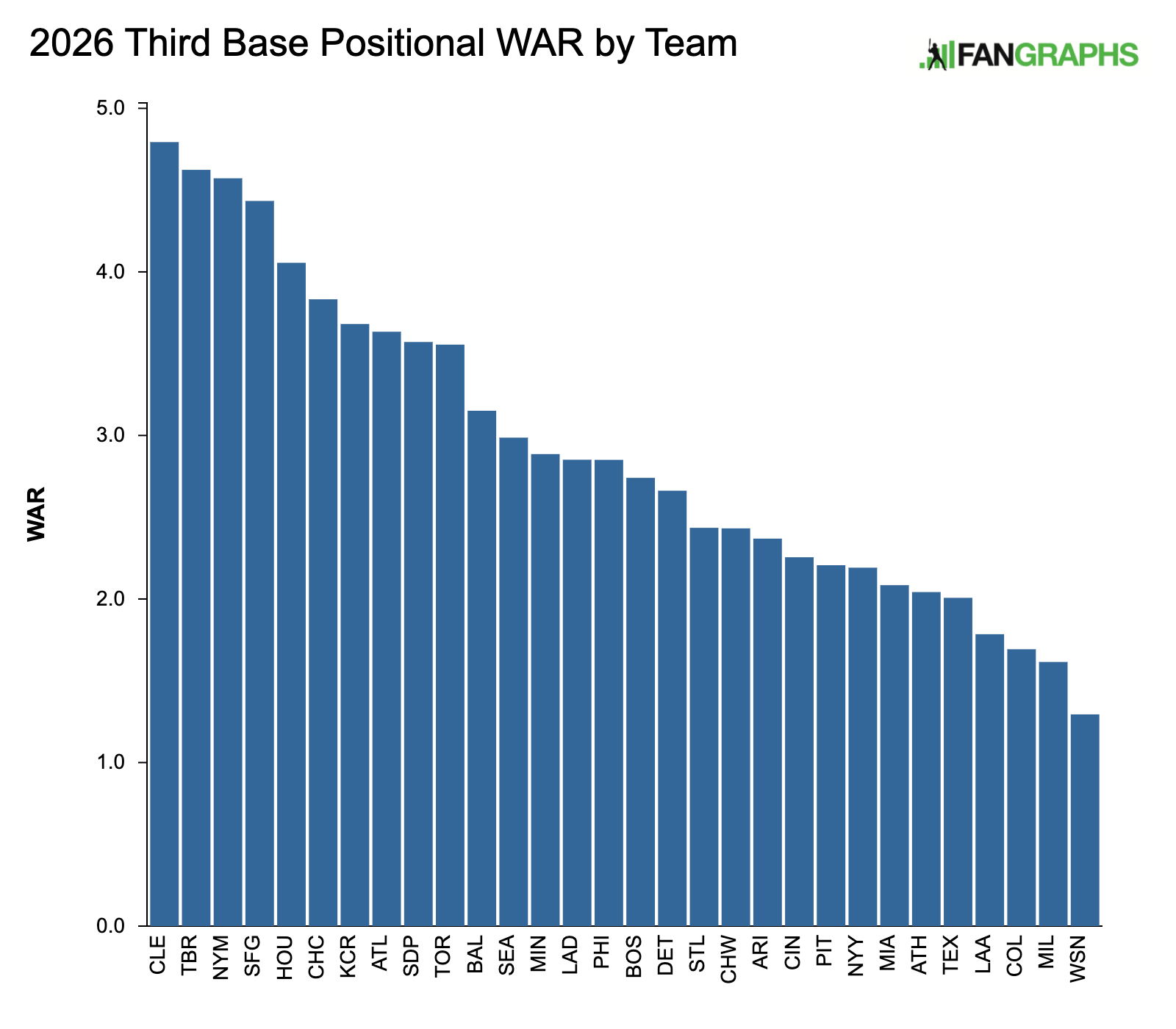
Third base is undergoing a generational change at the moment. The late 2010s and early 2020s were dominated by a group of five superstars: Nolan Arenado, Alex Bregman, Matt Chapman, Manny Machado, and José Ramírez. All five are still in the majors, and you’ll see each of them on today’s ranking. But while Ramírez is still the best third baseman in baseball, and while you’ll also find Bregman and Chapman near the top, there’s a new group of stars breaking in at the hot corner. Junior Caminero is only 22. Maikel Garcia is a threat to embark on a decade-long string of defensive awards, and he turned into a great hitter in 2025 to boot. Bo Bichette and Carlos Correa have joined the party from shortstop. Kazuma Okamoto hit NPB pitching so well that he immediately helps Toronto project in our top 10. The top of this list has changed meaningfully in the last few years, and I expect more of that to come.
That said, there’s a shortage of great third base prospects poised for big league action. Colt Emerson is the best prospect with meaningful playing time projected here, and he’s a shortstop playing out of position. There were only five third basemen listed on our preseason Top 100, and two of them (Kevin McGonigle and Sal Stewart) are starting at different positions in the majors this year. Two of the others have ETAs of 2029, with the third set for 2027. In other words, the veterans will probably have a bit more time in the top half of the rankings even as they decline, because Caminero and Garcia aren’t set to be joined by a broad cohort of young stars.
There will no doubt be plenty of breakouts I haven’t anticipated here. No one saw Caleb Durbin coming a year ago, and honestly, if he has another great season in 2026, that’ll surprise people too. The same goes for Brendan Donovan, whose Mariners would rank higher on the list if he weren’t so good at playing multiple positions. But there’s a generational transition going on at third, and we don’t know who the members of the younger cohort will be just yet, because not enough of them have broken into the bigs. It’s too early to say whether this is just a blip in the prospect pipeline or a downstream effect of more and more players staying at shortstop despite huge frames, but either way, it’s one of the most notable facts about third base today.
| Name | PA | AVG | OBP | SLG | wOBA | Bat | BsR | Fld | WAR |
|---|---|---|---|---|---|---|---|---|---|
| José Ramírez | 616 | .273 | .347 | .484 | .347 | 18.1 | 2.0 | 1.6 | 4.6 |
| Daniel Schneemann | 56 | .219 | .299 | .359 | .291 | -0.9 | -0.0 | 0.0 | 0.1 |
| Gabriel Arias | 21 | .229 | .284 | .378 | .288 | -0.4 | -0.0 | -0.0 | 0.0 |
| Angel Martínez | 7 | .236 | .290 | .370 | .289 | -0.1 | 0.0 | 0.0 | 0.0 |
| Total | 700 | .267 | .341 | .469 | .340 | 16.6 | 2.0 | 1.6 | 4.8 |
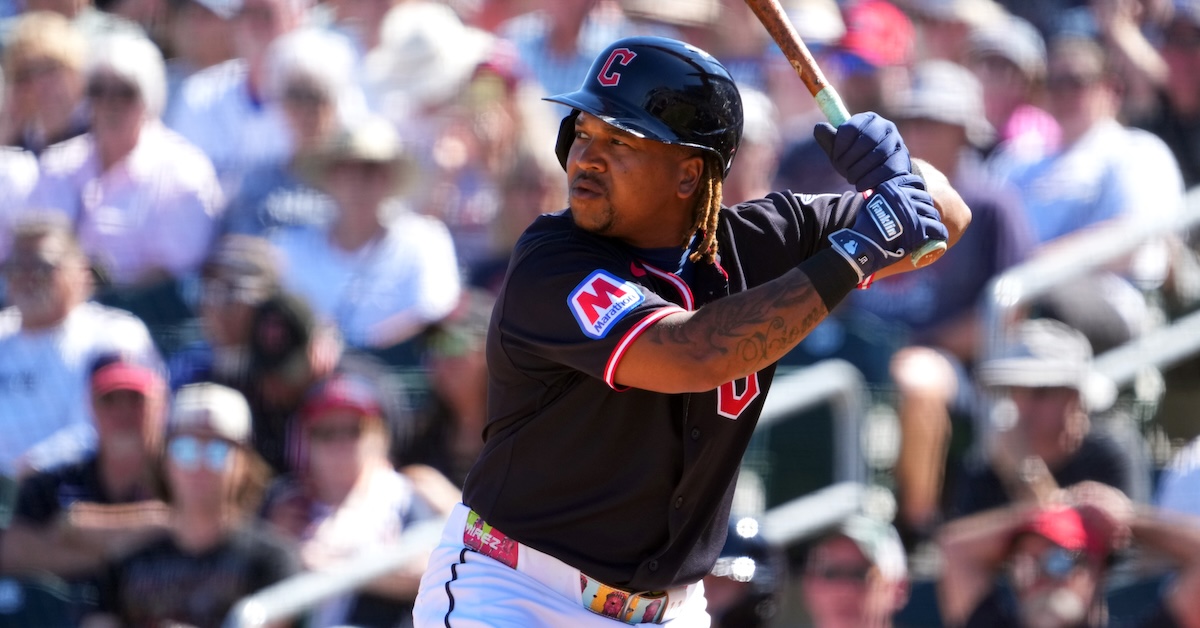
Death, taxes, and an MVP-caliber season from Ramírez — some things are inevitable. He has six top-five MVP finishes in the past decade, though he’s never won, and the sheer consistency of his excellence is impressive. He’s way better than league average offensively, thanks to never striking out and hitting a ton of fly balls out of the park. He’s a smooth defender. He’s durable. He’s a good baserunner. What am I going to tell you about him that you don’t already know?
The interesting part of this projection isn’t that the Guardians are ranked first – it’s that they’re ranked first by less than ever. Last year, they cleared the field by a full win. This year, there are three other teams projected within half a win. Our projection systems think that Ramírez will decline from plausible MVP winner to plausible MVP vote-getter in his age-33 season: slightly worse hitting, slightly worse fielding, a tiny bit less availability, still the best third baseman in baseball anyway. That’s how aging tends to work, and yet I think I’d take the over on Ramirez’s projection. He’s been durable enough for long enough that I can’t help but see upside here.
That upside would vanish if Ramírez got hurt, of course. We have three backups listed on the depth chart here, but none of them is particularly great. We had the same three guys listed as Cleveland’s backups last year, in fact, when non-Ramírez Guardians combined for -0.4 WAR at third. In other words, it’s Ramírez or bust – but it hasn’t come up bust in a long time.
| Name | PA | AVG | OBP | SLG | wOBA | Bat | BsR | Fld | WAR |
|---|---|---|---|---|---|---|---|---|---|
| Junior Caminero | 644 | .270 | .323 | .513 | .355 | 21.6 | -0.4 | -1.6 | 4.5 |
| Ben Williamson | 42 | .252 | .311 | .347 | .291 | -0.8 | -0.0 | 0.1 | 0.1 |
| Taylor Walls | 7 | .213 | .295 | .322 | .277 | -0.2 | 0.0 | -0.0 | 0.0 |
| Richie Palacios | 7 | .232 | .321 | .337 | .295 | -0.1 | 0.0 | 0.0 | 0.0 |
| Total | 700 | .268 | .322 | .500 | .350 | 20.5 | -0.4 | -1.5 | 4.6 |
Caminero might be Ramírez’s heir as the most underrated player in baseball. A scorching second half – .282/.338/.588 and a 152 wRC+ – gave him the second-best offensive season at the hot corner behind only his Cleveland counterpart, and his defense was better than expected as well, grading out as below average but only by a hair. He didn’t make more waves because he plays for the Rays and his best stretch came when they were already out of the playoff hunt. This year, a dominant full-season performance could catapult him onto the national radar.
Caminero’s main strength is just that: strength. He swings the bat harder than anyone this side of Oneil Cruz and rockets homers to all fields as a result. He makes a ton of contact given how violently he’s swinging. That means that the homers-to-strikeouts ratio tilts squarely in his favor, and quite frankly, he’d be a good hitter even if he struck out quite a bit more. He’s going to clear 40 homers regularly, and if he starts coming up with a more comprehensive plate discipline plan, he might add some valuable on-base numbers to that as well.
The Rays are known for their platooning tendencies, but they’re also known for not being dummies. Platooning Caminero would be dummy behavior. If either Williamson or Walls makes regular starts at third base, something has gone terribly wrong. I don’t think Williamson is a bad option as a backup, but I do think that Caminero is the best player on the Rays, and that they’ll let him play as much as he possibly can, and with a consistent defensive home.
| Name | PA | AVG | OBP | SLG | wOBA | Bat | BsR | Fld | WAR |
|---|---|---|---|---|---|---|---|---|---|
| Bo Bichette | 553 | .291 | .338 | .447 | .339 | 14.0 | -0.8 | 4.0 | 3.9 |
| Brett Baty | 105 | .249 | .317 | .424 | .322 | 1.2 | -0.1 | 0.2 | 0.5 |
| Ronny Mauricio | 28 | .244 | .296 | .402 | .301 | -0.2 | 0.0 | 0.2 | 0.1 |
| Mark Vientos | 7 | .250 | .311 | .450 | .328 | 0.1 | -0.0 | -0.0 | 0.0 |
| Jorge Polanco | 7 | .251 | .327 | .442 | .333 | 0.1 | -0.0 | 0.1 | 0.0 |
| Total | 700 | .282 | .333 | .442 | .335 | 15.3 | -0.9 | 4.5 | 4.6 |
Bichette was a four-win shortstop for most of his time in Toronto. Now, we think he’ll be a four-win third baseman in New York after signing a three-year, $126 million deal this winter. It’s not hard to understand how our projections got there. Improved defense and the positional adjustment offset each other, the models think that a 28-year-old with a career 122 wRC+ will hit at his career average, and there you go — four wins. But for such a solid projection, there’s plenty of uncertainty here.
Bichette’s defensive forecast depends heavily on him adapting to third base on the fly. He probably will, since he’s athletic enough to at least fake shortstop. But that’s no given, and Baty looked excellent defensively while figuring things out at the plate late in the 2025 season. If Bichette is slow to pick up the position, I think the Mets will have a hard time standing pat. It’s not like they won’t play Bichette, but I could see him getting shuffled around to other positions.
Wherever Bichette ends up, I expect him to make an impact on offense. His contact-and-doubles game doesn’t always look pretty. He’s a mortal lock to take swings that have Mets fans gnashing their teeth and rending their garments. The approach works, though. He’s an outlier athlete with the quick-twitch skills to adjust to pitches in flight and hit them with authority. He rarely swings and misses. He has enough loft and thump that he’s nowhere near Luis Arraez territory.
In other words, I’m not quite sure how this will all pan out, but I do think that this is a great group of players. Baty’s going to get his playing time somewhere. Bichette’s going to be a menace on offense. Mauricio and Vientos are great third and fourth options. The picture’s confusing, but it’s also promising.
| Name | PA | AVG | OBP | SLG | wOBA | Bat | BsR | Fld | WAR |
|---|---|---|---|---|---|---|---|---|---|
| Matt Chapman | 672 | .242 | .336 | .439 | .337 | 14.9 | -0.5 | 3.4 | 4.4 |
| Casey Schmitt | 21 | .248 | .305 | .403 | .308 | -0.0 | -0.0 | -0.1 | 0.1 |
| Christian Koss | 7 | .249 | .294 | .366 | .289 | -0.1 | 0.0 | 0.0 | 0.0 |
| Total | 700 | .242 | .335 | .437 | .336 | 14.8 | -0.6 | 3.3 | 4.4 |
Chapman’s elite defense is the headline, but while he’s played Gold Glove third base his entire career, he’s quietly overhauled his offensive game for the better of late. His best two traits at the plate aren’t new: He has top-tier bat speed and a plus batting eye. Combine those two, and you’ll frequently put pitchers in a bind. For a long time, though, Chapman made little enough contact that he struck out a ton anyway, 29.9% of the time from 2020-2023.
Merely by dialing his contact rates up from bad to middling, he’s down to a 24% strikeout rate the last two years. He’s always walked a lot, but 2025 was a career high. That makes his offensive floor enviably high; 20 homers and plus non-contact results mean that it’s hard for him to fall on his face. Combine that with his sterling defense, and you get one of the best third base projections in the league.
Injury feels like the biggest risk here. Chapman hit the IL twice in 2025, both times due to sprained ligaments in his hand, and his power was down when he tried to play through the pain. All told, he managed only 535 plate appearances, his lowest full-season mark. At almost 33, nagging injuries have a way of nagging for longer than you’d expect. Schmitt and Koss would be massive downgrades here; neither projects to be even average. So long as Chapman is healthy, though, the Giants have one of the best third base situations in baseball.
| Name | PA | AVG | OBP | SLG | wOBA | Bat | BsR | Fld | WAR |
|---|---|---|---|---|---|---|---|---|---|
| Carlos Correa | 511 | .263 | .331 | .420 | .327 | 6.2 | -0.9 | 4.3 | 3.0 |
| Isaac Paredes | 175 | .243 | .346 | .438 | .343 | 4.4 | -0.4 | -0.3 | 1.1 |
| Shay Whitcomb | 7 | .224 | .286 | .393 | .295 | -0.1 | 0.0 | 0.0 | 0.0 |
| Nick Allen | 7 | .233 | .297 | .313 | .274 | -0.2 | -0.0 | 0.1 | 0.0 |
| Total | 700 | .257 | .334 | .423 | .330 | 10.2 | -1.3 | 4.1 | 4.1 |
This is the rare situation where I’m not sure which of the first two names on the depth chart I’d prefer. Correa is great when healthy, and as a career shortstop playing out of position thanks to a roster crunch, you’d expect him to be a vacuum at third base. He looked middling in his introduction to the position last year, though, not ideal for a 31-year-old with an extensive injury history. His defensive metrics at shortstop were also quite poor in 2025. You can’t blame that on an acute injury; he hit the 7-day IL to be evaluated for a concussion but otherwise avoided extended absences. He was playing through nagging injuries, and that showed in his offensive production, but it’s still a scary trajectory.
Paredes is coming off of a more serious injury, a hamstring strain that landed him on the 60-day IL, but he feels like the better option offensively. His lift-and-pull approach is a great fit in Houston’s home park, and with four years of sneaky power and enviable walk and strikeout numbers under his belt, it sure doesn’t look like a fluke.
Paredes doesn’t have an obvious defensive home; he’s mostly played third, where he grades out as roughly average. We think he’s going to get playing time at third, second, first, and DH this year. But if Correa gets hurt, or if he shifts to shortstop at times in the absence of Jeremy Peña, what a wonderful Plan B to have. Most teams with starters this good skimp on their backups, and with good reason. The Astros have a uniquely redundant infield, and it shows here.
| Name | PA | AVG | OBP | SLG | wOBA | Bat | BsR | Fld | WAR |
|---|---|---|---|---|---|---|---|---|---|
| Alex Bregman | 672 | .250 | .341 | .421 | .333 | 12.2 | -1.7 | 0.9 | 3.7 |
| Matt Shaw | 28 | .244 | .321 | .408 | .319 | 0.2 | 0.0 | 0.0 | 0.1 |
| Total | 700 | .250 | .340 | .421 | .332 | 12.4 | -1.7 | 0.9 | 3.8 |
Bregman was one of the biggest free agent prizes of the winter, but I’m a little worried about his fit in Chicago. Not his defense – he’s consistently above average in the field. And not his plate discipline – it’s among the best in the league. But a lot of Bregman’s power comes down the pull-side foul line, and the combination of Wrigley’s spacious dimensions (355 to the left field foul pole, as compared to 315 in Houston and 310 in Boston) and a cold spring might lead to less offensive firepower than expected.
The silver lining here is considerable, however. Bregman’s power is more dessert than main course. His on-base ability is his real standout skill, and that looks as good as ever. Even if balls aren’t leaving the park, he walks more than 10% of the time and strikes out only a hair more than that. Bregman’s offensive line will be disappointing if he only cracks 15 bombs, but it’ll probably still be meaningfully higher than league average. The Cubs were one of the most powerful teams in baseball last year, and getting on base in front of those home runs will go a long way to making up for any shortfall in Bregman’s power output.
Shaw graduated as a top prospect and is a great third base defender, but he’s been squeezed out of Chicago’s plans for the moment. We still think he’ll get some playing time around the diamond – we have him down for 252 total plate appearances – but we don’t expect much of it to come here.
| Name | PA | AVG | OBP | SLG | wOBA | Bat | BsR | Fld | WAR |
|---|---|---|---|---|---|---|---|---|---|
| Maikel Garcia | 644 | .269 | .332 | .404 | .322 | 2.3 | 1.8 | 6.0 | 3.5 |
| Nick Loftin | 28 | .243 | .327 | .367 | .308 | -0.2 | -0.0 | 0.1 | 0.1 |
| Tyler Tolbert | 14 | .225 | .281 | .323 | .268 | -0.6 | 0.1 | 0.1 | 0.0 |
| Jonathan India | 7 | .243 | .338 | .378 | .318 | 0.0 | -0.0 | -0.1 | 0.0 |
| Josh Rojas | 7 | .233 | .307 | .342 | .288 | -0.2 | 0.0 | -0.0 | 0.0 |
| Total | 700 | .267 | .330 | .400 | .320 | 1.4 | 1.9 | 6.1 | 3.7 |
Garcia is another guy whose skill outstrips his fame. He’s been one of the best defenders in baseball for a while now, but 2025 was a true breakout offensively. He finally turned his precocious feel for contact into a great season at the plate, exploding for a 121 wRC+ and 5.6 WAR. It’s hard to overstate how unexpected that was given that he’d racked up a 78 wRC+ in two seasons worth of playing time before last year.
Garcia leveled up by swinging harder. His bat speed is up more than two ticks since 2023. He’s putting the ball in the air more often, too, frequently for rifled doubles in the gap. He’s still squaring the ball up a ton, particularly when he’s hitting those low liners. The only worry here is whether he can keep the underlying process going, because Garcia richly deserved his great results last year. We’re talking elite bat control, good pitch recognition, and now solid bat speed. And oh yeah, he’s one of the best defenders in baseball, a plus shortstop playing third base because of the presence of Bobby Witt Jr.
The rest of this list shows you how we feel about Kansas City’s infield depth, namely uncertain. But I’m not worried, because I think Garcia is the real deal. A generation ago, you might look at the arc of his career and worry that 2025 was a one-off, but with the benefit of today’s broad set of process statistics, we can say that Garcia is a totally different player than he used to be. The left side of the Kansas City infield might be the best in baseball this year.
| Name | PA | AVG | OBP | SLG | wOBA | Bat | BsR | Fld | WAR |
|---|---|---|---|---|---|---|---|---|---|
| Austin Riley | 658 | .261 | .324 | .470 | .341 | 14.4 | -1.0 | -2.6 | 3.6 |
| Mauricio Dubón | 21 | .258 | .298 | .366 | .290 | -0.4 | -0.0 | -0.1 | 0.0 |
| Kyle Farmer | 14 | .233 | .292 | .358 | .286 | -0.3 | -0.0 | -0.0 | 0.0 |
| Jorge Mateo | 7 | .224 | .269 | .357 | .273 | -0.2 | 0.1 | 0.0 | 0.0 |
| Total | 700 | .260 | .322 | .463 | .337 | 13.5 | -1.0 | -2.7 | 3.6 |
The trajectory of Riley’s seasonal wRC+ marks is not good: 144, 128, 116, 103. The WAR numbers don’t look great either: 5.9, 5.2, 2.4, 1.7 Two straight season ending injuries – a broken hand in 2024 and an abdominal strain in 2025 – explain some of that WAR downturn. But even on a rate basis, Riley has declined pretty much across the board in the past two years.
He’s striking out more frequently and walking less often. Despite swinging harder than ever, he’s making loud contact less often. He’s coming up empty on swings in the strike zone more frequently; the 2025 season represented the lowest zone contact rate of his career. In 2024, I think it was reasonable to say that Riley’s underlying talent declined by far less than his observed results. In 2025, they both went downhill together.
The silver lining of two straight injury-affected seasons is that they provide an easy answer for Riley’s struggles. Maybe he’ll just be healthy in 2026! We’re projecting him to bounce back about halfway to his peak. But the converse of that is pretty easy to think of, too. What if he gets hurt again? None of the guys we list here are great long-term options at third. The Braves farm system is notably light on hitters. The long-term backup option at third probably isn’t on the 26-man roster today – either Nacho Alvarez Jr., who is currently ticketed for Triple-A, will get the job, or Atlanta will make a trade.
| Name | PA | AVG | OBP | SLG | wOBA | Bat | BsR | Fld | WAR |
|---|---|---|---|---|---|---|---|---|---|
| Manny Machado | 553 | .263 | .325 | .448 | .332 | 11.0 | -0.5 | -0.1 | 3.2 |
| Sung-Mun Song | 112 | .243 | .304 | .363 | .292 | -1.4 | 0.1 | 0.4 | 0.3 |
| Miguel Andujar | 28 | .274 | .317 | .415 | .317 | 0.2 | -0.0 | -0.3 | 0.1 |
| Jose Miranda | 7 | .229 | .282 | .355 | .280 | -0.2 | -0.0 | -0.0 | 0.0 |
| Total | 700 | .260 | .321 | .432 | .324 | 9.6 | -0.4 | -0.1 | 3.6 |
Machado has aged gracefully, but make no mistake about it, he’s squarely in the back half of his career. He’s still a solid defender, but “solid” is a big step down from his transcendent peak. He’s never been the fleetest of foot, but he’s downright glacial out there now. Time wounds all heels. But park Machado at the plate, and he looks as good as ever.
He still pairs a desire to swing with a good sense of the strike zone. He’s still a lift-and-pull hitter with a swing optimized to launch homers to left center, and though his bat speed has ticked down of late, it hardly matters. He could fall out of bed and post one of the best barrel rates in the majors. Always wise beyond his years at the plate, Machado has settled into a comfortable offensive game, and he does so many things well that I’m not expecting much age-related decline this year, and neither are our projection systems.
In fact, if we projected Machado for 100% of the playing time at third, San Diego would finish in the top five of this list. But we have him getting plenty of run at DH, with Song picking up the slack. His projection is quite volatile. Not only is he making the leap from the KBO to MLB at age 29 on a three-year, $15 million contract that suggests he wasn’t in high demand, but he’s missed much of spring training with an oblique injury. The better he is, the more time the Padres can get Machado off his feet while keeping his bat in the lineup.
| Name | PA | AVG | OBP | SLG | wOBA | Bat | BsR | Fld | WAR |
|---|---|---|---|---|---|---|---|---|---|
| Kazuma Okamoto | 434 | .250 | .329 | .453 | .335 | 8.3 | -0.9 | -0.8 | 2.4 |
| Addison Barger | 189 | .246 | .316 | .440 | .326 | 2.1 | -0.2 | -0.6 | 0.9 |
| Ernie Clement | 70 | .271 | .306 | .398 | .305 | -0.4 | -0.0 | 0.5 | 0.3 |
| Davis Schneider | 7 | .220 | .328 | .407 | .324 | 0.1 | -0.0 | 0.0 | 0.0 |
| Total | 700 | .251 | .323 | .444 | .330 | 10.1 | -1.1 | -0.8 | 3.6 |
Okamoto is coming off of a sterling three-year stretch in NPB that got him a four-year, $60 million contract in Toronto. He’ll fit in offensively. In my Top 50 Free Agent rankings, I described him thusly: “If you enjoyed the Blue Jays this October, [Okamoto] is their kind of hitter.” As it was written, thus shall it be: Okamoto’s blend of plenty of walks, plenty of elevated contact, and not many strikeouts should keep the line moving for the American League champs. There’s always risk in projecting a league change, but that risk goes both ways; I could see Okamoto being better than advertised at the plate, though his defense will likely be an adventure.
We have Okamoto down as a backup first baseman and part-time DH, with Barger moving to third from the outfield in those games. I’m not sold on his defense either, and he strikes out more than your average Jay, but he has 20-homer power. He’s one of the Jays’ best lefty hitters, so they’ll find ways to play him even if it’s not at third. Clement will get some time here too, as a brilliant multi-positional defender. I like this group quite a bit, and it wouldn’t shock me if Toronto ended the year with top-five production at the hot corner.
| Name | PA | AVG | OBP | SLG | wOBA | Bat | BsR | Fld | WAR |
|---|---|---|---|---|---|---|---|---|---|
| Jordan Westburg | 259 | .262 | .317 | .468 | .338 | 5.7 | -0.2 | 0.9 | 1.7 |
| Coby Mayo | 175 | .233 | .309 | .431 | .320 | 1.4 | -0.2 | -0.4 | 0.8 |
| Jeremiah Jackson | 161 | .244 | .284 | .411 | .300 | -1.4 | -0.2 | -0.5 | 0.4 |
| Blaze Alexander | 84 | .232 | .314 | .365 | .302 | -0.6 | -0.1 | 0.5 | 0.3 |
| Bryan Ramos | 14 | .213 | .277 | .354 | .278 | -0.4 | -0.0 | 0.0 | 0.0 |
| Luis Vázquez | 7 | .233 | .290 | .362 | .286 | -0.1 | -0.0 | 0.0 | 0.0 |
| Total | 700 | .246 | .306 | .430 | .319 | 4.5 | -0.8 | 0.4 | 3.2 |
I’m a long-time Westburg fan, and he’s been awesome when available (115 wRC+, 3.3 WAR/600), but the injury concerns are real. He’s topped out at 447 plate appearances in a single season, and he’s already out with a partially torn UCL and no firm timeline to return, though he’ll miss at least April. That’s worrisome both for his playing time and his production. Westburg’s power is his best asset, and now he’s playing on half an elbow in his dominant arm. And that’s the guy we project for the most playing time here; it’s kind of a mess.
Mayo is an aspirational third baseman; he’s a power-first guy whose natural home is first base. Unfortunately, he didn’t hit for much power in 2025, which makes his grasp on the position tenuous at best. Jackson is probably best suited for the outfield, but I’m fairly certain he could handle third defensively. The bigger question is his offense; last year was the best offensive season of his professional career and even then, he struck out 27.3% of the time in 183 big league plate appearances. Alexander is my favorite of these options, and he might be Baltimore’s favorite, too: He’s slated to start the season as their regular second baseman with Jackson Holliday on the IL.
If Westburg returns relatively soon and plays at his normal level, the Birds will be just fine. But his projection is doing a ton of work in this ranking, and even then the position looks roughly average. For me, the top 10 teams are in their own tier, and the O’s are part of the broad middle, with four potential starters but no sure things.
| Name | PA | AVG | OBP | SLG | wOBA | Bat | BsR | Fld | WAR |
|---|---|---|---|---|---|---|---|---|---|
| Brendan Donovan | 371 | .273 | .348 | .404 | .331 | 8.2 | -0.9 | -1.8 | 2.0 |
| Colt Emerson | 294 | .228 | .307 | .344 | .289 | -3.4 | -0.3 | 1.0 | 0.9 |
| Leo Rivas | 28 | .215 | .334 | .301 | .293 | -0.2 | 0.1 | 0.0 | 0.1 |
| Miles Mastrobuoni | 7 | .237 | .314 | .325 | .287 | -0.1 | 0.0 | 0.0 | 0.0 |
| Total | 700 | .252 | .330 | .374 | .311 | 4.5 | -1.1 | -0.7 | 3.0 |
The way we do our power rankings hides Donovan’s value somewhat. We have him down as Seattle’s third-best hitter, but we think he’ll do it at second, third, in the outfield, and at DH, so his contributions get spread out commensurately. He’s valuable and in an obvious way: He rarely strikes out, walks a lot, has huge doubles power, and can do it while standing pretty much anywhere on the diamond.
That versatility means the Mariners can be flexible with Emerson, their top prospect. He turned 20 in the middle of a scorching run through three levels of the minors last summer. His offensive game is delightfully well-rounded for his age, with good pitch recognition, great bat control, and a feel for getting the ball in the air with authority. If he’s ready for the majors – I think he might need a few more months of minor league seasoning first – he can play third and Donovan can move elsewhere.
Emerson looks like the shortstop of Seattle’s future, which clouds the third base picture slightly. If J.P. Crawford gets hurt or falls off a cliff at short — his 82 wRC+ in the second half and grim playoff performance are both scary data points — Emerson will be needed there. But that’s why Donovan is such a good fit; he can play third every day if need be, or play elsewhere if the M’s go to a Crawford/Emerson pairing. I like the flexibility here, even if the ceiling isn’t huge.
| Name | PA | AVG | OBP | SLG | wOBA | Bat | BsR | Fld | WAR |
|---|---|---|---|---|---|---|---|---|---|
| Royce Lewis | 553 | .251 | .309 | .431 | .319 | 2.5 | 0.4 | 0.3 | 2.5 |
| Kody Clemens | 63 | .231 | .292 | .424 | .309 | -0.3 | -0.0 | 0.4 | 0.3 |
| Gio Urshela | 28 | .262 | .308 | .375 | .298 | -0.4 | -0.1 | -0.1 | 0.1 |
| Orlando Arcia | 28 | .227 | .283 | .353 | .279 | -0.8 | -0.0 | -0.0 | 0.0 |
| Eric Wagaman | 21 | .258 | .309 | .403 | .310 | -0.1 | -0.0 | -0.0 | 0.1 |
| Tristan Gray | 7 | .220 | .278 | .377 | .284 | -0.2 | -0.0 | -0.0 | 0.0 |
| Total | 700 | .249 | .306 | .424 | .315 | 0.8 | 0.2 | 0.6 | 2.9 |
Make sure to grab a salt shaker before you read this capsule. Got it? Ok, first, toss some over your shoulder, because Lewis has been so fragile that projecting him for this much playing time feels like a jinx. Now take Lewis’ playing time projection with a pinch of that salt – the guy’s career high is 403 plate appearances. But while those are scary caveats, the upside is tantalizing. When Lewis is healthy, his power/contact blend jumps off the screen. A full healthy season of production could be very good here. I’m just not very optimistic about the chances of that happening.
The rest of this depth chart is spaghetti on a wall. Clemens is a multi-position backup who’s on the roster because he can play anywhere without embarrassing himself offensively. Urshela is clinging to big league relevance after a disastrous few seasons. Arcia was one of the worst hitters in baseball last year, though with the caveat that he was on the Rockies for some of that, and leaving the Rockies seems to help pretty much everyone. Wagaman played 117 games at first base in 2025 with an 85 wRC+.
This mixture of utilitymen and minor league contract signees looks like the way teams with All-Star third basemen plan their backups. That seems like a very unwise choice when your top option is a guy best known for his injury history. Sure, the headline says 13th, but it would hardly shock me if the Twins had one of the worst third base situations in the entire majors by year’s end. Oh yeah, the last reason for that shaker: I’m pretty salty about this group.
| Name | PA | AVG | OBP | SLG | wOBA | Bat | BsR | Fld | WAR |
|---|---|---|---|---|---|---|---|---|---|
| Max Muncy | 441 | .220 | .347 | .438 | .342 | 10.6 | -1.1 | -2.5 | 2.4 |
| Enrique Hernández | 105 | .225 | .281 | .369 | .284 | -2.4 | -0.1 | -0.4 | 0.1 |
| Santiago Espinal | 70 | .250 | .303 | .334 | .282 | -1.7 | -0.1 | -0.1 | 0.1 |
| Miguel Rojas | 49 | .256 | .311 | .374 | .301 | -0.5 | -0.0 | 0.4 | 0.2 |
| Alex Freeland | 35 | .226 | .320 | .378 | .309 | -0.1 | 0.0 | -0.0 | 0.1 |
| Total | 700 | .227 | .329 | .408 | .323 | 5.9 | -1.3 | -2.5 | 2.9 |
Muncy turning into a third baseman in his 30s is never going to stop amazing me. He’s improved quite a bit at the position in the past four years, though it’s never looked particularly pretty, and we’re projecting some age-related decline there. We’re also projecting a bit of a downturn on offense, but we still think he’ll be one of the best offensive third basemen in the game thanks to a veritable raft of walks. His career walk rate is a silly 15.2%, and we think he’s going to be right around that level again. You don’t have to do much else to be a good hitter when you’re getting on base for free that frequently, but Muncy also hits for power. It’s a stable foundation that I have no doubt will produce plenty of value. The only questions are whether he’ll bleed that value back with the glove and whether his last two years of injury troubles will persist.
Hernández is on the 60-day IL, but he lives for October anyway. It’s not like the Dodgers are worried about missing the playoffs, so they’ll likely work him back into the fold slowly. That means Espinal is in line for a meaningful role early in the year; he’s a great defender who gives all that value back with the bat, but the Dodgers can live with that as a backup option given their overall offensive excellence. This is one of the weakest spots on the reigning champs’ roster, and it’s not even that weak.
| Name | PA | AVG | OBP | SLG | wOBA | Bat | BsR | Fld | WAR |
|---|---|---|---|---|---|---|---|---|---|
| Alec Bohm | 581 | .278 | .331 | .428 | .328 | 6.1 | -1.0 | -2.6 | 2.4 |
| Edmundo Sosa | 84 | .253 | .297 | .415 | .308 | -0.5 | 0.0 | 0.5 | 0.3 |
| Aidan Miller | 14 | .224 | .312 | .350 | .296 | -0.2 | 0.0 | -0.0 | 0.0 |
| Dylan Moore | 14 | .214 | .307 | .393 | .307 | -0.1 | 0.0 | -0.1 | 0.0 |
| Otto Kemp | 7 | .234 | .313 | .395 | .310 | -0.0 | -0.0 | -0.0 | 0.0 |
| Total | 700 | .273 | .326 | .424 | .325 | 5.3 | -0.9 | -2.2 | 2.9 |
It’s convenient that we have Philly right in the middle of our rankings, because I think of Bohm as an exactly league average third baseman. To be clear, that’s not an insult; third base is stacked, and Bohm has worked his way up from an inauspicious beginning to his career to become steady both offensively and defensively. Well, as steady as anyone can be in the variable game of baseball, at least; ask Phillies fans, and they’d strongly prefer 2024 Bohm to the 2025 edition.
Bohm’s offense is built around contact. He squares up grounders and low line drives to all fields, and gets to modest power by pulling the ball when he elevates. It’s easy to look at Bohm’s 6-foot-4 frame and scoff at his mid-teens home run totals, but if you think about him as a jumbo-sized singles hitter, everything comes together. He has good plate discipline but doesn’t walk much – that’s because pitchers pound the zone. He runs a high BABIP – that’s because he’s lacing liners instead of lofting fly balls. I’m generally skeptical of OBP guys who don’t walk much, but Bohm has been making it work long enough that he deserves the benefit of the doubt. The Phillies have a boom/bust lineup, and Bohm provides a metronomic counterpoint.
Out of the rest of the options on this list, Sosa is the clear second choice, a utility infielder who the Phillies trust implicitly on defense. Miller is the shortstop of the future, but with Trea Turner the shortstop of the present, third is a plausible landing spot. If the team trades Bohm or he sustains a serious injury, Miller is the obvious long-term replacement.
| Name | PA | AVG | OBP | SLG | wOBA | Bat | BsR | Fld | WAR |
|---|---|---|---|---|---|---|---|---|---|
| Caleb Durbin | 546 | .258 | .334 | .395 | .321 | 1.1 | 1.1 | 1.4 | 2.5 |
| Isiah Kiner-Falefa | 70 | .253 | .296 | .337 | .280 | -2.2 | 0.2 | -0.2 | 0.0 |
| Marcelo Mayer | 35 | .245 | .302 | .401 | .305 | -0.4 | -0.0 | -0.0 | 0.1 |
| Andruw Monasterio | 28 | .242 | .319 | .363 | .303 | -0.4 | -0.0 | -0.1 | 0.1 |
| Romy Gonzalez | 14 | .268 | .312 | .433 | .320 | 0.0 | -0.0 | 0.0 | 0.1 |
| Anthony Seigler | 7 | .217 | .319 | .342 | .297 | -0.1 | 0.0 | -0.1 | 0.0 |
| Total | 700 | .256 | .327 | .388 | .315 | -2.0 | 1.2 | 1.0 | 2.7 |
Boston’s last move of a busy offseason shored up a position that looked like a big weakness heading into the winter. Durbin plays a lot bigger than his 5-foot-6 frame would suggest, and despite sixth-percentile bat speed, he managed reasonable minor league power numbers by getting the ball in the air to the pull side. That’s an intriguing combination at Fenway, though I think it would require a swing overhaul. “In the air” means a different thing when you’re trying to clear a 40-foot wall in left field. Shockingly, Statcast thinks that Durbin only would have hit five homers if he played all of 2025 in Boston. I’ll be keeping an eye on his swing shape and power output early, because there’s conflicting information about how the park will treat him.
However his offense turns out, Durbin should provide excellent third base defense. The guys behind him on the depth chart should too; Kiner-Falefa is an excellent utility defender and Mayer is a shortstop by trade in addition to being the team’s starting second baseman. The Sox are looking for offense here, though, so if Durbin is unavailable for an extended period, I think they’ll pivot. Maybe that’s Gonzalez against lefties and Seigler against righties. Maybe it’s someone not yet on the roster. But it’ll be something. The Red Sox clearly knew they needed help at third. It wouldn’t make sense to stick with the status quo if their Plan A is unavailable.
| Name | PA | AVG | OBP | SLG | wOBA | Bat | BsR | Fld | WAR |
|---|---|---|---|---|---|---|---|---|---|
| Colt Keith | 259 | .264 | .334 | .433 | .333 | 4.1 | -0.0 | 0.2 | 1.4 |
| Zach McKinstry | 238 | .239 | .312 | .382 | .304 | -1.8 | 0.6 | -0.2 | 0.8 |
| Javier Báez | 112 | .237 | .274 | .376 | .281 | -2.9 | 0.1 | -0.4 | 0.1 |
| Matt Vierling | 35 | .245 | .311 | .381 | .303 | -0.3 | -0.0 | -0.2 | 0.1 |
| Jace Jung | 28 | .221 | .318 | .374 | .307 | -0.1 | -0.0 | 0.1 | 0.1 |
| Kevin McGonigle | 21 | .256 | .337 | .429 | .333 | 0.3 | -0.0 | 0.1 | 0.1 |
| Hao-Yu Lee | 7 | .233 | .305 | .372 | .298 | -0.1 | 0.0 | 0.0 | 0.0 |
| Total | 700 | .248 | .315 | .400 | .312 | -0.8 | 0.6 | -0.4 | 2.7 |
The Tigers are very invested in finding Keith a place to play. He was a second baseman in 2024, split time between first, second, third, and DH in 2025, and is slated for a a full-time role split between DH and third this year. He’s a below-average defender, but not strikingly so. The biggest question is going to be his offense, which has settled in at league average as opposed to the power/OBP combo the Tigers were hoping for when he debuted. I’m optimistic that he’ll continue to develop in 2026, and I think moving him to third makes sense too; his offense looks a lot more enticing there than it does at first base, where the league average wRC+ is 13 points higher.
While Keith projects for near-everyday at-bats, I expect him to shift to DH frequently when lefty Kerry Carpenter is out of the lineup. That’s how you end up with platoon-looking playing time projections between two lefties; McKinstry is going to play all across the diamond, and when Keith DHs, he’s the first option at third. Báez will also get some opportunities there as the team continues to move him off of shortstop, though there’s some chance that he won’t hit enough for it to make sense. We also sprinkled in playing time for plenty of other options given how uncertain the top of the depth chart looks.
| Name | PA | AVG | OBP | SLG | wOBA | Bat | BsR | Fld | WAR |
|---|---|---|---|---|---|---|---|---|---|
| Nolan Gorman | 315 | .220 | .300 | .416 | .310 | 0.1 | -0.9 | 0.4 | 1.2 |
| Ramón Urías | 266 | .248 | .309 | .393 | .307 | -0.7 | -0.3 | 0.1 | 0.9 |
| Thomas Saggese | 70 | .249 | .301 | .374 | .296 | -0.8 | -0.1 | 0.2 | 0.2 |
| José Fermín | 42 | .242 | .340 | .364 | .314 | 0.1 | 0.0 | -0.1 | 0.2 |
| César Prieto | 7 | .256 | .299 | .364 | .290 | -0.1 | -0.0 | -0.0 | 0.0 |
| Total | 700 | .235 | .306 | .399 | .308 | -1.3 | -1.3 | 0.6 | 2.4 |
By this point, we’re squarely into the shrug-your-shoulders-and-try-many-options portion of the power rankings. Gorman is running out of runway in St. Louis, but he’s getting one last shot at a starting role. The Cardinals are finally giving him a crack at his natural third base, a position he’d shifted away from when Nolan Arenado was on the Redbirds. He got a quick reintroduction to the position last year and was a butcher defensively, but that’s far from his biggest problem. The real issue is that Gorman strikes out about a third of the time of the time. Unless you’re a glove-first catcher, it’s hard to add value that way. The power has been worse than advertised, but that’s surely downstream of the strikeouts; it’s hard to hit the ball out of the park when you can’t hit the ball.
Gorman is also going to get some games at first base and DH, because if he can hit and can’t field, the Cards need somewhere else to stash him. That means Urías is back in a role he excelled at in the early part of Baltimore’s rebuild: providing sneaky production on a team that isn’t trying to make the playoffs. As he did in Baltimore, he’ll play a smattering of positions and provide delectable veteran competence, something this team is going to be short on as they lean into the rebuild. Saggese and Fermín round out the options, but the Cards hope that Gorman will do the job, and have Urías in case he can’t. That’s the key takeaway here.
| Name | PA | AVG | OBP | SLG | wOBA | Bat | BsR | Fld | WAR |
|---|---|---|---|---|---|---|---|---|---|
| Miguel Vargas | 574 | .237 | .327 | .403 | .321 | 3.5 | -0.4 | -4.9 | 2.0 |
| Curtis Mead | 35 | .246 | .312 | .377 | .304 | -0.3 | -0.0 | -0.0 | 0.1 |
| Tanner Murray | 35 | .230 | .273 | .346 | .271 | -1.2 | -0.1 | 0.2 | 0.0 |
| Munetaka Murakami | 35 | .232 | .342 | .449 | .342 | 0.8 | -0.1 | -0.1 | 0.2 |
| Lenyn Sosa | 14 | .251 | .285 | .409 | .299 | -0.2 | -0.0 | -0.1 | 0.0 |
| Sam Antonacci | 7 | .244 | .345 | .338 | .309 | -0.0 | 0.0 | -0.0 | 0.0 |
| Total | 700 | .237 | .324 | .400 | .318 | 2.6 | -0.6 | -4.9 | 2.4 |
I’m an unabashed Vargas fan. I’ve long believed he has the skills to hit at the major league level, and in his first season of everyday playing time, he posted a cromulent 101 wRC+. So far, so good. But Miguel Vargas, full-time third baseman?!? I’m not convinced that’s going to work out. Vargas doesn’t possess great defensive instincts, and he has middling arm strength. Every defensive metric thought he was a butcher at third in part-time work last year, and now he’s going to be getting far more opportunities to show off his skills, or lack thereof.
I don’t think the White Sox care all that much, to be honest. Vargas being a -10 defender isn’t going to be the difference between them making the playoffs or not, and giving him everyday at-bats to continue his offensive development is far more important. The idealized version of his offensive profile is something out of the Alex Bregman playbook, and that kind of bat would play regardless of defense. In the long run, he’s probably a first baseman or DH, but first base is occupied and there’s no reason to consign him to DH this early in his career. There’s some level of defensive ineptitude that would change the team’s mind, but I think that level is fairly extreme. You have to find out what you have when you’re in their position.
| Name | PA | AVG | OBP | SLG | wOBA | Bat | BsR | Fld | WAR |
|---|---|---|---|---|---|---|---|---|---|
| Nolan Arenado | 602 | .254 | .309 | .404 | .308 | -3.1 | -0.9 | 2.7 | 2.1 |
| Ildemaro Vargas | 56 | .251 | .299 | .356 | .288 | -1.2 | -0.0 | 0.4 | 0.1 |
| Jordan Lawlar | 21 | .237 | .312 | .383 | .305 | -0.2 | 0.1 | 0.0 | 0.1 |
| Luis Urías | 14 | .231 | .321 | .360 | .304 | -0.1 | -0.0 | -0.1 | 0.0 |
| Tim Tawa | 7 | .223 | .291 | .369 | .290 | -0.1 | -0.0 | 0.0 | 0.0 |
| Total | 700 | .252 | .309 | .398 | .306 | -4.7 | -0.9 | 3.0 | 2.4 |
Oof, behind the Cardinals, sorry Nolan. Arenado got the team upgrade he was angling for this winter, and the Diamondbacks also needed some help at third base. But at almost 35, he’s not the same hitter he once was. Last year was the worst full season of his career, the continuation of a sustained downswing after a career year in 2022. Injuries limited him to 107 games, and his contact quality fell through the floor when he was on the field. Arenado continued to get the ball in the air, but career-low contact quality meant career-low home runs per fly ball.
That’s the physical description of his 2025 season, but the counterpoint is easy enough to make: Arenado just needs a change of scenery, the same way he did after the disastrous 2020 that concluded his Rockies tenure. You can squint and see the old Arenado even now. He’s still a defensive asset. He’s never gotten by on raw bat speed; he uses his elite bat control to limit strikeouts and hunt pulled home runs, not to lash hard contact to all fields. His game is based on exquisite timing and control. Maybe he just needs a reset to get those things back in sync.
That’s not the most likely outcome. But the most likely outcome is a boring, high-floor season centered around defense and avoiding strikeouts. That’d be just fine with the D-backs, who are competing for the playoffs and don’t have other options at third. He’s not peak Arenado, but he still beats the alternatives by a lot.
| Name | PA | AVG | OBP | SLG | wOBA | Bat | BsR | Fld | WAR |
|---|---|---|---|---|---|---|---|---|---|
| Ke’Bryan Hayes | 532 | .244 | .300 | .355 | .288 | -13.8 | 0.4 | 8.2 | 1.5 |
| Eugenio Suárez | 140 | .235 | .312 | .474 | .336 | 1.8 | -0.4 | 0.0 | 0.7 |
| Spencer Steer | 21 | .237 | .319 | .407 | .318 | -0.0 | -0.0 | 0.0 | 0.1 |
| Sal Stewart | 7 | .264 | .328 | .440 | .333 | 0.1 | 0.0 | 0.0 | 0.0 |
| Total | 700 | .242 | .303 | .381 | .299 | -11.9 | -0.1 | 8.2 | 2.3 |
The best defensive third baseman in the game can’t hit, unfortunately. Hayes is the best in the business with his glove, but the batting line we’re projecting here would actually be a significant improvement over his last two years of work, and it’s still well below average. The whole has long been less than the sum of the parts for Hayes. He makes plenty of solid contact and limits strikeouts, but all of his best contact seems to be on the ground, and he hasn’t been able to lift the ball with authority at all, perhaps hindered by a persistent back injury.
That injury has also wreaked havoc on his playing time through the years, but fortunately for Cincy, Suárez is an excellent backup plan. He’s slated to be their everyday DH, but he’s also a capable third baseman. He’s a bit below average defensively, but that’s perfectly acceptable when he’s cracking 35 homers. I think there’s a chance that Suárez plays more third than this anyway. If the Reds need more offense, Hayes could fall into a platoon with a lefty DH, ceding third to Suárez more frequently. If you can’t have a high ceiling, it’s at least good to have a high floor, and I think that this configuration does that for Cincy.
| Name | PA | AVG | OBP | SLG | wOBA | Bat | BsR | Fld | WAR |
|---|---|---|---|---|---|---|---|---|---|
| Jared Triolo | 490 | .245 | .329 | .363 | .308 | -3.3 | 0.3 | -0.5 | 1.5 |
| Nick Gonzales | 168 | .264 | .318 | .405 | .315 | -0.2 | -0.3 | 0.3 | 0.6 |
| Nick Yorke | 35 | .254 | .309 | .365 | .296 | -0.6 | -0.0 | 0.0 | 0.1 |
| Enmanuel Valdez | 7 | .238 | .313 | .406 | .314 | -0.0 | -0.0 | 0.0 | 0.0 |
| Total | 700 | .250 | .325 | .374 | .309 | -4.0 | -0.0 | -0.2 | 2.2 |
This is purely a filler spot for the Pirates this year. Triolo is a utility infielder, and he’s well suited for the role. He played 20-plus games at second, third, and short in 2025, and while he hit a mere .227/.311/.356 while doing it, that’s an acceptable line for a bench bat who can handle tough positions. It’s not a great line for an everyday regular, though, so Pittsburgh will have to hope that some of the gains Triolo made on offense last year continue into this one.
First and foremost, he made far more contact than he had in the past. He’s never going to hit 25 homers, so minimizing empty trips to the plate goes a long way towards making the overall line work. He also put his speed to work for him, both on the basepaths and with the occasional bunt. It’s hard to imagine this working out without increased power. Triolo’s carrying tool in the minors was walks, but pitchers are flooding the zone and daring him to do something about it.
Gonzales is filling Triolo’s utility role this year after a tough 2025 season. He’s had the same issues as Triolo; he hasn’t been able to replicate his walk-based minor league success because pitchers aren’t afraid to challenge him in the zone. Yorke has the most power upside of the group, and I think he has the best chance to turn into a long-time contributor out of this trio, but Pittsburgh is mostly looking for competence here, and Triolo gets them that.
| Name | PA | AVG | OBP | SLG | wOBA | Bat | BsR | Fld | WAR |
|---|---|---|---|---|---|---|---|---|---|
| Ryan McMahon | 490 | .211 | .304 | .371 | .298 | -5.4 | -0.8 | 3.9 | 1.7 |
| Amed Rosario | 154 | .262 | .296 | .380 | .294 | -2.1 | 0.3 | -0.3 | 0.4 |
| José Caballero | 28 | .220 | .313 | .334 | .291 | -0.5 | 0.2 | -0.1 | 0.1 |
| Oswaldo Cabrera | 21 | .237 | .303 | .370 | .296 | -0.3 | -0.0 | -0.0 | 0.1 |
| Paul DeJong | 7 | .204 | .262 | .365 | .274 | -0.2 | -0.0 | 0.0 | 0.0 |
| Total | 700 | .224 | .302 | .371 | .296 | -8.4 | -0.3 | 3.6 | 2.2 |
I like this situation more than the rankings, because I’m a sucker for platoons and think this is a good one. McMahon is a slick fielder who has never put up even an average wRC+. He’s acceptable against righties, but he has a 72 wRC+ over more than 1,000 plate appearances against southpaws. The solution is easy: just don’t let him face many. Enter Rosario, who is a solid hitter against lefties but probably shouldn’t face righties too often. Mix the two, give Rosario extra work as a backup elsewhere on the diamond, and you have a decent-hitting, solid-fielding third baseman in the aggregate.
The weak point of this argument is that it relies on McMahon to hit righties well, and he hasn’t even done that consistently of late. He struck out a third of the time against them last year and suffered through an extensive power outage after leaving Colorado. There’s risk here that he just can’t do the job, and Rosario isn’t a viable full-time option either. Caballero might be their best bet if McMahon isn’t the right guy, even though he doesn’t fit the traditional third base mold. He’s starting the year at shortstop until Anthony Volpe returns, but he’ll be picking up at-bats across the diamond when they’re at full strength.
| Name | PA | AVG | OBP | SLG | wOBA | Bat | BsR | Fld | WAR |
|---|---|---|---|---|---|---|---|---|---|
| Connor Norby | 476 | .245 | .304 | .403 | .308 | -2.8 | -0.5 | 0.2 | 1.5 |
| Graham Pauley | 196 | .229 | .303 | .379 | .299 | -2.5 | -0.1 | 0.9 | 0.6 |
| Javier Sanoja | 14 | .258 | .306 | .380 | .299 | -0.2 | -0.0 | 0.0 | 0.0 |
| Maximo Acosta | 14 | .224 | .286 | .344 | .278 | -0.4 | 0.0 | 0.0 | 0.0 |
| Total | 700 | .240 | .304 | .394 | .305 | -5.9 | -0.6 | 1.1 | 2.1 |
Norby joined the Marlins in the Trevor Rogers trade in 2024, and he’s been their first choice at third ever since. Even as he struggled offensively and hit the IL three times, the Marlins kept running him out there. That’s a wise team-building decision, because they need to see what they have in Norby. Unfortunately, so far what they have is a guy who strikes out too much and plays below-average defense.
The upside here is still readily visible. Norby put up solid power numbers in the minors, and he does a good job of getting his best-struck contact in the air where it can do damage. Home runs can cover up a lot of strikeouts and defensive miscues. But if Norby starts slow or misses time, the Fish might look to move on quickly. Pauley would be their nominal next option – he started 48 games at the hot corner last year – but he’s on the shelf with a forearm injury right now, a tough malady given that he has below-average arm strength for third anyway. Sanoja is a utility infielder who can pitch in until Pauley’s back. It’s not an amazing backup situation, largely because the Marlins are dearly hoping that Norby will make it a non-issue.
| Name | PA | AVG | OBP | SLG | wOBA | Bat | BsR | Fld | WAR |
|---|---|---|---|---|---|---|---|---|---|
| Max Muncy | 378 | .243 | .302 | .394 | .303 | -4.3 | -0.7 | 1.7 | 1.1 |
| Andy Ibáñez | 154 | .245 | .305 | .383 | .301 | -2.0 | -0.3 | 0.2 | 0.4 |
| Darell Hernaiz | 91 | .262 | .324 | .369 | .305 | -0.8 | -0.1 | 0.1 | 0.3 |
| Brett Harris | 56 | .235 | .317 | .364 | .302 | -0.7 | -0.1 | 0.3 | 0.2 |
| Zack Gelof | 21 | .228 | .299 | .399 | .305 | -0.2 | 0.0 | 0.1 | 0.1 |
| Total | 700 | .245 | .306 | .386 | .303 | -8.0 | -1.1 | 2.4 | 2.0 |
Wait! This one says Max Muncy. But the Dodgers one already said… Oh, right. There are two Max Muncys. I’m never going to get used to that. Anyway, this Muncy looks like a second-division regular with some defensive versatility, and he split time between second and third base last year. With Jeff McNeil in town, he’s moving to third full-time, and the hope is that last year’s strikeout woes will subside while the power sticks.
That seems aspirational to me. In the long run, I think Muncy is just a rotational option. This is the weakest spot in the A’s lineup, and they’ll likely go through this list looking for breakouts if Muncy doesn’t start off great. Ibáñez is about to be 33, so he’s unlikely to be the long-term solution. Hernaiz needs to figure out how to get the ball in the air, because pitchers have knocked the bat out of his hands in the majors. Harris is an older prospect who probably doesn’t have anything more to learn at Triple-A but is also probably just a Quad-A guy. Gelof had a spectacular debut, driven by shocking power production at second base, but he’s faded hard and dealt with a string of tough injuries. He’s probably on his last opportunity in Sacramento.
In all, I think the A’s plan here – throw some scraps at the wall and see what happens – is pretty reasonable given the work they’re doing to build up the rest of the offense. Just don’t expect fireworks from third this year; they’d settle for finding an average regular by year’s end.
| Name | PA | AVG | OBP | SLG | wOBA | Bat | BsR | Fld | WAR |
|---|---|---|---|---|---|---|---|---|---|
| Josh Jung | 553 | .248 | .294 | .404 | .303 | -3.5 | -1.2 | 0.4 | 1.7 |
| Ezequiel Duran | 56 | .246 | .292 | .376 | .291 | -0.9 | 0.0 | -0.5 | 0.1 |
| Josh Smith | 42 | .244 | .332 | .370 | .311 | 0.0 | -0.0 | -0.4 | 0.1 |
| Cody Freeman | 35 | .245 | .292 | .380 | .292 | -0.5 | -0.0 | -0.1 | 0.1 |
| Jonah Bride | 14 | .218 | .321 | .333 | .295 | -0.2 | -0.0 | -0.0 | 0.0 |
| Total | 700 | .247 | .296 | .398 | .302 | -5.1 | -1.3 | -0.6 | 2.0 |
Jung has been trying to replicate his dynamic 2023 full season debut for two years now. At that point, he looked like a classic two-way third baseman, combining power and defense in equal measure. But even then, Jung carried some injury concerns, and the past few years have been cruel. He missed much of 2022 with a shoulder injury. He missed a significant chunk of his rookie season with a broken thumb. He missed most of 2024 with a fractured wrist. The 2025 season was his healthiest year in a while, but even then he hit the IL and spent a bit of time in the minors.
In other words, it’s time to be worried that Jung won’t figure things out. At 28 and heading into his fourth full big league season, our projections think that the clay is pretty much dry. We have Jung down as a second-division regular who won’t hit enough homers to escape his strikeout issues. And just to make matters worse, he’s currently sidelined with a groin injury. That’s not to say there’s no upside – Jung wasn’t a top 25 prospect for nothing – but Texas would be well-served to have a backup plan.
That backup plan will involve Duran and Smith, both of whom should be used to the drill by now. Duran has chipped in at third in each of the last four years as a utility infielder. Smith has too, and took over as the everyday third baseman when Jung missed most of 2024. Smith’s starting at second base this year, and Duran will get plenty of playing time elsewhere, but it’s nice to have two solid backups. This will likely be a weak point for the Rangers, but it’s unlikely to be a below-replacement-level disaster.
| Name | PA | AVG | OBP | SLG | wOBA | Bat | BsR | Fld | WAR |
|---|---|---|---|---|---|---|---|---|---|
| Yoán Moncada | 413 | .239 | .318 | .408 | .317 | 0.7 | -0.8 | -2.4 | 1.3 |
| Oswald Peraza | 147 | .219 | .284 | .345 | .279 | -4.3 | 0.3 | 0.8 | 0.2 |
| Vaughn Grissom | 56 | .249 | .316 | .371 | .303 | -0.5 | 0.0 | -0.0 | 0.2 |
| Jeimer Candelario | 35 | .204 | .274 | .353 | .276 | -1.1 | -0.1 | -0.1 | 0.0 |
| Adam Frazier | 21 | .234 | .294 | .332 | .277 | -0.6 | -0.0 | -0.1 | 0.0 |
| Chris Taylor | 21 | .213 | .292 | .335 | .279 | -0.6 | -0.0 | -0.0 | 0.0 |
| Denzer Guzman | 7 | .217 | .283 | .343 | .277 | -0.2 | -0.0 | 0.0 | 0.0 |
| Total | 700 | .233 | .307 | .383 | .303 | -6.7 | -0.6 | -1.9 | 1.8 |
Moncada is at a fascinating turning point in his career. He’s actually been an effective hitter for two straight years – when healthy, that is. The problem is that he barely played in 2024 and only got in a half-season in 2025. Also, he was shockingly poor on defense, the worst third baseman in the league on a per-inning basis.
I can talk myself into Moncada keeping the good offensive vibes going this year. He’s always going to strike out a lot, but when he’s seeing the ball well, he also walks a bunch and hits for power. He’s moved away from the swing-averse style that served him poorly early in his career, and still has solid bat speed even as he enters his age-31 season and after a series of nagging injuries. But realistically, this might not work out, either because his defense isn’t good enough or because he can’t stay healthy.
If it doesn’t work out, the backup plan is basically to try everything else. Peraza probably can’t hit enough to hold the job down, but he can field. Grissom is trying to revitalize his career after a down few years. Candelario is trying to do the same, with the added complication of age-related decline. Frazier and Taylor aren’t much more than filler. This isn’t a great group.
| Name | PA | AVG | OBP | SLG | wOBA | Bat | BsR | Fld | WAR |
|---|---|---|---|---|---|---|---|---|---|
| Willi Castro | 434 | .257 | .332 | .408 | .324 | -3.1 | 0.2 | -3.8 | 1.0 |
| Kyle Karros | 217 | .261 | .333 | .381 | .314 | -3.4 | -0.2 | 1.4 | 0.6 |
| Ryan Ritter | 28 | .253 | .323 | .405 | .319 | -0.3 | -0.0 | 0.1 | 0.1 |
| Tyler Freeman | 14 | .274 | .354 | .386 | .329 | -0.0 | 0.0 | -0.0 | 0.0 |
| Vimael Machín | 7 | .259 | .317 | .393 | .309 | -0.1 | -0.0 | -0.0 | 0.0 |
| Total | 700 | .258 | .332 | .399 | .321 | -7.0 | -0.1 | -2.2 | 1.7 |
Castro is a perfectly acceptable backup infielder on a contending team. On the Rockies, however, he’s getting everyday reps as their marquee free agent addition this winter. He does a little bit of everything on offense: double-digit homers, double-digit steals, a few walks, and strikeout issues that make the other traits slightly less attractive. He also historically plays solid defense anywhere on the diamond, though he had a down 2025 in that regard. This projection seems spot on to me. Castro doesn’t have enough power or defense to really stand out at a position where the top of the field is so crowded.
Karros is making a run at the starting job with a big spring. He got a cup of coffee in the majors last year and looked overmatched, but he hit plenty in Double-A and is only 23, so he’s far more likely to be part of Colorado’s long-term plans at third. He’s a completely different type of player than Castro – 6-foot-5 and strong rather than 6-foot and fast – but his statistical record is similar. He can take a walk, he has a bit of power, and the glove plays. If he’s at all intriguing, I expect the Rockies to shift Castro elsewhere on the diamond and let the kid play. After all, a big part of Castro’s appeal is his versatility.
| Name | PA | AVG | OBP | SLG | wOBA | Bat | BsR | Fld | WAR |
|---|---|---|---|---|---|---|---|---|---|
| Luis Rengifo | 420 | .251 | .305 | .376 | .298 | -4.7 | -0.0 | -2.2 | 0.9 |
| David Hamilton | 140 | .223 | .294 | .359 | .288 | -2.7 | 1.2 | 1.2 | 0.5 |
| Jett Williams | 84 | .222 | .307 | .369 | .298 | -0.9 | 0.0 | -0.4 | 0.2 |
| Brock Wilken | 42 | .191 | .296 | .347 | .288 | -0.8 | -0.0 | 0.0 | 0.1 |
| Ethan Murray | 14 | .195 | .273 | .287 | .254 | -0.7 | -0.0 | 0.0 | -0.0 |
| Total | 700 | .238 | .302 | .368 | .295 | -9.8 | 1.2 | -1.4 | 1.6 |
The Brewers keep trying the same trick: go into the year with a horrid projection at third base and excel anyway with a new acquisition. This year’s version is perhaps too on the nose; the top three names on this list weren’t Brewers at the conclusion of last season. Rengifo is a known quantity at this point, and one I’m not excited about. He’s a below-average hitter for his career, had a below-average 2025, and doesn’t field the position particularly well. The Brewers have a keen eye for player acquisition, but even with that in mind, guys you sign for $3.5 million generally aren’t lighting the world on fire.
Hamilton, part of the return from trading incumbent Caleb Durbin, is interesting as a defensive replacement and baserunner, two skills the Brewers are quite good at maximizing. He’ll fill in across the diamond doing both of those things, especially against righty pitchers. Williams is the best chance at a breakout in this group. His profile fits better at up-the-middle positions where his speed will play more, but the Brewers are good at finding unexpected positional fits, so if he does play third, I’ll be excited to see the results. I could even say the same for Wilken, their first-round pick from 2023. Either way, though, the Brewers are doing what they always do: starting the season with a messy third base picture and figuring it out on the fly.
| Name | PA | AVG | OBP | SLG | wOBA | Bat | BsR | Fld | WAR |
|---|---|---|---|---|---|---|---|---|---|
| Brady House | 546 | .245 | .283 | .382 | .288 | -11.0 | -0.6 | 1.0 | 1.0 |
| José Tena | 112 | .253 | .308 | .373 | .299 | -1.3 | -0.0 | 0.0 | 0.3 |
| Orelvis Martinez | 28 | .197 | .270 | .362 | .276 | -0.8 | -0.0 | -0.1 | 0.0 |
| Andrés Chaparro | 7 | .239 | .309 | .413 | .313 | 0.0 | -0.0 | 0.0 | 0.0 |
| Trey Lipscomb | 7 | .236 | .281 | .334 | .270 | -0.2 | -0.0 | -0.0 | -0.0 |
| Total | 700 | .244 | .287 | .379 | .289 | -13.4 | -0.7 | 1.0 | 1.3 |
House debuted in the majors last June and scuffled in his first big league action. That continues a pattern for him: struggle mightily the first time he reaches a new level, then pick it up in his next attempt. It worked in Triple-A. House was quite poor there in 2024 and then was very good in 2025. The problem with doing so at the major league level is that he was very bad, like 2.9% walk rate and 28.5% strikeout rate bad.
The path to improvement isn’t easy, but it’s also not impassable. The first step will be chasing less. House’s 37% chase rate and 71% contact rate just don’t work together. The only big league hitter with similar marks is Bryce Harper, and Harper gets away with it because of top-of-scale power. The Nats would accept less power from House if he could put the ball in play more often and take some free bases. This year is his chance to show whether he can do that against big league pitching.
Aside from House, Washington is following the rebuilder’s playbook by letting a few interesting guys get a crack at third. Can Tena hit for enough power? Probably not, but the Nats want to find out. Will a change of scenery help Martinez bounce back? Who knows! Can Chaparro field the position? “Almost certainly not” isn’t the same as “certainly not,” so they might as well check. I think 30th is right for their position in this list, and I also think they’re probably quite comfortable with that.
Ben is a writer at FanGraphs. He can be found on Bluesky @benclemens.
What are the best left sides of the infield in baseball? Royals, Mets, Giants sound about right?
Depends what you mean by “best”. Speaking strictly defensively its the Royals and probably not even that close as they literally have 2 elite SS’s.
All around its probably a toss up between Mets and KC.
Curious if there might be a bug in Jared Triolo’s Fld metric. -0.5 seems…inconsistent…with his defensive metrics at 3B. Maybe pulling his SS projection?
Yeah something is weird there because connor norby is projected for better defense in similar PAs
Something is definitely off. There’s no world in which Nick Gonzales projects to be worth more defensively than Triolo at literally any position.
Was coming here to make this my Pirates homer comment. Besides the metrics, he has always had a good reputation at third, winning a minor league gold glove in 2021 and the major league utility gold glove in 2024, though those can be pretty weird.
Maybe the system is evaluating him as a part-time first baseman, or as a position switcher? The computers might see him as a guy starting to move off third, though what really happened is that Hayes was occupying third, and when he got traded they tried Triolo at short. Even so, he’s graded out as good at second and playable at short, which you’d expect to reflect well on him at third.
Ben’s right – the PPR approach doesn’t really lend itself to valuing platoons appropriately – Rosario’s pretty much Bo Bichette against LHP, while McMahon’s usually in the 95-100 wRC+ range against RHP…and we’re getting a breakdown with no knowledge of what pitchers they’ll be facing.
Also, I’m fully expecting Durbin to lose 5 HR and add like 15 doubles from moving to Fenway, ahaha – absurdly perfect fit for that stadium, even as he definitely won’t play in YS3.
I’ll read the rest of the list later but I just could not go beyond the point of predicting Bo Bichette to have better a 3B fielding rating than Matt Chapman without saying something about it. How do you figure? Is there some magic prediction that shows that every ball hit towards 3B will be hit directly at Bo?
Bo has good hands and can make good throws but he can’t move fast enough to catch things and is moving to a position he hasn’t played before, whereas Chapman is a generational 3B defensive talent.
Was there a typo!?
Unfortunately it is not a typo. You must not understand that the computer thinks that a SS moving to 3rd, an easier position to play, must automatically be upgraded to the next Brooks Robinson or, at least Scott Rolen. Just another reason for me to laugh at any and all defensive metrics.
I genuinely don’t understand your presence on this website. You’re obviously an old-school fan that’s skeptical of analytics, which is cool, but you’re on a site that’s solely dedicated to statistical analysis and computer-based projection.
I’m really not a fan of eating anchovies, therefore I don’t frequent websites that specialize in anchovies
I’d suggest actually reading his comments, maybe?
Because if I were to respond to this comment with the reading comprehension and intellectual integrity displayed herein…I’d ask why you hate steak, tomatoes, and cheeseburgers.
To further match his energy, I’ll start the odds that this man literally drinks Caesar dressing at 100 to 1.
What do find in error in my statement? The way I understand defensive metrics is if a player moves from a position of greater difficulty and importance to a position that is considered easier, and less critical to play, the computer assumes that he will be better at the new position and he is given credit by way of a higher metric. I can see no other explanation for what Radivel points out because nobody would think Bichette is going to outperform Chapman defensively.
I am waiting for someone to respond to my comment below. “What do you find in error in my statement? The way I understand defensive metrics is if a player moves from a position of greater difficulty and importance to a position that is considered easier, and less critical to play, the computer assumes that he will be better at the new position and he is given credit by way of a higher metric. I can see no other explanation for what Radivel points out because nobody would think Bichette is going to outperform Chapman defensively.” In the 10 years that I have been a huge fan of Fangraphs I have been looking for defensive metrics to get their act together and produce results that are, at least, somewhat in agreement, but I have seen very little improvement. In today’s article on CF Oneil Cruz is rated slightly above average on FRV but well below average by The Fielding Bible. Until there is better agreement I find the conflicting information to be of little value. Am I guilty of being correct? Is merely questioning what comes out of a computer a mistake or is the mistake accepting whatever the computer says without questioning it’s validity? Inquiring minds want to know.
Ah, my attempted reply gotten eaten by a refresh!
Anyway, the fundamental irony of Dmjn’s tantrum is that there are advanced metrics telling us that Bichette sucks at going to his right and has a noodle for an arm!
Anyone familiar with both the Statcast numbers and the what, why, and how of 3B defense would IMMEDIATELY question a projection system that blindly says he projects as a plus 3B…while also noticing that he profiles damn well at 2B!
But, uh, how dare you?
Next you’ll tell me you listen to your doctor, rather than ChatGPT!!!!
It’s hard for me not to think that the Mets best defensive alignment has Baty at 3B, Bichette at 1B, and Polanco at DH. I could even be convinced that Bichette should even be the most of the time DH
I always wonder if the Brady House version of being bad at lots of stuff is better or worse than being bad at one or two specific things, in terms of how easy it will be to improve.
One the one hand, House has a ton of ways to get better and maybe that means it’s easier to get better since he can just do the things that come easiest to him. He could chase less, make more contact, raise his launch angle, or hit for more power. Comparatively, if a player only has one or two glaring weaknesses, those might be things that are really hard or impossible for them to fix.
Of course, you’d rather not have to start from “everything is bad,” but hey, lots of paths to improvement!
I think with a player of House’s age and pedigree, “being bad at everything” is better. Like you say, if House improves/benefits from positive variance in 1-2 aspects, those are building blocks to address the other aspects; if a player is bad in only 1-2 aspects, there’s a chance that you sacrifice what they’re good at to address those aspects.
I’m optimistic he can be better this year. The team will certainly be bad enough that he can work through it.
It is rough being a Nationals fan right now. The Brewers brought in two guys who put up 0.1 fWAR in 700+ PAs last year to play third base…and the Nationals are below that.
I really hope they have a plan to help him figure out which pitches to swing at.
Don’t get me wrong. I recognize Ke’Bryan Hayes’ limitations as a hitter. And I am not adept at the mysteries of WAR calculation. But I can think of three games the Reds won in the two months he was on the team based on plays Hayes made at 3B that could not have been made by any other 3B in MLB, much less a “replacement level” 3B. To me, that’s 3 WAR in a third of a season. And his hitting actually wasn’t awful before he got hurt, no more than a -1 WAR certainly if that on hitting. If I were managing the Reds, I would probably sub in Suarez or Stewart on days when a fly ball pitcher was on the mound, but I sure would want Hayes at 3B for the other games or as a late inning replacement.
You have an 80s color commentator’s idea of what WAR should be. “This guy played pretty good today, so that’s a win!”
To elaborate on what raregokus said, when the Reds win a game because of a play Hayes made that an average 3B wouldn’t have, that’s also a game they won because a player got a hit that maybe a replacement batter wouldn’t have got, or a pitcher got some outs that a replacement pitcher wouldn’t have got, etc.
Which is why WAR calculates the average number of runs saved on a play and divides it by 10 for the win value–Hayes got credit for seven more outs above average and five fielding runs saved compared to the average 3B. Which is a ton for a third of a season. His fielding runs season total last year (all season) was second only to Bobby Witt among infielders.
You could try to measure clutch fielding by some measure like WPA, which takes into account how this one play makes a difference in the game state, but it’d be hard to do because you’d need to apply an estimate of what the average fielder would have done in a situation to the win probability stats. And anyway it wouldn’t be projectable to next year, when Hayes’s best plays might not come at such clutch moments.
The problem is that you’re giving too much credit to 3 plays. Even with those 3 plays, they would not have won those games without the contributions of the rest of his teammates.
Oh boy. Using similar logic we could also give him -1.0 WAR in any game where he went 0-4 at the plate
“ The Rays are known for their platooning tendencies, but they’re also known for not being dummies. Platooning Caminero would be dummy behavior” poetry
Any concern about the projections here giving Bo Bichette a better defensive projection than Jared Triolo?
It’s just a known structural flaw at this point, unless RR have Dan and Steamer run the defensive projections across every possible position…and even then, I question the extent to which it would help for true position switches like Bichette’s, absent detailed OAA data.
All that said! A known structural flaw LAPS the alternative.