MIAMI – The assignment facing Nicaragua’s Duque Hebbert was as nerve-wracking as he could imagine. As the 21-year-old right-hander warmed up before the top of the ninth inning of Monday’s Pool D game between Nicaragua and the Dominican Republic, Juan Soto waited, watching from the on-deck circle. Up after him: 2022 AL Rookie of the Year and five-tool phenom Julio Rodríguez. Should he manage to survive both of those elite hitters, he would have to contend with six-time All-Star Manny Machado, who had homered in his last at-bat and come a combined three or four feet short of going deep twice more.
Against that terrifying trio stood Hebbert, 5-foot-9 and 170 pounds, the youngest and last man picked for a Nicaragua squad that qualified for its first-ever WBC and, as its reward, drew a spot in the tournament’s Pool of Death alongside the Dominican Republic, Puerto Rico, and Venezuela. Hebbert and his teammates came into the day with two losses in two group stage games so far; down 6–1 against the DR, that would soon become three in three. Then again, no one had expected Nicaragua to win a game in this pool, much less advance. They were in Miami with the goal of growing and getting better and putting up a respectable fight against rosters full of legends and superstars. So as Hebbert finished his warm-up throws and Soto stepped in, the task in front of him was simple yet immense: end the day on a positive note for Pool D’s resident underdogs by retiring three of the best hitters in the entire world.
Nineteen pitches, four batters and three eye-opening swinging strikeouts later, Hebbert had done more than that, going from anonymous Nicaraguan reliever to baseball’s newest viral sensation. He set Soto down with three straight strikes, the last a diving changeup that he swung right over; the future Hall of Famer flashed a smile back at the mound as he walked out of the box. Rodríguez fared no better, fouling off a 90 mph fastball and that devilish changeup before eventually whiffing on a slider down and away. Machado, too, waved through a slider and was down 0–2, only to smash a double to left, bringing up Rafael Devers. No sweat for Hebbert, who fell behind one of the majors’ top sluggers 3–1, got him to foul off two pitches, then dispatched him with — what else — a changeup to finish the inning. Read the rest of this entry »
Monday night was special for Team Rubio. By falling to Venezuela on Sunday night, Puerto Rico had put themselves in a position with little room for error and faced a win-or go home scenario against the Dominican Republic on Wednesday night. Taking on Israel in its third game of Pool D play and with limited pitching depth, the team needed a nails performance from starter José De León. He didn’t disappoint, delivering for his people and providing a historic WBC performance. In a mercy rule win, Puerto Rico combined for eight perfect innings led by De León, who went 17 up and 17 down with 10 strikeouts.
After a top of the first inning that was over before you could blink, Team Rubio immediately got it going offensively. As Yonder Alonso said on the broadcast, “early and often” was the goal for this lineup after Puerto Rico almost rallied back from a big deficit against Venezuela the night before, bringing the tying run to the plate in the eighth inning after trailing 7–0 in the second. To carry that energy over, the top of Puerto Rico’s lineup had to set the table. Francisco Lindor and Enrique Hernández both made quick outs, but then chaos ensued, starting with a four-pitch walk by MJ Melendez. Emmanuel Rivera then scorched a ground ball at 106.1 mph into left field, setting up a run scoring opportunity for Javier Báez.
Báez had struggled mightily in the previous two games. He committed the error on Jose Altuve’s game-opening groundball, kick-starting Venezuela’s three-run first inning, and had spent his at-bats chasing breaking ball after breaking ball way out of the zone. Hitting fifth in the lineup, Báez was going to be relied on as a run creator. After taking a slider outside to start the at-bat, he did just that, sending a blistering line drive down the left field line that just landed fair to drive in Melendez and Rivera and give Puerto Rico a 2–0 lead:
Right after that double, we got a taste of why Báez is called El Mago — The Magician — when he swiped third base on a 1–0 count with Eddie Rosario at the plate. Nobody makes an art form out of the swim slide better than Báez. Sit back and appreciate the near impossible:
Nobody knows how he does it, but that’s why Báez has his nickname. Last WBC, we got him applying a sensational no-look tag on the heels of Yadier Molina’s perfect throw to nail Nelson Cruz attempting to swipe second; this year, we have another beautiful swim slide. Rosario didn’t let this it to waste, knocking in Báez with a 405-foot double off the base of the center field wall to give Puerto Rico a 3–0 lead.
That was more than enough for De León. In the top of the second, he induced four swinging strikes on his sinker, including three against Alex Dickerson. Israel’s hitters couldn’t handle the pitch all night: de León threw 44 sinkers in total and earned 15 called strikes and whiffs on it. As he churned through the lineup the first time through the order, he leaned on that sinker to do everything for him, both setting up and finishing off hitters with it. After the game, he credited Martín Maldonado’s pitch calling, noting that he didn’t shake off the veteran once the entire game. Maldonado had a plan to attack hitters with the sinker the first time through the order if De León could keep executing the pitch. And as the game progressed, he switched to more and more changeups and sliders to keep Israel’s hitters on their toes. All night, De León executed whatever Maldonado threw down for him.
In the bottom of the second, Hernández added to the onslaught with a double to score an additional two runs with no outs. Two batters later, Rivera punched a triple into the right-center gap to make it 6–0. The Diamondbacks third baseman has been solid so far as Puerto Rico’s unexpected cleanup hitter and at the hot corner. In the weeks leading up to the tournament, the expectation was that Jose Miranda and Carlos Correa would fill out Puerto Rico’s infield alongside Lindor and Báez. But with both Twins hitters bowing out of the tournament, Rivera was inserted into the starting lineup with the task of following the team’s three best hitters. So far, he has four hits in 11 at-bats with four RBI and two runs scored to go along with clean defense. Given a challenging opportunity, he has made the very most of it.
De León’s first big challenge came in the fourth, with the top of Israel’s lineup coming up a second time, led by their best hitters in Joc Pederson, Zack Gelof, and Matt Mervis. But he needed only eight pitches to breeze by them. Against Pederson, he switched up his sequencing and threw three consecutive changeups, with the third yielding a routine groundball to Neftali Soto at first. De León then caught Gelof trying to ambush a sinker and fooled him with the only cutter he threw all night. Looking to crush a high pitch, Mervis swung at two sinkers in the top third of the strike zone, then took a third that ran away and off the plate. That set him up perfectly for the changeup, and while Maldonado helped de León with a perfect frame of a pitch that may have been slightly off the low and outside corner, either way, it was perfectly executed and earned De León a called third strike from home plate umpire Ron Kulpa.
The top of fifth was just as easy as the previous inning, with De León needing just seven pitches to complete it. His offense didn’t go down as easily: Baéz led off the bottom half of the frame with a double; Joey Wagman entered the game in relief and intentionally walked Vimael Machín to get the favorable matchup against Maldonado, but he couldn’t find the zone with his curveball and ended up walking the veteran catcher as well, setting up a bases-loaded opportunity for Lindor. The Mets shortstop fell behind 0–2 but got a hanging curveball in his sweet spot and smacked it off the wall in right-center field, just missing a grand slam:
Lindor’s triple cleared the bases, and as he cruised into third base, he rubbed his luxurious blonde hair while his teammates and fans basked in the moment.
Heading into the sixth up 9–0, de León was still under the WBC’s first-round maximum of 65 pitches, allowing him to return to the mound and continue his perfect game bid. He struck out both Spencer Horwitz and Ty Kelly looking before exiting, one pitch shy of the limit and the owner of the longest perfect game bid by a starter in WBC history. He was serenaded by a roaring Puerto Rican crowd as he exited the game:
As a former top prospect who has battled countless injuries, De León is still looking to find his place in MLB; maybe this outing will help him make the Twins, with whom he signed a minor league deal back in December and joined earlier this spring as a non-roster invitee. But even it doesn’t, he will have a life-long memory that not only means the world to him, but also to a tiny little island whose people eat, sleep, and breathe baseball. His quote after the game says it all:
“I’ve been through so many obstacles in my career, so many things. And to have a moment like this in front of my family, my people, wearing Puerto Rico across my chest makes it a hundred times more special. I’m still walking on cloud nine right now, so it’s a moment I’ll remember forever.”
After De León, Molina went with Yacksel Ríos to close the sixth, Edwin Díaz for the seventh, and Duane Underwood Jr. for the eighth and final inning. Those three pitchers were perfect as well and got one last bit of support from the offense, who closed out the 10–0 win with Hernandez’s single in the bottom of the eighth that scored Maldonado and invoked the mercy rule. It was the second no-hitter in WBC history — the first belongs to Shairon Martis, who threw it for the Netherlands in 2006 — and the only one in which zero runners reached base. And to many Puerto Ricans, myself included, this game means more than you can imagine. That performance by De León and the rest of the team will be spoken about in the Puerto Rican community for as long as baseball is played.
The Pool of Death has been as exciting as advertised so far. Venezuela will look to secure their spot at the top of the pool on Tuesday against Nicaragua; if they win and the Dominican Republic defeats Israel later that night, we will have an incredible rivalry matchup set for Wednesday between the DR and PR. The winner will move on, and the loser will go home. Buckle up, folks; we may have just seen a walk-off perfect game, but we’re just getting to the most thrilling part of the tournament.
MIAMI – It’s unlikely that, in the history of Christopher Columbus High School baseball, it’s ever hosted so many superstars. The Catholic all-boys prep school, located amidst the sprawl of southwest Miami not far from the airport and which counts Jon Jay and White Sox manager Pedro Grifol among its notable alumni, has won a pair of state championships and was ranked No. 1 in the country back in 2009. But on Sunday afternoon, its field and gym were the practice space of choice for the Dominican Republic’s World Baseball Classic squad, and its enviable, mind-boggling collection of All-Stars and future Hall of Famers — baseball’s answer to the Dream Team.
At least, that was the narrative coming into the group stage. The mighty Dominican Republic and its titanic lineup, hard-throwing rotation, and deep bullpen was favored even in the Pool of Death with Puerto Rico and Venezuela. But that was before the Dominicans turned in a listless, uneven effort against Venezuela on Saturday night, stranding runners and squandering opportunities and looking nothing like the Home Run Derby Globetrotters you were hoping for.
The afternoon after that loss to Venezuela, the Dominican team assembled at Christopher Columbus High for an off-day practice — an optional one, said manager Rodney Linares, but one that was fully attended nonetheless. There, he spoke to his players, and they spoke to each other. The message? Be calm. Stay cool. Put the nerves and the frustration of Saturday night behind you. As Linares put it, “Try to control the situation, and don’t let the situation control us.” Read the rest of this entry »
After Sunday night’s loss to Mexico, Team USA was facing down — to quote Thomas Paine — the times that try men’s souls. But Monday brought new life; Great Britain’s upset win over Colombia put the Americans’ destiny back in their own hands, and in the nightcap the United States bludgeoned Canada with nine first-inning runs en route to a 12-1 mercy rule win.
Team USA is idle on Tuesday, but will advance with a win over Colombia on Wednesday. With a win and a Mexico loss in either of its two remaining games, Team USA will win the pool. If Mexico and the U.S. both win out, Mexico will win the group.
For fans of chaos, the dreaded five-team tiebreaker scenario is still on the table under a specific set of circumstances:
How to Get to Pool C’s Tiebreaker Armageddon
Home Team
Away Team
Colombia
Canada
Mexico
Great Britain
Canada
Mexico
Colombia
United States
Winning team in red
If that happens, be prepared to laugh and/or cry and/or pray.
MIAMI – Welcome to the Pool of Death. Three of the World Baseball Classic’s best teams — the Dominican Republic, Puerto Rico and Venezuela — came to Miami last weekend knowing that only two of them would still be there past Friday. (Apologies to Israel and Nicaragua, the minnows unceremoniously chucked into the shark tank.) And by dint of the schedule, it was Venezuela that seemed to draw the shortest straw, opening pool play against the powerhouse Dominican Republic on Saturday night, then facing Puerto Rico, the 2017 tournament runner-up, just 24 hours later. The options before Venezuela: sink or swim.
“When you speak about the pool of death, when you say that Venezuela had the most complicated journey, we Venezuelans are used to that, right?” said manager Omar Lopez before Sunday night’s game. “We are used to complications, tough moments, adversities. Somehow we overcome those obstacles, and this is the same way we are going to play here.”
And that’s exactly what Venezuela did. Buoyed by big bats and some stellar pitching, Lopez’s squad grabbed back-to-back wins over its fellow Latin American super-clubs, taking control of Pool D and virtually guaranteeing the team a spot in the quarterfinals and a date with the Pool C runner-up in Miami a week from now. On Saturday, Venezuela stymied a stacked Dominican lineup and touched up NL Cy Young winner Sandy Alcantara in his home park in a 5–1 shocker. On Sunday, they pounded out seven runs in the first two innings en route to a 9–6 win over Puerto Rico. The weekend was a raucous Caracas block party, soundtracked by thousands of fans in red, blue and yellow going wild with every homer and strikeout — outdone only by the Venezuelan players who came spilling out of the dugout to celebrate virtually every hit. Read the rest of this entry »
PHOENIX – Each first-round site of the World Baseball Classic had its glamor fixture. For Pool C in Phoenix, everyone had Sunday night’s game between the United States and Mexico circled on the calendar. Mexico certainly did, and then circled the bases several times for good measure.
Joey Meneses homered twice, while Randy Arozarena went 3-for-5 with two doubles and three runs scored to lead an impressive offensive outburst by Mexico. Patrick Sandoval and Javier Assad kept the U.S. off the board long enough for Mexico to win 11-5 and maintain control of its own destiny. Had Mexico merely beaten the U.S., it would’ve constituted an upset but not a shocking one. It was the nature of the win that was so remarkable.
At one point, Mexico led 11-2 and had a runner on second base who, had he scored, would have invoked the WBC’s mercy rule. And even that scenario understates the extent to which Mexico outhit, out-pitched, and out-fielded its northern neighbors. Team USA’s worst WBC loss since an 11-1 defeat to Puerto Rico in 2009 leaves the heavy Pool C favorites in serious danger of first-round elimination. Read the rest of this entry »
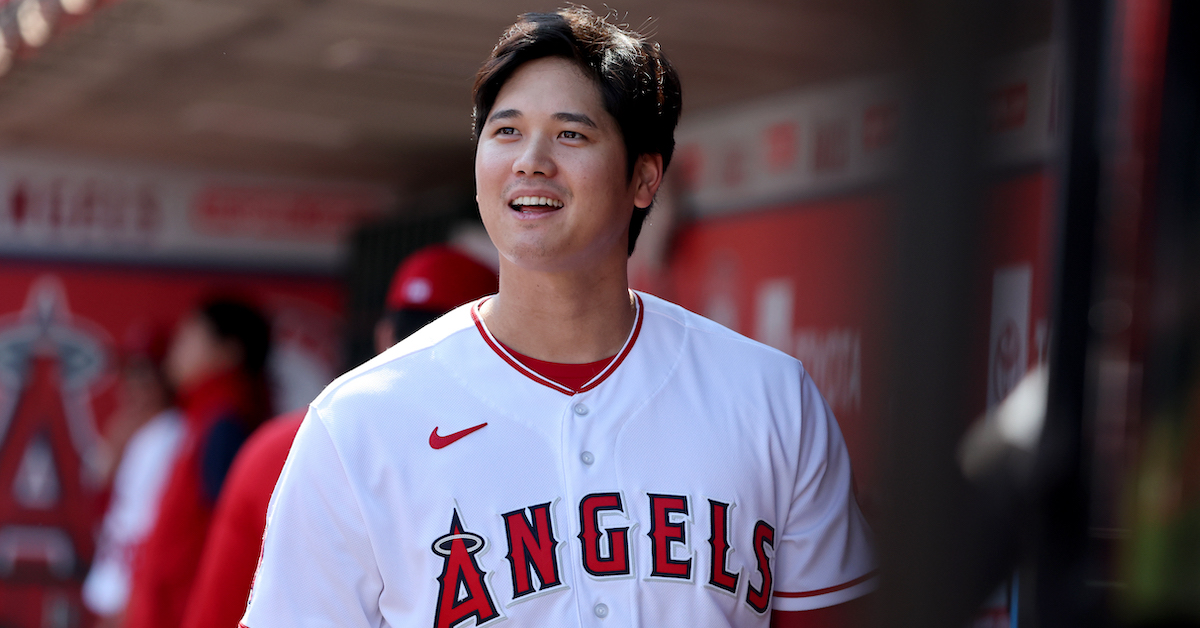
This is a Shohei Ohtani Update. The World Baseball Classic is officially underway, and after a weekend packed with games, it’s time to check in on one of the biggest stars in the world. With Samurai Japan fresh off a 4-0 rampage through Pool B, FanGraphs can now officially report that Shohei Ohtani is still good at baseball.
The issue was not necessarily in question, but it’s worth taking a look at Ohtani’s performance considering his sudden disappearance at the end of the 2022 season. The two-way star didn’t play in a single game for more than four months — essentially the entire winter. Although he posted 9.5 WAR in 2022, several straw men constructed for the purpose of this sentence wondered whether, after such a long layoff, Ohtani would even remember how to play baseball at all.
Fortunately, Ohtani arrived at spring training in mid-February. After spending a couple weeks re-familiarizing himself with the sport, Ohtani got into three spring training games. Ohtani the batter hit a triple on the first pitch he saw, and has gone 2-for-5 so far. Ohtani the pitcher made one appearance, throwing 2.1 scoreless innings with no hits, two walks, and two strikeouts. Cactus League sources indicate that both a 1.200 OPS as a hitter and a 0.00 ERA as a pitcher are considered good. Read the rest of this entry »
With the World Baseball Classic in progress this week, now feels like a good time to steal an idea from another sport. In baseball, the international game is a bit vestigial. There has never been a consistent international best-on-best tournament on par with the FIFA World Cup or Olympic ice hockey, in which players desire success with the national team as much as they would success with their club teams.
Baseball hasn’t had that; the Olympics, taking place as they do within the MLB regular season, never featured best-on-best competition. And that’s when the Olympic program includes baseball to begin with. The World Baseball Classic hasn’t been around long enough to gain the kind of legitimacy the World Cup has, and it’s administered in part by Major League Baseball.
The biggest obstacle to a serious international game in baseball is pitcher usage. Pitcher workloads are so tightly monitored, few players and even fewer teams are willing to loan out a fragile and valuable arm to a tournament that’s widely viewed as an exhibition. The second-biggest obstacle is the lack of a powerful independent governing body for the sport; for most of the history of baseball, MLB has been its driving force. Even as various major leagues popped up around the world and the sport flourished at the amateur level, baseball has been centralized in the way hockey, soccer, and basketball never were, and the WBSC isn’t powerful enough to dictate a truly independent prestigious international competition. Read the rest of this entry »
It’s World Baseball Classic time! Over the next two weeks, we will see players from all over the world represent their countries in the hopes of bringing home a title. We’ll be lucky enough to see MLB superstars like Shohei Ohtani, Mike Trout, and Juan Soto play for their respective countries, but viewers will also be introduced to some names and faces they might not have seen play stateside. Baseball is played all over the world, after all, and there are hundreds of players who could prove to be impactful for their teams in this tournament.
With games starting today, I wanted familiarize you with a few players who either aren’t yet household names in MLB or have no experience in MLB at all. I’ve selected each of these players because they have a chance to be standouts on their respective teams. Read the rest of this entry »
In the last week, over 300 MLB-affiliated players have started to leave camp to join their countries’ teams for the first World Baseball Classic in six years and the fifth in the tournament’s history. For some veterans and well-established big leaguers, a hiatus from Grapefruit or Cactus League action isn’t something to be concerned about. Playing in the Classic won’t cost them a chance to hit quality live pitching, or pitch to quality live hitters, and while any game action comes with some risk of injury, these types can afford a two-week sabbatical without jeopardizing their job security. Other players, though, are in the midst of big league roster battles, trying to distinguish themselves during camp and earn a spot come Opening Day. As much as we discount the stats generated in spring exhibitions, for some players, this time represents much more than a chance to get into game shape – it’s also an opportunity to change the course of their career.
For these players, the WBC is perhaps not ideally timed. If you’re trying to secure the final bench or bullpen spot, departing camp for a while isn’t exactly a surrender, but these are valuable weeks to make your abilities known. Tony Andracki of Marquee Sports Network has reported that a number of Chicago Cubs on the roster bubble are forgoing participation in the WBC in order to continue their efforts to make the club, and they likely aren’t alone. Here I’ll also note that the absence of some big league regulars opens the door for prospects and other fringe roster types to make a strong impression on their club with more trips to the plate and batters faced. Still, the WBC is a well-appreciated opportunity to represent one’s country, and that so many players jockeying for a roster spot choose to take the time to do so is a testament to what that opportunity means. Read the rest of this entry »