
Elvis Lives
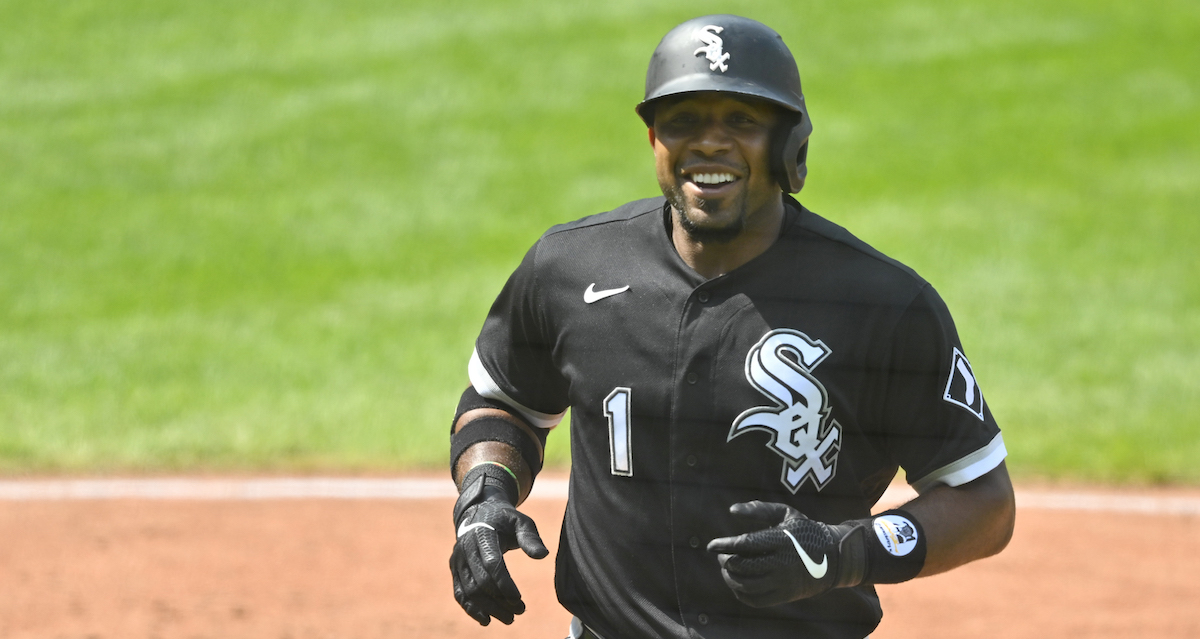
Elvis Andrus didn’t come to Chicago as a marquee attraction. He wasn’t a trade deadline acquisition; rather, the A’s released him on August 17, and the White Sox signed him two days later. At the time, it felt notable for a completely unrelated reason: Andrus had an option with the A’s that was close to vesting, one that would pay him $15 million next year. The White Sox, meanwhile, had serious depth issues; with Tim Anderson and Leury Garcia both on the IL, they were short on middle infielders, and Andrus was the only way to add someone from outside the organization.
It was, in hindsight, a stroke of serendipity. The White Sox were desperately in need of freely available competence. If their spate of injuries had happened three weeks earlier, they would have had any number of options on the trade market. Given the timing, though, it was Andrus or nothing. If he’d merely played as well as he did in Oakland, he’d have been an excellent stopgap. Instead, he’s been the sixth-best offensive player in baseball.
This is, to put it mildly, unexpected. From 2018-21, Andrus put up an aggregate 74 wRC+, hitting .255/.302/.360. Plus defense at shortstop made him at least playable, but his best offensive days looked to be behind him. His production in Oakland this year was itself a resurgence; while league offense is down as a whole this year, Andrus hit for a bit more power than usual while getting on base at his steady, near-average clip.
On the Sox, Andrus is hitting .314/.357/.517. He’s hit six home runs in just 126 plate appearances, nearly quadruple his previous career rate. That’s all the more impressive considering he played most of his career in the Rangers’ old, homer-happy stadium. Where in the world did this come from?
In any sample this small, it’s a given that part of the answer is randomness. No one’s ever as good as they are in their best month, and make no mistake, this is Andrus at his best. He’s had roughly five stretches this hot in his entire major league career, so it’s not like he’s never performed like this before, but it’s clearly not a new true talent level or anything. Still, it’s worth looking into what he’s doing right, both because it’s fun to talk about Andrus being good and because maybe we’ll learn something.
We can rule a few things out quickly. Andrus hasn’t changed his approach at the plate in any significant way. He’s swinging at a fairly constant rate of first pitches, first pitches in the strike zone, fastballs, breaking balls, offspeed pitches, borderline pitches; you name it, his swing rate is unchanged, with near-metronomic consistency. He’s swinging slightly more often overall, but not by an amount that would make you say “wow, that guy changed.” The technical name for this next chart is “a whole lot of nothing”:
| Team | Z-Swing% | Heart Swing% | Shadow Swing% | First Pitch Swing% | FB Swing% | Secondary Swing% |
|---|---|---|---|---|---|---|
| Oakland | 62.2% | 65.3% | 52.1% | 25.9% | 45.7% | 44.2% |
| Chicago | 62.6% | 65.5% | 52.4% | 27.8% | 46.9% | 45.8% |
A close inspection of his swing reveals a similar lack of change. You can play along at home if you’d like. To make everything as similar as possible, I selected two pitches against the same pitcher in the same park. Here’s Andrus on the A’s, taking a hack at a secondary pitch early in the count on the inner third of the plate:
Now here he is on the White Sox, taking a hack at a secondary pitch early in the count on the inner third of the plate:
Maybe you’re a better detective than I am, but I don’t see any meaningful differences. Andrus’ swing is beautiful, almost hypnotic at times, but he hasn’t overhauled it since joining the White Sox. That seems reasonable to me; he was doing pretty well already in Oakland this year. Why change something that’s working?
If he’s made any swing changes, they’ve come with two strikes in the count. In Oakland, he generally dropped his leg kick with two strikes, but brought it back in full counts unless he was facing a high-velocity pitcher – Dylan Cease, to give one example. In Chicago, he’s dropped his leg kick with two strikes, and brought it back in full counts less frequently. If you think this is too small of a difference to matter, I’m with you. Andrus had a 148 wRC+ on full counts with Oakland, and has a 221 mark in Chicago, largely due to a .625 BABIP. I don’t think the swing changes can explain his recent good form.
But even if he hasn’t changed how he swings, he has changed how he impacts the ball. When he hits the ball in the air with Chicago, he’s hitting it hard (95 mph or harder, to be precise) 39.6% of the time. That compares to a 29.4% mark in Oakland. It’s not a huge sample, and it’s only a bit over a standard deviation of difference, so it could be nothing – but it’s at least somewhere to point.
Meanwhile, he’s hitting fewer fly balls overall. That’s because he’s replaced them with line drives, always a great switch. It’s not a particularly repeatable switch in most cases, but Andrus’ 23.7% line drive rate with the White Sox isn’t ludicrous; he’d just been hitting very few on the A’s this year.
Even if you give him full credit for all the batted ball changes he’s made, it’s hard to believe Andrus will keep producing at this rate. He’s running a 20% HR/FB mark, for example, with a career mark in the mid single digits. The truism that anyone in baseball can do anything for a month isn’t always actually true, but it definitely applies here: I think Andrus is a solid player, but I don’t think the home runs are here to stay, and he probably won’t continue to hit so many line drives.
That leaves him as a slightly above-average hitter in my estimation, which is still remarkable. How many good hitters with plus shortstop defense can you add to your team at no prospect cost in the middle of a playoff chase? The White Sox pulled off a coup by adding him, essentially undoing Tim Anderson’s injury by replacing his production in the lineup seamlessly.
When Anderson returns, the Sox will have a difficult decision to make – but not that difficult. Theoretically, they’ll have to pick between playing one of their longstanding stars and playing their current hottest hitter. In practice, Romy Gonzalez is starting at second base right now, and I’m pretty sure that Andrus can handle second, à la Trea Turner in 2021. They still face an uphill climb to reach the playoffs, but at least they won’t have to do it while leaving a good hitter on the bench.
Andrus will be a free agent after this season, and I hope he gets a deal he’s happy with. Sure, they want to see what they have in Nick Allen, but the A’s pretty clearly cut him to avoid any chance of triggering his vesting option. It obviously wasn’t for performance; even though he left the team a month ago, he’s still one of their top three hitters in WAR this season. That’s a rotten move, and one that might end up before an arbitrator. It easily could have been the last we heard of Andrus this season.
Instead, he’s gone from playing for a team in the process of blowing itself up to a team in the thick of a playoff chase, and being the toast of the town to boot. It would be extremely unscientific of me to attribute his recent form to the baseball gods making some sort of point. But whether or not that’s the cause (it’s not), I can’t help but smile every time I see Andrus pacing his playoff-hopeful teammates. However it has happened, it’s a delightful story, and a rare ray of hope for a White Sox team that’s dealt with a series of unfortunate injuries and headwinds all year.
Ben is a writer at FanGraphs. He can be found on Bluesky @benclemens.
His current swing looks a touch flatter and his hands are loaded a bit higher when he takes his stride. It helps him to stay on inside pitches more. Coincidentally, he’s swinging more at inside pitches in Chicago, whereas in Oakland he was upper middle-and-away the majority of the time. He’s also swinging more at low pitches.
Also, am I the only one who didn’t realize that Andrus was actually decent in Oakland? Postive baserunning and fielding marks combined with a 99wRC+ for 1.6 fWAR over 106 games. Easily would have been a 2-win player even if he’d stayed.
Elvis’ career is a case-study in the disappearance of the bunt. His first 5 seasons, he average 15.6 bunts a year and led the league in bunts 3 times. In his last five years, he has a grand total of 4 bunts…
Also a case study of aging
It’s not sustainable but even being capable of reeling off a hot streak and playing a premium position will keep you in the league. I mean I thought he was done after last year but he’ll get a major league contract for sure this winter. He probably won’t be good but with the shortage of even adequate shortstops a mediocre one can get a job somewhere.
I agree it’s not sustainable, but the White Sox get to bank the production when they needed it most, and Andrus’ expected production is still a lot better than what they had before. What a windfall. Maybe they can sign him cheap and use him at 2B next season.
Not sure a single swing comparison is enough sample size. His timing was infinitely better on the second swing. He was more direct to the ball and timed up his hips with his swing better. The swing just looks faster as a result.
Could just be seeing the ball better in Chicago or have fixed something in his timing with his swing.
He’s gonna regret that cookie crumble remark about the Guardians.
Just to confirm, does his vesting option survive being released or is that gone now? In other words if he makes it to a combined X plate appearances between both teams, is he now due the $15M?
Being released voids a player’s current contract. If they were passed through waivers and picked up by another team, that’s a different story, but not the case here. His current contract is a pro-rated 700k, with no incentives.
I think his current contract with the White Sox is as you say, but the A’s (and Rangers) are still responsible for his original contract guarantee less what the Sox pay. But you’re correct that the option does not survive release.
Active hits leader
1. Pujols 3371
2. Miggie 3081
3. Cano 2639
4. Molina 2167
5. Votto 2093
6. Cruz 2018
7. Andrus 1985
8. McCutchen 1941
9. Altuve 1920
10. Freeman 1890
There is a real possibility that Andrus becomes the active hits leader in a couple of years.
The White Sox signed Joe Kelly after he got bought out by the Dodgers ($4M buy-out on a $12M option) for $16M/2.
The White Sox traded for Jake Diekman, making $8M/2 (after being bought out by OAK for $750K on a $4M option), giving up Reese McGuire, who’s produced 1.1 WAR in 79 PA for BOS.
I’ll predict they’ll re-sign Andrus for $30M/2, say that 2B is solved, re-sign Abreu and Cueto, tap out with a $220M payroll and call it an offseason.
If this is all, then the next year will be a wash too. Team still has too many DH type players, especially if they re-sign Abreu. That outfield was horrendous this year.
Kind of funny that Soto and Andrus and currently tied with the most fWAR among all position players who have changed teams this season. And Andrus was slightly cheaper.
In that second swing he didn’t drop his hands to get to the pitch