
Let Me Upgrade You: Small Improvements With Big Playoff Implications
Last week, Dan Szymborski looked at how much a team’s fortunes can change in the first month of the season. That old truism – you can’t win the World Series in April, but you can lose it – turns out to, in fact, be true. Dan’s research found that even teams we think are good – those projected to win 90 or more games – had meaningfully worse results after a bad April, even if their actual talent remained the same.
In other words, those early losses really do count. But I like to look at things from a glass-half-full perspective, so my takeaway was that there’s still plenty of time to fix a bad start, because it’s still early in the season. But how to fix it? That’s a trickier question. Luckily, “that’s a tricky question” is just FanGraphs for “that’s a fun thing to write an article about,” so I’ve got answers for you.
I came up with a method that let me look at all 30 teams at once. First, I took our playoff odds, with current standings, for every team in baseball. Then, I went through and found each team’s weakest position. I did this separately for pitchers and hitters. How’d I do it? I sure hope you’re in the mood for some methodological exposition, but if not, you can probably skip the next three paragraphs and get right to the good stuff.
For each batting position on each team, I summed the projected WAR from our Depth Charts. I used these to create league-wide averages for each position, important considering the average shortstop projection, for example, is much better than the average first base projection. Then I compared each position for each team to the league average and noted the one that fell furthest short. To improve that position, I created a synthetic league-average player and assigned that player either the most plate appearances that any player on that team was projected for at that position, or 600 plate appearances, whichever was higher. I then rebuilt the depth chart behind our synthetic player by sliding down whoever was left and noted the difference in WAR between the new depth chart and the old one. I divided that change in WAR by the number of games remaining in the season to turn it into a change in winning percentage, bumped that team’s true talent winning percentage by that amount, and then re-ran our playoff odds 20,000 times with its new, improved squad, keeping the talent level of all other teams constant, to calculate what its odds would look like post-trade.
For starting pitchers, I constructed a league-average pitcher by averaging the top seven options on each team’s depth chart to create one global league-average WAR per inning pitched. For upgrades, I went down each rotation in order until I found a player with a lower projected WAR per inning pitched than that league average. I replaced that pitcher with the league-average option, then used a waterfall method. The displaced pitcher took the spot of the first pitcher below him on the depth chart who projected to be worse than him on a per-inning basis. Then that displaced pitcher followed the same procedure, over and over until I rebuilt the entire depth chart. In this way, injured but talented players didn’t get bumped down the playing time ladder undeservedly. I then took the difference between how much WAR the pre- and post-upgrade rotations projected for, turned that into increased winning percentage, and re-ran the playoff odds.
I didn’t subtract any players from any teams when I re-ran the odds. I also didn’t re-run platoons or account for risk of injury. These odds are intended as a quick check of how much teams might improve by patching their weakest holes, not as a complete functioning model of the major leagues. I think their estimates are reasonable. I wouldn’t defend any of them as being perfect, but I do think that this method does an excellent job of identifying low-hanging fruit.
Sorry, did your eyes glaze over there? That was a lot of methodology in a few dense paragraphs. But whether you felt like following along or not, the upshot is that I came up with a list of how much each team in baseball could improve by replacing its weakest position with a league-average player, and how much that would change its playoff odds. For example, the AL East could use some shortstops, but not every team could use them equally:
| Team | Upgrade Position | WAR From Upgrade | Playoff% Increase From Upgrade |
|---|---|---|---|
| Yankees | SS | 0.8 | 3.1% |
| Blue Jays | SS | 0.3 | 1.8% |
| Red Sox | SS | 1.0 | 5.7% |
| Orioles | CF | n/a | n/a |
| Rays | SS | 1.7 | 10.0% |
The Blue Jays and Orioles have well-rounded squads, which explains why the WAR upgrade from shoring up their weakest spot is minimal. In fact, all of Baltimore’s non-pitcher positions are projected to be above average, so we can’t upgrade its roster with a league-average player, even in center field, the team’s weakest spot. That’s why you see “n/a” in the table above. The Yankees project to receive nearly as large of a WAR upgrade as the Red Sox from this exercise, but since they’re already quite likely to make the playoffs, their playoff odds change by less. And the Rays have the largest potential gain in the majors. They’re right on the fringe of the playoff race, and yet they have the worst projected shortstop depth chart in the majors.
Six teams could boost their playoff odds by more than five percentage points by upgrading their weakest position to league average:
| Team | Upgrade Position | WAR From Upgrade | Playoff% Increase From Upgrade |
|---|---|---|---|
| Rays | SS | 1.7 | 10.0% |
| Diamondbacks | 1B | 1.4 | 7.6% |
| Braves | SS | 1.3 | 7.1% |
| Guardians | SS | 1.5 | 6.9% |
| Red Sox | SS | 1.0 | 5.7% |
| Padres | 1B | 1.4 | 5.5% |
I did the same thing for starting pitchers, and this time we’ll flip leagues and coasts and use the NL West as an example:
| Team | Rotation Spot Upgraded | WAR From Upgrade | Playoff% Increase From Upgrade |
|---|---|---|---|
| Dodgers | SP6 | 0.3 | 0.2% |
| Diamondbacks | SP1 | 0.7 | 4.0% |
| Padres | SP4 | 1.1 | 4.4% |
| Giants | SP2 | 1.0 | 4.0% |
| Rockies | SP1 | 1.2 | 0.1% |
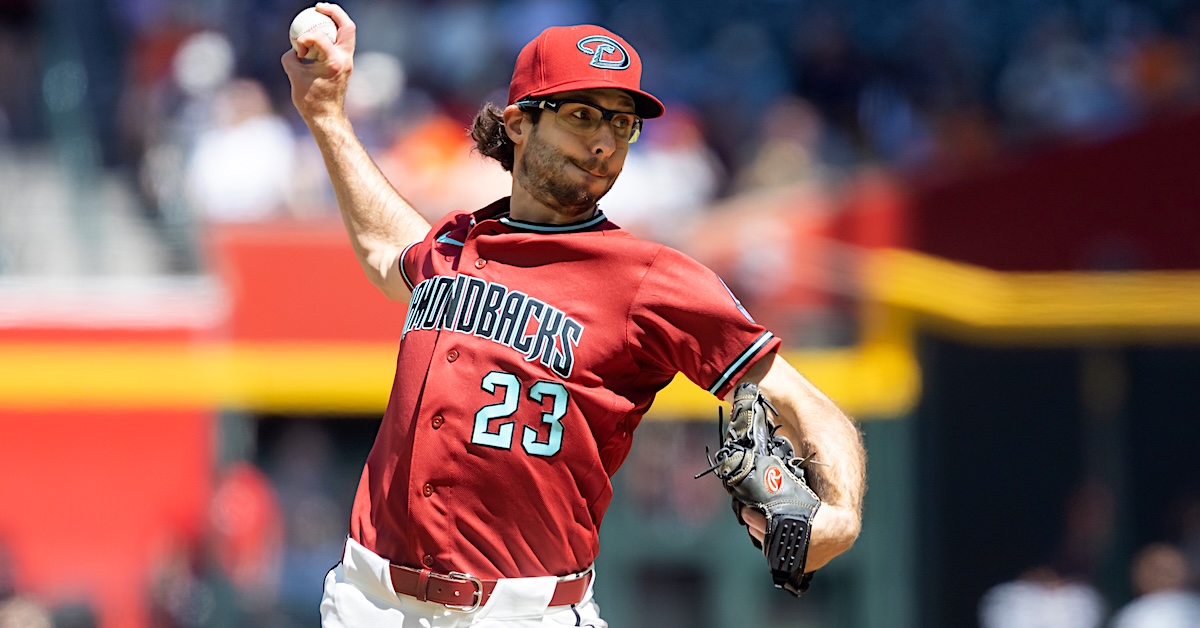
First, yes, technically a league-average starting pitcher would project for infinitesimally more WAR than Zac Gallen, but the real gain comes from pushing some of the less-capable arms at the back of the rotation into spot duty. But I think this division demonstrates the utility of this method very well. The Dodgers don’t really need an average starting pitcher; he’d only be their sixth-best option. Thus, they’d get only a very small WAR upgrade – and also a very small playoff odds increase, since they’re already basically a lock for October.
The Diamondbacks get the most bang for their buck because they’re in the cuspiest position. Entering Monday, we gave them a 30% chance of making the playoffs, as opposed to around 20% for the Padres and Giants. And the poor Rockies badly need an upgrade – but even an upgraded Rockies squad basically never makes the playoffs anyway.
Let’s look at the teams who could use an extra arm most:
| Team | Rotation Spot Upgraded | WAR From Upgrade | Playoff% Increase From Upgrade |
|---|---|---|---|
| Phillies | SP5 | 1.0 | 5.4% |
| Astros | SP2 | 0.9 | 5.3% |
| Cubs | SP2 | 0.9 | 5.1% |
| Padres | SP4 | 1.1 | 4.4% |
| Royals | SP3 | 0.7 | 4.1% |
Those are good insights (and you can see the entire list here), but I wanted to ask one more question. There’s no reason that I have to limit my model to upgrading to an average player. I told the model that we could instead add a good starter, a player who projects for one WAR more than league average at his position. Now we’re really cooking with gas. Ten teams could add double-digit percentage points to their playoff odds by grabbing one of those guys today:
| Team | Upgrade Position | WAR From Upgrade | Playoff% Increase From Upgrade |
|---|---|---|---|
| Rays | SS | 2.9 | 16.8% |
| Diamondbacks | 1B | 2.6 | 13.8% |
| Braves | SS | 2.5 | 13.2% |
| Red Sox | SS | 2.2 | 12.3% |
| Guardians | SS | 2.7 | 12.2% |
| Royals | 2B | 2.1 | 11.5% |
| Brewers | 1B | 2.1 | 10.8% |
| Pirates | C | 1.9 | 10.5% |
| Rangers | 2B | 1.7 | 10.2% |
| Padres | 1B | 2.6 | 10.2% |
And at the risk of just showing you too many charts, adding a good starter helps a lot of teams quite a bit:
| Team | Rotation Spot Upgraded | WAR From Upgrade | Playoff% Increase From Upgrade |
|---|---|---|---|
| Astros | SP2 | 1.8 | 10.7% |
| Cubs | SP1 | 1.9 | 10.7% |
| Diamondbacks | SP1 | 1.8 | 9.9% |
| Royals | SP2 | 1.7 | 9.8% |
| Phillies | SP3 | 1.8 | 9.6% |
| Orioles | SP1 | 1.8 | 9.2% |
| Blue Jays | SP2 | 1.5 | 8.6% |
| Guardians | SP1 | 1.9 | 8.6% |
| Mariners | SP3 | 1.7 | 8.4% |
| Giants | SP2 | 2.1 | 8.4% |
| Padres | SP1 | 2.1 | 8.3% |
The point of this exercise? Honestly, mostly I just wanted to make the tool I used to get these insights. It seems like a fun one for trade analysis. But I also think this serves as a reminder of how much season there is in front of us. Adding an average regular would have a huge impact on a great number of playoff contenders. Adding an above-average regular could change the playoff picture substantially. It’s so early in the year that a small change in team quality can still have a large impact on playoff outcomes. So you can get sad about a slow start if you’d like. But I’d prefer to dream about how to turn things around. It’s April. Anything can happen. Dream big – or at least, dream of your team snagging a decent starting pitcher and a capable shortstop.
Ben is a writer at FanGraphs. He can be found on Bluesky @benclemens.
Beyonce Clemens is best Clemens