
Matrix Reloaded: January 16, 2026
Finally, the stars aligned to get us back on the Friday Matrix Reloaded schedule, and boy did they align! Nos. 1, 2, 8, and 9 on Ben Clemens’ Top 50 Free Agents list signed since we last checked in, leaving just two of the top 10 remaining. We also saw a three-team trade reported about a minute after our top free agent signed, and some two-teamers of significance, too.
As always, you can find the colorful Offseason Matrices spreadsheet here. Let’s get into the events of the last 11 days.
Significant Signings
Dodgers Sign Kyle Tucker for Four Years, $240 Million (Present Value of Approximately $228.4 Million With Deferrals)
Effect on the Dodgers
I find “the rich get richer” to be particularly annoying even among annoying turns of phrase, but what else can be said about the Dodgers at this point? They won the World Series, lost nobody of significance to free agency, and added Edwin Díaz to anchor their bullpen. They would’ve looked like clearly the best team in baseball without Tucker. With him, they might be the best iteration of these Dodgers yet.
Assuming Tucker sticks in his accustomed right field and Teoscar Hernández slides back over to left, where he played in 2024, the club’s starting nine, down to the positions, appears set. The only question is if Tommy Edman, who’s projected to start at second base, will be ready in time for Opening Day after his offseason ankle debridement surgery. If not, Hyeseong Kim and Miguel Rojas can split time at the keystone.
If there is a nit I can pick with the Dodgers, it’s the relative age of their roster. That doesn’t mean we should expect a bunch of age-related regression to drag down the team, but it is notable that Tucker and center fielder Andy Pages are the only regulars under 30. In the projected six-man rotation, only Emmet Sheehan and Roki Sasaki are in their 20s. The Dodgers are still set up as well as any team in baseball to continue to win, obviously, and star players have farther to fall as they age. But they’re not infallible. It’s baseball; no team is. They play the games for a reason.
Effect on Other Teams
The presumed final three teams for Tucker were the Dodgers, Mets, and Blue Jays. Of the three, the Dodgers of course needed Tucker the least, but when you’re the richest team in baseball you can YOLO your way into Kyle Tucker anyway.
But while losing Tucker stings for the Blue Jays and Mets, the cascading effects either won’t happen or already did. An Anthony Santander bounce-back would go a long way for the Blue Jays and make their lineup full. (Even as it is now, Nathan Lukes, who had a solid year and hit second against righties during Toronto’s playoff run, is projected to be on the bench.) The Mets very quickly signed Bo Bichette to a massive deal (much more ink spilled on him below). They’re not the Dodgers, but these are two good teams that still have time to get better.
Effect on Similar Players
He’s Kyle Tucker. He just got the biggest AAV in major league history. There wasn’t anyone similar to him on this offseason’s market.
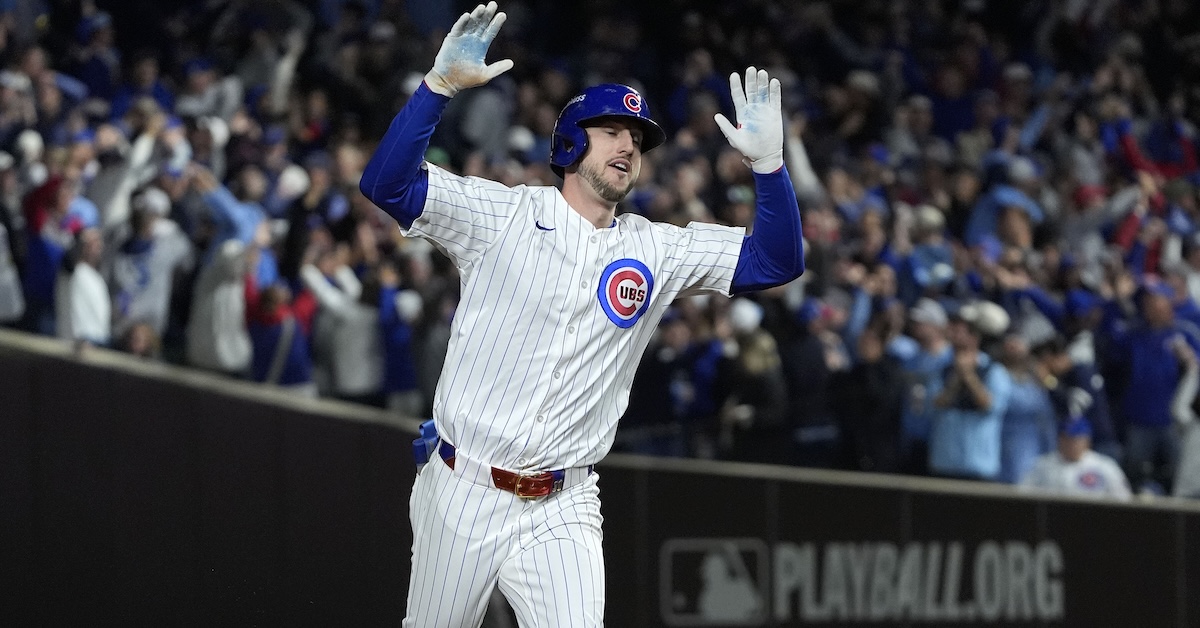
Cubs Sign Alex Bregman for Five Years, $175 Million (Present Value of Approximately $155 Million With Deferrals)
Effect on the Cubs
I’ll be honest, I didn’t have the Cubs signing a contract of this magnitude on my radar as a distinct possibility. But now that they have, they’ve got two aspects to consider: the pure on-field baseball element, and the payroll aspect.
On the baseball side, the Cubs first have to figure out how to allocate playing time. Third base wasn’t an obvious position of need for them with Matt Shaw coming off a solid — albeit extremely uneven — rookie campaign. But with Bregman in the fold and set to play every day at third (save for perhaps some occasional DH duty), Shaw will have to bounce around to find playing time. Fortunately for Shaw, he can play other positions. He was a primary shortstop in college before shifting to playing mostly third base in the pros, and he’s also got experience at second base and in the corner outfield.
With Shaw filling in all over the field and likely getting some DH reps against lefties in place of lefty-swinging Moisés Ballesteros, the Chicago offense looks set. It’ll be Ian Happ, Pete Crow-Armstrong, and Seiya Suzuki from left to right in the outfield; Bregman, Dansby Swanson, Nico Hoerner, and Michael Busch at the four infield spots; and Carson Kelly and Miguel Amaya behind the plate. Ballesteros, Shaw, and Tyler Austin should all get DH reps, and Austin could platoon with Busch at first base, too.
Now for the nitty-gritty Beckerdom that is payroll analysis. As you can see on the payroll page linked above, we currently have the Cubs at juuuuuuuust below the first $244 million luxury tax line, and that includes placeholder money for players who are called up during the season to cover for guys on the injured list. However, being short by under $1 million as a contending team means you may as well be over it. The Cubs will want to add at the deadline barring catastrophe, and they may also be on the hook to pay performance incentives to Matthew Boyd, Phil Maton, Hoby Milner, Jacob Webb, and Hunter Harvey. Assuming health, many of those incentives will be attained. For all intents and purposes, the Cubs are over the CBT line, even if they’re not quite there right now.
But being just barely over the CBT line isn’t a smart course of action. The Cubs do not receive revenue sharing money, so the value of their draft compensation picks would swing wildly depending on if they exceed or don’t reach the tax threshold. If they’re under the line and one of their free agents who gets a qualifying offer signs elsewhere, the Cubs would get a draft pick between Competitive Balance Round B and the third round of the draft. If they’re over the CBT threshold, the compensation pick would come after the fourth round. That difference of about 60 draft slots is huge, and the draft slot change occurs whether a team is over by $1 or $1 million or $10 million. Knowing that, and knowing that the Cubs are clearly in win-now mode, they should pick a lane rather than straddling the line and not knowing for certain if they’ll be barely over or barely under it. With three pending free agents who ought to be under consideration for QOs — Happ, Hoerner, and Suzuki — that inflection point is all the more important.
If the Cubs are looking to be under the tax line, they have only two realistic options: Trade either second baseman Hoerner (earning $12 million this year) or projected fifth starter Jameson Taillon ($18 million). Signing Bregman to move Hoerner makes the Cubs the ill-advised combo of “maybe slightly better and definitely way more expensive,” but as I’ll explain more in the Edward Cabrera section down below, Chicago has enough pitching depth to cover for a Taillon trade.
As for adding more player payroll to go way over the tax threshold, this is a pretty full roster right now, so it’s possible the Cubs could just wait until the trade deadline and not care about the size of contracts they’re absorbing (within reason). Alternatively, they could attempt to sign pre-arbitration players like Crow-Armstrong and Cade Horton to extensions, knowing that their real-cash payroll wouldn’t go up much, but the average annual value of those contracts (affecting the luxury tax calculation) would kick in immediately.
Effect on Other Teams
It was more than just the Cubs vs. the Red Sox for Bregman (the Diamondbacks and Blue Jays popped up), but the aftermath of his signing focused almost entirely on those two teams. So now that the Cubs have Bregman, where do the Red Sox go from here without him?
Boston’s collective displeasure with Bregman’s leaving is palpable, and I’m not one to tell fans how to feel. What I will do, though, is remind Red Sox fans that there are other solid options both in free agency and on the trade market.
On the Free Agent Matrix, you’ll see the Sox connected to an impact bat in Eugenio Suárez, and they’ve reportedly expressed interest in trading for the Astros’ Isaac Paredes, too. Either of those two would represent what the Red Sox need to take their offseason from “pretty good, but with a sour taste” to “they didn’t really leave any mission unaccomplished.” I get it, neither of them is Bregman, and it’s no doubt frustrating for Red Sox fans. But that doesn’t mean all is lost, especially when the Ranger Suárez signing (much more on him and the aftereffects of his deal below) opens up even more trade possibilities.
If a successful Red Sox offseason is very narrowly defined as one in which they brought back Bregman, then yeah, nothing I just said in the prior paragraph is going to satisfy you. But if a successful Red Sox offseason is defined as “improving upon the team that made the playoffs last year,” there are still paths aplenty for that to happen, if it hasn’t already with the additions of Suárez, Sonny Gray, Willson Contreras, and Johan Oviedo, not to mention a full season of Roman Anthony coming down the pike.
Effect on Similar Players
Whatever contract Suárez gets won’t be affected by the signings of Bregman and Bichette, unless it forces the Red Sox to get desperate and pay above market rate for him. Suárez is older and far more flawed; the only tool of his that’s better than one of Bregman’s is raw power, and it’s possible he’s a worse defender at third than Bichette will ever prove to be. The Bregman and Bichette signings, though, should get his market moving.
Mets Sign Bo Bichette for Three Years, $142 Million
Effect on the Mets
While David Stearns preached the need for better “run prevention” (pitching and defense) by the Mets heading into this season after their 2025 collapse, the actions his front office has taken this offseason haven’t exactly backed that up.
Bichette is expected to play third base for the Mets, his first exposure to the hot corner in his career. The man catching many of his throws across the diamond will be Jorge Polanco, also playing away from his career-long positions of short and second. “New position” doesn’t equal “bad defense” by any means, and Bichette and Polanco will have ample time to acclimate. But half of your starting infield being represented by players at new spots obviously comes with risk. As such, I didn’t have Bichette being an obvious Tucker pivot for the Mets on my radar.
The offense, though, is undeniable. The Mets lineup now boasts strong depth beyond the top four of Francisco Lindor, Juan Soto, Bichette, and Polanco; Brett Baty and Francisco Alvarez were quietly very good last year, and Mark Vientos finished stronger than he started. And spending “only” money on Bichette instead of prospects keeps the youth pipeline intact. Carson Benge is still the projected starter in left field for now, and Jacob Reimer, Jett Williams, and A.J. Ewing could be up at some point this year, too.
The Mets’ attention now ought to turn to the other half of run prevention: the pitching. A major culprit of their second-half swoon was the collapse of their starting pitching, which was a surprise bright spot early in the season but ran out of steam by the end of the year. The need for starting pitching doesn’t mean the Mets don’t have internal options, and Nolan McLean in particular looks like he has the stuff to anchor a rotation. Perhaps they think that positive regression and a full season of McLean will be enough to fix the starting pitching without doing anything; perhaps they’ll decide to spend big on Framber Valdez. As the Bichette deal shows, trying to guess a team’s next course of action can sometimes prove fruitless.
Effect on Other Teams
Losing out on Bichette thanks to the division-rival Mets is the worst-case scenario for the Phillies, who reportedly thought they had a deal with Bichette on Thursday evening before the Mets brought the hammer down. Seven years and $200 million is a perfectly reasonable long-term offer, but the Mets’ deal is far better. It allows Bichette the ability to opt out after each season, and even if he stays for the full three years, he’ll only have to beat four years and $58 million on his next contract to top what he would’ve earned as a Phillie.
Phillies fans don’t seem to be taking well to J.T. Realmuto’s return being the counter move to Bichette’s heading to Queens, and I don’t blame them. Realmuto (more on him below) is a known quantity and perfectly good catcher, but running back a very similar team for the fourth consecutive year and hoping that this is the year that things finally break their way doesn’t seem like the way to go. Maybe that would work in the AL Central, but not in the NL East.
Effect on Similar Players
This is similar to Bregman. There’s nobody quite like (really, nobody even remotely close to) Bichette left to be signed, but it could get Eugenio Suárez’s market percolating even more.
Red Sox Sign Ranger Suárez for Five Years, $130 Million
Effect on the Red Sox
The Red Sox didn’t get their man in Alex Bregman, but they certainly got A Dude in Ranger Suárez. The former Phillies ace is something of a throwback, hovering around 90-92 mph and relying on guile/pitchability/intuition/[insert any other pithy word for Guys Who Know How To Pitch here] to get batters out. His walk rate reached a new low in 2025 at a sparkling 5.8%, and he also allowed the lowest rate of hard contact among pitchers who threw at least 100 innings. That makes Suárez seem like a pitcher who ought to be plenty durable, but a long list of injuries — lately, his back has been the main culprit — has prevented him from ever throwing enough innings to qualify for rate stat leaderboards. So much for a throwback.
Regardless of exactly how many innings he throws this year, Suárez gives Boston an embarrassment of riches in the rotation, with Garrett Crochet, Sonny Gray, Suárez, and Brayan Bello as the front four. Boston then has a potpourri of arms from which to choose for the final spot: trade acquisition Johan Oviedo, injury returnees Patrick Sandoval and Kutter Crawford, and highly touted prospects Payton Tolle and Connelly Early. This is where we pick up the thread about what the Sox should do now that Bregman has gone elsewhere.
Any of the above-listed contenders for the fifth spot and even Bello could hypothetically be on the move in a trade for a hitter. Whether it will line up in the way the Red Sox hope remains to be seen, but the trade market isn’t without options. I mentioned the Isaac Paredes connection in the Bregman capsule, but he’s not the only impact infielder who could be available. It would be an interesting twist of fate if Boston were to acquire either Nico Hoerner or Matt Shaw from the Cubs, two players who could be moved now that Chicago has Bregman. Spencer Steer of the Reds might also be a good player to target, as his place on the Cincinnati roster might be redundant with Sal Stewart around. I think Paredes is pretty clearly the best of the names listed because you don’t have to project an uptick in performance, but as mentioned in the Bregman section, Eugenio Suárez is a nice third base option on the free agent market. Or, the Red Sox could be better off taking the opposite approach and holding onto all of their quality pitchers at least into spring training, so that the team can take stock of everyone before dangling depth ahead of the deadline.
Effect on Other Teams
Suárez’s market was fairly quiet publicly, unusual for a Scott Boras client. In the aftermath, however, it was reported that the division rival Orioles were very interested in Suárez before he shipped up to Boston. With Suárez off the board, Framber Valdez is the only free agent starter remaining who’s a big upgrade over Baltimore’s projected fifth starter Dean Kremer, unless the Orioles think they know the special sauce to get Zac Gallen back on track. Adding another starter would allow the O’s to be more cautious with Zach Eflin’s return from back surgery.
Effect on Similar Players
Speaking of Valdez, he’s got to be licking his chops after he saw what Suárez got this late in the offseason. Generally, the later players sign, the worse their contracts are relative to expectations. That’s not the case for Suárez. On the Total Spending Projection page, you’ll see the median contract prediction for him was five years and $125 million, just under what he ultimately received. For what it’s worth, if you had asked me what Suárez would sign for a few days ago, I’d have ballparked something like four years and $90 million or five years and $100 million. I always recalibrate downward as the offseason drags on.
Valdez is, of course, not Suárez. He’s better, but he’s two years older and had the much-maligned cross-up (or “cross-up” if you prefer) with catcher César Salazar last season. But the willingness for teams to sign large deals is clearly still out there, as evidenced by these late megadeals for Tucker, Bregman, Bichette, and Suárez. If the appetite for a long-term deal isn’t out there for Valdez, he could always shift to a shorter-term deal with a high AAV and opt outs, as Tucker and Bichette did.
Phillies Sign J.T. Realmuto for Three Years, $45 Million
Effect on the Phillies
Whether it was Realmuto or somebody else, the Phillies needed a catcher. That it took this long was probably a function of two things: the Phillies’ focusing on their successful pursuit of Kyle Schwarber and unsuccessful pursuit of Bichette, and Realmuto’s understanding that he was far and away the best catcher on the market. The good ol’ “You need me more than I need you” argument.
The Phillies may well have tried to call Realmuto’s bluff as long as possible (was anyone else really going to offer him three years at a healthy AAV, one that includes another $5 million in available incentives each year?), but losing him would have left Victor Caratini as the only starting-caliber catcher on the market for the Phillies to sign. Caratini is fine, but he’s no Realmuto.
Bringing Realmuto back sets the starting nine for the Phillies, and it’ll be largely the same as it was to end 2025. The only changes will be Justin Crawford (assuming he doesn’t fall flat on his face in spring training) taking over for Harrison Bader (still a free agent) in center, with Brandon Marsh staying in left field, and Adolis García in right. The Phillies signed García to take over for Nick Castellanos, who’s still on the roster but won’t be when Opening Day rolls around. The starting infield of Alec Bohm, Trea Turner, Bryson Stott, and Bryce Harper remains unchanged.
Effect on Other Teams
Realmuto’s market was pretty quiet before he signed, hence my hypothesis that there was a bluff that the Phillies tried to call for as long as possible. The Red Sox were reportedly interested, but that probably would’ve been more of a timeshare with Carlos Narváez than a true starting job. So, too, were the Rangers, but they quickly shifted to Danny Jansen after realizing they wouldn’t have payroll room for Realmuto.
Effect on Similar Players
With Realmuto and Victor Caratini (more on him below) signed, we’re quickly down to zero catchers sure to get a major league deal. Jonah Heim, Elias Díaz, Reese McGuire, and Christian Vázquez could find jobs soon now that both Realmuto and Caratini have signed.
Twins Sign Victor Caratini for Two Years, $14 Million
Effect on the Twins
The Twins already had a starting catcher in Ryan Jeffers and an out-of-options backup in Alex Jackson, so they weren’t on my radar as a potential fit for Caratini. Jeffers shared time with Christian Vázquez during the latter’s three-year contract with the Twins and should be in a similar arrangement with Caratini, who also has experience at first base. A switch-hitter, Caratini produces well enough at the plate to see some time at DH, too. He’s much stronger from the left side, which gives the Twins the ability to sit Jeffers against especially tough righties.
Effect on Other Teams
If you’re a team in need of a catcher, your situation went from OK with the options on the market to pretty dire in one day, as Realmuto and Caratini both came off the board on Friday. The trade market doesn’t have much to offer, either, though Jackson is now more expendable.
Effect on Similar Players
Same deal as the Realmuto aftereffects: The catching market dried up in a hurry, so there aren’t similar players left.
Rockies Sign Willi Castro for Two Years, $12.8 Million
Effect on the Rockies
That the Rockies would sign a free agent for multiple years with a new front office in place at the beginning of what could be an arduous rebuild registers as something of a surprise. Of course, there’s nothing preventing the club from trading the superutilityman at any point in the deal.
Castro’s appeal is his versatility. Yes, he was horrid for the Cubs after the trade deadline, but he still filled in at five different positions. In signing him, the Rockies don’t have to commit to closing themselves off from further additions at any other position. That’s great news for me, because I can continue to wishcast a Luis Arraez signing.
Effect on Other Teams
The switch-hitting Castro was singular in his versatility both in the field and at the plate, but there are still multi-positional bats available on the free agent market. Primary infielders Isiah Kiner-Falefa and Luis Rengifo both have outfield experience at all three spots; Adam Frazier is primarily a second baseman but can play the outfield corners and third base; and Miguel Andujar is known much more for his bat, but he can at least stand at all four corners.
Effect on Similar Players
Except for Andujar, who could earn a multi-year contract on the heels of a strong season at the dish, I don’t expect any of the names listed above to sign for more than the upcoming season. Like Castro, Rengifo is also entering his age-29 season and at times has been a capable switch-hitting utilityman. He was pacing for his best season yet in 2024 (118 wRC+ and 1.5 WAR in just 78 games) before wrist inflammation and eventually surgery sent him to the IL for most of the second half and ultimately ended his year prematurely. Rengifo made it back for Opening Day last year, but his production cratered to exactly replacement level and a 73 wRC+ over 147 games. It’s quite possible that some team could blame his dreadful performance on the lingering effects of the wrist injury and give him a healthy one-year deal hoping for a bounce-back.
Rapid-Fire One-Year Deals
Rockies Sign Michael Lorenzen for $8 Million
Lorenzen has done nothing but sign one-year deals in the five offseasons since he initially hit free agency at the conclusion of the 2021 season — with five teams, no less! Coors Field is, of course, a challenge for any pitcher, and it could prove to be especially difficult on a pitcher like Lorenzen, who doesn’t throw particularly hard or from any funky arm angles. However, he does throw a bevy of pitches, which could help him keep hitters off balance.
He’ll slot behind Kyle Freeland in the rotation, with the other three spots open season for Chase Dollander, Tanner Gordon, Ryan Feltner, McCade Brown, Antonio Senzatela, and others. With Lorenzen’s starting spot secured, that leaves just one question about his role: Will he be allowed to hit?
Reds Sign Pierce Johnson for $6.5 Million
The curveball-spamming Johnson (he threw the hook a ridiculous 72% of the time last year) is the third free agent reliever to sign with the Reds this offseason, along with lefty soft-contact specialist Caleb Ferguson and last year’s closer Emilio Pagán, who re-signed with them in early December.
The 34-year-old Johnson has carved out a nice career for himself since returning from NPB after dominating in his lone season there in 2019, bouncing from the Padres to the Rockies to the Braves and now the Reds. He’s struck out just a hair under 30% of batters faced in those six seasons. He’ll get key middle relief and setup innings in a Cincinnati bullpen that looks deeper now than it did to end the season, with Johnson, Ferguson, Tony Santillan, Graham Ashcraft, and Connor Phillips all building the bridge to Pagán.
Braves Sign Tyler Kinley for $4.25 Million
Kinley turned his season around after being traded from the Rockies to the Braves at the deadline, improving from a 5.66 ERA/4.18 FIP/3.82 xERA to a sparkling 0.72 ERA/2.74 FIP/2.71 xERA. Despite that stark improvement, Atlanta declined his $5.5 million option, paying him a $750,000 buyout before bringing him back for less than the initial option’s value.
The 35-year-old righty’s new deal comes with another club option for 2027, valued again at $5.5 million. If he’s anything like he was down the stretch, that’ll be a no-brainer for the Braves.
Cardinals Sign Ryne Stanek for $3.5 Million
The St. Louis native heads to the Midwest for the first time in his career, coming off three seasons in which he’s been barely above replacement level. But he continues to get major league deals (and this one has a club option for $6 million for 2027) thanks to his tantalizing stuff. His 116 Stuff+ in 2025 was his best mark since the metric’s birth in 2020, with his splitter and slider both registering scores above 130. It might be wise for him to increase the usage of both of those pitches and deemphasize his high-90s fastball.
Stanek is among a menage of relievers competing for saves at the back of the Cardinals bullpen, along with JoJo Romero (who may well be traded, as he’s a free agent after the season), Riley O’Brien, and Matt Svanson.
Diamondbacks Sign Taylor Clarke for $1.55 Million
Clarke returns to the place where his career began after three years in Kansas City, capped off by a nice 2025 campaign in which he had a 3.25 ERA and 3.97 FIP in 55 1/3 innings. That wasn’t enough to stave off a non-tender, but it did earn him a guaranteed contract. He joins a wide-open competition for the Diamondbacks closer’s role, a battle that should also include Andrew Saalfrank, Ryan Thompson, Kevin Ginkel, and veteran non-roster invitee Jonathan Loáisiga.
Dodgers Sign Andy Ibáñez for $1.2 Million
Ibáñez was a valuable destroyer of lefties for the Tigers in both 2023 and 2024, posting a 118 wRC+ against southpaws in the former and 129 in the latter, but he regressed to 1% below league average with the platoon advantage in 2025, leading to his non-tender. The Dodgers are hoping he can bounce back in a similar role this year, and with two other righty platoon bats in Miguel Rojas and Alex Call on the roster, they can pick their spots with Ibáñez even more carefully to set him up for success. He’s out of options and has two more years of arbitration eligibility.
Trades
Cubs Acquire Edward Cabrera from Marlins for Owen Caissie, Cristian Hernandez, and Edgardo De Leon
- Michael Baumann’s Write-Up of the Deal
- Updated Cubs Roster Projection
- Updated Marlins Roster Projection
- Updated Cubs Payroll Projection
- Updated Marlins Payroll Projection
Effect on the Cubs
It’s no secret that the Cubs have been chasing upside for their rotation since the trade deadline. When they couldn’t close the deal there in July — Michael Soroka, a rental, was the one notable add — they spent much of this offseason tied to any and every interesting starter. Cabrera is exactly the type of pitcher the Cubs have coveted: three years of club control, elite offspeed and breaking stuff, and plenty of room for growth with the fastball, which has gotten hit about as hard as he throws it.
The righty isn’t without risk beyond the poor fastball performance. Last year was his best season by innings pitched and walk rate, and those numbers were just 137 2/3 and 8.3%, respectively. While he was mostly healthy, the most recent injury was the most significant: an elbow sprain that the Cubs evidently think is minor enough as to not be a major issue for the trio of years before he hits free agency.
And if that injury (or others) pop up, the Cubs have a lot of rotation depth even if they may lack a true top-of-the-rotation arm (though I bet they think Cabrera or Cade Horton could become that). Cabrera, Horton, Matthew Boyd, Shota Imanaga, and Jameson Taillon should be Chicago’s starting five, with Justin Steele hopefully returning from elbow surgery around midseason. The Cubs have also got two swingmen in Colin Rea and Javier Assad, depth arms in Ben Brown and Jordan Wicks, and a top-100 prospect in Jaxon Wiggins.
Effect on the Marlins
If the Cubs were telegraphing their desire for a rotation arm, the Marlins were doing the inverse: expressing a clear willingness to move anyone from their rotation not named Eury Pérez. In the Cubs, they found a natural trade partner, especially with Caissie on the table.
Caissie isn’t exactly like Kyle Stowers, who went from Trevor Rogers trade return to All-Star in under a year, but there are parallels. Both are lefty-swinging corner outfielders with big pop and contact concerns, though Caissie is essentially the more extreme version with a better power tool and worse hit tool than Stowers. Caissie will get the chance to displace fellow power-over-hit lefty Griffin Conine (ironically, an even more extreme version of Caissie, based on their most recent scouting grades), but he’s not going to be guaranteed a roster spot out of camp. Christopher Morel, another offseason acquisition, could end up back in the outfield, though the Marlins are also going to try him at first base. Hernandez’s prospect star has faded after a middling 2025 spent repeating High-A; meanwhile, De Leon doesn’t turn 19 until next month and performed well in the Complex League, albeit as a first baseman with a large number of strikeouts.
Even with Cabrera and Ryan Weathers (more on him below) gone from the rotation, the Marlins have a panoply of options behind Sandy Alcantara and Pérez. Braxton Garrett, Max Meyer, and Janson Junk are the arms most strongly in the mix for the final three big league rotation spots, but top prospects Thomas White and Robby Snelling should also factor in at some point this season. They’ve also got depth options like Ryan Gusto and Adam Mazur.
Diamondbacks Acquire Nolan Arenado and Cash from Cardinals for Jack Martinez
- Michael Baumann’s Write-Up of the Deal
- Updated Diamondbacks Roster Projection
- Updated Cardinals Roster Projection
- Updated Diamondbacks Payroll Projection
- Updated Cardinals Payroll Projection
Effect on the Diamondbacks
The Diamondbacks have had a weird offseason. It started innocently enough with their re-signing of catcher James McCann, the addition of Michael Soroka, and the boomeranging of Merrill Kelly back to Phoenix after trading him to the Rangers at the deadline. From there, well, it was a bunch of “Will they, or won’t they?” instead of actually doing.
Would they move Ketel Marte to restock a farm system light on upper-level pitching? Would making such a move allow them to clear enough payroll to sign Bregman? Would they say screw it and decide to keep Marte and add Bregman? Turns out the answer to all three of those questions was a resounding no. Marte has been at least ostensibly pulled off the trade market, and Bregman is, of course, a Cub. Enter Arenado, certainly a far less inspired option than Bregman, but a far cheaper one. (The Cardinals are covering $31 million of the $42 million owed to Arenado over the next two years.)
The eight-time All-Star’s career has been on an unrelenting decline since he finished third in the MVP voting in 2022, when he amassed 7.2 WAR and posted a 149 wRC+. Since then, he’s worsened each year, with wRC+ numbers of 107, 103, and 84. For $5 million this year and $6 million next year, the Diamondbacks don’t need to get much production at all to make Arenado “worth it,” but they’re certainly hoping he’s much closer to his 2023-24 self than where he was last year as he takes over at the hot corner.
Arenado’s signing puts top prospect Jordan Lawlar in a tough spot, but he’s at least ahead of the curve with getting reps in the outfield. With Arenado, Geraldo Perdomo, and Marte entrenched at third, short, and second, respectively, there will be far more plate appearances available on the grass (especially with Jake McCarthy getting traded) than on the dirt. But regardless of where Lawlar is playing, he has to hit, and it’s something he’s yet to do in the slightest at the major league level.
Effect on the Cardinals
The effect on the Cardinals is the same as the effect of their trades of Sonny Gray and Willson Contreras: Shipping the veterans out of town affords them the chance to take a look at younger talent.
The Cardinals are now the only team in the majors with a projected lineup on RosterResource entirely comprised of homegrown talent, and Arenado’s departure gives more playing time to Nolan Gorman, Thomas Saggese (not homegrown, but young!), and JJ Wetherholt. It’s not about cutting cash (though they’re certainly happy to at least get some relief from the Diamondbacks), and it’s not anything against Arenado’s body of work as a Cardinal, either. But having Arenado around would have cut into the development of players who actually will be around for the next good Cardinals team, whether that’s in 2027 or 2028 or beyond. (I’ll cover my bases here by saying it could even be in 2026!)
There’s nobody left that the Cards should feel like they have to trade — Arenado was really the only one; it was never a guarantee that Gray and Contreras would be gone — but Brendan Donovan and Lars Nootbaar have been popular in trade rumors all offseason, so it wouldn’t be a surprise to see either or both of them move. JoJo Romero is the team’s one holdover from 2025. He’s a pending free agent, and as such, is probably the single likeliest to move.
Yankees Acquire Ryan Weathers from Marlins for Dillon Lewis, Brendan Jones, Dylan Jasso, and Juan Matheus
- Kiri Oler’s Write-Up of the Deal
- Updated Yankees Roster Projection
- Updated Marlins Roster Projection
- Updated Yankees Payroll Projection
- Updated Marlins Payroll Projection
Effect on the Yankees
Prior to the Weathers acquisition, the Yankees’ offseason was defined by getting the band back together. Trent Grisham accepted the qualifying offer, and Amed Rosario, Ryan Yarbrough, and Paul Blackburn were all brought back to The Bronx on modest one-year deals. Rule 5 pick Cade Winquest and waiver claim Kaleb Ort were the only external additions until this week’s trade with Miami.
In Weathers, the Yankees are getting a southpaw long on potential but short on experience. Since making his regular season debut in 2021 (he’s a member of the exclusive club of players who debuted in the postseason), he’s thrown just 281 major league innings thanks to a combination of ineffectiveness and injuries, with the former giving way to the latter in recent years. He’s been a popular breakout pick since he upped his average fastball velocity from 93.5 mph in 2022 to 95.1 mph in 2023, and the heater is harder still; it averaged a career-best 96.9 mph in his eight major league starts last year.
While the Yankees aren’t going to let Weathers’ addition preclude them from aiming higher and targeting an even more notable starting pitching addition like Brewers righty Freddy Peralta or Nationals lefty MacKenzie Gore, the rotation does look to be set. Carlos Rodón and Gerrit Cole will start the year on the IL, but the team still has a quintet of capable starters in Max Fried, Cam Schlittler, Weathers, Will Warren, and Luis Gil. And, considering all but Fried can be optioned to the minors, the Yankees have plenty of options for what to do when the two frontline starters return from injury.
Effect on the Marlins
Everything I said about the Marlins rotation in the Cabrera section applies here, too.
As for the prospects, none of them is quite as highly regarded as Caissie, nor will any of them be expected to make much of an impact — if any — in 2026. None of the four has even reached Triple-A, though Jones, the most notable of the quartet, could well start the year in Jacksonville after a strong second half in Double-A.
It’s worth noting that in the Cabrera and Weathers trades, the Marlins came away with seven hitters and no pitchers. It’s unknown whether that was intentional or just circumstance when considering the best packages available, but it makes sense for a Marlins system with plenty of pitching and a weaker offensive pipeline prior to the trades.
Rays Acquire Gavin Lux from Reds and Chris Clark from Angels; Angels Acquire Josh Lowe from Rays; Reds Acquire Brock Burke from Angels
- Updated Rays Roster Projection
- Updated Angels Roster Projection
- Updated Reds Roster Projection
- Updated Rays Payroll Projection
- Updated Angels Payroll Projection
- Updated Reds Payroll Projection
Effect on the Rays
There have been two three-team trades this offseason, and of course both involved the Rays, the league’s preeminent wheelers and dealers. After signing Jake Fraley ($3 million) and Cedric Mullins ($7.5 million) to one-year contracts, the Rays had a glut of lefty-swinging outfielders, with those two, Lowe, and Chandler Simpson. They’re still loaded in that department, but not overly redundant, and Lux is a far better roster fit for the Rays with Brandon Lowe now in Pittsburgh.
Lux had an odd 2025 season, his sole as a Red. He was perfectly fine at the plate, with a wRC+ of 102 (111 against righties), but was worth just 0.3 WAR because he was absolutely horrid in the field. When he played the field (he DH’d 59 games), he was mostly in left, where he put up a putrid -5 FRV in just 54 games. Fortunately for him, the Rays can shield him from lefty pitching entirely and keep him off the outfield grass, playing him as their second baseman against righties. He was below average at the keystone in limited action in 2025, too, but he’s been roughly average or better in prior years.
Clark was the Angels’ fifth-round pick in 2023 out of Harvard and pitched to a 4.73 ERA and 4.33 FIP in 144 2/3 innings across three levels last year. He figures to start his 2026 in High-A or Double-A.
Effect on the Angels
Perhaps no team attempting to contend (well, to the extent the Angels attempt to contend) had a more obvious need in the outfield than the Halos did after they traded Taylor Ward to Baltimore. Despite Cody Bellinger and a far cheaper option in Bader languishing on the free agent market, the club elected to fill their vacancy with Lowe.
The lefty swinger looked like a potential long-term, core piece for the Rays in 2023, when he put up 3.4 WAR in 135 games with 20 homers and 32 steals. But since then, he’s been worth just 0.9 WAR in 214 games, striking out 28% of the time. His defense has graded out poorly, too, and it remains to be seen how the Angels will align their outfield. Will Mike Trout be healthy enough to play right field or even go back to center on occasion? Otherwise, he’ll be stuck at DH while the Angels run out an outfield featuring defensive liabilities Jo Adell, who was worth -13 FRV between right and center in 2025, and Jorge Soler. No matter the arrangement of bodies, things could get ugly.
Effect on the Reds
Burke provides another different look for the rebuilt Reds bullpen, giving the club a hard-throwing southpaw to go with soft-contact king Caleb Ferguson. Burke’s strikeout rate plummeted from 2024 to 2025, but so too did his walk rate, and renowned Reds pitching coach Derek Johnson will surely try to work his magic to bring back bat-missing while keeping the strike-throwing gains.
The removal of Lux from the roster opens up playing time for top prospect Sal Stewart, who showed oodles of potential in his first 18 major league games last year. For a team that’s lacked a big bopper since the days of Joey Votto and Eugenio Suárez, if Stewart could continue to show that in-game pop, it would go a long way toward solidifying the Reds as true contenders instead of peripheral pretenders.
Rockies Acquire Jake McCarthy from Diamondbacks for Josh Grosz
- Updated Rockies Roster Projection
- Updated Diamondbacks Roster Projection
- Updated Rockies Payroll Projection
- Updated Diamondbacks Payroll Projection
Effect on the Rockies
Watching McCarthy and his 99th-percentile sprint speed run around the expansive outfield at Chase Field was plenty fun, and he now gets to level up that experience by roaming the vast spaces of Coors Field. The lefty-swinger fell flat on his face after a breakout 3-WAR 2024, with his wRC+ nearly halving from 110 to 60. Getting on base so little (his OBP was .247) meant he only stole six bases in 67 games, too.
Barring any further moves, Jordan Beck and Brenton Doyle should be set as Colorado’s starting left and center fielders, respectively. That leaves McCarthy vying for time in right with a slew of options; Mickey Moniak (who graded out horribly defensively but could DH), Tyler Freeman, Zac Veen, Yanquiel Fernández, and Sterlin Thompson are among the possibilities. McCarthy can’t be optioned to the minors, and is under control via arbitration through 2028.
Effect on the Diamondbacks
The non-Corbin Carroll outfield wasn’t exactly a position of strength for the Diamondbacks before the trade, but it was a spot with redundancy from the left side. Along with Carroll, Arizona also has lefty Alek Thomas as its best defensive center fielder and another out-of-options outfielder, switch-hitter Jorge Barrosa. (Barrosa is listed at 5’6” but may well be shorter, making him the only major league player who could well be my height of 5’4”.)
Infielder Blaze Alexander got seven games of a trial run in the outfield last year and could see more time there in 2026. Jordan Lawlar (covered in more depth in the Arenado section) now has a clearer lane to outfield time than infield time. The Diamondbacks also have outfield-capable utilityman Tim Tawa from the right side, and Lourdes Gurriel Jr. should return from his torn ACL at some point during the season.
Before flipping him to Arizona, the Rockies had acquired Grosz at last year’s trade deadline in the deal with the Yankees for Ryan McMahon, and got a 5.87 ERA out of him in seven High-A starts. At the time of the McMahon trade, our prospect team gave Grosz a 35+ FV.
Jon Becker manages RosterResource's team payroll pages and assists with all other aspects of RosterResource, too. Follow him at your own peril on Twitter at @jonbecker_ and on BlueSky at @jon-becker.com.
The Dodgers have 3 starters under 30, you’re forgetting Yamamoto.