
More Stats: ABS Strike Zone, Arm Angles, Spin Rate
We’ve added a number of new metrics to the player pages and leaderboards related to the automated ball-strike challenge system, pitcher arm angles by pitch type, and spin rates by pitch type. These metrics first made their debut on MLB’s Baseball Savant, and we’re excited to bring them to you on FanGraphs.
And if you missed it, we added a number of Statcast Bat Tracking metrics last week.
Here are all the details:
- There is a new plate discipline section labeled “Statcast – ABS” on the leaderboards page. All the metrics in this section reflect how the ABS strike zone will be called and is the new default view for all plate discipline stats. Specifically, the zone is defined as:
Like the plate, it is 17 inches wide. The top end of the zone is at 53.5% of the player’s height, while the bottom is at 27% of the player’s height. The depth of the zone is 8.5 inches from both the front and back of the plate to its center.
- Our previous strike zone definitions are still available under the “Statcast – Legacy” view.
- We’ve also added a more granular look at the strike zone, labeled “Statcast – Strike Zone Breakdown.” This includes the Heart (H-stats), Shadow (S-stats), Chase (C-stats), Waste (W-stats).
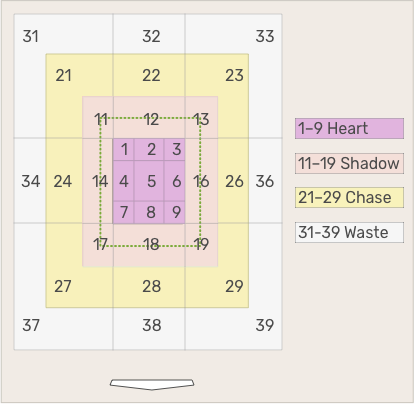
- There’s an even more granular view of the shadow zone, which splits it into pitches that are in the strike zone and in the shadow zone (SI-stats) and pitches that are in the shadow zone and outside the strike zone (SO-stats).
- Arm angle stats have been added by pitch type. Arm angle is defined as:
a horizontal line extending from the location of the pitcher’s throwing shoulder and the location of ball at the time of the pitch.
- Spin rate stats have been added by pitch type. Spin rate is defined as:
the spin on the baseball when the pitch is released. It is measured in revolutions per minute.
David Appelman is the creator of FanGraphs.
Oooh! I heard the discussion on EW about player heights being updated due to ABS measurements (Alex Bregman, your booster seat is now waiting). Where are player heights on FanGraphs sourced from? Will they be/are they from these new measurements? I’m now equally interested in a sortable list of player heights as I am bat speeds, so if you know where to find one it’d be appreciated!
And could we get ‘historical’ heights for players? I want to know who was juicing their height the most now that ABS incentivizes accurate declaration of height. Do players who add 2″ to their height hit better than the non-height-juicing members of their vertical group do they hit worse? These are the kinds important questions we need answered!
I am very curious to know what Soto’s chase rate on “chase” pitches is. That and what the average chase rate is on similar pitches so I know how far to extend my jaw
Alright so I just checked out Soto’s page and used Bryce Harper’s page (a guy who i know has a much higer O-swing %) to get a sense of the context for these numbers. As advertised, I saw the heart zone percentages and the shadow zone percentages, with the shadow zone being broken down further into in zone and out of zone.
Unfortunately I couldn’t find chase rate percentages on chase pitches, the stat I was initially looking for. There’s probably a way to do this, but I couldn’t figure it out on my phone.
So correct me if I’m wrong, but isnt that the most important stat when judging a player’s plate discipline? My understanding–and like I said, correct me if im wrong– is that no player can determine, within an inch or two, precisley where a moving ball is going to land by the time he has to make a swing decision. Ive been operating under thr impression that players with “good eyes” can track if the pitch will be, say, in the chase or waste zone but not where in the shadow zone it will be. Alas, even after the ball lands in the catcher’s mitt, players still have a hard time determining where in the shadow zone the pitch actually landed; to wit, the ABS success rate of minor leaguers was something like 55%, challenges that presumably all came on shadow pitches.
So if this is all correct, wouldn’t somebody’s chase rate on shadow pitches out of the zone just be a proxy for how often they swing in general? Yea Soto’s out of zone shadow rate swing percentage is much lower than Harper’s and that could mean he has a better eye than Harper. But Soto’s swing rate on shadow zone pitches in the strike zone is also much lower that Harper’s, so what does that tell you? Probably just that Soto swings less often.
To recap: if players cannot accurately determine within a couple inches where the ball is going than shadow zone in vs shadow zone out percentages arent the greatest indicator of plate discipline. Id prefer chase percentages on pitches in the chase zone, as that number would reflect a skill that some players actually have and others dont.
C-Swing% is the swing percent on pitches only in the Chase zone (not overall pitches). I believe that’s what you’re looking for? All our plate discipline metrics use only the pitches in the zone in the denominator.
For instance:
O-Swing% = Pitches Swing At Outside Zone / Number of Pitches Outside Zone
O-Contact% = Pitches Made Contact with Outside of Zone / Number of Pitche Swung at Outside the Zone
Ah perfect, thank you!
To the larger point, any of the Swing% metrics for a particular zone are going to strongly correlate with just regular old Swing%. Though, there may be certain circumstances where Swing% alone does not tell the full story and it may be worth drilling down further.
True, but I think shadow zone swing percentage correlates more closely with regular old swing percentage than do any of the other area of zone swing percentages. At least that makes sense to me intuitivley. If I were a writer here id gather all the necessary data, GIFs, and puns.
Yep, running the numbers, shadow zone swing% is a pretty good proxy for swing%.
There may be some exceptions, but they’re quite similar.
Have you ever considered breaking swing% out by count – before 2k, and 2k?
Will you have stats for ABS related calls so we can learn who is better and worse at using the system to fix bad calls? On the broadcast, for balls out of the zone, it shows how far out of the zone. I imagine every player who makes a challenge could have a score, with point for correct/incorrect, and also by how much they were wrong (larger numbers are bad), and possibly also by how much they were correct (smaller numbers are good).