Spencer Strider Undergoes Surgery, Will Miss Remainder of 2024 Season

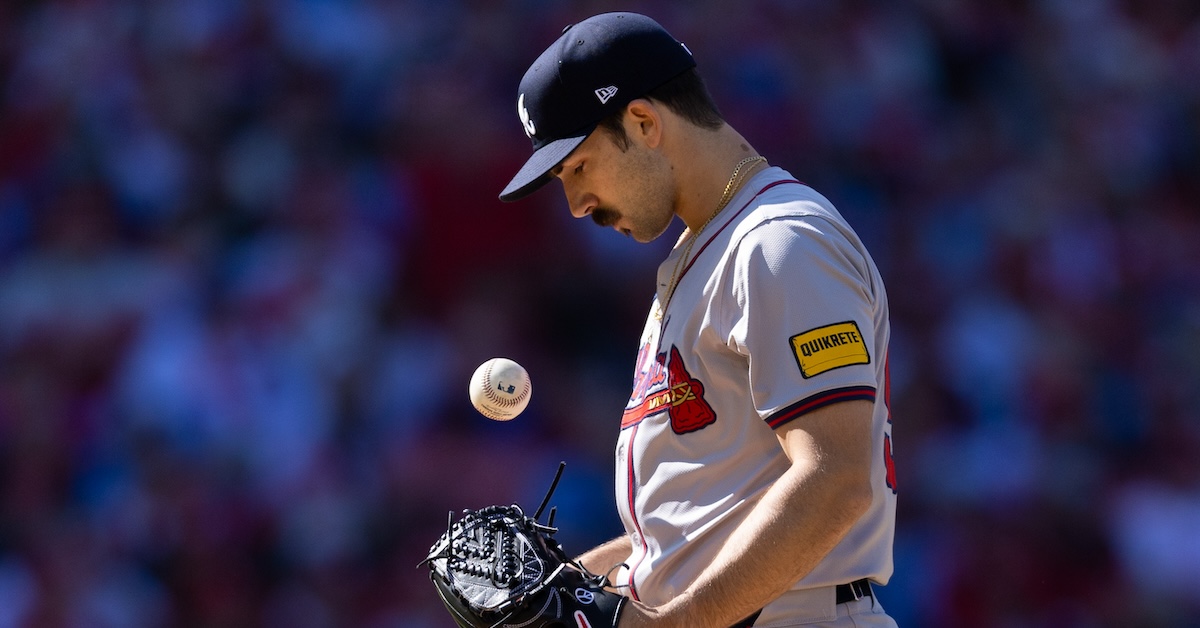
Two weeks ago, Spencer Strider’s arm appeared healthy. One week ago, the Braves placed Strider on the IL after an MRI of his elbow revealed a damaged ulnar collateral ligament. This Friday, Strider had internal brace surgery to support that UCL; he’ll miss the remainder of the season and perhaps some of next year recovering from it. That’s awful news for Strider, the Braves, and baseball as a whole. I know a good article structure when I see it. Let’s walk through each of those in turn, in decreasing order of how much I have to say about them.
For Strider, a second procedure shrouds the remainder of his career in mystery. His career trajectory was already essentially without precedent. He ascended from draft pick to prospect to reliever to ace with blinding speed, whipping unhittable fastballs and mind-bending sliders past batters with ease. He instantly became one of the best five or so starters in baseball, an NL Cy Young favorite, and one of the most exciting arms in the game.
Impressively, he did so without missing much time with injury. He made 32 starts last year and pitched 186 innings, a veritable pillar of durability by today’s standards. But injury was never far away. Strider throws phenomenally hard. In his two years at the top of the game, he had the third-fastest average fastball velocity among all starters, behind only Hunter Greene and Sandy Alcantara. He was only a few years out from Tommy John surgery, to boot; he missed the 2019 season after having his UCL replaced while pitching at Clemson.
Perhaps with that in mind, Strider signed a contract extension after his first transcendent major league season. He and the Braves agreed to a six-year, $75 million deal at the end of that 2022 season, just before he finished second in Rookie of the Year voting. That deal undoubtedly capped his earnings upside, but it also guaranteed him generational wealth. Without that extension, he’d be entering his final year of pre-arbitration salary, having cleared perhaps $3 million if things had gone really well. He’s still only cleared $2.7 million, but he also has $73 million in guaranteed money remaining, which undoubtedly softens this blow somewhat.
Strider’s future prognosis is murky. Rather than undergo a second Tommy John surgery, he opted to have an internal brace procedure. The brace is a suture that attaches to the existing UCL, as opposed to a complete replacement. As Cody Stavenhagen detailed at The Athletic, the TJ alternative has become quite popular in recent years, particularly at the amateur level. Avoiding a complete reconstruction for a second time – known as a “revision” – was surely appealing to both Strider and the Braves. Surgical techniques and technology have improved greatly, but there’s still a decent chance of failure; recovery rates from second TJs are hard to pin down exactly but probably hover somewhere in the 60-70% range. If there’s any good news there, it’s that the pitchers who do return seem to perform similarly to their pre-injury form.
Internal brace procedures have better recovery rates, but Strider will be blazing a new trail regardless. The internal brace is so new that there just isn’t much long-term data on how major leaguers perform after having it done. There’s particularly little data on pitchers who opt for an internal brace procedure after already having had a UCL replacement, as Strider did.
Per Jon Roegele’s excellent database, Lucas Giolito had a brace put in in lieu of a complete reconstruction this spring. So did Jonathan Loáisiga. Shohei Ohtani might have had a brace put in – he’s been vague when discussing it. Drew Rasmussen hasn’t returned to action yet, but he’s had two TJs and an internal brace.
Two minor leaguers, Connor Prielipp and Dax Fulton, are rehabbing from a brace after previously having had TJ. Kent Emanuel has had both and returned, though for just three major league innings. The ageless Rich Hill had an internal brace in 2019, eight years after a previous TJ. Matt Bush had both procedures a decade apart and briefly hit the majors again afterwards. The same is true for Jesse Hahn. John Fasola returned after a TJ/brace combo, only to have another TJ a year later. But that’s not a lot of data points, and only Hill is a clear success so far. Strider is one of the first high-velocity starters to go down this route at the big league level, so it would be foolish to assume we know what will happen with his elbow in the future.
That puts Atlanta in familiar territory: short on starting pitchers. Max Fried missed most of last year thanks to injury. Charlie Morton missed the 2023 playoffs. Michael Soroka looked like a rotation mainstay when he debuted, only for repeated injuries to derail his career. Injuries have been a way of life for the Atlanta rotation even as the team has run roughshod over the NL East.
Just so we’re clear, I still think the Braves are going to romp to a division title this year, even without Strider’s help. I mean, have you seen their offense? Our playoff odds think they’re 88% likely to win the division, the highest such probability in baseball by a mile. I don’t think they’d be favorites if they had to have a fan come down from the stands and fill Strider’s rotation spot every fifth day, but it would be close. Getting to use a real baseball player in that position? I think they still have it in the bag.
The bigger question is what this does to Atlanta’s playoff rotation, and the Braves now have all year to figure that out. Will Reynaldo López keep his hot start going? Will Fried bounce back? Will Morton and Chris Sale stay healthy? If the answer to all three of those questions is yes, the Braves might not have to do anything. If not, they might turn to their minor league prospects. Their Triple-A rotation is filled with guys who were previous big league starters for them: Ian Anderson, Bryce Elder, Huascar Ynoa, Dylan Dodd, and AJ Smith-Shawver. Trades are an option as well. No one gets better by losing a pitcher like Strider, but I think Atlanta is well positioned to at least minimize the sting.
The same might not be true for the league as a whole. As Jay Jaffe documented last week, Strider’s injury is just one of many high-profile elbow injuries in 2024. We haven’t learned anything conclusive about this phenomena since, even as several notable pitchers weighed in with their thoughts. One thing that seems clear is that we aren’t anywhere near figuring out how to stop this problem. Pitching, as performed by current-day big leaguers, leads to arm injuries. It also leads to tremendous riches if done well, and doing it well seems to be correlated to doing it with increased injury risk.
So get well soon, Spencer Strider. Your team and the league as a whole would love to have you back as soon as possible, trolling Phillies fans and striking out the side with aplomb. In a year full of bummer injuries, this is another tough one. The only silver lining is that Strider already signed a contract that minimizes how much this hurts him in the long run, and that his team is built robustly enough that they’ll be able to weather the storm better than you might expect when the Cy Young favorite goes down.
Ben is a writer at FanGraphs. He can be found on Bluesky @benclemens.
“Internal brace”?
Isn’t this the 1st step down the inevitable road to the “bionic arm”? We know that’s where this is going.
Mustachioed pitching machines?
I hope so