
Szymborski’s 2026 Booms and Busts: Pitchers
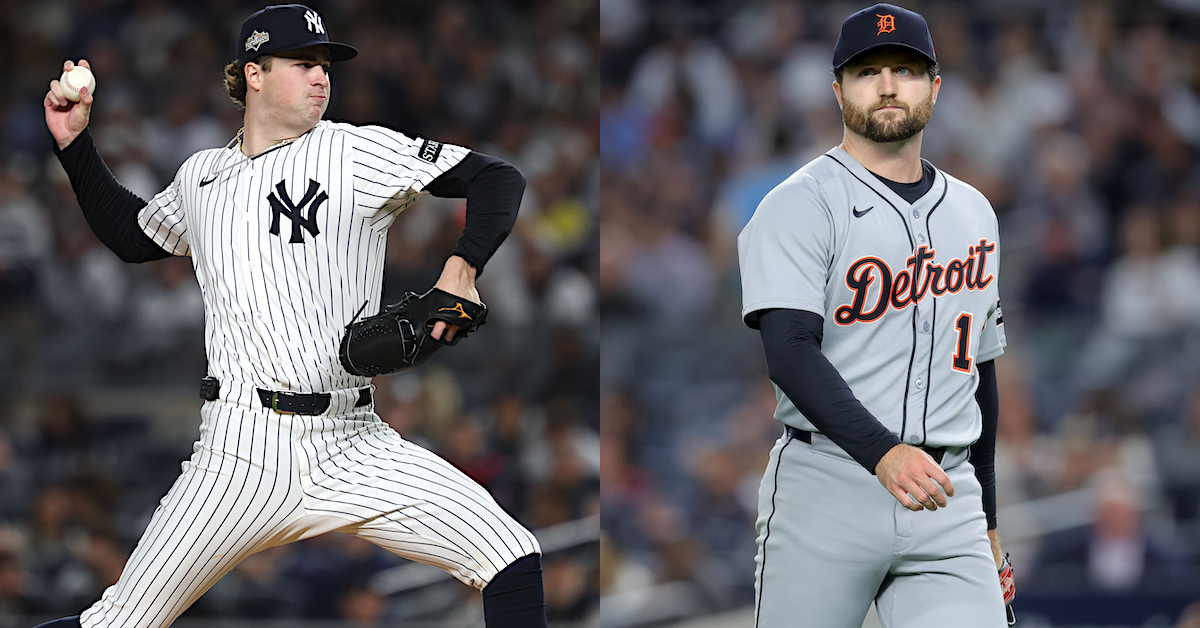
When you run a lot of projections, one thing you have to get used to is being very wrong, very often. The ZiPS projections generally run about 4,000 players every year, meaning you should expect around 800 players to either achieve their 90th-percentile projection or fall short of their 10th-percentile projection. Those hundreds of results will invariably be quite a distance away from the standard midpoint projections that you see.
As is my ritual, it’s time to run my two articles discussing my favorite booms and busts of the upcoming season. After looking at the hitters last week, today we turn our attention to the pitchers. But just to keep the ritual of humiliation fully transparent, we’ll start by looking at the pitchers I selected for last year’s booms and busts.
| Player | ERA | FIP | ERA- | WAR |
|---|---|---|---|---|
| Jack Leiter | 3.86 | 4.15 | 95 | 2.3 |
| Spencer Schwellenbach | 3.09 | 3.56 | 73 | 2.4 |
| Brandon Pfaadt | 5.25 | 4.22 | 123 | 1.7 |
| Zebby Matthews | 5.56 | 3.79 | 135 | 1.4 |
| James McArthur | NA | NA | NA | 0.0 |
| Graham Ashcraft | 3.99 | 2.72 | 90 | 1.6 |
| Caden Dana | 6.40 | 6.48 | 154 | -0.4 |
| Ian Hamilton | 4.28 | 4.39 | 106 | 0.0 |
| Player | ERA | FIP | ERA- | WAR |
|---|---|---|---|---|
| Jacob deGrom | 2.97 | 3.64 | 74 | 3.4 |
| Javier Assad | 3.65 | 4.24 | 88 | 0.3 |
| Luis Castillo | 3.54 | 3.88 | 92 | 2.6 |
| Jackson Jobe | 4.22 | 5.18 | 103 | 0.1 |
| Alexis Díaz | 8.15 | 8.51 | 189 | 0.6 |
Thank goodness I was wrong about Jacob deGrom, as he managed to have his first essentially healthy season in forever! I think it’s finally time for me to get off the Brandon Pfaadt train, meaning he’ll probably have his breakout this year. A real mixed bag, but it was overall a less bleak result than I had with the hitters!
The Booms!
Chase Burns, Cincinnati Reds
Coming off flexor pain last year? Mixed results in spring? Well, that’s a breakout pick if I ever heard one! Burns didn’t come into the majors last year completely polished, occasionally proving a bit too hittable when he fell behind in counts. But the expectation shouldn’t have been that he was a finished product, with only 13 minor league games under his belt since being the second pick in the 2024 draft. With a bit more experience, I believe he’ll have little trouble overcoming his relatively minor issues because he does the big things so well: He misses bats, he finishes off hitters, and he doesn’t have a hostile relationship with the strike zone. It’s hard to fake fanning 14 batters per nine, as he did as a rookie. Injuries have thinned out the Reds enough that he’s not going to have to fight for early season starts, and I expect him to solidify his spot in the rotation fairly quickly.
Eury Pérez, Miami Marlins
Pérez was solid in his return to the Marlins last summer, following his 2024 Tommy John surgery, but as one would expect, he wasn’t quite as dominating as he was pre-surgery. Now, in his first full season back on a big league mound, I expect him to get back to that level; don’t forget, he hasn’t even turned 23 quite yet! He’s gotten tagged hard a few times this spring, but I really like the tinkering he’s done with his changeup, and his contact rate is down around an immaculate 60%.
Mick Abel, Minnesota Twins
When the final ZiPS projection update goes up on Wednesday morning, Abel will have one of the most improved projections as the result of spring training. Last season was a poor one for him, but he showed a great deal of progress in one respect: Throwing strikes. After walking six batters per nine at Triple-A in 2024, he cut more than a third off that number in both the minors and majors last year, though he still wasn’t showing results commensurate with how filthy his stuff has been at times. But that hasn’t been a problem this spring, and his changeup looks nastier than ever.
Joe Boyle, Tampa Bay Rays
There’s a real risk that there’s some wish-casting involved at this point, but Boyle strikes me as the type of guy, like Dellin Betances in the near-long-ago, who has enough stuff that things could click into place quickly if the fates are kind. That’s not the case right now, and because of his continued command issues in spring training, it was perfectly reasonable for the Rays to option him to Triple-A to start the season. But Tampa Bay is a great organization at fixing flawed pitchers with upside, and if he doesn’t show progress as a starter, I think he could be a dynamite reliever, with a simpler gameplan making his lack of command easier to overcome.
Matthew Liberatore, St. Louis Cardinals
Spring training stats aren’t as important as regular season stats, but as Dan Rosenheck demonstrated a decade ago, they do mean something. ZiPS has always kind of liked Liberatore, even when he struggled initially in the majors, and given that he’s been a swing-and-miss beast this spring, I’m going to give him a nod here. Further cementing things is that Liberatore’s changeup, like Abel’s above, has looked better to me, and it’s something he really needs to stifle right-handed batters.
Ben Brown, Chicago Cubs
Brown didn’t impress in 2025, but he did show signs of progress, seemingly getting his walk rate under control even while giving up too many runs. But the .347 BABIP he allowed in 2025 isn’t sustainable — that’s worse than the collective BABIP allowed by batters dragooned into being pitchers — and especially not on a team that’s as good defensively as the Cubs. I already liked Brown entering the offseason, and now that he’s throwing a 97-98 mph sinker, a pitch that is just begging to exist when you have Dansby Swanson and Nico Hoerner standing behind you, I’m even more sold.
Cam Schlittler, New York Yankees
Schlittler was originally expected to miss his first go-around in the rotation due to the Yankees’ being careful about his recent back issues, but he now has the go-ahead for the opening series against the Giants. We didn’t get a ton of Schlittler this spring because of that sore back, but he’s mixed up his repertoire somewhat, doubling the rate he throws sinkers from last season and throwing his cutter three (!) miles an hour harder than in 2025. There was a lot to like about him last year; the only thing I don’t like about him this year is that the Orioles don’t have him.
Mitch Bratt, Arizona Diamondbacks
It won’t be immediately, but I think Bratt has the potential to be that control prospect who is able to break through and succeed in the majors. The window for him to have success may be relatively narrow, but he hasn’t been relying on weak contact from minor league hitters as much as other similar types frequently do, and he misses just enough bats that I give him a fighting chance. There are a lot of questions in Arizona’s rotation, and I think he’ll get a chance at some point later this season. He’ll have to survive the Pacific Coast League first, which ought to be a good test of whether he can avoid getting hit hard.
The Busts!
Reynaldo López, Atlanta Braves
López missed the entire 2025 season due to a shoulder injury, so I’m not surprised that he’s been careful with the velocity this spring. But there are limits, and four mph is a lot of missing oomph, and very concerningly, he hasn’t really gotten stronger as the spring has gone on, as you’d expect from a guy who is just trying to be careful in a return from injury. He’s falling behind in counts more than he should be, and he’s just not getting swings-and-misses. I think he’s a huge risk for an already-risky Braves rotation in 2026.
Casey Mize, Detroit Tigers
The signing of Framber Valdez this winter pushed Mize further down in the Tigers rotation, so they don’t actually need him to be a no. 2 starter or anything to make the playoffs. But his command has been a trainwreck this spring, and his stuff just isn’t electric enough for him to achieve much success when he’s throwing first-pitch strikes under 50% of the time. I actually like how his splitter has developed, but it’s all for naught if he doesn’t have the consistency needed to leverage that pitch.
Carlos Estévez, Kansas City Royals
The Royals have dismissed the idea that Estévez’s missing velocity is a problem, though you wouldn’t expect them to publicly throw their closer under the bus, especially not before the start of the season. But the fact is, the explanation going around that he always pitches with less velocity in the spring doesn’t hold water. Yes, he’s historically thrown his fastball softer in spring training, but previously, he would only drop his velo from his regular-season average of 96-97 mph to 93-94 — certainly not to (cue Doc Brown voice) 88 mph. And the thing is, there were already things to worry about from last year. Despite his excellent 2.45 ERA, he struck out only 7.36 batters per nine, meaning that, on a rate basis, more than a third of his strikeouts from just two years earlier disappeared into the ether. That was a bad sign for Alexis Díaz going into last season, and it’s a bad sign for Estévez now. There’s a real chance Matt Strahm spends some time this year as Kansas City’s closer.
Michael Wacha, Kansas City Royals
Wacha always seems to be on the edge of disaster, but he just rears back and tosses his excellent changeup, and invariably lives to fight another day. While Wacha does not rely on getting swings-and-misses, there are limits to this approach, and once you see a strikeout rate drop into the six batters per nine range, the margin for error becomes tiny. I’m overall quite confident in Kansas City’s rotation, but I think Wacha is where Kyle Hendricks was in 2023. I’ll make you look up what happened.
José Berríos, Toronto Blue Jays
Berríos and the Blue Jays appear to have patched things up after friction last fall, but I don’t have a ton of confidence that he’s about to have a bounce-back season. And that’s not because of the stress fracture in his elbow that kept him out of the World Baseball Classic and will prevent him from starting the season on the roster. Rather, his stuff has been sliding for years, and whether you like Stuff+ or PitchingBot, there was almost nothing to like in his repertoire the last few years. As such, it’s hard to say that his 4.79 xERA in 2025 was a simple fluke. He’s simply not the pitcher he was in Minnesota, and I think there’s a real chance that he falls out of the rotation during the season not too long after his return. Concern about Berríos is one of the reasons I was advocating for the Blue Jays to continue to be aggressive at signing pitching during the offseason, even after landing Dylan Cease.
Dan Szymborski is a senior writer for FanGraphs and the developer of the ZiPS projection system. He was a writer for ESPN.com from 2010-2018, a regular guest on a number of radio shows and podcasts, and a voting BBWAA member. He also maintains a terrible Twitter account at @DSzymborski.
Not a single hot take on that bust list.
We should be fairer to Wacha, who has been a model of consistency.