
White Sox Bring Anthony Kay Home From Japan
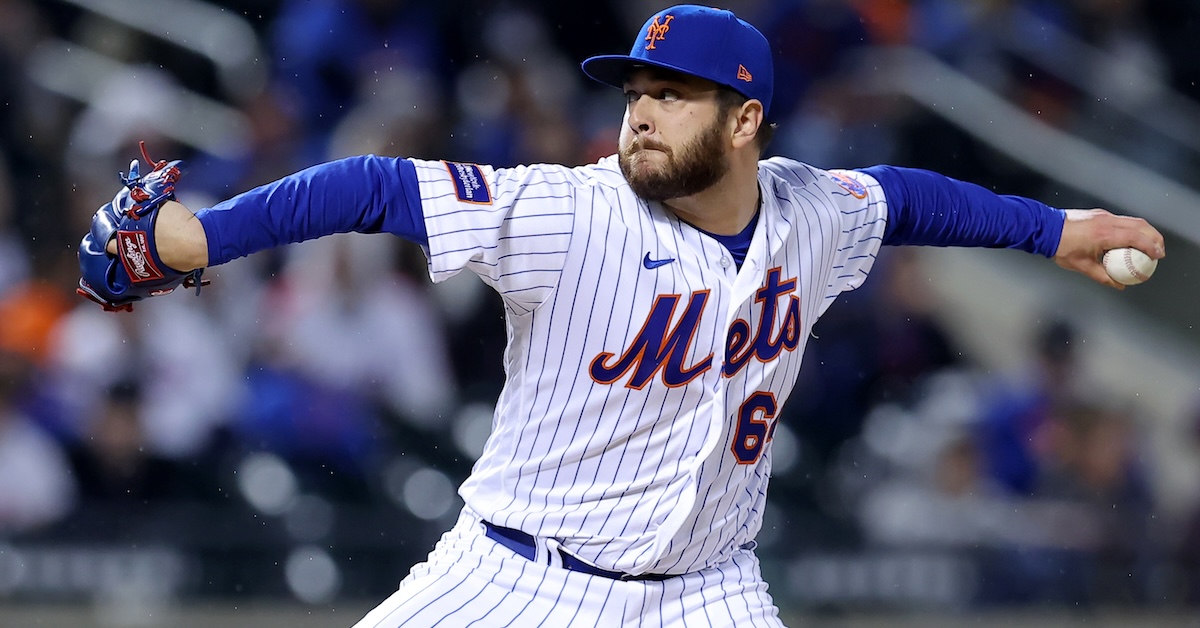
The Chicago White Sox got on the board in free agency on Wednesday morning, inking left-handed pitcher Anthony Kay to a two-year, $12 million contract with a $10 million mutual option for 2028. Kay will make $5 million in each of the next two seasons, with a $2 million buyout due if the mutual option isn’t exercised.
It’s been a huge week for the trans-Pacific starting pitching exchange, with Matt Manning going over to the KBO and Cody Ponce coming back in the other direction. Kay spent the past two seasons pitching for the Yokohama DeNA BayStars of NPB — and pitching quite well, it bears mentioning: In 24 starts and 155 innings this past season, Kay posted a 1.74 ERA and a 2.55 FIP. That ERA is a couple tenths better than what Tatsuya Imai, this offseason’s hot Japanese pitching import, posted this season.
The White Sox have shopped in the expatriate pitching market before; at the risk of invoking Erick Fedde in a third blog post in as many days, Chicago signed the former Nationals righty to a two-year, $15 million contract in the aftermath of a dominant 2023 season in the KBO. Fedde was terrific when he first returned to North America, posting a 3.11 ERA in 21 starts for the Sox, who dealt him to St. Louis at the 2024 trade deadline. Fedde collapsed totally in 2025, but by the time that happened he wasn’t Chicago’s problem anymore, which made his signing one of Chris Getz’s greatest successes as a GM.
It’s therefore easy to understand why Getz would want to revisit that particular spot on the craps table. And while Kay was even less effective than Fedde in his first major league stint, there’s a lot to like about how he developed during his time in Japan.
The 30-year-old Kay is a stocky 6-foot left-hander with a low three-quarters delivery. He’s got a compact, kind of Travis Wood-y delivery that generates little extension but some interesting horizontal movement on his breaking ball.
The Mets took an interest in the local kid, drafting him first out of his Long Island high school, and then again after a stellar career at UConn. Before he could make the majors, Kay got shipped to Toronto in the Marcus Stroman trade, and struggled to get a foothold in the big leagues. He appeared in every major league season from 2019 to 2023, but he topped out at 33 2/3 innings in 2021, which makes up about 40% of his career total. Kay got waived twice and then non-tendered in the span of about eight weeks at the end of 2023, at which point he (quite reasonably) decided to try his luck in Japan.
It was there that Kay really started to make some changes. In his first stint in American pro ball, Kay had above-average fastball velocity for a lefty — consistently in the 94 to 95 mph range — but with dead zone movement and no standout secondary pitches. He tinkered with his slider, tried a cutter and a changeup, and… to be honest, you can tell how well that worked out by the fact that he went to Japan in the first place.
Last month, Kay went on Robert Murray’s podcast and explained how his repertoire has evolved after two seasons abroad. He said throwing four-seamers at the top of the zone didn’t work because Japanese hitters, who tend to have flatter swings than hitters trained in the Americas, would foul that pitch off all day. That forced Kay to develop a sinker, and after that everything clicked.
Kay’s current portfolio of offerings includes three fastballs — four-seamer, sinker, cutter — along with a sweeper, a changeup, and a show-me curveball. By mixing the fastballs up, Kay turned himself into a soft-contact monster. He actually ran a slightly lower K% in Japan than he did during his brief career in MLB, but he paired that with groundball rates well over 50% and HR/9 ratios in the 0.4 range. He was doing, in NPB, what guys like Framber Valdez and Cristopher Sánchez have been doing over here.
There are obvious reasons not to expect Kay to come back to the U.S. and pitch like prime Brandon Webb right off the jump. Kay sought out a sinker in the first place because Japanese hitters attack pitchers differently than hitters from the Americas do. In all of NPB last season, only two players hit more than 23 home runs.
And when you look at the individual leaderboards, you can see evidence that the quality of play is lower there as well. We know what Tyler Nevin, Yoshi Tsutsugo, and Trey Cabbage can do against major league pitching, and it’s not “finish in the top 10 in the league in homers.”
While the White Sox would throw a parade if Kay came back over here and pitched like Valdez or Sánchez, I suspect that even their expectations for him are somewhat more modest. That’s fine; Kay doesn’t have to even be good to be worth $6 million a year to a team that’s expected to finish last in a bad division. He just has to soak up enough innings to get Chicago’s defense off the field.
This much he can do. Kay tore his UCL in his draft year, but since then, he’s been positively rubber-armed. He made at least 23 starts and threw at least 120 innings in each of his first two full minor league seasons. Then came the pandemic, then a move to the bullpen, but once he moved back into the rotation for Yokohama he was totally healthy on a 24-start workload in both of his seasons.
Kay joins a White Sox rotation currently occupied by Shane Smith, Sean Burke, Davis Martin, and Jonathan Cannon. All five of those guys threw 100 or more innings last season. So did Mike Vasil, who worked almost exclusively out of the bullpen. None of them had more strikeouts than innings pitched. None of the five returning White Sox innings-eaters had an xERA or FIP below 4.00.
See, the White Sox aren’t in the bat-missing part of their rebuilding cycle yet. That’ll come when Noah Schultz and Hagen Smith get promoted, or maybe later, or not at all.
The total vacancy of Chicago’s major league project can be demonstrated with the following bit of trivia: If Kay’s 2028 mutual option gets declined (which it will be, as all mutual options are), he’ll be owed a $2 million buyout. That buyout is further in the future than any other player salary obligation the White Sox have. In fact, Kay and Andrew Benintendi are the only current White Sox players with a guaranteed contract for 2027.
Kay probably isn’t going to follow the Merrill Kelly career path, reinventing himself overseas so he can return to almost a decade of lucrative mid-rotation excellence. (Insofar as such a pitcher existed in this free agent class, it was probably Ponce.) But he’ll soak up innings, keep the ball on the ground, and generally avoid the kind of blowup that turns a forgettable 100-loss team into an abysmal 110-loss team. For a club like the White Sox, there are much worse ways to spend $6 million.
Michael is a writer at FanGraphs. Previously, he was a staff writer at The Ringer and D1Baseball, and his work has appeared at Grantland, Baseball Prospectus, The Atlantic, ESPN.com, and various ill-remembered Phillies blogs. Follow him on Twitter, if you must, @MichaelBaumann.
This move makes so much sense for the White Sox. He’s an innings eater with upside! That’s the kind of pitcher every rebuilding team would want.
Also a good landing spot for him he’s gonna get thirty starts health permitting even if he struggles some. I suspect if he pitches well he’ll be moved like Fedde was at the deadline.