Welcome to another edition of Five Things I Liked (Or Didn’t Like) This Week. I got a chance to see many of my favorite baseball happenings this week: catchers making tough plays, exciting pitching matchups, and stars of the game at their absolute best. We also have plenty of goofy but delightful coincidences, just as Five Things patron saint Zach Lowe intended. A quick programming note: I’ll be on vacation, a nice restorative pre-deadline trip, for the next week and change. Enjoy baseball in the meantime – it’s a wonderful time of year for it.
1. Athletic Catchers
It’s amazing how much baseball knowledge your brain absorbs without actively thinking about it. For example, when you see an outfielder throw the ball home to cut down a runner trying to score on a single, you’ll immediately anticipate that the batter who hit that single might try to advance to second base. You might not even realize you’re thinking this. It’s just the natural timing of the sport. Long throw, cutoff man missed — how in the world is the catcher going to attempt a tag and then find a way to get the ball down to second base? It just doesn’t happen.
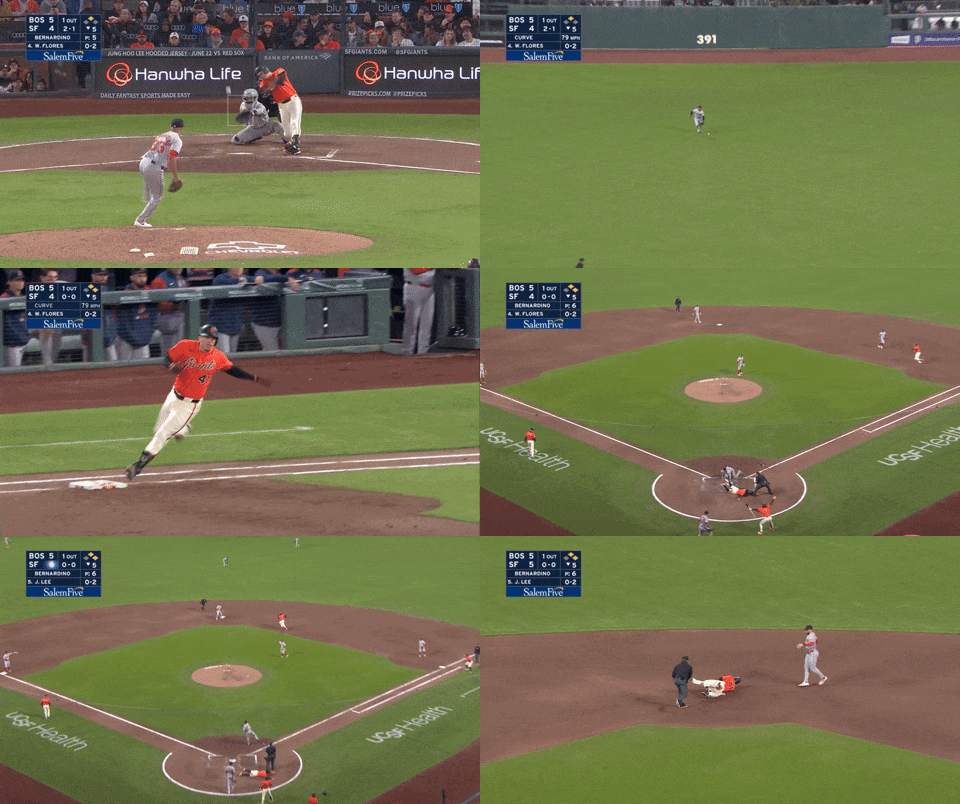
Or, well, it’s not supposed to happen. But Carlos Narváez doesn’t care what heuristics are stored in your brain:
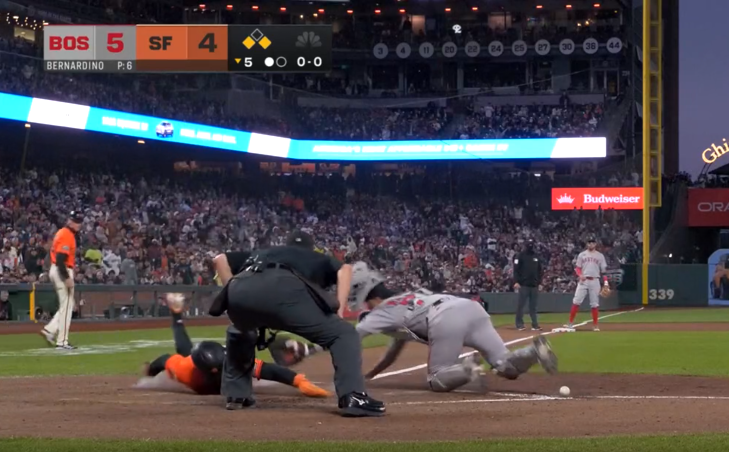
What a weird play. The Red Sox correctly played to prevent the runner from scoring, and that let Wilmer Flores round first and get a great look at the play at the plate to see if he should advance. Right around this point, Narváez seemed to have no shot at throwing out Flores:
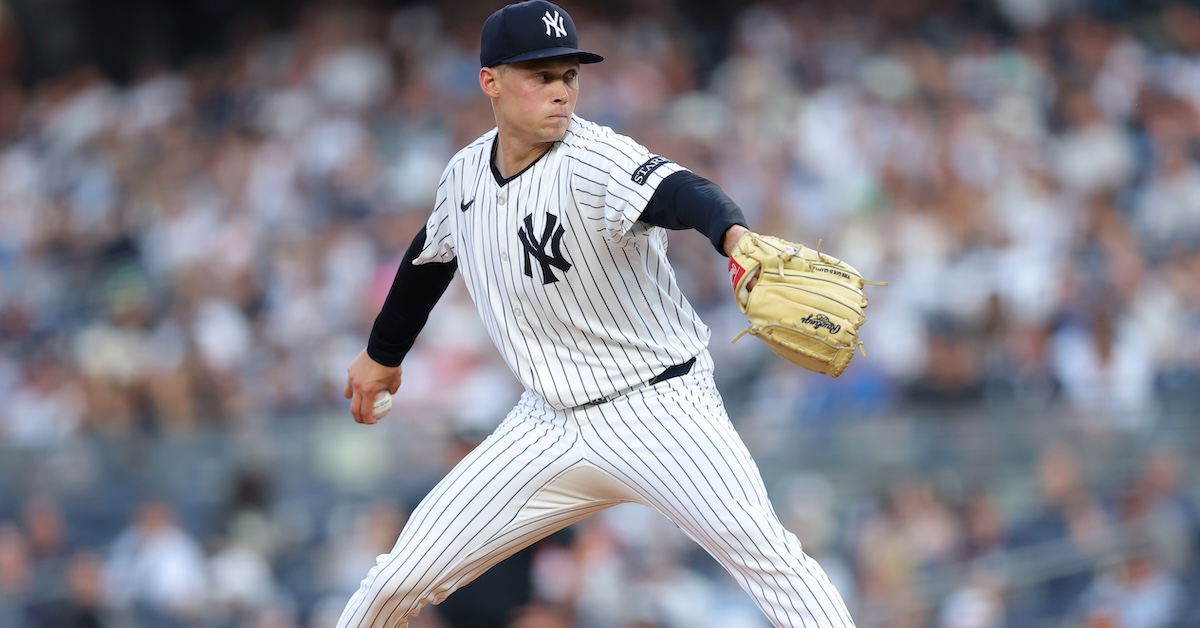
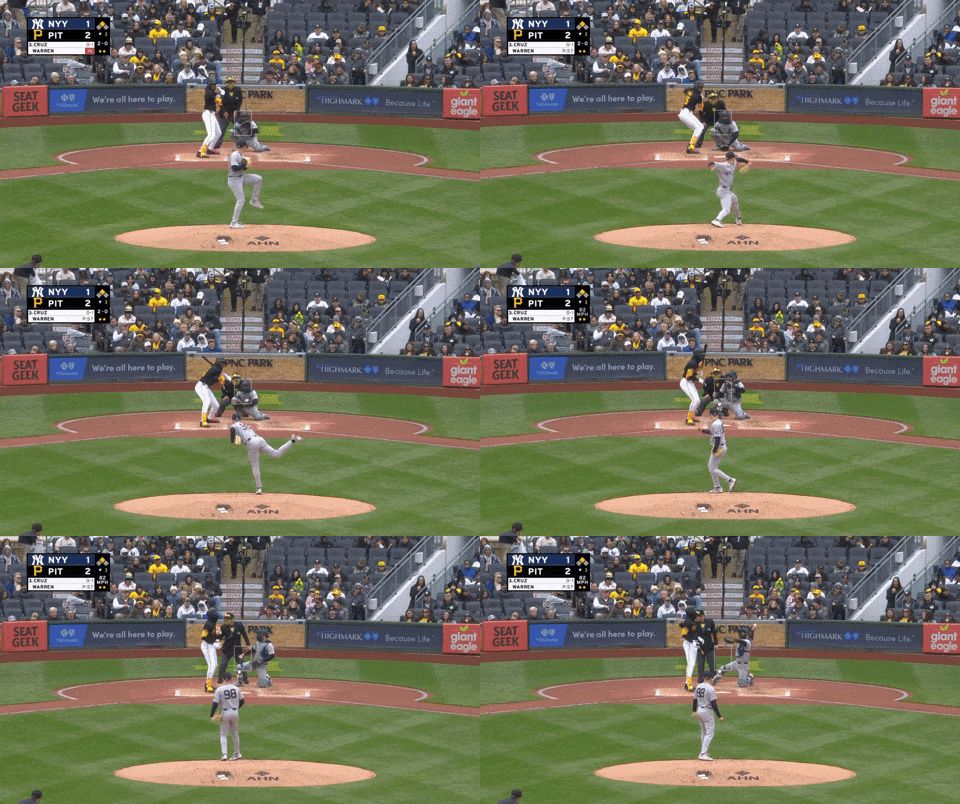
Will Warren’s best pitch is a sweeper. That’s the case for a lot of pitchers in baseball today, of course, but his rendition is almost the platonic ideal of the pitch: low-80s velocity, very little vertical movement in either direction, and a huge, comic-book-exaggerated horizontal hook. The ball briefly looks possessed on its flight home:
No, your eyes aren’t deceiving you: That’s a really sweep-y sweeper. No one in baseball gets more horizontal movement on his sweeper than Warren, in fact. From his slingy, low-three-quarters arm slot, he generates the sweep the pitch is so known for, working it across the plate to righties or darting it in to steal a front-door strike against lefties. It’s Warren’s signature pitch, the secondary offering he uses most frequently, and he has it on a string. He throws it more frequently when behind in the count than ahead, believe it or not, and floods the zone with unerring precision.
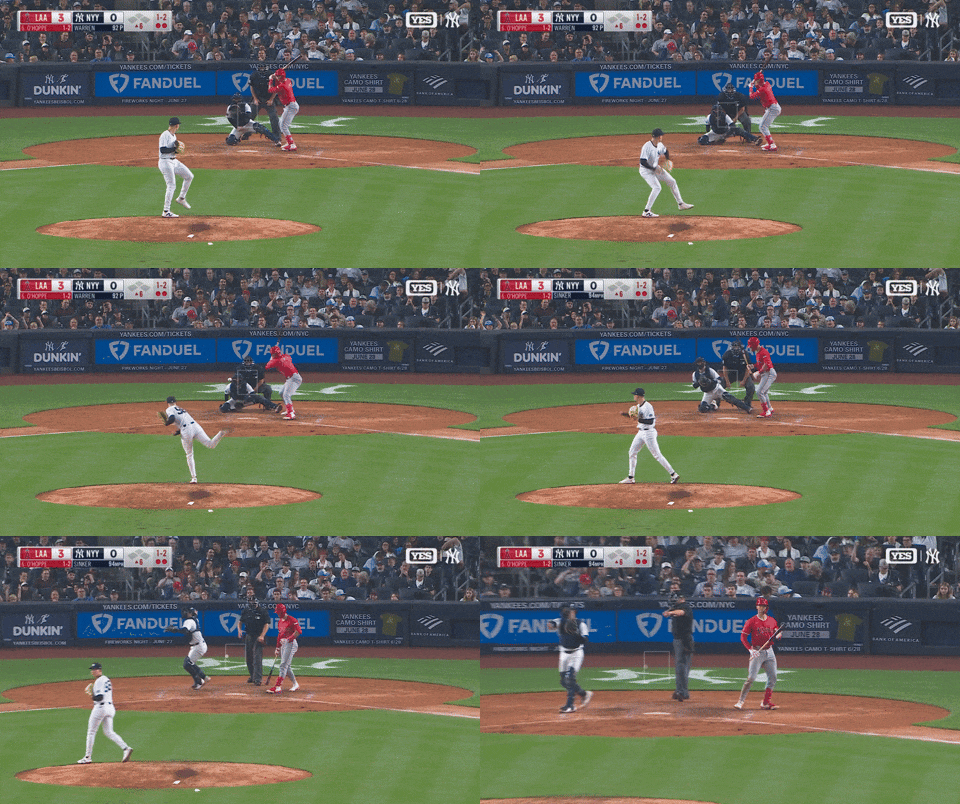
The natural pairing for that sweeping slider? Warren’s excellent sinker, which dives and tails arm side, falling four more inches and tailing two more inches than your average 93-mph sinker. That movement confuses opposing hitters to no end. He’s induced called strikes on around a third of the two-strike sinkers he’s thrown all year, the best mark in the majors. You can see why:
That, in a nutshell, is the promise of Will Warren. Major league pitchers are increasingly adopting a sinker/sweeper approach when they face same-handed opposition, and Warren is one of the best there is at sinking and sweeping. That was the promise that made him a Top 100 prospect – two elite pitches, the ability to mix in a four-seamer, changeup, and curveball to keep batters off of those two premium offerings, and enough command to sew it all together. It’s working. Though he’s suffered from poor sequencing luck (65.2% left-on-base rate, one of the lowest in the majors among starters), his 2.88 FIP, 3.37 SIERA, and 3.58 xERA all point to his effectiveness so far. Read the rest of this entry »
When Riley Greene debuted in 2022, he had a tiny bit of a strikeout problem. His overall line – .253/.321/.362 in cavernous Comerica Park – was roughly league average, but it would have been better than that if he had struck out less than 28.7% of the time. Over the subsequent two years, he reined that issue in some: 27.4% in 2023 and 26.7% in 2024. He also got better at the plate while doing so. And this year, he’s off to a scorching start, .291/.345/.530 with a career-best 145 wRC+. So he conquered the strikeout demons, right? Wrong. He’s striking out a ghastly 30.7% of the time. This requires further explanation.
One of the classic paradoxes driving the way baseball looks today is that strikeouts don’t appear to be as bad for hitters as one might think. There’s essentially no correlation between batter strikeout rate and overall batter production. You could crunch the numbers to verify that – or you could just consider Luis Arraez and Aaron Judge. But while we pretty much all know this by now – the Judges and Harpers and Ohtanis of the world crack a few eggs while they’re depositing omelets over the outfield fences – it doesn’t feel as true at the extreme high end of the spectrum. After all, Joey Gallo’s outlandish 38% strikeout rate obviously held him back. But Gallo is the easiest example, and discussing his strikeout woes doesn’t quite prove a whole lot. So let’s look at the 10 hitters striking out most this year:
Aside from Greene, that’s not an impressive group. Stowers is the best of the bunch, but even including him, the aggregate statistics are quite poor. This isn’t some list of overmatched hitters doing absolutely nothing right, ether; there’s fearsome power here pretty much across the board. They’re just striking out so much that the overall package doesn’t work. So why does Greene look so different from the rest?
It starts, as MLB.com’s Jared Greenspan pointed out, with aggression. Greene spent his first years in the majors as a patient hitter, chasing less often than average and taking a few pitches in the zone as the price of his patience. My favorite proxy for hitter aggression is how often they swing at first pitches in the strike zone. The league as a whole swings at about 45% of such pitches. Greene was right around there in his first three years in the big leagues: 42.4%, 45.2%, 46.1%, respectively. Then he decided to stop letting those cookies go by. This year, he’s swinging at 56% of first-pitch strikes.
The reason for this is simple: These are good pitches to hit. From 2022 through 2024, Greene put up great numbers when he made contact with a first-pitch strike. He batted .425 and slugged .770 on them, with underlying contact metrics to match. He’s doing even more damage this year, .448 with a .966 slug. More importantly, though, he’s damaging these pitches more frequently because he’s swinging at them more often. These tend to be the best pitches to hit all plate appearance; why not take a big hack at them?
There’s a cost to doing this. Greene is also swinging more often at bad first pitches; his 0-0 chase rate is up to 18.5% from roughly 12% in his career before the season began. That sounds bad, but consider that he’s upped his in-zone swing rate by 10 percentage points. Because of this aggression, he is no longer taking as many hittable pitches for strikes. Take a look at how often he’s gotten ahead, fallen behind, and put the ball in play over time:
Riley Greene’s First-Pitch Results
Year
In Play
0-1
1-0
2022
8.8%
52.1%
39.0%
2023
8.0%
49.9%
42.2%
2024
9.1%
51.2%
39.7%
2025
10.2%
49.1%
40.7%
As you can see, this has been a great trade-off. He’s putting the ball in play more frequently than ever and falling behind less often as a result. Aggression pays, particularly early in the count and particularly for hitters as powerful as Greene.
That smidgen of extra production against hittable pitches in early counts helps explain some of Greene’s boosted production on batted balls this year – his .525 wOBACON and .504 xwOBACON are both career highs (here’s why I like these BACON stats). Want to mash the ball? Aim at easier pitches.
That said, Greene’s aggressive approach to pitches in the zone has come with some swing-and-miss downside. Break the plate down into more than just “in or out” and you can see the trade-off more clearly:
Riley Greene’s Swing% By Zone
Year
Heart
Shadow-In
Shadow-Out
Chase
Waste
2022
69.3%
58.3%
44.7%
22.5%
4.0%
2023
75.2%
60.7%
39.7%
21.8%
5.9%
2024
72.9%
58.3%
38.0%
17.5%
3.7%
2025
78.0%
64.3%
46.6%
25.7%
5.9%
Naturally, Greene is swinging more at everything in his attempt to drive more hittable pitches. That makes sense; he didn’t simply wave a magic wand and start swinging at the good ones more without adjusting his approach to all pitches. He’s not hacking blindly at everything off the plate, or even close to that, but it makes plenty of sense that he’s taking a few more ill-advised swings along with all the extra good ones.
Normally, you’d expect this to be a self-correcting loop. Greene gets more aggressive, so pitchers leave the strike zone more often, which tilts Greene back toward selectivity as he gets ahead in the count more often and can choose pitches to hunt. Early in the count, pitchers are treating him about the same as always – he’s powerful, and so they try to nibble around the corners of the zone, accepting extra balls in exchange for avoiding meatballs. But with two strikes, particularly if you exclude 3-2 counts, they’re not giving him so much as the time of day. He sees strikes on a mere 35.3% of 0-2, 1-2, and 2-2 counts, one of the lowest marks in baseball.
That feels like a wise adjustment by opposing pitchers. This guy is powerful and wants to swing, so why bail him out by giving him something to hit? So he faces a steady diet of breaking balls in the dirt, high fastballs, sinkers off the plate in, basically everything you can think of. There’s an adjustment to be made here, starting aggressive and dialing it back with two strikes instead of maintaining that aggression all the way through. In 2024, he chased 30.3% of the time in those counts. This year, he’s up to 39.1%. That’s from “much less than average” to “more than average” if you’re keeping score at home.
The end result of this newfound aggression and pitchers’ avoidance of the zone is that Greene is striking out on 22.8% of the two-strike pitches he sees, the highest mark of his career. He’s also getting to two-strike counts more frequently thanks to his early-count swings. He’s fouling more pitches off than ever before, as well. That comes with the swing-hard-early territory; Greene will happily take some foul balls in exchange for all the damage he’s doing when he keeps the ball fair.
As far as I can tell, Greene is like no one else in the high-strikeout cohort. He’s not up there because he’s a helpless hacker who can’t make contact. He has a good sense of the strike zone, one he’s displayed in multiple seasons. His swing is geared for power, so he’ll always swing over his fair share of balls, but plenty of hitters with power swings still have good two-strike approaches. Greene just hasn’t put together his new early-count plan – attack pitches in the zone and accept a few extra chases to do it – with a two-strike approach. He’s chasing too often, and as best as I can tell, it’s because he’s swinging more frequently than ever before early in the count. It’s tough to switch mental gears, particularly while you’re learning a new approach, and I think Greene has fallen into that trap so far.
All this is to say Greene is hardly doomed to strike out 30% of the time for the rest of the year. In fact, I think his early-count aggression will end up lowering his strikeout rate, not raising it. He’s giving pitchers fewer easy options by hunting drivable pitches early. And in previous seasons, he’s already demonstrated the ability to tighten up and manage the zone late in the count. He’s still just 24 years old and only in his sixth year of professional baseball (excluding the canceled 2020 minor league season). Unlike most of the players who strike out as often as he does, he seems to have no fatal flaw that will keep him in that group. It’s just a matter of making all the parts of his ever-improving game work together, and I definitely wouldn’t bet against him fixing it sooner or later.
It’s a credit to his incredible talent that his horrid strikeout rate hasn’t really mattered so far. I love his new approach this year overall. When you have this level of power, letting early-count strikes go by is a cardinal sin. I think he’ll figure out how to modulate that as necessary – when he gets behind and pitchers start fishing for strikeouts, basically. But if you’re looking for a testament to Greene’s talent, I can’t think of any better one than his performance this year. He’s striking out a truly unconscionable amount while he tries to change the way he works at the plate, and yet it doesn’t matter. He’s just that powerful, and even though he’s aggressive, he’s not flailing pointlessly at pitches out of the zone and blunting his results on contact. The strikeouts will almost certainly come down. The new, early-count damage? That’s here to stay.
Welcome to another edition of Five Things I Liked (Or Didn’t Like) This Week. I won’t try to slow-play it; there was nothing I didn’t like this week. Baseball is freaking great right now. There are huge blockbuster trades that ignite passionate fanbases, for better or worse. The playoff chase is starting to heat up as we approach the All Star break. Crowds are picking up now that school is out. The weather is beautiful in seemingly every stadium. We’ve entered San Francisco Summer, which means it’s a lovely 57 and foggy most days here, ideal baseball weather for me (and you, too, if you live here long enough to acclimate). So I have no bones to pick this week, nothing that irked or piqued me. It’s just pure appreciation for this beautiful game – and, as always, for Zach Lowe of The Ringer, whose column idea I adapted from basketball to baseball.
1. The Streaking… Rockies?!
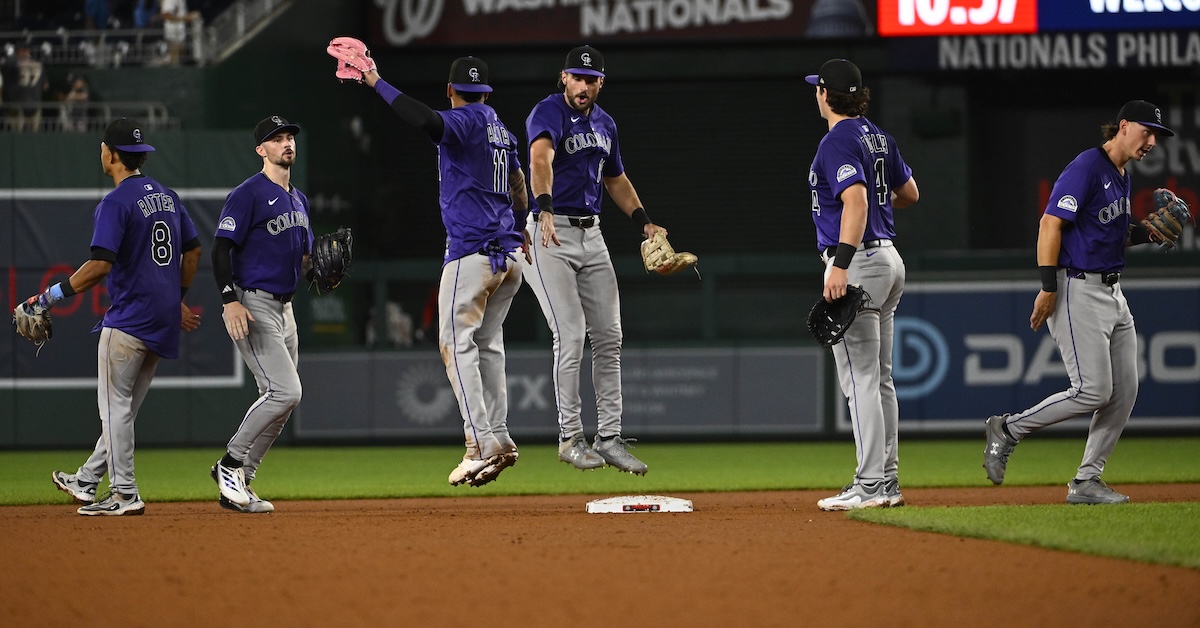
The hottest team in baseball right now? That’d be the Red Sox or Dodgers, probably – maybe the Rays or Astros depending on what time horizon you’re looking at. But if you adjust for difficulty level, it has to be the Rockies, who were one James Wood superhuman effort (two two-run homers in a 4-3 victory) away from a four-game sweep of the Nationals. Add that to their Sunday victory over the Braves, and they’re 4-1 in their last five. That could have been a five-game winning streak!
Sure, baseball is a game of randomness. Every team gets hot for little micro-patches of the season. But, well, this feels like the biggest test of the “anyone can do anything for 10 games” theory in quite some time. These Rockies are terrible. Their everyday lineup features six players with a combined -1.4 WAR this year. Those the starters – the bench is worse than that. Their rotation has an aggregate 6.23 ERA. They’ve been outscored by 196 runs this year; the next-closest team is the Athletics at -128. Read the rest of this entry »
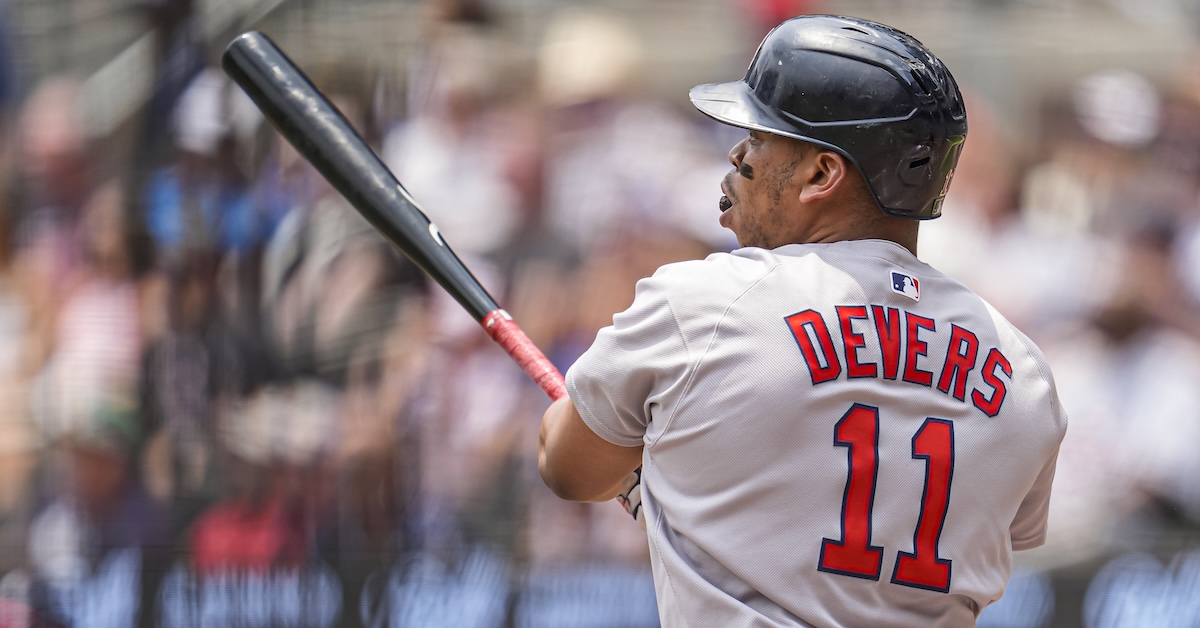
As you might have heard, the Red Sox traded Rafael Devers to the Giants earlier this week. In my breakdown of the deal, I ranked the players headed to Boston in the order of my interest in them: James Tibbs III, Kyle Harrison, Jose Bello, and lastly Jordan Hicks, though that’s contract-related, as I think he’s probably the best current player of the four. The next day, someone in my chat asked me why I preferred Tibbs to Harrison – was I particularly high on Tibbs, or particularly low on Harrison? After all, Harrison was a consensus top 50 prospect only a year ago, while Tibbs took his first Double-A at-bats this week.
My initial answer was that I saw Harrison several times last year, and he didn’t really do it for me. Combine that with his uninspiring results and the fact that other prospects had squeezed him out of the Giants rotation, and I preferred Tibbs. Since neither guy is clearly ready to dominate the major leagues right now, give me the higher-variance unknown quantity.
When I stopped to think about it later, though, I decided that my answer wasn’t good enough. Right now, I’m knee-deep in spreadsheets, linear regressions, non-linear regressions, projections, scouting reports, basically every type of baseball data out there as I do some initial work on our annual Trade Value Series, which will run next month. I have tons of prospect data stored up. I even looked into how prospect grades translate into major league players earlier this year. Rather than try to re-evaluate Harrison based more or less on vibes and ERA, I decided to apply a bit of analytical rigor now that I wasn’t writing for a deadline. Read the rest of this entry »
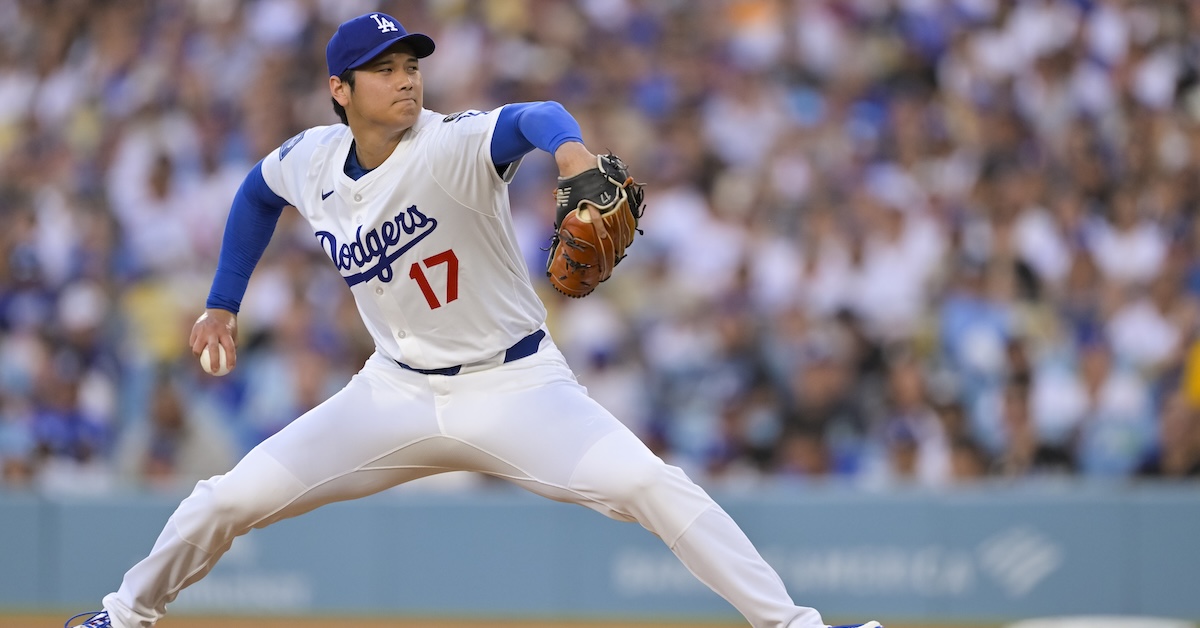
On Monday night in Los Angeles, Shohei Ohtani made his first major league start for the Dodgers. For any other starter signed before the 2024 season, that would be a disastrous sentence to type. Ohtani, of course, became the charter member of the 50/50 club, won the National League MVP, and then helped his team win the World Series. But he came to the Dodgers to hit and pitch, not just to play DH, and last night marked a key step in that process, his first game action as he rehabs from a 2023 elbow surgery.
I watched every pitch of Ohtani’s one-inning outing to compile a report. Obviously, these are the observations of a data analyst, not a scout. I’ve supplemented them with the Statcast and pitch model data generated overnight. I’m not the type to ignore the numbers, but realistically speaking, 28 pitches isn’t enough for a real sample, so the data is more supporting than primary. I’ll start with my first impressions, walk through each of the four pitch types Ohtani threw, and then share some general conclusions. Read the rest of this entry »
The San Francisco Giants are acquiring Rafael Devers from the Boston Red Sox for Jordan Hicks, Kyle Harrison and more, according to sources familiar with the deal.
That’s the kind of blockbuster you don’t see every day. Rafael Devers is the best healthy Red Sox hitter. The Sox are above .500 and in the thick of the AL playoff hunt. They’re desperate for offense – though they came into the year with more hitters than spots, injuries to Alex Bregman, Triston Casas, Wilyer Abreu, and Masataka Yoshida have left them scrambling for depth. Abraham Toro has been batting high in the order of late. Romy Gonzalez is their backup DH. And they just traded their starting DH – hitting .271/.400/494, good for 14 home runs and a 145 wRC+ – for salary relief? We’re going to need a deeper dive.
Let’s start with the return. The Sox sent Devers and his entire contract – 10 years and $313.5 million at time of signing, with about $250 million and 8.5 years left on it today – to the Giants. In exchange, they got a wide mixture of players. There’s a major leaguer, Jordan Hicks. There’s a recently graduated prospect, Kyle Harrison. There’s a well-regarded hitting prospect, James Tibbs III. There’s another, further away prospect, pitcher Jose Bello. Finally, there’s that sweet, sweet financial flexibility, something the Sox are no stranger to.
If you look at baseball completely in the abstract, with bean-counting surplus value as your only guiding light for evaluating a trade, this one looks reasonable enough. Devers is under contract for a lot of years at a lot of dollars per year, and projection systems consistently think that he’ll generate low WAR totals for his salary in the back half of his deal. Harrison was a top 25 prospect not so long ago. Tibbs was a first round draft pick last year. Bello is an interesting lottery ticket. Hicks – okay, Hicks might have been a salary offset. But the point is, it’s likely that if all you care about is WAR accrued per dollar spent, the Sox come out ahead on this deal for most reasonable models of surplus value. Read the rest of this entry »
Welcome to another edition of Five Things I Liked (Or Didn’t Like) This Week. I took a week off to indulge in a little French Open binge-watching, and after one of the greatest finals of my lifetime, I was ready to charge back into baseball. That feeling – charging ahead – has been something of a theme across baseball of late. You want speed? Chaos? Huge tools and do-or-die choices? This week’s list is for you. It starts, as usual, with a nod to Zach Lowe of The Ringer for originating this format. It also starts, as everything seems to these days, with a green-and-gold blur.
1. The Flash
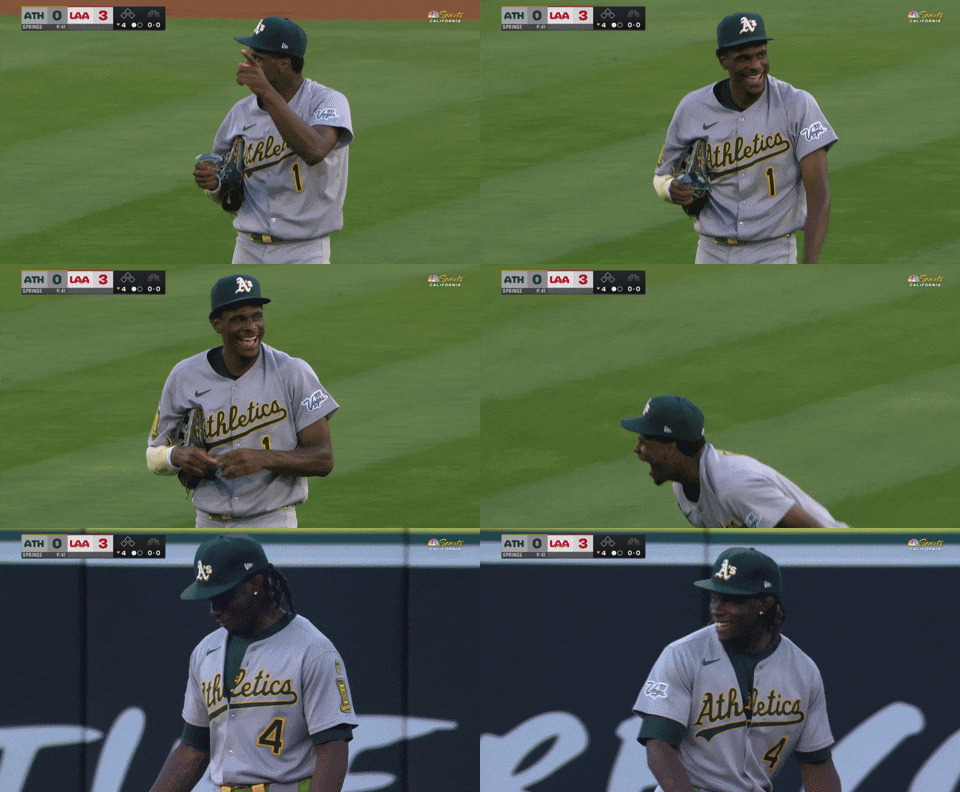
If you turn on a random A’s game of late, you’re liable to see something like this:
And if you’re lucky, something like this afterward:
Denzel Clarke is on quite the heater right now. That spectacular play doesn’t even come close to his greatest major league feat, this absurd home run robbery: