First- And 99th-Percentile Projections: National League Edition
At this time time last year, I made a series of predictions. I explained why each team might make it to the promised land, as well as why each team might find itself dead in a pit. We’re running it back this year. Will your favorite team win it all? Will it perish in a factory fire? Here’s how it might go down. Consider these the first- and 99th-percentile projections. Check back for the American League tomorrow.
Arizona Diamondbacks
Why They’ll Win It All: Geraldo Perdomo is just getting started. The shortstop had an ugly rookie season at the plate, then jumped to right around league average in 2024. In 2025, he exploded, running a 138 wRC+ and knocking 20 home runs, a 143% improvement over his career mark. He combined that quantum leap in offense with his trademark excellent defense and baserunning, ending up with 7.1 WAR and finishing fourth in the NL MVP voting.
In 2026, Perdomo’s going to make another 36-point jump in wRC+. He’s going to finish with a wRC+ of 174, sock 34 dingers, put up a 12-win season, and dethrone Shohei Ohtani. I mean that literally. He’ll win the MVP, yes, but Perdomo will also walk into the Dodgers clubhouse on Opening Day and yank the ergonomic swivel chair from under Ohtani’s versatile posterior.
Why They’ll Lose It All: Everything I’ve just described will come to pass, for a while. Perdomo will unseat Ohtani and get off to a scalding start, spraying homers all over the greater Phoenix area. Then the Dodgers will come to town for a four-game set in June. For four days, Perdomo will watch Ohtani, just returned from the injury list (coccyx), limp around the bases. After the rubber match, Perdomo will stay in the clubhouse long after everyone has left. He’ll take a look in the mirror. “Who are you?” he’ll ask (though he’ll be munching a protein bar, so it will come out sounding more like, “Froowroo?”). He won’t like the answer. He’ll decide that he liked the old Geraldo Perdomo better. The one who led the league in sac bunts every year. The one who put up league-average seasons like clockwork. The one who never broke any butts. He’ll never hit another home run.
Atlanta Braves
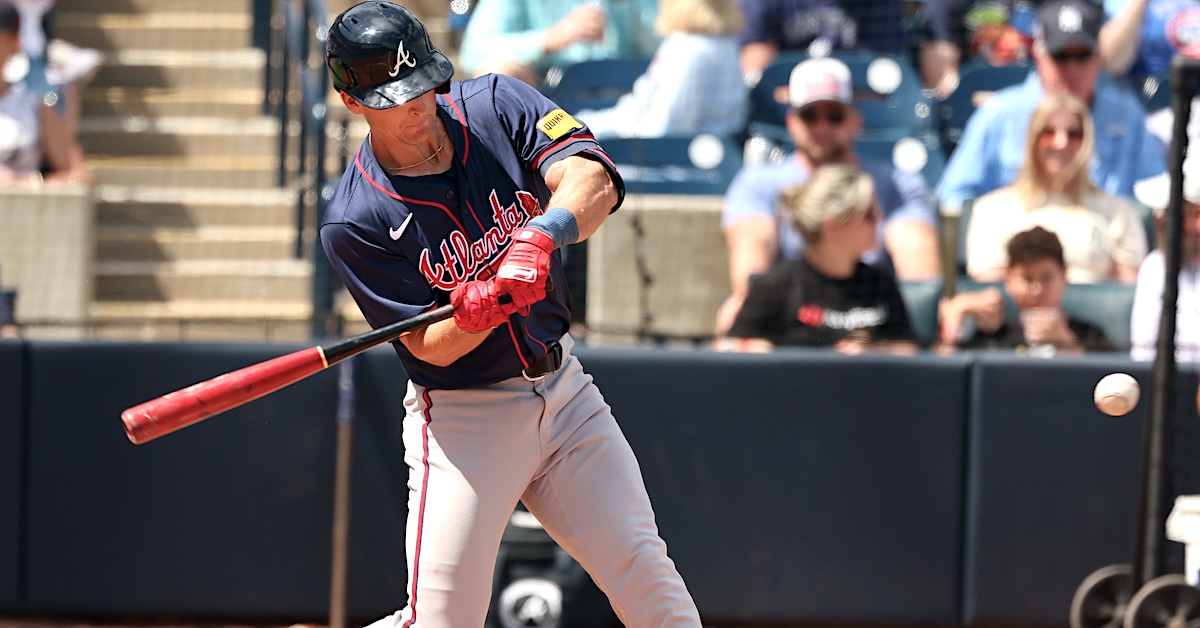
Why They’ll Win It All: Michael Harris II is finally going to come out of the gate strong. The 2022 Rookie of the Year has never been an All-Star because despite a career 134 wRC+ in the second half, his first-half mark is a disastrous 80. It’s the most extreme split in major league history. All that will change in 2026. Harris will put up a 134 wRC+ in the first half, and then he’ll still undergo his usual 50-point jump. He’ll be an All-Star, then he’ll be All-World in the second half. The rest of the Braves will get injured. It won’t matter.
Why They’ll Lose It All: In a desperate bid to recapture the glory of the 2021 World Series championship squad, Alex Anthopolous will wheel the soft-serve ice cream machine back into the Atlanta clubhouse. This will prove a mistake, because as it turns out, you have to clean those things. The machine, which had been sitting in a closet since the fall of 2022, will be full of microbiota that qualify as neither toppings nor mix-ins. The entire 26-man roster, the entire coaching staff, and two clubbies will wind up on the IL with tummy trouble. Everyone at Triple-A Gwinnett will get called up at the same time, crucially, before the soft-serve machine is identified as the culprit. They, too, will fall victim to the swirl sickness. Neither the Braves, nor the pipes will recover.
Chicago Cubs
Why They’ll Win It All: Because it was foretold in Back to the Future, again. What, didn’t you ever watch Back to the Future Part IV? It was straight-to-video, so I understand if you missed it, but Marty McFly, played by a guy who looked at least a little bit like Michael J. Fox, ends up in 2026, and he can’t come home until his son, Arthur, gets help for his debilitating gambling addiction. It’s quite accurate and thoroughly depressing. Anyway, the Cubs win the Series again, and Arty McFly loses everything and lives out the rest of his life skateboarding across the great Pacific garbage patch.
Why They’ll Lose It All: Some time in May, Pete Crow-Armstrong will go back on a ball and disappear into the ivy. Like, he’ll just be gone. The Cubs will send dozens of people out there after him, poking and prodding the wall, shouting his name. They won’t find a trace of him. A bereft Seiya Suzuki will try to walk through the ivy and join PCA, wherever he is. He’ll just bonk his head on the bricks over and over again. The Feds will shut down Wrigley Field while they conduct their investigation, and the Cubs will play their home games at Rate Field. With PCA on indefinite leave and Suzuki on the IL with a concussion, they’ll post the worst outfield WAR in the league
Cincinnati Reds
Why They’ll Win It All: Do you know what Matt McLain has been doing during spring training? He’s batting .529. He’s hit seven home runs in 17 games. He’s got a 301 wRC+. Guess what? He’s going to keep it up. McLain will transition from spring training to the regular season without so much as a hiccup. He’ll never slow down. He’ll hit .700 in the playoffs. Elly De La Cruz will be pretty good, too.
Why They’ll Lose It All: McLain will only be pretty good. De La Cruz will only be pretty good, too. In fact, everyone on the Reds will be pretty good. As it was foretold, Cincinnati will be a medium place. You might think that would make the Reds a medium team, but it’s not that simple. Every inning they play will end in a tie. They’ll never finish a game, except by way of suspension. The whole damn system will break down. They’ll be cast out from the league, and then the sport.
Colorado Rockies
Why They’ll Win It All: In a brilliant bit of outside-the-box Moneyball thinking, Paul DePodesta will sign the Rocky Mountains to a contract. “His defect is that he’s literally a mountain range,” he’ll say as he pitches the scheme to Dick Monfort. “Nobody in the big leagues cares about him, because he mountains funny.” Colorado will go from an extreme hitter’s park to an extreme pitcher’s park overnight, since every ball that lands on the ground will have technically been caught by Colorado’s right fielder, literally the Rocky Mountain range. (Brenton Doyle will still keep his job as the center fielder, because have you seen him out there?) The Rocky Mountain range will strike out quite a bit, but nobody will mind it much when it’s holding opponents to a BABIP of zero.
Why They’ll Lose It All: Even with a BABIP of zero, Rockies starters will give up enough homers to end up with 105 losses.
Los Angeles Dodgers
Why They’ll Win It All: Inertia.
Why They’ll Lose It All: Entropy.
Miami Marlins
Why They’ll Win It All: It turns out that calling pitches from the dugout is a winning strategy after all. The Marlins’ front office quants will read “The Purloined Letter” 15 times in a row, then develop an unbeatable algorithm that calls the perfect pitch for every situation based on the count, the game situation, the pitcher, the catcher, the weather, the time of day, and an extensive psychometric profile of the batter. They’ll stick it in the dugout disguised as a quality control coach and let it cook. Opposing batters will be constantly off-balance. They’ll flail wildly at pitches in the dirt. Their knees will buckle at get-me-over curveballs. They’ll start to think the Miami pitchers can read their minds. They’ll grow paranoid. They’ll second-guess themselves and third-guess themselves. They will have struck out before they even step into the batter’s box.
Why They’ll Lose It All: Some time in April, the other teams will get wise. That coach in the Marlins dugout – the one with the boxy head and boxy torso, who never moves a muscle but whose eyeballs flash a sequence of bright colors after each pitch – isn’t really a coach. The opposing manager will finally ask the umpires to check him out. “That’s just Jerry!” manager Clayton McCullough will shout. “He has a condition!” But the jig will be up. The umpires will tap on Jerry’s hollow cube of a head, and the left side of his mustache will come unglued and flutter in the light breeze. He’ll never call another pitch.
Milwaukee Brewers
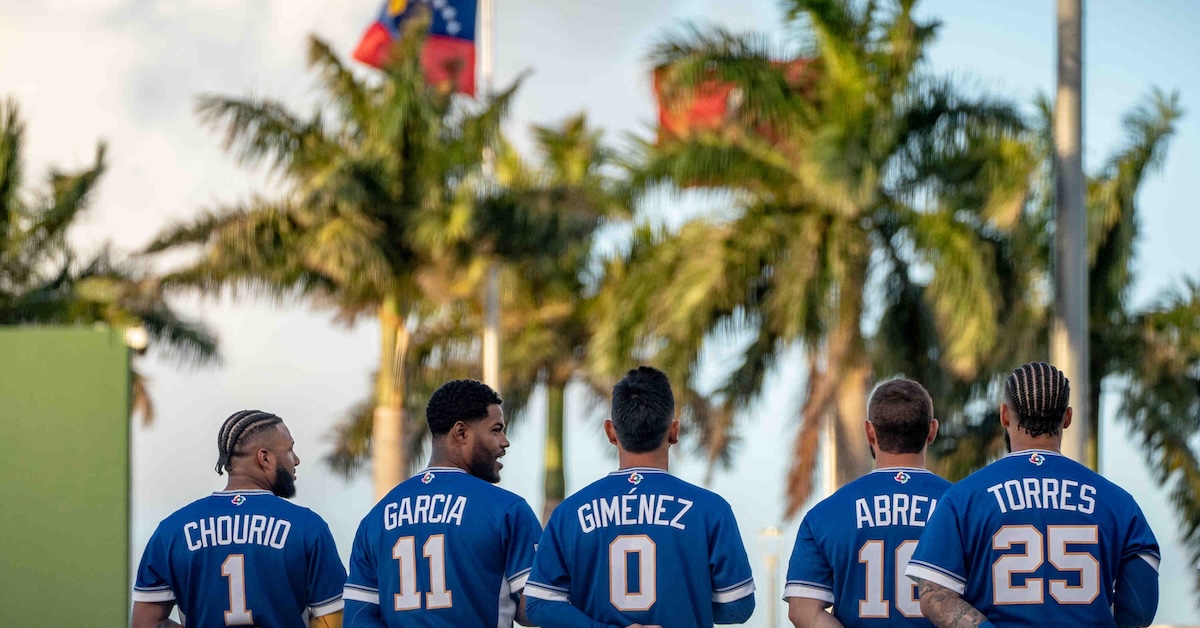
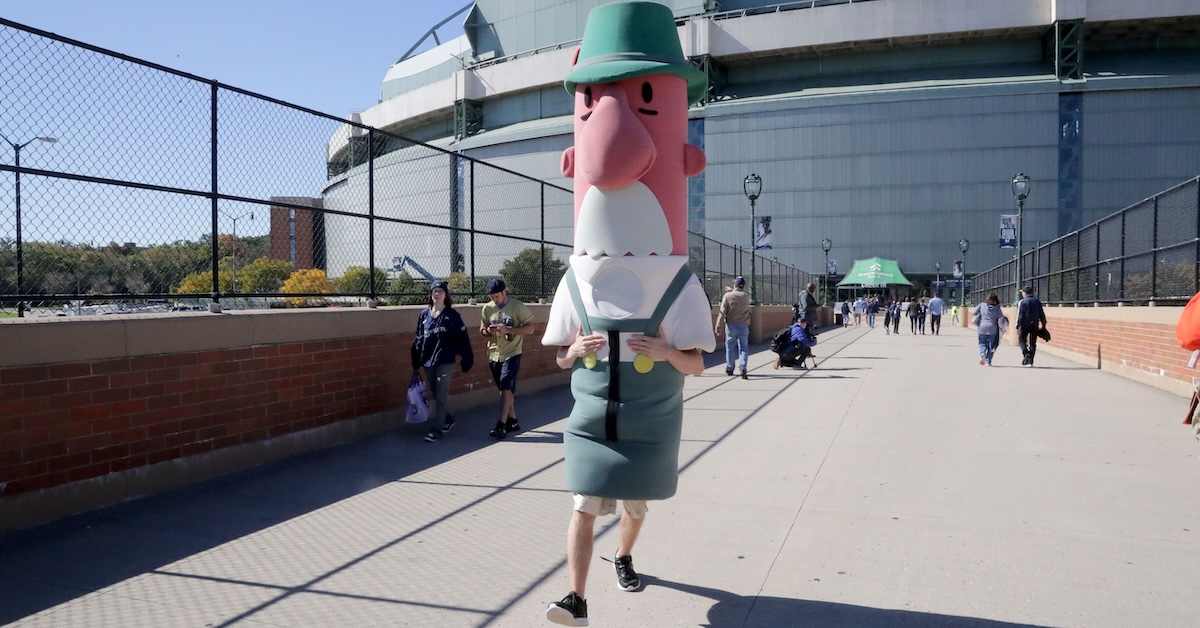
Why They’ll Win It All: The Bratwurst won’t just win the first 15 runnings of the sausage race. It’ll destroy the other sausages. It’ll keep on running around the entire warning track and lap them. Pat Murphy will sign the Brat to a contract and start it out as a pinch-runner. After a week or two, the Brat will stand alone atop the Baserunning Runs leaderboard. It’ll swipe bases left and right. It’ll tag up on popups. It’ll steal home and slide across the plate before the pitch even arrives. And it’ll do all this in full costume. Murphy will make the lederhosen-clad Bratwurst his everyday center fielder, and it will reward him with thrilling diving catches, a surprisingly accurate arm, a .275 batting average, and 25-homer pop. Jackson Chourio will be pretty good, too.
Why They’ll Lose It All: Just after the Bratwurst earns All-Star Game MVP honors, the Brewers will celebrate with a sausage appreciation night: sausage-making competitions, grilling competitions, bratwurst-eating contests, kids in sausage costumes, the whole nine yards. But while handing out an award to a local sausage-maker right in front of home plate, the sure-footed Bratwurst will trip and tragically stumble directly into a running sausage grinder. To the horror of 41,900 celebrants, it will return to its previous state, an unformed pile of meat (with veins of lederhosen mixed in there, too). The crowd will watch in stunned silence as all of the sausage-makers on hand try in vain to put the Bratwurst back together again. The entire state of Wisconsin will go into mourning. The Brewers will play out the string lifelessly. Murphy will take a flier on the Polish sausage, but it’ll keep getting doubled off because it doesn’t understand the tag-up rule.
New York Mets
Why They’ll Win It All: It turns out that right field was the problem for Juan Soto all along. After a career of unrelenting defensive ghastliness, he’ll be great in left field. He’ll be… well, he still won’t be elite out there. But he’ll be quite good, and all of a sudden, his game will have no weaknesses at all. He’ll have an average Juan Soto season at the plate, steal another 35 bases, and all of a sudden, that 158 wRC+ will put him in line for a nine-win season. He’ll carry the Mets into the playoffs.
Why They’ll Lose It All: Francisco Lindor will miss his hamate bone. The surgery won’t hinder his performance at the plate – at least not physically. He’ll just miss it, you know? He once had a whole hand full of bones, and now he’s got a missing piece. He’ll feel incomplete, distracted, and the rest of the Mets will follow their leader. They’ll never quite get it together. They’ll always feel like something’s missing, even if they can never quite name it.
Philadelphia Phillies
Why They’ll Win It All: The Lord will look down upon Philadelphia, see a team that just agreed to devote a quarter of a billion to pitchers named Jesús and Cristopher, and the Lord will smile.
Why They’ll Lose It All: Measles and listeria will sweep through the clubhouse. No one will say out loud who’s responsible for it, but everyone will know.
Pittsburgh Pirates
Why They’ll Win It All: Because they might actually be good. Maybe? Possibly? They might, like, just have a good team. With good players? I know, I know. But it’s possible. Maybe.
Why They’ll Lose It All: At a certain point, Paul Skenes will decide that he’s sick of losing at baseball and go back to the Air Force Academy.
San Diego Padres
Why They’ll Win It All: Welcome to the Nick Castellanos Revenge Tour. Castellanos will work his way into the starting lineup by hook or by crook, and he will unleash unholy fury upon the baseball for the sole, spiteful purpose of making sure the Phillies know exactly what they’re missing. He’ll slug hellaciously, and he’ll step up as a clubhouse leader to lift the rest of the Padres with him. It’ll be like that scene in The Natural where the New York Knights actually look like a baseball team during practice. His defense will still be pretty bad.
Why They’ll Lose It All: Joe Lacob, owner of the Golden State Warriors, is known to be in the running to purchase the Padres, and he’ll have the winning bid. San Diegans will rejoice now that the man who oversaw a dynasty in Oakland (then promptly moved it to San Francisco) has just purchased their team. But Lacob will have learned all the wrong lessons from the success of the Dubs. He’ll trade what little is left of the farm for Trayce Thompson. He’ll sign Xzavion Curry. He’ll hire Draymond Green to manage the Padres, and that will go exactly as well as you might expect it to go. He’ll move the team to LA.
San Francisco Giants
Why They’ll Win It All: Remember when Luis Arraez played in Miami and put up a career-high 131 wRC+ dumping weak liners into that enormous outfield? Well, he’s finally landed in San Francisco and found himself another big old outfield. He’s going to go back to hitting .350, and he’s going to teach Jung Hoo Lee all his tricks. Matt Chapman and Rafael Devers are never going to come to the plate without a couple runners on base.
Why They’ll Lose It All: Logan Webb can’t start every game.
St. Louis Cardinals
Why They’ll Win It All: The Cardinals will try something new in the outfield. They’ll turn Victor Scott II loose. “Any ball you can reach, you go get it,” Chaim Bloom will tell him. This newfound freedom will strike Scott as a revelation. He’ll finally realize that the artificial boundaries separating center field from left and right are just that. Artificial. Limitations keeping him from unlocking his true potential. The scales will fall from his eyes and he’ll range through the outfield like a holy wind, catching everything there is to catch. Jordan Walker and Lars Nootbaar will take to positioning themselves directly on the foul lines, content to steal outs on the occasional would-be foul ball while Scott takes care of the rest. The Cardinals will have the best defense in the league.
Why They’ll Lose It All: They’ll still need some hitters.
Washington Nationals
Why They’ll Win It All: Pass.
Why They’ll Lose It All: In an odd mathematical quirk, it turns out that it’s really hard to have a successful season while losing more than 90 games. Let’s just give Paul Toboni some time.