Archive for Q&As

Red Sox Acquisition Jake Reed Has a Less Funky Arm Slot in Mind

© Jessica Rapfogel-USA TODAY Sports

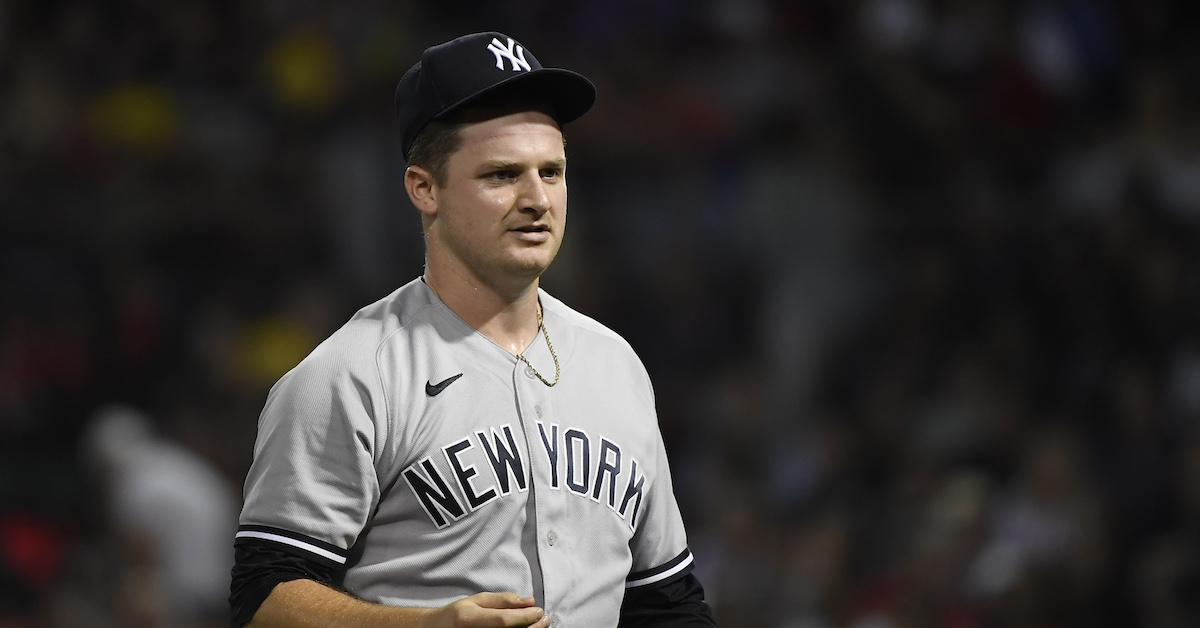
The Boston Red Sox acquired a unique pitcher when they claimed Jake Reed off waivers from the Baltimore Orioles last week. They also acquired a pitcher who is heading into the offseason looking to rework a delivery that is among the funkiest in the game. As Ben Clemens showed us when writing about him last summer, the side-slinging 28-year-old right-hander has been attacking hitters from an arm slot that is anything but ordinary.

Reed’s effectiveness in the big leagues has been a mixed bag. Since debuting with the Dodgers last July, he’s held same-sided batters to a .639 OPS, but he’s also logged a 5.74 ERA over his 28 relief appearances. With designs on jumpstarting a professional career that began in 2014 when he was drafted 140th overall by the Minnesota Twins out of the University of Oregon, Reed plans to not only bring a new throwing motion with him to Boston, but a higher octane heater as well.

Reed discussed the evolution of his atypical delivery, and why it again needs to change, on the final weekend of the regular season.

———

On dropping his arm angle:
“I’d pretty much always been low three-quarters. I was pitching pretty well in the minors, but in 2017 the Twins changed over their front office. Baseball was getting a lot more progressive, which sort of changed how guys are valued. I threw pretty hard — I was a mid-to-upper-90s kind of guy — but my stuff didn’t necessarily perform super well analytically. So about halfway through the 2019 season we had a long conversation and came to the idea of me dropping down sidearm and trying to create more movement on my sinker, and improve my slider. That was the first time I really made that transition from how I’d thrown my whole life. Read the rest of this entry »

Once a Young Gun, Triston McKenzie Is Now a Top-Notch Starter

Triston McKenzie
Matt Marton-USA TODAY Sports

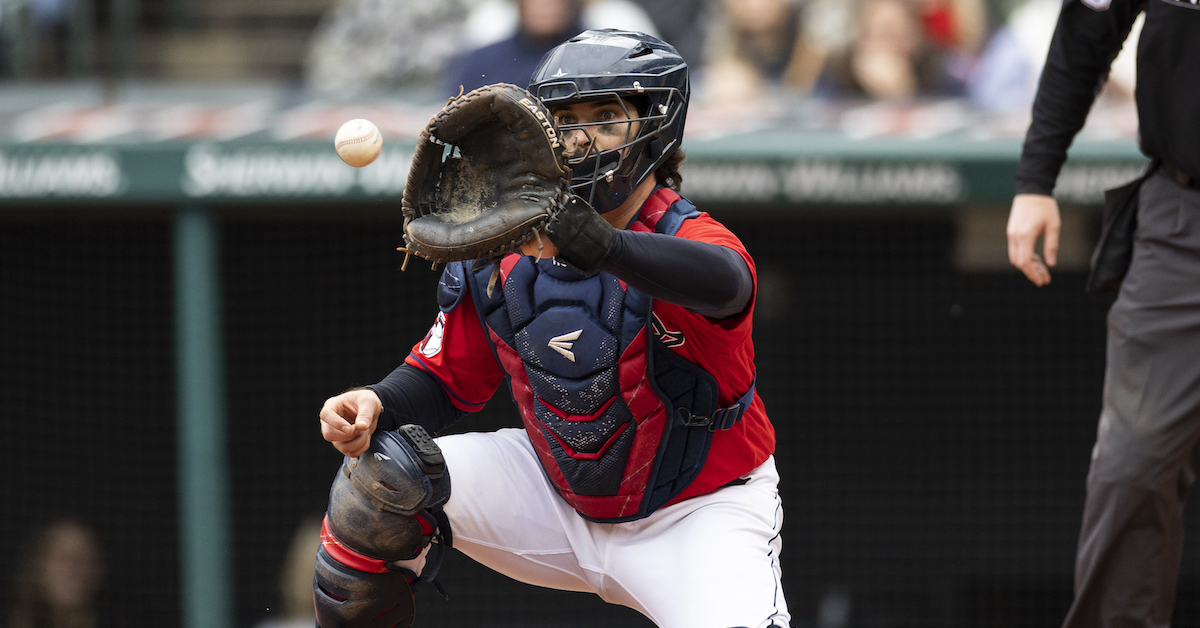
Triston McKenzie was 19 years old and pitching for High-A Lynchburg when he was first featured here at FanGraphs in May 2017. Five years later, he’s one of the top starters on a talented Cleveland Guardians staff. In 31 appearances this season, the lanky right-hander logged a 2.96 ERA and a 3.59 FIP with 190 strikeouts in 181.1 innings. Last week, he tossed six scoreless frames and allowed just two hits in Cleveland’s Wild Card Series-clinching win over the Tampa Bay Rays.

McKenzie, the scheduled starter for ALDS Game 3 versus the New York Yankees on Saturday, discussed his evolution as a pitcher and the mindset he takes with him to the mound during the Guardians’ final home stand of the regular season.

———

David Laurila: We first talked five years ago. What have you learned about pitching since that time?

Triston McKenzie: “The biggest difference is that I’m in the big leagues. Mindset-wise, how I attack hitters hasn’t changed much outside of adapting to this level and understanding that guys are more disciplined in what they do in their approach. I’ve figured out that you can’t always be the the young gun, the kid who is going to throw his best stuff over the heart of the plate. These guys can hit that. So I’d say it’s a mix of finding my identity as a pitcher, figuring out what my strengths are and where I can beat guys, but not getting so headstrong that it’s to my detriment.”

Laurila: How much better do you understand how, and why, your stuff works? You’re obviously working with smart coaches and seeing a lot of data. Read the rest of this entry »


Austin Hedges Hands Out a Few Guardians Pitching Superlatives

© Scott Galvin-USA TODAY Sports

Austin Hedges is Cleveland’s primary catcher because of his defensive value. That’s no secret: The 32-year-old backstop has long been a well below-average hitter — his career wRC+ is a woeful 54 — but when it comes to working with a pitching staff, few do it better. Under his and backup Luke Maile’s guidance, the Guardians rank third in the American League in pitcher WAR and fourth in ERA. It’s fair to say that pitching is the postseason-bound club’s greatest strength.

Hedges fielded questions about his time behind the plate in Cleveland prior to a recent game.

———

David Laurila: Who has been the easiest guy on the team to catch, the pitcher for whom you’re kind of just sitting back there on a rocking chair?

Austin Hedges: “Our whole team does a really nice job of staying consistent with all of their pitches, which has made my job really easy. One of the guys in the bullpen that is surprisingly easy to work with — a pitcher with really good stuff — is Enyel De Los Santos. He doesn’t get the credit that a lot of the big dogs in our bullpen do, but he’s been a workhorse for us. He’s gotten big outs in leverage situations. He’s so consistent with all of his pitches that I always know what I’m going to get.” Read the rest of this entry »


Cal Quantrill Cares More About Outs Than Stuff+

© Raymond Carlin III-USA TODAY Sports

Cal Quantrill epitomizes the term “pitcher.” Twenty-seven years old and in his fourth big-league season, the Cleveland Guardians right-hander not only attacks hitters with a multi-pitch arsenal, he does so with a combination of aggressiveness and guile. Mixing and matching with aplomb, he’s won 23 of 32 decisions and logged a 3.16 ERA in 336 innings over the past two seasons. As my colleague Michael Baumann pointed out just last month, Quantrill isn’t overpowering, but he gets the job done.

Drafted eighth overall in 2016 by the San Diego Padres out of Stanford University, Quantrill was acquired by Cleveland at the 2020 trade deadline as part of the nine-player Mike Clevinger deal. He’s expected to start against the Tampa Bay Rays on Sunday if their Wild Card Series requires a deciding Game 3.

Quantrill discussed his evolution as a pitcher and his it’s-all-about-getting-outs approach this past weekend.

———

David Laurila: We discussed your repertoire in spring training of 2018 when you were in the Padres system. How have you changed as a pitcher since that time?

Cal Quantrill: “If we’re looking at it from a literal standpoint, I flattened out the slider and turned it into a cutter. I went to more of a 50/50 mix with the two-seam and four-seam. I’ve kind of kept a little curveball wrinkle to keep them off the hard stuff. Read the rest of this entry »


Gunnar Henderson Is One of Baseball’s Most Promising Young Hitters

© Dan Hamilton-USA TODAY Sports

On September 1, one day after baseball’s no. 5 overall prospect made his major league debut, Dan Szymborski wrote that the Baltimore Orioles “showed mercy to minor league pitchers … officially calling up infielder Gunnar Henderson.” As my colleague pointed out, the 21-year-old left-handed hitter had slashed .297/.416/.531 with 19 home runs over 112 games between Double-A Bowie and Triple-A Norfolk. His wRC+ was a healthy 154.

Henderson has continued to impress at the big-league level. In 110 plate appearances with the O’s, the young slugger has punished pitchers to the tune of a 139 wRC+, with 12 of his 27 hits going for extra bases. He’s left the yard four times, with the latest of those blasts leaving his bat at 111.1 mph and traveling 428 feet into Fenway Park’s center field bleachers.

Henderson sat down to talk hitting on Tuesday, one day before he was named Baseball America’s Minor League Player of the Year.

———

David Laurila: Let’s start with your evolution as a hitter. What do you know now that you didn’t when you were drafted by the Orioles [42nd overall in 2019 out of Selma, Alabama’s John T. Morgan Academy]?

Gunnar Henderson: “I would say that it’s the number of good pitches you get to hit. In high school, you’ll get multiple pitches to hit within an at-bat, and then as you progress, at each and every level, it’s less and less. Especially here in the big leagues. You really have to take your walks and not give in to what the pitcher wants you to do. You’ve got to hunt for that one pitch, because you might only get one, maybe two, a game.”

Laurila: How do you go about doing that? Read the rest of this entry »


Clarke Schmidt Throws a Baby Whirly

© Bob DeChiara-USA TODAY Sports

Clarke Schmidt has added an important weapon to his arsenal since he was first featured here at FanGraphs in January 2021. Given the organization he plays for, it isn’t much of a surprise that that addition is a sweeping slider — or, in New York Yankees vernacular, a “whirly.” The 26-year-old right-hander is throwing his version of the pitch 37.2% of the time this season, and with great success: Opposing hitters are batting just .148 against the offering, with a .164 SLG and a .186 wOBA.

His overall numbers are likewise impressive. The 2017 first-round pick has made 23 appearances this year — all but three out the bullpen — and boasts a 2.82 ERA and a 3.17 FIP. He’s allowed 41 hits and fanned 51 batters in the same number of innings.

Schmidt discussed his “baby whirly” when the Yankees visited Fenway Park earlier this month.

——

David Laurila: We talked pitching prior to last season. What’s changed since that time?

Clarke Schmidt: “When we spoke, I wouldn’t have been throwing a slider. That’s the main thing I’ve added, and it’s probably been my biggest pitch this year. My usage has been high, and I’ve had some really good results with it. Beyond that, I’ve cleaned up some things — some arm path stuff — and there has probably been more maturity in my pitch selection. But I’d say that the slider has been the number one change.”

Laurila: I recall you saying in January 2021 that some people considered your curveball more of a slider.

Schmidt: “For sure. I’ve always had a big breaking ball, but it’s hard — it’s 84-85 [mph] — so even though people are throwing harder curveballs now, it does get considered a slider sometimes. But now that I’m throwing both, there are distinct differences. I have two different shapes. Read the rest of this entry »


Jackson Jobe Has an Electric Arm and a Desire to Expand His Arsenal

© Kirthmon F. Dozier / USA TODAY NETWORK

Jackson Jobe has a bright future. Currently first in our Detroit Tigers prospect rankings, the 20-year-old right-hander is coming off a first full professional season during which he logged a 3.94 ERA and 81 strikeouts in 77-and-a-third innings spent between Low-A Lakeland and High-A West Michigan. Drafted third overall last year out of Oklahoma City’s Heritage Hall High School, he pairs an array of plus offerings with elite athleticism. What’s more, according to our own Eric Longenhagen, the 6-foot-2, 210-pound Jobe “would have been a Day Two pick as a position player.”

Jobe discussed his early-career development, as well as the pitches in his power arsenal, at the conclusion of the Midwest League season.

———

David Laurila: Along with pitching, you showed a lot of promise as a position player. At what point did it become clear that your future was on the mound?

Jackson Jobe: “I’ve always pitched a little bit. Growing up, I always had a good arm — obviously, you’ve got to have a good arm to play shortstop — but I want to say it was my junior year. My junior year spring was COVID, so I only got one outing before our whole season got banged. At that point, I just kept training. Then summer came around, and they were still doing some of the showcases.

“Perfect Game had a showcase — I want to say it was PG National — and I got invited there to play shortstop and pitch a few innings. I ended up throwing really well. It kind of just clicked, I guess. I threw harder than I’d ever done before. The slider was good. From that point forward, my phone was blowing up with agents and scouts. That was kind of the beginning for me as far as pitching goes.” Read the rest of this entry »


Padres Pitching Prospect Jackson Wolf Has Unique Characteristics

© Jerome Miron-USA TODAY Sports

Jackson Wolf has unique characteristics. No. 22 on our updated San Diego Padres prospect rankings as a 35+ FV, the 23-year-old southpaw not only stands 6-foot-7 and features a deceptive delivery, his changeup grip is among the most unusual in the game. Drafted in the fourth round last year out of West Virginia University, he was described by Eric Longenhagen as “a funky, low-ish slot lefty with uncommon athleticism and flexibility… [with] arms-and-legs deception.”

A native of Gahanna, Ohio, Wolf made all but one of his 24 appearances with the High-A Fort Wayne TinCaps this season, logging a 4.21 ERA and 4.32 FIP with 95 hits allowed and 139 strikeouts in 142 innings. He sat down to discuss his repertoire, and the outlier properties that come with it, earlier this summer.

———

David Laurila: Let’s start with how you self-identify as a pitcher. How do you get guys out?

Jackson Wolf: “I actually just had this conversation with one of our coordinators. Finding my identity is something we’ve addressed this year, and getting outs isn’t going to come from blowing fastballs by guys. It’s going to come from using my movement, and from using my weird motion and leverage — kind of my deception — to get hitters uncomfortable and off-balance.” Read the rest of this entry »


Texas Rangers Offensive Coordinator Donnie Ecker Talks Hitting

© John Hefti-USA TODAY Sports

The Texas Rangers made meaningful changes this summer when they parted ways with manager Chris Woodward — Tony Beasley is currently serving in an interim capacity — and subsequently replaced Jon Daniels with Chris Young as their top front office decision-maker. But a move that has been every bit as impactful was made 10 months ago. Last November — shortly before Baseball America named him their MLB Coach of the Year — Donnie Ecker was hired away from the San Francisco Giants and given the title of Bench Coach/Offensive Coordinator.

Ecker’s reputation as a tech-and-data-savvy hitting nerd is well-earned. Prior to the two seasons he spent as Gabe Kapler’s hitting coach in San Francisco, the 36-year-old Los Altos, California native built his bona fides as an assistant hitting coach with the Cincinnati Reds, and before that as a minor-league hitting instructor in the St. Louis Cardinals and Los Angeles Angels organizations.

Ecker, who is well-educated in biomechanics and analytics, discussed some of the philosophies and practices he brought with him to Texas when the Rangers visited Fenway Park earlier this month.

———

David Laurila: You spend a lot of time at the ballpark, often arriving by 9 AM for a seven o’clock game. What does your day typically look like?

Donnie Ecker: “It starts with understanding where all of our people are at, zooming in on our hitters first and looking at the things that we find valuable. How is their performance aligning with our North Stars and peripherals? As a department, we want to be on top of that day-to-day. Most times, that’s a process of going deep and bringing up simple and actionable items to the surface. Everything is from the inside out, leading to what we want our conversations and training to look and feel like that day for that player. Read the rest of this entry »


Rangers Right-Hander Glenn Otto Goes in All Directions

© Troy Taormina-USA TODAY Sports

Glenn Otto is a different pitcher than the one the New York Yankees took in the fifth round of the 2017 draft out of Rice University. Acquired from his original organization by the Texas Rangers as part of last summer’s Joey Gallo deal, the 26-year-old right-hander not only has a better understanding of his craft, he’s attacking hitters with an expanded arsenal. Moreover, his five-pitch mix is directionally diverse. Augmented by an occasional bridge pitch, Otto’s offerings are designed to go north, south, east, and west.

Otto discussed his repertoire, and the education he’s received while building it, when the Rangers visited Fenway Park last weekend.

———

David Laurila: In what ways have you grown since coming to pro ball? Having played at a high-profile program, I assume you already had a good idea of how to pitch.

Glenn Otto: “I honestly really didn’t. I was a reliever in college and pretty much relied purely on stuff. I had a mid-90s fastball and a really good curveball, which was all I used back then. Once I got into pro ball and became a starter, it was about going as deep as I can, commanding the fastball to all four quadrants, developing a changeup — a pitch which has kind of come and gone for me — and I’ve also made some adjustments mechanically. Read the rest of this entry »