Archive for Q&As

Cardinals Prospect Jordan Walker Has a Big-Time Bat (and a Very Strong Arm)

© Mark J. Rebilas-USA TODAY Sports

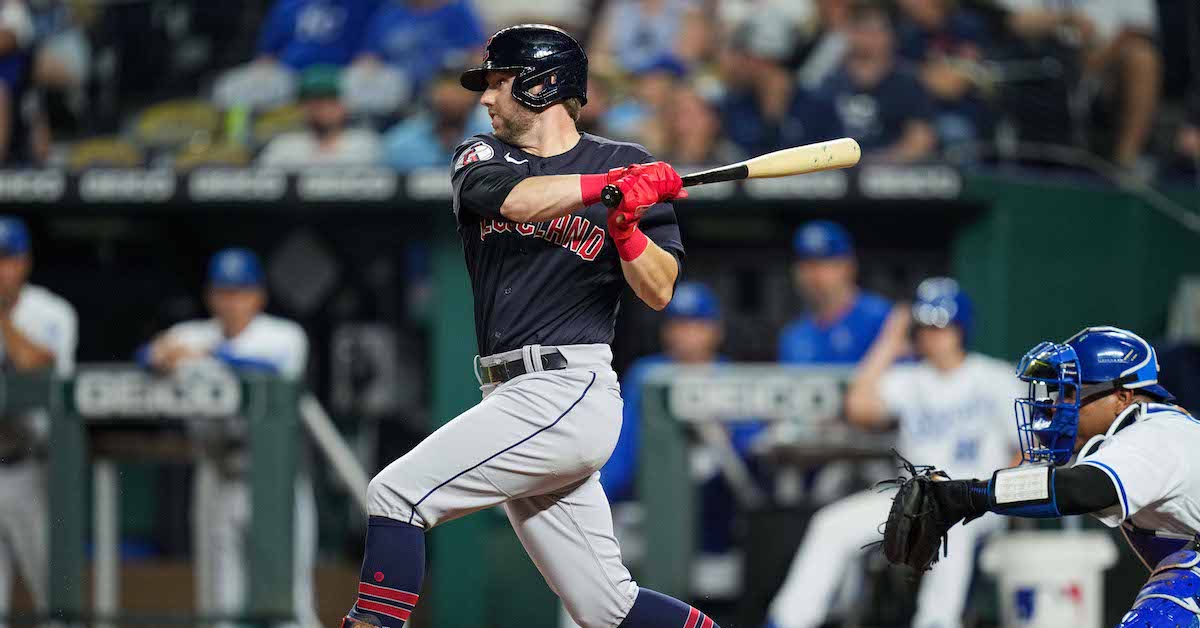
Jordan Walker is no. 8 on our Top 100 thanks largely to his bat. As our lead prospect analyst Eric Longenhagen wrote in July, the 6-foot-5, 220-pound St. Louis Cardinals outfield prospect “is one of the most exciting young hitters in the minors, with elite power potential and superlative on-paper performance at Double-A while he’s still not old enough to have a beer.” At season’s end, the 20-year-old Stone Mountain, Georgia native boasted a .306/.388/.510 slash line, with 19 home runs and a 128 wRC+.

His tool set also includes a plus arm, which this writer witnessed firsthand during an Arizona Fall League game. Fielding a ball deep in the right field corner, Walker gunned a strike to second base that had me harkening back to the days of Dwight Evans and Dave Parker. A throw I wasn’t on hand to see was arguably even more impressive. As MLB.com’s Jesse Borek reported in mid-October, Walker “cut the ball loose at 99.5 mph, a throw harder than any by a St. Louis Cardinals outfielder since Statcast began to keep track in 2015.”

Shortly after talking to Walker’s close friend and AZL teammate Masyn Winn — featured here at FanGraphs on Tuesday — I approached the organization’s top-rated prospect to talk about his two most eye-catching assets: his bat and his arm. Read the rest of this entry »

Will Warren Is Quietly a Fast-Rising Yankees Prospect

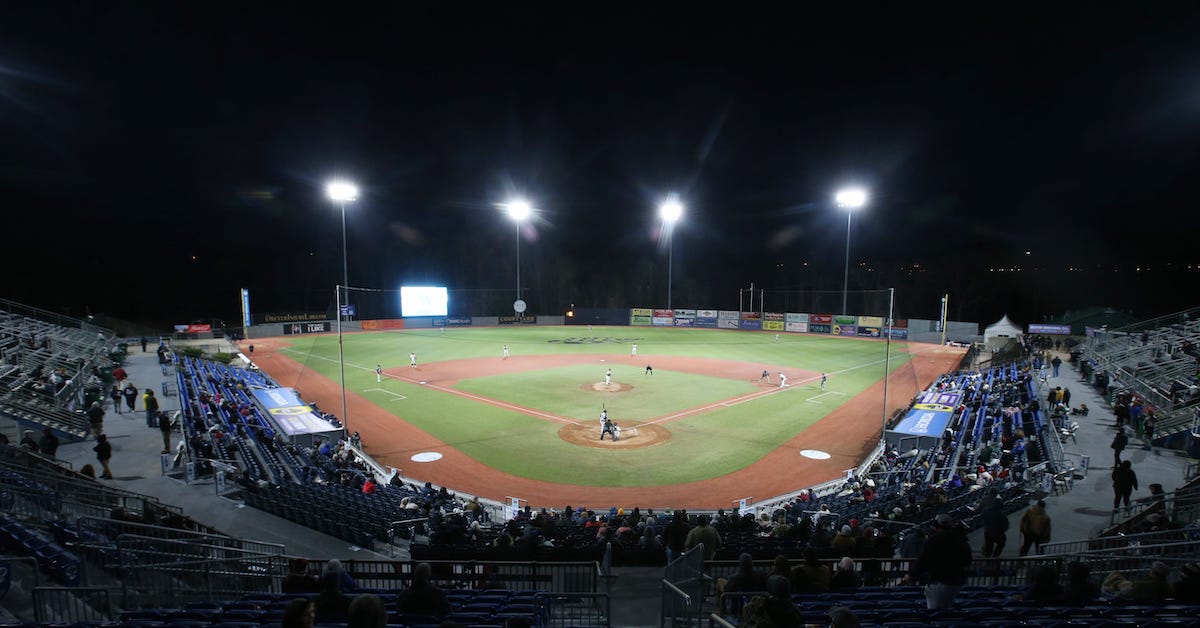
Hudson Valley Renegades

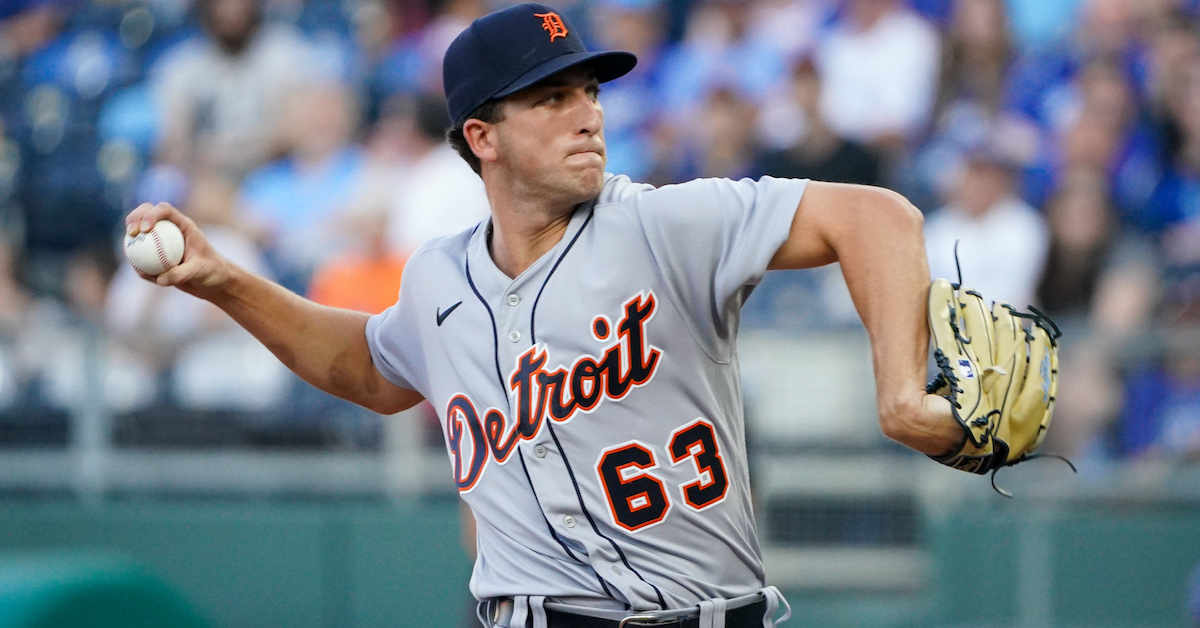
Will Warren has quietly, and quickly, emerged as one of the top pitching prospects in the New York Yankees organization. An eighth-round pick in the 2020 draft out of Southwestern Louisiana University, the 22-year-old right-hander made his professional debut this year, and by June he was pitching with Double-A Somerset. On the season, he had a 3.91 ERA and a 3.74 FIP with 125 strikeouts and 119 hits allowed in 129 innings.

His best two pitches have been added to his arsenal since college. Warren’s sweeper, which spins as high as 3,000 rpm, replaced the pedestrian slider he’d thrown as an amateur; his low-to-mid 90s sinker, which helped produce a 53% ground ball rate, was developed just this past season. His physique has transformed, as well. The 6-foot-2 hurler now packs close to 200 pounds on his once-lean frame, giving him a more-projectable starter’s build.

Warren discussed his developmental strides late in the 2022 season.

———

David Laurila: Let’s start with your M.O. on the mound. How do you get guys out?

Will Warren: “Basically attacking the zone, knowing that the guys behind me are going to make plays. As a sinkerball guy, I’m probably going to get a lot more ground balls than strikeouts, so I rely a lot on my defense to get people out.”

Laurila: I understand that you also have a pretty good slider.

Warren: “Yes. Analytics makes it easier to look at a pitch and say, ‘Oh, I can do this, I can manipulate it this way.’ When I got drafted by the Yankees, we [developed] the slider. We tinkered with some grips, and it ended up being what it is now.”

Laurila: Is it the Yankees whirly?

Warren: “It’s the sweeper, yes. Off the top of my head, I’m going say I get like 16–18 inches of sweep. I can get it bigger, but I think that’s what it is on average. The velocity is 84–87 [mph].” Read the rest of this entry »


J.J. Picollo Addresses the Royals’ New Direction

J.J. Picollo
Jay Biggerstaff-USA TODAY Sports

The Kansas City Royals have made forward-thinking changes in recent months, most notably in the managerial chair and at the highest level of their front office. The latter preceded the former, with J.J. Picollo taking over from Dayton Moore as the team’s top decision-maker in late September. Six weeks later, Picollo hired Matt Quatraro, who had been the bench coach for the Tampa Bay Rays, to replace Mike Matheny as manager.

Another impactful decision was announced this week. In want of a more-analytically-minded pitching coach, Picollo brought on board Brian Sweeney to fill the role that had been held by Cal Eldred. Previously the bullpen coach for the Cleveland Guardians, a team with a well-earned reputation as a pitcher development machine, Sweeney is seemingly a perfect fit for a Kansas City club looking to move away from a reputation of its own. Long seen as an old school organization, the Royals are, by all appearances, becoming more progressive.

Picollo, who now holds the title Executive Vice President and General Manager, talked about the team’s new direction during last month’s GM Meetings.

———

David Laurila: You’ve addressed this previously, but it’s nonetheless the best way for us to start: Given that you worked alongside Dayton Moore for many years, what will differ philosophically with you in charge?

J.J. Picollo: “Culturally and fundamentally, there will be a lot of similarities, because it’s just baseball and how you run an organization. That said, we want to be a little more open-minded to different ways of improving our roster, and utilizing our roster. Player acquisition… a lot has been made about being transactional, but I think that can be overstated. When you’re transactional, you’re just trying to make your team better. If it makes our team better, then we’ll be transactional.

“More than anything, hiring Matt Quatraro, with the way he thinks… he’ll be creative. I think that will be developmentally healthy, especially for our younger players.”

Laurila: How does he think? Actually, let me phrase the question this way: What did he say during the interview process that sold you on hiring him?

Picollo: “A lot, but more than anything, he was able to communicate what his thoughts were. You could just see, in some of the exercises we went through… for instance, how he would put lineups together. Obviously, a lot of that is based on matchups and how you want to use matchups. Also, the idea of using our bench was very clear; it’s something he’s not going to be afraid to do. Another was putting pitchers in situations where they can succeed yet develop at the same time. He was able to explain his processes really well.” Read the rest of this entry »


Michael Wacha on Evolving as a Pitcher (But Keeping His Bread and Butter)

Michael Wacha
Kirby Lee-USA TODAY Sports

Michael Wacha is, in many ways, the same pitcher who broke into the big leagues with the St. Louis Cardinals in 2013. The changeup is still his best weapon, and his fastball velocity has remained in the 93–95-mph range throughout. The 31-year-old right-hander has changed teams a few times, but he’s largely kept the same identity.

There have been tweaks to his repertoire and pitch usage. That’s inevitable over the course of what has been a 10-year career, one that will continue will a team yet to be determined. Following seven years as a Cardinal and subsequent one-year stints with the New York Mets, Tampa Bay Rays, and Boston Red Sox, Wacha is now a free agent. He’s hitting the open market on a high note; in 23 starts comprising 127.1 innings last season, the Texas A&M product went 11–2 with a 3.32 ERA.

Wacha discussed his evolution as a pitcher on the final day of the 2022 regular season.

———

David Laurila: To varying degrees, all pitchers evolve. How many times would you say you’ve changed over the years?

Michael Wacha: “From my rookie year, I’d probably say… a couple of times? But I don’t know. I mean, each year I’m trying to work on something different to help out my repertoire, to bolster it or make it better. So it’s kind of hard to say, but there have been a couple of changes.”

Laurila: Can you give any examples? Read the rest of this entry »


Boston’s Thad Ward Should Draw Interest in the Rule 5 Draft

© Kim Klement-USA TODAY Sports

Thad Ward should be of interest to several teams come next month’s Rule 5 draft. Currently no. 15 on our Boston Red Sox prospect rankings with a 40+ FV, the 25-year-old right-hander wasn’t added to the club’s 40-man roster — a decision that left Eric Longenhagen “a tad surprised.” Our lead prospect analyst explained that Ward “looked good in the Arizona Fall League, locating 92-94 mph fastballs while mixing in two above-average breaking balls… [and] looks like a possible bulk relief fit right now.”

Three years ago, Ward looked to be well on his way to securing a spot in Boston’s starting rotation. When he was featured at FanGraphs in October 2019, the 2018 fifth-rounder out of the University of South Florida had recently been honored as the organization’s Minor League Pitcher of the Year. According to then-Red Sox pitching analyst Brian Bannister, Ward was in possession of “a Chris Sale slider.”

But fate had its say. The 2020 minor league season was canceled due to the pandemic, and the following year, Ward underwent Tommy John surgery after making just two starts with Double-A Portland. By the time he returned to action this past July, he had essentially missed two-plus seasons. But while taking the mound again didn’t feel akin to jumping back on a bicycle for the righty, he did pitch well. In 51-and-a-third innings spread across four levels, Ward fanned 66 batters and allowed just 40 hits while logging a 2.88 ERA.

Ward discussed his comeback, including how his stuff compares to what it was pre-injury, during his stint in the Arizona Fall League.

———

David Laurila: You came back from Tommy John this year. Are you the same pitcher now that you were before going under the knife?

Thad Ward: “In some ways, yes. In some ways, no. I’ve matured a lot in terms of stuff I can’t control. I don’t get as upset over mistakes. That’s not to say my competitive edge has gone away, it’s more that I feel I’m channeling it in a better direction.” Read the rest of this entry »


Beau Brieske Has an Old School Meets New School Approach to Pitching

Beau Brieske
Denny Medley-USA TODAY Sports

Beau Brieske had a promising rookie season with the Detroit Tigers, and he beat the odds in doing so. The 24-year-old right-hander lasted until the 27th round of the 2019 draft, where he was selected 802nd overall out of Division II Colorado State University-Pueblo. He entered pro ball on the heels of a junior season in which he logged a 5.42 ERA.

Brieske has improved exponentially since that time, and pitching analytics is one of the reasons why. Armed with a better understanding of how his stuff plays (and he’s added to his arsenal, too), he made his big league debut in April, then went on to throw 81.2 innings before a forearm strain ended his season in mid-July. Brieske finished with a 4.19 ERA and a 4.97 FIP over 15 starts.

Brieske, who relies more on pitch-ability than on raw stuff, discussed his repertoire and approach shortly before going on the shelf with the injury.

———

David Laurila: What do you know about pitching now that you didn’t when you signed your first professional contract? I’m guessing that might require a long answer.

Beau Brieske: “For sure. I have a lot better understanding of myself as a pitcher than I did at that time. With all the analytics… I mean, I had no idea what any of those were when I was coming out of college. I didn’t really even know about spin rate, let alone all the other in-depth analytics that people use. Now I know a lot more about where my stuff plays.

“I also have a better understanding of sequencing certain pitches to get guys off-balance. I’m using effective velocity with my fastball, going in to low and away, then back in, maybe followed by a changeup low and away. Another big thing is learning where I can throw certain pitches to get a take, where certain pitches are better if I need a weak ground ball, and what to throw when I’m trying to get a punch-out.

“All of that stuff is continuing to grow for me, the learning about myself and my arsenal, and I’m trying to improve on a day-to-day basis. That’s whether it’s strictly internal feel, the eye test, or using analytics to, I guess you could say, ‘hit certain points’ where I can build my best arsenal. So yes, probably a long-winded answer. There has been a lot.” Read the rest of this entry »


Adley Rutschman on Learning How To Handle High Heaters

© Dan Hamilton-USA TODAY Sports

Adley Rutschman batted .304 with a .581 slugging percentage against four-seam fastballs this season, and learning how to handle heaters up in the zone played a big part in that success. Prior to being drafted first overall by the Baltimore Orioles in 2019 out of Oregon State University, the 24-year-old catcher wasn’t used to being attacked with elevated offerings. That changed when he entered pro ball. As a result, Rutschman found himself having to make both mental and mechanical tweaks as a hitter, and he’s done so with aplomb. The switch-hitting catcher is coming off a rookie season during which he logged a 133 wRC+ with 49 extra-base hits in 470 plate appearances.

Rutschman discussed his up-in-the-zone approach when the Orioles visited Fenway Park in late September.

———

On adjusting to professional pitchers:
“Comparing the pitching styles of college versus pro ball, one of the biggest changes I’ve seen is guys pitching up in the zone. Another is that, analytically, teams are more so taking into account what guys do well and working off of those strengths. In college, I feel like how teams pitched was very program-dependent.

“Up here, if guys have a good four-seam fastball, they’re usually pitching up in the zone. If they’ve got a good two-seam fastball, they’re attacking you horizontally. That was a big adjustment, learning to cover top to bottom instead of just in and out. Not that guys here don’t ever thrown in and out. They will, so there’s more variation. Read the rest of this entry »


Red Sox Acquisition Jake Reed Has a Less Funky Arm Slot in Mind

© Jessica Rapfogel-USA TODAY Sports

The Boston Red Sox acquired a unique pitcher when they claimed Jake Reed off waivers from the Baltimore Orioles last week. They also acquired a pitcher who is heading into the offseason looking to rework a delivery that is among the funkiest in the game. As Ben Clemens showed us when writing about him last summer, the side-slinging 28-year-old right-hander has been attacking hitters from an arm slot that is anything but ordinary.

Reed’s effectiveness in the big leagues has been a mixed bag. Since debuting with the Dodgers last July, he’s held same-sided batters to a .639 OPS, but he’s also logged a 5.74 ERA over his 28 relief appearances. With designs on jumpstarting a professional career that began in 2014 when he was drafted 140th overall by the Minnesota Twins out of the University of Oregon, Reed plans to not only bring a new throwing motion with him to Boston, but a higher octane heater as well.

Reed discussed the evolution of his atypical delivery, and why it again needs to change, on the final weekend of the regular season.

———

On dropping his arm angle:
“I’d pretty much always been low three-quarters. I was pitching pretty well in the minors, but in 2017 the Twins changed over their front office. Baseball was getting a lot more progressive, which sort of changed how guys are valued. I threw pretty hard — I was a mid-to-upper-90s kind of guy — but my stuff didn’t necessarily perform super well analytically. So about halfway through the 2019 season we had a long conversation and came to the idea of me dropping down sidearm and trying to create more movement on my sinker, and improve my slider. That was the first time I really made that transition from how I’d thrown my whole life. Read the rest of this entry »


Once a Young Gun, Triston McKenzie Is Now a Top-Notch Starter

Triston McKenzie
Matt Marton-USA TODAY Sports

Triston McKenzie was 19 years old and pitching for High-A Lynchburg when he was first featured here at FanGraphs in May 2017. Five years later, he’s one of the top starters on a talented Cleveland Guardians staff. In 31 appearances this season, the lanky right-hander logged a 2.96 ERA and a 3.59 FIP with 190 strikeouts in 181.1 innings. Last week, he tossed six scoreless frames and allowed just two hits in Cleveland’s Wild Card Series-clinching win over the Tampa Bay Rays.

McKenzie, the scheduled starter for ALDS Game 3 versus the New York Yankees on Saturday, discussed his evolution as a pitcher and the mindset he takes with him to the mound during the Guardians’ final home stand of the regular season.

———

David Laurila: We first talked five years ago. What have you learned about pitching since that time?

Triston McKenzie: “The biggest difference is that I’m in the big leagues. Mindset-wise, how I attack hitters hasn’t changed much outside of adapting to this level and understanding that guys are more disciplined in what they do in their approach. I’ve figured out that you can’t always be the the young gun, the kid who is going to throw his best stuff over the heart of the plate. These guys can hit that. So I’d say it’s a mix of finding my identity as a pitcher, figuring out what my strengths are and where I can beat guys, but not getting so headstrong that it’s to my detriment.”

Laurila: How much better do you understand how, and why, your stuff works? You’re obviously working with smart coaches and seeing a lot of data. Read the rest of this entry »


Austin Hedges Hands Out a Few Guardians Pitching Superlatives

© Scott Galvin-USA TODAY Sports

Austin Hedges is Cleveland’s primary catcher because of his defensive value. That’s no secret: The 32-year-old backstop has long been a well below-average hitter — his career wRC+ is a woeful 54 — but when it comes to working with a pitching staff, few do it better. Under his and backup Luke Maile’s guidance, the Guardians rank third in the American League in pitcher WAR and fourth in ERA. It’s fair to say that pitching is the postseason-bound club’s greatest strength.

Hedges fielded questions about his time behind the plate in Cleveland prior to a recent game.

———

David Laurila: Who has been the easiest guy on the team to catch, the pitcher for whom you’re kind of just sitting back there on a rocking chair?

Austin Hedges: “Our whole team does a really nice job of staying consistent with all of their pitches, which has made my job really easy. One of the guys in the bullpen that is surprisingly easy to work with — a pitcher with really good stuff — is Enyel De Los Santos. He doesn’t get the credit that a lot of the big dogs in our bullpen do, but he’s been a workhorse for us. He’s gotten big outs in leverage situations. He’s so consistent with all of his pitches that I always know what I’m going to get.” Read the rest of this entry »