
Five Big Questions About the 2026 Season
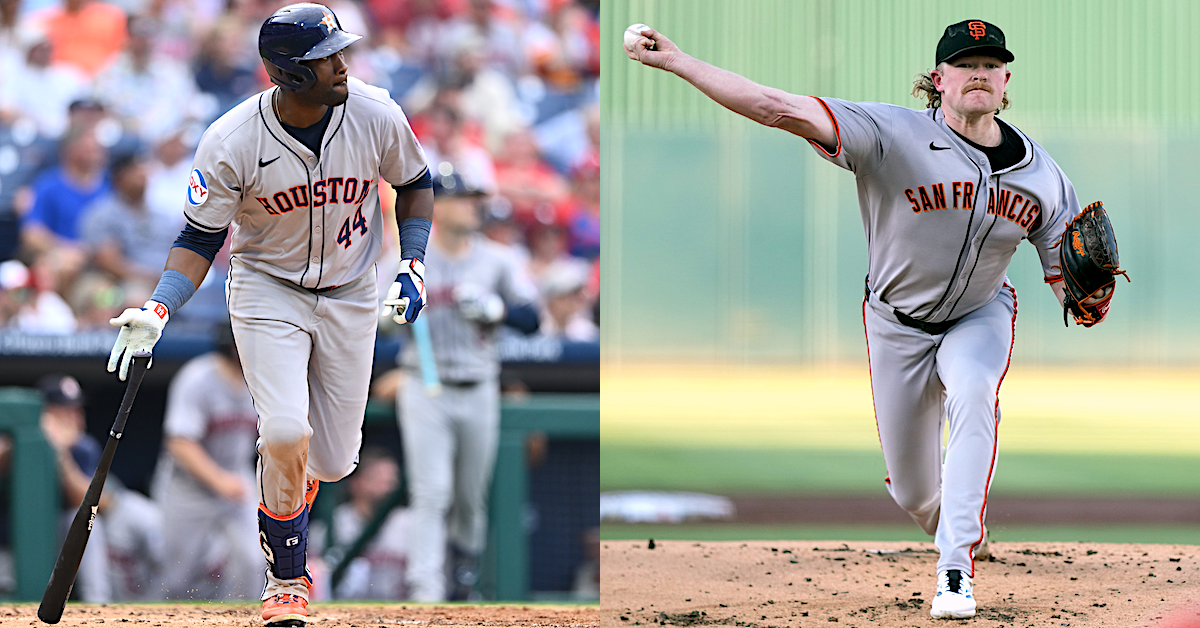
Here at FanGraphs, we make a lot of bold predictions. The entire staff makes them in a site-wide exercise that will come out tomorrow. I made 10 more of my own on Effectively Wild. Historically, I made five bold predictions about the season in this space as well. But I’ve been crowded out! Bold predictions are everywhere now. Meg and I came up with a substitute last year, and I enjoyed it enough that I’m bringing it back again: Five big questions about the season. These aren’t the only big questions I have. They aren’t necessarily the biggest questions in baseball. I don’t know the answers to any of them. But all five of these are unresolved questions that will help to shape the 2026 season, and all five fascinate me.
1. Do the Brewers Still Know Best?
The kinds of nerdy fans who read (and write for) FanGraphs have always had a data-driven team to root for. The Moneyball A’s predate this website. The Rays took that blueprint and ran with it. Before the Astros went full banging scheme, they revolutionized player development. The Guardians develop pitchers better than almost everyone else. The Brewers are the latest model; they do things a little bit differently than the rest of the league, according to some internal blueprint, and their plan works. They have the third-most wins in the league over the last five years despite running one of the lowest payrolls. It looks like their run atop the NL Central might continue indefinitely.
Of course, it felt like the previous analytical darling teams would keep their runs going forever, too. The A’s fell off hard after their peak. The Rays look a lot less magical today than they did four years ago. No advantage lasts forever; if you have some kind of secret sauce that truly does work, every other team in baseball will be trying to figure out the recipe.
From the outside, it’s clear that the Brewers do at least three things very well: They develop good pitchers, find fast and athletic position players who deliver plenty of WAR without gaudy batting statistics, and proactively trade established players for prospects who fit their preferred pitching and hitting archetypes.
This year, the Brewers are trying to do all three of those things at once. They traded two starting position players and their top starting pitcher. They’re filling in those slots with a mixture of their own prospects and the guys they acquired in those deals. Last year, the Brewers beat their projections in large part because of surprise seasons from guys they’d recently acquired. This year, they’re going to try to do it again, with a different group of guys they’ve recently acquired. That’s hard!
The market isn’t efficient. The Brewers really have proven their ability to find edges that other teams don’t see or can’t put into practice. But those advantages aren’t permanent, and it’s difficult to know in advance when their effectiveness will degrade. Brandon Sproat, Kyle Harrison, and Luis Rengifo weren’t Brewers last year, and they didn’t help their respective teams out all that much. This year, they’re all projected starters for Milwaukee. If the Brewers still have the magic touch, it’ll all work out. If they don’t, it’ll be easy to question them in retrospect. But you never know when your One Stupid Trick will stop working, at least until that actually happens.
2. Can the Padres Keep Kids off Their Lawn?
The Padres have been one of the most exciting teams of the 2020s. They promote their own prospects aggressively, make splashy trades, spend in free agency, and overall act like they are truly in a must-win situation at all times. I think of them as young upstarts in the established order of things, with their bright uniforms and delightful young stars top of mind when I imagine what’s going on in San Diego.
The uniform part of that is still true. The age part isn’t, though. Padres hitters are the third-oldest group in baseball, based on our aggregate playing time projections. Sure, Tatis is nicknamed “El Niño,” but he’s 27. All those years of trading minor leaguers for veteran performers have left Jackson Merrill as the only hitter on the 26-man roster younger than Tatis. In fact, those two and Gavin Sheets are the only three starting position players who will be in their 20s on Opening Day, and Sheets turns 30 next month.
I can understand how A.J. Preller ended up in this situation. He’s proven adept at finding value from reclamation-project veterans in recent years. The math keeps lining up – get a star for some good-but-not-great minor leaguers, then replace those minor leaguers on your depth chart with the likes of Miguel Andujar or Nick Castellanos. But this team has gotten very old, because its best players are aging at a rate of one year per year (yep, math checks out), while the rotating supporting cast isn’t getting get any younger, thanks to the constant churn of exchanging prospects for veterans.
The rotation is more of the same. It’s not the oldest in baseball, but San Diego is one of six teams whose average starter age exceeds 31. For the record, the others are the Cubs, Blue Jays, Tigers, Rangers, and Rockies (?!). Where many teams would fill in the back of their rotation with prospects, the Padres are going with vets looking to rebound: Germán Márquez and Walker Buehler are both starting the year in the rotation. Ignoring relievers, the Padres are the oldest team in baseball. Adding relievers, they’re part of a five-way tie for the oldest; the Dodgers, Yankees, Blue Jays, Phillies, and Padres all project for an average age between 30.27 and 30.35.
This trajectory can’t continue forever. The Padres have gotten by because their stars are great and because Preller is maxing out the veteran retread pipeline (and the NPB/KBO pipeline, too, it should be noted). But the stars won’t stay this great forever, the veterans he brings in won’t always pan out, and a prolonged farm system deficit is making it ever harder for the Padres to retool during the season when they need depth. I don’t know if this is the last year the current Padres core will compete for a title, but surely that time is coming soon.
3. How Long Until the Challenge System Feels Normal?
Challenges are so hot right now. I can’t go a day without seeing a new leaderboard on Baseball Savant, or reading an article about how a team plans to deploy its challenges this year. Questions about them pepper my inbox. Will they help hitters? Pitchers? Will they change the nature of catching? Will certain pitches become overpowered due to weird interactions between the new rulebook zone and the extreme break that some slower deliveries can produce?
This isn’t a bold prediction article, so I’ll make a milquetoast projection instead: In a few years, we’ll all feel totally normal about this system. The question, in my mind, is how long it will take before challenges feel not like an area for teams to derive an advantage but merely a normal part of the game.
My point of comparison for this is tennis, which instituted a challenge system for in/out line calls in 2006. It used the same Hawk-Eye technology that powers Statcast today. It was a curiosity when it came out – and then pretty quickly, it was just part of the game. Tennis announcers and fans went from marveling at the cameras and discussing challenge strategy to just ignoring it. More calls were made correctly. (By definition: a challenge system is the old system plus some chance of correcting an incorrect call.) The calls that changed made the game better by correcting an oversight. Everyone prospered. I think baseball will follow the same path.
The optimal challenge strategy probably isn’t interesting. It involves challenging rarely or not at all in early innings, particularly in situations where the call doesn’t lead to a strikeout or walk. In later innings, you can widen your threshold for challenging, both because some situations will have extremely high leverage and because you don’t get to take the challenges home with you if you fail to use them. Every called strike three in the ninth inning – and every pitch that could have been called strike three but was instead called a ball – is fair game for a challenge because the rewards are just that high.
You could always challenge if you’re very sure the call is wrong, too, but in practice, no one has been all that accurate at challenging so far. That was true in tennis, too, and the uncertainty is amplified in baseball. It’s just how the human brain works; the ball is moving too fast for your eyes to actually see it continually, so your brain makes some assumptions about where it goes in the interim. There isn’t even a physical strike zone; you have to guess where that is, too.
In 10 years, the zone will probably be called completely by computers. But long before we get there, I think the challenge system will become a completely accepted part of the game, a small tool that mainly helps correct two things: obviously wrong calls, and wrong calls in important situations. It’s just a matter of how long it takes to get there, and how hyperbolic we all get about the importance of challenges in the meantime.
4. Who’s the Best Hitter in the AL West?
For quite awhile now, the three best hitters in baseball have been Aaron Judge, Shohei Ohtani, and Juan Soto in some order. You can throw Ronald Acuña Jr. and Vladimir Guerrero Jr. into the mix to make a top five if you’d like. Maybe you could add Bryce Harper if you value reputation over recent results, or Bobby Witt Jr. if we’re talking about overall offensive value instead of merely batting. I think that one AL West hitter will crack this list this year. I’m just not completely sure who that will be.
Could it be Cal Raleigh? Certainly. He just hit 60 homers and finished second in the AL MVP voting. He posted a 161 wRC+ with solid peripherals, and he’s in the prime of his career. The Mariners DH him plenty to keep his legs fresh even though he’s a great defensive catcher, because they know his bat is just that valuable. He walks a ton, strikes out an acceptable amount, and does it from both sides of the plate. But he’s actually the least likely answer to this question out of the three names I’m considering here.
Could it be Yordan Alvarez? No doubt. Yeah, Raleigh had a career year, but Alvarez’s career wRC+ is actually better than Raleigh’s single-season 2025 mark. Injuries held Alvarez back last year, but even then, he walked almost as much as he struck out and smashed the ball to all fields with authority. He rarely chases, makes a shocking amount of contact for a man with 97th-percentile bat speed, and puts the ball in the air without popping it up.
Don’t forget about Nick Kurtz, either. The Athletics phenom exploded into prominence last year, posting the best batting line for a rookie since… well, since Alvarez debuted in 2019. Kurtz has a Yordanian game, too. He’s a mountain of a man, and he takes big hacks aimed at getting the ball in the air to all fields. He struck out 31% of the time in his debut, which is a minor worry, but I’m willing to grant him the benefit of the doubt. Kurtz got drafted in 2024 and barely played in the minors; adjusting to big league pitching while posting a 170 wRC+ is just further evidence of his precocious talent and ability to improve rapidly.
The best hitter of this trio isn’t guaranteed to make the playoffs, just so we’re clear. Baseball rarely works that cleanly. But all three of these guys have huge error bars on their projections in 2026. Raleigh just put up the best season of his life and has to repeat it. Alvarez has to show that he’s healthy again. Kurtz has to prove that he’s not just a flash in the pan. We’ll know a lot more about the future of the division at year’s end, because I think we’ll have a much better idea of how good these superstars are. I’m not sure who will come out on top – or whether Julio Rodríguez, Brent Rooker, or Corey Seager will crash the party – but all three have the talent and track record to finish the year in the pantheon of baseball’s very best.
5. Will Anyone Throw 200 Innings?
In 2021, major league pitchers were still reeling from the shortened pandemic season. With little workload to build off of from the previous year, innings totals and readiness fell precipitously. Only four pitchers crested the 200-inning mark, the lowest full-season mark in baseball history. It was a shocking downturn; 15 pitchers hit the mark in 2019, and a full 28 had done so as recently as 2015.
In 2022, pitchers rebounded somewhat; eight starters threw 200 or more innings. But there was more contributing to the broader trend than just the pandemic. In 2023, only five pitchers did it. Only four did in 2024. And in 2025, only three pitchers – Logan Webb, Garrett Crochet, and Cristopher Sánchez – tallied 200. That’s the new all-time low, but if the trends hold, it won’t stay that way for long. We’re eventually going to have a year with no 200-inning pitchers. The question is when.
Webb is the best bet to do it. He’s topped 200 innings for three straight seasons. But it’s been a near thing; he had 204 2/3 in 2024 and 207 in a league-leading 34 starts in ‘25. One short start or one skipped turn could leave him short. Crochet and Sánchez are first-time 200 Club members, and each has an interesting outlook in ‘26; Crochet certainly looks the part of an old-school innings eater, but he missed so much time due to injury early in his career that he’s new to hefty workloads. Sánchez looks like a natural Webb successor – same sinker-based game, same good command – but it’s had to project another 200-inning season from him when he’s only reached that mark once in his career.
While I’m fascinated by each of those pitchers, the macro view is even more interesting. Take a look at how teams have behaved in recent winters. Bulk starter innings are extremely valuable on the free agent market. Everyone’s looking for seven starters, not five. There are so many innings to fill that teams are aggressively pursuing all kinds of solutions. Older starters from foreign leagues? Reliever conversions? Justin Verlander and Max Scherzer? Everything’s on the table.
But despite that hunger for innings, concentrated volume keeps declining. Pitching is valuable in part because it’s so fragile, and teams have gotten caught between preserving the long-term availability of their best guys and managing the short-term necessities of fielding a full roster. Sure, you’d love 230 innings from your ace. But if you perceive the injury risk of those 230 innings to be high, maybe you’d accept 180 from your ace and 50 from a random veteran. Come playoff time, this trade-off goes away, but now that everyone makes the playoffs, the difference between 50 average innings and 50 elite ones is increasingly a price teams are willing to pay for health.
There’s no rule that says it has to keep going this way. My view is that processes like these generally self-perpetuate until they’ve gone too far, but then the snap-back can happen quickly. There’s no way to tell whether we’ve hit the bottom yet, though. The simultaneous search for bulk innings and the restriction of top-end starter workloads has defined major league roster construction for quite awhile now. I’m interested in seeing whether it continues apace this year, or whether we’ve reached some kind of local minimum in workloads for the best starters in the league.
Ben is a writer at FanGraphs. He can be found on Bluesky @benclemens.
On a different team, I think Skenes could and would throw 200. Cherington and Kelly will never allow it though.
I think there is a good chance he does, he hit 187.2 last year, a 25+ IP jump from 2024. Seems like a natural progression this year.
That was with them artificially limiting his innings/pitch counts in the back half of the season once they were well out of it. Assuming the Pirates are in the race for most of this season, he should easily get there.
I think it could depend on whether the Pirates are finding a way to stay in the WC race. The temptation to let him pitch more if the team is actually playing for something, even balancing against the future.
He threw an avg of 93 pitches per start last year. That doesnt seem like someone being protected that much. I know they cut one of his starts in sept short last year specifically to limit his workload but it was also a meaningless game (as were many last year for the Pirates)
If the Pirates are actually good, or good enough at least, I suspect they will lean on Skenes more. I dont think they are going to limit arguably the best pitcher in MLB to an arbitrary innings limit if they are pushing for a WC spot.
If Skenes starts 31 more games this year, he’d need to pitch into the 7th every game (on average) to get to 200 IP.
If he starts 34 more games, he’d just need to average 6 IP/start. I think 32 starts is more likely than 35, especially because he threw stressful innings in the WBC and if the Pirates might make the playoffs, they would want him fresh for those starts too. But 200 is possible.
Are those aggregate roster ages available somewhere on the site?
No but here they are in a Google Sheet: https://docs.google.com/spreadsheets/d/1a8q0JXz5OwFi-TsbQVFoRq2Mqe0nmvZv-lOc45YdTbo/edit?usp=sharing
Amazing how times have changed. 2004 was Big Unit’s age 40 season. He lost the CY to Clemens who was 41 that season. Johnson’s 2.30 ERA and 0.90 WHIP with 290K in 245.2 IP was just not good enough.
Including that season, in ages 40-42 seasons Johnson posted 676.1 IP and 673 K. Won 50 games, threw 10 CG and 2 SO. I’ll always cherish that period of time in baseball, and not in a way that denigrates today’s game, it was just special for its own reasons.
The game has changed fast. Kids born the year Mark Buehrle’s streak of 14 consecutive years with 200 IP ended are just starting to hit puberty.
Johnson lost the CY because: A) he only won 16 games, and B) Clemens was just as big name as Unit and won 18 games. Such a shame too because him going 16-14 for a 111 loss DBacks team was pretty amazing.
That was just as advanced stats started gaining steam and attracting more attention but at that time, it was so much about Ws. Before 2009, and excluding strike years and 2006 when nobody in the NL won more than 16 games, the only starting pitcher to win the CY with fewer than 17 Wins was Rick Sutcliffe in 1984 and that comes with a gigantic asterisk since he was traded mid-season from Cleveland to the Cubs. While he only won 16 games in the NL (which is all that was counted in the voting), he won 20 on the season.
Since 2009, and excluding 2020, 14 of the 32 CY winners have won 16 or fewer.
The only question I have is whether Ohtani is really a human being. Even if it was only spring training 11 K’s in the first 4 innings is astounding, and I have heard that he is also a pretty good hitter.
He’s clearly not. If Mike Trout was an robot sent from the future to annihilate baseballs, Ohtani must be the next model.
If you ask a Japanese person, Ohtani is merely what you get when a Japanese person grows to the size of an American.
So Ohtani is now obese and is not in the best shape of his life?
Ohtani represents the absolute peak of evolution. Its all downhill from here
We are all DEVO.
Are we not men?
I think it’s (pretty obviously?) clear that Yordan is the third best hitter in baseball. Soto’s only edge is that he’s played more games (which, duh, that matters). But Yordan is clearly a demonstrably better hitter
Early April Fool’s joke?
You know, after looking for a few minutes to make sure I wasn’t crazy, I’ll admit that it was too strong of a stance. Yordan’s 2025 118 wRC+ hurt him pretty bad in comparison’s with Soto (plus great 2024 and 2025 from Soto has nudged him to about even w Alvarez overall):
2022-2025: Alvarez 168 wRC+ vs Soto 159 wRC+
2021-2025: 160 vs 160
2020-2025: 160 vs 162 (this was ofc Soto’s big 202 wRC+ season)
2024-2025: 155 vs 168 (edge clearly to Soto)
So, maybe not demonstrably better, and the most recent years certainly favor Soto. But I will at least maintain that Alvarez is at worst the 4th best hitter in baseball, and any other guys mentioned are behind him.
Their career wRC+ is Alvarez at 163 and Soto at 158. That’s not clear or demonstrable at all. They’re both great!
I fully agree that Alvarez is awesome, and I’d just change the premise slightly:
There’s no just group as the “Top 3 Hitters in Baseball.”
Aaron Judge is the best hitter in baseball.
Then, it’s Ohtani/Yordan/Soto…all of whom are a lot closer to tenth than they are to 1st.
Honestly, the whole “in some order” in the article made no sense. It’s Judge-Ohtani-Soto.
That’s the order. Ohtani isn’t at all close to Judge but really Soto isn’t close to Ohtani. This holds true if you look at their wRC+ for the last one, two, three, four, or five years.
Soto loses third place on multiple of those ranges, too, while Judge-Ohtani remain 1-2 throughout. His placement at three is questionable, looking backwards. His placement above three is a ridiculous assertion.
Nick Kurtz is coming in hot!
IMO the argument as to what order the #3-#8 hitters in baseball will be in is just not interesting. What are the stakes of a debate about the order when Cal Raleigh, Juan Soto, and Ronald Acuna all had wRC+’s within 5 points of each other in 2025…and that’s before we start talking about Ohtani, Yordan Alvarez, and Nick Kurtz? I just don’t think it matters. One of them will probably have a better year than the others in 2026, and in 2027 it could very well be someone else.
Hot take: Ohtani’s bat is closer to Judge’s than whoever has the 10th best bat.
Batting runs over the past two seasons
(deliberately chosen to be favorable to Judge)
1. Judge 180
2. Ohtani 132
3. Soto 114
4. Guerrero Jr. 81
[…]
10. Henderson 59
As a matter of fact, Soto is the only hitter whose batting run differential from Ohtani is smaller than the gap between Ohtani and Judge.
Depends on the span and metric!
I was using wRC+ numbers from 21-25, both because of the “a number of years” parameter Ben mentioned and to deliberately include 2021, the last season before SuperJudge!
Over the past two years, the wRC+ gap is 36 between Judge and Ohtani.
Drop 36 from Ohtani’s, and you’re at 140…which would be 10th place!
(I’d be remiss not to note the 25 point gap between Ohtani and Vladito in 4th, however!)
If you’re being super pedantic, 10th place is a 38 point difference. So Ohtani is closer to Judge. And if you dropped Ohtani 36 points, he’d be in 9th place because even Ohtani can’t be in two places at once.
The most favorable comparison for Ohtani would be 2023-2026*, where the difference between Ohtani and Judge (25 points) is the same as Ohtani and 6th place Corey Seager.
*Judge’s wRC+ 2023-2026 is one point lower than 2023-2025 thanks to last night. This is clearly cherry picking at its finest and the thrust of the point is still clear: Judge cannot be compared to contemporaries at this point offensively.
Hah, excellent pedantry – I doff my cap, sir!
Yeah when I read your comment the first thing I did was check to see what their cumulative wRC+ was between 2021 and 2025…and they were the same.
I would guess that due to health issues that Yordan Alvarez is going to drop from here on out, although maybe not too quickly.
This was true going into 2024! Soto, relative to Yordan, was a media darling and therefore overrated but they’ve diverged since then. Soto is still the biggest name and now in 2026 his projections are ahead of Yordan. I wanna believe in Yordan though.
I don’t think Crochet gets 200 innings this season. Not due to ability, but due to more limited opportunity. The Red Sox have so many starters that it seems they’ll employ a 6-man rotation during busier parts of the schedule, or simply for overall rotation workload management however they see fit, to keep Suarez, Gray, and everyone else healthy for the playoffs run. And now Connelly Early has made the Opening Day squad. So the current rotation is: Crochet, Gray, Suarez, Bello, Oviedo, Early. Even if they only occasionally use a 6-man rotation, it’s unlikely Crochet gets to 200 IP. It will be fascinating to see how Cora manages those arms.
Some other teams with strong pitching staffs are taking similar approaches to their rotations, so 2025 truly could have been the swan song for 200 innings pitched
I was just about to comment something like this. The team’s playoff hopes won’t be laid solely on Crochet’s shoulders like they were in 2025. The team is better, the competition should be worse, and we have more than two other starters whom you can count on every fifth day.
That’s still no guarantee at this point that they won’t need every start they can get from Crochet to get a first round bye or even make the playoffs.
Agreed – I’m not sure taking starts from one of the five best starters in the whole league and giving them to the sixth best starter on your own team is the best way to get ahead in what should be a very tight race.
Overall, I think you are right … and credit to the Red Sox for building a good enough (somehow cheap enough?) rotation to pull this off with … however, Oviedo is starting the year in the ‘pen as some form of long-relief.
If a team has a clear Ace starter, using a 6-man rotation at any time that Ace is healthy just doesn’t make sense until/if the team has reached the point that they are essentially guaranteed a first round bye in the playoffs. Otherwise, they need to make sure that guy gets as many starts as possible (on normal rest, of course) to rack up the team wins.
It would be a huge embarrassment if the team just missed that first round bye or the playoffs completely just because they were trying to save some gas for the playoffs.
I’m not advocating that they should employ a 6-man rotation, but given the number of starting pitchers they are carrying, it sure seems like that’s the plan. I see them occasionally doing it at some arbitrary point of the schedule, out of an abundance of caution for workload management (of the entire rotation, not just Crochet)
I don’t think we ever see a snap back to a plethora of 200 inning starters. All the contributing factors are still going the other way … young pitchers being babied on strict pitch/inning limits, managers hyper focused on match-up/platoon splits later in games, and (above all else) it’s because of the elevated velocity in todays game which has led to the increase in injuries. The velocity genie is not going back in the bottle.
I’m wondering about the optimal challenge strategy. Catchers had a 60% correct challenge rate in spring training, hitters had a 46% success rate, and pitchers had a 56% success rate (although with a lot fewer challenges).
I would think the optimal strategy is to empower catchers to challenge early and not let hitters challenge until late in the game.
I agree. I also believe run expectancy, not leverage, should be the guiding principle. A good challenge that swings run expectancy early in the game could literally make a “leverage” challenge later rather meaningless.
The other factor is certainty. Tell your hitters that if they miss a challenge early then they’re getting benched for the rest of the game. Maybe they get one mulligan, but then enforce it. Managers could give the green light depending on the situation.
There’s probably other perhaps better ways to ensure your players are using them wisely. But letting obvious bad calls stand seems like a terrible idea.
I wonder if it will just be the teams best players challenging early in the games
That’s a good point – I would give Aaron Judge a lot more leeway in challenging than I would Volpe (for example).
MLB had an article where they asked players which hitter was going to benefit the most and Soto was the winner by far. I have to believe he is given carte blanche to dispute any call at any point if he’s certain it was a ball.
But I have to believe that all players will be given some leeway to dispute the egregiously bad calls. We’ve all seen those ones where the pitcher misses right down the middle and the ump doesn’t call it because he didn’t hit his spot. Going to be a lot of those at any point during the game.
As I was looking at the spring training leaderboard, the best hitters at challenges were not players with the highest walk rates, who you would think would really ‘know’ the strike zone. There seemed to be a lot of catchers (or former catchers) like Wilson Contreras, Austin hedges and Agustin Ramirez. It might just be random, but maybe catchers also have the best strike zone judgement, even when they are hitting.
When the ump calls the “right down the pike ball” it always makes me think of Frank Drebben trying to forestall the 7th inning stretch. I think it’s important that we not forget that the ump may be trying to protect a visiting head of state or dignitary
I think one reason the Brewers “One Stupid Trick” keeps working year after year is that it isn’t the same trick over and over. Yes, the very surface concepts are the same; trade expiring contracts, extreme value focus etc. But the traits they look for, what they develop in pitchers and so on change over time. They don’t stop trying to innovate, they don’t rest on their laurels or settle on “The Brewers Way”. Or they do, but the Way is ever-changing.
Brewers pitching is far deeper than it was this time last year. Freddy is likely more of the mid 3 ERA pitcher his career and peripherals suggest than the mid 2 ERA pitcher from last year. So keeping him would *also* mean a step back, in all likelyhood. Whoever replaces him won’t be far off 2026 Peralta. The Collins trade is only weakening if you expected his 2025 to be repeatable; I’m fairly certain it isn’t. Durbin is probably pretty close to what he was in 2025, but even an uninspiring Hamilton/Rengifo platoon (Until if/when Jett comes up) is likely not going to be too far off that. The rest of the position player side is better.
It’s totally reasonable to not expect 97wins again. But the .500 (or in some cases worse…) projections/predictions are an easy over. That should be obvious even if you don’t beleive in some kind of “devil magic” or the likes.
The Brewers’ pitching pipeline really is spectacular if you’re expecting a high 3’s ERA from whom is currently their #5 starter.
I think Andrew Fischer is more likely to be the future 3b for the Brewers, maybe as early as July. Also, I’m fairly sure Collins would start 2026 in Nashville if he wasn’t traded assuming he’d be below Perkins in the depth chart, and Perkins is in Nashville.
The one weird trick that the Brewers have been consistent with is improving catcher defense. It is shocking how good they have become with that.
I said this about the Brewers on the article about the Caleb Durbin trade: This is a team that clearly believes that they are the smartest team in the league. They believe that they can take players who look like they’re maxed out and turn them into above-average regulars. And they are willing to trade away the previous players they previously improved in order to do it again.
They may actually be the smartest team in the league, and certainly their record with Collins, Priester, and Vaughn is evidence that they’re closer to that side than not. But there is such a thing as having too much confidence in your own projections and methods. They seem totally convinced that enough of the following will be true so that they can win the division again:
1) Garrett Mitchell will stay healthy
(2) that at least one of David Hamilton or Luis Rengifo can hit and play third base effectively
(3) the real Jake Bauers is closer to the guy who had a 167 wRC+ in the playoffs than the guy with a career 87 wRC+, and
(4) that Kyle Harrison is a few tweaks away from being the next Quinn Priester.
(5) that Yelich, Vaughn, and Frelick’s 2025 is closer to what they will do than the FGDC projection
How many of these these things do they have to be right about in order to win the division? Three? Four? All five? Excepting the shortened 2002, a team has needed at least 92 wins to take the division going all the way back to 2015. They’re currently projected for 82 wins.
This is why I think overconfidence is dangerous. They could actually be the best team in the league at this stuff, but you shouldn’t be counting on that at 3-5 different spots. That means you have to be right a lot.
It’s weird to project arrogance on a FO for making moves. I’m sure they think they’re plenty smart, but none of what they did this offseason screams “we’re taking big risks because we think we know better” to me. They moved Peralta when they could to get value back. They turned Durbin into pitching depth. The idea that these are overconfident big brain moves seems pretty misguided to me.
I think the “this season” time horizon is confounding people. They have infield depth coming from the minors, maybe as soon as a few months. They don’t have pitching depth coming. So they recalibrated the roster — still competitive this year, and better positioned going forward.
I’d bet that a) they will be competitive this year, which is their aim, and b) that they wouldn’t be in a meaningfully different competitive spot for 2026 at the end of the year if they’d kept Peralta and Durbin.
I have now seen about 10 different defenses of the moves that the Brewers have made this offseason. I get the Peralta move, that was a huge return for a guy with one year of team control.
But aside from that, none of these explanations make any sense unless one of two things are true:
(1) They have enormous confidence in their ability to rehabilitate players that other teams have given up on and in their guys in the minors, or
(2) They just don’t care that much about 2026
Collectively, Kyle Harrison, Luis Rengifo, David Hamilton, and Angel Zerpa were worth 0.9 fWAR last year. Forget comparing that to their fifth and sixth most valuable position players last year…that’s less than Nick Mears and Andruw Monasterio gave them last year, and trading those guys away barely rates a mention.
There is absolutely no way that they make these moves unless they thought they could fix them when other teams couldn’t*. The crazy thing is that it could work. Some of the stuff that happened last year was so improbable that I think they might really have a knack for this. But it’s awfully risky.
—
*Unless they just don’t care that much about 2026, which I think is also a possibility, since they kind of arrived a year early last year.
Let me explain this in more detail:
At third base, Brock Wilken and Cooper Pratt are projected for an 87 and 75 wRC+ for 2026. Andrew Fischer doesn’t even have 100 PAs in pro baseball. Jett Williams has had throwing issues at shortstop and has had zero innings at third base in pro baseball. Luis Rengifo played so badly last year it’s surprising he didn’t have to settle for a minor league deal. David Hamilton hit so badly that he was never a serious consideration for a Red Sox team that had a glaring hole in the infield.
In center field, Garrett Mitchell has only had 443 PAs in the major leagues…despite burning up 3 years of service time. His backup / platoon partner has a career 62 wRC+. The backup’s backup is at 85. Luis Lara is the next guy up probably, he’s projected for something like a 75 wRC+. The rest of the upper level outfield depth is entirely org guys.
I am not a big fan of saying “they’re smart, we must have missed something.” We used to do that with the Rays, and sometimes we were right and sometimes we were wrong. We wouldn’t say this if we were talking about the Orioles, Blue Jays, Rangers, or Braves…all of whom are projected for more wins than the Brewers this year.
I do not buy that they decided that giving up a couple wins this year wouldn’t change their competitiveness, unless they were already resigned to not being competitive. I think they think they can make this work.
I think they viewing it as gathering themselves up…ahead of a leap when the young lads come up next year.
And what were projections for Priester, Durbin, Collins, Vaughan, Turang and Patrick before last year? It’s almost like they know something more about player development than they’re given credit for.
We’ll see on the OF now that Chourio is out for a stretch.
Don’t disagree they have risks at two positions. Where I do disagree is the idea that they would be significantly better off with Durban and Collins on their roster, as opposed to where they stand now.
Say Collins is a 1-1.5 WAR guy, Durbin 1.5-3, though I’d take the lower range and think they would too. Call that 3.5 WAR.
They have Bauers (1 WAR) in place of Collins, they have Hamilton (1.5 WAR 2 years ago in 60% of a season, ZIPS is similar on him this year, other projections are lower but mostly because they assume less playing time), and Rengfio (1 WAR). Jett Williams also could be an option in both spots. And maybe some other prospects later in the year though I don’t think they’re counting on that, or a midseason acquisition.
That doesn’t scream “they’re giving up on the season” and in exchange for that dip they got a bunch of pitching depth — relevant both for their rotation and pen — and are better configured for 2027. It makes sense to me. I get you disagree but the idea that this is some wild, arrogant approach is odd — particularly when they’ve repeatedly shown they are good ant extracting value out of players you wouldn’t expect them to.
Agree, I think they don’t care so much about 2026, at least not the division. Probably figure they’ve got a better shot at it than the projections show, but ultimately only need to be a bit over .500 to make the playoffs. Next year a new crop arrives. If the OD roster washes out, some of those guys will get an early test.
I’m cautiously optimistic the plan will work, but I think the season is going to feel like ’23, kind of a tough slog.
I don’t think it’s so much that the Brewers think they’re the smartest team in the league, vs they understand that they are in the smallest market in the league and ruthless follow a strategy. I think their strategy is more akin to an investment fund buying low/selling high. They likely believe they sold high on Collins and Durbin; while absolutely buying low on Vaughn and Priester.
On top of a ruthless buy low / sell high mindset then they layer in their org preferences (speed/defense/pitchers with odd deliveries, etc). I doubt they think David Hamilton or Luis Rengifo are great (just like the Rays likely have no delusions of how good Lux and Mullins will be), but sometimes you have to play guys like that when you don’t have money to spend.
Most every team wouldn’t even entertain the idea of trading a guy who just put up 2.6 WAR in his rookie season. But the Brewers did it twice this winter because they believed they were selling high.
There are two parts of this that are hard to reconcile when they happen at the same time. They sold high…but also they know the guys they got back aren’t great? It only really works if you sell at peak value for something like that actual peak value!
It only works if they think they know something other teams don’t.
It seems like a combo of:
“We pull Collins/Durban types out of our back pocket every year and need to do something with the excess”
And
“We’re better at pitching dev than the Royals and The Fucking Stiff and we know what to do with these kids.”
Just commenting on the Durbin trade, which I think is the most confusing aspect of their offseason. It’s only weird if you are convinced that the Brewers must win every trade to be this good, or that winning trades is at the root of their “plan.” But I think what happened here is that Arnold simply got housed on the Devin Williams trade, lucked out with Durbin hitting his ceiling out of the gate, and to his credit, pivoted away from a player he overpaid for.
Williams was in best-reliever-in-baseball territory over 2022-2024. To trade even 1 year of him for a utility IF prospect and an expensive 5th starter who apparently everyone in the world except Arnold knew was injured reeked of desperation. The 2025 roster had a gaping hole at 3B (and backup IF), and Arnold needed an MLB-ready (read: old) prospect with a modicum of upside beyond a AAAA journeyman. Cashman pounced.
Fortunately, and perhaps attributable to Pat Murphy, Durbin delivered to salvage the short-sighted move. Even Williams did his part by crumbling under the bright Bronx lights. Arnold saves face on the surface. But if he truly thought Durbin could be as good as necessary to justify that return for a top closer, he wouldn’t have traded 5 years of Durbin control for Kyle Harrison.
To explain this sequence, you have to accept that he fuctup, he realized he fuctup, and opted to rectify while he still had a playable hand. That’s a self-aware pivot I would expect from someone who actually is the smartest man in the room, not just thinks it.
Less speculatively, I think it’s clear Arnold felt compelled to acquire a metric ton of cheap arms to make up for the loss of 200 Peralta innings. Zerba, Harrison, Drohan, Sproat and Jake flippin Woodford are all what makes trading Freddy while preserving 2026 optimism possible.
God, I hope it doesn’t take 10 years to have the zone fully called by robots