
How the Red Sox Could Miss Out on All the Big Free Agent Infielders and Still Come Out Ahead
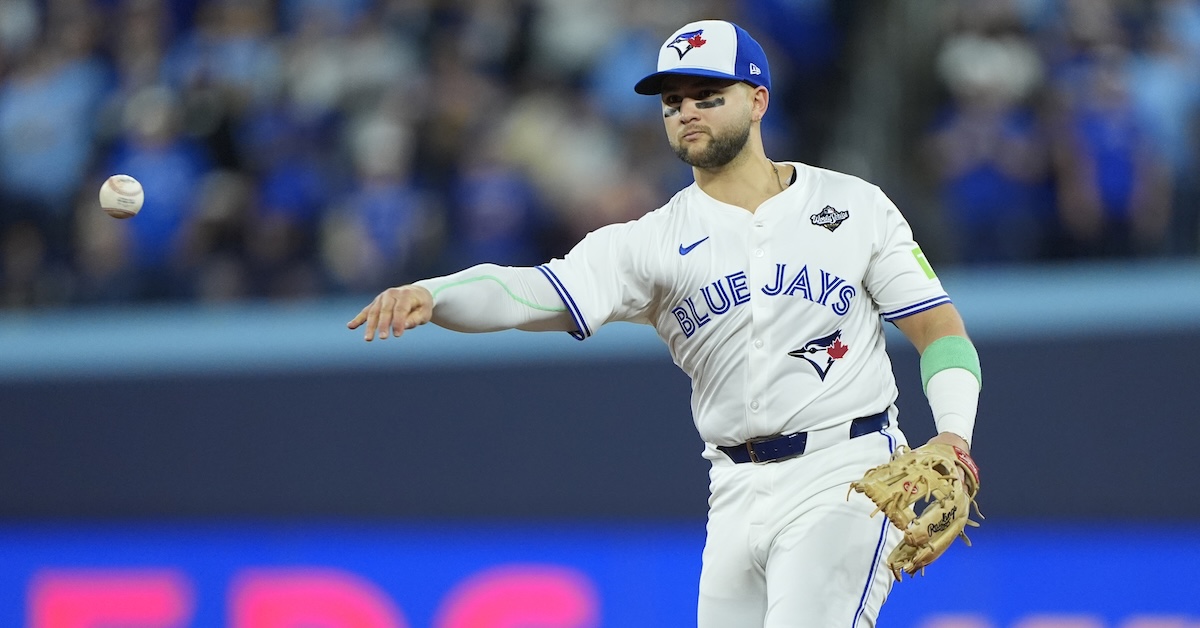
Things have been a little testy in Boston of late. It’s all downstream of the decision, in June, to trade — salary dump, really — Rafael Devers to San Francisco. I won’t relitigate the blow-by-blow, but Boston had just made the opportunistic signing of Alex Bregman and anointed Kristian Campbell as their second baseman of the future. Coupled with Trevor Story’s return to decentness after two years lost to injury, to say nothing of Marcelo Mayer’s rapid development, that left the Sox with more infielders than they could use.
Now, having seen what’s happened to Devers’ in-zone contact rate over the past two seasons, I think in the long run Red Sox fans will be happy they don’t have to watch the last eight and a half years of his contract up close. But for now, everyone’s nerves are a still a little raw. It’s always tough parting with a homegrown superstar, but the player Boston seemingly chose over Devers is quite good himself… oh wait, Bregman opted out of the last two years of his contract and signed with the Cubs.
You know who summed the situation up quite nicely? Matt Damon, during an appearance on Katie Nolan’s show: “We had two third basemen — two All-Star third basemen — last year, and now we have none. I don’t know what to say.”
You could actually say quite a bit more, because the Red Sox have had a few positive developments on the infield in the past year. Getting a 3.0-WAR season from Story was far from a given, and while I don’t want to put too much stock in half a season from a platoon guy they picked up on waivers from the White Sox, Romy Gonzalez was terrific in a limited role in 2025.
But in just one major league campaign, Campbell seems to have played his way out of the infield situation entirely. Mayer was pretty poor in his first season in the majors, though I’m happy enough to write off a rookie season that was cut to 44 games by injury. Ceddanne Rafaela started 75 games on the infield in 2024 and 19 more in 2025. He too has moved to the outfield permanently, but considering the circumstances — Rafaela has not only flashed signs of offensive competence, he’s apparently a generational defensive talent in center field — that’s an unalloyed positive for Boston.
Still, that leaves the Red Sox with the following infield: Willson Contreras at first, some combination of Gonzalez and Nick Sogard at second, Story at short, and some combination of Sogard and Mayer at third.
I’ve seen worse, but “I’ve seen worse” is probably not what a team with championship ambitions is going for.
Here’s the good news: The Red Sox are in a great position to upgrade.
Because Story is a legit shortstop, and Mayer could play there if need be, the Red Sox aren’t looking for a player who can hold down one specific position. They could choose from basically any free agent or trade candidate with experience on the dirt.
And as much as the market is settling down, there are still some attractive options out there.
The most obvious — and most effective — answer is Bo Bichette, a longtime shortstop who’ll probably slot in at second base going forward. Bichette, 27, is not only one of the youngest players in this class, he’s one of very few genuine middle-of-the-order bats still out there. The Red Sox have been interested in Bichette, and it shouldn’t surprise anyone that those rumors have only heated up since Bregman signed with Chicago.
Unfortunately for the Sox, they might end up stuck in the middle between the Phillies, who are rumored to be the only team willing to meet Bichette’s ask on term, and the Dodgers, who will offer your mailman $35 million a year on a short-term contract.
Moreover, Boston made a big splash on Wednesday by signing left-handed pitcher Ranger Suárez to a five-year, $130 million contract. Suárez is a good pitcher, a playoff workhorse, and one of the coolest customers in the league; I get why he could command that deal out of context.
But five years and $130 million — which is, what, two-thirds of the way to a Bichette contract? — puts the Red Sox just over the second competitive balance tax apron. We’ll see what the team’s ultimate payroll limits are, but they can no longer sign Bichette without either offloading salary or tripping a new set of tax penalties.
The latest RosterResource tally has Boston at $265.7 million in taxable spending, with the third payroll threshold at $284 million. The Red Sox don’t have any outstanding arbitration cases, which makes the math easier, but let’s leave a few million dollars for emergencies. Let’s say the Sox have $15 million to play with, give or take.
If they aren’t willing to blow off the tax, that probably takes them out of the running for a double-Suárez offseason. Eugenio Suárez is 34, has been declining defensively, and runs a little hot and cold with the bat. Still, he’d be an upgrade on what the Red Sox have at third base now. Unfortunately, he’ll also command more than $15 million a year, seeing as how he’s coming off a 49-homer season.
The head-scratchy thing about the Red Sox signing Ranger Suárez is that, while infield is an area of obvious weakness, Boston’s rotation is its greatest strength. The Sox return Cy Young runner-up Garrett Crochet, Brayan Bello, and talented young left-handers Connelly Early and Payton Tolle. And Suárez is the third veteran starter the Red Sox have added this winter, after Sonny Gray and Johan Oviedo.
That’s a lot of pitchers. Seven, actually. And that’s not even counting Kyle Harrison, who was part of the return in the Devers trade, or Patrick Sandoval and Kutter Crawford, who are due to return from injury at some point in 2026.
Most teams only use five starting pitchers at a time, maybe six. Surely the Red Sox should trade from that surplus to strengthen elsewhere.
They certainly could, though I’d caution everyone to remember that in any group of 11 professional pitchers, just from a statistical perspective you’d expect three or four to be hurt at any one time. Still, that’s enough depth for the Sox to trade out of and still maintain a comfortable reserve of arms.
But the Red Sox aren’t the only team that’s doubled down on a position of strength. The Cubs did too when they signed Bregman, despite already having Dansby Swanson, Nico Hoerner, and Matt Shaw on the infield. If the Phillies sign Bichette, they’ll be in the same situation, with Trea Turner, Bryson Stott, and Alec Bohm all having at least three seasons of incumbency. Plus a really good fifth infielder in Edmundo Sosa, and an excellent near-majors shortstop prospect in Aidan Miller.
The Cubs could let it roll without trading anyone; Hoerner’s a free agent after this season, and Shaw’s combination of youth and versatility would make him an excellent luxury player and Hoerner’s heir presumptive. Nevertheless, the hot rumors now all involve the Cubs shipping Hoerner before the season. If the Phillies sign Bichette, it would put them right up against their stated budget limit, making Bohm and his $10.2 million salary expendable.
The Blue Jays, despite presumably jettisoning Bichette, have added Kazuma Okamoto and could still bring in Kyle Tucker. And while I wrote last week that they could still figure out a way to play everyone, that’s another team with an infield surplus the Red Sox could exploit. Assuming they were OK helping a direct rival.
Last week, the Cubs traded Owen Caissie (and two other guys) to Miami for pitcher Edward Cabrera. The Marlins needed some pop and had a surplus of starting pitching, while the Cubs had too many corner guys and could stand to gain a pitcher with some upside. In my writeup, I made passing reference to an economic concept called Pareto efficiency, one of the few half-remembered principles still stuck in my mind after a misspent youth as a political science grad student.
Pareto efficiency is a distribution of resources in which no one’s position can be improved without making someone else worse off. In a non-Pareto efficient system, a move that improves one party’s welfare without hurting anyone else is known as a Pareto improvement.
Such as a team with too many pitchers and not enough infielders trading a pitcher to a team with too many infielders and not enough pitchers, and getting an infielder in return. The Red Sox could still make a win-now move, like signing Bichette or Eugenio Suárez, or trading prospects for Brendan Donovan. Or they could miss out on signing Bregman and Bichette, and still profit by making a Pareto improvement trade for a veteran infielder displaced by those signings.
I don’t know if that’ll satisfy Matt Damon — though I dunno, he seems like a smart enough guy to handle some basic social science constructs — but Boston still has plenty of options. They might not have any third basemen at the moment, but it’s a buyers’ market.
Michael is a writer at FanGraphs. Previously, he was a staff writer at The Ringer and D1Baseball, and his work has appeared at Grantland, Baseball Prospectus, The Atlantic, ESPN.com, and various ill-remembered Phillies blogs. Follow him on Twitter, if you must, @MichaelBaumann.
They also have a surfeit of outfielders and I’ve never heard it said that you can never have enough outfielding.
Clearly the answer is moving Contreras to 3B. It’s 14 dimensional checkers.