
Konnor Griffin Will Be a Pirate For a Very Long Time
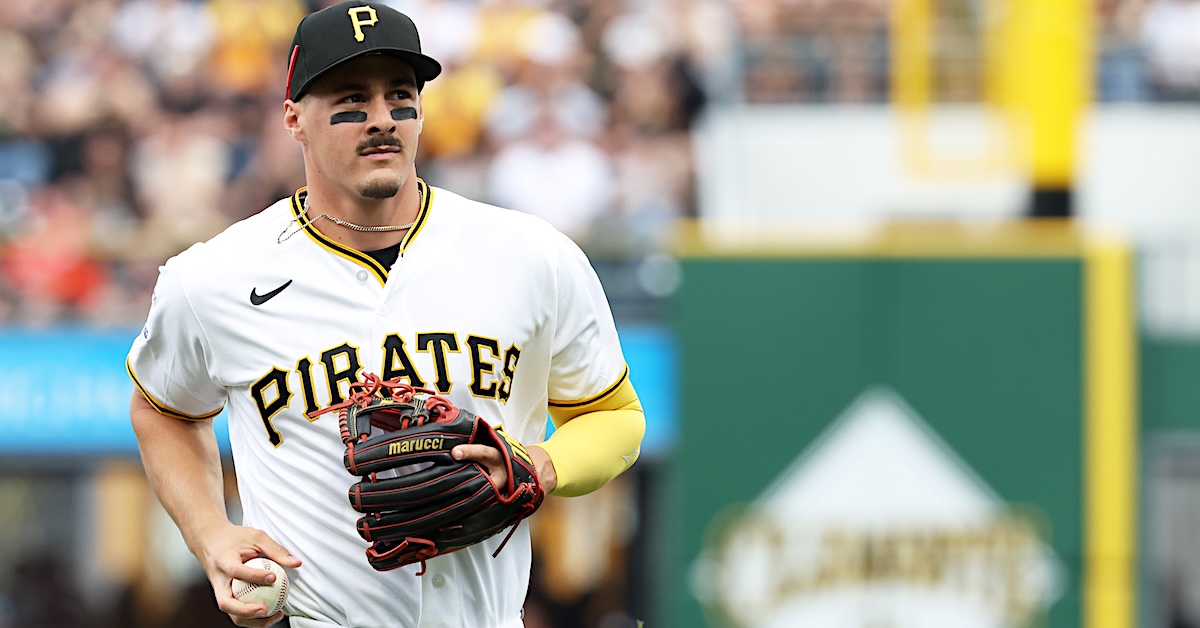
I’m a fan of gallows humor, and I think that fans of the Pirates need to be as well. The Pirates have developed their share of stars over the years, but for fans, there’s always the slight bit of dread that once their young talent starts getting paid commensurate with their production, they’ll be swapping the black-and-gold for Dodger blue or pinstripes. So it’s a good time for Yinzers and the Allegheny-adjacent community, as shortstop Konnor Griffin and the team agreed to a nine-year, $140 million contract that would keep him in town until after the 2034 season.
As contracts go, this is a rather straightforward one. While MVP incentives can bring up the deal by a modest $10 million, to $150 million, that’s just about the only complexity present. There is no deferred money to eat away at the present value of the contract, no option years for the Pirates to lock in at the end, and no opt-out provision that could get Griffin to free agency a year or two early. The deal includes a $12 million signing bonus, which will be doled out over the next three years, certainly helpful to Griffin in that he’ll still get a nice chunk of cash even if the seemingly inevitable lockout drags into the 2027 season.
The Pirates have a real up-and-down history with contracts, so it’s always nice to see them spend on franchise talent rather than spread things around on third-tier free agents. They managed to keep Andrew McCutchen a few years past his free agent eligibility, but for the last 50 years, most of the stars who started out in Pittsburgh became better associated with other teams. Players ranging from Barry Bonds and Bobby Bonilla to Aramis Ramirez and Gerrit Cole, a group that could include Paul Skenes in a few years. Some of the deals the Pirates did sign haunt the dreams of Gen X and millennial Pirates fans (Pat Meares! Kevin Young! Derek Bell!). The Pirates signed Andy Van Slyke and paid him more than the Giants paid Bonds during the latter’s first years in San Francisco.
Griffin was basically everyone’s top-ranked prospect coming into this season, and it’s not hard to see why. He has more tools than can be found at a Florida spring break kegger, and in his first professional season, he terrorized minor league pitchers to the tune of a .333/.415/.527, 165 wRC+ line across three levels, including a 175 wRC+ in his month at Double-A. That would be a drool-worthy performance if he were a 23-year-old first baseman, but he did all of that as a teenage shortstop. He still doesn’t hit the big two-oh for a couple of weeks. Griffin’s one of the few prospects you can plausibly compare to A-Rod at a similar stage in his career without the listener rolling their eyes and saying, “Who, Aurelio?”
A few weeks ago, I did my annual look at contracts I’d like to will into existence, and ZiPS suggested an eight-year, $142 million contract for Griffin. So getting a ninth year is even better!
| Year | BA | OBP | SLG | AB | R | H | 2B | 3B | HR | RBI | BB | SO | SB | OPS+ | WAR |
|---|---|---|---|---|---|---|---|---|---|---|---|---|---|---|---|
| 2026 | .261 | .330 | .400 | 532 | 93 | 139 | 23 | 3 | 15 | 83 | 35 | 151 | 30 | 102 | 3.6 |
| 2027 | .265 | .335 | .418 | 558 | 102 | 148 | 25 | 3 | 18 | 90 | 38 | 149 | 32 | 108 | 4.3 |
| 2028 | .264 | .336 | .420 | 584 | 109 | 154 | 27 | 2 | 20 | 98 | 42 | 148 | 32 | 108 | 4.6 |
| 2029 | .265 | .338 | .428 | 601 | 114 | 159 | 28 | 2 | 22 | 105 | 45 | 147 | 32 | 111 | 5.0 |
| 2030 | .265 | .341 | .434 | 599 | 116 | 159 | 28 | 2 | 23 | 107 | 47 | 142 | 30 | 114 | 5.3 |
| 2031 | .265 | .343 | .436 | 597 | 117 | 158 | 29 | 2 | 23 | 107 | 49 | 138 | 27 | 115 | 5.4 |
| 2032 | .268 | .346 | .444 | 597 | 118 | 160 | 29 | 2 | 24 | 109 | 49 | 138 | 27 | 118 | 5.6 |
| 2033 | .268 | .346 | .444 | 597 | 118 | 160 | 29 | 2 | 24 | 110 | 49 | 138 | 26 | 118 | 5.6 |
| 2034 | .270 | .349 | .446 | 596 | 118 | 161 | 29 | 2 | 24 | 111 | 50 | 139 | 25 | 119 | 5.8 |
That ninth year is pretty darn valuable, and ZiPS would be quite happy to give Griffin $40 million more in order to secure the 2034 projection. ZiPS, like most projection systems, does not generally have fits of irrational exuberance, for the simple fact that it’s well aware about how risky players are. Griffin is not a 5-WAR player yet, so there is risk involved, but that’s true of all players, whether they’re elite prospects or superstars in the middle of their careers. Albert Pujols and Miguel Cabrera were obviously far more “proven” when they signed their biggest deals than Griffin is now, but the Angels and Tigers paid handsomely for that so-called proof, and as should be clear now, there was a lot of downside involved there, too.
A $140 million contract isn’t a mega-deal in the typical baseball sense, but for the Pirates, Griffin’s contract represents the biggest financial commitment they’ve ever made to a player. They’re all-in when it comes to the Konnor Griffin business. Both team and player are now spared things like years of speculation about future trades or service-time games should Griffin struggle in April. Remember the time the Pirates offered Gerrit Cole $538,000, and when he turned it down, they apparently wouldn’t budge past $541,000, and threatened to pay him the league minimum if he refused? Cheap-bush league shenanigans are now out of the question with Griffin, and the focus can be on the actual baseball.
Even if Griffin isn’t immediately a megastar, he makes the Pirates meaningfully better, and they know it. He really did look raw at times in the spring, to the level that sending him down was excusable, even understandable, unlike when the Chicago Cubs in 2015 decided they needed precisely 20 days some additional time to figure out if Kris Bryant was a better option at third base than Mike Olt. Griffin did get five games with the Triple-A Indianapolis Indians, and it certainly looked like, in a small sample size, that he wasn’t really anything new against minor league pitching. But that’s not the point. The Pirates are true NL Central or Wild Card contenders, and they are much better off with Griffin as their starting shortstop, even if it takes him some time to adjust to the majors, than a decent role player like Jared Triolo. (Triolo has since been placed on the injured list with a patellar tendon injury in his right knee.)
With the long-bubbling Griffin contract negotiations finally complete, now the Bucs can worry about the rest of the team, and making the Cubs and Brewers feel uncomfortable for the rest of 2026.
It would border on being grotesquely premature to talk in too-concrete terms about a 19-year-old Griffin and the possibility of him one day having a Hall of Fame plaque in Cooperstown. But at least if such an object should ever come into existence, there’s now a realistic chance that it could have a “P” on the cap. That’s enough to make this a good week for Pirates fans.
Dan Szymborski is a senior writer for FanGraphs and the developer of the ZiPS projection system. He was a writer for ESPN.com from 2010-2018, a regular guest on a number of radio shows and podcasts, and a voting BBWAA member. He also maintains a terrible Twitter account at @DSzymborski.
I think this is good for baseball, having (potentially) big stars on small market teams.
Yes important to grow the game in the 40th largest market in the US
If you’re not going to try to win fans in the 28th largest metro area with one of the oldest single-location franchises in baseball you might as well just give up and start counting down the days until baseball ends as a major US sport.
The biggest problem that MLB has faced is that its ownership is more concerned with collecting TV rights money than trying to get fans. And to do that you have to do two things that MLB owners have been very reluctant to do. The first is to support the teams that are currently in small markets. And the second is to add *new* franchises, both in locations that are growing and don’t have a team (like Austin) and in already large markets where tickets are scarce and the big money teams could use competition. But owners don’t want to do that. They want to become literal landlords subsidized by state governments. The idea that there are *more fans* out there to get is irrelevant to them.
I don’t like this deal for Konnor Griffin so much because I worry that the Pirates won’t spend enough to surround him with the pieces to seriously compete at the top. But for the game? This is worth a lot.
Actually, it is. It does MLB no good to have LAD/NYY/NYM/Boston/Philly great & the smaller market teams acting as feeder teams for them.
We all know the NFL is the biggest sport going & look at how they treat their teams- small market KC & Buffalo have the 2 best QB’s & will for many years, small market Pittsburgh & Green Bay have the most consistent winning teams & Green Bay had a top QB for 25 of the last 33-34 years in Favre & Rodgers. Baltimore has a top 5 QB (& will for years) & is a consistent winner.
2 best teams in the NBA?- OKC & San Antonio.
MLB should be shooting for something like that where small markets can win if they’re smart. It builds up the entire league & gives fans of all teams hope that they can win if they are run smartly.
This is an aside, but I think it would be really good to come up with a way that would make it easier for small market teams to sign their home grown stars to reasonable, fair value, extensions.
Something like, each small market team gets half of one contract for a player they drafted (or traded for before he got to AAA – exactly what would count for a player to be home grown is quite an important wrinkle) paid out of revenue sharing. So could the Pirates pay Skenes $40 million a year? I doubt it. Could they pay Skenes $20 million… while having the Yankees/Dodgers/etc pay for Skenes not to play for them… great. (And I say this as a Dodgers fan.)
In general I think that revenue sharing should be use it or lose it. Most of that money should be going to guaranteed contracts / extensions of more than one year. Not on arbitration, not on team or player options, not on “we signed Jose Quintana to a one year deal because we can’t think of anything else to do with our money.” This whole “we need to maintain our flexibility” thing that front offices have bought into is not great for the game. Let’s make these franchises make some choices to keep players recognizable and familiar to the kids.