Konnor Griffin Will Be a Pirate For a Very Long Time
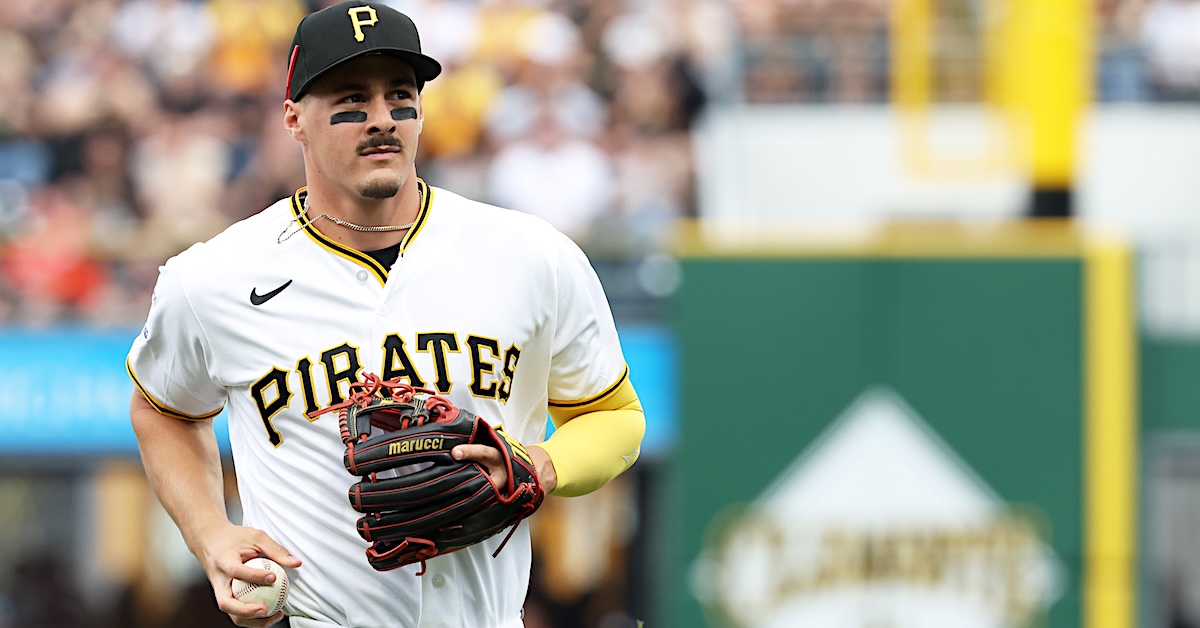
I’m a fan of gallows humor, and I think that fans of the Pirates need to be as well. The Pirates have developed their share of stars over the years, but for fans, there’s always the slight bit of dread that once their young talent starts getting paid commensurate with their production, they’ll be swapping the black-and-gold for Dodger blue or pinstripes. So it’s a good time for Yinzers and the Allegheny-adjacent community, as shortstop Konnor Griffin and the team agreed to a nine-year, $140 million contract that would keep him in town until after the 2034 season.
As contracts go, this is a rather straightforward one. While MVP incentives can bring up the deal by a modest $10 million, to $150 million, that’s just about the only complexity present. There is no deferred money to eat away at the present value of the contract, no option years for the Pirates to lock in at the end, and no opt-out provision that could get Griffin to free agency a year or two early. The deal includes a $12 million signing bonus, which will be doled out over the next three years, certainly helpful to Griffin in that he’ll still get a nice chunk of cash even if the seemingly inevitable lockout drags into the 2027 season.
The Pirates have a real up-and-down history with contracts, so it’s always nice to see them spend on franchise talent rather than spread things around on third-tier free agents. They managed to keep Andrew McCutchen a few years past his free agent eligibility, but for the last 50 years, most of the stars who started out in Pittsburgh became better associated with other teams. Players ranging from Barry Bonds and Bobby Bonilla to Aramis Ramirez and Gerrit Cole, a group that could include Paul Skenes in a few years. Some of the deals the Pirates did sign haunt the dreams of Gen X and millennial Pirates fans (Pat Meares! Kevin Young! Derek Bell!). The Pirates signed Andy Van Slyke and paid him more than the Giants paid Bonds during the latter’s first years in San Francisco.
Griffin was basically everyone’s top-ranked prospect coming into this season, and it’s not hard to see why. He has more tools than can be found at a Florida spring break kegger, and in his first professional season, he terrorized minor league pitchers to the tune of a .333/.415/.527, 165 wRC+ line across three levels, including a 175 wRC+ in his month at Double-A. That would be a drool-worthy performance if he were a 23-year-old first baseman, but he did all of that as a teenage shortstop. He still doesn’t hit the big two-oh for a couple of weeks. Griffin’s one of the few prospects you can plausibly compare to A-Rod at a similar stage in his career without the listener rolling their eyes and saying, “Who, Aurelio?”
A few weeks ago, I did my annual look at contracts I’d like to will into existence, and ZiPS suggested an eight-year, $142 million contract for Griffin. So getting a ninth year is even better!
| Year | BA | OBP | SLG | AB | R | H | 2B | 3B | HR | RBI | BB | SO | SB | OPS+ | WAR |
|---|---|---|---|---|---|---|---|---|---|---|---|---|---|---|---|
| 2026 | .261 | .330 | .400 | 532 | 93 | 139 | 23 | 3 | 15 | 83 | 35 | 151 | 30 | 102 | 3.6 |
| 2027 | .265 | .335 | .418 | 558 | 102 | 148 | 25 | 3 | 18 | 90 | 38 | 149 | 32 | 108 | 4.3 |
| 2028 | .264 | .336 | .420 | 584 | 109 | 154 | 27 | 2 | 20 | 98 | 42 | 148 | 32 | 108 | 4.6 |
| 2029 | .265 | .338 | .428 | 601 | 114 | 159 | 28 | 2 | 22 | 105 | 45 | 147 | 32 | 111 | 5.0 |
| 2030 | .265 | .341 | .434 | 599 | 116 | 159 | 28 | 2 | 23 | 107 | 47 | 142 | 30 | 114 | 5.3 |
| 2031 | .265 | .343 | .436 | 597 | 117 | 158 | 29 | 2 | 23 | 107 | 49 | 138 | 27 | 115 | 5.4 |
| 2032 | .268 | .346 | .444 | 597 | 118 | 160 | 29 | 2 | 24 | 109 | 49 | 138 | 27 | 118 | 5.6 |
| 2033 | .268 | .346 | .444 | 597 | 118 | 160 | 29 | 2 | 24 | 110 | 49 | 138 | 26 | 118 | 5.6 |
| 2034 | .270 | .349 | .446 | 596 | 118 | 161 | 29 | 2 | 24 | 111 | 50 | 139 | 25 | 119 | 5.8 |
That ninth year is pretty darn valuable, and ZiPS would be quite happy to give Griffin $40 million more in order to secure the 2034 projection. ZiPS, like most projection systems, does not generally have fits of irrational exuberance, for the simple fact that it’s well aware about how risky players are. Griffin is not a 5-WAR player yet, so there is risk involved, but that’s true of all players, whether they’re elite prospects or superstars in the middle of their careers. Albert Pujols and Miguel Cabrera were obviously far more “proven” when they signed their biggest deals than Griffin is now, but the Angels and Tigers paid handsomely for that so-called proof, and as should be clear now, there was a lot of downside involved there, too.
A $140 million contract isn’t a mega-deal in the typical baseball sense, but for the Pirates, Griffin’s contract represents the biggest financial commitment they’ve ever made to a player. They’re all-in when it comes to the Konnor Griffin business. Both team and player are now spared things like years of speculation about future trades or service-time games should Griffin struggle in April. Remember the time the Pirates offered Gerrit Cole $538,000, and when he turned it down, they apparently wouldn’t budge past $541,000, and threatened to pay him the league minimum if he refused? Cheap-bush league shenanigans are now out of the question with Griffin, and the focus can be on the actual baseball.
Even if Griffin isn’t immediately a megastar, he makes the Pirates meaningfully better, and they know it. He really did look raw at times in the spring, to the level that sending him down was excusable, even understandable, unlike when the Chicago Cubs in 2015 decided they needed precisely 20 days some additional time to figure out if Kris Bryant was a better option at third base than Mike Olt. Griffin did get five games with the Triple-A Indianapolis Indians, and it certainly looked like, in a small sample size, that he wasn’t really anything new against minor league pitching. But that’s not the point. The Pirates are true NL Central or Wild Card contenders, and they are much better off with Griffin as their starting shortstop, even if it takes him some time to adjust to the majors, than a decent role player like Jared Triolo. (Triolo has since been placed on the injured list with a patellar tendon injury in his right knee.)
With the long-bubbling Griffin contract negotiations finally complete, now the Bucs can worry about the rest of the team, and making the Cubs and Brewers feel uncomfortable for the rest of 2026.
It would border on being grotesquely premature to talk in too-concrete terms about a 19-year-old Griffin and the possibility of him one day having a Hall of Fame plaque in Cooperstown. But at least if such an object should ever come into existence, there’s now a realistic chance that it could have a “P” on the cap. That’s enough to make this a good week for Pirates fans.
Dan Szymborski is a senior writer for FanGraphs and the developer of the ZiPS projection system. He was a writer for ESPN.com from 2010-2018, a regular guest on a number of radio shows and podcasts, and a voting BBWAA member. He also maintains a terrible Twitter account at @DSzymborski.
I think this is good for baseball, having (potentially) big stars on small market teams.
Yes important to grow the game in the 40th largest market in the US
If you’re not going to try to win fans in the 28th largest metro area with one of the oldest single-location franchises in baseball you might as well just give up and start counting down the days until baseball ends as a major US sport.
The biggest problem that MLB has faced is that its ownership is more concerned with collecting TV rights money than trying to get fans. And to do that you have to do two things that MLB owners have been very reluctant to do. The first is to support the teams that are currently in small markets. And the second is to add *new* franchises, both in locations that are growing and don’t have a team (like Austin) and in already large markets where tickets are scarce and the big money teams could use competition. But owners don’t want to do that. They want to become literal landlords subsidized by state governments. The idea that there are *more fans* out there to get is irrelevant to them.
I don’t like this deal for Konnor Griffin so much because I worry that the Pirates won’t spend enough to surround him with the pieces to seriously compete at the top. But for the game? This is worth a lot.
Baseball owners are monopoly rent seekers and takers. The players are a labor aristocracy. They do well if the make the Majors. The owners are never a friend of the fans.
Actually, it is. It does MLB no good to have LAD/NYY/NYM/Boston/Philly great & the smaller market teams acting as feeder teams for them.
We all know the NFL is the biggest sport going & look at how they treat their teams- small market KC & Buffalo have the 2 best QB’s & will for many years, small market Pittsburgh & Green Bay have the most consistent winning teams & Green Bay had a top QB for 25 of the last 33-34 years in Favre & Rodgers. Baltimore has a top 5 QB (& will for years) & is a consistent winner.
2 best teams in the NBA?- OKC & San Antonio.
MLB should be shooting for something like that where small markets can win if they’re smart. It builds up the entire league & gives fans of all teams hope that they can win if they are run smartly.
It’s almost certainly better for a league to have the big market teams be great and the small market teams bad, than the other way around.
The NBA Finals would have gotten way better ratings if the Knicks made it instead of the Pacers.
To Hell with the Knicks, the Celtics, the Lakers, etc. Since I don’t have a natural rooting interest in any NBA team, I pick between the various teams. Right now, I prefer the Spurs because of Wembly, Denver because of the Joker, etc. It’s better that way. I’ve been a Pirates fan since 1961. We’ve been a plaything of fate and mendacity since 1980. With the NBA, I have a choice.
Short term, yes that’s true.I’m sure ratings would have been better with Knicks in the Finals instead of Indiana. Just like I’m sure NFL ratings would be even better if Josh Allen played for The Giants.
However, that’s 1 year. I’m talking long-term viability of the league.
But, long term you need ALL teams to truly have a chance to win if they’re run intelligently. If small market teams have no chance/path to success then fan interest will collapse.
Having good QBs is just draft luck, and other luck. Feels random.
I know we’re not here to talk about football, but I need to comment on this.
The overwhelming evidence after decades of observation is that quarterbacking in pro football is entirely a matter of “nurture” over “nature.” Just in recent history we’ve seen several top picks who were labeled busts be transformed simply by being in an environment conducive to growth. It’s not a coincidence that the same handful of teams pick the “wrong” QB over and over again, when the same guy ends up being “right” elsewhere.
The Packers are on Year 34 of above average QB play because they have a proven system; watch film of Aaron Rodgers in ’05, if he had been forced to play straightaway and not sit four years to rebuild his mechanics from scratch he’d have flamed out of the league. If Rodgers go #1 to the 49ers and Alex Smith ends up in Green Bay, Smith is probably the international superstar bragging to RFK about his fake wife.
And to bring it full circle, Green Bay is the smallest market in any American pro sports league, but it still has a more devoted fanbase than the two LA teams combined, so good for Pirates fans!
Maybe, maybe not..but, the NFL is set up so those QB’s can STAY with the team that drafted them & that was really the point.
Imagine if KC drafted Mahomes, sat him for 1 year (which they did) & then when he turned into a star, the clock to him inevitably leaving to go to the Cowboys or Giant started because there was no way KC could afford him or to put a team around him..& all the discourse was around “When will he get traded? What will they get?” & then with 2 years to go before FA they traded him for a bunch of draft picks/cheap players because that was the only option.
Would that be good for the NFL? Maybe short term- you’d get Mahomes in a big media market, but, it would also kill interest for fans of KC & other small market teams because they would feel they don’t have a chance even when they did things right.
After about 10-20 years of that, you’d have a bifurcated league..just like MLB is now.
.
This is an aside, but I think it would be really good to come up with a way that would make it easier for small market teams to sign their home grown stars to reasonable, fair value, extensions.
Something like, each small market team gets half of one contract for a player they drafted (or traded for before he got to AAA – exactly what would count for a player to be home grown is quite an important wrinkle) paid out of revenue sharing. So could the Pirates pay Skenes $40 million a year? I doubt it. Could they pay Skenes $20 million… while having the Yankees/Dodgers/etc pay for Skenes not to play for them… great. (And I say this as a Dodgers fan.)
In general I think that revenue sharing should be use it or lose it. Most of that money should be going to guaranteed contracts / extensions of more than one year. Not on arbitration, not on team or player options, not on “we signed Jose Quintana to a one year deal because we can’t think of anything else to do with our money.” This whole “we need to maintain our flexibility” thing that front offices have bought into is not great for the game. Let’s make these franchises make some choices to keep players recognizable and familiar to the kids.
I actually think this would be helpful for small teams even if it was universally available to all teams. Just have a rule where every team can designate one “home grown core player” and the league as a whole will share the cost of that player’s salary up to $50 million per year (so maximum cost payment from league of $25 million per year). Also some interesting strategy and hot stove debates about who to designate, whether to use it on role player or wait to see if a prospect develops, whether to go short term or long term on your core player’s contract, etc.
There’s no way to make a cutoff line for what small market means, anyway.
small market teams are substantially subsidized already
This isn’t necessarily related to your post and I’m not sure how this would work or if it’s even possible if the sport remained uncapped, but I’m thinking of restricted free agency. In the NHL, players have a few seasons on entry level deals, then hit restricted free agent (where another team can try to sign the player by submitting a contract offer the player then signs). However, if that restricted free agent signs, depending on the player and the length and amount of the contract, the team who loses the player gets a combination of young players, draft picks and prospects. The existing team also gets final say on matching the contract and I believe the contract is limited in length (maybe to 7 years, in which the existing team can go to 8 years). This gives players earlier ownership on their future and also gives the existing teams an opportunity to retain their homegrown players. Probably no way this works without a cap.
So let’s say Skenes was a restricted free agent after 2026, he was offered and signed . And the return was judged to be Ben Rice, Cam Schittler, George Lombard, Carlos Lagrange and a first round pick. I’m not sure how often teams would engage in that kind of madness, but it wouldn’t be dull.
It would never fly with the MLBPA, because it would lower salaries. Skenes would get less money overall if the team that signed him had to give up a massive haul of assets just for the right to pay him.
I agree with the idea that small markets need additional boosts in getting good players — but locking up stars is one of the things that small markets do *well.* A quick search of betting odds suggests that there are fourteen position players with better than 30:1 (arbitrary cutoff!). Nine of them are on contract extensions with the teams they debuted with (Witt, Yordan, Acuna, Julio, Carroll, JRam, Vlad, Raleigh, Tatis). Gunnar and Kurtz won’t be free agents for a while. The only three to hit free agency are Ohtani, Judge, and Soto. That’s incredible!
Further down the list, more of the guys who got big free agent contracts come up … but there are still guys like Trout, Anthony, and Marte (who only kind of qualifies).
Cy Young odds do not show a similar trend, but we’d expect pitchers to be different.
I like the comparison to the Miggy/Pujols contracts. The plodding slugger archetype doesn’t seem to be getting paid at the same level at that age today (if we can even say hitters of that caliber have been free agents recently). But I’d guess teams know the probabilities of getting good ROI on young prospects compared to vets. Throw in fan reaction and team morale and it seems like a Bobby Witt-like bargain
IDK about teams not wanting to invest in plodding sluggers anymore. Juan Soto and Vlad Jr got $500M+ deals. Rafael Devers got $300M (and has already been salary dumped).
The difference is that teams don’t want to give massive deals to guys who are already on the wrong side of 30.
As a long suffering Pirates fan, I’d be thrilled with a Bobby Witt Jr starter kit here.
As a long suffering Pirates fan, I’m expecting Cole Tucker 2.0 because Pirates fandom has become a sickness the last 40 years.
For Konner, not taking this contract to try to get more money in a few years would be comparable to a man in his 40s choosing not to pay for health insurance because its expensive and he’s in excellent health.
This is kind of a strange analogy, but I absolutely agree that he was right to take the $140m in hand rather than gamble on an uncertain payout 6 or more years in the future. Who knows if the Pirates would have promoted him without this deal? He might not have even hit Arb 1 until like 2030 or 2031.
Of course, if things go bad he may have to limit his spending to around 4% of 140m if he wants this to last a lifetime. That’s only 5.6m a year.
Yea, I was seeing a lot of people saying Konner shouldn’t take the deal because he could potentially earn so much more.
Trying to express how crazy that idea is.
But seem most people here are agreeing he made the right move.
Probably right move for Pittsburgh, too. Win-Win.
i know it’s somewhat apples/oranges, but these early extensions always make me think about the pre-debut kelenic offer that jarred ultimately rejected. teams get lucky in both directions. i really hope this works out well for pittsburgh fans.
Even if he doesn’t hit like everyone think he will, he already shown that he is a capable mlb shortstop, which makes his floor pretty high. There’s not a ton of risk here for the Bucs.
There’s a dark irony to it. A big reason Kelenic has flopped from what I’ve gathered is that he’s kinda… dumb. Like he spent his rookie season trying to put on a ton of muscle which turned him from a fringe CF into a guy who can’t play a corner, which gave him a much shorter leash at the plate to get reps.
That, and he doesn’t know that a slider breaking into the other batter’s box is the pitch you *don’t* swing at with 2 strikes.
I think, at the time, the Mariners offered Kelenic the same exact contract they gave to Evan White. It was basically “take our extreme lowball deal and you’ll get to the majors sooner.” However, Kelenic was a consensus top-10 prospect while White was in the back half of some publications’ top-100 lists. White, being a glove-first 1B with a questionable bat, took the deal. Kelenic arguably should have been offered more money just based on his prospect pedigree, given that at the time he was near the same tier of prospecthood that Pratt/Emerson/Griffin are in nowadays. The Mariners, being in the midst of a rebuild though, weren’t about to spend a bunch of real money yet, so luckily Kelenic balked at the offer. Imagine still having to be on the hook for his money and he’s barely able to hang onto a roster spot!
That said, it can still go sideways with any prospect who signs a pre-debut contract extension buying out their entire prime years. They haven’t proven much of anything except that they can beat on other minor leaguers, but it’s a catch-22. If you wait until after they debut and they slay, you could end up paying them significantly more money. Imagine if Pittsburgh had waited for Griffin to make the all-star team, win ROY, a silver slugger, and finish top-10 in the MVP race after a 5-6 WAR debut campaign. They’d have to lock him into a contract that rivals Julio Rodriguez’s deal inked after the 2022 season! No way the Pirates do that, even if Bob Nutting had been visited by the three ghosts of Christmas.
Hey, those 20 days of Mike Olt were critically important for the 2015 Cubs to evaluate whether his preseason Lasik surgery took properly!
Ha! Obviously everyone remembers the Cubs shenanigans with Bryant but I had completely forgotten about Mike Olt! He was a Top 100 prospect for a few years, as high as #22 by Baseball America in 2013. Glove first scouting report IIRC but some hope with the bat. Prospects, man.
Recall Mike Olt being more of a power bat with contact issues prospect. By time Cubs got him his prospect star had fallen some due to concussion related vision issues. Believe it was Matt Garza trade. Get it and the Dempster trade with Rangers mixed up. Interesting thing in both was that is was the secondary prospects that created more value.
Konnor Griffin is a married man with a self-made net worth of over $150 million, and he isn’t even 20 years old.
This has to be one of the most impressive profiles in the country, right? The number of other people who have accomplished that has to be in the double digits at most.
How does his marriage factor into it?
I just think it’s impressive!
It’s mostly luck of the draw if you think you found your soul mate in high school and the other person feels the same way about you.
(I guess it’s also up to whether you have a charming personality, are good looking, and are obviously healthy. He also got really lucky to have all of that too)
After that it’s up to whether you have the resources to feel like you can get married.
In terms of those resources…he has $6M in the bank and looks to have a lot more on the way.
So conditional on him getting lucky in love as a teenager, the “getting married” step is not going to be the hardest part.
It’s the “staying married when you got hitched at age 19 while you’re on the road 100 days out of the year” part that I think is going to be a challenge. Especially that last part. Baseball players are away from their families a lot!
But hey, good for him. I hope it works out for these crazy kids. Konnor Griffin seems like a very pleasant young man who wants to do the right thing. Everyone seems like they’re a winner here. I just hope it stays that way.
getting married is easy, staying married (especially after major life transitions like becoming a rich famous ballplayer) is more impressive
The wife is more impressive cause she is younger and very rich.
Self-made? I’m sure he didn’t buy his gear and drive himself to all those showcases as a kid.
“Self-made” meaning “not inherited”.
If the term is going to be used, then it is appropriate here. This isn’t a “small loan” of $1 million or even the station that Bezos’ parents put him in.
You’re certainly correct in a pedantic way, but the line for “self made” can’t be so high that if you have loving parents you’re automatically the same as a trust fund baby.
Surely his net worth is a lot lower than $150 million? Sure, that’s what he will earn over the contract (probably – we might have made that assumption about another young, highly touted SS who signed a big extension for a small market team…). But he doesn’t have that money now, and I would assume that actually having immediate access to money/assets is quite important for your net worth.
Well if you think about it in terms of “how much would someone pay to own Konnor Griffins future income”, you’d think the rights to ALL his income would probably cost significantly more than the value of this single contract.
Even by Dan’s lofty standards, some great one-liners in this one.
Just such a disrespectful pot shot at the wholesome college kids taking a well-earned break from their rigorous academic schedules.
The dirty secret about the Pirates is that they do tend to extend players they think will be important. You mentioned McCutchen, but they also extended Starling Marte, Josh Harrison, Jose Tabata and Gregory Polanco (the less said about the latter two the better). Heck the three of the four highest paid players in the history of the team played for them last season and were extensions (Keller, Hayes, Reynolds). The only players they haven’t done that with have mostly been Boras guys who never sign team-friendly extensions. They truly don’t operate much differently than the vast majority of small-market teams, including the Brewers and Rays. It’s just their player development is generally so poor that they don’t have many guys worthy of signing long-term coming through the system. And that’s not because of cheapness either, because if you remember they’re the team that broke the old draft system by being too generous with bonuses
Will admit the Skenes thing is a fumble since he’s not a Boras guy. But I also don’t know if his agency is a go-to-free-agency-no-matter-what outfit or not
TLDR, the Pirates are more incompetent than they are cheap, relative to other similar teams
They’re both incompetent and cheap, IMO. They just signed their first multi-year free agent in 10 years this offseason. Extensions aren’t the only form of signings, and excluding FAs from their plan has hurt them.
Disagree that the Pirates are more incompetent than they are cheap.
Since 2007 when Nutting became the principal owner, Pirates rank 29th in payroll and likely would have been 30th if the Rays had to pay Wander Franco according to the contract. ($19M difference between the #30 Rays and #29 Pirates, $38M difference between the #29 Pirates and #28 Athletics)
Now compare that to their on field record of 26th by win%. (ahead of Royals, White Sox, Marlins, and Rockies)
Basically nobody can claim that the Pirates are not a top 3 cheap team.
Competition for a top 3 incompetent team would be much fiercer. (Rockies, White Sox, Angels, Marlins, etc.)
But, the main issue with the payroll is they’ve largely not developed players worth extending. Sure they could have signed a couple of $20-30m/year players in like, 2017. But the Angels showed even if you have 2 HoFers if the rest of the team is lousy it doesn’t matter. And you mention the Rays who are always way better (and fleeced the Pirates in the Archer trade, another example of them spending money). And the Brewers ship out expensive players all the time. The difference is those teams have reinforcements ready in the minors to go with players they’ve already developed signed to extensions. Blaming the Pirates for being cheap hides the bigger problem of them not being very good at hiring baseball people compared to other equally small-market teams
Also, just as an aside, I still have no idea why McCutchen signed the deal he did in 2012 (or whatever year it was). He has the be the most underpaid player who actually signed an extension in the 21st century
The Albies deal probably still takes that particular cake.
The thing about being Bob Nutting levels of cheap is that he’s probably skimping on scouting and player development as well, and he’s been getting exactly what he pays for there too, which is about once per decade+ when a handful of players randomly coalesce. As far as I’m concerned, he’s cut corners everywhere he can to save his pennies.
Many good coaches/talent evaluators who establish themselves at this level get poached by teams with deeper pockets/more willingness to pay for their services, and even though we never see the dollar figures publicly like we get to look at player salaries, they, like just about everyone else with a job and a pulse, are looking for the largest payday they can get.
They seem to careen between mostly incompetent and mostly cheap. Sometimes they are both.
That said, the team seemed to recognize that having Skenes gave it a rare opportunity, although it had the same opportunity when it had Cole on the team, which it efficiently and effectively ruined because the Pirates were cheap and incompetent. The organization seemed to have recognized that Griffin was also a gem that fell into its lap, like manna from Heaven. Today, with both players in hand, they are, perhaps, more blessed than they were when they had McCuthen and Cole. So, in response to the opportunity provided by the two players, Bob “Nickels” Nutting opened the Scrooge Mcduck vault and retrieved a bit of the bullion he squirreled away over past decade and spent the money on the team.
This good fortune may not lead to a title. We know this because the Mariners did not win a World Series when the team had Jr., Arod, Martinez and the Unit; the Bonds’ era Pirates did not even make the World Series; etc. It takes talent and luck. And, with the Dodger Death Star in the way, the emphasis will be on luck. But, its better to have Skenes and Griffin than not to have them.
But the cheapness comes largely because of the incompetence. They’ve shown they’re willing to spend money commiserate with other small-market teams. But they largely haven’t in a position to do anything other than what would be symbolic-but-not-useful free agent signings because their development has been so bad
Like, who’s a player in the last 20 years that they should have signed to an extension and wasn’t a Boras client that they didn’t sign? Neil Walker is the only player who comes to mind. And Skenes now but he’s a somewhat unique situation. Hell, they signed Gregory Polanco to an extension and we see how that turned out
The cheapness isn’t just in not signing extensions, but not signing any significant free agents, and in several cases salary dumping the players they do extend.
Look at what happened after their last playoff run. Trading Walker wasn’t terrible, but with an opening in the rotation already they targeted Jon Niese as the return because he had cost-controlled options, salary dumped Charlie Morton, made no effort to retain J.A. Happ, and instead of signed Juan Nicasio for 1/3 and tried to start him, and signed Ryan Vogelsong for 1/2. A team that was supposedly trying to contend wound up with Niese/Vogelsong/Nicasio/Jeff Locke as their rotation behind Cole and Liriano. And they wound up giving up prospects to dump Liriano’s salary. When “trust the process” guys like me had hoped that cheaping out in the lean years meant that they would spend a little cash to supplement the team when it got good.
The incompetence is bad too. Those were the days of thinking they had everything solved with sinkers, and forcing all their pitchers to throw sinkers even after the rest of the league realized that uppercut swings would meet the path of the ball. That’s why Morton and Cole never met their potential in Pittsburgh. But there were opportunities to try harder than they did.
Even the Archer fiasco came because they were trying to trade for a player with a “good” contract.
I don’t agree that having Cole at the time the Bucs had him and having Skenes now are/were the same. Cole was very good and developed into one of the best starting pitchers in the league. Cole was not quite that when he was traded. Skenes is transcendent.
The Pirates tried to make Cole fit into the mold they had for starting pitchers. Pitch to contact, get ground balls. That was the recipe. Cole had enough talent that he made it work. But the mold was not optimal.
It did not work for Glasnow as well….
Skenes may be transcendent, as you suggest. However, I do not doubt that the Pirates of the mid-teens would have pushed him into the mold. Only vets seemed to escape it.
Given the injury risk, I can understand an organization avoiding a long term extension with a young pitcher unless there is a very healthy hometown discount involved.
“He has more tools than can be found at a Florida spring break kegger”
That’s pure gold!
His WAR still increasing in 2034 (and potentially beyond)? Call me skeptical. I don’t think aging curves typically work that way. Among other players who debuted at 19:
Not saying Griffin can’t break the mold but I would bet dollars to donuts that his best season won’t be at 28 or later. He would be a complete outlier to what has come before him.
Beltré’s aging curve is not like the others. Yes, his single-season peak came young, but his 30’s surpassed his 20s. He’s one of the best old players of all time.
The one thing none of those guys are/were are shortstops who can actually defend. I think that makes a huge difference.
Lindor (21 years old debut, not 19) but he put up 7.7 and 6.3 fWAR in his age 30 and 31 seasons respectively.
Incidentally, Kevin Young had one of the meanest community nicknames around back on usenet: KY Jelly Roll.
Kevin Young – fantastic value pick in 2000 MLB showdown
I think this makes sense for Konnor Griffin but wow did the Pirates get a steal here.
Colt Emerson is a pretty good prospect and Cooper Pratt is okay but Griffin is at least a full grade higher than Emerson and two ahead of Pratt. This is worth more money but it’s not worth *that* much more.
In the scenario where he matches the ZiPS projection it will be more cost effective than any other way the Pirates could spend that money. Probably a top 10 contract on the midseason trade value list. And there are some outcomes that where this becomes the most valuable contract in all of baseball.
Finally the problem that a team like the Pirates have is that you can never stockpile enough talent through the farm system for a critical mass of players in any real window of time. By the time your young guys are good the previous guys you brought up through your system are in their contract year. You have to find some way of keeping your guys around for at least a couple extra years. But this logic can be applied to basically any other team in baseball. The Tigers should be thrilled if McGonigle accepts this offer, same with the Brewers and Made. When you have these guys with high floors and superstar upside you have to take your shot.
Griffin was already one of the more valuable contracts in baseball without the extension. That said, this is obviously great for the Pirates. Even if they eventually trade him in year 7 or 8 for a huge return, both the team and fans will have come out way ahead. Everybody wins, assuming he is able to deliver on the extremely high performance expectations.
Minor quibble: Andy Van Slyke was really, really good for the Pirates for a long time, including in his first two seasons after he signed his 3-year extension in April 1991. Plus, Bonds didn’t leave the Pirates until after the 1992 season, so it’s not as if the Pirates had a choice between Bonds and Van Slyke in free agency and chose the wrong guy. Trying to spin Andy Van Slyke’s time with the Pirates into an example of the Pirates misfiring on big contracts seems like a real stretch, if not downright silly. Yes the Pirates shouldn’t have let Bonds walk, but that mistake doesn’t somehow make Andy Van Slyke’s extension a mistake too.
Oh, it just amuses me.
Yeah it doesn’t make much sense.
Wonder if Jason Kendall got any consideration for inclusion here. Played great, then good, got paid.
“He has more tools than can be found at a Florida spring break kegger”. I lol’ed. Thanks Dan.
Not sure if idk what I’m talking about, but did the Pirates forgo the chance to get a comp pick by not having him on the opening day roster? Granted he has to win the MVP but that’s a chance you take if you thought you could get this extension done 2 weeks ago
A player doesn’t have to necessarily be on the Opening Day roster – he can be brought up shortly thereafter and still qualify for PPI. But, there’s a catch! If he’s signed to an extension, he doesn’t qualify. So, the Pirates brought him up soon enough, but gee, they hadn’t quiiiiiite finalized the extension just yet. Funny how that worked out, huh?
I think I’m speaking for most when I say thank the powers that be that Griffin is now on the same team as Skenes. I have hope for the franchise more long term. I hope they get at least one deep playoff run before Skenes breaks or leaves.
The cynic in me thinks that the increased prevalence of guys signing earlier, and in particular buying out arb years, means that in 3-4 years we’re going to start to see holdouts become a thing when inevitably some of these guys become stars and realize they’re missing out on literally hundreds of millions.
As a dedicated baseball fan who would not walk across the street to watch an NFL game, even if given free seats at the 50 yard line, it has to be said that the NFL handled its windfall income from TV and ancillary rights in a way that is far better than baseball did. In the early days, circa 1948-1958, when pro football was just gaining a foothold and TV was in its infancy, the NFL owners driven by Wellington Mara, owner of the New York Giants made the brilliant decision to distribute TV income equally between all the franchises. This has enabled the fabled franchise at Green Bay to thrive and and allowed other smaller cities, Buffalo and Jacksonville, to maintain competitiveness. It is unfortunate that Pittsburgh has not had an owner willing to support the team but I hope the Pirates can return to the days when they are regular contenders as they were in the 60’s and 70’s.
Kevin Young was a classic example of the folly of paying for past perfirmance. The Pirates drafted him, released him, picked him back up on the cheap for his age 28 season and that year and the next two saw him total 10 fWAR on a series of 1-year contracts that paid him $4.1 million. The Pirates rewarded him with a 4-year, $24 million contract. He cratered to replacement level almost immediately.