
Let’s Sign Some Contracts! 2026 Edition
If there’s something even more satisfying than spending your hard-earned money, it’s spending someone else’s money that you didn’t earn. When we’re talking baseball, unless you’re an extremely high-net-worth individual who can casually spend hundreds of millions of dollars — if this describes you, call me and we can totally hang out or something — you only have the option to spend other people’s cash. I mean, I haven’t technically asked American Express to up my credit limit to $300 million, but I’m guessing the answer would be no. Every year around this time, I make a whole piece out of it, naming seven players I think teams should attempt to sign to long-term contracts now, rather than waiting until later. There are some additional complications, of course, with a lockout likely coming after this season, but teams and players could be willing to act with more urgency to sign contracts now before all the uncertainty ahead of them.
I’ve (hopefully) chosen seven players whose possible extensions would benefit both the player and the team, as all good contracts ought to do. I’ve included the up-to-date ZiPS projections for each player, as well as the contract that ZiPS thinks each player should get, though that doesn’t necessarily mean I think the player will end up with that figure or even sign an extension.
Elly De La Cruz, Cincinnati Reds: Eight years, $280 million
| Year | BA | OBP | SLG | AB | R | H | 2B | 3B | HR | RBI | BB | SO | SB | OPS+ | WAR |
|---|---|---|---|---|---|---|---|---|---|---|---|---|---|---|---|
| 2026 | .261 | .334 | .453 | 589 | 100 | 154 | 30 | 7 | 23 | 87 | 62 | 174 | 40 | 111 | 4.5 |
| 2027 | .262 | .337 | .458 | 587 | 102 | 154 | 31 | 6 | 24 | 89 | 64 | 165 | 38 | 113 | 4.7 |
| 2028 | .262 | .339 | .460 | 585 | 103 | 153 | 31 | 5 | 25 | 89 | 66 | 160 | 34 | 114 | 4.7 |
| 2029 | .259 | .337 | .457 | 584 | 103 | 151 | 31 | 5 | 25 | 89 | 67 | 156 | 32 | 113 | 4.7 |
| 2030 | .256 | .337 | .452 | 582 | 103 | 149 | 31 | 4 | 25 | 88 | 69 | 154 | 29 | 112 | 4.5 |
| 2031 | .253 | .334 | .442 | 582 | 101 | 147 | 30 | 4 | 24 | 87 | 69 | 152 | 26 | 108 | 4.2 |
| 2032 | .254 | .336 | .444 | 579 | 101 | 147 | 30 | 4 | 24 | 86 | 69 | 152 | 25 | 109 | 4.1 |
| 2033 | .254 | .336 | .444 | 558 | 96 | 142 | 29 | 4 | 23 | 82 | 66 | 147 | 22 | 110 | 3.9 |
It would not be crazy for the Reds to spend a ton of money on a big extension for their most valuable player. They did it with Joey Votto a long time ago, and that turned out to be one of the few big deals for a first baseman that actually worked out for the team that signed it. Cincinnati tried to do this with De La Cruz before last season, but it’s something worth trying again. While De La Cruz is a year closer to free agency, set for after the 2029 season, there’s also some additional risk on his side, as last year was a bit of a down year for him, at least relative to his breakout 2024 campaign. If De La Cruz doesn’t want to sign an extension, he certainly doesn’t have to do it, but this might be Cincinnati’s last, best chance to keep him through his prime years.
James Wood, Washington Nationals: Nine years, $235 million
| Year | BA | OBP | SLG | AB | R | H | 2B | 3B | HR | RBI | BB | SO | SB | OPS+ | WAR |
|---|---|---|---|---|---|---|---|---|---|---|---|---|---|---|---|
| 2026 | .263 | .354 | .469 | 571 | 88 | 150 | 34 | 3 | 26 | 93 | 79 | 194 | 15 | 132 | 3.5 |
| 2027 | .267 | .360 | .483 | 569 | 91 | 152 | 35 | 2 | 28 | 96 | 81 | 185 | 15 | 138 | 3.9 |
| 2028 | .270 | .364 | .492 | 567 | 93 | 153 | 35 | 2 | 29 | 98 | 83 | 177 | 15 | 141 | 4.2 |
| 2029 | .271 | .367 | .499 | 565 | 94 | 153 | 35 | 2 | 30 | 99 | 85 | 170 | 14 | 144 | 4.3 |
| 2030 | .272 | .370 | .501 | 563 | 94 | 153 | 35 | 2 | 30 | 99 | 87 | 164 | 13 | 146 | 4.4 |
| 2031 | .269 | .369 | .493 | 562 | 95 | 151 | 34 | 1 | 30 | 99 | 88 | 160 | 12 | 143 | 4.2 |
| 2032 | .269 | .369 | .493 | 562 | 94 | 151 | 34 | 1 | 30 | 99 | 88 | 160 | 11 | 143 | 4.2 |
| 2033 | .269 | .369 | .489 | 558 | 92 | 150 | 34 | 1 | 29 | 98 | 87 | 160 | 11 | 142 | 4.0 |
| 2034 | .269 | .369 | .489 | 558 | 92 | 150 | 34 | 1 | 29 | 97 | 87 | 161 | 10 | 142 | 4.0 |
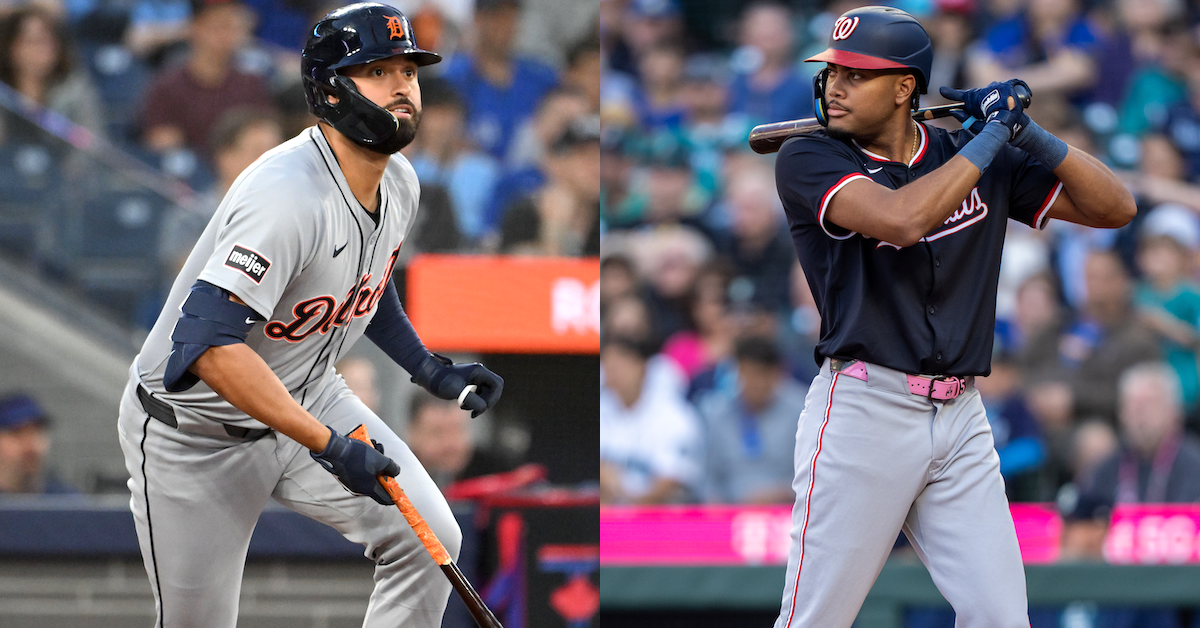
Not a lot has gone Washington’s way lately, but Wood is for real, and a classic middle-of-the-order thumper at a time when it doesn’t look like many will be available in free agency anytime soon. The Nats have been burned in the past when it comes to attempting to extend their best hitters into their free agency years, even though they’ve been serious about it, but trying to make a deal earlier in a player’s career is better if the team wants to avoid a repeat of seeing Bryce Harper and Juan Soto playing for divisional rivals. ZiPS projects Wood to finish top 10 in career home runs among all players currently active.
Hunter Brown, Houston Astros: Seven years, $191 million
| Year | W | L | ERA | G | GS | IP | H | ER | HR | BB | SO | ERA+ | WAR |
|---|---|---|---|---|---|---|---|---|---|---|---|---|---|
| 2026 | 13 | 6 | 3.06 | 30 | 28 | 167.7 | 138 | 57 | 16 | 55 | 178 | 136 | 4.1 |
| 2027 | 12 | 7 | 3.12 | 29 | 27 | 164.7 | 138 | 57 | 16 | 51 | 171 | 134 | 3.9 |
| 2028 | 12 | 7 | 3.20 | 28 | 26 | 163.3 | 139 | 58 | 17 | 50 | 166 | 130 | 3.7 |
| 2029 | 11 | 7 | 3.27 | 28 | 26 | 157.0 | 137 | 57 | 17 | 48 | 156 | 128 | 3.4 |
| 2030 | 11 | 7 | 3.31 | 28 | 26 | 155.0 | 138 | 57 | 17 | 48 | 150 | 126 | 3.2 |
| 2031 | 10 | 7 | 3.44 | 26 | 23 | 144.0 | 131 | 55 | 16 | 44 | 136 | 121 | 2.9 |
| 2032 | 9 | 7 | 3.45 | 23 | 21 | 133.0 | 122 | 51 | 15 | 42 | 123 | 121 | 2.6 |
| 2033 | 8 | 6 | 3.56 | 21 | 19 | 121.3 | 113 | 48 | 14 | 40 | 110 | 117 | 2.2 |
OK, this extension recommendation is a repeat from last year, but I, again, feel strongly that the Astros ought to lock up Hunter Brown as soon as possible. The difference is this contract projection is double the one from a year ago! Brown is as good a bet as any to be in the Cy Young race, and it’s not like the Astros can’t afford it. Now will they? Houston always seems to be willing to move on from its best starting pitchers, but it’d be nice for the team to make an exception. In projected five-year WAR, ZiPS has Brown fifth in the majors among pitchers, behind Paul Skenes, Tarik Skubal, Garrett Crochet, and Logan Webb. Three of these guys won’t be available on the open market anytime soon, and the fourth (Skubal) will cost a helluva lot more than $191 million. This extension is priced to start in 2027.
Riley Greene, Detroit Tigers: Six years, $175 million
| Year | BA | OBP | SLG | AB | R | H | 2B | 3B | HR | RBI | BB | SO | SB | OPS+ | WAR |
|---|---|---|---|---|---|---|---|---|---|---|---|---|---|---|---|
| 2026 | .268 | .334 | .487 | 557 | 83 | 149 | 29 | 3 | 29 | 98 | 54 | 168 | 3 | 125 | 3.1 |
| 2027 | .267 | .336 | .488 | 566 | 85 | 151 | 29 | 3 | 30 | 101 | 57 | 165 | 3 | 126 | 3.2 |
| 2028 | .268 | .339 | .489 | 567 | 86 | 152 | 29 | 3 | 30 | 101 | 59 | 160 | 3 | 127 | 3.3 |
| 2029 | .268 | .339 | .489 | 564 | 86 | 151 | 29 | 3 | 30 | 100 | 59 | 155 | 3 | 127 | 3.3 |
| 2030 | .264 | .337 | .479 | 553 | 83 | 146 | 28 | 2 | 29 | 97 | 59 | 150 | 2 | 124 | 3.0 |
| 2031 | .261 | .337 | .470 | 536 | 80 | 140 | 27 | 2 | 27 | 91 | 59 | 144 | 2 | 122 | 2.7 |
| 2032 | .258 | .334 | .462 | 515 | 75 | 133 | 26 | 2 | 25 | 87 | 56 | 139 | 2 | 119 | 2.4 |
The effect of the lack of impact bats hitting free agency can be seen in the contracts for Vladimir Guerrero Jr. and Kyle Tucker, which are massive numbers for hitters who aren’t Soto or Shohei Ohtani. Now, Greene isn’t quite in the class of Tucker or Vladito, but there aren’t a lot of even Greene-level outfielders likely to hit free agency in the next few years. With it looking increasingly unlikely that the Tigers will retain Skubal’s services past the end of 2026, it would be nice to lock up another big, if lesser, part of the team’s foundation.
Konnor Griffin, Pittsburgh Pirates: Eight years, $142 million
| Year | BA | OBP | SLG | AB | R | H | 2B | 3B | HR | RBI | BB | SO | SB | OPS+ | WAR |
|---|---|---|---|---|---|---|---|---|---|---|---|---|---|---|---|
| 2026 | .261 | .328 | .398 | 532 | 101 | 139 | 25 | 3 | 14 | 76 | 35 | 152 | 32 | 102 | 3.6 |
| 2027 | .266 | .334 | .412 | 553 | 109 | 147 | 27 | 3 | 16 | 84 | 38 | 148 | 33 | 107 | 4.3 |
| 2028 | .270 | .339 | .424 | 575 | 117 | 155 | 29 | 3 | 18 | 90 | 41 | 145 | 34 | 112 | 4.9 |
| 2029 | .271 | .340 | .433 | 601 | 124 | 163 | 31 | 3 | 20 | 97 | 44 | 144 | 35 | 114 | 5.4 |
| 2030 | .269 | .341 | .430 | 616 | 129 | 166 | 32 | 2 | 21 | 102 | 47 | 142 | 35 | 114 | 5.5 |
| 2031 | .271 | .343 | .436 | 624 | 132 | 169 | 33 | 2 | 22 | 104 | 49 | 139 | 33 | 116 | 5.8 |
| 2032 | .274 | .346 | .444 | 624 | 134 | 171 | 33 | 2 | 23 | 106 | 49 | 140 | 32 | 119 | 6.1 |
| 2033 | .276 | .349 | .448 | 623 | 134 | 172 | 34 | 2 | 23 | 107 | 50 | 140 | 31 | 121 | 6.2 |
If the projections — and the scouts — are right, signing Konnor Griffin to an extension is going to get really expensive very quickly. I think the Pirates have more of a chance of signing Griffin past his cost-controlled years than they do with Skenes, and having Griffin locked up will make a potential Skenes trade in the future less painful for Pittsburgh fans. Getting Griffin signed now also gives the Pirates the biggest incentive not to play service-time games with him (and possibly net that extra draft pick). That’s pretty important; ZiPS may be skeptical about the Pirates, but this team does have a path to the postseason in 2026. That path is most likely if Griffin breaks out and plays 150 or so games in the majors.
Jesús Luzardo, Philadelphia Phillies: Five years, $91 million
| Year | W | L | ERA | G | GS | IP | H | ER | HR | BB | SO | ERA+ | WAR |
|---|---|---|---|---|---|---|---|---|---|---|---|---|---|
| 2026 | 11 | 9 | 3.99 | 28 | 28 | 160.3 | 142 | 71 | 21 | 49 | 179 | 111 | 2.6 |
| 2027 | 10 | 9 | 3.99 | 27 | 27 | 155.7 | 139 | 69 | 20 | 46 | 168 | 111 | 2.4 |
| 2028 | 10 | 9 | 4.17 | 26 | 26 | 153.3 | 140 | 71 | 20 | 46 | 160 | 106 | 2.2 |
| 2029 | 9 | 9 | 4.27 | 26 | 26 | 145.3 | 136 | 69 | 20 | 43 | 147 | 103 | 1.9 |
| 2030 | 9 | 9 | 4.42 | 26 | 26 | 142.7 | 137 | 70 | 20 | 42 | 140 | 100 | 1.7 |
| 2031 | 8 | 8 | 4.57 | 23 | 23 | 130.0 | 128 | 66 | 19 | 39 | 124 | 97 | 1.3 |
I know about Luzardo’s injury history, of course, but I think ZiPS is selling him incredibly low here. I certainly don’t envision $91 million getting the job done, but I’d be willing, in Philadelphia’s position, to go far higher. The Phillies are basically designed to win over the next few years, and Luzardo’s pending free agency is a pretty big concern. As good as Philadelphia’s rotation looks to be this year, Ranger Suarez has shipped up to Boston, and your pants would instantly burst into flames if you claimed that Zack Wheeler and Aaron Nola were as good of bets as they appeared to be a year ago. The Phillies already have club options that could keep Cristopher Sánchez around through the 2030 season, and ensuring they have another strong starter under contract ought to be a priority.
Kyle Bradish, Baltimore Orioles: Five years, $61 million
| Year | W | L | ERA | G | GS | IP | H | ER | HR | BB | SO | ERA+ | WAR |
|---|---|---|---|---|---|---|---|---|---|---|---|---|---|
| 2026 | 5 | 4 | 3.51 | 20 | 20 | 100.0 | 85 | 39 | 10 | 32 | 106 | 119 | 2.0 |
| 2027 | 5 | 4 | 3.62 | 20 | 20 | 99.3 | 87 | 40 | 10 | 32 | 101 | 115 | 1.9 |
| 2028 | 6 | 4 | 3.69 | 22 | 22 | 109.7 | 98 | 45 | 12 | 36 | 108 | 113 | 1.9 |
| 2029 | 6 | 5 | 3.78 | 24 | 24 | 116.7 | 107 | 49 | 13 | 39 | 112 | 110 | 1.9 |
| 2030 | 6 | 5 | 3.97 | 24 | 24 | 113.3 | 107 | 50 | 13 | 38 | 107 | 105 | 1.7 |
| 2031 | 5 | 5 | 4.12 | 22 | 22 | 102.7 | 100 | 47 | 13 | 36 | 94 | 101 | 1.3 |
Bradish is a really hard player to value, which is why I think that it’s in the interest of both him and the Orioles to split the difference here. There’s a real chance that Bradish has a full, healthy 2026 season and emerges as a legitimate ace. Do you know the last time the Orioles had a pitcher with four WAR in a season? Not since 2007, when Erik Bedard pulled off the feat. (Corbin Burnes finished with 3.9 WAR in 2024.) But at the same time, Bradish is also a pitcher who has basically lost two seasons to injury, and there’s a real risk he never repeats his 2023 performance. So an extension here (starting in 2027) would give the Orioles a chance at having a long-term ace without paying market value for one, while giving Bradish a hedge that still amounts to generational wealth.
Dan Szymborski is a senior writer for FanGraphs and the developer of the ZiPS projection system. He was a writer for ESPN.com from 2010-2018, a regular guest on a number of radio shows and podcasts, and a voting BBWAA member. He also maintains a terrible Twitter account at @DSzymborski.
I would absolutely do every single one of those if I were the team except for the EDLC deal. I think that deal buys out four years of FA, during his age 28-31 seasons (or something like it). The only way this would make sense is if you think (1) his otherworldly athleticism isn’t going to have declined precipitously for his age 28-31 years or (2) you think he’s going to suddenly cut his strikeouts without losing walks to compensate for it.
Something like that Riley Greene deal seems fairer for EDLC. Not that EDLC and Riley Greene are comparable, EDLC is better. That Riley Greene deal is a little rich in the abstract, even if I like it for the Tigers specifically.
When you have “otherworldly” athleticism, declining isn’t as a big deal — you are starting from a higher point after all.
I also think there’s a lane where he adds a little more bulk as he ages into his 30s and leans into the power side of the equation. He certainly doesn’t have a Judge frame (no one else in baseball does), but I think he could add a bit more bulk, still be above average footspeed and maybe move to an OF corner and/or 3B.
Yeah maybe, I just really question the bat control. Some of it is just that he has two swings and his right handed swing is not good. The optimists will say he just need more reps. But bat control is super sticky.
If I had to guess, what the difference is here is that his bat control is bad from both sides but he has so much power from the left side that he can still smash up right handed pitching. If that is the case then what you describe is the most likely route for him to really mash.
Who is a downside risk to comp to EDLC? I’m not really coming up with anyone… granted I’m just looking at 10 prospects over the last 15 years or so with K issues. Moncada was never as good at 22 or 23. Buxton was even worse. Kelenic was fine at 23 but then was traded.
Oneil Cruz
Moncada is actually an excellent comp in some ways due to his excellent age-24 performance, power-speed combo, switch hitting, and K’s, but his career was also wrecked by injuries so it’s hard to say.
There are some other guys who might fit but they’re typically a lot slower and less athletic than EDLC–guys like Miguel Sano, Domingo Santana, Christopher Morel, and Paul DeJong. And those guys had much worse bat control than EDLC (and more power).
If you want actual downside risk you need to assume that he doesn’t have the aptitude to make adjustments, kind of like Colby Rasmus or Yasiel Puig. But I don’t think those are likely outcomes. I think he’s going to make some adjustments, and he’ll have a boom year somewhere because of it.
Here are the guys I’m going to go with as the closest comps:
-Matt Kemp: people might balk at this one because he didn’t strike out that much in comparison to EDLC, but his K%+ in his early 20s is basically identical to EDLCs. And his swinging strike, called strike, and contact rates are similar. If you asked me what I actually thought was going to happen, it’s this. He’s going to perform in the 130ish wRC+ range a couple of times, have one monster year where he tops 150, and the rest of the time he’s going to be in that 100-110 wRC+ range. I have to imagine he’ll give more defensive value though, although more like “plus fielder at 3B” than “scratch at shortstop” when he slows down.
-BJ Upton: Another case where he would have way more K’s today. In 2007 it looked like BJ Upton was going to be the next big thing. There were some bright spots after that year, but by 2010 it was clear that wasn’t going to happen, and by 2013 he had stopped hitting. The one thing that is different is that BJ Upton was patient to the point of being passive in his early 20s.
-Wil Myers: Remember when Wil Myers was a Top 5 prospect? And also when he spent a year trying to fake it in center field because the Padres decided actual center fielders were overrated? There were a lot of things about his debut with the Rays that should have raised some red flags. The Rays weren’t wrong to trade him, they were just wrong to take Souza back instead of Trea Turner. It was all downhill from his age 24 season onward at the plate, with the wheels coming off around age 30.
Jason Heyward with a similar body type and skill set, first taste of the bigs at age 20, looked like a perennial all-star…until he didn’t.
He has way more power than Heyward, but he can’t get to it because he is unable to get the bat on the ball effectively.
His Topped% on Savant is 38.3%, in the Top 10 with qualified plate appearances and sitting among a whole bunch of other players who strike out a lot less (Yandy Diaz, Jacob Wilson, Alec Bohm, etc).
And this is how a guy with 70 raw (maybe 80) has an xwOBAcon in the same range as Willy Adames and Taylor Ward rather than Byron Buxton and Corbin Carroll.
BJ Upton and Kemp suffered a number of injures. Myers too. EDC cut his strikeout rate from 31% to 26% but traded a bit of his power to do so losing a few homers but the biggest loss was in doubles. He’s going into his age 24 season that drop in strikeout rate shows he’s adapting and it’s not unreasonable to expect improvements during the contract period. The amount teams dropped this off season for the free agent years covered in the proposed contract would make this a bargain if that becomes common going forward. Of course we have no idea what the impact of a new CBA might be.
Elly isn’t comp-able. It’s almost not worth trying.
Oneil Cruz would be a good one if he wasn’t on the exact same ramp. Fernando Tatis Jr. is a solid one. Alex Rodriguez if you use some imagination (i.e. picture ARod facing today’s pitchers).
In short, your comps are the greatest all-around athletes to ever play the sport.
Don’t projection systems like ZIPS account for a falloff in athleticism? That said, by ZIPS, you’re guaranteeing three years of arb, which would cost $60 mil if things go well, so you can get the 4 slightly diminished years for about $220 mil. Is that worth it? I guess maybe it is, but it does seem a little risky.
With the caveat that I have no idea what $55M would look like in 2030, the idea of paying $55M a year for four years for a 4.5 win player sounds like something you shouldn’t be rushing out to do.
Teams are willing to pay for those seasons. Look at Bichette’s contract. Hitting wise they are different players but Elly De La Cruz is entering his age 24 season its not unreasonable to expect improvements at the plate. I’d sign that deal.
The projections have Konnor Griffin at 29.5 WAR through six years, which would just barely edge out Brian Giles at 28.8 WAR for the all-time best Pirate whose last name starts with G. Get this extension done, it’s important!
More seriously, I’d like to see the Pirates even try for nine or ten years at presumably a much higher rate for the last couple. Griffin could sign for ten years and, if he lives up to expectations, still hit free agency before age thirty and sign a truly ridiculous contract.
i feel like a julio rodriguez type of contract structure here would be good for all parties involved. bake in all the opt ins and opt outs, all the escalators, and all the performance bonuses. let him earn top tier money with top tier play.
I want the Nats to extend James Wood. I’ve suspected that something like the Julio extension would be necessary to convince a Boras client to avoid free agency, even though Wood’s skillset seems to be a bit more narrow compared to Julio.
Boras clients sign extensions at a similar frequency to players represented by other agencies. The biggest difference is most fans don’t know which agencies rep non-Boras players.
That isn’t true. Boras clients sign extensions at a much lower frequency than any other agent. He will do them, but only if it’s one year before free agency. No Boras client has signed an extension at least two years from free agency since Elvis Andrus in April of 2013. Jose Altuve, Cal Raleigh, and Keibert Ruiz all had to fire Boras to get their pre-arbitration extensions done because Boras refused to do one. He calls those deals “snuff contracts.”
In the limited action Kyle Bradish has seen over the last two years he drastically increased his %k rate. If he’s able to stay healthy and maintain that improvement over a full season he very well could be better than 2023.
I am not sure an extension is in Konnor Griffin’s best interests. If he becomes a free agent after 2031, he would be 25 years old and ZIPs thinks he will be coming off a 5.8 WAR season. That sounds like someone who could get $700M as a free agent. He also just got a $6.5M signing bonus just a year and a half ago, so he probably doesn’t feel the short-term financial pressure that other players feel.
Griffin’s WAR projections seem to imply a lot of defensive value. 8 years from now he gets up to a 121 OPS+ with 6.2 WAR. I’m not sure I would put so much trust in defensive projections without seeing them the major leagues.
That also assumes the current 6 years of team control won’t change in the next CBA. I think that’s one of the few carrots the league has to offer in exchange for a cap. Maybe Griffin is actually a free agent at 24.
What about a salary floor in the new CBA? Would that put more pressure on the Pirates to extend Griffin? Would the Pirates really prefer to spend that money on 3rd tier free agents?
Boy howdy!!
For sure, if he’s anywhere near the projections, any extension he signs with the Pirates will turn out to be a bargain for the team, and having banked $6.5 million means he can live his whole life very comfortably regardless of how his career goes. On the other hand, $142 million is guaranteed, injury-proof generational wealth with a strong possibility of still breaking the bank as a free agent at age 27. I don’t think either decision would be wrong for Griffin. It’s a question of whether he more values security or maximizing earnings.
Oh yeah, the risk/reward calculation is totally personal. Maybe I shouldn’t speculate about how the big signing bonus would affect his choice.
If I’m Konner or related to him in anyway: TAKE THAT CONTRACT!!!
Instant mind-melting multi-generational wealth. Ensure nobody you know ever needs to work again. With just one signature from a dude who hasn’t even played a single game of MLB. He could bust for any number of reasons or get hurt. Nothing is guaranteed in life…. but seemingly infinite money supply will be if he signs.
And then still plenty of opportunity to break banks at age 28. Maybe a better chance after hiring the best personal chefs, nutritionists, doctors, trainers, hyperbolic sleeping chambers etc…
He’d be crazy not to sign.
Hard to sell it as a huge risk when he got a 6.5 million signing bonus less than two years ago. Even if he only manages plays out his renewables, he will make around $9 million in 5 ish years.
I argue the difference between $15m and 140m is significantly greater than the difference between $140m and $700m.
Not even mentioning that he would literally STILL have the opportunity to potentially sign a top-end contract that then could be worth a billy.
Not taking that contract is like declining to pay for health insurance in your 40s. Go for the max wealth! You’ll probably be fine!
I’m wondering what a hyperbolic sleeping chamber would be like? Give it AI and voice capabilities, and I’d imagine it would sound something like this:
“Screw those lousy hyper*baric* sleeping chambers! I’m the best sleeping chamber on the market! You’ll fall asleep within 30 seconds, stay asleep all night long (my built-in catheter will assure that), and wake up actually younger than when you went to bed!”
I don’t know we’ve seen it work out for players. Surrendering too many years of FA without a creative approach to addressing the players upside is an issue. But players get hurt, or struggle all the time or take a while to approach their projections. Take Jackson Chourio as an example.
What are the chances he busts or just turns out to be a pretty good player? In all of those scenarios, the $142 million guaranteed right now is a good option.
Or what if he turns out to be the superstar that you suggest? He’ll hit the free agent market at 28. He’s not going to get as much as he would as a 26-year-old but he’s still getting whatever the equivalent of the Mookie/Lindor deal is, adjusted for being a free agent instead of signing early.
ZiPS has a Favorite Toy?!? Or something in that vicinity, anyway.
Is there somewhere where a member of the general public (though paying Fangraphs guy) like me can see all the ZiPS career projections with top projected accumulators and maybe even odds of reaching milestones and the like?
If not, I’d like to request a Symborski/Jaffe collaboration article on some slow week of next offseason/lockout. It would be fascinating.
I know he hasn’t debuted yet, but I wonder if Griffin will be looking more for Bobby Witt money than Roman Anthony money.
But he hasn’t played above AA, and there only briefly. What’s the record contract for a guy who hasn’t played in the Majors or overseas? Is it Campbell from last year at 8/60 or so?
The Pirates would be taking on a ton of risk with this deal, they should only do so with a pretty good sized discount.
Pretty sure it’s Chourio at 8/82.
Ah yes, thank you!
I am pretty sure if the Mariners, Brewers, D-Backs, Red Sox, Royals, or any other team that has handed out a big early career extension lately offered him a Roman Anthony level deal he would take it. You can dream of bringing a championship home with any of these organizations. Even the Royals.
I do not know what, if anything, would get him to sign away a free agent year to the Pirates.
The Griffin deal rests largely on how certain both sides are that 2026 will be a full year of service time. If it is, the. This contract makes sense. It might be a little like this:
2026: $1m
2027: $2m
2028: $3m
2029: $10m
2030: $20m
2031: $30m
2032: $38m
2033: $38m
If 2026 is not a full year and especially if he’s held back past super 2, then it’s hard to see this having enough upside for the Pirates and how it would work within the normal structure of pre-free agency.
The team and player would be conducting a bit of a dance around how certain Griffin is to play all of or at least most of 2026 in Pittsburgh vs. AAA. To me, the Pirates naturally hold more of the cards. All Griffin can do is try to win the ROY when they do eventually let him loose. This makes me think they could add on another $38m team option on the end of this. Maybe with a $8 buyout that pushes the total guarantee to an even $150m. That still makes him a free agent going into his age 29 season. If he is who they think he is, he’ll still get over $500m (realistically probably over $700-800m with inflation).
The Pirates are under a fair amount of pressure not to hold Griffin down. They don’t have that many years left with Skenes (especially because he is going to make bank in arbitration), by their standards they’ve already invested a fair amount in this season, and–absurd as it is to say this about a nineteen-year-old with twenty-one games in AA–the dropoff to the next man on the depth chart is steep.
Plus the Pirates are not only pressured but also incentivized to have him on opening day roster with the PPI (prospect promotion incentive) draft pick possibility. A sandwich pick after the 1st round is a pretty valuable incentive.
I’m not sure they are “pressured” insofar as it doesn’t seem that they are susceptible to that kind of shame, and the chances of a successful grievance are approximately 0.00%. The pick is of course valuable, but if Griffin doesn’t finish top-2 in ROY, getting another year of team control when he’ll be in his age-26 season is also valuable.
That’s my point. The Pirates would need to posture that they’d maybe roll the dice on leaving him down to increase their negotiating position. Stretching out a ninth year would seem doable because it still leaves him fairly young as a free agent.
Of course on the off-chance that he ends up a dud, $30m-plus per season is just devastating to a small market team. I feel like these teams should take the risk because you’re never going to win as a small market team playing it safe.
If we’re talking strictly in terms of value, I would rather have an additional year of Griffin than a sandwich pick. It might actually be more like 1 1/2 years if it prevents him from winning ROY.
Yeah, you could make a decent argument to keep him down, especially given his very short track record in AA and above, if there was really any decent option ahead of him in the organization. But you’ve got Nick Gonzales (who I actually somewhat like but is probably a bench guy on a good team), and maybe Alika Williams? With RosterResource having Nick Yorke as the only infielder on the bench? Triolo is an option at SS but if you move him then you have to fill 3B.
If I’m trying to win, I give Griffin a shot to take the job and run with it, and move Nick Gonzales to the bench. If Griffin struggles (and he very well might), just option him down, you may even be able to do so before he accumulates much service time. But if he does well, then you’ve improved your team both by getting production from Griffin and giving Yorke’s playing time to Gonzalez.
Yeah, behind Williams and Yorke the SS/3B options seem to be Davis Wendzel, who I hadn’t heard of until I checked the depth charts this offseason, Corey Joyce, who I hadn’t heard of until I checked Roster Resource just now and who isn’t even an NRI, Jack Brannigan, who doesn’t have much more AA experience than Griffin and who broke his nose in spring training, and… maybe seeing if one of their fringy second base defenders can play third.
If I’m the Pirates, I’m feeling no pressure at all on that front. The Red Sox held Anthony down while he was playing quite well in AAA just to avoid Super-2 status. Why should the Pirates hold themselves to a standard that some of the wealthiest teams are not following?
If I’m the Pirates, I almost certainly start Griffin in AAA this year. If he continues to dominate there for a month or two, promote him. He can still be a free agent at 26 or 27.
If I’m Griffin’s agent I advise him to demand much more than $38M per year for the two FA years.
Tucker just got $60/m per year, and there’s another 6 years of inflation to go before Griffin’s FA years. If the Pirates balk, I’d suggest converting them to team option, say at $60 & $70M.
Griffin signs because he gets to lock up $66M and bet on himself.
The Pirates sign because they get to avoid arbitration and have options that are a no brainer is he really is a 6 win player at that point.
Regarding the Hunter Brown extension, how many of these recent big starting pitcher contracts have worked out for the team, historically?
Strasburg is obviously the poster child for not doing them, but many of the others are questionable also.
Gerritt Cole has been great when he has pitched, but he’s missed 1 1/2 years already, and probably isn’t a great bet to be super healthy through 2028.
Degrom missed basically 2 full seasons so far and was very good but not great last year.
Nola declined immediately and now might be average at best.
Same for Berrios.
Rodon was terrible and hurt for the whole first year, but he might be worth it if he stays healthy.
Robbie Ray missed 2 full years and has been pretty average since he returned.
This isn’t an exhaustive list, but I don’t know that I would ever do a big deal for a starting pitcher. There was so much talk this off-season about short, high AAV deals for hitters, but that’s what I would be trying to do for pitchers instead.
I’m not sure any starting pitcher contract in the last 5 years has been unambiguously worth it from a value perspective (obviously the dodgers just care and the titles they got).
Oof, these are some pretty depressing case studies. Even when you do get a stretch of elite performance in the contracts listed above, you can never be really sure when you’re going to get it in the life of the contract.
Regarding earlier pre-FA extensions for pitchers as well, we have a few interesting case studies.
The Logan Webb extension looks like an absolute steal right now, buying out 3 years of FA at 18M AAV. Webb could still get hurt, of course, but if he maintains recent performance 2026-2028, this is a huge bargain for SF.
Strider was extended early as well with one FA year bought out and another having a team option. After signing the deal in late 2022, Strider was great in 2023, hurt in 2024, and not all that effective last year in 2025. The jury is still out on whether this deal will work out for the Braves, but if 2025 Strider is the new normal, the Braves were better off just riding out the team control years.
The Crochet contract looks good so far but is a bit more complicated as it offers Crochet a conditional opt-out and also offers Boston some injury protection. We will have to wait a little longer to see. I myself was really skeptical of the extension for a guy with an injury history who had a whopping 146 IP as an effective major league starter, but I may eat some crow on this one.
More extensions:
Early returns on Glasnow: He’s pitched very well when healthy. Shocking!
Joe Musgrove is in a similar boat but has missed a lot of time. Reportedly he’s back now. The Luis Castillo extension has gone… about average I’d guess? The Red Sox ate it on the Chris Sale extension, even if they hadn’t traded him it’d have been a lot to shell out for one Cy Young season and almost nothing else. Though maybe I shouldn’t count it as a pre-FA extension since it was his second (this is also true of Glasnow though less stark).
Dipping into eight-figure extensions, the best-looking extension right now is probably Cristopher Sanchez, though who knows the future. It’s also incredibly cheap and somehow only runs through his years of control plus two team options. Cristian Javier… incomplete due to TJ. At least it’s not ruinously expensive. Mitch Keller looks OK so far but again who knows what the future will bring. (3D chess analysis: If the Pirates had let him walk or more likely traded him at the last deadline, maybe they’d have signed Okamoto and keep Mike Burrows instead of trading for Lowe.)
The Christopher Sanchez extension might be the best (non-entry) pitcher contract in baseball right now. It’s so cheap and even has two team options for the most expensive years at the end if things go really south (and if they don’t, they are absolute bargains). And buying out the arb years at the rate they did may even have saved the Phillies some money given how good of a year Sanchez just had.
Things can just change so quickly for pitchers. The Pablo Lopez extension looked amazing until injury ate up a lot of last year, and this year will be missed for UCL surgery. That is just, poof, at least half (1.5) of the FA years (3) bought out gone due to injury, and who knows what performance will look like for the last year coming back.
The problem is, in order to go all the way, you typically need an established arm or two that could go 180-200ip of high quality. It’s tough to get that without overpaying through free agency.
That’s fair. I would rather go high AAV, short term, but I suppose most pitchers don’t want that and it isn’t meaningfully different from medium AAV, long term.
It just feels worse when your team has a guy miss 1-2 seasons with like 4 more to go.
Here are the largest:
Yamamoto
Cole
Strasburg
Verlander (homerun, 56.6 rWAR, 5.7 rWAR/yr)
Fried
Greinke
Sabathia
Scherzer (homerun, 42.8 rWAR. 6.1 rWAR/yr)
DeGrom
Felix
Cease
Hamels (very good, 34.4 rWAR, 4.3 rWAR/yr)
Nola
Crochet
Greinke and Sabathia contracts were solid. Part of the question is how much value the modern starting pitcher will be able to provide. A Cy Young-quality season now might be around 6 WAR, whereas Scherzer and Verlander were averaging that.
In one way, the players you’re mentioning argue in favor of extending Brown. Those guys mostly signed in free agency, at later ages. Getting Brown extended without having to go into his late 30s might save you from that.
Are we just talking about extensions? I think the Wheeler contract in 2020 looks pretty good in retrospect if we can count free agents
Yeah but these are mostly free agent deals you are referencing. Brown is a lot younger than these guys, and has a lot fewer miles on his arm as a result.
Strasburg’s first extension was a huge win for the Nationals. So was the first Verlander extension for Detroit. The Berrios extension went badly, although he didn’t have swing and miss stuff.
The super risky scenario is when you give a guy a massive deal after he’s already pitched a lot. Sometimes you get Max Scherzer or Zach Wheeler, but most of the time you get David Price. Who wasn’t *bad* for the Red Sox and Dodgers but it was a disappointing part of his career.
Dan, what would an extension for Nick Kurtz look like? The A’s have already locked up Jacob Wilson, Lawrence Bulter, Brent Rooker, and Tyler Soderstrom to long term deals, so one for Kurtz makes sense too.
Surprised Peralta isn’t on this list but considering he’s asking for a 7-8 year deal and has been open about it I don’t see it happening.
The Mets should just do it. Teams are so afraid of long term deals now they’re giving out 80% of the money on half of the years. Just give the guy the peace of mind, stretch out your payments like a normal billionaire does, and enjoy his twilight years as a #4 starter instead of giving Sean Manaea type guy an even bigger AAV.
Now that I’m thinking about having a few hundred million dollars to spend I’m finding it hard to focus on baseball
The Tigers being so close to the CBT likely scuttled any long term contracts this year, since the AAV bump would likely push them into the tax region. The money isn’t much, but the draft penalties are significant for a team currently a revenue sharing payee with some pending free agents.
They can officially start the extension in 2027, though, can’t they?
Probably? I don’t know the rules on that. I do know this is why I am pushing back on extending McGonigle.
I’d be really hesitant to sign Hunter Brown to that deal. If he pitches to his projection, he makes something like $5.7M, $12M, $18M over the next three years, with only the first year guaranteed. This deal tacks on 5 years (ages 30-34) during which he’s projected to be a #2-3 starter, totaling 14 WAR at a cost of $155M. That’s okay, but why not play out the next 3 years and see where you stand?
There’s an argument for taking this risk on superstars because they are so rare, and losing them to free agency is so devastating. But as projected here, Brown is a very good but not great pitcher. Losing him at age 30 would be bad but there are pitchers like him available every year. Recent examples include Suarez, Fried, Flaherty, Nola, Montgomery, E. Rodriguez, etc.
Good points. I think the $27mm AAV that Szym is proposing here is too high. It would be cheaper I think to just let him go to FA in 2029 and offer him $30mm a year for 5 years then. Suarez, Fried, Nola all signed for around $27-30mm.
Or $140 for 7 years, $20mm AAV. I would assume that would be acceptable to Brown because pitching injuries are so common and that would destroy his value for 2 years.
The other point here is the CBT and having $20mm AAV hurts CBT in 2027-2028 relative to Brown’s arbitration numbers.
To be fair, Eduardo Rodriguez and Jordan Montgomery are categorically not in the same league as Hunter Brown.
They’re not currently. I’m going by the projection of what Brown will be like 4-8 years out and what those guys were like when they reached free agency. Fictional future Brown probably still gets an edge but I’d put them in the same league.
I assume Konnor becomes a free agent in October of 2031 or 32. In arb he can assume $15mm yr 1, $30mm yr2, $35mm yr3. That is if he is as good as advertised and gets a service year for RoY award or top 3 in MVP (seems unlikely). If he does not get that service year, then yr4 arb of $40mm. THat is $120mm over his 7 years. I would offer him somthing like $200 for 10 years (going up to $225/$250mm). When he is 29 he can hit free agency.
For Pirates it removes any risk of salary floor and removes any risk that new CBA makes Konnor a free agent a year or two earlier. Tough for a small market team to take this risk, but the risk of not doing it is also huge (lose Konnor after 2029 season for nothing but draft pick). The window for this signing is now because if CBA does change arb and team control there will be no incentive for Konnor to sign.
I would love for the Orioles to extend Bradish, but he has been so good when healthy that I can’t see him even considering that offer. Yes, his health is a question mark, but teams pay more for a great performer who misses time than they do for an average performer with a clean injury history.
Brandish is in his Arb 2 season. He is currently slated to reach FA in 2029. When he will be 32. I think there is a case for him to try to see if he has a healthy and productive 2026 to establish his value before he’s willing to discuss an extension. I also could see an argument that he might want a guaranteed deal to protect himself.
That’s exactly why I think he won’t extend unless the deal is substantial. There is no point in only signing away his age 33 and 34 seasons, then going back to free agency as a 35 year old.
I’m interested to see if Skubals arb case affects extensions at all. I think going year to year in arbitration is more attractive if you can get paid (almost) like a free agent in the last one.
Pitchers in particular seem to have had a tough time in arbitration, and Skubal’s case is step in the right direction. But I think Skubal would be getting a lot more than $32 mil for his age 29 season in free agency, and probably even a higher AAV than $32 mil on a long-term deal.
I’m curious what ZiPS would offer as an extension for Masyn Winn. He (and JJ Wetherholt) seem like the obvious extension candidates for the Cardinals going into this season. Winn is a superlative defender but just had a down year offensively. On the other hand, he was playing through a torn meniscus in his knee. He had four more years of service time remaining, but the Cardinals aren’t likely to compete for the first two of those years. Signing him to an extension (if he’s amenable) makes a lot of sense.
Do you have a connection in the Phillies’ front office??? Good timing
Two of the things I appreciate about Dombrowski is (1) his willingness to learn about new ways of finding the best players and (2) his very simple approach to team building. He’s not nearly as focused on “efficiency” or any other new buzzword. He’s like “how about we just get the best players and have them under team control for a while?”
Yeah, he’s sort of the opposite of the type of GM/POBO I thought I’d want running the Red Sox but having him in that role was great. Yes he overpaid sometimes and he missed on some players, but so does everyone. But overall he knew talent and he knew how to build a team and he didn’t got bogged down in the details.
And as you mention, despite his more traditional reputation, he did seem open to new ideas.
Dave Dombrowski has been running a front office since 1988. He’s only something like 70 years old, and has run a front office in five different decades. Five decades!
He brought a lot to Boston’s front office because he’s got incredible instincts and doesn’t overthink things. But based on what he has done in Philadelphia he learned a lot from the people working in Boston’s front office too.
Why hire Dan when they can just join FG?
Anyone here after the Luzardo deal?
Little low on Luzardo, but you got the ball rolling!
Regarding Griffin, isn’t their some sort of weird thing where he cannot sign one until opening day? Some reports say they have talked about it, but I’d imagine the Pirates would want to maintain the prospect promtion incentive.
So Griffin has essentially a hall of fame projection here with 41.8 WAR before he turns 27. For reference – this would be a half win short of where Juan Soto currently is in his career.
It is quite insane honestly. The offense is good, sort of resembles Lindor stats from a power speed wrc standpoint from first 8 year projections. Less home runs, more sbs, similar
WAR.
Where I’m a bit lost is where the rest of the WAR comes from? I mean obviously it’s defense and base running but a guy who hasn’t made it to the MLB you are projecting to basically hit around the same as Lindor but be *better* over his first 8 seasons. If my in my head math serves me right, Lindor has 40.8 war through 8 years (course covid year). Griffin is projected for 41.8. But through 8 seasons Lindor was also a better hitter slightly than Griffin is projected to be through 8 seasons. So basically the projections say Griffin is a better glove than Lindor? That seems crazy for a guy who was thought to be too big, or have to move off the position.
Now obviously I’d be surprised if Griffin has more war than Lindor after 8 years, but not shocked. The way I would think it happens is from turning into one of the best 5 hitters in the game and playing a solid SS w elite power. Not actually being better on defense than the guy that this own sites defensive value has as the best defensive SS of all time, and the 5th best defender ever (behind 3 catchers and Beltre). I realize those metrics don’t go back forever but I have to think something went wrong in the calculations. Like instead he is gonna be doing 150wRC stuff? Unless it’s just off the charts base running better than anyone ever, it is defense? Which makes me wonder how are we projecting defense and base running so well that we call someone the goat at those things who hasn’t even played in the mlb yet?
It’s surprising because players who haven’t made it to the upper minors tend not to get very exciting projections. And so much of it appears to be fielding and baserunning. Compare that to Roman Anthony who projected to less than 30 WAR through the same age when he signed his deal. All in all, it seems like a ton of unnecessary risk to lock him up now.
Jesús Luzardo just got 5 years 135m.
Congrats on predicting Luzardo!
The Luzardo prediction seemed much more reasonable than what he got….$27 mill per year for his age 29-33 seasons, for a guy with TWO 30/175 seasons is borderline something. Apparently Phillies ownership isn’t concerned about future economics of the game.
*Scott Kingery smirks somewhere*