
MLB Announces Major Rule Changes for 2019 and 2020
I have a long history of abhorring of structural or rule changes in baseball. I wasn’t alive in 1969 to get upset, but going from two divisions to three seemed like an affront to everything that was right and decent in fifteen-year-old me. And a wild card? A team that can’t even win the division would make the playoffs? Somewhere in the WBAL-TV video archives is me in late 1994 arguing with Josh Lewin about how much I loathed the wild card. Hopefully it can’t be found.
Interleague play? Hated it. I still haven’t gotten to the point where I only mostly hate it. If I look deep into my soul, I still think of the Milwaukee Brewers as an AL East team with the best logo in baseball history and the Houston Astros as NL West stalwarts.
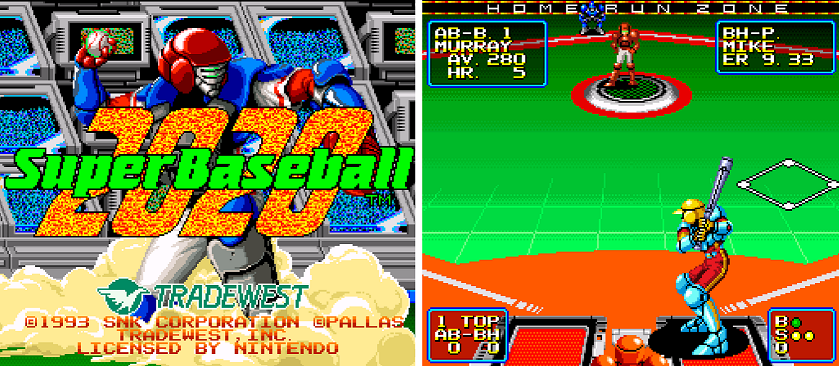
On Thursday, the announcement came down from Major League Baseball and the MLB Players’ Association that several of the significant rule changes proposed in recent weeks would now be implemented for the 2019 and 2020 seasons. Yet I flipped no tables over, and went on no weird Twitter rants that involved Norse gods smiting Rob Manfred under a vermilion sky (we’ll save that imagery for the CBA negotiations). I’m…happy? Apart from the decided lack of robots, that is.
First, the changes for 2019, in no particular order.
An Actual Trade Deadline, Not a Trade Deadline That Also Has This Weird Second Deadline With Secret Lists and Stuff
Baseball’s post-July 31 “bonus” deadline never really made all that much sense. It’s something we accepted because we were used to it, like how neon blue became the official color for raspberry-flavored candy for some reason. Why have a trade deadline if you’re going to have an additional one, before which some players can be traded, but only if they pass through a series of convoluted hurdles?
The August trade season was an opaque mess, full of waiver claims and revocable waivers and irrevocable waivers and pullbacks and teams trying to finagle a way to get prospects moved via players to be named later. It had largely become the “swap bad contracts” deadline and where’s the appetite for that?
The objections to removing this later deadline don’t make a lot of sense to me. I’ve heard a number of baseball and baseball-adjacent people wonder “What if you don’t know whether you’re contending or not?” or “What if something happens and you don’t have a Plan B in the minors?” Not these exact words perhaps, but you get the gist.
My answer: So? It’s good for the sport to have an element of risk in the decision-making process and it’s good for teams that plan their roster depth well to receive a benefit. One simple, straightforward trade deadline is the way to go. And really, if you need until the end of August to know if you’re a contending team or to receive the revelation that pitchers frequently become injured, you’ve got way bigger problems to worry about.
All-Star Election Day (Guest Starring: Extra Cash)
I’ll save the political parallels of election winners directly receiving cash bonuses for someone else!
All-Star voting has always been kind of weird, in that if you try to vote based on in-season performance, you end casting a ballot for an All-April team since the voting process starts very early and continues over a long period of time.
The All-Star Game has been the least interesting part of All-Star Week since interleague play started, but I do think there’s an opportunity here for baseball to create an event where they can market their top players. Hopefully upping the Home Run Derby prize to $1 million will prove a strong incentive for more top-tier sluggers to participate. Joey Gallo is already considering it.
MLB also snuck in the rule that for the All-Star Game, extra innings will start with runners on second base. Since this still won’t affect the real games, I’ll just hope this thing that nobody asked for, wants, or likes will die a quick death and just be a joke in 30 years, much like AfterMash.
Reduced Commercial Breaks
Anything that increases the baseball-to-no-baseball ratio is fine with me. The reduction from 2:05 to 2:00 in local games probably won’t be noticed, but the 2:25 to 2:00 in nationally televised games is a significant trimming. Saving a dozen views of the year’s horribly overplayed commercials in the World Series could do a lot for our collective mental well-being.
After 15 years, I still can’t completely forget the advertisement for Skin in which Ron Silver loudly reminds his daughter that her boyfriend’s father is the district attorney. If you weren’t old enough to remember the 2003 World Series, consider yourself blessed.
MLB/MLBPA Joint Committee
This isn’t really a rule change, but I’m hopeful that the MLBPA and MLB meeting years before the expiration date of the current collective bargaining agreement will result in more productive changes than we’ve gotten in recent agreements. Baseball’s revenue system is in serious need of modernization and it’s not something you can paper over by both sides agreeing to take money away from those rich, robber baron…uh…17-year-old international players. From incentivizing teams to win baseball games over subsidizing lower revenues, to gaming the service time clock, both sides have a lot of things to talk about. Rule changes aren’t likely to be quite as contentious as provisions that directly impact player compensation, but a constructive dialogue about what baseball should look like and how it should be played can only help to shape the harder conversations set to take place in 2021.
Visitation Rights Revoked
Baseball implemented a 30-second limit on mound visits before the 2016 season and capped the total number of mound visits per game without a pitching change at six before 2018. For 2019, this number has been further reduced to five visits, and while this won’t result in a significant change in total game times, it’s another moment where for the viewer, nothing is actually happening but some standing around and talking. Baseball isn’t a pub crawl, after all.
And coming in 2020…
Return of the 15-Day Injured List
The injured list (formerly the disabled list before the name change) will now return to being a 15-day list instead of a 10-day one; the minimum assignment period for pitchers sent to the minors will also increase to 15 days. The idea of the shorter injured list stint was to nudge teams into putting players with short-term injuries on the IL instead of keeping them active in the fear of having to lose them for a full two weeks, thereby risking further or worsened injury. In practice, some teams were using it as a taxi-squad, and baseball would prefer to not have to be the injury police to enforce whether or not injured list visits are due to chicanery. Unlike machinations such as openers or two-way players, exploiting rules meant to protect injured players isn’t what I consider in-game cleverness.
The LOOGYDämerung Beckons
Baseball’s rule changes frequently involve structural alterations to things like divisions and playoff spots or equipment. Changing how a player is allowed to be used on such a wide basis is a good bit rarer. There has always been some tinkering around the edges, like as the Pat Venditte rule, which is intended to keep baseball from degrading to an infinite loop as switch-pitchers and switch-hitters fight an endless battle for platoon superiority.
Going from a minimum of one batter faced to three, or until the half-inning concludes, is a significant change, and one I feel has been a long time coming, simply due to the nature of pitching vs. hitting in terms of how baseball itself is designed.
A left-handed pitcher can be rostered just for an ability to get out left-handed hitters as that’s all they have to do, but carrying a left-handed pinch-hitter to do nothing but hit righty relievers is much more difficult. There were always a lot more Randy Choates than Dave Clarks.
As players became more specialized, bullpens ballooned, and benches withered away. Knowing that a pitcher may have to pitch to three batters, or until the inning concludes, brings a bit of balance back to the issue as I see it. It makes the batting order more tactically relevant and instead of bringing in the lefty to face the lefty almost by reflex, managers will have to assess the risk-reward of bringing in that pitcher without the option to remove him easily.
One important thing to note is that people also greatly overestimate just how many one-batter stints there are in baseball.
| Year | One-Batter Appearances |
|---|---|
| 2015 | 1410 |
| 2012 | 1335 |
| 2014 | 1272 |
| 2011 | 1230 |
| 2016 | 1188 |
| 2007 | 1175 |
| 2010 | 1170 |
| 2013 | 1168 |
| 2018 | 1159 |
| 2006 | 1131 |
| 2009 | 1130 |
| 2017 | 1125 |
| 2008 | 1085 |
| 2005 | 1051 |
| 2001 | 1041 |
| 2004 | 1035 |
| 2003 | 1005 |
| 2002 | 1000 |
| 1999 | 991 |
| 1998 | 987 |
| 2000 | 978 |
| 1997 | 945 |
| 1993 | 920 |
| 1996 | 882 |
| 1995 | 856 |
Even in the season with the most one-batter appearances, 2015, teams still averaged only about eight a month. It’s too soon to be certain about the trend, but based on 2017 and 2018 at least, this type of usage may have hit its peak in 2011-2015.
I’m only half-joking when I say Bruce Bochy’s retirement would have reduced this number on its own. Three of the top four seasons in one-batter reliever usage in baseball history were Bochy-managed teams — the 2012, 2015, and 2016 Giants. There were 112 one-batter relief stints on the Giants in 2012 alone; only 15 other teams ever topped 70.
The players did not embrace this rule change, but agreed not to fight this particular adjustment. I suspect when we look back on this in 10 years, we’ll be surprised by how extreme people thought the change was at the time.
The 26/28 Man Roster
The size of standard active rosters will expand to 26. This strikes me as an eminently fair attempt to reverse the disappearance of benches. A team can still carry 13 pitchers (or whatever number is selected in the final rule) if it chooses to do so, but now American League teams will have at least a reasonably sized bench. My hope is that limits on resources cause innovation in both the bullpens and benches. If we see a wider variety of bullpen roles when combined with the three-batter rule and a comeback of situational hitters, I think this is a win.
Naturally, with a limit on pitchers, there needs to be a bright line to separate actual two-way players like Shohei Ohtani and Matt Davidson. Players will now have to be designated as either a pitcher or a position player in advance, and two-way players will have to meet certain criteria. The limit initially chosen of 20 innings pitched and 20 games of at least three plate appearances strikes me as a bit too steep. I have serious doubts that teams would try to “fake” a pitcher by allowing a .400ish OPS hitter to start ten games a year. For 2020 Ohtani, he’ll already have the required number of plate appearances from 2019 to qualify as a two-way player, but absent an injury exemption, until he gets the 20 innings thrown, he’ll have to be considered a pitcher, meaning he will take up one of the team’s pitcher slots for that period of time. After those 20 innings, he wouldn’t count against the team’s pitcher cap and could be reclassified.
Along with the three-batter rule, the pitcher limitation also seeks to improve the aesthetics of the game. I’ve long argued that baseball’s problem isn’t games that are long so much as it is games that are long and nothing is happening. A parade of constant reliever changes grinds things to a halt.
Where I’m not-so-excited is the effect on September rosters. I like seeing teams out of contention call up some of their minor leaguers to the 40-man roster. With 28 players on the roster, teams save on MLB salaries. If you think of some of that money going to the 26th-man during most of the season, it will likely function in many cases as a subsidy to older players from younger players. And this is sadly a theme of some changes the MLBPA and MLB have happily agreed to over the last decade.
Dan Szymborski is a senior writer for FanGraphs and the developer of the ZiPS projection system. He was a writer for ESPN.com from 2010-2018, a regular guest on a number of radio shows and podcasts, and a voting BBWAA member. He also maintains a terrible Twitter account at @DSzymborski.
Not that this will be an often occurrence but I’m still waiting to see how it will be handled if a team makes two mound visits before a pitcher faces three batters. We would have one rule requiring the pitcher be removed from the game and another stating that he is not allowed to be removed. Is baseball just broken at that point?
Game freezes, must shut down and restart from the beginning
You need to blow into the cartridge too
Holy crap. I’m disappointed I didn’t immediately think of that. I suspect that clarification or penalty would have to be devised sufficiently strong that you only do it in dire situations (like an IBB/balk) instead of the current penalty of “remove the pitcher”.
Well, they could allow you to remove a reliever early in that case, but the penalty is that you have to use up 2 of your mound visits in order to do it, a classic risk/reward scenario.
The only bad thing about this comment is that increases the chance they’ll see it and fix it, and then we’ll never get to see in a game.
with probably next year only 4 mound visits for the entire game, this probably wouldn’t happen much at all.
So true. The fact that these people enacted a rule that creates a situation that is eminently reasonable to occur and is in direct conflict with an existing rule makes a person wonder what these people were thinking about in the first place. You could make book that Earl Weaver or Bobby Valentine would have been out there on opening day if this was in place in their day.
Eject the coach/manager? Also there is the situation of the pitcher intentionally getting himself tossed, by calling the Umpire a M*****F***er.
That would be great tv. Watching relievers try to get tossed after pitching to one batter. I hope everything is mic’d up.
Extreme case would be to sneak the pitcher ipecac during a mound visit so he clearly couldn’t go futher due to “injury”
Under current rules, it’s possible to make a pitching change and then have two mid-batter mound visits before the first PA has finished. The rules in that case dictate that the manager (or pitching coach) is ejected, and the pitcher has to stay in long enough to complete the one (soon to be 3) PA, but then must be removed from the game at the earliest legal opportunity.
I’d think the easy thing would be ejecting the visitor as soon as he walks towards the mound. Like the rule that says you can’t argue balls and strikes, there is no grey area, so he has to hit the showers.
Ejected and fined an undisclosed amount for aggravated mound visitation: sounds legit
At that point the TV viewer will have a button on their remote that makes funny sounds while the umpires convene to decide which was more meaningful the third batter or the two visits. Ultimately it will depend on the positioning of the third batter while in the on deck circle relative to when the coach was moving towards the mound for the second visit. If the coach breaks for the mound before the batter moves towards the batters box then the coach must pull the pitcher. but if the batter shifts his weight towards home plate before the coach takes a step towards the mound then the pitcher must pitch to the third batter before he is pulled. If necessary it will be reviewed on a monitor by the umpires.
If MLB hates being the injury police, just wait until they start trying to figure out how to enforce the three-batter rule.
that’s simple. A pitcher is removed for “injury” either must immediately go on IL, or if it happens 2x in a week, must then immediately go on IL.
If a player claims cramp/dehydration as the reason for leaving how can they prove it’s not? As long as the team has a doctor willing to sign off on it and stick an IV in the pitcher I fail to see the issue.
And how many pitchers have you EVER seen pulled for a cramp or dehydration(especially)? Not even mentioning a guy who is just coming into a game.
Just have the first baseman go stomp on the pitchers foot. Then you have ironclad proof he is hurt and you can replace him.
You see it every once in a while during the summer. Yeah, would be odd with a guy that just came in. But who’s going to tell the pitcher to stay in and that he’s faking it? If they start doing that and someone gets hurt worse, the legal ramifications are worse than allowing the pitcher to leave the game.
If there is the threat of the IL though, that won’t happen. And I’m sure that will be the counter to faking injuries.
They go on the IL, regardless.
Is this the actual rule? Or just your proposed fix? I am not clear.
My proposed fix. Don’t give teams any wiggle room to abuse it, because you know they will….
But then you’ll have pitchers forced out for 15 days due to a legitimate cramp or minor contusion or blister injury. That’s not right.
This used to happen all the time in the nfl (Maybe it still does, but I don’t watch anymore). When facing a no-huddle offense on a long drive you’d routinely see defensive players writhing on the ground like they’d sustained a serious injury, be helped off the field, sit out the mandatory one play then come back in as if nothing had happened. It was a clear attempt to stop play by faking an injury thereby allowing the defense to make substitutions and catch their breath before play resumed.
There needs to be something to deter players from faking injuries to get around inconvenient rules, because it will happen otherwise.
Perhaps, but IMO it’s less not-right than the alternatives. I can live with that.
Requiring an IL placement isn’t fair if it’s legitimately only a cramp or a day-to-day injury that shouldn’t normally need the IL.
As a foreigner I indeed found the trade deadline one of the most most mysterious of deadlines.
I like how this implies that it somehow makes more sense for US-Americans.
Where is the rule that shows MLB to market its players and sport to grow the game. Right now Mike trout, mookie betts etc can walk down sunset blvd in LA and Lebron can’t. Nobody knows who these MLB players are because MLB trashes its players and fines them instead of promotes them. Jose Altuve is not even a celebrity in houston. SAD
Everything they do does not grow the sport….does not market these players. SAD.
I’m sure MLB would love to hear your ideas on marketing the game. I think MLB has actually been doing a pretty damn good job lately on trying to be relevant in the social media/digital age. And it looks like they’re finally starting to get the message that constantly appealing to history is a good way to lose modern interest.
The Griffey/’let the kids play” commercial was really good (though only the second best sports league self-promotional commercial behind the amazing NFL 100 ad).
I rather liked the “chicks dig the long ball” ads.
https://www.youtube.com/watch?v=UjkuJPvMrI8
The MLB has a good instagram account but their digital presence, however strong, is not the heart of the issue. Marketing the game is fine and dandy but is a fruitless endeavor if they don’t find ways to improve access to, and interest in, the product. The MLB could make the greatest commercial in the history of television and it wouldn’t matter if people can’t watch the team they want to watch or the product on the field does not interest them.
On the accessibility front, the structure of RSN contracts, streaming rights, and the resulting blackouts work in direct conflict with that objective. So does putting the stadium out in a parking lot 20 minutes from the city itself. However, I will give teams credit for getting creative with ticket packages and pricing.
The interest side is difficult because baseball is literally being outpaced by more action oriented sports. Baseball’s long schedule, long game times, and lack of consistent action have little appeal to casual observers.
NFL games have rarity on their side in that there are 16 games, with only 1 game to watch a week for a team. Basketball, hockey, and soccer have much more constant and fluid movement and build up. Baseball is awkward and wonderful in that it can go from nothing to something in the swing of a bat but there’s a whole lot more nothing than something most of the time.
Another issue in baseball is that outside of every 5th start where an Ace takes the hill, the best players have limited opportunities to make an impact during an individual game. Lebron touches the ball every possession, Tom Brady takes every snap on offense. The best players in other sports, the ones we as fans are most invested in, have a much larger presence at any given time.
These are issues that are not easily addressed. Do you shorten the season? Each game? Does the league contract to increase the quality of player on the field or at bat at any given moment? Are these just band aids for what is an issue with the core product, the game itself and its existing rules?
I always thought Futurama’s Blernsball was both ridiculous and sad, why would they need to change the game that much? But I think the reality is that baseball will need changes to the game itself to stay relevant in future generations. To be honest, while there is always a lot of push back to changes affecting the way the game is played, it’s not uncommon in its history. http://www.baseball-almanac.com/rulechng.shtml
Good points on first 2 paragraphs. Rest is baseless speculation that I could argue the opposite on every single point. I fear mlb front office believes what u wrote as reasons. It’s not. Out of touch. 50 year olds
Have you considered that many of the players *like* their physical anonymity?
Why do you think all those players go with ZZTOP beards and big hair during the season? Clean them up and put them in a suit and they can have a private life in the offseason.
Market their name and deeds, yes.
Make them paparazzi targets? Not really necessary.
Lol nfl and nba players don’t have the option to be anonymous, they are stars no matter what. Mike trout could sit next to random person on plane and no one would know who he is. Sad. MLB executives are out of touch, the mlbam deal with Disney will be the end of baseball.
While I don’t mind the change to stop pitchers from only facing 1 batter, I would have much preferred to see it be a 2 batter minimum. If a guy comes in and dishes up 2 long balls should a manager really be forced to keep him in to face another batter. Or a situation where the first 2 batters each have 10 pitch at bats, maybe you don’t want that reliever staying out there past 20 pitches. Yes pitchers will have to adjust to this and build up to expect more usage at a time than what they were use to, but there are some situations where this seems unnecessary. Reduce the warm up pitches when they get to the mound instead, they should already be warm coming out of the pen.
Exactly. My only real problem with these rules. If the pitcher is pitching terribly, his manager should not be forced to leave him in.
I mean, if a pitcher came in and gives up 2 home runs, the rule would just mean that he has to face one more hitter. Doesn’t seem that much to ask.
How about this: Why not only require pitchers face additional batters (up to 3) after they record an out? Say a pitcher is brought in and records an out, they must remain in the game and face the next batter. If they surrender a hit or the batter reaches, they can be removed. This adds extra cost/risk to the LOOGY that can get the lefty out as they then must also face whoever is sent out next.
This would cut down on some of the 1 batter stints, but not all of them.
I am pro-long relief but I would also prefer 2 batter minimum. The pitch count was my first thought, too. Maybe a tweak to allow a change if over 20 pitches after 2 batters.
3-batter minimum seems a lot better and more likely to decrease mid-inning pitching changes. Right now it’s not uncommon in a close, late game to have a reliever start an inning, get 2 outs, and then pull him for a platoon advantage when no one’s even on base. 3-batter minimum means that you have to leave the guy in to try to get the 3rd out (which they will get the majority of the time)
I’m not sure that this will materially affect one batter appearances, because I do not know how the data breaks out for when one batter appearances occured in 2015-2018. If more than 1/3 of these occurred with 2 outs, the game time gain might be overestimated. Situational pitchers aren’t going to disappear. You’re going to see many more of them occurring with two outs since this is the safest way to deploy them. Managers avoid strings of three consecutive R or L whenever possible. So I think you’ll just see the share of midinning pitching changes shift from 1 out to 2 outs.
Also going to echo the concerns that this forces a manager into burning pitches and knocking a situational guy out for the next two games, if he’s going to spend 20+ pitches on required three hitters.
The real nightmare scenario here is you gamble on an alright L to face L/R/L to start a clean inning. If he lets the lead guy reach, you have to survive a platoon disadvantage for a best case 1 on/1 out and likely pinch hitter – so you have two suboptimal PA with mounting pitch counts – or worse – you might have a pitcher you cant pull, with no platoon advantage, with 2 on no outs and enough pitches spent to knock him out for tomorrow.
The more I think three batter minimum, the more adamantly against it I am. I think the game time concern is overdone is overblown at this point because *nothing* you do makes it seem less like a slow game. It’s not supposed to be a “fast” game and never has been. 2:15, 3:05, it’s going to feel slow to the younger generation one way or another, and some people inevitably won’t mind that.
Like, I thought Milwaukee and Tampa Bay were VERY EXCITING teams last year! They just killed the opener/flip the lineup strategy, increased the value of hi lev (can face both sides relief arms), and made Javier Lopez or Chad Bradford’s career impossible. Basically, it kills anomalous pitching strategy and I’m really not a fan of that. The haves get stronger yet again because the pens that are more Yankees than full of middle relievers like most teams play at a greater disadvantage. Amazing to me that the Brewers run was a problem – that was one of the few unpredictable stories last year and one of the few small/mid market success stories. MLB responds by disincentivizing it and only further encouraging the small markets to lose 100 until they can, and only when they can, win 90. That’s your real problem.
Or even combine them into one rule: A pitchers may be removed after he faces three batters OR throws 20 pitches, whichever comes first.
You know the warm-up pitches are to get used to the mound and the catcher and pitcher to get on the same page, right? Not to actually warm up.
If you can make the case that limiting these pitches doesn’t I’m player safety, I’m in. But I honestly have no idea how many pitches are needed to make sure a pitcher isn’t going to sprain an ankle.
I saw someone on MLB Trade Rumors propose an interesting idea that the minimum batter count should be 3 minus each inherited runner (while still requiring 1 batter faced if the bases are loaded).
Part of the reason why I think the “batter on second” rule is so terrible is because it is transparent in not having anything to do with game-logic, and everything about ending extra innings. Why second base? Why not first base? Why one runner? Why not two runners?
So here’s my attempt to turn lemons into lemonade: Let’s take this thing all the way to its logical extreme.
-In the 10th inning, you get a runner on 1st.
-In the 11th, you get a runner on 2nd.
-In the 12th, you get a runner on both 1st and 2nd.
-In the 13th, you get a runner on 3rd.
-In the 14th, you get a runner on 1st and 3rd.
-In the 15th and thereafter, each half-inning starts off with the bases loaded
If you’re going to make a dumb rule like this, it’s better to make it really big so that we can all laugh about it.
Or cry.
I assumed that we will be alternating between the two.
A metaphor for life.
Not a metaphor, Dan.
What else should we expect from baseball but that?
It’s the All Star Game, it’s a midseason exhibition with the players you LEAST want to have injured or exhausted. Call the game a tie after 10, the universe does not end when (some) spring training games or other exhibitions end in a tie after 10.
People watch the allstar game to see the best players play, not from some weird desire to see who’s left on the bench after 12 or out of deep concern about who wins. Just stop the game.
I’m fine with it in the All Star Game, because who cares? In fact I’d maybe even prefer it – as it’s better than a tie (I guess). But MLB seems to be obsessed with this utter disaster of a rule change, and this is the start of the proverbial slippery slope.
Even more interesting (and fun) would be that every inning after 9, both teams have one less defensive player. So by the 12th inning, the defense 6 players including the pitcher and catcher. Do you go shortstop, first base, and 2 outfielders? 3 infielders and a center fielder?
…until that’s left is the pitcher and catcher. If players can’t score then, it’s their own damn fault.
The King and his Court would win the World Series.
I like it. Take one player out of the lineup as well so that it turns over to the best hitters faster (but maybe not the same player? don’t need to have the pitcher be one of the 4 or 5 hitters left)?
Do it the penalty shootout way: Put Rob Manfred on home plate, and each player on each team gets one shot to hit him in the coconut. Best of 9 wins the game.
If the goal is to end extra innings, why don’t they just begin each half-inning with the bases loaded and two out? Either the leadoff batter makes an out (no runs), or he’s not out and one or runs score.
That should maximize the likelihood of the two teams scoring a different number of runs in any given extra inning.
After 15 innings it’s a Home Run Derby FTW.
I agree with “who cares about the allstar game so do whatever” sentiment, however, I like baseball. Baseball season is my favorite time of year. To say I am obsessed is putting it lightly, as I spend more time on it than I do on my job. To me, more baseball is better. I love extra innings, and to me I always drop what I am doing (well, likely mean just changing the channel) and turn on a game that is in the 15th inning since that is exciting to me. I love watching players go 0-9, or 6-8, or basically any rarity.
Rather than in defined innings, put all eight potential base states in a bag and draw it at random at the beginning of the inning. Both sides get the same rule but every inning is a surprise.
Dan, are you concerned that the 3-batter minimum applies even when a pitcher is ineffective? For example, why shouldn’t a manager be allowed to remove a reliever who surrenders a homer to the first batter faced? Or issues two free passes to load the bases?
And once a pitcher enters the game, won’t opposing managers be free to pinch-hit for the platoon advantage without fear of a countermove?
I agree with you that one-batter appearances are overestimated, but I suspect that all it will take to overturn this rule change is a few high-profile, high-leverage instances where the rule prevents the manager from making a strategic change and subsequently loses the ballgame because of it. (Think Yankees-Red Sox, Chad Green or Betances blows the game to a LHB with Chapman still in the pen.)
In that scenario, you would think if the pitcher is required to throw 3 batters or end the inning, they wouldn’t bring in a pitcher to begin with? I love noise and confusion, so I like the idea of a pitcher being forced to suck.
I believe the injured list now is a split thing….
15 days for pitchers
10 days for batters
I think MLB did a good job with this. It was abused.
I also think the September limiting to 28 is a good thing. Sorry but not interested in teams having 40 guys on the roster. Even 28 per game is a joke if you have 40 but can select 28 per game- as you’d have 1 starter and 13 relievers for the bullpen. No thank you.
You can’t just select a different 28 per game. Normal roster transaction rules still apply.
The whole point of September roster expansion is to give your top prospects a cup of coffee and some extra playing time after the minor league seasons end. Now teams will barely be able to do that, especially since one or two of those extra roster spots usually go to guys who are returning from the injured list. If they were going to go this route, then the September roster size should still be at least 30.
Oh man. 2003. I had just moved halfway across the country, and I spent that postseason in IRC with a bunch of the old BBTF crew. Truly, his father will always be the district attorney.
Me too. We had all sorts of random people in there, such as Colby Cosh.
The three-batter rule is going to be the land of unintended consequences. We’re going to see more mid-inning pitching changes, with relievers brought in every time there’s two outs and the starter is done, knowing said reliever probably won’t have to face more than one guy to end the inning. We’re also going to see managers walking people just to set up the batting order for the next inning, so that the lefty can come in with two outs. Ineffective relievers will make the game take longer, and will still be replaced before the inning is over.
Every argument I’ve seen *for* this rule justifies it by saying, oh, it’s not gonna come up very often, or baseball didn’t used to have single-out matchups or other appeals to history. I’ve yet to see anybody defend the rule on it’s merit in the course of actual gameplay. How is this making the game during later innings more appealing, how is it making gameplay better? Why can’t MLB exhaust their options to options to speed up the game around the margins before starting down this path?
This is getting a lot of upvotes for speculating without any data/evidence.
For example, the expected run increase going from 2 outs, no one on base to 2 outs, guy on first is ~0.12 runs. The average wRC for a RHP facing an LHH was ~0.13 runs last year while the average wRC for a LHP facing an LHH was ~0.1 runs. So a 2018 manager gained ~0.03 runs by bringing in a LOOGY last year.
Walking a batter in 2018 to “set up the lineup” in the next inning would have been a loss of ~0.09 runs on average.
Sure, there’s some leverage considerations, etc., but it seems unlikely those secondary things would overcome the 4-fold worse outcome for putting someone on base for free just to get a platoon advantage in a future inning.
Unless a manager is actively trying to lose a game, they’re probably not going to want to make -EV decisions like that on a frequent enough basis to matter.
Matt- I trust your numbers, and someone who isn’t as mathematically inclined as yourself, where do you find these numbers for yourself and or figure them out?
I pulled the run expectancy numbers from the RE24 page and used the Splits Tool to find league-wide wRC/PA for LHP and RHP vs LHH in 2018.
I can’t comprehend the need for this rule at all, when there are such obvious alternatives that don’t completely mess with the current game.
The problem (I think) that MLB wants to solve is the slow pace of play caused by multiple pitching changes in a short time. That’s fine, I get that. When I’m watching a game and sit through 2 minutes of commercials, get the game back for one batter, and then get another 2 minutes of commercials, it’s pretty annoying (especially on mlb.tv when it’s the same commercials over and over again).
But THAT is precisely the problem – the commercials. The solution is so obvious – don’t go to a commercial break for a pitching change (or, say, each pitching change in an inning after the first one). Will it be boring to watch a pitcher warm up? Maybe a little, but nowhere near as bad as the commercials and the associated “break in the action.” Plus now we have the announcers who can continue to talk, maybe tell a story that they couldn’t fit in during the game action, and generally keep the fans engaged.
And if that’s still too much, just cut down on the number of warmup pitches that can be thrown on the real mound. Let the relievers warm up in the pen, and if they’re not ready, then they don’t come in. No worse than this idiotic 3 batter thing.
I hate this rule so much.
How do sooooo many people think the point of “warm-up pitches” is to actually warm up?
Are there really this many people who think MLB teams regularly call on pitcher swho aren’t ready to perform?
I’ve been mesmerized by this incredibly popular reaction to this rule change.
‘Warm-up’ pitches are not for literally warming up. They’re for getting used to the specific mound conditions, catcher, backstop, and so forth. It’s rhythm that’s important; professional athletes are by necessity creatures of habit.
Also, I know it doesn’t fit in as neatly with the article subject, but BaseWars was, for my money, the premier robot baseball video game.
Random shoutout here for Baseball Highlights 2045, one of my favorite recent board games. It’s a fairly simply card game, but it’s got a surprisingly subtle strategy to it, and the hat tips to old school (and new school) players in the card names are awesome.
Perhaps, but part of the joke is that the year 2020 is actually in the title as the presumed setting of the game.
I’m a little fuzzy on how a player could earn a 2-way roster spot.
For someone like Ohtani it’s easy. They’re pitchers on the days they start, and hitters on the days they don’t. After 3-4 turns in the rotation they’ll have their 20 innings and all is well. The ABs are even easier
But how about for a Brooks Kieschnick type OF4/RP? It could take most of the season before a player only good enough to be a backup earns 20 starts in the OF. Let alone trying to plan 20 dedicated innings by a reliever when you have to decide before the game if he’s even eligible to pitch.
Edit: Which is a shame. Ohtani will get a roster spot regardless because he’s that good. But the real value is in having a Swiss Army Knife kind of guy that can extend the bullpen and provide value as a bench bat and/or defensive replacement. But it seems to me that’s going to be the hardest sort to get eligible under this rule.
More follow-up: But pitchers CAN hit whenever they want, right, or even play defense in the field? You just never see them as a PH except in extra innings games when the bench is used up.
So designate yesterday’s starter as a “hitter”, since there’s no way he’s going to actually throw. Now you name your Kieschnick-type a “pitcher” and feel free to play him however you wish.
There. Problem solved!
As a matter of fact, even teams without a 2-way could hide yesterday’s starter as a hitter if the wanted to extend their bullpen with an ordinary reliever
IIRC the actual text of the proposed rule says you designate at the start of the season or at callup, you CAN’T change a pitcher into a position player arbitrarily.
If that’s the case then it becomes almost impossible.
A “hitter” will likely never pitch in enough blowouts or extra inning games to accumulate 20 IP.
A “pitcher” won’t only have to be a good batter, but also a good fielder. And good enough at both to earn 20 starts at a position. If DH counts as a position that might work in the AL, but could be a lost cause in the NL.
I haven’t read the rule fully, but starting a pitcher at a position seems exceedingly easy. Throw them out in LF for one batter, or even one pitch then replace them. Sounds like a Tampa is going to be having some fun.
And we’ve officially turned real baseball into rotisserie…
This works much better with an opener strategy than it has any right to have.
re: One PA. That’s way too easy. The fine print surely must discuss a minimum participation level for it to count as a “game started”. If I had to guess it’s going to be the same five innings that makes a game official.
That doesn’t allow the hitter to rack up the required 3 PA per game or the pitcher to easily rack up 20 IP.
Anyway, the rule also allows the eligibility to carry over from the previous season. The issue is that after this upcoming season, it’s going to be very difficult for a player to gain eligibility for the very first time. Hopefully, there will be a stipulation that a player can gain eligibility in the minor leagues without such strict requirements that will then carry over to the Majors once he gets called up.
This is my concern. There are ways to tinker with it to make it work. I also don’t want the rule created in order to prevent position players from pitching in blowouts (one of my fondest memories at a ballgame was watching Wade Boggs throw knuckleballs in an actual game).
The intent, I think, is to limit the number of actual regular pitchers that a roster has. So, I would suggest the following. In order to be eligible to pitch in a major league game, the player either needs to be designated as a pitcher subject to the 13 player maximum or the player needs to have at least 5 PA in games in which they did not pitch and average at least one PA per every 3 games on the active roster (no PA count toward eligibility for games in which the player pitches to a batter). this would mean that over the course of a season, a two way player would need to get 54 PA either as a pinch hitter or position player in order to count as a two-way player and not be required to be listed as a pitcher on the roster.
This type of language would allow bench players to come into pitch in blowouts. Andrew Romine who is a no-hit utility player (who has 7 appearances as a pitcher) would still be eligible to pitch.
They already allow for position players to pitch in blowouts. They even define blowouts liberally: 8 run lead or deficit. Romine has nothing to fear.
Well the concern, as it were, would be a team trying to sneak a 14th pitcher on their roster by naming him a 2-way player. To that extent, it’s the player’s bonafides as a real hitter that should be required legitimate. Andrew Romaine has nothing to fear. It’s is utility as a … um … utility guy that keeps him in the majors.
Still, I feel games STARTED is too high of a bar to establish a 2-way guy as a legit position player. Mostly we’re talking about guys who might be OF5/6. Maybe. Should peg it to plate appearances, or innings played in the field, or a combination.
That’s my point. Teams shouldn’t need to do to much to prove that a player has an offensive role on a team. If the concern is that teams are carrying too many pitchers, at least to me is to make people eligible to pitch with two different eligibility requirements.
1. They’re designated as pitchers on the roster and subject to the 13 pitcher maximum (remember it’s a maximum as opposed to a fixed number). Most pitchers are going to be designated this way anyways. Teams rarely carry more than 13 pitchers. All normal pitchers would be rostered this way and subject to the minimum.
2. They prove that they’re on the roster at least in part as an offensive player. To do that, they need to be put into game situations as an offensive player. That means getting PAs in a reasonable number of games. I had suggested 1 PA per every 3 games on the roster and that PAs as a pitcher don’t count (I don’t intend that to be the final word as opposed to a concept) and they need a minimum of 5 PAs to be eligible. The idea here is that this would allow both position players to come in to pitch (even in non-blowouts) because they have established themselves as position players.
The advantage in this as opposed to what MLB is doing is that there’s no real change in the way baseball works now. If a team determines that it needs a position player to pitch for any reason, it would be able to do so. It just needs to prove that person is a verified hitter. I suggested one mechanism, but there are others that may work. The MLB proposal doesn’t even consider the issue that some of these guys are going to be riding the shuttle between AAA and MLB.
Extra innings are a designated exception, as well.
Can’t a lefty just come in, get the lefty out, then just get tossed by running his mouth on an ump. Either the umpire ejects and a righty can come in or they have to just let the lefty do whatever he feels like.
I like it! Forget running their mouth. For that 2nd batter, throw at his head (and miss). Then throw behind him. If it takes a third pitch to get tossed, then go ahead and plunk him. All’s the same as walking him, but now you get a new pitcher.
He could do that, but he would get fined and possibly suspended and the manager would get ejected. So, I don’t know how many pitchers and teams would find that worth it. And if this did become common, they would just start increasing fines and lengthening suspensions.
But there will be some situations that are worth it – close game with a division rival in September? Yeah, get tossed so you can get platoon advantage (especially if the other team have just used a pinch hitter)
Yes…because platoon advantage has DEFINITELY been shown to be that important…
I’d prefer verbally abusing umpires to physically endangering batters.
… or do this:
https://www.baseball-reference.com/boxes/CIN/CIN198607220.shtml
in the 10th inning, Roger McDowell comes in to pitch and Jesse Orosco goes to the OF.
In the 11th, Orosco comes back in and McDowell goes to the OF.
In the 13th, McDowell comes back in and Orosco goes back to the OF.
They combined for five innings, allowing 0 runs and four singles. ignoring the switch hitters (3 PA between Rose and Oester), Orosco faced 6 of the remaining 7 LHB and McDowell faced 7 of the remaining 8 RHB
I would like to propose another rule- A starting pitcher must pitch to the entire lineup once before he can be replaced by a relief pitcher. With exception to an injury, of course.
Nope. Openers are great! In what fucking universe do you want to watch an SP flounder his way through the line up while giving up 5 runs in the first 2 innings. It’s not common, but it’s also not uncommon and it’s not fun.
A few thoughts:
– The august deadline also served as a way for buyers to get in season reinforcements on the cheap and sellers to save a month of salary on players of limited value. (Putting everybody through waivers to see who drew a bite let them know who had no value.) Btw, are revocable waivers gone?
– There’s less impact to the Loogy rule than people think: the change is “face three batters or until the end of the inning”. Loogys don’t only come in at the start of an inning. And walks count as batters faced. And if coming in with two outs…
– For the homerun derby: they might need to add an off-camera qualification round, maybe the day before. Because a million is two years salary for pre-arb players. So every young batting cage slugger will want in. There’s already grumbling by guys who aren’t invited and that’s without money at play.
– 26 man roster: Rule 5 draft is going to be a lot more active. More out-of-options will hang around as utility, 3rd catcher, and 5th outfielders. Don’t think many older FA types will get the extra slot.
– 40 man roster reduction: minor leaguers get a month of MLB salary so cutting out twelve slots saves the team maybe a million? And going to a full 40 roster isn’t universal. The 26th slot will cost more. It matters less than it seems to. A better solution would’ve been to simply allow two extras to be activated from the callup pool for each series.
– Shorter ad breaks? Read the fine print: wanna bet we’ll see more sidebar and crawler ads between pitches?
Mostly doodling on the margins.
Probably the best idea is the Election day voting.
I’d kind of think that the HR derby would be done by the current HR list as of Date x. Top 8 guys would get invites and then go from there…..
And number nine screams bloody murder.
It’s a can of worms, creating a bigger divide between young and old.
Especially if the winner is Harper.
If it’s done solely on actual homers hit as of a date- July 4?- there would be absolutely nothing anyone could complain about. Only thing would be if there was a tie.
That would be fine but to date that’s not how they do it: they want name sluggers. Many of whom prefer the extra time off, which is why they now offer up money.
Judge would probably agree but Stanton would probably say “been there, done that. I make good money already.” If anything, some of the big money players might bow out to give a teammate a shot at the money.
Unintended consequences are likely.
That’s why a qualification round open to everybody with say, 10hrs, would be a good idea. An extra event after the futures game. Keep it simple: 10 swings, so nobody gets worn out.
lets look at last years top 8 as of July 4..
JD Martinez 26
Mike Trout 24
Jose Ramirez 24
Aaron Judge 24
Francisco Lindor 23
Nelson Cruz 22
Nolen Arenado 22
Giancarlo Stanton 21
Manny Machado 21
Bryce Harper 21
Mookie Betts 21
pretty much a top notch group…
Also, you say after the futures game for your thing. Small problem- that’s on Sunday, and there are MLB games that day…. So non starter there…
Move it to monday and move the derby to wednesday?
Make it a four day festival?
It’s a multiday festival, give it as many events as possible.
So, the manager can change his pitcher/hitter designations before every game, right? Otherwise you end up with a situation where a two-way player isn’t allowed to pitch because he’s designated as a hitter, and he can’t get his designation changed because he doesn’t pitch.
Nope, I don’t think so, there’s no limit on using pitchers as fielders or hitters, so a two-way player starts the season as a pitcher, and plays as a pitcher till he reaches the two-way milestones at which point he no longer counts against the pitcher limit and can still be used either way.
No, the designations are made before the season starts for the entire season. The two-way players are the rare exceptions that are designated as both.
With the 3 batter rule I expect to see a lot more intentional walks. I also feel as though dehydration/cramping will become less rare.
Also, who wants to watch a pitcher floundering on the mound? If a pitcher comes in and his control has completely deserted him is he better off beaning 2 batters and being tossed than actually attempting to throw strikes?
The Rangers will remove gatorade from the bullpen.
If a pitcher comes in and faces one batter to end an inning, then I am assuming he can be pulled after one batter in his second inning. Does anyone know for sure if this is correct? In other words, he only faced 2 hitters and comes out in the middle of an inning, but still met the requirement of having finished an inning.
I believe you are correct. Once he’s finished the inning, he’s eligible to be removed at any point after that…. At least, that’s how I feel the rule should be.
I wonder if the unilaterally implemented three batter rule is a bit of a bluff or experiment. And when they see the negative feedback (is the independent league using it), what we have in 2020 is a TWO batter minimum rule which will have positive reactions.
I think the union was in a real tough position. The Batters were all for it, pitchers weren’t(at least relievers). By doing it where they aren’t appealing, but not agreeing to it either, they’re trying to be sensitive to everyone.
I would have liked an exception to this rule. Specifically, the pitcher would need to face at least 3 batter unless the end of the half inning is reached or until a batter reaches base. The idea is that the Manager can’t pull a reliever who is doing well, but he can pull a reliever who is struggling. If he gives up back to back homers, he should be allowed to be pulled from the game.
That would create a fun tactical choice as well, where the manager would have to decide if they were willing to issue an intentional walk just to change pitchers
If we have to have this rule at all, I think you’ve hit on the best possible version of it.
Why is MLB jumping through hoops with these silly rule changes to appease non-baseball fans? Why is watching a three-hour game worse than watching a 2 hour 50 minute game?
It’s because the 3 hour game had almost no action in it. Fireballer after fireballer coming in out of the pen to face 1-2 guys each. If a guy goes long, he gets dl’d and misses 6-7 games only and a fresh reliever in place for next day. If game blowout early, throw in a position player, instead of having a true long reliever.
how much of the longer, 3 outcome games has to do with field dimensions? shorter fences=more HR. Smaller foul territory=less pop outs and more 2-strike counts.
While I agree that you are right, I can guarantee you the average fan isn’t not watching baseball because there are too many home runs.
Possible unintended consequence of the 28 roster limit in September, basement dwellers are more likely to DFA vets on their walk years to give young guys a shot?
Could also be a result of the deadline change.
“We’re putting you on waivers. Talk to the Rays. They’ll owe us one.”
A week later, a prospect gets traded for an organization player, if the waived guy goes to the Rays.
Since there will be an additional player on each MLB roster, shouldn’t the luxury tax thresholds be adjusted accordingly? Or are the tax amounts based on the 40 man roster irrespective of service time or how salary accrues at the MLB level?
I can’t believe I’m typing this, but if they want more action….expansion will dilute the pitching depth across the league, and you’ll get more hits and walks……
The only one I don’t like is the 28 man roster in September, since it is all about taking money and benefits from minor league players, some of whom will now never see the majors.
A vast majority of your September callups are your AAAA players who have been shuffled back and forth from AAA all year long.
Are they? That’s not my recollection as a Twins’ fan, but I’ve never really studied it to know. that said, there will be more guys that get time during the year, as the 26th spot will be filled with injury replacements and guys that shuffle…..so it’s not just 1 more player getting time….but it’s probably less players getting time, though like I said, that’s based on my “memory”….
That’s true, and I’m all for minor leaguers getting more money and benefits, but playing the most important games of the season under drastically different rules is worse.
Yes, they could do that and it would open up some slots for the marginal/fungible unemployed.
But most of the likely expansion sites are needed as leverage to get parks for Oakland and the Rays or for relocation if the shakedowns fail. Plus, except for Montreal, they are smaller markets that won’t be crowding the luxury tax limits.
At best a short term fix, kicking the can down the road a decade at most.
Dumb Q, but does the minimum batter rule effectively kill the Waxahachie Swap? Or if the player remains in the game will that not count as a substitution? In theory if both players remain in the game they could both throw to 3 batters prior to being pulled.
This is a good question. Can a pitcher come in, pitch to 1 batter and then go play left field? I would hope that that is still allowed, even though we don’t see it very often. Bu, if it is allowed, we might start seeing it more often.
That is probably where the two way player designation comes in.
They can also rule that it is three *consecutive* players.
I’d love for the rule to read “the pitcher must remain in the game for three plate appearances.” If you want a new reliever bad enough to put your current one out in right field, you should be allowed to go for it!
What? There was a sequel to Base Wars???
Not really. Super Baseball 2020 has robots and cyborgs with upgradable armor and equipment, but there’s no violence. I guess they’re sort of co-generic.
If you feel like playing it on an emulator, get the Neo-Geo version.
Don’t break the law! Although the Wii Virtual Console version of the Neo Geo release is no longer available, it will eventually be released on the Switch like all the other Neo Geo games.
Am I the only one who just got incredibly disgusted reading the rules about what qualifies a player as a hitter or pitcher or two-way player? Is MLB turning into a fantasy baseball league? Why can’t we just let these guys play?
Right on. Next thing you know, MLB will be worrying about the equivalents of ineligible receivers downfield and too many men on the line of scrimmage…
Hey, here’s an idea. Instead of putting in rigid/exploitable rules about who is a pitcher/hitter/two-way, how about having the manager designate four players as “eligible relievers” before each game? Then make it a rule that only these eligible relievers could be used as relief pitchers, except in extra innings or in blowouts (trailing by say 10 or more runs).
This would eliminate a big incentive for stashing 13 pitchers on a roster, without all the headaches.
Well, if they outlaw the shift you’ll see infielders in motion the moment the pitcher starts his windup. And then they’ll have to limit when fielders can move and…
“Balk. Infield in motion. Go to first base.”
Maybe they’ll give the umps weighted hankies.
Because they don’t want 15-pitcher bullpens and don’t want to hamper future Othanis.
Ken Brett comes to mind, here: George used to say Ken was a better hitter than him but the Red Sox developed him as a pitcher. Career 3.77 FIP so he was decent.
But as a hitter (in small samples) he turned in a 145 WRC+ (before the DH) and five years later when he was traded and the Phillies gave him 100PAs he turned in a 120 WRC+. With no real development time as a hitter. If developed as a hitter, we might be looking at the Bretts as another great brother act. We’ll never know. But…
https://www.mlb.com/news/ken-brett-two-way-phenom-c269367600
Putting a limit of the number of pitchers is a move against specialization (probably as a prelude to a universal DH) and an encouragement to teams to let players with two-way talent to develop both.
This one is hard to object to.
Hat’s off to Ohtani.
I’d argue that if a team wants to have a 15-man bullpen, either by developing 2-way players or by limiting their bench to one player, then go ahead and let them.
#1, it’s really a non-starter since no team would ever do that.
#2, just in case they did, I’ll repeat what I said in another comment – the ONLY problem with pitching changes is the commercial break. Obviously MLB doesn’t care about the revenue from pitching change commercials if they won’t even allow teams to change pitchers, so get rid of the commercial break. Limit relievers to 2-3 warmup pitches on the mound, and poof – the problem instantly goes away.
I’d argue that an inning with 3 pitching changes without commercials is a million times more enjoyable to watch than an inning with just one change with commercials.
On top of that, in theory, if there are more pitchers to spread the work around, pitchers should remain healthier.
But the way the rule is outlined it’s essentially sink or swim for potential two way players. To earn your status you are going to have to be given a real opportunity because you will have to start out using one of your teams valuable pitcher spots.
You bring up the DH, and little has been mentioned about it being one of the sources of the problem. The DH reduces the value of position players on the bench, allowing teams to add more marginally valuable pen arms. The same goals these rules set out to accomplish could be done simply by increasing the utility of position players on your bench.
Also, it seems to me that the 2-way player rule will do exactly the opposite of what you say, at least for established hitters who want to try to also pitch.
They’ll have to be designated as pitchers to start the season and that, combined with the new artificial limit on total pitchers means that they will be taking the spot of a better pitcher. Teams are going to be VERY reluctant to use a valuable pitching spot on a hitter who maybe has a slight chance of being an effective reliever.
If they didn’t change a thing, there’d be more 2-way players.
With good reason.
The rule isn’t for marginal position players looking to hang on as occasional pitchers. (Brooks Kieschnick types.) It’s for the guys in the minors being developed as two way players from day one. There a couple down there right now.
Those prospects will enter as pitchers who hit regularly and once they validate true two way status with meaningful ABs won’t count towards the pitcher limit.
The rule exists to prevent gaming by putting relievers in the field during blowouts or in lost games. A two way should be genuinely useful both ways, not just a way to bloat the bullpen.
Yes, it shouldn’t have to be done this way but if it can be gamed it will be gamed.
Actually, preventing pitchers from playing the field isn’t part of the rule. They don’t care about that. They’re just trying to limit how many bullpen arms a team has available in regulation, non-blowout games in order to further limit pitching changes.
FIRE MANFRED!
I’ve been reading a lot about the 3 batter minimum rule today (Mike Petriello has an article about it out today as well as Ben Lindbergh), but I still dont like it. I’m sure I will get used to it, but LOOGYs are already mostly gone as it is, and my favorite team in the Yankees already are one of the teams that have the least amount of one batter relief appearances (2018), so I dont see this quite a lot, but just picturing a high leverage spot going completely wrong at the biggest moment of the season because the pitcher cant yet come out would drive me crazy. I’ve seen suggestions that a 2 batter minimum would be better, and I agree with that, if they are so insistent on doing something like this I would prefer a 2 batter rule, and it doesnt even include the loopholes that have already been brought up in the comments section here, i’m sure front offices are thinking the same exact things right now.
In general, I’m not a fan of the league telling teams how they have to run their strategies. Thats why I’m not in favor of banning the shift, limiting pitchers on rosters or telling teams how they have to use their players. If a team wants to go crazy and carry 14 pitchers, let them. If a team wants to play 7 fielders on the right side of the field, let them. I believe that the biggest things that would help the pace of play is forcing batters to stay in the box at all times, and cutting down commercial breaks with no break for pitching changes. Everything else just seems like overthinking to me.
Could not agree more, on every single point. I’d upvote this a million times if I could.
I tried unsuccessfully 🙁
Can’t be said any better.
Super Baseball 2020 is in my upper echelon of Sega Genesis games
I agree completely with the point about the 28 man roster–the Union traded potential call-ups and service time for a dozen minor leaguers to get a paying job for an on-the-bench veteran. The Union still doesn’t get it at all, and you would think they would be smart enough to hire a negotiator who does. As to the rest of the changes, eh, let’s see how they play out in real time. I do like the hard trading deadline.
If MLB wants, they can actually eliminate extra-innings while also bringing pitching changes to a screeching halt with this one weird trick:
A tiebreaker rule.
1. If the game is tied after nine full innings, the team that used the fewest pitchers is declared the winner.
2. If both teams used the same number of pitchers, the team that made the fewest mid-inning pitching changes is the winner.
3. If tiebreakers #1 and #2 don’t determine a winner, the home team is declared the winner.
They can also have the managers thumb wrestle to break a tie. That doesn’t mean it’s a good idea.
Jello wrestling!
Once upon a time, MLB had curfews.
Games tied at curfew were continued by suspended game rules. Worked fine for decades.
Make it 12 innings or midnight, whichever happens first. Or some such.
Too much overthinking.
Lol…I forgot to put the “/sarc” at the end of the comment. I have NO idea why MLB is so allergic to extra innings, and the runner on second proposal is beyond absurd.
Regarding the home run derby, a million is a lot. However I’d doubt it moves the needle much for a guy like Harper, or Trout. But someone making league minimum, or on a rookie contract? Well that guy it nearly doubles their annual income if they were to win. I would hope we could get a chance to see the best players, but I would much rather see guys who the money means a lot to in there. Lets say Palka is leading the league in HRs at the break, and making $575k per year. Wouldn’t training for the HR derby a few weeks early matter more to him then you know, the season where they are already 10 games out? It further complicates it when some of the 1 dimensional sluggers are unlikely to get another large contract, if at all. The difference between making $575k, and 1.575 million in a year is a lot. Making $575k you feel like you have a lot of money and are unlikely to need money, but you also don’t feel like you can do whatever you want. A nice apartment, a car or two, but you can’t go out to the nicest place in the city 5 nights a week. With 1.5m you can.
Kinda went a bit on a rant there, but mostly was trying to say that this home run derby might become extremely important to some younger/guys who are unlikely to make much more money in their career.
I meant to say doubles the amount, or, triples the total.
Here’s to hoping the derby has an opposite effect on Gallo and he can suddenly hit the baseball
My one “far out” prediction for an unintended consequence of the idiotic two-way player rule (that I really hope comes true just to spite MLB):
Any hitter who’s trying to become a 2-way player will have to be designated as a pitcher at the start of the season. (If they were designated as a hitter, they would never be allowed to pitch, and thus could never become a 2-way player). But this means that until they pitch 20 innings and play 20 games as a hitter, they are effectively taking the spot of a (better) pitcher, hurting the team.
The vast majority of these guys are going to be relievers, so pitching 20 innings could take a long time. Maybe even as long as half the season, since they are essentially going to be the worst relievers available.
So teams have an incentive to have this guy pitch 20 innings as fast as possible, but a disincentive for him to really pitch at all.
The solution? Blowouts!
The first blowout loss they have, he comes in and pitches the entire remainder of the game. He won’t have the arm strength to do that normally though, so he throws as soft as he possibly can – basically just lobbing the ball the way a coach throws to 9 year olds. Obviously no curves or anything that would put any strain on his arm. He’s just throwing batting practice, so he can throw as many innings as possible.
Could we see 100 runs in a game? 50 home runs? The possibilities are endless. It would make a complete mockery of the game, and all batting records would be meaningless.
And it would be exactly what MLB deserves for coming up with such an unbelievably stupid rule.
Alternatively, it will encourage tanking even more – a team could decide “we’re going to be bad this year” and load up on potential two-way players. They’d all have to be designated as pitchers. A couple months into the season, they all pitch their 20 innings, don’t have to be “pitchers” anymore, and the team is in better shape for the following season.
Meanwhile they just went 6-54 over their first 60 games because they had position players starting every other game.
The three batter rule is eventually going to lead to unnecessary pitching changes in one particular way.
Teams are going to make mid-inning pitching changes the inning prior to the team’s star hitter coming up in order to burn through a pitcher’s three batter limit even if the existing pitcher has allowed no men to reach base during the inning he’s being replaced.
For example, if a team is playing against the Phillies (and Bryce Harper) even if the pitcher throwing against them has been pitching quite well, it’s likely the opposing team might pull their pitcher with one or even two outs in an inning even with no one on base in order to burn some of the relievers three batters he has to face so that the manager isn’t locked into a lefty reliever for two more batters after Bryce bats.
I haven’t seen much talk of this, but a major source of the problem these rules are designed to fix is the existence of the DH.
The DH decreases the value of having position players on your bench while also increasing the value of additional relievers. The DH makes it more difficult for pitchers (particularly starters) to navigate lineups while simultaneously giving defenses more ammo to play matchups and platoon advantages.
While I don’t advocate for the removal of the DH, doing so would likely have a stronger effect than all of these changes together will, without all the unintended consequences and general stupidity.
Has anyone done a look at the effect the DH had on game length?
Results seem fairly inconclusive. Looking at the direct impact of a DH seems to add a few minutes to each game, but the difference between AL and NL games is insignificant.
I would argue that teams adapt to the rules in place, and with so much inter-league play NL teams have adapted to playing AL baseball much of the time. Game times have clearly increased since the invention of the DH and the advent of inter-league play. In that sense it’s hard to suss out the direct impact the DH has had on pace and length of games and whether or not its removal would start things back in the other direction.
Why not take the HR derby a step farther? Allow more guys with regional qualifiers , and guys who get in on merit. Then the guys who get in on merit (hr league leaders, past winners ,mvps) auto get into the final (lets say 16) and the others battle it out. Then when it is all over, they get to go up against the USA HR amateur winner. The player will be fatigued, and almost assuredly there is at least one non pro out there who could win/compete in the HR derby.
It is like that Dr. who made 2750 consecutive free throws in 12 hours. Or the other guy who made like 100k consecutive over the course of years. Let someone out there get the chance to compete for a million dollars versus the best players in the world at a very specialized part of baseball. Would be good for marketing, would be good for everything. Who wouldn’t want to Aaron judge lose to a physics teacher who somehow can hit every single pitch during batting practice exactly 345 feet down the line? Or some slow pitch 300lb body building behemoth who decides to start training for this since a million dollars is a lot and he can hit 100 straight HRs in slow pitch BP?
Here’s the problem: We, the fans, would love to see this. Aaron Judge does not want to lose to a physics teacher, because then he becomes “the player who lost to a physics teacher”. It’s the reason you don’t see big name guys there already, there’s little to gain and everything to lose. What does Trout prove if he does the Derby and wins?
Why can’t there be a 10-day AND 15-day disabled/injured list?
Unless you added some sort of penalty/incentive or extreme limits to the 10 day list, why would anyone EVER use the 15 day list?
The 3-batter rule should have just spelled out that a reliever needs to face 3 batters, end an inning, or allow a run to score. Almost all the complaints about the 3-batter rule have centered around worries that a guy comes in and just doesn’t have his stuff that day and gives up multiple home runs.
No team is going to “strategically” bring in a reliever just to give up a run to a guy. There’s no gaming the system there. And if you allow him to be replaced if he DOES give up a run, most of the arguments against it melt away. Yes, you’d still have a mild worry about the guy who has no command that day and walks three guys in a row. But if the guy catching him in the bullpen can’t tell it’s not his day, that’s on you.
Officially annoyed baseball isn’t fixing what ain’t broke. What’s broken is incentivizing anti competitive behavior as optimal strategy. Gameplay doesn’t need all kinds of untraditional overhaul and regulating new strategies out. Some people enjoy the art of pitching staff management. Allowing for atypical strategy is one of the very few potential competitive advantages that are left for small and mid markets. CRAZY IDEA but maybe if the worst ten teams didn’t automatically grab the first several draft slots, after which success rate appreciably plummets, they would be least incentivized to lose, and 2 win players in their late 20s and solid middle relievers with a 3 ERA wouldn’t be fighting for non guaranteed MILB deals. Which is just straight up embarrassing to watch from a fan standpoint.
Reverse snake draft orders incentivize competition, even when you know the stars would really have to align for a playoff spot. None of these proposals fix anti competitive behavior, it just destroys a product that doesn’t have anything wrong with it. Stay off the field and matrix of strategery, PLEASE. While you’re at it, don’t kill the double switch. Make a different concession to the players union than a universal DH.
Top 3 draft slots: worst three teams. But slotted at random, so you’re not teying to tell professionals to lose as hard as they possibly can.
Tampa Bay wins 90 with a fractions of the payroll of the two teams ahead of them? They get rewarded with the 4th overall pick. Wow, that’s a get. Now small markets can build for the future without tanking. Seattle underperforms Pythag and misses playoffs? Pick 5. I bet they don’t have a firesale for players who won’t be in the bigs til 2021. And so on.
That’ll fix the free agency problem right quick. That dumb three batter rule is going to get some nasty press the first time someone comes in and gets a 15 pitch at bat right off. Foul balls up ten percent over ten years because more sliders. So you have to leave the guy in to throw another’s 15 and get totally spent in mid April? UGH PLEASE DONT DO THIS.
I agree completely with your sentiments Red. If baseball wants to try something crazy, try some crazy incentives for rebuilding teams to win (or disincentives to lose). Maybe you set the 1st round of the draft to go (1) lottery winner among bottom 3, (2) best non-playoff team, (3) worst team besides lottery winner, (4) 2nd-best non-playoff team, etc….incentives for teams in the middle to aim for more wins.
Another crazy idea to make it less palatable to go on a multi-year deep rebuild – reduce the 40-man control roster to a 35-man limit, and make players eligible for the Rule 5 Draft one year earlier than the current rules. This would put a meaningful cap on how much minor league talent you could stockpile.
Regarding the 26-man/13-pitcher rule: if a team has the discretion to designate whether a two-way player is a pitcher or a position player, then the choice is easy: he’s a position player, period. Because the whole point of the rule is to reduce bullpens. So by designating, say, Ohtani as a position player, now the Angels can keep four starters and nine relievers on staff designated as pitchers. So, in practice, they’ll have 14 pitchers. They can simply say that one of their position players happens to pitch.
The alternative would be to designate a percent of innings played as a pitcher vs a position player that will determine an automatic designation for the guy, e.g., if it’s 25%, or 33%, or 40%, or whatever%, of innings as a pitcher, he’s a pitcher. The problem there is if he’s straddling a line and gets automatically reclassified as he goes back and forth across it, the team would need to make roster moves to address it, and that would be insane. The main point is, allowing teams to simply designate a two-way guy as a position player flouts the spirit of the 13-pitcher limit.
I see two results from this particular iteration of the rule: (1) way more two-way players (which is probably going to happen either way, I guess); and (2) way more position players throwing garbage innings in lost causes (and winning blowouts), to save the bullpen.
The rules generally make it impossible to use a position player as a pitcher.
Are you sure you don’t want takesies-backsies on this reply?