Mariners Swap a Ford for a Ferrer(i)

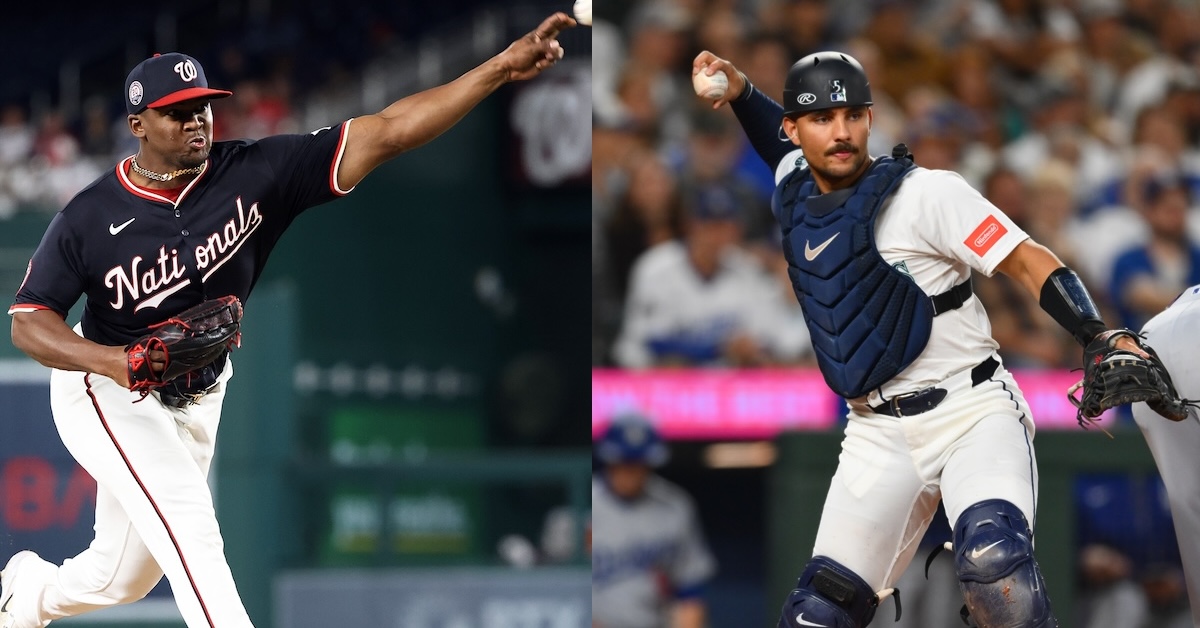
Daniel Kucin Jr. and Steven Bisig Imagn Images

On Saturday afternoon, the Mariners traded catching prospect Harry Ford to the Nationals in exchange for Jose A. Ferrer; the Mariners also sent right-handed pitcher Isaac Lyon, their 10th-round pick from this year’s draft, to Washington. Robert Murray of FanSided had the news first.

This is a trade that raises a few eyebrows. While Ford moved through the minor leagues slowly by modern standards, he’s been a consensus Top 100 prospect for nearly three years now. It’s a little jarring to see someone of that caliber dealt for a reliever, particularly one with pedestrian surface-level numbers and good but not sterling peripherals. My initial reaction was that Seattle sold low on Ford, though further review has changed my thinking a little. Let’s dive in.

The Mariners’ side of this takes a little more nuance to work through, so we’ll start with their situation. Ford is a good, if not great prospect. He’s been on our Top 100 list for a couple seasons now on the strength of a well-rounded game, finishing the 2025 season ranked 43rd overall as a 50 FV. He can hit a little bit, there’s average power that he’s learning to tap into, and he’s growing into a reliable, if unspectacular defender behind the plate. There isn’t much star potential here, and I’ll say more on why that is in a bit, but he does project as a regular.

But Ford was also as blocked as any prospect in the minors, stuck behind MVP runner up Cal Raleigh. Raleigh is durable, excellent, and thoroughly entrenched after inking a six-year extension this past March. The Mariners had experimented with Ford in the outfield to see if they could find something else for him to do, as it’s been clear for a while now that his future would not be behind the plate in Seattle. He’s been an obvious trade candidate for at least a year, and the only surprise is that it took so long for the M’s to move him. They’ve reportedly been shopping him for impact relievers elsewhere; frankly, this is a swap that would have made a ton of sense four months ago, when Ford was just as blocked and the Mariners could have used more relief depth in front of Andrés Muñoz and Matt Brash for their playoff push. Oh well, not like it bit them in the butt during October.

So, trading Ford makes sense. But for Ferrer? A guy with a 4.36 career ERA? Don’t they have holes around the infield, ones they may need to fill via trade since it seems like their off-season budget is pretty modest? What gives?

As readers likely know, Ferrer’s numbers under the hood are much better than his ERA. His FIP over the last two years is under 3.00, thanks to tiny walk and home run rates. He’s also one of the league’s foremost groundball generators. His groundball rate is just over 60% for his career, and of the pitchers who threw at least 50 innings in 2025, only José Soriano, Jhoan Duran, and Tim Hill topped Ferrer’s 62.6% mark. As you’d expect, it’s really hard to drive the ball against him, and he only allowed five long balls in 76.1 innings of work in 2025. He takes full advantage of his ability to dampen damage on contact, pounding the zone to the tune of a 2.21 career BB/9 rate and an in-zone pitch rate of nearly 60% (roughly the 90th percentile for the league).

And of course, the Mariners aren’t just acquiring those numbers. They’re trading for the chance to unlock more, and you can see compelling paths forward here.

This season, Ferrer mostly just pounded the zone with his sinker while mixing in a changeup about 20% of the time and a slider once or twice an outing. His sinker is quite good, as it sits in the upper 90s, touches 100, and features plus tail. It’s a quick and reliable way for him to generate outs, and you can see why he leans on it. But like most pitchers who spam the fastball, there’s an argument for a usage adjustment here. The changeup performed very well in 2025, generating big whiff and chase rates, and hitters didn’t do much with it even on contact. He could probably stand to use it more.

The real path forward may be the slider, though. Ferrer’s sits in the low 90s and has tight, two-plane movement, not quite cutterish but in the neighborhood. His command of it isn’t great, generally in the dirt to the glove side, but whether it’s because guys don’t expect the Spanish Inquisition or they’re just not seeing his spin very well, opponents did absolutely nothing with it and whiffed more than half the times they swung. The Mariners have had a lot of success getting fastball-heavy arms to diversify their arsenal — Logan Gilbert and Bryce Miller are two obvious examples — and it would come as no surprise if they have Ferrer lean on the bender a lot more going forward.

Put everything together, and you can imagine why Seattle sees Ferrer as an impact reliever, the kind worth parting with a top prospect for. Sources from around the game like Ferrer as an upside play. He throws hard, he pounds the zone, he has three pitches that flash plus, and there’s a relatively straightforward adjustment that could unlock more. With four years of team control left, he’s not even expensive. He lengthens the bullpen and gives the Mariners a left-handed weapon of a magnitude they didn’t have last season. There’s always risk in acquiring relief pitching, but this looks like a safe way to add 1-1.5 WAR to the bullpen, and with his skills, a nutty, sub-2.00 ERA season is not outside the realm of possibility.

On Washington’s side, this also makes plenty of sense. Ferrer’s a tough guy to lose, but good relievers are a luxury on a rebuilding club and swapping bullpen arms for bats with everyday upside is a sound idea. That’s especially true behind the plate. Nationals catchers produced -1.4 WAR in 2025, last in the majors, and were awful on both sides of the ball. Led mostly by Riley Adams and Keibert Ruiz, the club’s backstops hit .225/.270/.322, good for a 65 wRC+ that was 29th in baseball. Thanks in part to Ruiz’s horrible framing numbers (his mark of -5.3 runs prevented was third from the bottom among all catchers, in 65 games no less), Washington’s catchers were also the league’s worst collective on defense as well. Ruiz was once a top prospect, but he’s now 27, has no approach, and is not exactly an asset defensively. It’s time to move on.

Enter Ford. A first round pick in 2021, Ford progressed slowly and steadily toward the big leagues before making his debut in September. His approach has been awesome: He has a very good eye, he recognizes soft stuff out of the hand, and while he doesn’t swing a ton, he reliably turns it loose on pitches he can drive. If you put a ton of stock in swing decisions, this is your guy.

Statistically, all is well. His production has been strikingly consistent, with Ford notching a wRC+ between 125 and 135 at each full-season level. He’s also posted very small deviations in his walk, strikeout, and — aside from 2024, which he spent in a huge, homer-suppressing yard — ISO numbers, all of which were encouraging. If you value consistent minor league production, this is your guy.

Scouts and evaluators are not universally sold on Ford’s ability to translate that production to the big leagues, though. His bat speed is average and he’s periodically struggled getting his bat to fastballs up in the zone. In his most recent prospect write-up, Eric covered an adjustment Ford made with his feet and timing that seems to have helped this season, but obviously the big leagues will provide a different stress test. I see an average bat with a chance to grow into average game power, but there are scouts who would take the under on both.

Ford’s defensive growth has mirrored his ascent through the minors. His framing has improved but is still fringy, and he may benefit from an ABS assist (though he was actually pretty bad at challenging pitches this season). He shines more in spots where his athleticism takes center stage. He’s quick on plays where the ball is tapped out in front of the plate, and he’s going to catch his share of baserunners. He has an above-average arm, his throwing accuracy has improved, and he caught nearly 25% of would-be-thieves in 2025. Early-career reports questioned whether he had too much trouble simply catching the ball, but his passed-ball figures have plummeted since 2023. I’m projecting an average defender, though again, there are evaluators who will take the under.

It all adds up to a 50 FV report, albeit one where there isn’t a lot of wiggle room if one of the tools doesn’t reach its projection or Ford’s approach buckles against better stuff. In truth, part of that projection is a reflection of the state of catching throughout the league; the bar for being an average regular isn’t very high right now. Still, if he’s average on both sides of the ball, that’s a good player, and he’s the kind of risk Washington should be taking at this stage. Ford could be part of the next good Nationals team, and even if he falls a little short of where we have him here, he’s likely steady enough to be a real upgrade over what they’ve trotted out in recent seasons.

Let’s quickly touch on the other player in the deal. Lyon, the son of former big leaguer Brandon Lyon, signed for nearly $200,000 this summer. He’s a good strike thrower with a bad fastball, a slider and change that flash average, and a delivery with some deception in it. He sat in the low 90s in short starts with Low-A Modesto, and could have another gear as he fills out. He projects as an up-down type and has a low-leverage relief ceiling if he can find a way to throw harder in shorter stints.

One other thing to note: With Ford now in Washington, Seattle will be in the market for a backup catcher. The club is reportedly open to a reunion with Mitch Garver, who hit 24 homers amidst otherwise disappointing production over the past two years as the club’s primary backup catcher; he also started at DH 22 times this season. While Raleigh plays nearly every day, he does DH fairly often, so whoever Seattle signs will probably start about 25% of the time behind the plate.

Ultimately, the deal helps both parties, and one exec I spoke with called it a “win win” move. The more I look at Ferrer, the more he seems like a reliever with another gear, a guy with closer stuff who is a plenty good fit for Seattle’s bullpen as is. Still, I think Washington did well here, getting a high-floor position player at an area of desperate need. The Paul Toboni era is here now, and Nationals fans should be enthused about his first big trade as president of baseball operations with the club.

AL Division Series Preview: Houston Astros vs. Seattle Mariners

© Troy Taormina-USA TODAY Sports

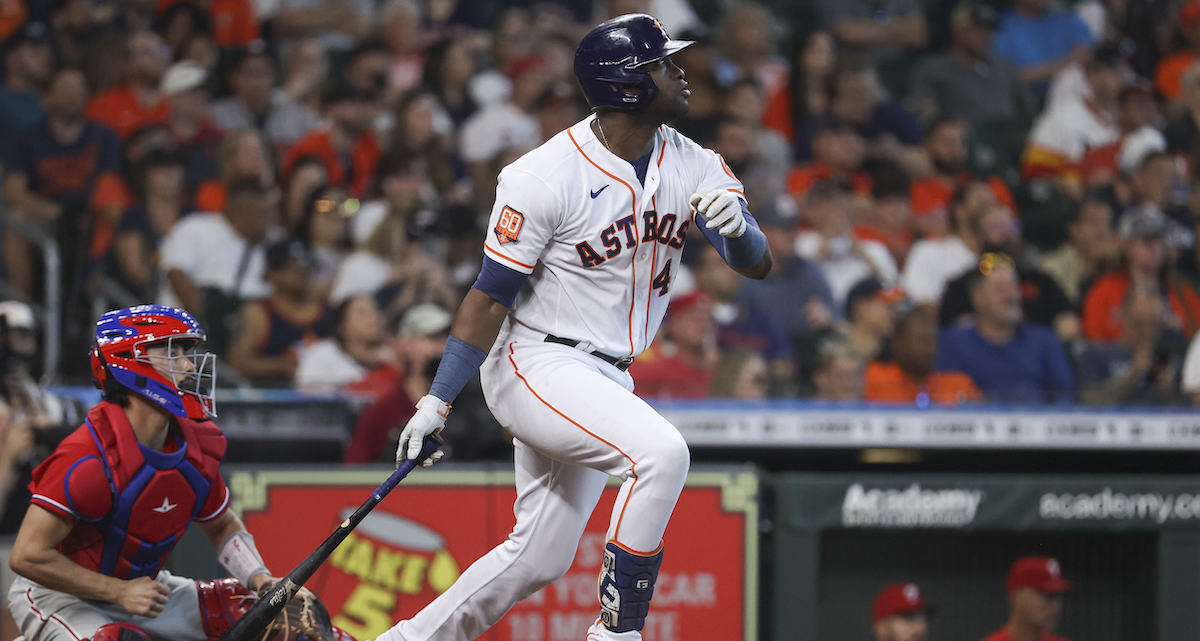
When the American League Division Series begins on Tuesday, the Seattle Mariners will take on the Houston Astros as the ultimate underdogs. The Mariners are in the midst of their first postseason run in over 20 years, while the Astros have made their way to the ALCS in each of the past six seasons. No matter how you slice it, the Astros are the overwhelming favorites.

In fact, this might be the most winnable ALDS matchup the Astros have had over their seven-year run. Never before has the gulf between the Astros and their opponent been this wide:

Houston Astros ALDS Opponents Since 2017
Year Astros Record Opponents Record Difference Astros Pythag. Record Opponents Pythag. Record Difference
2017 101-61 93-69 8 99-63 93-69 6
2018 103-59 91-71 12 109-53 98-64 11
2019 107-55 96-66 11 107-55 93-69 14
2020 29-31 36-24 -7 30-30 35-25 -5
2021 95-67 93-69 2 101-61 97-65 4
2022 106-56 90-72 16 106-56 89-73 17

Read the rest of this entry »


Sunday Notes: Zack Littell Knows a 20-1 Record is Relative

Two summers ago, I asked Greg Mroz — then a radio broadcaster for the Clinton Lumber Kings — which of their players I should interview and write about. He recommended Zack Littell. I proceeded to do so for a Sunday Notes column, despite never having heard of him. Not too many people had. At the time, Seattle’s selection in the 11th round of the 2013 draft barely registered a blip on prospect radar.

Mroz deserves some props, because Littell is now living large. Playing for two different organizations, at two different levels and for three different teams, Littell finished this season with a record of 20-1. The most recent of his victories came on Wednesday with Minnesota’s Double-A affiliate, the Chattanooga Lookouts, in the Southern League playoffs.

No one saw it coming — you can’t predict 20-1 — and the same could probably be said of his multiple changes of address. Seattle swapped Littell for James Pazos last November, and the Yankees subsequently traded him to the Twins as part of July’s Jaime Garcia deal.

“The first one was out of nowhere,” Littell told me. “I was at home, hanging out in the offseason, and got a call — one minute I was a Mariner, and the next minute I was a Yankee. Coming to the Twins… I got scratched from a start the night before, so I kind of knew something was up, but I thought I was going to the A’s because of all the Sonny-Gray-to-the-Yankees rumors. But when I got the call from (New York GM Brian) Cashman, he told me I was going to the Twins.”

The 21-year-old North Carolina native is smart enough to know that W-L records are to be taken with a grain of salt. Read the rest of this entry »


Mariners Prospect JP Sears Is a Strikeout Machine

When Seattle selected JP Sears 333rd overall in this year’s draft, they knew they were getting a pitcher with a propensity for punch outs. In his junior season at The Citadel, the 21-year-old left-hander fanned 142 batters — the most in Division I baseball — in 95.1 innings. What they couldn’t possibly have known was that his strikeout rate would rise once he got to pro ball.

In 17 relief appearances between short-season Everett and Low-A Clinton, the 11th-round pick struck out — drum roll, please — a staggering 51 batters in 27.2 innings. He also allowed just 13 hits and two earned runs.

You can’t hit what you can’t see, and according to Clinton Lumber Kings pitching coach Doug Mathis, that’s the secret to the southpaw’s success.

Read the rest of this entry »


Sunday Notes: Manny Margot is Playing Happy in San Diego

Four years ago, Manny Margot was 18 years old and playing against older competition in short-season ball. He was more than holding his own. Equal parts precocious and promising, he was one of the highest-ceiling prospects in the Red Sox system. Intrigued by the parallels, I wrote an article titled Manuel Margot: Boston’s Next Bogaerts?

That never came to fruition. Following the 2015 season, Margot was sent to the Padres as part of the package that delivered Craig Kimbrel to the AL East. The change of scenery has been to his liking. One year removed from a stellar season in Triple-A, the native of San Cristobal, Dominican Republic is now San Diego’s starting centerfielder.

While some things have changed, others remain the same. In 2013, Margot told me the game is “all enthusiasm” for him, and that he “never wants to leave this dream.” He echoed those thoughts when I caught up to him earlier this week.

“You always have to play happy,” Margot told me with the help of Padres translator (and Baseball Operations assistant) David Longley. “That doesn’t change as you go through baseball. You’re going to go through some bad streaks, but you put on a good face and those bad times are going to get better. Always play happy.” Read the rest of this entry »


Sunday Notes: Tigers’ Daniel Norris Channels Clayton Kershaw

Daniel Norris has no illusions of being Clayton Kershaw, but that doesn’t mean he doesn’t want to emulate him. Who wouldn’t? Kershaw is arguably baseball’s best pitcher, and — according to the Detroit Tigers southpaw — they share important characteristics. For those reasons, Norris watches “almost all of Kershaw’s starts,” and has for some time.

“I like watching him pitch,” Norris told me on Friday. “And because we’re similar, I can learn from him. He’s the best in the world — he’s Kershaw — but he’s a lefty, he’s typically 93-95, he’s got a slider that’s 88-90, he’s got a curveball that’s 73-76, and he’s started throwing a changeup. That’s four pitches that I throw, as well. If I can pick up something from the way he maybe throws his slider down-and-in more often than he goes backdoor… stuff like that. I like how he attacks hitters.”

Norris also likes how Kershaw, despite being elite, continues to evolve. He pointed to how the Dodgers ace has not only started throwing more changeups, he’s also “kind of dropping down from time to time, to give hitters different angles.” Norris has noticed subtle “delivery adjustments” over the years, where Kershaw appeared to be “working on mechanical rhythms and tempos.”

Norris is currently doing exactly that. Consistency and command have been issues for the 24-year-old former Toronto Blue Jay, and he feels that a work-in-progress tweak may help solve those woes. He described it as “kind of a higher leg kick, and getting a stronger front side.” One of the goals is a freer and easier delivery. Rather than being out there “trying not to walk guys,” he feels he needs to “not think about anything, just let it go and trust my stuff.” Read the rest of this entry »


Sunday Notes: Acta’s Analytics, Banister’s Fire, Phillips’ Folly, Porcello Up Down, Rowdy, more

Manny Acta was managing the Cleveland Indians when I first interviewed him, in 2010. He’s now the third base coach for the Seattle Mariners, and while many things change over the course of seven years, others will stay the same. Acta continues to embrace analytics as much as anyone who wears a baseball uniform to work.

When the Mariners visited Fenway Park last week, I asked Acta what he’s been observing as the club hopscotches across the league.

“Everybody has the same access to all the analytics,” answered Acta. “It’s about who has the courage to actually use it to their advantage, and to push the envelope. Some teams are still a little bit more old-school than others. You can notice the difference when teams come through town. Some are more aggressive with shifting, and some do different things against different players. Everybody in the league knows which teams are the more proactive with how they use analytics.”

Playing devil’s advocate, I proposed that in some cases it may not be a lack of courage, but rather a belief that traditional strategies are more sound. His response suggested that while that may be true, it isn’t particularly smart. Read the rest of this entry »


Players’ View: Are Two-Seamers and Sinkers the Same Pitch?

The terms “two-seamer” and “sinker” are synonymous. Or are they? It depends on who you ask — and even then, there’s ambiguity in the answer. If an exercise in semantics is what you’re after, pursuing this subject with a cross section of pitchers and pitching coaches might be a good place to start.

I learned that over the past week. Prompted in part by Alex Stumpf’s article, The Death of the Sinker , I solicited the opinions of 12 — four from each team — members of the Boston Red Sox, Seattle Mariners, and Texas Rangers. Here’s what they had to say.

———

Brian Bannister, Red Sox assistant pitching coach: “It’s basically the same grip, but for some power pitchers, it’s kind of a variation on the four-seamer with a little more arm-side movement; it’s really a derivative of their four-seamer. For other guys, it’s their bread-and-butter pitch where they’re trying to get the hitter to hit the top half of the ball. For some guys it misses more bats, and for other guys the purpose is to get ground balls.

“It depends on how your arm works and how your hand works through the ball. For some, it’s really more of a two-plane fastball. For others, it really goes down. Guys like Jake Arrieta, Noah Syndergaard, and Michael Fulmer throw two-seamers that end up above barrel, whereas with your Trevor Cahills and Dallas Keuchels, it ends up below barrel.”

Read the rest of this entry »


Sunday Notes: Tribe’s McKenzie, Mariners’ Motter, Barnette on the Shuuto, SSS Match-up Comps, more

Triston McKenzie has a big arm. He’s also charismatic with a big heart, which helps make him a natural fit for the team that drafted him 42nd overall in 2015. As much as any organization in baseball, the pitching-rich Cleveland Indians value character and makeup.

McKenzie has all the makings of a role model, but at 19 years old, he is hesitant to set it as a goal. He would nonetheless embrace that sort of reputation.

“I wouldn’t try to put myself in that position, but if that’s what happens, that’s what happens,” said McKenzie, who has a 2.84 ERA this year with high-A Lynchburg. “I always try to set a good example for my younger (16 year old) brother, and I guess it would stem from there.”

McKenzie pays attention to players he can look up to, and model his game after. He feels that athletes who set good examples are not only “good for the culture of baseball,” they also “open eyes for a lot of people outside the game.”

His father isn’t a pitching professional — McKenzie’s parents are both physical therapist assistants — but he does have insights on the craft. Pitchability is considered one of the youngster’s strengths, and paternal advice is part of the reason. Read the rest of this entry »


Mariners Prospect Gareth Morgan Is Riding BABIP to a Resurgence

Gareth Morgan’s BABIP went down on Tuesday. On the balls in play that he recorded, the Seattle Mariners outfield prospect grounded out, flew out, and singled. He had other at-bats, as well. In one of them, he fanned for the 46th time on the season. In the other two, he homered.

Morgan’s stat sheet is… intriguing. The 2014 second-round pick is slashing a solid .291/.352/.473, with four long balls, in 122 trips to the plate. He’s put up those robust numbers despite a 39.3% strikeout rate.

And then there’s his ball-in-play fortune. Prior to the aforementioned dip, it stood at .491, the highest mark in professional baseball. (He now ranks third, at .475, having been leapfrogged by Clinton Lumber Kings teammate Anthony Jimenez and Blue Jays prospect Bo Bichette.)

The 21-year-old native of Toronto, Ontario, wasn’t aware of that statistical factoid when I spoke to him after Tuesday’s game. Nor could he offer an easy explanation for the mix of whiffs and safe landings.

Read the rest of this entry »