
The Indians Are in a Bad but Enviable Position
The Indians are one of the best teams in baseball. The Indians have also been one of the best teams in baseball. Last year, they won their division. The year before that, they won their division. The year before that, they won their division, and they nearly won the World Series. The Indians possess an incredible core of star-level players, and they don’t really need to do anything in order to look like a title contender in the season ahead. It’s a good time to be a baseball fan in Cleveland.
Yet the Indians recently unloaded Yan Gomes. As a result, they could use another catcher. And far more significantly, for the past month or so, there’s been talk of the Indians trading one of Corey Kluber, Trevor Bauer, and Carlos Carrasco. Nothing has actually happened, of course, but the rumors haven’t gone away, and a trade seems fairly likely. Such a trade would be atypical, to say the least. A first-place team selling would be nearly without precedent. There’s no easy way to look that up, but just about all of the time, good teams buy, and bad teams sell. That is the nature of things.
The Indians being who they are, they’re trying to think about payroll, and they’re trying to think about their window. No one’s ever happy to trade an ace-level starter. At the same time, as much as that kind of trade would suck, the Indians also have a unique opportunity. The Indians are a smaller-budget operation. And they’re the envy of other smaller-budget operations.
The Indians haven’t been major spenders for more than a decade and a half. Related to that, the Indians used to routinely sell out their ballpark. Those sellouts haven’t returned, despite the team’s on-field success, and while there are a number of reasons for that, that’s just the situation. Payroll has been cited as the motivating factor behind the trade talk. Gomes is pretty good, but he’s not cheap. The great starters aren’t cheap, either. To be sure, they’re paid a lot less than they’re worth, but different teams have different spending capacities. It’s obvious the Indians aren’t willing to push up against the competitive-balance tax.
Now, I don’t think the Indians actually have to shed anything or anyone. That’s not just a statement about how owners can afford to spend a lot more than they do. In 2016, the Indians opened with a $96-million payroll. In 2017, they opened at $124 million. In 2018, they opened at $135 million. At present, for 2019, they project to open at $119 million. That would be a 12% drop. The Indians can afford $119 million. They shouldn’t have to trade a starter, if they don’t want to.
Generally speaking, though, because the Indians are a lower-half spender, they don’t get to think about being in contention every single year. A team like the Yankees or Dodgers can more easily afford to do what’s necessary to stay competitive basically forever. Teams like the Indians have to think more cyclically. Or, differently, anyhow. You can plan to either go through window-and-rebuild cycles, or you can try to just always aim for the middle. Every single thing a team like the Indians does has to balance shorter-term and longer-term considerations. The Indians can’t afford to forget about the future, unless they’re willing to bottom out down the line.
Let’s take a look at the Indians today. With Francisco Lindor and Jose Ramirez, they have two of the top ten projected position players. Steamer projects Kluber as the fifth-most valuable pitcher. Carrasco is projected as the eighth-most valuable pitcher. Bauer is projected as the tenth-most valuable pitcher. That’s an amazing group. Kluber is under contract another three years. Carrasco’s under contract another two years. Bauer has two years of arbitration eligibility. The roster drops off from here, but this is why the Indians profile as a super-team. Few clubs could compete with this core.
That’s the Indians in isolation. But it’s crucial to consider the Indians in context. Now, if the Indians were to trade one of their great starters, of course that would make them worse, relative to the Red Sox, Yankees, and Astros. The top priority, however, is just winning the division and reaching the playoffs. The Red Sox, Yankees, and Astros are in other divisions. And the Indians’ division is…very bad. Last year, the Indians took first place by 13 games, and according to BaseRuns, the difference should’ve been more like 20. At this moment the Indians are projected to take first place in 2019 by 15 games, and that doesn’t fold in strength of schedule, which would only widen the gap further. The AL Central is lousy. It’s improving, perhaps, but it’s lousy.
The Tigers aren’t good, and won’t become good. Same goes for the Royals. Same probably goes for the White Sox, although to their credit, they’re at least showing some interest in players at the top of the market. The Twins are better than the three rebuilders, but they’re nowhere close to the Indians’ level. Not for this coming season. And it would be irresponsible for the Twins to push in enough chips to get there, considering what that would require. Few things in baseball are ever guaranteed, and better teams than the Indians have certainly flopped, but as things are at present, the Indians should win their division with ease. Which means the Indians could presumably win their division with ease, even if they traded a quality starter.
This is what’s so unusual about their position. The main reason good teams don’t sell is because good teams tend not to be able to take success for granted. Good teams tend to be pretty close to the other good teams, or hopeful-good teams. From the Indians’ standpoint, their advantage in the Central is so overwhelming that this could be used as an opportunity. They could trade a quality starter who’s controlled for two or three years, but in return, they could receive a package of young talent where each player is controlled for six or seven years. As Ken Rosenthal wrote, what if the Indians traded a starter to the Dodgers and received a package including, say, Alex Verdugo? To say nothing of the other pieces. An infusion of young talent would, in theory, allow the Indians to extend their competitive window. They’d be worse in the present for the sake of being better down the road, but they’d still be good in the present. It would be daring, but you can see the sense.
An Indians trade of a starter has long felt more realistic than a Mets trade of Noah Syndergaard. Both the Indians and Mets want to win in 2019, but the Indians have plenty of wiggle room, while the Mets still need to get better. The Indians, then, could trade a starter for a package of prospects, many of whom might not be major-league ready. The Mets would want to move Syndergaard but receive useful big-league pieces. The team on the other end would be relatively unwilling to include useful big-league pieces, since that team would *also* be hoping to win, and you don’t want to both add and subtract. For the Mets, that kind of trade would be difficult to pull off, unless they could find something like the Chris Archer return from Pittsburgh. For the Indians, this could look like a regular trade of a great starter.
I actually wonder if payroll isn’t the primary driver here. I wonder if payroll is secondary, behind the above. The above might just be harder to explain in a press conference. The Indians are already projected to have cut opening-day payroll by 12%. That seems like it should be good enough, if the team really does need to cut costs. Trading a starter would trim payroll further, but the farm system would improve. A team like the Indians always needs a good farm.
Maybe the real tell would come after. If the Indians traded one of their starters, we could then check to see whether they reinvest those savings in short-term improvements, behind the plate, in the outfield, or in the bullpen. Then we’d know this was at least as much about extending the window. Taking advantage of the opportunity the rest of the AL Central has provided.
The Indians still haven’t made the tough decision. They might never. They might keep their rotation intact. But there’s an opening here for something unconventional. It would also be something unpopular, since trading one of the good starters would be the very opposite of “going for it,” but the Indians aren’t the kind of club that seems to believe in all-out going for it, compared to just being competitive as often as possible. There’s a chance here to make a move that could be in the organization’s long-term best interests. The fans wouldn’t like it in the immediate aftermath, but what can they do, if they’re already not showing up? From a roster-management perspective, low attendance can be liberating.
Jeff made Lookout Landing a thing, but he does not still write there about the Mariners. He does write here, sometimes about the Mariners, but usually not.
The Marlins following the 1997 season is definitely a huge example of selling when you are good.
Yep, that’s about all I could come up with off the top of my head.
1975 Oakland Athletics. Finished first, then traded away Reggie Jackson (6.1 WAR); Ken Holtzman (3.6 WAR) in the offseason, and then tried to sell Vida Blue (5.1 WAR), Rollie Fingers (2.2 WAR) and Joe Rudi (3.4 WAR) for $3.5 million before the transactions were voided by MLB.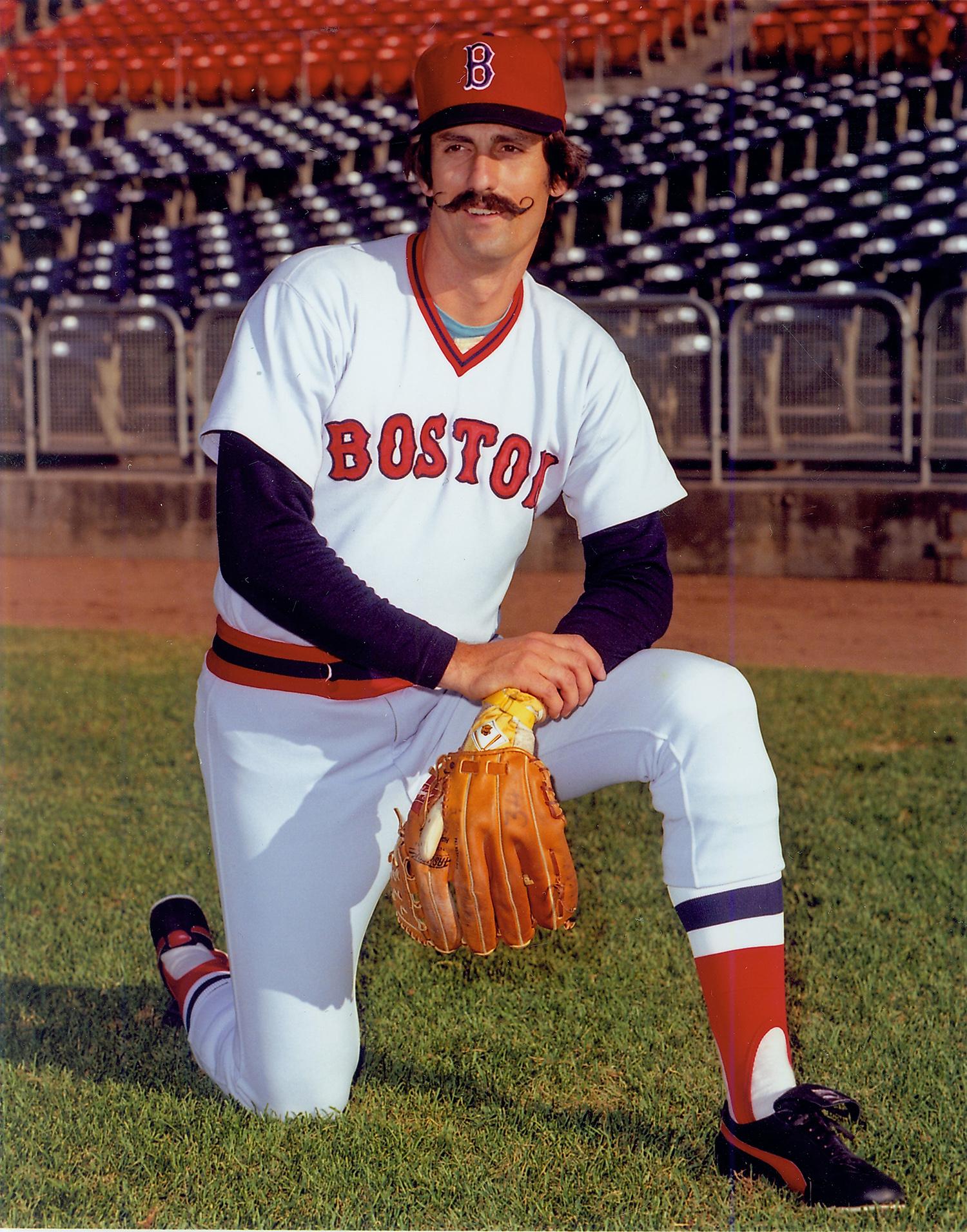 ?itok=wkEjOacE
Also the 1914 Oakland Athletics, when Connie Mack got swept in the World Series and then immediately sold off Hall of Famers Eddie Collins, Home Run Baker, Eddie Plank, and Chief Bender (and the next season traded away Hall of Famer Herb Pennock and longtime aces Bob Shawkey and Jack Coombs for good measure).
Cardinals win the 1982 WS, next year trade Keith Hernandez for a couple of amusement park passes, then go to two more Series.
The As also do what this article talks about a lot – trading Mark Mulder and Tim Hudson while still contenders, trading Josh Donaldson after multiple playoff trips, and other cases. The As did get major league players back from these trades, though, so it’s not quite the same as if the Indians make this trade only for prospects. It also probably has more to do with payroll, since Beane’s hands are really tied. But it was probably at least in part about this window-extending, so I think it’s the most similar thing.
Could the Indians be trying to save enough money to afford a long term deal for Lindor?
A good thought, this.
With such blatant gaps in the OF and bullpen, I have a hard time believing they wouldn’t go for at least one or two controllable, MLB-ready pieces, no?
Is Verdugo (or equivalent) likely to be in play, though?
Or are they more likely to end up with a Puig/Pederson class of player and some low A lottery ticket?
Teams don’t always get the best deals when the other side knows they can’t walk away if they don’t get their ask.
I think the catch is that the Indians can just walk away. If they don’t get the deal the want, I think they will just keep the core together. And enough teams will be calling about those top starters that they will be competing with each other. I would say that just about any prospect should be in play, at this point.
But the Indians are clearly well-positioned to do just that.
Are they, really?
There’s a difference between “We’ll listen on everybody.” and “We’re looking to trade… ”
The first is saying “Convince me.” the latter is “I’ll take the best offer.”
All the reports are that they will without question trade somebody. So, if it becomes a staring contest, who blinks first?
The other team. The Indians don’t /need/ to trade anyone because they’re still trying to compete. They /want/ to in order to open some budget space, but they could easily wait till the in-season trading deadline, or until right before spring training. This isn’t like the Mariners and their fire sale; if Cleveland doesn’t like what they’re being offered, then they can keep their top-shelf pitching and remain excellent regardless.
…of course, given the quality of the last couple trades they’ve made, I don’t know how much hope I hold for them being that sensible.
Verdugo would’ve probably been a starting OF for the majority of MLB teams last year. His lack of playing time is more reflective of the Dodgers depth than his ability.
The people replying are right but also miss the point. Willingness to walk away only matters if the negotiation is between just two parties (as Jeff recently suggested the Segura trade might’ve been). As long as there are multiple teams who want whichever started the Indians shop, the price would stop being determined by negotiations between the buyers and the Indians and start getting determined by competition among the buyers. And Cleveland’s desire to sell Kluber or Carrasco or Bauer doesn’t affect the fact that a buyer needs to have a better bid than any other buyer in order to land the pitcher.
Verdugo is available. He doesn’t even have a job on the team as it is currently constructed. There have been rumors we’ve held on to him instead of including him in lesser deals, but in my opinion he would not get in the way of adding a top starter with several years of team control left. Any trade for Kluber would by definition be a major deal. Verdugo seems like a great place to starts. Dodgers have a healthy number of young RH prospects capable of being a second piece: May, Santana, Gonsolin, White, Uceta to name a few. The rest of the package would be easy to fit together.
Being in win now and win later mode, I’d think Cleveland would want a major league ready starter as part of the package. Perhaps Verdugo, Will Smith and either Wood or Stripling, as the return for Kluber. A lot to give up, but that locks in a potential playoff rotation of Kluber, Buehler Kershaw and Hill or Ryu.
I would hope that if the Indians are trading Kluber or another starter they would be shifting resources and not necessarily just cutting payroll. If they trade Kluber for a prospect(s) it would be nice to see those savings put in to free agency to improve the outfield. Or trade Kluber for outfield help without taking on more payroll.
They would still be left a rotation of Carrasco, Bauer, Clevinger, Bieber, and Salazer/rotating 5th guy
Steamer projects Corey Kluber to be the fifth-best starter in major league baseball next year. Carrasco is projected to be the eighth, and Bauer the tenth. Collectively, the team will probably owe them about $38M next year. Lindor is projected as the third best position player, and Ramirez is projected as the sixth-best position player. The two of them, collectively, will probably cost about $15M. This is basically a small-market team’s dream (heck, any team’s dream)–having five of the top players in the major leagues for under $55M.
With the returns for veterans so far this winter, there is just no way Cleveland is going to get fair value for any of those pieces. They tried trading Carrasco for Sheffield and Florial, which in itself would probably be a bad deal for Cleveland, but nope, the Yankees found an even less-expensive one when they traded for Paxton. Patrick Corbin is still out there. Dallas Keuchel is out there too. The D-Backs can’t give Greinke away because he’s old and expensive, but he’s good. Steamer thinks JA Happ is good for 3.3 fWAR next year, Eovaldi for 3.0, aand Charlie Morton for 3.2. Unless a team is desperate for a “league ace” (and not many are, it seems), they have other options. This is not a seller’s market.
Despite Cleveland being in a very advantageous position to make a run and this not being a great time to sell, this rumor just won’t die. I think it has to do with the idea that Jeff mentioned, that they seem like they’re going to be a default division winner. But putting themselves farther away from competing with the Red Sox, Yankees, and Astros would seem to be a bad move. I just can’t see this working out well.
Correction: Corbin no longer out there. To the Nats for $140 MM / 6 yrs
Correction noted!
Whoa!!
I get what Jeff is saying about threading the needle here, but it just seems like there’s too many ways it could go wrong.
The trade is a step too far back, the prospects they get don’t pan out, etc etc.
And even if it works to perfection, it seems unlikely that they’ll get back to a spot that’s as advantageous as the spot they’re sitting in right now.
Just too cute for me.
I don’t have a vested rooting interest, but tbh it is disappointing that they are even considering it. This is a championship drought city with its best core since the ’90s, and teams earlier this century like the early Cardinals and later the Tigers showed that the stars and scrubs model can be successful. The Red Sox, running a payroll twice as high, just won while getting nothing from their catchers (jk, Vazquez put together great AB in October and is a better pure hitter than his triple slash, but, that’s neither here nor there).
I follow this article logically, but that doesn’t make me feel better about Cleveland possibly trading from its core. As much as I’d rather not wear a franchise owner’s shoes, I’d consider shifting gears, having seen attendance gains not follow lots of recent success, which I had not been aware of. But I don’t agree with it.
It’s going to be a long time for a small to mid market team to have enough great process and good luck to have five 5+ WAR players under contract again in the future, and there’s more than no talent beyond those five right now. If they turn around and consider buying in the midseason trade market, they’re either not going to recoup the fifth 5+ WAR player, or they’re going to have to dump a lot of prospect value to do it, and they may not be any better for 2018 OR the long term in that case.
I think what’s almost as frustrating is that sure, Minnesota and Chicago are probably a year early to be buyers, but the field surrendering a division two straight seasons is irritating as a fan of the sport. That’s not healthy for the league. What would the reaction be if no teams dared challenge Golden State just because they were odds-on favorites? Rebuilds have a way of dragging on and on and on sometimes. What’s the plan, guys? Do you think all of your prospects are going to convert, or are you just afraid of trading Tatis Jr. for Shields again?
I’m not sure what you are going on about. KC’a window closed. Minnesota’s prospects haven’t quite developed and took a step back in 2018!after winning 85 games in 2017. Detroit has been trying to buy a championship for years and they finally decided to change course. The White Sox ran a top 10 MLB payroll the 6 years after winning in 2005 and failed to develop talent around the few stars they had. It has been a perfect storm. In order to get elite young talent you have to be involved in the international market, trade assets and draft in the top 10. If you are not doing at least 2 of those rebuilding is very difficult. Spending on free agents is not the way.
Current payroll of $119 million? Is that before arbitration? Lindor will get a $10 million raise in arbitration, and Bauer likely $5 million.
Bauer is more like $11.6M, per MLBTR.
Guessing you mean Salazar?
To clarify, my comment was that Bauer was getting a ~$5 million raise in arbitration (not $5 million total).
Yeah, I’m not sure where Jeff is getting $119 million from. Baseball Reference shows them at $126 million with $7 million of that being “Estimate of Remaining Players Costs (based on 1-year avg of all pre-arb players” So that likely explains the difference between Jeff’s source and Baseball Reference.
Also, last year’s number isn’t directly comparable to this year’s, because last year’s includes the cost of players (Hand, Donaldson) picked up in mid/late-season trades. The Indians will have to set aside some money in this year’s budget to account for the cost of mid-season pickups.
All the numbers I cited refer to opening-day payroll, so midseason additions don’t matter for those. Different places say different things but I get my data from Cot’s. If they’re off, blame them! https://legacy.baseballprospectus.com/compensation/cots/american-league/cleveland-indians-2/
So it looks like BR and Cot’s have some small difference here and there in how they estimate things. That adds up to about $3 million. The other $4 million discrepancy is because Cot’s hasn’t included the $4 million in contact escalators that Corey Kluber earned based on his performance last year. So that puts the Indians current payroll between $123 and $126 million.
Carrasco is supposedly off the market now and the Indians are now looking to sign him t an extension. Which is a bit strange. (“hey, we couldn’t trade you so instead we’d like to give you more $$$”
And the rumor is that Bauer is who they’d like to trade, if possible.
too chatty and proud of showing his analytics works in progress on social media?
Would Oakland swap Laureano for pitching help?
They project for the 28th worst rotation and although they don’t look like a powerful team, the Mariners are suddenly out of the race so it seems like it’s just the A’s/Astros for the division (sorry Angels).
Oakland doesn’t have a lot of OF depth though (Piscotty, Laureano, Canha, Martini?, and Davis who DHs). Maybe they give Mateo a shot in the OF with Barreto/Semien up the middle.
How about the Yankees? They have Stanton (not going anywhere), Judge (also not going anywhere), Ellsbury (also not going anywhere) Gardner, and Hicks. Then if they really are committed to Bird (at least against RHP) then there is your DH (with Stanton and Hicks filling in).
Yankees aren’t getting Corbin now but they also might not need any additions.
Cubs and Happ (though the Cubs primary rotation is full: Lester, Hendricks, Quintana, Darvish, and Hamels)?
My thoughts are the Yankees could be a match. Frazier returns to Cleveland with Sonny Gray for Bauer. Might have to add a lesser piece or two for each to make it work but I think the framework is there. Cleveland has the pitching depth to take the chance with Gray and gets the young outfielder they desperately need per Jeff’s article for not just immediate season but the long run of the Lindor and Ramirez era.
As an A’s fan I’d definitely trade Laureano if I thought the A’s were in a class of the Astros. But I don’t think that. I see them as about a .500 team even with Kluber or Bauer. They need to see if 2018 performances of Semien, Laureano, and Piscotty are sustainable, whether Baretto is any good, and pick up like 4 more pitchers somewhere.
They would swap Laureano for one of Cleveland’s top pitchers without thinking about it, and Cleveland would never consider it for the same reason. Judge isn’t going anywhere, Stanton has a no-trade clause, and Hicks only had one year of control left (and is their best option in center). It’s not clear what position Happ really plays and is way less valuable than Cleveland’s pitchers.
All of these are examples of a bigger problem: Cleveland’s pitchers are so good that even though they may want to trade from a position of strength, it will inevitably make the team weaker because there are probably only 8 outfielders in the league at the same level as Cleveland’s top 3, and they’re not going anywhere, and the longer-term young controllable guys like Bellinger/Benintendi aren’t available either.
I think the Red Sox would definitely consider trading Benintendi in a deal for Kluber.
I’d like to see some 3-way action:
Realmuto -> CLE
Kluber -> Team X
Boatload of prospects (mostly from Team X) -> MIA
That would keep CLE roughly equally as competitive, while both saving them some cash and giving them the 2nd year of Realmuto.
Team X might not need Realmuto (*cough* NYY) but be willing to give up the Realmuto price to land a pitcher like Kluber.
I feel like people are minimizing how bad Jose Ramirez was in the second half. I don’t like to ignore what he did over the previous 2 1/2 years, but I think that there is reason to be worried that the superstar we saw in the first half might not come back.
Steamer seems to think he’s a 5-win player or more, running a wRC+ of 135. That’s definitely a star. Hoping that he hits like prime Joey Votto, runs like prime Dee Gordon, and gives scratch defense in the middle of the defensive spectrum over the course of a whole season might be a bit much to ask for.
Lol, I just had to look. Ramirez was an 8 WAR player and he was “so bad” in the second half that he ran a 110 wRC+. Ramirez basically was as good as usual, but he hit .174/.322/.315 in the September of a season that saw his team win the division by 13 games. Are you, like, trying to acquire Ramirez in a fantasy league right now or something?
.218/.366/.427 in the second half…with a 110wRC+…which is 60 points offf from his first half. And did it while in the AL Central against that divisions awesome pitching. But yea, if you just want to assume he will be a top 10 player in 2019 be my guest.
Jose Ramirez 1st half: 13.6 BB%, 11.5 K%, 302/401/628, .280 BABIP
Jose Ramirez 2nd half: 17.6 BB%, 11.5 K%, 218/366/427, .213 BABIP
His drop off in the 2nd half was mostly poor batted ball luck, but he did suffer a decline in Hard %, which fell from 40.8 to 28.5. This halved his unsustainable HR/FB% from 21.0 to 10.8 pre- to post-break and certainly would be expected to negatively impact BABIP as well, but not to the degree that occurred.
Ramirez has added power while maintaining his elite contact skills both years since his breakout in 2016. And he just turned 26 in September. We’ve probably seen his ceiling the last two years, but his ceiling is 8 WAR, so yeah, I’ll assume he’ll be a top 10 player in 2019.
I think to a certain extent the Moneyball A’s were in this situation
Regarding a potential trade of a starter, while there’s the old adage in baseball of “you can never have too much starting pitching” … you could definitely say the past 2 seasons the Indians have indeed had too much starting pitching come playoff time. In the 2017 ALDS they had good starting pitchers Clevinger and Danny Salazar in the bullpen, with poor results. This year they had Trevor Bauer in the bullpen, with poor results (if he’d been healthy in September, would’ve likely meant Clevinger wouldn’t have pitched in the ALDS) Meanwhile they have clear needs in the outfield and bullpen, and their system has Bieber and Triston McKenzie but no great outfield prospects or relief prospects…If you could’ve swapped one of those starters the last 2 seasons for a young, good outfielder, reliever, etc, they may have performed better in the playoffs.
If they trade Kluber for example, they still have a rotation of Bauer, Carrasco, Clevinger, Bieber and someone else, where they’d have solid options like McKenzie, possibly Danny Salazar or Cody Anderson for that 5th spot. If the top 3 stay healthy-ish that’s still one of the best rotations in the league. It makes lots of sense to roll the dice on a trade of one of their big 3 starters to upgrade elsewhere. Ideally they trade one of them for a good, near-ready outfield prospect, and also use the savings to go after an actual decent free agent like McCutcheon.
The Indians play in the same division as the Twins, who have Wander Javier ready to take the league by storm. It’s not “bad but enviable,” it’s “catastrophic and unenviable.”
My first thought was the Phillies trade of cliff lee in 2009. Granted, that was seen as a poor trade on their part, both in terms of return as well as its necessity, so it likely will just serve as model example of what not to do
Cleveland needs to go all in, and now, because while the rest of the division is bad now and very likely won’t improve much barring the White Sox nabbing Harper or Machado, they won’t be as weak in two years. CHW should be good, with KC and Detroit on the rise, and I have no idea what the Twins are doing. CLE needs to go for a ring while the division is gift-wrapped for them.