
World Series Preview 2025: No Dominant Strategies
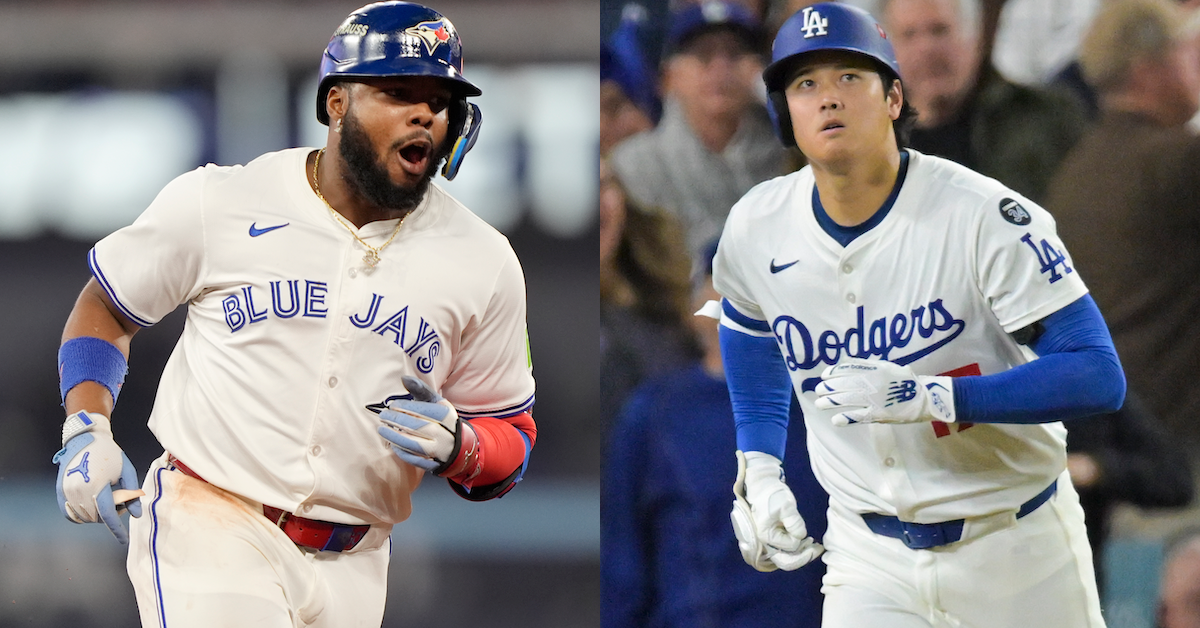
This October, the biggest-spending, best-run franchises in baseball have been flexing their muscles. Case in point: The team with the largest TV audience in the game, one with a monopoly on an entire country’s fandom and a huge payroll to match, a team that takes over opposing stadiums on “road trips” — that team is headlining the World Series. There, on the biggest stage in the sport, they’ll take on the Los Angeles Dodgers.
Oh, you thought the Toronto Blue Jays were David facing the Dodgers’ Goliath? Get out of here. The Jays are a Goliath, too. They have a top five payroll, just like the Dodgers. Of the nine hitters, four starters, and three relievers I expect to play the biggest roles for Toronto this series, just four are homegrown. They’ve filled in the gaps with canny additions in free agency and made excellent trades to bolster their roster even further. Their ace and their leadoff hitter were both high-profile free agents. They have literally Max Scherzer, the embodiment of a well-paid veteran.
That’s not to say that Los Angeles is punching up here. The Dodgers’ best players need little introduction. Shohei Ohtani. Mookie Betts. Freddie Freeman. Blake Snell. I could keep writing one-name sentences for quite a while before I ran out of stars to highlight. Sure, all of Canada roots for the Jays, but all of Japan roots for the Dodgers, and Japan is three times as big by population. California is the size of Canada, for that matter, and there are a few Dodgers fans there, too. In fact, the Dodgers are an even bigger Goliath than the Jays, but that doesn’t make Toronto any less of a big-market club.
If you like baseball, you’re going to like this series. Both of these teams are model franchises. They spend money to make money, and they take putting the best team on the field that they can seriously. They build their roster according to guiding principles, but they’re hardly just plugging numbers into a spreadsheet and blindly going from there. The Jays value defense highly, and they’ve adjusted their team around it. They’re willing to make big trades for the guys they want, and they’re also aggressive about keeping their best players in town via contract extensions. For their part, the Dodgers develop just as well as they sign, and they’re pretty dang good at signing. They have one of the best farm systems in baseball despite frequently trading from that group to acquire good major leaguers. And excellent org-wide development means that pitchers often improve in Los Angeles, though I suppose I should also acknowledge that they’ve gotten hurt a good bit, too.
Don’t worry, though. I’m not going to try to make an entire World Series preview out of fawning praise for two well-run organizations. I’m sure you’ve already read that article elsewhere, in fact; it’s just too tempting of a throughline to ignore. But the boardrooms, coffers, and draft classes of these organizations aren’t the focus here. The Blue Jays and the Dodgers are about to face off in a fascinating seven-game series. They’re excellent matches for each other: strengths facing off against strengths, weaknesses mirroring weaknesses, and no easy answers anywhere. Let me take you on a tour through the spots in this matchup where there are, to use the game theoretical term, no dominant strategies.
The top of the Dodgers order is the most famous part of the team, and with good reason. It’s either three MVPs in a row or three out of four, depending on how they stack it up for platoon matchups, and even though Ohtani is a two-way player, his latest, greatest feats have skewed to the hitting side. This fall, though, Los Angeles is winning via run prevention, not run scoring, so that’s where we’ll start. Because after years of having their carefully designed rotation fall apart due to injuries long before October, the Dodgers got their best four guys healthy all at once, and the results have been devastating.
Snell, Yoshinobu Yamamoto, Tyler Glasnow and Ohtani have combined for 10 starts in the playoffs. Their aggregate ERA is a “hey dude, are you sure you checked this article for typos”-inspiring 1.40. They have a 2.00 FIP, a 2.09 xERA, and a 2.39 xFIP. They have the most innings pitched by a mile, even ahead of teams that have played more games than them. They’re striking out more than a third of the batters they face. “Why don’t they just make the whole rotation out of aces?” is supposed to be a joking rhetorical question, but apparently no one told Andrew Friedman that.
The Jays’ hitters might be the ideal foil for that group, though. They scored a ton of runs this year and have poured on the offense in the playoffs, particularly on the power front. They have the most homers, the most doubles, the highest slugging percentage, and one single solitary stolen base. They’re barely striking out, which makes all that power even more impressive. They’re looking to slug their way to success, and they haven’t had to sacrifice much to do it. The headlong collision between Toronto’s homer-seeking boppers and Los Angeles’ bat-missing aces should make for great theater.
Snell has been the best pitcher in the playoffs, but he’ll have his work cut out for him against an overwhelmingly right-handed Blue Jays lineup. The last time Toronto faced a lefty in the playoffs, they brought seven righties, including their top four hitters. Almost all of Toronto’s righties excel against changeups, with the notable exception of Vladimir Guerrero Jr. Snell wants to throw his changeup early and often to righties. Here comes our first tough decision.
Snell could stick to his normal plan, throwing changeups in the zone to get ahead in the count and then bouncing them to finish hitters off. But the Jays’ righties are one of the best changeup-hitting groups in baseball. They make a ton of contact when they swing – the second most in the majors. And that contact is loud – they have the highest xSLG and the third-highest barrel rate against lefty changeups.
Should Snell abandon his changeup? Surely not. But that pitch has been a key to his newfound ability to go deep into games, and he’ll have to consider how much he uses it early in the count. Without a changeup to quickly neutralize right-handed hitters, he’s left with his old playbook of fastballs high and breaking balls low, many outside of the strike zone. But that version of Snell often only threw five innings a start. So what will it be? Changeups thrown through hostile airspace or nibbling towards a too-brief outing? I can’t tell you what Snell should do, but I’m excited to find out what he and the Dodgers think.
The lineup Snell faces isn’t set in stone. Bo Bichette, one of the drivers of Toronto’s offense for most of the season, has missed more than a month after spraining his PCL in a collision at the plate in September. He’s on the World Series roster, to DH and perhaps even to play the field, though I think a DH assignment is the most likely outcome, and his presence opens up new options (or potential complications) for John Schneider. George Springer has been DHing throughout the playoffs, and really throughout most of the regular season. There’s no question that he’ll slide to the outfield should Bichette have to DH; the question, instead, is who the odd man out will be. Luckily for the Jays, they have an abundance of reasonable platoon options, so I expect to see Addison Barger on the bench against lefties and a rotation that sends Isiah Kiner-Falefa to the bench against righties.
However the lineup shapes up, the Blue Jays are going to face an interesting dilemma against every pitcher, not just Snell. Their offensive approach includes a ton of extra-base hits and few strikeouts, and to accomplish those two things, Toronto swings early and often. Only three teams saw fewer pitches per plate appearance this year, and they’re especially aggressive in the strike zone. Sticking with that identity makes sense, but it also presents a clear downside: swinging earlier is going to make it easier for Dodgers starters to go deep into the game.
The Dodgers bullpen is by far the weakest part of the team. It’s too simplistic to say that Dave Roberts’ entire job this series will be to maximize the percentage of innings his starters cover, but that’s the basic task in front of him. The difficulty is in achieving it, not in defining it. I’ve simplified too much, though, because that bullpen is more like two units: a bunch of guys who have gotten hit around very hard, and Roki Sasaki, fire-breathing unicorn.
Excluding Sasaki and one appearance by Glasnow, Dodgers relievers have posted a 7.00 ERA this October, with as many walks as strikeouts. They’ve shuffled different players through, but the aggregate bullpen has been a mess no matter who is in what role. Then there’s Sasaki, the converted starter who looks like he was born to close games. He’s thrown eight innings in relief, as many as the next two Dodgers relievers combined. He’s been outstanding, overpowering opponents to the tune of a 1.13 ERA and 2.39 FIP. The extra velocity he’s picked up in a short-burst role has also changed his fastball shape; he’s getting more rise and less run, which takes the heater out of the dead-zone shape it previously occupied. Between that and his ability to use only fastballs and his wipeout splitter, he’s looked dominant. Roberts has treated him as an automatic zero, and he’s basically been right every time.
It sure sounds tempting to have an automatic zero, but Sasaki probably can’t be extended indefinitely; he’s never pitched in this role before, he’s had recurring injury problems, and hitters adjust as they see a new pitcher more times. Roberts will need to get Sasaki into as many key moments in this series as possible, but he’s going to be tempted to use him for less-key moments because of how shaky the rest of the bullpen is. Even with the huge workloads the starters have been producing this October, Sasaki is handling a massive percentage of the total bullpen innings. There’s no way he can keep that up if there are more innings to cover, which means Roberts will frequently have to choose between over-extending Sasaki and over-exposing the rest of the ‘pen.
The way Roberts divides time between his relievers is interesting, but a more important variable is how many innings they have to cover. One key driver of that workload: the split-second decisions that Jays hitters will face against Dodgers starters. A seven-pitch inning will feel especially demoralizing if it means more Snell (or any of the four starters, really) at the end of the game. That’s not to say the solution is swinging less often. Those early swings aren’t just about pitch counts. In fact, they’re specifically not about pitch counts. They’re about finding good pitches to hit, early in the count, and making something happen. Reach two strikes, and you’re going to have a bad time in today’s majors. The Jays solved that problem by getting into two-strike counts less often than all but two teams. In other words, instead of trying to change the “per plate appearance” part of pitches per plate appearance, the way they hope to wear the Dodgers down is by getting more plate appearances.
There’s an interesting cat-and-mouse game here. One of the ways the Dodgers rotation chewed up the Brewers offense is by getting ahead in the count, which helped them rack up strikeouts and also pitch deep into games. Running the same plan back against the Jays feels risky. Do you want to be attacking the strike zone with Vladdy in the batter’s box? The natural adjustment is to throw more secondaries and leave the strike zone more frequently early in the count. But the Jays can make adjustments of their own. Swing less often, and the Dodgers starters might fall behind in the count far more often than they did in the NLCS.
You can imagine the levels to this. If the Jays hitters become more passive, the next step for the Dodgers is attacking the zone aggressively. That plays right into Toronto’s strengths, though, and so maybe they should revert to their normal, strike-hunting ways. On and on it can go; there’s no dominant strategy, no obvious choice, just excellent pitchers and hitters trying to outsmart and out-execute each other.
If Toronto succeeds in avoiding two-strike counts, one of two things will happen. First, the Jays might just slug a ton of home runs. Dodger Stadium is the best place in the majors for righties to hit home runs, and Rogers Centre is friendly to righties as well. But if “just hit a bunch of home runs” was that easy, more teams would have done it. If the Blue Jays don’t strike out much but also don’t pour on the power, which feels like the most likely outcome to me, the spotlight will fall on the Dodgers’ defense.
Through three rounds of postseason play, the Dodgers have allowed a minuscule .236 BABIP, the lowest mark among playoff teams. That’s not remotely sustainable, though it does help to explain their sheer run prevention dominance. Plenty of strikeouts and few hits on balls in play? That’ll do it. But Toronto is going to put that to the test. For years, the Dodgers have been one of the best teams in baseball at positioning their defenders. The question will be whether that accumulation of small advantages – a foot to the left here, six inches back there, and so on – can keep the Blue Jays from ripping grounders and line drives through for base hits.
One interesting pivot point in that battle for outs will be third base. The Dodgers, perhaps emboldened by their elite ability to position their guys, have leaned into offense at every turn. Most notably, they have Max Muncy play third base most nights even though he’s below average there. Given Toronto’s righty-heavy, contact-heavy lineup, Muncy is going to get a ton of work throughout the series. There’s no matchup where playing a defensive liability at third base will matter more.
If defense were all that mattered, the Dodgers would likely prefer to play Enrique Hernández at the hot corner. He’s a better defender than Muncy, and he’s going to be starting anyway. But that would mean no Muncy at all; Ohtani is DHing, Freeman plays first, and Muncy isn’t an outfielder. That makes for an interesting question: Is it worth upgrading your defense at the cost of one of your better hitters? How does that equation change based on who is on the mound, or who is at the plate? What about the score, or the inning? The truth is, there’s no strictly correct answer, and Roberts will have to constantly balance his offensive needs against the probabilistic boost he’s giving to Toronto’s offense by placing worse defenders in the field.
The solution in most situations, aside from late in the game with the lead, is probably to play Muncy and live with any additional base hits. He’s a great hitter, key to the length of the Dodgers lineup, and the Blue Jays are light on impact left-handed pitching. It’s more complicated than that, though, because Toronto’s top two starters are incredibly tough on lefties. Kevin Gausman has made an entire career out of throwing his splitter past lefty batters who think they can hit it but aren’t anywhere close. Trey Yesavage, the Jays’ top prospect and Game 1 starter (man, what a year), also lives and dies by his excellent splitter. Those two are actually tougher on lefties than righties, so “normal” lineup considerations go out the window. It really is the postseason of the splitter.
Combine those two righties with a lack of high-leverage lefty relievers, and the Jays are going to need to make tough choices. Would you prefer a tiring Gausman against Ohtani, Freeman, and Muncy over a lefty reliever? Does that equation change if you know that you’re going to be facing the same situation — tiring starter or overmatched lefty — over and over again throughout the series? Will Schneider try to ride his top two starters longer than they’re used to, or push an overtaxed, underqualified bullpen to pick up the slack?
As a quick refresher, the top of the Dodgers lineup is generally going to go Ohtani/Betts/Teoscar Hernández/Freeman/Will Smith/Muncy. There aren’t any weak spots there; there’s no secret code to easily neutralize their potency by correctly stacking otherwise marginal relievers. The best thing you can do against the top of the Dodgers lineup is throw your best pitchers, and hope it works out.
Now, the bottom of that lineup is susceptible to right-handed pitching, especially high-velocity right-handed pitching. The problem is, you need those arms for the other Dodgers. Calling in a low-leverage reliever for the bottom three batters and seeing two of them reach base is going to feel like a disaster. On the other hand, using your limited supply of good relievers before even facing the slugging section of the lineup is no good.
You can imagine games where Schneider needs to use all of his very best relievers, in order, regardless of who they’re facing. That won’t always be the correct answer, though; sometimes it would be better to use a lesser reliever against the bottom of the order to save your best arms. Heck, sometimes it might be right to use a weaker arm against one of the scary sections, depending on the game state. Every inning, every game, there will be a new equation to balance, a new tradeoff between making it less likely that the stars bat again and saving your best pitchers to face those stars. I don’t envy Schneider the decisions, but I’m excited to watch them.
My favored solution would be stretching the starters longer, but I’m not sure how feasible that is for Shane Bieber and Scherzer, Toronto’s third and fourth starters. Both have alternated flashes of brilliance and clear weaknesses this October – Scherzer managed to show both in his only start of the playoffs, in fact. These are the kinds of pitchers the Dodgers dismantled all season, and it feels like managerial malpractice to leave them in too long, at least until you look at the Toronto bullpen, which has been one of the worst in the playoffs.
In an ideal world, Schneider would get length from both Yesavage and Gausman, letting him save relievers in those games, then empty out the ‘pen in support of Bieber and Scherzer. But that’s just the theory, and it won’t go that perfectly in practice. Some starter is going to get shelled — after all, you can’t expect to completely hold this Dodgers lineup down — and some reliever isn’t going to have it. Maybe one of the games will go to extra innings. Schneider is going to need at least a few of the pitchers on his staff to perform incredibly well while being stretched beyond their normal usage. He just doesn’t know who it will be yet, or when they’ll have to do it. Good luck planning that one out in a spreadsheet.
In the end, I think this series is going to come down to whether the Blue Jays can limit the Dodgers to a mediocre offensive performance. The Dodgers offense hasn’t been clicking on all cylinders this postseason, though Toronto’s pitching staff is going to be their easiest matchup yet. The Dodgers have been dominating on the back of their pitching, but the Blue Jays are, in turn, the best offense they’ve seen. If the Jays are allowing three-ish runs a game, I like their odds of breaking through often enough to take the series. If the Dodgers are chewing through relievers and stringing together crooked innings, it’s not going to last long. And of course, even if Toronto’s pitching shows up, Los Angeles’ starters might show up even more; saying that there’s only one variable of interest in a playoff series is almost never right.
Before the playoffs started, I predicted a Blue Jays/Dodgers World Series, and I picked the Jays to prevail. I suppose I’ll stick with that pick here, to the extent that I’m making a pick, though this article has obviously been about matchups and not overall advantages. I’m not picking them because I think they’re favorites against the Dodgers, to be clear. I like to use predictions to highlight outcomes I think are underpriced by the wider market, rather than what I think the most likely outcome is, and I thought the Jays were meaningfully overlooked heading into the playoffs.
Our game-by-game ZiPS odds have this one as about 60/40 Dodgers, and the betting markets have Los Angeles closer to 66% to win. My own personal estimation would be close to ZiPS’ numbers; the Dodgers are definitely the better team, with their sterling rotation providing the majority of the advantage, but it’s hardly a walkover. This should be a great World Series. Both teams are going to pose clear challenges to the other. None of those challenges are insurmountable, but none have easy solutions. It’s a World Series with no dominant strategies.
Ben is a writer at FanGraphs. He can be found on Bluesky @benclemens.
Both World Series teams offered the two biggest contracts last offseason to relief pitchers (Scott and Hoffman), but both teams are using a closer (Sasaki and Hoffman) that was below replacement level in the regular season. That especially can’t have happened in too many prior World Series.