Clayton Freeman/Florida Times-Union / USA TODAY NETWORK
October is one of our busier months editorially. We cover all of the postseason action, from previewing the relevant team strengths and weaknesses that might define each series to writing game stories for every game, with our writers often at the ballpark to bring you insight from the clubhouse. In fact, this year, we’re committed to having staff at every World Series game, allowing for additional reported work and greater access to players and team personnel, with in-person coverage throughout the earlier rounds as well. Needless to say, it’s a lot of work and travel, and it also sits outside the cadence of our usual baseball coverage, as it’s one of the few times a year when our staff consistently works on something resembling a beat writer’s schedule.
That’s why it’s frustrating that the amount of advertising revenue our playoff coverage generates is often so meager. The baseball season is predictably cyclical, and while many of our readers frequent the site regardless of which teams are playing in the World Series, from a traffic standpoint, October pales in comparison to March or July. As the field dwindles and more fanbases are disappointed, folks check out, often reengaging with us when free agents start to sign. We think comprehensive postseason coverage is vital to the fan and reader experience, but given the current state of both the internet and advertising, the scale needed to pay for that editorial content is well beyond what October FanGraphs generates in clicks. Read the rest of this entry »
Whenever I write a State of FanGraphs post, I see some version of this comment: “I’m already a FanGraphs Member, but I’d like to give FanGraphs more money. How can I do that?”
We deeply appreciate that some of you want to offer us more support than our standard annual Membership, and now there’s a way, with the FanGraphs MVP Membership. The price is $500 a year and you get the following:
All the usual FanGraphs Membership benefits
A gift exclusive to FanGraphs MVP Members
An annual call for MVPs with me and other FanGraphs leadership on the state and direction of the site
An optional tag on your comments indicating that you’re an MVP Member
Assuming that you’re already a site Member, this Membership will replace your current Membership, with your prorated remaining time credited to the initial $500 price. This way, if your $80 Membership just renewed, you don’t have to pay $580 to become an MVP Member.
Philosophically, we’re positioning FanGraphs MVP Membership as a way to further support our work, and receive some special recognition in the process. FanGraphs will become better with your additional support, but your individual FanGraphs experience won’t be better than any other Member’s. We feel this is an important distinction to make, and also an important distinction to be up-front about.
This year’s exclusive gift is a 14-ounce FanGraphs-branded Yeti mug with a ceramic interior:
When I showed the prototype to folks at a recent FanGraphs staff gathering, it was deemed “quite nice.” It will be laser etched with the FanGraphs logo, the year you became an MVP Member, and your MVP Member number, which is assigned in the order you sign up for an MVP Membership. In future years, we may have different gifts. We’ll think more about that this offseason, solicit feedback from MVP Members, and make an announcement as to what’s next before the first anniversary of FanGraphs MVP Membership.
Regardless, we won’t sell these FanGraphs Yeti mugs outside of MVP Membership. They are exclusive to FanGraphs MVP Members.
That said, we know that many existing Members who want to further support the site would prefer to buy more FanGraphs-branded merchandise to do so. We’re actively working on some new merch that isn’t tied to FanGraphs MVP Membership, as well as restocking some of our existing items, and should have more information soon!
If you have the means and love FanGraphs, an MVP Membership is a great way to support the site you’ve come to rely on while getting a nice mug you can brag about. And whether it’s as an annual or monthly Member or an MVP, we’re extremely grateful for all of our Members. You are the reason we’re able to continue to grow and improve the unique combination of data and editorial content that is FanGraphs.
Hello! This year marks 21 seasons of FanGraphs, and as we look ahead to the August 5 anniversary of our launch, I wanted to thank you for reading and visiting the site. And, as has become an annualtradition, I also wanted to provide you with an update on the state of FanGraphs.
I started last year’s version of this piece by listing all of our new features and site improvements. As this year’s list is even longer, instead of detailing everything up front, I’ve included a Feature Appendix at the bottom of this post. Take a look – it’s quite a scroll. What I was struck by as I was compiling that list is just how much we’ve been able to accomplish with our Members’ support, support that has translated into new features, voices, data, and other random fun stuff you didn’t even know you wanted. From the written work of our dedicated team of baseball experts to all the stats and leaderboards, the data and fantasy tools to the prospect analysis, the projections, RosterResource, the mobile app, the podcasts, the chats — the depth and breadth of the site is very special. Plus, we do it all without private equity funding or sports betting partnerships, allowing us to produce the independent analysis and high-quality tools you’ve come to rely on.
And while I think the future of FanGraphs is bright, I also think it’s worth talking about the realities of running a sports media site in 2026, the challenges we see looming, and why your support matters more now than it ever has before.
First, if you are a FanGraphs Member, thank you so much for your continued support. Membership is set to account for about 80% of our revenue this year. Six years ago, that number was about 25%. Still, our Members only make up about 2% of what we believe to be the real-life human visitors to the site. We want our work and data to be accessible, but we’re up against a number of challenges.
Data Is More Expensive
FanGraphs isn’t free to operate. We don’t scrape data, opting instead to maintain agreements with all our data providers. This has been our model from day one, both because I wanted FanGraphs to be sustainable and for our data to be reliable, and because people deserve to be paid for their work. This strategy seems to have worked out, but it comes at a cost. Our data costs have nearly doubled over the past five years. At the same time…
Advertising Revenue Is Down, While Bots and Scraping Cost Us More
Our advertising revenue has decreased 50% since 2024. There are multiple factors at work here, some of which are good. We’ve decreased the number of ads on some pages, and our Members enjoy a fully ad-free experience as one of their Member benefits. But as I mentioned, even with the growth we’ve seen, Members only account for about 2% of our total users, and there is a massive discrepancy between the ads served to non-Members and the number of pageviews we’ve served. This May, multiple site analytics tools we use claim we served about 12 million pageviews to non-Members; ads were served on just 2.1 million of those pageviews. That’s only about 18% of pageviews, compared to 51% two years ago. That’s a staggering amount of missing ad revenue.
Non-Member Pageviews/Pageviews With Ads
Time Frame
Total Pages
Pages with Ads
% With Ads
May 2024
6.9M
3.5M
51%
May 2025
7.5M
2.5M
33%
May 2026
12M
2.1M
18%
Two things are likely happening here. First, we’re seeing a lot more bot traffic, which often doesn’t register as the sort of browser session that advertisers care about. We estimate that at least 60% of all traffic coming to FanGraphs is from non-human sources, including web crawlers, AI bots, and scrapers. In addition to the decline in ad revenue, this has led to increased server costs and us spending valuable time figuring out where the offending traffic is coming from in order to keep the site operational.
Second, folks are much more apt to use ad blockers these days, so while our overall site traffic hasn’t declined, our non-Member users are seeing ads at much lower rates. This creates the untenable situation where we’re serving up more content, but also serving up fewer ads because those ads are either being blocked, or the thing using our resources isn’t even a person.
Those are some of the challenges we face right now, but the landscape we operate in also has some big potential shocks on the horizon, one likely to affect digital publishing more generally, the other specific to baseball.
The Impact of AI
First, I’ll take this opportunity to share our editorial policy around the use of AI. All of the editorial content at FanGraphs is written entirely by the members of our staff, without any assistance from generative AI models, and that will remain our policy going forward. You don’t come to FanGraphs to read ChatGPT’s analysis, and there’s no way it could come up with the headlines Michael Baumann does.
And while the development team has found AI to be a useful coding tool, we don’t use it to create stats or metrics, or ask it to source the data displayed on the site. I have no interest in Claude hallucinating Jacob Misiorowski’s strikeout rate or average fastball velocity (though you’d be forgiven for wondering if either is real).
Of course, AI’s impact goes beyond the need for code checks or an editorial policy. Put simply, AI is taking our content and repurposing it in a way that could make it so that there’s no need to actually visit the site. Indeed, changes to many popular search engines mean many people unfamiliar with FanGraphs might not even discover the site in the first place. Just think about the AI results you see on Google. How many people are going to click through to our Brewers Top Prospect list, a piece that took days to write and edit, when Gemini will serve up much of Jesús Made’s scouting report, tool grades and all? If there’s ever been an existential crisis for online publishers, it’s this. Whether it’s Membership or advertising revenue, our business model depends on visiting the site, and AI seems poised to keep people away, eroding the link between writers and readers.
Baseball’s Looming Lockout
The precise impact of this winter’s seemingly inevitable lockout is tough to gauge, as it will greatly depend on how long it takes MLB and the Players Association to reach an agreement. But if the pandemic and the last lockout taught us anything, it’s that not having major league baseball isn’t great for a baseball media site. We saw our traffic dip 50% during the 2021-22 lockout. The support of our Members helped us weather it, but it was a challenge, and if we were to lose an entire season, I’m not sure what it would mean for FanGraphs without significant Membership growth.
So what should you take from all of this? Well first, become a FanGraphs Member! Membership allows us to continue to grow and improve the site, providing a source of revenue that’s immune from macro forces like AI or baseball’s labor dispute, and that’s more stable than advertising. We’re in a moment where it’s incumbent upon all of us to support the writers, artists and publications we love, or risk losing them. Obviously I hope FanGraphs is on that list for you, but this isn’t just a FanGraphs thing. Unfortunately, the era of good free content is over. Ultimately, the advertising model syphoned a shocking amount of money away from publishers to middlemen and tech giants, and AI is threatening to destroy one of the most reliable ways for us to surface our work to new readers. But your direct support puts you in the driver’s seat. It’s not what SEO wants, or AI wants, or what the advertisers want. It’s what you want.
Our pledge to you is that if you support us, we’ll keep producing all the great baseball analysis you’ve come to rely on, and continue to grow the site in new and interesting ways, just like we have for the past 21 years.
We’re excited to announce that the latest addition to the FanGraphs Lab is a baseball simulator:
You can click on any of the day’s games to pre-fill the rosters, or build your own using current players. The simulator will then simulate a game 10,000 times. Read the rest of this entry »
We’ve added a number of new metrics to the player pages and leaderboards related to the automated ball-strike challenge system, pitcher arm angles by pitch type, and spin rates by pitch type. These metrics first made their debut on MLB’s Baseball Savant, and we’re excited to bring them to you on FanGraphs.
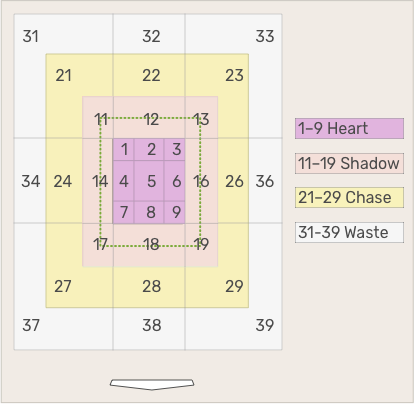
There is a new plate discipline section labeled “Statcast – ABS” on the leaderboards page. All the metrics in this section reflect how the ABS strike zone will be called and is the new default view for all plate discipline stats. Specifically, the zone is defined as:
Like the plate, it is 17 inches wide. The top end of the zone is at 53.5% of the player’s height, while the bottom is at 27% of the player’s height. The depth of the zone is 8.5 inches from both the front and back of the plate to its center.
Our previous strike zone definitions are still available under the “Statcast – Legacy” view.
There’s an even more granular view of the shadow zone, which splits it into pitches that are in the strike zone and in the shadow zone (SI-stats) and pitches that are in the shadow zone and outside the strike zone (SO-stats).
This application is now closed. Thank you for your interest. We will be in contact with potential candidates soon.
RotoGraphs is now accepting applications to join our staff as a contributing writer.
Contributors typically write two to three times a week. Familiarity and comfort with fantasy baseball and the data on FanGraphs is a requirement, but just as importantly, we’re looking for writers who can generate their own ideas and questions while providing interesting analysis and commentary on the game of fantasy baseball. From standard roto redraft to long-term keeper leagues, identifying intriguing prospects and breakouts to managing a fantasy roster, we want to cover it all.
We use rigor, creativity and the latest analytical tools to provide useful, interesting insights and advice to fantasy managers. And while we take our responsibility to support fantasy managers seriously, we’re also willing to be silly and keep things light. After all, fantasy baseball is supposed to be fun! Read the rest of this entry »
We now have all the 2026 projections available on the site. Frequently, we get asked about the differences between the projection systems and how often they’re updated, so here’s a quick primer on what’s what.
Primary Projections
Primary projection systems are generated independently and do not aggregate any of the others.
ZiPS: ZiPS projections are run by Dan Szymborski and have been available on FanGraphs since 2010. ZiPS are updated as needed leading up to the season and updated daily throughout the season. You can read more about ZiPS here.
ZiPS DC: ZiPS DC is exactly the same as ZiPS, except it’s prorated for our RosterResource playing time projections. ZiPS DC playing time is updated daily both leading up to the season and during the season, and the underlying performance projections are updated the same as ZiPS (as needed prior to the season and daily during the season).
Steamer600: These are exactly the same as Steamer projections except every position player is prorated to 600 plate appearances (450 for catchers). Starting pitchers are prorated for 200 innings pitched, while relievers are prorated for 65 innings pitched. It’s updated daily leading up to the season and during the season.
THE BAT: Run by Derek Carty, THE BAT projections have been on FanGraphs since 2018. They are updated daily leading up to the season and during the season.
THE BAT X: Also run by Derek Carty, THE BAT X projections are currently for hitters only and are differentiated from THE BAT by including Statcast data. They are updated daily leading up to the season and during the season. You can read more about THE BAT X here.
OOPSY: Run by Jordan Rosenblum, OOPSY debuted on FanGraphs in 2025. Playing time for OOPSY is updated daily leading up to the season and during the season utilizing RosterResource. The underlying performance projections are updated as needed leading up to the season and daily during the season. You can read more about OOPSY here.
Composite Projections
Composite projection systems are an aggregate of primary projection systems. These types of systems tend to do better when tested against actual player performance.
FanGraphs Depth Charts: FanGraphs Depth Charts projections are a 50/50 blend of Steamer and ZiPS prorated to our RosterResource playing time projections. They are updated daily leading up to the season and during the season.
ATC: Compiled by Ariel Cohen and available on FanGraphs since 2017, ATC is a weighted composite of a number of projection systems based on their past performance. ATC is updated weekly leading up to the season. During the season, it’s labeled as ATC DC and uses our RosterResource playing time projections. ATC DC playing time is updated daily, while the underlying performance projections are updated as needed during the season. You can read more about ATC here.
Please note, the application period for this position is now closed. Thank you for your interest.
FanGraphs is now accepting applications to join our staff as a full-time prospect writer.
The prospect writer will work with lead prospect analyst Eric Longenhagen and other members of the FanGraphs staff to produce organizational top prospect lists, amateur draft coverage, and other minor league and prospect-related content. A successful candidate will be able to evaluate prospects using in-person looks, video scouting, and data. Familiarity and comfort with advanced statistics is a requirement, as is prior scouting or prospect evaluation experience and a firm understanding of the minor league landscape. Just as importantly, we’re looking for a writer who can generate their own ideas, produce lively and engaging prose, and detail what makes a prospect good (or bad) in a way that is educational, accurate, and fun to read. Read the rest of this entry »
As you’ve no doubt noticed, we’ve added some balloons to the site to mark the occasion. If you click on one, you’ll be presented with an article that’s been deemed a worthy piece of FanGraphs history by our current staff, FanGraphs alumni, and industry friends. (I hope you’ll add your favorites in the comments here.)
Beyond the balloons, 20 years seemed like an appropriate moment to reflect on how the site started, and how it has gotten to where it is today.
I started FanGraphs when I was 23 years old. I was working at AOL, and my job involved putting together powerpoint decks of dialup metric graphs for executives. I thought the dialup business’ days were numbered — somewhat ironic, since dialup seems to have lived on for almost exactly 20 more years. Read the rest of this entry »
Reminder: Starting August 4, the price of a FanGraphs Membership is going up. You can find more information on the reason for the increase, as well as how to lock in our existing pricing, in the post below. As I noted when we announced the pricing change on June 10, Membership makes our work at the site possible, allowing us to add new site features and grow our staff, and it comes with a ton of great benefits. Since that announcement, we’ve launched a pitch-type splits leaderboard and a crowdsourced trade value tool, and we’ve added a full-time staff member. We know there is intense competition for your subscription dollars, but we think the breadth and depth of our coverage makes a Membership well worth it and still represents a considerable value in the sports media subscription landscape. I hope you’ll become a Member, and help us continue to build a better FanGraphs. Thank you for your support. – David Appelman
Over the last five years, as we’ve navigated a changing advertising landscape — not to mention the pandemic and a lockout — I’ve endeavored to be transparent about the state of the site, our business model, and our plans for the future. I’ve taken that approach because FanGraphs is a community, and I think our readers deserve to understand what we are doing and why. It’s been four years since we last increased the price of a FanGraphs Membership, and we’ve delayed this increase for as long as possible. We’ve not only seen considerable increases in our stat licensing fees and infrastructure costs, but this year we’ve also seen a steep decline in our advertising rates as well as our organic search traffic, as Google continues to push relevant websites further and further down the page in favor of new AI search results.
Beginning August 4, a yearly FanGraphs Membership will cost $80; a Monthly Membership will cost $15 a month, while a Three-Year Membership will cost $200. Since we won’t be introducing this change until August 4, you still have the opportunity to purchase a $60 Membership for the year, or upgrade your existing Membership to a $150 Three-Year Membership, allowing you to grandfather yourself into our existing pricing for the next three years. Read the rest of this entry »