Author Archive

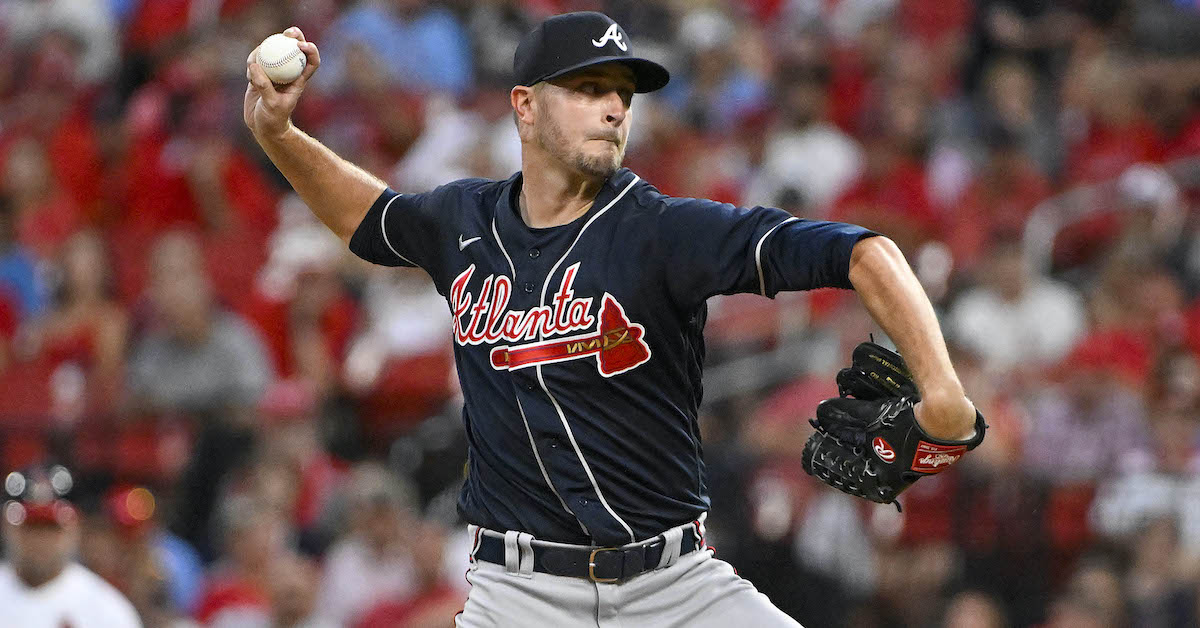
Lance Lynn Learned a New Trick

D. Ross Cameron-USA TODAY Sports

Since breaking into the big leagues back in 2011, Lance Lynn has featured one of the most fastball-heavy approaches in the majors. Now, that’s a little reductive, as he throws three different fastballs that he can ride, cut, or sink depending on what the situation calls for. Still, over 80% of the pitches he’s thrown in his career have been classified as a four-seamer, sinker, or cutter; that’s the third-highest rate of hard stuff thrown by a starter since his debut. And Lynn’s approach has only been amplified in recent seasons. In the last five years, over 85% of his pitches have been fastballs; no other pitcher has crossed the 80% mark.

When Lynn isn’t throwing a heater, he mixes in a curveball and a changeup, though neither pitch has been all that effective during his career. His four-seamer is a devastating pitch up in the zone, and his cutter and sinker allow him to work laterally to either side of the plate if needed. Utilizing all three of his fastballs effectively leaves little room for secondary offerings in his pitch mix. Why change an approach that’s worked for more than a decade?

Baseball is a game of constant adjustments, particularly in the context of the pitcher-batter duel at its center. In December, after announcing he’ll be pitching for Team USA in the World Baseball Classic, Lynn gave a fascinating quote about the adjustments he’s had to make in an interview with The Athletic’s James Fegan:

“People get so caught up in ‘Oh, you just throw fastballs.’ If you actually pay attention to the game, there’s speed differentials, there’s bigger breaks or smaller breaks. Part of evolving as a pitcher is giving the hitters different looks. Over time, you’re locking in the things that make you good, and you’ve got to figure out things that are maybe not as good as they can be. Over the last couple of years, Ethan [Katz] and I have been able to really concentrate on grips, different spin axes, and things of that nature that have really helped develop a pitch that comes out of a slot where it gives hitters difficulty.”

Read the rest of this entry »


The Tigers’ Young Sluggers Should Benefit From the New Dimensions in Comerica Park

Rick Osentoski-USA TODAY Sports

After a promising end to their 2021 season, the Detroit Tigers made a few big splashes in free agency to support a wave of young prospects on the verge of making their big league debuts. Instead of continuing to build on that momentum, however, Detroit took a huge step backwards last year, losing 96 games while scoring the fewest runs in the majors. Their new additions, Javier Báez and Eduardo Rodriguez, combined for just 2.6 WAR, and their top position player prospects, Spencer Torkelson and Riley Greene, had rough introductions to the big leagues. This cyclone of disappointment led to the dismissal of long-time general manager Al Avila and a bevy of questions about the direction of the franchise.

There are plenty of problems new president of baseball operations Scott Harris needs to address on the roster and in the organization. The early-career struggles and future development of Torkelson and Greene loom the largest, however. As prospects, those two were seen as can’t-miss, heart-of-the-order bats who would form the core of the next great Tigers lineup. Instead, their disappointing rookie seasons were a significant contributor to that league-worst offense in 2022.

Torkelson and Greene are both under 24 years old and will have plenty of opportunities to develop into the kind of contributors that reflect their status as former top prospects. Still, it would behoove Detroit to give them every advantage to succeed in the big leagues, leaving no stone unturned. To that end, the Tigers announced on Wednesday that they would be making some adjustments to the dimensions of Comerica Park ahead of Opening Day:

Read the rest of this entry »


Ian Happ Flipped the Script

Kamil Krzaczynski-USA TODAY Sports

Last January, inspired by Cedric Mullins’s 2021 decision to stop switch-hitting, I tried to identify other switch-hitters who might benefit from swinging from one side or the other. Going beyond simply calculating the largest platoon splits, I relied on handedness splits for some of the players’ key underlying batted ball and plate discipline metrics. The idea was that there could be a path to improvement if these switch-hitters eliminated their severe underperformance from one side of the plate. Of course, the other option is simply to work on their weaker swing and become a better overall switch-hitter.

One of the batters I identified as a candidate to hit left-handed full-time was Ian Happ. Through 2021, Happ had posted a 55 point platoon split, the second-highest among the 25 switch-hitters in the sample. Happ crushes right-handed pitching from the left side, but all of his batted ball peripherals are significantly weaker when swinging from the right. Instead of taking my advice (thank goodness), Happ posted the best season of his career against left-handed pitching in 2022:

Ian Happ, Career Platoon Splits
Year wOBA vs R wOBA vs L Split
2017 .357 .326 .031
2018 .348 .274 .074
2019 .381 .321 .060
2020 .385 .322 .063
2021 .340 .289 .051
2022 .338 .345 -.007
Career .351 .311 .040

Read the rest of this entry »


Angels Continue Adding Depth, Sign Brandon Drury

© Kyle Ross-USA TODAY Sports

On May 24, the Angels were 27-17 and just a game behind the Astros in the AL West. Their roster was relatively healthy, and a breakout from Taylor Ward alongside standout performances from Mike Trout and Shohei Ohtani had helped them leap out to a strong start through the first month and a half of the season. Two weeks later, their win total was still stuck at 27, having fallen below .500 after an ugly 14-game losing streak. Of the nine players who accumulated more than 100 plate appearances for the Angels through mid-May, just three reached at least 300 plate appearances afterwards. Los Angeles cycled through 32 different position players from May 24 onwards, struggling to find any sort of competent depth to cover for their injured and ineffective players.

The Angels’ lack of depth isn’t isolated to this season either — it’s been a constant thorn in their side for the past decade. They haven’t posted a winning record since 2015 and have only reached the playoffs once over the last 13 seasons despite employing two of the best baseball players to ever play the game, one of whom has been an Angel for most of that stretch. With Ohtani’s free agency just a year away and the potential sale of the franchise by owner Arte Moreno looming, the 2023 season feels like a significant hinge point for the Angels.

So far this offseason, they’ve been aggressive in bringing in the type of talent that complements their superstars while avoiding any long-term commitments that could complicate the sale of the club. They signed Tyler Anderson and Carlos Estévez to bolster their pitching staff and traded for Hunter Renfroe and Gio Urshela to lengthen their lineup. And on Tuesday, they inked Brandon Drury to a two-year, $17 million contract. That deal brings the Angels’ total projected 2023 payroll to $206 million, the highest in franchise history. Read the rest of this entry »


Rangers Lean Into Volatility, Sign Andrew Heaney

© Orlando Ramirez-USA TODAY Sports

A few days after signing Jacob deGrom to lead their rotation, the Texas Rangers continued to bolster their pitching staff, signing Andrew Heaney to a two-year contract that could be worth up to $37 million total. The base salary is $25 million with up to $12 million in additional incentives; the deal also includes an opt-out after 2023.

After limping to a 5.83 ERA in 2021 while pitching for the Angels and Yankees, Heaney signed a one-year, bounce-back deal with the Dodgers, and bounce back he did. With a 25.4% career strikeout rate, he’s had no problems sending batters down on strikes over the years. He took that ability to new levels in 2022, pushing his strikeout rate to a career-high 35.5% while also logging career bests in ERA (3.10) and strikeout-to-walk ratio (5.79).

However, that penchant for Ks comes with a really nasty habit of allowing far too many home runs. Over the last five seasons, his 27.2% strikeout rate ranks 28th among all qualified starting pitchers, while his 1.64 HR/9 ranks 12th. He was able to offset some of that damage with his improvements this year, but it’s a real sticking point that has held him back from becoming one of the premiere starters in baseball. Read the rest of this entry »


Matthew Boyd Reunites With the Tigers

© Steven Bisig-USA TODAY Sports

Matthew Boyd has been on quite the baseball journey over the last few years. After spending the bulk of his career with the Tigers as a promising member of their rotation, an unfortunate elbow injury in 2021 resulted in Detroit non-tendering him after the season. He signed a one-year deal with the Giants and spent the first half of this year rehabbing from his flexor tendon surgery. He was traded to the Mariners at the trade deadline and returned to the big leagues to pitch 13.1 innings for his hometown team in September as they worked towards breaking their infamous playoff drought.

With his childhood dream fulfilled and a clean bill of health, Boyd will now return to the Tigers on a one-year, $10 million deal with the potential for an additional $1 million in performance bonuses.

With his recent injury history, the one-year contract doesn’t come without its share of risk. And even if Boyd’s elbow is completely healthy, he wasn’t exactly the most consistent performer in Detroit. In 2019, he posted a career-best 3.2 WAR behind a 30.2% strikeout rate and an above-average walk rate. Unfortunately, both his ERA and FIP sat above 4.00 that year because he also led the league in home runs allowed. The long ball had been a consistent problem for him throughout his career, but the improvements he made to his strikeout-to-walk ratio seemed like they could offset the number of balls flying over the fence. Read the rest of this entry »


FanGraphs Power Rankings: The Beginning of the Offseason

The hot stove is set to simmer while teams take stock of their roster situations and the free-agent market. That means it’s the perfect time to see how each team stacks up against each other. Because these rankings are entirely data driven (based on the Depth Charts projections), there will be some wonky placements, particularly for teams that had significant players leave via free agency earlier this month. Think of these as a glimpse at which teams are close to being ready for 2023 and which teams might have a lot of work to do before thinking about next season. We’ll run these power rankings a couple of times during the offseason as a way to check in on how teams are shaping up heading into Opening Day.

A reminder for how these rankings are calculated: first, we take the three most important components of a team — their offense (wRC+), their pitching (a 50/50 blend of FIP- and RA9-, weighted by starter and reliever IP share), and their defense (RAA) — and combine them to create an overall team quality metric. For these offseason power rankings, I’ve used each team’s projected stats based on their Depth Charts projections which are entirely powered by the 2023 Steamer projections at this point. I’ve also used the projected fielding component of WAR that appears on our Depth Charts projections as the defensive component for each team in lieu of RAA.

Tier 1 – Ready to Compete
Team Projected Record wRC+ SP- RP- Fld Team Quality
Braves 93-69 105 88 85 -0.7 170
Rays 92-70 109 94 97 1.2 168

With a young core locked up for years and very few holes on the roster, the Braves are essentially ready to run everything back in 2023. The biggest departure so far is Dansby Swanson; outside of him, Atlanta’s entire starting lineup and rotation will be returning in 2023.

The Braves’ biggest hindrance to improving their roster this offseason is their payroll, which is already butting up against the competitive balance tax. If they want to bring in a new shortstop or re-sign Swanson, they’ll either have to blow past the luxury tax threshold or find creative ways to cut costs. That appeared to be the reason behind trading away Jake Odorizzi last week. And with Vaughn Grissom’s strong rookie showing, there might already be a Swanson replacement in the organization anyway.

It’s surprising to see the Rays this high in the rankings, but their deep and flexible roster means they have few gaps to fill, and some good projections for their young core puts them already ahead of some of their closest division rivals. More importantly, the players they did lose to free agency all have in-house replacements already established or close to debuting — a big benefit of their robust development pipeline. That depth is a double-edged sword, however. Facing a 40-man roster crunch ahead of this week’s Rule 5 roster deadline, Tampa made four trades just in the last week, though none of them had much impact on the overall projections. Read the rest of this entry »


Rangers Go Bargain Shopping for Pitching With Trade for Jake Odorizzi

Jake Odorizzi
Jeff Curry-USA TODAY Sports

The Rangers spent more than half a billion dollars in new free-agent contracts last year — by far the largest outlay in baseball — and wound up losing 94 games anyway. But while it was not a successful year by any stretch of the imagination, many of those long-term deals set the foundation for the roster as Texas attempts to exit a long rebuilding cycle. And with a solid, if expensive, core to build the lineup around, it isn’t hard to see where the major holes on the roster are: the pitching staff. Last year, the Rangers allowed 4.59 runs per game, 23rd in the majors, and their starters put up ERA- and FIP- marks of 119 and 111, respectively. With Jon Gray essentially the only established option written in pen for the rotation, they have a lot of work to do this offseason.

To that end, the Rangers acquired Jake Odorizzi from the Braves in exchange for Kolby Allard on Wednesday. Atlanta will be covering $10 million of Odorizzi’s $12.5 million salary in 2023 after he exercised his player option prior to being dealt. The unique two-year deal that he signed with Houston in 2021 included a number of performance bonuses and escalating clauses that pushed his player option from a base of $6.5 million to the current $12.5 million salary the Rangers will pay. Those escalators also increased the size of the buyout on his option from $3.25 million to $6.25 million. By meeting all of the thresholds and maxing out his potential salary, his decision to exercise his option became an easy decision. To make things even sweeter, his player option for ‘23 also includes a number of performance bonuses that could increase his total salary to a maximum of $15.5 million.

Odorizzi will be joining his sixth organization in his 12th season as a big leaguer. Over the last two years, he’s posted a league- and park-adjusted ERA (104) and FIP (107) just a hair over league average across 45 starts and 211 innings. These past couple of seasons have been a bit of a disappointment after what seemed like a breakout season back in 2019, when he put up career-bests in FIP, strikeout rate, and WAR. Unfortunately, a host of minor injuries cost him most of the shortened 2020 season and have prevented him from pitching a full season since then. Last season, with a healthy starting rotation full of better options, the Astros traded him straight up for Will Smith (the reliever) at the trade deadline. Read the rest of this entry »


How Should the Astros Approach Bryce Harper?

Bryce Harper
Bill Streicher-USA TODAY Sports

When the Astros face the Phillies in the World Series on Friday, they’ll have their hands full with a team that’s in the middle of a miracle run to the final round of the playoffs. And while Philadelphia’s lineup has plenty of potent hitters in it, if the Astros want to win their second championship in franchise history, they’ll need to have a solid plan to deal with the hottest hitter of the postseason: Bryce Harper.

Just to review: Harper has reached base in all 11 games he’s played in this postseason and collected seven multi-hit games, 11 extra-base hits, five home runs, and a 1.351 OPS that would stand as the eighth best in a single postseason in MLB history. The game-winning home run he hit in Game 5 of the NLCS is already the stuff of legends, earning him NLCS MVP honors.

That we’re seeing Harper at the height of his powers comes as somewhat of a surprise; this season hasn’t been easy for him. An elbow injury suffered in early April relegated him to designated hitting duty for nearly the entire season. An errant fastball from Blake Snell fractured his thumb in late June, costing him two months on the injured list. He wasn’t his normal self after returning from that stint on the sidelines: In 151 plate appearances from August 26 through the end of the season, he posted a meager .227/.325/.352 slash line, good for an 83 wRC+. Read the rest of this entry »


Verlander Shines for Astros in Game 1 Victory

© Troy Taormina-USA TODAY Sports

One of the storylines of this postseason has been the amount of rest — or lack thereof — each team is getting due to the new expanded playoff schedule. While the first round bye generated plenty of gripes from fans of the top teams in the National League, the Astros and Yankees had no such trouble advancing despite sitting out the Wild Card round. The American League teams even had an extra day off during the Division Series, but a couple of rain delays created scheduling chaos for the Yankees and Guardians. The Yankees entered the Championship Series having played three straight days over the weekend; they traveled from New York to Cleveland without the benefit of a travel day in the middle of that stretch. Then the second rainout of that series forced them to play on Tuesday, the day before the ALCS was scheduled to begin.

It’s understandable, then, that the Yankees began the third round of the playoffs looking a little weary. Their batters wound up striking out 17 times, while the contact-heavy approach of their pitchers led to their staff notching just two strikeouts. The Astros, on the other hand, hadn’t played since their 18-inning thriller in Seattle and had the benefit of kick off the series with their rotation stacked exactly the way they wanted. With New York’s fourth best starter lined up against Justin Verlander, the odds were never going to be in the Yankees’ favor, even if they had been well rested.

After allowing 10 hits and six runs in his Game 1 Division Series start, Verlander was looking to bounce back in just his second playoff start since 2019. Despite posting career-bests in ERA and FIP during the regular season — likely earning him his third Cy Young award — some of his peripherals weren’t as strong as you might expect. His strikeout rate was the lowest it’s been since 2017, the same year he was traded to Houston from Detroit. Instead of blowing batters away with his fantastic fastball and deadly breaking stuff, he used pinpoint command to curtail nearly all hard contact against him. Read the rest of this entry »