Jay Jaffe: Good afternoon, folks! It’s a very chilly day here in Brooklyn (21 degrees) with the snow piled high on the curb. I think we got 10-12″ on Sunday. My basement office is cold enough to hang meat, to borrow a phrase from the late, great voice of the Utah Jazz, Hot Rod Hundley.
The following article is part of Jay Jaffe’s ongoing look at the candidates on the BBWAA 2026 Hall of Fame ballot. For a detailed introduction to this year’s ballot, and other candidates in the series, use the tool above; an introduction to JAWS can be found here. For a tentative schedule, see here. All WAR figures refer to the Baseball Reference version unless otherwise indicated.
Last week, BBWAA voters electedCarlos Beltrán and Andruw Jones to the Hall of Fame — and in doing so, they once again foiled my chances at a perfect five-year projection of upcoming elections. Not that I had any real expectation of running the table given my spotty track record regarding this endeavor, but while a year ago I correctly projected that Beltrán, who received 70.3% on the 2025 ballot, would make it this year, I was somewhat surprised that Jones, who received 66.2% last time — leaving him with what has typically been roughly coin-toss odds of reaching 75% the next year — made it as well.
If I’ve learned anything from 14 years of doing these five-year outlooks, dating back to the wrap-up of my 2014 election coverage at SI.com, it’s humility, because there are far more ways to be wrong in this endeavor than to be right; when a candidate gets elected more quickly than I expect, or lags relative to my expectations, it creates a ripple effect. The presence of a high-share holdover means less space for and less attention paid to the mid-ballot holdovers, so clearing one from the ballot can have ramifications that won’t be felt for a few years; likewise, a more rapid election than predicted can accelerate other candidates’ timelines. What’s more, the Hall can change the rules for election without warning, and candidates can do unforeseen things that compromise their chances.
The first time I tried this was so long ago that candidates still had 15 years of eligibility instead of 10, so I could afford to project Tim Raines for election in 2018, his 11th year of eligibility. The Hall’s unilateral decision to truncate candidacies to 10 years would come just months later, though thankfully voters accelerated their acceptance of Raines, who was elected in 2017. Both the eligibility shortening and Hall vice chairman Joe Morgan’s open letter pleading with voters not to elect candidates linked to performance-enhancing drugs changed the landscape in ways I couldn’t foresee. Meanwhile, Ichiro Suzuki made a two-game comeback that bumped his eligibility back a year, Curt Schilling found increasingly elaborate ways to offend voters, Omar Vizquel became the subject of multiple allegations of domestic violence against his wife and sexual harassment of an autistic batboy, and Beltrán lost a shot at first-year election because of his involvement in the Astros’ illegal sign-stealing scheme. My Magic 8 Ball didn’t see any of that coming. Read the rest of this entry »
The following article is part of Jay Jaffe’s ongoing look at the candidates on the BBWAA 2026 Hall of Fame ballot. For a detailed introduction to this year’s ballot, and other candidates in the series, use the tool above; an introduction to JAWS can be found here. For a tentative schedule, see here. All WAR figures refer to the Baseball Reference version unless otherwise indicated.
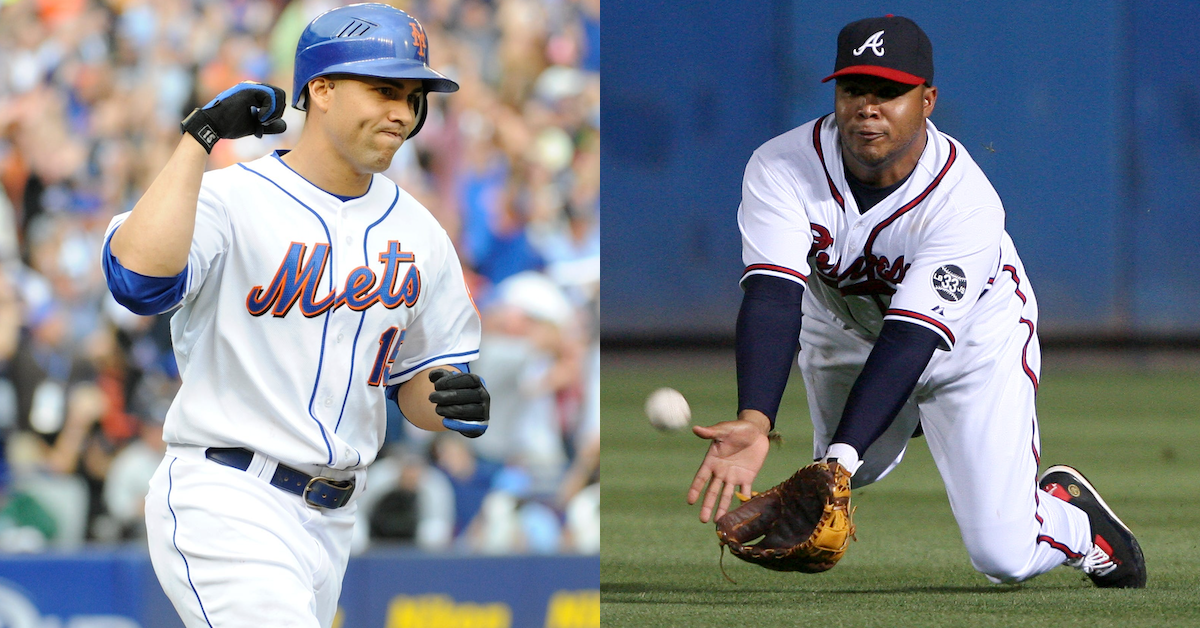
The 2026 Hall of Fame election is history, with a pair of center fielders who were born one day apart, fourth-year candidate Carlos Beltrán (born April 24, 1977) and ninth-year candidate Andruw Jones (born April 23, 1977), elected by the Baseball Writers Association of America. This is the fourth time two players from the same position besides pitcher were elected by the writers in the same year. Right fielders Harry Heilmann and Paul Waner were the first pair in 1952, followed by right fielders Henry Aaron and Frank Robinson in ’82, with left fielders Rickey Henderson and Jim Rice elected in 2009. That’s some impressive company!
Beltrán and Jones will be inducted into the Hall along with Contemporary Baseball honoreeJeff Kent on July 26, 2026, on the grounds of the Clark Sports Center in Cooperstown, New York. There’s no official word yet on which caps the players will be wearing on their plaques — the Hall has the final word — but odds are they’ll be the ones that you expect. Said Beltrán, who’s currently a special assistant for the Mets, “There’s no doubt that the Mets are a big part of my identity.” Kent has expressed his desire to wear a Giants cap, and Jones is almost certain to wear a Braves cap.
As usual, beyond the topline results, there’s plenty to digest from Tuesday’s returns. So as promised, here’s my candidate-by-candidate breakdown of the entire slate of 27 candidates, 13 of whom will return to the ballot next year. Note that references to percentages in Ryan Thibodaux’s indispensable Tracker may distinguish between what was logged at the time of the announcement at 6 p.m. ET on Tuesday (245 total ballots) and what’s in there as of Thursday at 9 a.m. ET (254 total ballots) Read the rest of this entry »
The following article is part of Jay Jaffe’s ongoing look at the candidates on the BBWAA 2026 Hall of Fame ballot. For a detailed introduction to this year’s ballot, and other candidates in the series, use the tool above; an introduction to JAWS can be found here. For a tentative schedule, see here. All WAR figures refer to the Baseball Reference version unless otherwise indicated.
When it comes to center fielders and the Hall of Fame, BBWAA voters have been a particularly picky lot. It’s all too easy to say, “This guy was no Ty Cobb,” or “This guy was no Willie Mays.” Who can live up to standards like that? Until Tuesday, just nine center fielders had been elected by the writers, fewer than any other position, but when Josh Rawitch announced the results of the 2026 balloting, two more joined them: fourth-year candidate Carlos Beltrán and ninth-year candidate Andruw Jones.
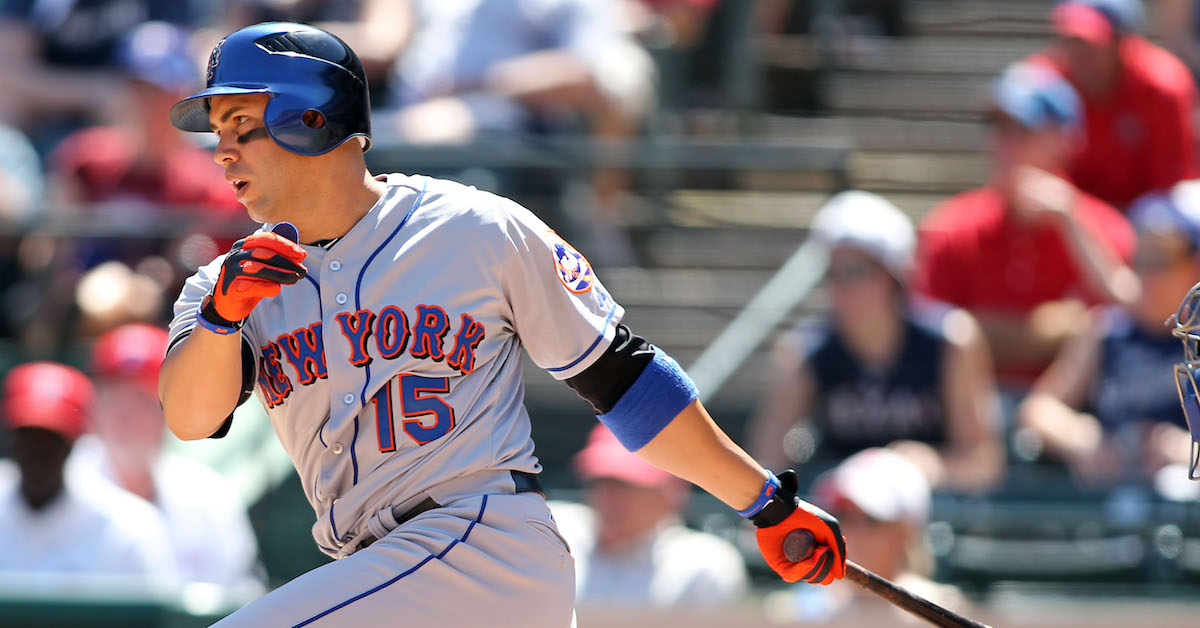
Beltrán, a five-tool player with 2,725 career hits, 312 stolen bases and the no. 9 ranking among center fielders in JAWS, received 84.2% of the vote, up from 70.3% last year. He had to overcome some initial resistance to his candidacy owing to his involvement in the Astros’ illegal sign-stealing scandal at the end of his career while helping the Astros win the 2017 World Series. Commissioner Rob Manfred’s 2020 report placed him at the center of Houston’s scheme, and it cost him his job as Mets skipper before he could manage a single game. Despite his transgression, he received 46.5% of the vote in his 2023 ballot debut, and followed with three straight years of double-digit gains. Read the rest of this entry »
The following article is part of Jay Jaffe’s ongoing look at the candidates on the BBWAA 2026 Hall of Fame ballot. For a detailed introduction to this year’s ballot, and other candidates in the series, use the tool above; an introduction to JAWS can be found here. For a tentative schedule, see here. All WAR figures refer to the Baseball Reference version unless otherwise indicated.
On Tuesday evening, the National Baseball Hall of Fame will announce the results of this year’s BBWAA balloting. In this age of ballot tracking, we have only a mild bit of suspense on our hands, something less than a true cliffhanger. Based on the published ballots in Ryan Thibodaux’s Tracker (which unfortunately has been experiencing outages due to traffic throttling), both Carlos Beltrán and Andruw Jones are likely to be elected, though there’s still a bit of uncertainty for the latter. If the FanGraphs readers who participated in this year’s crowdsource ballot had their way, Beltrán would be the only one who would make the cut. Read the rest of this entry »
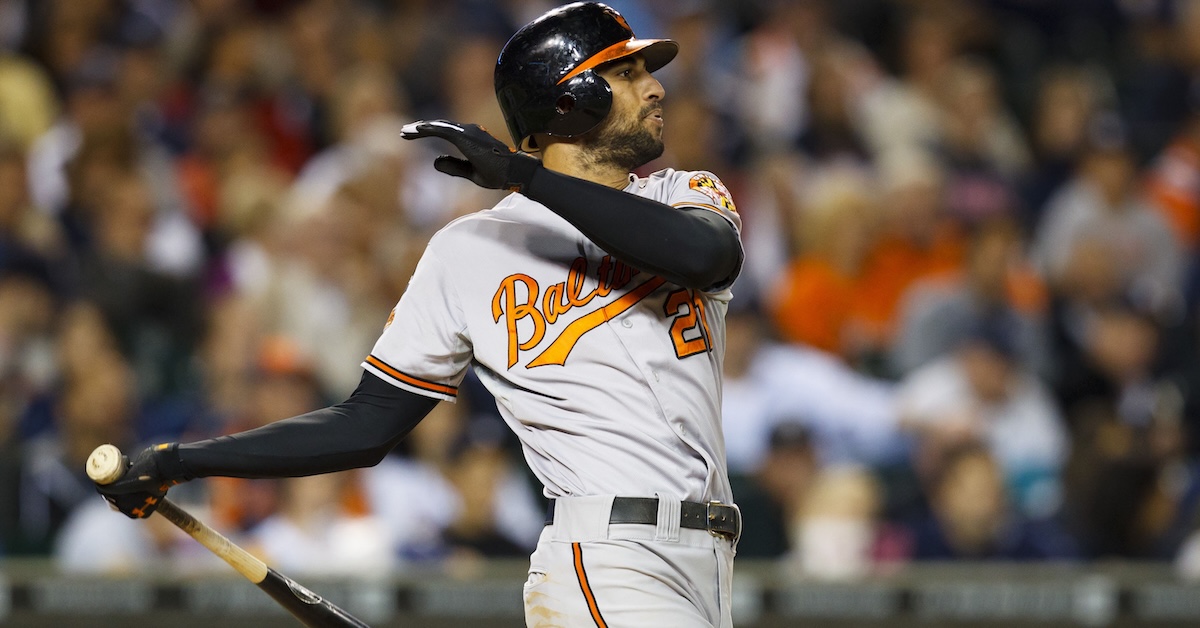
The following article is part of Jay Jaffe’s ongoing look at the candidates on the BBWAA 2026 Hall of Fame ballot. For a detailed introduction to this year’s ballot, and other candidates in the series, use the tool above; an introduction to JAWS can be found here. For a tentative schedule, see here. All WAR figures refer to the Baseball Reference version unless otherwise indicated.
2026 BBWAA Candidate: Nick Markakis
Player
Pos
Career WAR
Peak WAR
JAWS
H
HR
SB
AVG/OBP/SLG
OPS+
Nick Markakis
RF
33.7
24.6
29.2
2,388
189
66
.288/.357/.423
109
Source: Baseball-Reference
Early in his career, Nick Markakis appeared to be a star in the making. In his second and third seasons in the majors (2007 and ’08), the former first-round pick topped 40 doubles, 20 homers, and a .300 batting average while slugging nearly .500. He led the AL in WAR in 2008, his age-24 campaign — not that anyone was aware of it at the time, which helps to explain his omission from that year’s AL All-Star team.
It would take another decade before Markakis finally became an All-Star, and during that stretch, his performances leveled off. He became better known for his durability, his defense (he won three Gold Gloves), and above all, the example he set for younger players while enduring lean years both in Baltimore and Atlanta. He stuck around long enough to help both teams’ rebuilding efforts come to fruition with playoff appearances, racking up so many hits that he generated discussion regarding his potential Hall-worthiness if he persisted long enough to reach the magic 3,000-hit milestone.
Markakis’ retirement after his age-36 season rendered that question moot. He didn’t generate a Hall-caliber résumé or gaudy statistics during his 15-year career, but he received considerable praise for his impact on his teammates. From Braves manager Brian Snitker, who managed him from 2016–20:
“One of the most consistent, professional pros that I’ve ever been around. I’m glad I had the honor to manage him in his last years, because he’s a special player… How consistent he was, how professional he was, the way he played the game, how he grinded every at-bat. He never took a pitch off. And to see what he did late in his career, winning that Gold Glove, and the stabilizing force that he was for our club while I was here. You don’t appreciate a guy like Nick until you manage him. What a great career he had.”
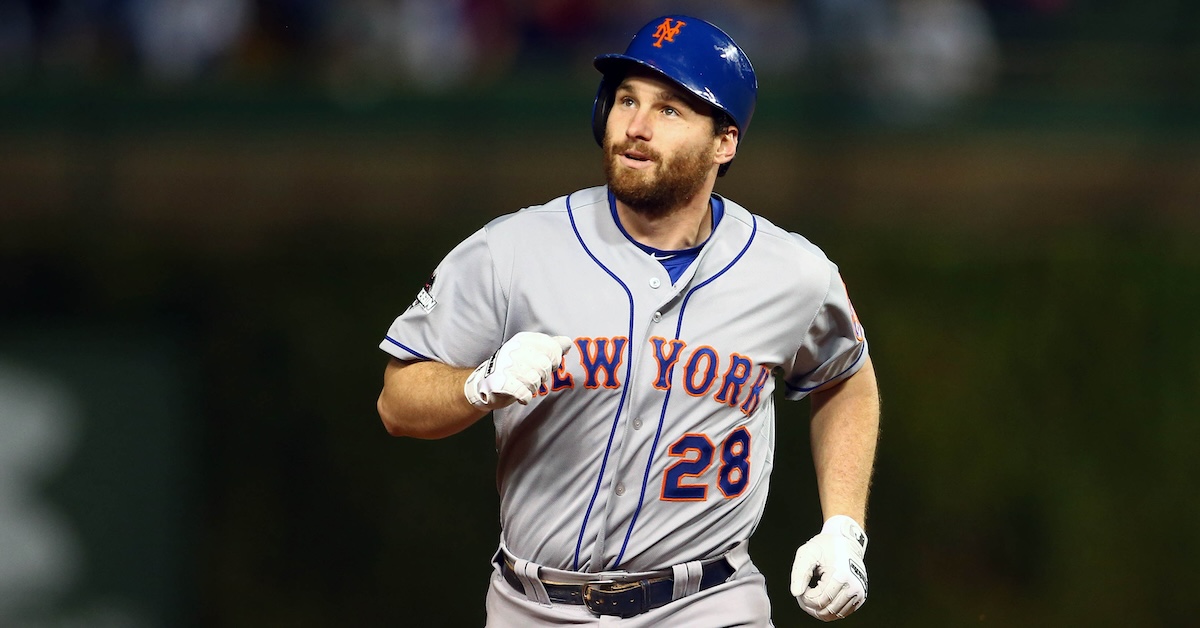
The following article is part of Jay Jaffe’s ongoing look at the candidates on the BBWAA 2026 Hall of Fame ballot. For a detailed introduction to this year’s ballot, and other candidates in the series, use the tool above; an introduction to JAWS can be found here. For a tentative schedule, see here. All WAR figures refer to the Baseball Reference version unless otherwise indicated.
2026 BBWAA Candidate: Daniel Murphy
Player
Pos
Career WAR
Peak WAR
JAWS
H
HR
SB
AVG/OBP/SLG
OPS+
Daniel Murphy
2B
20.8
18.7
19.7
1,572
138
68
.296/.341/.455
113
Source: Baseball-Reference
Daniel Murphy was not a home run hitter. Over the course of a 12-year major league career that was interrupted by knee injuries, he reached double digits in just seven seasons, topping 20 homers just twice. Like Howie Kendrick — another Jacksonville-born second baseman debuting on this Hall of Fame ballot, one who even played on the same team as Murphy in 2017–18 — the lefty-swinging, righty-throwing Murphy was known for his exceptional bat-to-ball ability. And like Kendrick, he went on a memorable, power-driven October run and won NLCS MVP honors. In 2015, he set a record by homering in six straight postseason games, carrying the Mets to their first pennant in 15 years. While it didn’t culminate in a championship, it earned him an indelible spot in postseason history; without that run, he probably wouldn’t even be on this ballot.
…
Daniel Thomas Murphy was born on April 1, 1985 in Jacksonville, Florida, the oldest of three children of Tom and Sharon Murphy. Tom taught kindergarten while Sharon sold insurance (in one amusing anecdote, an 11-year-old Murphy declared he wanted to be “an insurance person” for his school yearbook). Younger brother Jonathan (b. 1990) was a 19th-round pick by the Twins in 2012 and spent three seasons as an outfielder in their minor league system. Read the rest of this entry »
The Dodgers have struck again. For the second winter out of the past three, they’ve snuck in and landed the top free agent on the market, just when he was expected to sign elsewhere. But unlike Shohei Ohtani, who in December 2023 nearly signed with the Blue Jays before agreeing to a 10-year, $700 million contract with the Dodgers, one in which all but $2 million per season was deferred, Kyle Tucker has gone for a short-term deal of four years and $240 million.
According to ESPN’s Jeff Passan, the deal includes a $64 million signing bonus; $30 million of the total salary is deferred, reducing the net present value to $57.1 million a year. That still means that Tucker, who will turn 29 on Saturday, has set a record for the highest average annual value of any contract, exceeding that of last year’s record-setter, Juan Soto, by about 12%, albeit on a much shorter deal:
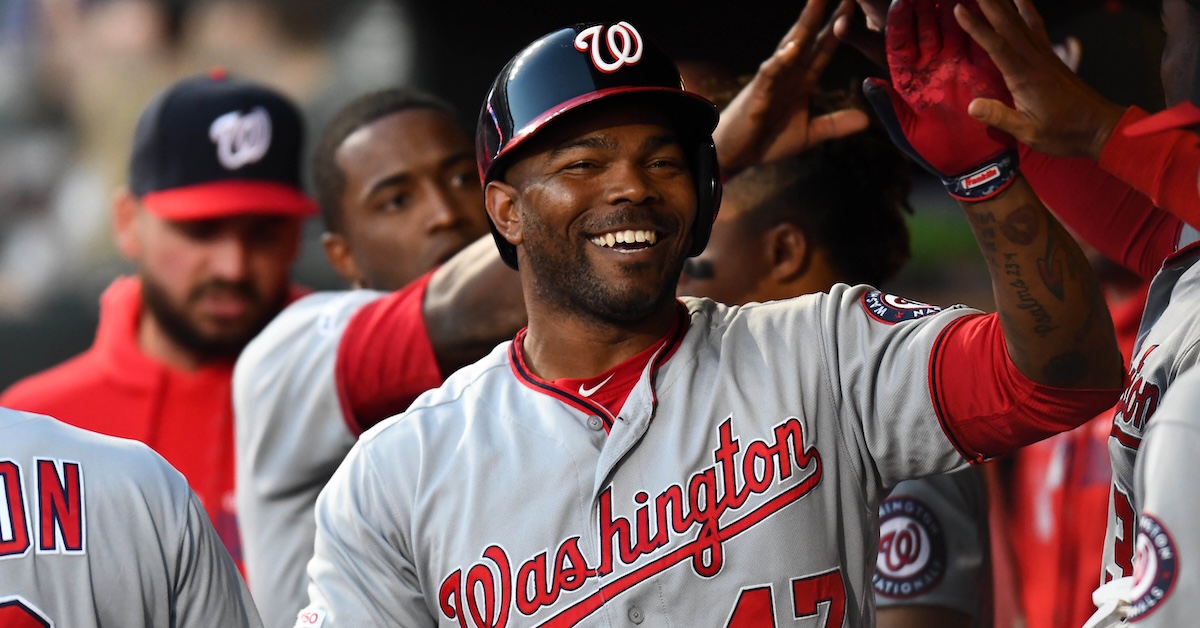
The following article is part of Jay Jaffe’s ongoing look at the candidates on the BBWAA 2026 Hall of Fame ballot. For a detailed introduction to this year’s ballot, and other candidates in the series, use the tool above; an introduction to JAWS can be found here. For a tentative schedule, see here. All WAR figures refer to the Baseball Reference version unless otherwise indicated.
2026 BBWAA Candidate: Howie Kendrick
Player
Pos
Career WAR
Peak WAR
JAWS
H
HR
SB
AVG/OBP/SLG
OPS+
Howie Kendrick
2B
35.0
25.6
30.3
1,747
127
126
.294/.337/.430
109
Source: Baseball-Reference
In their backyard baseball fantasies and daydreams, what kid hasn’t imagined hitting a late-inning home run to win a playoff game, or even Game 7 of the World Series? Howie Kendrick lived that dream not once but twice during the 2019 postseason, capped by a homer that sent the Washington Nationals on their way to their first championship in franchise history. What’s more, his October run (which also included NLCS MVP honors) topped off a storybook rise from humble beginnings that included a complicated family situation growing up and an amateur career that took place in almost complete obscurity.
“The more I learned about him, he starts telling me about how no schools wanted him, how it was really hard to stay confident,” former Angels teammate Torii Hunter, who mentored Kendrick upon joining the Angels in 2008, recalled in ’19. “I just kept thinking: This guy could have really fallen through the cracks.”
What put Kendrick on the map was his legendary bat-to-ball ability. Though he never won the major league batting title that was expected of him while hitting for a .358 average during his time in the minors, he carved out an impressive 14-year career, earning All-Star honors and helping his teams make the playoffs eight times.
…
Howard Joseph Kendrick III was born on July 12, 1983 in Jacksonville, Florida. He never knew his father, and because his mother, Belinda Kendrick, was a staff sergeant serving overseas in the United States Army, he and his two sisters grew up in the care of his maternal grandmother, Ruth Woods, in Callahan, Florida, a two-stoplight town of less than 1,000 people near the Georgia border. All 12 of Woods’ children, and their children, lived in the area as well. Read the rest of this entry »
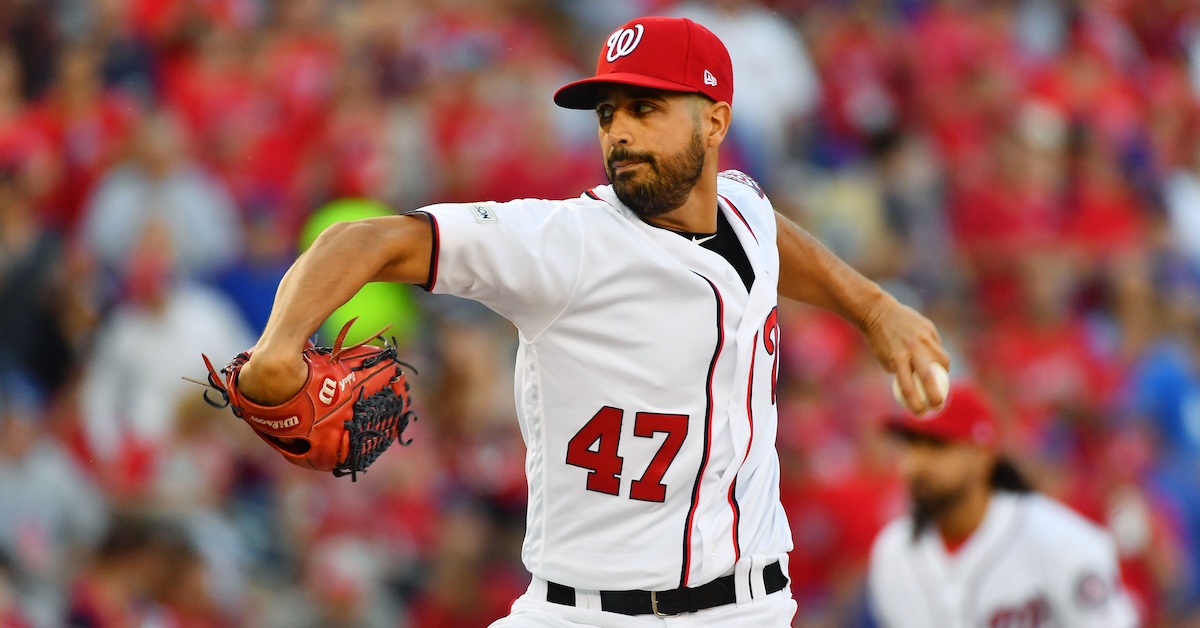
The following article is part of Jay Jaffe’s ongoing look at the candidates on the BBWAA 2026 Hall of Fame ballot. For a detailed introduction to this year’s ballot, and other candidates in the series, use the tool above; an introduction to JAWS can be found here. For a tentative schedule, see here. All WAR figures refer to the Baseball Reference version unless otherwise indicated.
2026 BBWAA Candidate: Gio Gonzalez
Pitcher
Career WAR
Peak WAR Adj.
S-JAWS
W-L
SO
ERA
ERA+
Gio Gonzalez
28.3
26.2
27.2
131-101
1,860
3.70
111
Source: Baseball-Reference
The baseball industry loves its pitching prospects — and sometimes seems to love dreaming on them by using them as trade chips almost as much as it does actually letting them pitch. Considered to have one of the best curveballs in the game from the outset of his professional career, Gio Gonzalez was traded three times before he’d thrown a major league pitch, and five times during a career that ended just after he turned 35. Along the way, the undersized southpaw made two All-Star teams, received Cy Young votes twice, and helped his teams reach the playoffs five times. While he wasn’t always easy to watch given his high walk rates, his ability to miss bats was a testament to the quality of his stuff.
…
Giovany Aramis Gonzalez was born on September 19, 1985 in Hialeah, Florida, a city in Miami-Dade County where roughly three-quarters of the population is of Cuban ancestry. He’s the oldest of six children of Max and Yolanda (Yoly) Gonzalez. Max, a first-generation Cuban-American, installed billboards and owned a scooter shop, while Yoly, an immigrant from Cuba, worked at various jobs to help the family make ends meet.
Gio was just four years old when his parents introduced him to baseball. Growing up, he played sandlot baseball with neighborhood kids in a narrow, rocky strip of land behind the family’s townhouse. “We broke so many windows that I found a guy who would replace them for 15 bucks apiece,” Yoly recalled in 2011.
“Max grew up tough, never got to play as much ball as he wanted and, when it rained on too-rare Sundays when he had a game as a child, he broke down in frustration and cried. But he never stopped studying the sport,” wrote the Washington Post’s Thomas Boswell in 2012. When his eldest son showed an aptitude for the game, Max taught him the curveball that would become his signature. Read the rest of this entry »

 Jay Jaffe: Good afternoon, folks! It’s a very chilly day here in Brooklyn (21 degrees) with the snow piled high on the curb. I think we got 10-12″ on Sunday. My basement office is cold enough to hang meat, to borrow a phrase from the late, great voice of the Utah Jazz, Hot Rod Hundley.