
Matrix Reloaded: January 23, 2026
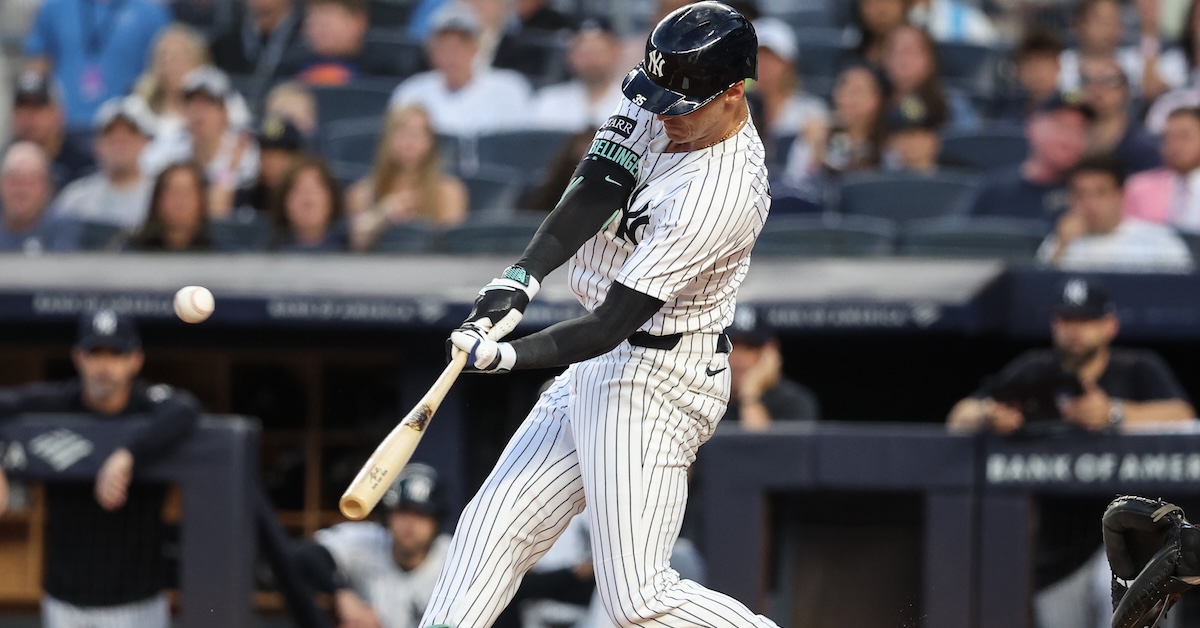
After a valiant editing effort from Matt Martell last week, I’m back with a Matrix Reloaded of a much more normal length! The Significant Signings section might not be necessary for too much longer this offseason, but I’ll continue to start there as long as players are signing for $10 million or more.
As always, the Offseason Matrices document can be found here.
Significant Signings
Yankees Sign Cody Bellinger for Five Years, $162.5 Million
Effect on the Yankees
The overarching theme of the Yankees’ offseason has been to get the band back together, with Bellinger the cherry on top of a very familiar sundae. Ryan Weathers is the team’s one major acquisition from another club, with Bellinger the fifth Yankees free agent re-signed, after Trent Grisham, Ryan Yarbrough, Amed Rosario, and Paul Blackburn.
With Bellinger back in the fold for at least two years (he can opt out after 2027 or 2028), the starting squad for the 2026 Yankees will look much the same as it did to end 2025. The outfield will once again consist of Bellinger, Grisham, and Aaron Judge, with Giancarlo Stanton DHing. The infield will feature a Ryan McMahon/Rosario platoon at third, José Caballero starting at short until Anthony Volpe’s return from shoulder surgery, Jazz Chisholm Jr. at second, and Ben Rice at first. Austin Wells will start at catcher, with Rice potentially seeing some time behind the dish again too.
The aftershock here is the most uncomfortable for Jasson Domínguez, whose playing time waned once Stanton returned from injury and Rice continued his breakout. Domínguez was barely average at the plate and was horrid in the field; his most significant contribution last season was on the bases. He could be a useful late-game pinch-runner, but a 103 wRC+ and blooper-reel-quality left field defense isn’t what the Yankees signed up for. With Grisham set to hit free agency after the season, it’s possible that the Yankees will be fine sending Domínguez to the bench or Triple-A and reconsidering his fit come 2027, but it’s clear that he doesn’t have much of one as it stands in 2026.
Effect on Other Teams
The Yankees were far and away the team mentioned most often when Bellinger’s name came up, so I don’t think there’s anyone scrambling for a pivot move here. Even after signing Bo Bichette, the Mets were connected with outfielder a bit, but they filled the would-be Bellinger spot by trading for Luis Robert Jr. (much more on him later). That made Bellinger returning to the Bronx seem like even more of a fait accompli than it already had.
Effect on Similar Players
There’s nobody of Bellinger’s caliber left on the market, but him reaching a deal ought to get things moving for the remaining free agent outfielders. The biggest names there are Harrison Bader, Austin Hays, Starling Marte, and Michael Conforto.
White Sox Sign Seranthony Domínguez for Two Years, $20 Million
Effect on the White Sox
Save $20 million on Luis Robert Jr., spend $20 million on the best remaining free agent reliever. Chicago’s starting pitching group is pretty… let’s say “ragtag,” projecting as the third worst in the majors. With Domínguez in the fold, however, the bullpen could sneakily be a position of strength for the Pale Hose, at least in the final few innings.
Domínguez is expected to handle the ninth inning for the White Sox. He hasn’t held a closer job over a full season, but he did pick up 10 saves for the Orioles down the stretch in 2024 after being acquired from the Phillies. Seranthony’s top setup man will be flamethrower Grant Taylor, who was fabulous last year in a 36.2-inning big league debut if you can look past his ERA (and you really should). Domínguez’s signing frees Taylor up for more multi-inning fireman outings, a role he was often used in last year.
The Sox also have a classic one-inning fastball/slider guy in Jordan Leasure, another multi-inning righty in Mike Vasil, lefties Tyler Gilbert and Brandon Eisert, and a couple of Rule 5 picks in Alexander Alberto and Jedixson Paez in their projected bullpen.
Effect on Other Teams
Teams in need of a high-leverage arm are in trouble with Seranthony signed, at least as far as the free agent market is concerned. Michael Kopech has as much talent as any pitcher in the world, but he can’t stop getting hurt; Evan Phillips will be out until midseason after undergoing Tommy John surgery in June; and the likes of Danny Coulombe, Justin Wilson, Scott Barlow, Brent Suter, and Tommy Kahnle are more “nice to have in the sixth or seventh inning” arms than “I trust this guy to close for me” pitchers.
Effect on Similar Players
If the above list didn’t make it clear enough, there’s nobody comparable to Domínguez still holding out for a job on the free agent market. It’s likelier than not that he’s the last reliever to sign a multi-year deal this offseason.
Rapid-Fire One-Year Deals
Angels Sign Yoán Moncada for $4 Million
Moncada returns to Anaheim, where he had his best large-sample wRC+ since 2021, though he still got into just 84 games as he battled a thumb sprain and knee inflammation. The switch-hitting third baseman was almost entirely shielded from lefty pitching, and as such figures to once again be a strong-side platoon bat at the hot corner. Righties Vaughn Grissom and Christian Moore will be competing for both third base time against lefty pitching and the wide-open everyday job at second base. The Angels infield will continue to be anchored by shortstop Zach Neto, with Nolan Schanuel holding down the fort at first.
Rangers Sign Jakob Junis for $4 Million
Junis pitched well on a $4.5 million contract for the Guardians in 2025, posting a 2.97 ERA and 3.45 FIP in 66.2 innings largely in lower-leverage situations as a bridge to the back end of the bullpen. He had to settle for a little bit less this time around, but he could have a higher-leverage role with Texas than he did in Cleveland. The Rangers have remade their bullpen for the second consecutive offseason, losing Phil Maton, Shawn Armstrong, and Jacob Webb in free agency (Danny Coulombe is still a free agent, too). Junis joins Tyler Alexander and Alexis Díaz as the newcomers to the relief corps, and Chris Martin was brought back in free agency.
Twins Sign Taylor Rogers for $2 Million
Rogers returns to where his career began, having racked up 50 saves in six seasons with the Twins before stints with the Padres, Brewers, Giants, Reds, and Cubs. Now 35 and back in Minnesota for the first time since 2021, he could be the frontrunner for saves under new manager Derek Shelton. Justin Topa, Kody Funderburk, and Cole Sands could also still be in the mix.
Mets Sign Luis García for $1.75 Million
In between the big trades with the White Sox and Brewers (much more on those below), the Mets came to a modest agreement with García, who was still chucking upper-90s sinkers in his age-38 season, his best by ERA and FIP since 2022. The Mets will be García’s ninth major league team, and he joins Devin Williams, Luke Weaver, Brooks Raley, and A.J. Minter (who may be a bit behind after undergoing lat surgery) as locks for the club’s Opening Day bullpen.
Braves Sign Jorge Mateo for $1 Million
- Ben Clemens’ Write-Up of the Deal (and Ha-Seong Kim’s Injury)
- Updated Roster Projection
- Updated Payroll Projection
The versatile and speedy Mateo will fill Mauricio Dubón’s superutility role, while Dubón in turn fills in for the injured Kim at short until the end of April at the very earliest. When Kim returns, Mateo’s roster spot could be in jeopardy assuming the rest of the roster is healthy.
Trades
Mets Acquire Freddy Peralta and Tobias Myers from Brewers for Brandon Sproat and Jett Williams
- Davy Andrews’ Write-Up of the Deal
- Brendan Gawlowski’s Write-Up of the Prospects
- Updated Mets Roster Projection
- Updated Brewers Roster Projection
- Updated Mets Payroll Projection
- Updated Brewers Payroll Projection
Effect on the Mets
Peralta was probably the single most popular potential trade candidate this offseason, even as it was never a given that he’d be on the move for his final season before free agency. The Mets, for their part, always made logical sense as a destination for the right-hander. Mets president of baseball operations David Stearns acquired a then-19-year-old Peralta from the Mariners when he was the Brewers’ front office honcho and signed him to his (extremely cheap) extension in February 2020 (what an innocent time that was…). And while the Mets have a lot of pitching depth, they were short on big league-level front-of-the-rotation pedigree. Enter Peralta, who’s struck out 200 batters in three straight seasons.
Nicknamed Fastball Freddy when he first came up, that’s now something of a misnomer. These days, the formerly heater-heavy Dominican throws the pitch just over half the time, buttressing his repertoire with a changeup, curve, and slider. His bag of tricks isn’t as large as that of potential co-ace Nolan McLean, who burst onto the scene with a fantastic first octet of big league starts on the strength of an advanced six-pitch mix. The remainder of the rotation will be some combination of David Peterson, Clay Holmes, Kodai Senga, Sean Manaea, Jonah Tong, and Myers. Whether the Mets will once again go to a six-man rotation to accommodate Senga is unclear, and it’s also possible that Peterson (in his last season before free agency) or Senga is traded away from what’s now a position of strong depth for New York.
Let’s also not forget about Myers, who was fabulous as a rookie in 2024 before taking a step back and spending significant time in the minors in 2025. Sixteen of his 22 big league appearances last year were in relief, a role in which he had a 1.91 ERA in 28.1 innings, walking just three batters (although he also struck out just 20). If the rotation is too impenetrable, at least right now, Myers could still be very useful for the Mets as a multi-inning reliever. While Peralta is currently set to be a free agent at the conclusion of the coming season, Myers won’t be one until the end of the 2030 World Series.
Effect on the Brewers
For the second time in three offseasons, the Brewers have turned one year of their best starting pitcher into 12 combined years of two highly-regarded prospects. Of course, trades aren’t measured in years of control in and out the door, but the constant extension of their contention window is how the Brewers operate. These moves don’t always work — Joey Ortiz and DL Hall, the two players acquired from the Orioles for Corbin Burnes, haven’t panned out particularly well as of yet — but the combination of the wheeling and dealing, a well-stocked farm system, and under-the-radar acquisitions has allowed the Brewers to amass depth to a point where trading Peralta was something they were comfortable with, just as they were with Burnes.
To wit, just look at the rotation even without Peralta and Myers. Brandon Woodruff, Jacob Misiorowski, and Quinn Priester should be set as the top three starters. After that, Milwaukee has an array of arms from which to choose for the last two spots: Chad Patrick, Logan Henderson, Robert Gasser, Coleman Crow, Carlos Rodriguez, and Sproat. Even current relievers Hall, Aaron Ashby, and Angel Zerpa have been brought up as options to be stretched out.
If Sproat is unable to claim one of the open rotation spots coming out of spring training, he’ll likely head back to Triple-A, a level where he got plenty of seasoning before a nice showing in his first four big league starts. Williams is yet to make his major league debut and had a 156 wRC+ in 96 Double-A contests before earning a promotion to Triple-A, where he stumbled to an 81 wRC+ in 43 games. His small stature (he’s listed at 5-foot-7 and 175 pounds), stolen base acumen, and ability to play both shortstop and center field makes him extremely “Brewers-y” no matter where he ends up on the field.
Rangers Acquire MacKenzie Gore from Nationals for Five Prospects
- Ben Clemens’ Write-Up of the Deal
- Eric Longenhagen’s Write-Up of the Prospects
- Updated Rangers Roster Projection
- Updated Nationals Roster Projection
- Updated Rangers Payroll Projection
- Updated Nationals Payroll Projection
Effect on the Rangers
Before Thursday’s news broke, the Rangers’ offseason was defined by roughly lateral moves: trading three years of a higher-AAV Marcus Semien for five seasons of a cheaper-per-year Brandon Nimmo; non-tendering former lineup stalwarts Adolis García and Jonah Heim before replacing Heim with Danny Jansen; and reshaping a cheaply-constructed 2025 bullpen with more discount aisle relief arms. The acquisition of Gore is the first that unequivocally makes the club better.
The Rangers missed the playoffs last year, but it wasn’t the fault of the pitching. The club was the best by ERA and the fifth best by FIP and WAR, and the rotation will continue to be fronted by the two-headed monster of Jacob deGrom and Nathan Eovaldi while also returning Jack Leiter and swingman Jacob Latz.
Gore may well have the best stuff of them all, with a funky delivery helping his already great-looking pitches appear that much more imposing. He looked as if he was finally breaking out in the first half of 2025, starting with an Opening Day performance (six shutout innings with one hit allowed and 13 strikeouts) taht was one of the best we saw in the majors last season. An ERA of 3.02 and a strikeout rate above 30% through the early part of July keyed his first All-Star selection, but he faded hard in a second half interrupted by shoulder inflammation, with 49.1 innings of 6.75-ERA ball and a K-BB% under 8%.
The oscillation between great and anything but has been a theme of Gore’s career dating back to his time in the minors, when he struggled with borderline yips-y command for stretches. That this trend repeated itself in 2025 has something of a perverse benefit for the Rangers: it allowed them to acquire a pitcher with ace-level flashes for something below an ace-level package. The question is: how can the Rangers make those flashes shine longer? They have two years before Gore hits free agency to try to solve the puzzle.
Effect on the Nationals
New president of baseball operations Paul Toboni has wasted no time leaving his mark on the Nationals organization in his first offseason at the helm. Already, he has traded for their catcher of the future in Harry Ford, hired the youngest full-time manager the majors has had since the 1970s in Blake Butera, and made sweeping front office changes, including hiring Anirudh Kilambi away from the Phillies to serve as his general manager. But he won’t be judged for any of those moves nearly as much as the Gore trade, which will be litigated and re-litigated for years to come.
Eric’s piece is where you’ll want to go for information on the prospects, none of whom except for perhaps first baseman Abimelec Ortiz seems likely to play for the Nationals this season. But while we might not know how much fruit the trade tree will bear — if any — for years, the repercussions of moving on from Gore will be felt in 2026. Sans Gore, the Nationals rotation only has two locks in former top prospect Cade Cavalli and NPB boomerang Foster Griffin, who thus far has been the only big league signing of Toboni’s tenure. There’s a whole menu of other arms for Butera and the coaching staff to pick from for the last three spots, even if the menu is more McDonald’s than fine dining: Jake Irvin, Josiah Gray, Brad Lord, Mitchell Parker, Riley Corniello, Cade Cavalli, Andrew Alvarez, and Jake Eder are all on the 40-man. More enticing arms like top prospects Jarlin Susana, Travis Sykora, and Alejandro Rosario (part of the Gore package) are all down with injuries, and only Susana is expected to pitch this year. Despite all the options, the Nationals could look for a veteran innings-eater to help out in the rotation, and they also have a clear need for a first baseman to keep the seat warm for Ortiz.
Mets Acquire Luis Robert Jr. from White Sox for Luisangel Acuña and Truman Pauley
- Ben Clemens’ Write-Up of the Deal
- Updated Mets Roster Projection
- Updated White Sox Roster Projection
- Updated Mets Payroll Projection
- Updated White Sox Payroll Projection
Effect on the Mets
It’s not quite as impactful as trading for Peralta, but the Mets are surely glad to have acquired one of the game’s premier up-the-middle talents — even if it hasn’t translated to results lately — for up to two years at a relative pittance.
Robert has played in just 210 games since concluding his fabulous 2023 season, with his 84 wRC+ lower than his uniform number (88). But despite the rough stretch of health (and in turn, results), the tools haven’t eroded completely. He was worth 7 FRV in the field last year to go along with 92nd-percentile bat speed and 90th-percentile sprint speed, and he improved the rate at which he pulled the ball in the air from 2024 to 2025.
Whether the Mets can actually get Robert closer to his 2023 self remains to be seen, but knowing that he is just A Guy on the new-look Amazin’s rather than The Guy (we currently have him projected to hit eighth in the lineup on RosterResource) affords them patience to work out the kinks. Even without Williams in the system after being shipped off to Milwaukee, the Mets still have depth to cover for Robert in the event of further injury. Tyrone Taylor is penciled in as the team’s fourth outfielder, top prospect Carson Benge has a clear path to the Opening Day roster and is also capable of patrolling center, and speedy outfield prospects Nick Morabito and A.J. Ewing could debut this year as well.
Effect on the White Sox
The will-they-won’t-they Robert trade speculation goes back as far as the team’s disastrous 2024 season. Ultimately, the package general manager Chris Getz received for the center fielder feels fairly light in terms of returning talent, though it did clear Robert’s entire $20 million salary for 2026 and $20 million club option for 2027.
Perhaps that’s a little harsh on Acuña, who at one point was a well-regarded prospect; he graduated in 2025 as a 45 FV and peaked at no. 44 on our Top 100 in 2023. But prospect shine only goes so far, and Acuña’s star has faded pretty dramatically in the time since he was acquired from the Rangers for Max Scherzer. His first micro-sample of big league time in 2024 produced three homers in 14 games, but he followed that up with exactly zero dingers in 95 games in 2025. He did become the first player ever to hit four homers in a Venezuelan Winter League Game just a couple of weeks ago, so there’s some pop in there, but ultimately he profiles as more of a super-utilityman with strong defense at second, short, and in center. The White Sox have the most available playing time in Robert’s vacated center field, and that’s where we’ve got him projected to start now. Acuña is out of options and has a full six years of club control before free agency, so he’ll get a good, long look on the South Side.
Pauley was the Mets’ 12th-rounder out of Harvard last year and made a three-game, 4.1-inning pro cameo. Per Eric Longenhagen, he projects as a multi-inning reliever, but one who improved over the course of 2025 and may yet end up as a legitimate starting prospect.
Jon Becker manages RosterResource's team payroll pages and assists with all other aspects of RosterResource, too. Follow him at your own peril on Twitter at @jonbecker_ and on BlueSky at @jon-becker.com.
Re: Volpe and Caballero
Do you believe in WAR as a useful metric? What if I tell you that so far in their respective careers, Jose Caballero has produced more WAR/100 PA than both Volpe and Pete Alonso? Which one would you REALLY rather have on your (real) baseball team?
Anthony Volpe was a 60FV prospect, Caballero was a 40FV. At the plate, they have been nearly identical (Cabbie’s 114+ Max EV is better!). In the field, they are both plus-plus defenders, with Cabbie having an edge in versatility. Cabbie is also a top-5 basestealer.
Caballero has never put in a full season, but if you make two seasons out of his last three, he is 3-4 WAR/year player. The forecasting systems stubbornly project Volpe to produce more next year, and Caballero to produce less, and other than their prospect ratings, I have no idea why.
Three conclusions:
Keep it up Cabbie, they will notice you sooner than later!