

Sent Down but Not Out: Five Players Who Will Start the Season in Triple-A
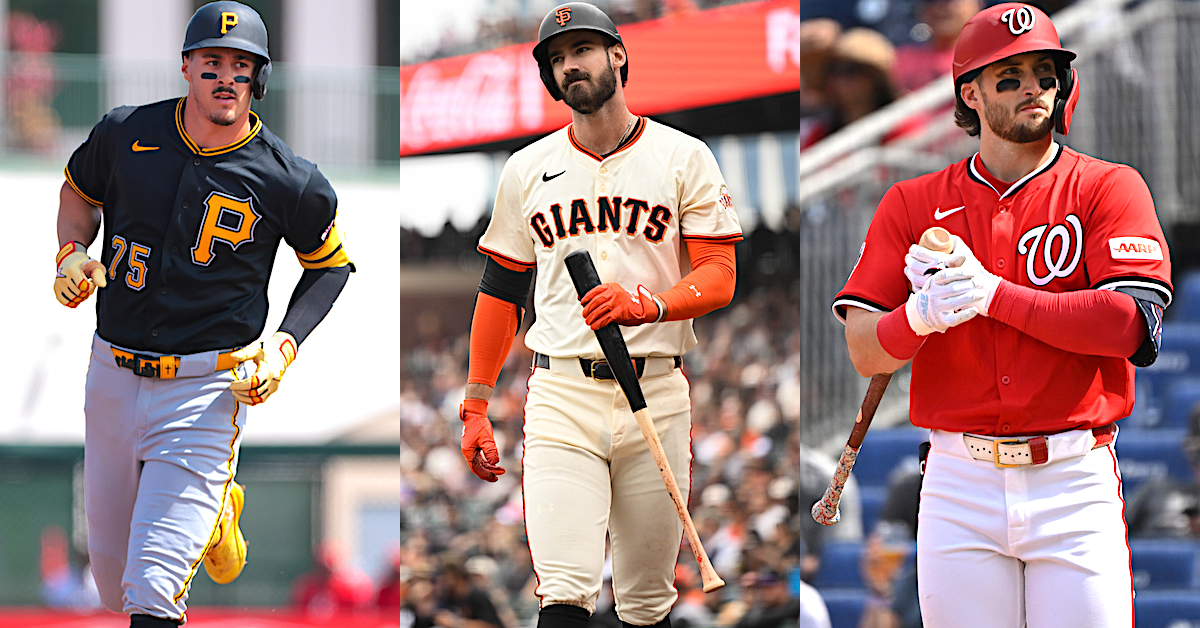
Dean Kremer has been a staple of the Orioles rotation in recent years. Even while missing significant time due to injuries in a couple of seasons, he’s made more starts than any other Baltimore pitcher since the beginning of 2022, a span that encompasses both the division-winning Orioles from ’23 and last year’s basement dwellers. Yet this past weekend, Kremer was optioned to the team’s minor league camp, the odd man out in a rotation battle. He’s not the only familiar name among those slated to start the season in the minors due to such decisions.
Opening Day is full of fanfare and so often freighted with meaning, but it’s still just one day on the baseball calendar; the decisions regarding who gets to be there (and who doesn’t) don’t actually define the season. Still, unless they’re recalled to replace injured players — which is hardly out of the question — optioned position players need to remain in the minors for 10 days and pitchers for 15 days, counting from March 25 (Opening Day for the Giants and Yankees). In other words, they’ll be eligible to return on April 4 or April 9. Beyond that, circumstances change as the season progresses, and rosters are in a constant state of flux.
Kremer stands out because he’s fully established himself in the majors, while the other high-profile decisions I’ve highlighted below involve players who are or were recently considered top prospects. They’re all headed to Triple-A, and I expect them to stay past the aforementioned dates, but they’re notable because they’re still expected to play substantial roles in 2026. The players are listed alphabetically.
Dylan Crews, Nationals
Dylan Crews debuted with the Nationals less than 14 months after being picked second in the 2023 draft, but he hasn’t exactly been an overnight success. He hit just .208/.280/.352 (77 wRC+) in 85 games last season while losing 12 weeks to an oblique strain, and failed to reach a 100 wRC+ in any calendar month. He was nearly helpless against breaking balls, hitting just .180 and slugging .220 against them while whiffing on 36.5% of swings; meanwhile, he slugged .303 with a 40.6% whiff rate against offspeed stuff. He was also utterly overwhelmed by lefties (.200/.241/.280, 44 wRC+).
This spring, the 24-year-old Crews went 3-for-29 with 11 strikeouts and just an 85.1 mph average exit velocity while “laboring through a ton of adjustments,” as Eric Longenhagen observed in some notes he shared with me. The Nationals’ new regime has tweaked Crews’ swing, and he doesn’t seem to have found a comfort level yet. “He was a toe-tap guy (then no stride with two strikes) last year, but now he’s using a leg kick (before again cutting it with two strikes), and the way his hands set up is also different,” wrote Eric, adding that Crews is swinging underneath upper-level fastballs and missing a lot of them up and away.
The Nationals optioned Crews to Triple-A Rochester with the expectation that he can continue working on some adjustments while under less pressure and scrutiny than he’d face while in the majors. Manager Blake Butera wasn’t willing to elaborate on the nature of those adjustments, but observed that Crews had been falling behind in counts, said that his swing did not need an overhaul, and added, “We expect him up here hopefully soon.”
Thus, the Nationals plan to start the season with 23-year-old lefty Daylen Lile in right field. A second-round pick from 2021, he’s a contact-oriented platoon type who made the most of the opportunity afforded by Crews’ injury last summer, hitting .299/.347/.498 (132 wRC+) with 11 triples and nine homers in 91 games, though he undid some of that value with his brutal defense (-14 DRS, -10 FRV). He’ll be joined by James Wood in left and Jacob Young in center, with righty-swinging Joey Wiemer, who has spent most of the past two seasons in the minors after serving as a regular on the Brewers in 2023, as a backup. With both Robert Hassell III and Christian Franklin also optioned, the Nationals appear as though they’ll start the season with just four outfielders on their 26-man roster.
Bryce Eldridge, Giants
Bryce Eldridge, a 6-foot-7, 251-pound behemoth who placed 16th on our Top 100 Prospects list, was limited to 100 combined games between Double- and Triple-A last year by a bone spur in his left wrist (removed via surgery in October) and a right hamstring strain. In 66 games at Triple-A Sacramento, he hit .249/.322/.514 (105 wRC+) with 18 homers, but also struck out 30.8% of the time. He brought his contact woes to San Francisco, going 3-for-28 with seven walks and 13 strikeouts in his 10-game cup of coffee, and this spring hit .225/.380/.450 with a 38% strikeout rate in 50 plate appearances.
While the 21-year-old’s elite power can offset his tendency to swing and miss, his defense has looked suspect this spring. The expectation is that once he arrives, he’ll share first base and DH duties with Rafael Devers, himself relatively new to the position. The Giants need Eldridge to be up to speed, but he’s still learning the ropes. From Eric’s notes: “Luis Arraez is stretched at second base and frequently needs some help from his first baseman. Conversely, sometimes the spectacular things that Matt Chapman and Willy Adames can do require a scoop on the other end of a tough throw. Eldridge is so enormous that he can struggle to bend down and do this a lot of the time.”
With Eldridge back at Sacramento, the Giants can find playing time for Jerar Encarnacion, Arraez, and others in the DH spot, opening up more playing time for Casey Schmitt in the infield.
Konnor Griffin, Pirates
Technically, this one isn’t an option-based decision, because Konnor Griffin, the ninth pick of the 2024 draft out of a Mississippi high school, hasn’t been added to the 40-man roster yet — but as he’s tantalizingly close, I decided to include him here. He’s the game’s top prospect, “a franchise-altering entity whose talent rivals that of Bobby Witt Jr., a young, level-headed Hanley Ramirez, or a faster Carlos Correa,” as our prospect team wrote for his Top 100 entry. While he won’t turn 20 until April 24, he entered the spring with a shot at becoming the first teenager to debut in an Opening Day lineup since Ken Griffey Jr.. But after homering three times in his first six Grapefruit League games, he added just one more, and finished at .171/.261/.488 with two walks and 13 strikeouts in 46 plate appearances. His chase rate against sliders was around 50%.
Given that, and the reality that Griffin has played just 21 games in Double-A (he hit .337/.418/.542 in 98 plate appearances at Altoona) and none at Triple-A, it’s not hard to understand why he’s not breaking camp with the big club. But inevitably given his blue-chip status, there are more layers to this. The Pirates reportedly discussed a long-term extension worth more than $100 million with Griffin, and some have speculated that had he agreed to a deal, he would have stayed up, though that doesn’t mean that sending him down constitutes service time manipulation. It’s true that rostering him from the outset of the season would have made the Pirates eligible to receive an additional draft pick and increase the size of their bonus pool by roughly $3 million if he wins Rookie of the Year honors via the Prospect Promotion Incentive; even missing Opening Day, if he’s called up in time to accrue 172 service days, he would retain PPI eligibility. At the same time, if Griffin wins Rookie of the Year honors, he’ll be credited with a full year of service time regardless of when he debuted, à la Paul Skenes in 2024, after he debuted on May 11.
“Coming into Spring Training, we weren’t closed off to the idea totally, but knew that he’s really young, and he’s incredibly important to us, and we think he has a chance to be a very, very good player for a long time,” said general manager Ben Cherington on Monday. “We feel some obligation to make sure that we’re doing everything we can to support him and being that very, very good player for the longest time possible.”
Manager Don Kelly said on Sunday that the team will open with Jared Triolo at shortstop and Nick Gonzales at third base. The 28-year-old Triolo was slated to be the team’s regular third baseman; he won a Gold Glove as a utilityman in 2024 and has been about average in the field in his limited duty at shortstop, but he’s scuffled at the plate, with last year’s 86 wRC+ representing a career high. The 26-year-old Gonzales, who has been supplanted at second by the arrival of Brandon Lowe, dropped from a 94 wRC+ in 2024 to 82 last year, though he does project to be the better hitter of the two.
While Griffin has been sent down, colleague Jon Becker noted on Thursday that 20 prospects from our Top 100 (really our Top 110) are set to be on Opening Day rosters or injured lists.
Hyeseong Kim, Dodgers
Though he spent seven full seasons playing regularly in the KBO (2018–24), Hyeseong Kim was only on the verge of turning 26 when he signed a three-year, $12.5 million deal with the Dodgers in January 2025. After beginning last season at Triple-A Oklahoma City, he played 71 games for the big league team, hitting .280/.314/.385 (95 wRC+) with 13 steals while splitting time between second base, center field, and shortstop.
It was a solid enough rookie season, but Kim missed all of August due to bursitis in his left shoulder, likely a factor in his .143/.160/.204 skid in the second half, with a 22-to-1 strikeout-to-walk ratio in 51 plate appearances. Included on the Dodgers’ postseason roster, he didn’t bat; as a pinch-runner, he scored the Division Series-clinching run on Orion Kerkering’s error, and in the World Series, he logged just one inning as a defensive replacement, spotting for Miguel Rojas — who despite having hit the game-tying home run in the ninth inning was dealing with an intercostal injury — at second base during the 11th inning, recording a putout on Isiah Kiner-Falefa’s sacrifice bunt.
Despite hitting .407/.448/.519 in 30 plate appearances this spring, Kim is heading back to OKC while Alex Freeland will remain with the Dodgers. The 24-year-old Freeland entered last year as a 50-FV prospect ranked 35th on our Top 100, but hit just .190/.292/.310 (73 wRC+) and struck out 36.1% of the time in 97 plate appearances for the Dodgers while splitting time between second and third. He was downgraded to a 45-FV prospect on the most recent Dodgers list, with our prospect team elaborating:
“Freeland’s contact rate plummeted in the majors, and his tendency to take pitches led to a lot of pitcher’s counts and subsequent punchouts. We don’t want to draw strong conclusions from what amounts to a handful of at-bats, but the way he got worked against lefties again leaves us wondering if he should quit switch-hitting. Visually, he’s more dynamic and fluid from the left side, and statistically, he’s performed significantly better that way.”
Freeland has hit just .125/.302/.229 in 63 plate appearances this spring, but the Dodgers have liked his swing decisions; he’s drawn 13 walks while striking out just 11 times. “I’m not blind to the fact that Alex didn’t have a surface line of production in spring, and Hyeseong did,” manager Dave Roberts said of the decision. “[Freeland] conducted the at-bat better even when he was struggling,” he added. “He didn’t finish off at-bats, but I do think that the process was right. And so I think that’s something we’re willing to bet on.”
Meanwhile, the team has been working with Kim on his swing mechanics, and believes he’s better off playing six days a week in Triple-A instead of platooning at second base with Rojas and spotting in center. With Tommy Edman and Enrique Hernández both recovering from surgery (right ankle for the former, left elbow for the latter), this is hardly the last word on the lineup, but for now, Freeland will share second base duties.
Dean Kremer, Orioles
The 30-year-old Kremer is coming off a career-high 2.6 WAR, having pitched to a 4.19 ERA (104 ERA-) and 3.97 FIP (95 ERA-) in a team-high 171.2 innings. Those obviously aren’t dominant numbers, but they aren’t out of character, either; since the start of 2022, Kremer has pitched to a 3.95 ERA (98 ERA-) and 4.17 FIP (105 ERA-) while averaging 150 innings and 1.9 WAR per year. To call upon a term that’s gone somewhat out of style as starting pitcher workloads have evolved, he’s a League Average Innings Muncher (LAIM).
The Orioles rotation was a hot mess last year following an unimpressive winter and a slew of injuries, ranking 24th in the majors with 8.1 WAR; Kremer and Trevor Rogers the only starters to total more than 1.1 WAR. Rogers led the staff with a 1.81 ERA and 3.3 WAR despite making just 18 starts; he’s gotten the nod for Opening Day. Kyle Bradish, who made just six starts after returning from June 2024 Tommy John surgery, is fully healthy, and given his sub-3.00 ERA in limited duty from 2023–25, he’s worthy of a spot, as is free agent signee Chris Bassitt. The Orioles are clearly high on the upside of 26-year-old Shane Baz, a former Top-100 prospect acquired from the Rays in December; he posted a 4.87 ERA last year, but has above-average stuff according to our pitch modeling systems, and struck out 24.8% of hitters, whereas Kremer’s stuff grades out as below average, and he struck out just 20.1%.
Thus the decision came down to Kremer and Zach Eflin, who was limited to 14 starts with a 5.93 ERA while missing time due to a lat strain and lower back inflammation. The Orioles believe that the 31-year-old Eflin, whom they re-signed to a one-year, $10 million deal after he underwent a microdiscectomy in August, will be ready to start the season; with three days off during the span of their first 13 games, the team won’t even need a fifth starter until mid-April. Eflin made his case with 5 1/3 innings of one-hit shutout work against the Yankees on Friday. Afterwards, president of baseball operations Mike Elias said, “Coming into the spring, we were a little guarded that he may not be able to get himself prepared for Opening Day and the season, and he clearly did. Both in terms of optics and result, did about as well as you could have imagined, especially coming off that surgery.”
It may not have helped Kremer’s cause that before missing time for the World Baseball Classic (where he threw 4 1/3 scoreless innings for Team Israel), he made a couple of rocky Grapefruit League starts in late February. Thus he’ll start the season in Norfolk, but the odds are high that he’ll spend time in the Orioles rotation sooner or later.
Brooklyn-based Jay Jaffe is a senior writer for FanGraphs, the author of The Cooperstown Casebook (Thomas Dunne Books, 2017) and the creator of the JAWS (Jaffe WAR Score) metric for Hall of Fame analysis. He founded the Futility Infielder website (2001), was a columnist for Baseball Prospectus (2005-2012) and a contributing writer for Sports Illustrated (2012-2018). He has been a recurring guest on MLB Network and a member of the BBWAA since 2011, and a Hall of Fame voter since 2021. Follow him on BlueSky @jayjaffe.bsky.social.
So many players you could have talked about and you chose to write about a 27 year old who has been a pro baseball player for the better part of a decade