
Sonny Gray Changes Teams. Again.
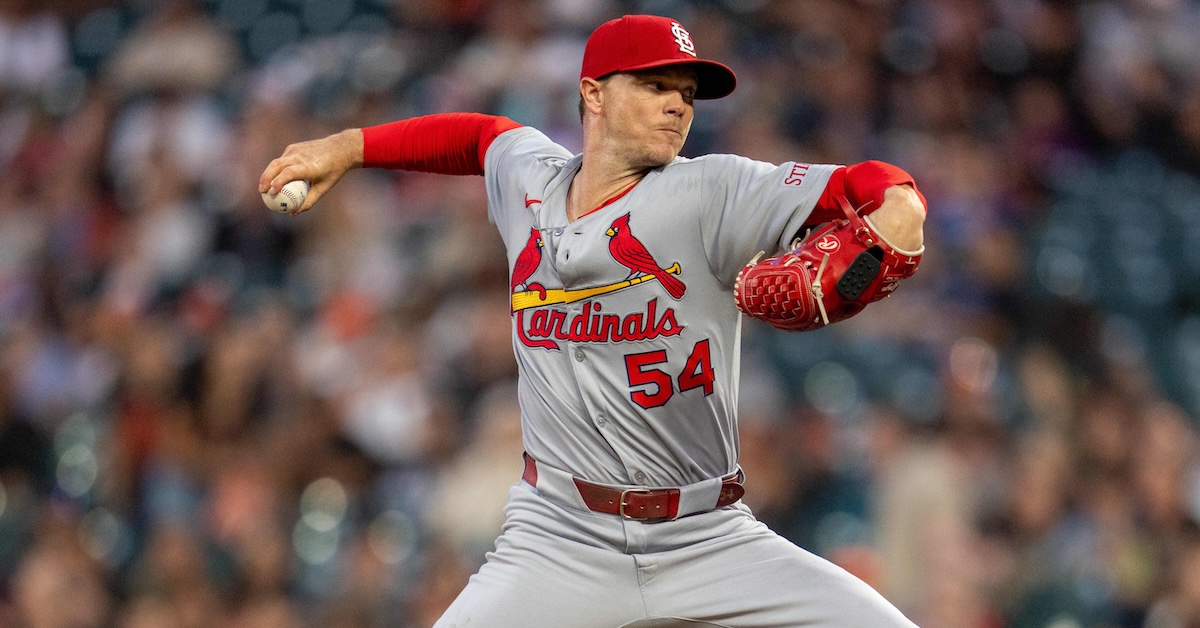
The Boston Red Sox have acquired veteran right-hander Sonny Gray and cash from the St. Louis Cardinals, in exchange for pitchers Richard Fitts and Brandon Clarke, and either cash or a player to be named later. Seems straightforward enough.
After 13 seasons in the majors, you all know Gray by now: short guy out of Vanderbilt. Big, slow curveball, but not a ton of velo. Changes teams every two or three years. In those 13 seasons, Gray’s two best WAR seasons are 5.4 and 4.5, but he’s posted four additional seasons of between 3.5 and 3.9 WAR, and three others of between 2.4 and 2.7 WAR. This is the Toyota Sienna of pitchers: You don’t stay up nights dreaming about him, and he can be a little pricey, but he’ll get you and your family where they need to go with an absolute minimum of fuss.
The Red Sox made the playoffs in 2025. I don’t think I’m going out on a limb by assuming they’d like to make the playoffs again in 2026. If I were in the playoff-making business, I’d welcome the opportunity to add Sonny Gray to my team.
Gray came into the majors with a decent amount of hype; he came from what I’d call the second generation of elite prospects to develop under Tim Corbin at Vandy. (It’s about 50/50 that Gray will pass David Price to become the all-time career WAR leader among Vandy alums sometime in 2026. Once that happens, he should retain that title until and unless Dansby Swanson hangs around long enough to haul him in.)
Early in Gray’s career, when he was putting up big innings totals and finishing on the Cy Young podium for the Athletics, I wasn’t a massive fan. I thought he didn’t get enough strikeouts to count as a legit no. 1 starter. Indeed, even now you wouldn’t want him to start Game 1 of a playoff series, but good news, Boston already has Garrett Crochet for that. And if Gray’s starting, say, Game 3, that’s a good sign for your rotation.
In recent years, Gray has started leaking fastball velocity — as most pitchers in their mid-30s do — but he’s compensated by leaning into a cutter and changeup, making him a legit six-pitch pitcher since 2023. At the same time, he’s gone the right way with his strikeout and walk numbers. During his time with the A’s and Yankees, Gray struck out 20.9% of opponents and walked 8.2%. In two seasons with the Cardinals, he struck out 28.4% of opponents and walked 5.4%.
The Cardinals, who are probably not in the playoff-making business at the moment, signed Gray to a three-year, $75 million contract before the 2024 season, leaving one year and $25 million worth of AAV, plus an option, left to run. Consider the pitchers who just accepted the qualifying offer of $22.025 million over one year: Brandon Woodruff and Shota Imanaga. I’d rather have Gray than those guys.
Which is not to downplay the risks of hitching one’s wagon to a 36-year-old right-hander whose fastball averaged just under 91 mph last season. Gray also posted a 4.28 ERA in 2025, which is his worst figure since 2018. Now, his FIP was nearly a full run better, and a lot of the ERA damage was confined to a few truly disastrous starts, but that’s still worth keeping in mind.
Then there’s the contract situation. Because Gray’s three-year contract didn’t call for a straight-up $25 million salary; it paid him just $10 million in 2024, $25 million in 2025, and was due to pay him $35 million in 2026, with a further $5 million guaranteed in the form of an option buyout.
That’s ludicrous. If Gray’s contract were any more backloaded, Big Sean would be writing songs about it. That’s how shady rent-to-own appliance stores price out refrigerators. Lucky for the Red Sox, they checked the ledger before they called in the trade, and were able to restructure Gray’s deal and get the Cardinals to kick in $20 million in cash.
Gray will now get paid $31 million for 2026, with a $10 million buyout of a mutual option for 2027. (The extra $1 million is for waiving his no-trade clause.) With the Cardinals’ contributions, that leaves Boston to pay $21 million for one year of Gray.
That strikes me as a reasonable amount to pay Gray in 2026. And by eating about half of Gray’s total remuneration, the Cardinals have turned this into a baseball trade, rather than a salary dump.
So let’s check in on the guys they’re getting back.
Fitts, the man whose name invites a million lascivious puns, has been in and out of Boston’s rotation over the past two seasons, with mixed results: a 3.97 ERA and 5.02 FIP over 65 2/3 career innings. Fitts, who turns 26 next month, was a sixth-round pick out of Auburn in 2021.
Longtime Effectively Wild listeners might remember Fitts from the Meet a Major Leaguer segment on Episode 2216, where I guest-hosted and bored Ben to death with the fun fact I’m about to share with you: Fitts’ older brother Trevor was the Game 1 College World Series Final starter for Mississippi State in 2013. He — along with Hunter Renfroe, Kendall Graveman, Adam Frazier, and about 25-odd other guys — made up one of the dirtbaggiest, most mullet-having, possum-chasing teams in baseball history.
The hitting coach from that team, Nick Mingione, is now the head coach at Kentucky, where Trevor Fitts currently serves as director of player development. The pitching coach, Butch Thompson, was Richard Fitts’ college head coach at Auburn. Networking is important, people.
I guess the fact that I just spent two paragraphs talking about Fitts’ brother’s post-playing career job history tells you something about Fitts as a pitcher. He’s got a mid-90s fastball with some natural cut, and three breaking pitches. His slider, it’s worth pointing out, got absolutely wrecked in 2025: opponents slugged .635 off the pitch last season.
Fitts is a bit of a project; with his fastball shape, he needs something with arm-side movement, and the Red Sox weren’t able to find it for him. He went with a splitter in 2024, and a sinker-changeup combo in 2025, but didn’t throw any of those pitches more than 11% of the time. If the Cardinals can find an off-speed pitch that works for him, he’s got the physical tools and command to start.
And even if the Cardinals don’t find an off-speed pitch that works, Fitts might end up starting quite a bit. With Miles Mikolas moving on and Gray now out of the picture, the Cardinals have created a universe where “Opening Day Starter Andre Pallante” is a realistic possibility. If nothing else, Fitts can muscle through a lineup a couple times and keep the game moving through five innings, even if he gives up a few runs along the way. Plus he’s still young, with two options and six years of team control left. It’s nice to have depth like that.
But the real prize in this deal, for St. Louis, is Clarke. Eric Longenhagen informed me that while this Brandon Clarke is not the same Brandon Clarke who plays forward for the Memphis Grizzlies, he does have basketball player-like 7-foot-4 extension off the mound. Here’s more from Eric:
Clarke was a junior college prospect committed to transfer to South Carolina, but his arm strength improved throughout 2024, and he properly blew up at that year’s Draft Combine, where he touched 98 and sat 95-plus. He signed for $400,000 and then showed even bigger stuff at the start of 2025 — Clarke was touching 100 and had an unbelievably nasty new slider — which moved him into the 50 FV prospect tier despite command and injury-related relief risk.
And Clarke’s injury history is lengthy. He had Tommy John in high school and surgery for Thoracic Outlet syndrome while he was a freshman at Alabama (he never pitched in games there), and he dealt with a stress fracture in his shoulder at State College of Florida. In 2025, Clarke dealt with blisters; he missed a month in May/June but wasn’t formally put on the IL. After Clarke returned from that dark month, he never pitched beyond the third inning of any outing, and in mid-August, he again dealt with a blister and this time was actually put on the IL.
Clarke’s injury history and imprecise feel for location make it likely that he ends up a reliever. But he might be a really great one, potentially one of the best left-handed relievers in all of baseball. He’s sitting 97 for multiple innings, and aspects of Clarke’s delivery, including things the Red Sox have tweaked since drafting him, help it play up. This guy generates seven feet, four inches of extension, he delivers from a low arm slot but has a vertical hand position on release (creating both uphill plane and ride), and the Red Sox made his delivery more cross-bodied and deceptive than it was in college. The angle on his fastball is a nightmare, especially when it’s located around the hands of lefties.
Clarke was a curveball/changeup guy at the Combine, but now has a lethal upper-80s slider that will crest 90 mph with huge length, and it also plays up against lefties because of the changes made to his delivery. I thought he had the makings of a good changeup at the Combine, but that pitch was barely featured in 2025 because Clarke didn’t need it in his relatively short outings. He merits development as a starter just to see if things work out, but in all likelihood, Clarke’s future rests in late-inning relief. But don’t let the relief projection undersell his prospectdom. This is the sort of stuff you see at the end of games in October, monstrous, overwhelming, door-slamming stuff.
That’s quite an evocative prospect profile, but one riddled with enough risk that you understand why the Sox were willing to part with Clarke.
Ultimately, how we remember this trade in five years — if we remember it at all; Gray gets traded a lot and they’re all starting to run together — is going to depend mostly on how good the Cardinals’ pitching development is.
For one extremely expensive year of an aging starter, in a season where finishing over .500 would probably be a pleasant surprise, the Cardinals have acquired a potential back-of-the-rotation starter and a potential elite high-leverage power left-handed reliever. Or, they’ve acquired a replacement-level swingman and a circus act who can’t throw enough strikes or stay healthy enough to get over the middle rungs of the minor league ladder.
For that reason, I can’t declare this trade to be a robbery in either direction. It’s a fair deal with both upside and risk for everyone involved. Well, except Gray. He just got paid an extra $1 million to dramatically increase his chances of pitching in the postseason in 2026. That’s a pretty sweet deal.
Michael is a writer at FanGraphs. Previously, he was a staff writer at The Ringer and D1Baseball, and his work has appeared at Grantland, Baseball Prospectus, The Atlantic, ESPN.com, and various ill-remembered Phillies blogs. Follow him on Twitter, if you must, @MichaelBaumann.
Kind of interesting looking at Gray’s ERA/FIP relationship for his career. First ten years his ERA beat his FIP six of ten seasons for an overall line of 3.51 ERA | 3.61 FIP over 1,507 IP.
Last two years though he is at a 4.07 ERA | 3.26 FIP, with that +0.81 differential the third largest wrong way gap out of 78 pitchers with at least 250 IP the last two seasons.
Without looking, that’s gotta be because of the infield defense behind him, right?
No, as the Cardinals had excellent infield defense most of the time the last couple of years between Goldschmidt/Contreras at 1B, Donovan at 2B, Winn at SS, and Arenado at 3B.
That’s not the case. The Cardinals’ infield defense ranked third in MLB between 2024-2025 in Statcast’s Fielding Run Value, with 30 FRV. They were behind only the Royals (52 FRV) and Guardians (40 FRV) in that two year span. It’s much more likely attributed to poor batted ball luck and event sequencing
Yeah I just didn’t think it through at all before posting the question, probably would delete if I could. Just a brain fart on my part. I appreciate the kind explanations though, maybe I need them more than I realize
If you prefer the usual internet discourse, I can call you moron and shill for something if you’d like?
-Sincerely, a man who thought Sonny Grey was still with Cincy where he hasn’t been since 2021
FIP consistently overrates bad fastball, great breaking ball pitchers. I wrote about this a decade ago and called it the Ricky Nolasco Rule. That type of pitcher usually runs a high strikeout rate because when they can get to two strikes they put away the batter with their breaking ball, but the bad fastball makes them more vulnerable early in the count than the average pitcher. Pitchers like Nolasco, Jon Gray, Germán Márquez, Carlos Carrasco, Patrick Corbin, and Dylan Cease are amongst the worst on the E-F list.
In 2025, Sonny had the fourth worst fastball by SIS value, but the sixth best slider and second best curveball. His fastball also did poorly in 2016 and 2018, which were two of his other bad E-F seasons.
Excellent corollary to the Javy Vazquez Rule:
“Being bad at pitching from the stretch isn’t luck.”
Since this leads to high HR rates, that would dampen the effect on ERA-FIP disparity with FIP’s emphasis on HR.
You have that backward. FIP doesn’t account for an elevated HR/FB rate, which is why xFIP exists.
I think they’re saying that hard contact leads to higher HR/FB leads to higher FIP. So FIP does account in some sense for contact quality which would narrow the gap between FIP and ERA in this case.
FIP doesn’t account for an elevated HR/FB, but it accounts for HRs in general. I’m saying that “bad fastball, great breaking ball” type pitchers have higher HR rates in general, meaning they will naturally have higher FIPs than the rest of the pitcher population. I still agree with the point that these types have bigger than average ERA-FIPs, but in the absence of this factor it’d be even bigger.
Now you’ve got me curious. From 2002 to 2025, here are the pitchers (as starters) who qualified in a season who piled up the most negative value on their fastballs (FB/C) from Sports Info Solution. I’ll put the gap between their FIP and ERA in parentheses (E-F). Negative numbers on E-F mean you beat your FIP, while positive numbers mean you underperformed your FIP.
Edwin Jackson -0.84 (+0.33)
Bronson Arroyo -0.94 (-0.38)
Kyle Lohse -0.68 (+0.04)
Carlos Carrasco -0.99 (+0.47)
Patrick Corbin -0.70 (+0.39)
Francisco Liriano -0.89 (+0.28)
Brett Myers -0.90 (-0.15)
Ricky Nolasco -0.79 (+0.59)
Ramon Ortiz -1.38 (-0.15)
Zach Duke -1.13 (+0.32)
There’s definitely something going on here, but it’s not a law that bad fastballs means you underperform your FIP. Myers, Ortiz, and Arroyo underperformed their FIP, and Lohse’s difference is small enough that it doesn’t really matter. But the other six are much more “above” it than those first three are “below” it.
And since I’m using a rate, here are the worst ones on a rate basis (Ramon Ortiz is the only one close to this list, he is at #14)
Graham Ashcraft -2.11 (+0.18)
Corbin Burnes -1.96 (-0.20)
Manny Parra -1.75 (+0.81)
Jose Lima -1.63 (+0.61)
Austin Gomber -1.60 (+0.26)–I’m really not sure how to judge this one, thanks to his home ballpark with the Rockies
Brandon Backe -1.55 (-0.24)
Tommy Hunter -1.53 (-0.28)
Josiah Gray -1.52 (-0.66)
Joe Mays -1.52 (+0.99)
Masahiro Tanaka -1.41 (-0.17)
This one is less clear. Five below, five above. But it is true that a lot of these guys were just bad all around and aren’t really starters anymore.
I wouldn’t call this a “law” or a “rule” but it does seem like this is one pathway towards underperforming your FIP. Conditional on your being an actually viable starting pitcher (which many of the other ones aren’t), having a bad fastball sometimes means you underperform your FIP. And it does seem like most of the FIP underperformers do have bad fastballs (Curt Schilling is a glaring exception).
The one other complication is that it’s possible that having a bad fastball magnifies the disadvantages of having a bad defense, but that would indicate that good defenses can compensate for hitters teeing off on fastballs specifically. That may or may not be true.
No, it isn’t, because that’s not what I said. I said that “FIP consistently overrates bad fastball, great breaking ball pitchers.”
Kyle Freeland has the 8th worst fastball in the majors over the last five seasons, but his career FIP and career ERA are nearly identical because everything he throws is terrible. If you’re not putting hitters away then FIP isn’t going to like you any more than your actual results.
FIP loves strikeouts and is blind to quality of contact that doesn’t leave the park. The type of pitcher who fits that is one that can get plenty of strikeouts thanks to a great out pitch but gives up really hard contact if they can’t get to two strikes.
I love this trade as a concrete signal that ownership is going to help Bloom move the rebuild along at a reasonable pace.
BFIB.
the saddest part is that Clarke grew up a red sox fan, but that’s the business
Chaim Bloom hates childhood dreams
I think this is a solid move for the sox.
Gray is still an excellent SP, ranking 9th in projected SP WAR and has been worth ~8 fWAR over the last 2 years. He’s now their 2nd best SP and a guy you wouldn’t mind starting a playoff game
Clarke is an interesting piece, but any starter they signed with a QO would have cost them a 2nd + 5th round pick, so they had to give assets to get a good SP either way, and im not sure Suarez/Cease etc are better than Gray. Obviously those guys are younger, but also you have to commit a lot more money/years to acquire them.
Feels like a nice way to add a good SP while maintaining flexibility
Agreed, and considering we coughed up James Tibbs for a Dustin May (!!!) rental at the trade deadline, I am more than happy to pay this price for a year of Sonny Gray, even if he declines into a 2-2.5 war pitcher
Check out his bWAR. The 2-2.5 WAR pitcher has already left the station. He’s a 1.5 WAR right now
Sonny Gray has only been worth 3.2 bWAR and 4.1 RA9-WAR over the last two seasons, which is a better measure of his actual performance given that he’s been one of the worst in Barrel% and HardHit% during that time.
It’s still a trade you should make ten times out of ten simply due to his innings totals, but he’s not as effective as his FIP would suggest.
At least he has a long track record of success in the AL East!
You’re right, but he had a 3.84 ERA, 3.12 FIP, 3.66 xERA, 1.08 WHIP, 166 IP and only…1.8 bWAR in 2024. What the heck? How does that line net you only 1.8 bWAR? I personally feel, in this instance, that fWAR did a better job of capturing value
I think rWAR gets too cute in adjusting for opponents, etc…but he put up 2.4 RA9-WAR in 2024, even as the Cardinals defense put up +3 FRV with him on the mound.
Then you didn’t watch his starts – go to bbref and click into his game logs
All his expected numbers are more in line with his fWAR… he’s a very good SPer. Probably not quite 9th best in baseball (like his projection) but probably one of the 40 or so best starters which is a really good 2/3
Good point about the picks. I think the FA commitment length is a double-edged sword. Yes, you’re on the hook much longer with a free agent, and those deals can go pretty poorly. But with the trade you’re giving up more advanced players and you’re only getting one year of pitching back.
Pallante may have more tenure and MLB experience, but I’d much rather see McGreevy as the Opening Day Starter as the roster currently stands. I’d also pick Liberatore before Pallante.
Going to be a long year when your top three starters are Liberatore, Pallante, and McGreevy.
At least Liberatore looks like an actual major league pitcher. McGreevy is only a fifth starter and Pallante isn’t even that.
Seriously, what a sorry state.
Chaim is going to make 2-3 more trades and depending on return will sign 1-2 guys. He’s not tanking, and he doesn’t have to cut payroll.
Gray’s spot is going to go to Leahy, and I’m not sure Gray will be better than Leahy in 2026. Leahy is an interesting story, and when Chaim and Cerfolio get excited about somebody off the beaten path I pay attention.
It’ll be rotation by committee: Quinn Mathews will be in there, Fitts will be in there, maybe they sign a Soroka or May plus a stabilizer like Eflin, but also wouldn’t shock me if they spent the money they saved on Gray on Gallen.
Depends on what they get for Donovan and Contreras.
All of those in house options sound awful. I’m sure it will eventually sort itself out and you might be right—Chaim Bloom’s history in Boston suggests he will buy low on anyone he can. Eflin and May are absolutely the sorts of pitchers he likes.
I actually like a lot of the Cardinals’ pitchers. I’m high on Mathews, Fitts, and Doyle and think all three will be average or better SPs
Leahy was worth 1.4 fWAR / 1.5 bWAR in 88 innings last year. That’s not awful, that’s good. There’s a Q about whether he will hold up in a larger sample, but there is also a Q about whether Sonny Gray will be good at age 36.
Just sayin: when Fangraphs publishes the inevitable “Where did Kyle Leahy come from?” article in June, remember this comment.
Quinn Mathews was a top-50ish prospect on some lists going into 2025. He was babied during the season, and struggled adapting to the MLB ball used in AAA, but finished pretty strong. The Cardinals have a lot of 25-28 year old guys who were drafted high and/or have spent time on top-100 lists. They’ve been blocking these guys with the Mikolases and Feddes and Gibsons and Lynns of the world in recent years, but they’re going to work through these guys in 2026, and some of them might be good: Leahy, Fitts, Mathews, Thompson, Hjerpe, Graceffo, Hence, maybe later in the year Henderson, Mautz, even Doyle. It’ll be rotation-by-committee, but that can work if nobody gets over-exposed.
Gray wasn’t very good. I know that FIP liked him b/c of his K and BB rates, but he got hit really hard. His xERA was his worst since 2018, and his FB is basically 91 now. He had good games, but also got blown up a lot for an “ace”. He’s a good pitcher, but I don’t think he was going to elevate the 2026 Cardinals over someone younger with more growth potential.
Who cares?
Man, it would be a bummer if, as Roster Resource has it now, Tolle and Early are bumped out of the rotation for Crawford and Sandoval. Long season, can’t have enough pitching, it’ll work itself out, etc. etc. Still think they’re the 3rd and 4th best starters Boston has now
They cannot possibly bump Early out for those guys, he is at least their second best pitcher and might even be their third best pitcher. The only reason to not start him in the majors right away is to keep his innings down in the first half of the season.
Same with Tolle, IMO.
I may be on an island here, but I think Crawford and Sandoval are starters 4 and 5 if they are back to their pre-injury levels. Both are good pitchers with longer track records of success.
I’m not so sure about Crawford but 100% agree on Sandoval. The Sox signed him to a 2-year, 18.25M deal when they already knew he was going to miss the entire 2025 season. So, essentially a 1 year/$18.25M deal. You don’t give someone that type of money to pitch out of the bullpen. Perhaps he’ll falter in spring training or early in the season and force their hand but I believe they have every intention of him opening the season in the rotation.
That’d be some sunk cost fallacy kinda logic. If you think you’re a contender, as the Sox do, then you should get your best guys in the rotation.
I agree with trombone. Absent a notable skill change in the spring from Crawford or Sandoval, the only reason it would make sense not to have Early in the rotation would be to hold down his innings. I can kinda see the argument on Tolle. High fb rate makes sense given his propensity for the four seamer, maybe want him to work on a secondary or two to keep the ball in Fenway. Still think he’s better than Crawford and Sandoval, anyway.
I see what you are saying and I do think the Sox will put out the best rotation available; however, I think the Sox value Sandoval very highly. Nothing has changed in Sandoval’s value since they gave him that contract and they gave him that contract with the intention of being a starting pitcher.
Crawford has a long track record of success? Not really
He’s thrown 400 ML innings. I think he’s been too successful to demote to AAA or the bullpen.
Whoops, I meant “he is at least their third best pitcher and might even be their second best pitcher.” But you probably knew what I meant.
I think Tolle still has some developing to do in the minors, but I cannot see any justification for leaving Early out of the rotation. If Campbell could win the 2B job last spring then there’s no way in hell Early won’t win at least the 5th rotation spot this year.
Given their injury woes in recent seasons, I could see either Crawford or Sandoval getting moved to the pen. I also wouldn’t put it past Bres and Cora to move Bello to the pen. His middling, unspectacular performances probably haven’t granted him immunity. With Harrison and Dobbins also in the mix (and a potential Houck late season return) there’s sure going to be a lot of competition
Unless Tolle learns to command a secondary pitch, he’s a reliever. The fastball absolutely plays, but after his first start, guys were just sitting on it because nothing else he threw was threatening at all. Huge upside, but needs to learn to pitch, not just throw.
Early, he’s kind of the opposite of Tolle – raw stuff is meh but he commands it well and mixes speeds and locations well. I would guess he has the inside track for a rotation spot given his performance down the stretch, but he has options left so it wouldn’t shock me if they let him mellow in AAA to limit his innings.
At this point I think Crochet, Bello, and Gray are locked into the top three spots and spring performance, health, and options will be the deciders for the last spots.
You would place them ahead of Bello?
I like them too but even if they are slotted behind Sandoval and Crawford, by some point in April, an injury or ineffectiveness by someone will open a spot for at least one of them.
At least for me I would put Early ahead of Bello. Tolle is a wild card, he could be better than anyone except Crochet or unplayable. The stuff is outrageous but it doesn’t really matter if the hitter knows that it’s going to be a 4 seam in the zone most of the time.
He also seems to have a very hard time commanding his changeup, which is probably why he doesn’t use it. That and the breaking ball need to be reliable enough to make up at least a quarter of his pitches for this to work. It’s possible but not easy to be a successful starter when 80% of your pitches are either a fastball or a cutter. The only two recent pitchers I can think of who did that and were successful for more than a year were Nestor Cortes and Lance Lynn.
It’s an interesting trade I did not realize how back loaded his contract was.
Love this deal for the Red Sox. Cards pay down chunk of cash to make Gray’s cost more palatable, and the Sox 2026 rotation will be improved with Gray in it. Giving up Clarke and Fitts feels reasonable. For the Sox postseason intentions, the deal makes sense. It will be interesting to see what other upgrades Breslow pursues.
For the Redbirds, Clarke has solid upside but like so many young pitchers with upside, there’s a fair amount of uncertainty regarding how well he will develop and improve his ability to throw strikes. Fitts, I’ve always liked, he feels underrated to me. I’ve watched him pitch in person a few times and although his ceiling is somewhat limited, he can paint the zone on nights when his command is on, and can be a quality back end of the rotation depth piece.
Still can’t believe the Yanks gave up two relatively useful players (Fitts, Weissert) to be saddled with Alex Friggin’ Verdugo.
Not quite Varitek and Lowe for Slocumb but I do look back on the deal which burdened the Yankees with Verdugo very fondly.
I’m going to disagree with the consensus here that the Red Sox did great and the Cardinals did meh. I’m not a huge Brandon Clarke fan but if you’re giving up an FV50, a former FV50 (Fitts), and a PTBNL for the right to pay Sonny Gray $21M over the next two years but pitch for you for one? The Cardinals did great here, even before we take into account the fact that Sonny Gray had a no-trade clause and didn’t have to go anywhere.
I’m a huge Sonny Gray fan and have been for probably a decade now and he is a legitimate playoff pitcher but if you compare this to the Corbin Burnes deal a couple offseasons ago this starts to look like a lot. Burnes was coming off a better season, was younger, cheaper, didn’t have a no-trade clause, and returned an FV50, a former FV50, and a Competitive Balance pick. The Cardinals aren’t quite getting a Corbin Burnes-level return unless the PTBNL is an FV40+ / FV45 type of prospect, but it’s close.
The Cardinals are big winners here. How about the Red Sox? I guess no risk, no reward, but they’re betting on Gray’s batted ball distribution following him to Boston ad I don’t know if it will. They did need to get a serious upgrade in the rotation but for one year this thing is going to be judged on whether they can make a deep playoff run or not. No do-overs here, and the opportunity cost of giving up this much pitching is a real thing. He’s a great fit for them because he doesn’t give up pulled fly balls to right-handed hitters. But he wasn’t always like this. I think they decided this was their guy and were going to get him, and they need to be right that this is a skill that is going to come with him to Boston for it to work.
Interesting, but disagree on a few points
One is that Fitts is absolutely not a 50 FV talent. I know Eric had him as that, but most had him at like a 40/45 and hes looked liked a long relliever/up down starter with maybe the ceiling to be a back end starter. Hasnt missed bats and has given up tons of loud contact/homeruns. I think he’s more of a 40+ FV. Also, BA just had Clarke as their like 15th or so best prospect in the sox system (forgot the exact number, but his helium isnt quite what it was at start of season due to extreme control issues) I think this is more of a 45/40 package than a 50/50
Also, that in any acqusition of a #3 starter or better, the sox were going tpo have to give up some level of assets Whether that be a Ryan trade (where Clarke is probably a 3rd piece) or a Suarez/Cease signing, where they are giving up a 2+ 5th roiund pick (which I think is similar-ish in value to what they gave up here)
I think of the starters avaiable Gray/Ryan/Cease/Suarez/Valdez are all kind of in the same tier. The upside to Gray is that he is much older so he cost a lot less.
I think it was a pretty fair trade for both sides. Cardinals got a nice high upside/risk piece and the sox I think did well in getting a playoff starter without giving a big contract or big prospect haul
I would agree he is not. Neither was DL Hall, though. Both relievers, probably. They’re very comparable in a lot of ways.
I think Clarke is probably the second piece in a Ryan trade, but maybe they have to give up 3 FV50s and one of them has to be the third. I’ll go with that.
Giving up those two picks for the Red Sox is like giving up an FV40+ and an FV35+. Maybe less. Teams get super irrational about losing picks, but here are the grades Eric gave prospects at picks between picks 55 and 70:
1 FV45
3 FV40+
9 FV40
3 ungraded
But they also would have had to pay a lot more money, which shouldn’t be a consideration but is. And also, they wouldn’t get the guy who doesn’t give up pulled balls in the air to right handed hitters, which is an interesting idea but unproven. That’s why this whole thing depends on the Red Sox being right about that–it’s what separates him from Cease.
I think while thats fair, teams will value their draft picks much higher than that bc its an opportunity to draft higher upside guys/giving up 2 picks does really lessen what you can do in the draft in terms of spreading money around. For instance, Clarke was just a 5th round pick.
Either way, that is defintely a part of the calculus. As in, do you prefer Gray at 1/20 + Fitts/Clarke or Cease at 5/150 + 2 and 5th round picks? I dont know the answer, but I think its a real discussion either way and comes down to how high you are on those individical players. I think they feel good about finding guys like Clarke in the draft and probablt didnt want to commit a big salalry to a SP when thet probably plan on giving one to a bat.
At least this is better than paying Batting Practice Buehler the same $21 million that the Red Sox will pay as their share of Gray’s 2026 salary. It is also better than having to send Duran or Abreu to the Twins for Ryan which could still happen. This gives the Red Sox three starters and there is a good chance they will be able to find a couple more from the likes of Early, Crawford, Sandoval and Tolle. They also protected Sandlin who could easily be as good as Fitts. I am more concerned with who the left-handed relievers are going to be after shipping out Bernardino and Murphy and Wilson being a free agent.
This is increasingly the vibe I’m picking up from Red Sox fans–our expectations of this front office’s free agent acquisitions are so bad this has to be a better idea. (It is a better idea, maybe even a good one)
I don’t really understand why the Twins would want Duran in exchange for Ryan since he only has one more year of team control, or Abreu because he can never face left handed pitching ever. But the Red Sox probably should do it if that is what the Twins want, the first one is a fair deal and the second one favors the Red Sox.
I think Duran has 3 years of team control. He signed one of those weird 2-yr mid-arb deals that I don’t understand.
Yes, Duran has 3 years of team control. The Sox have an logjam in the outfield but I hope they only trade Duran if they’re getting a haul back.
I just can’t see the Red Sox continuing this logjam in the outfield. Anthony and Mays, oops I meant Rafaela, aren’t going anywhere and Duran, the dynamic heart and soul of the team shouldn’t either. Abreu is also a great defender with power and is not as bad against lefties as some think but he is the logical choice to bring back something of value. I think, maybe wishfully, that there is a way to ship Yoshida, along with a boatload of cash, to some team and gat back something also. If there isn’t some move then I might have to watch Rafaela standing on the dirt again and that is something I never, ever, want to see again.
I really don’t think it’s that big of a deal except (1) the Red Sox seem very committed to not rotating that fourth outfielder through the DH spot when they are all healthy (2) Campbell is probably an outfielder too and (3) the Red Sox cannot help themselves when it comes to playing Rafaela in the infield.
I don’t think the first one is much of a problem because four players are usually not healthy at the same time, but the Red Sox are deep in the sunk cost fallacy for Yoshida. The second one can be resolved with a trade unless Campbell’s value has totally crashed due to him not hitting well last year (if it’s down because he’s no longer an infielder, that’s not going to change anytime soon and they might as well trade him. The third one is inexplicable, but it seems clear the Red Sox are addicts when it comes to Rafaela in the infield.
Totally agree here. If the Sox can get good value for Duran, then yes, by all means, trade him and balance the roster. However, Duran is a legitimate All-Star caliber player that many people are treating as if he’s a spare part. There really isn’t that big of a log jam unless you view Yoshida and/or Campbell as must start players. The Sox can rotate a 4th outfielder through the DH spot like you suggested. Rafaela can play 2B once or twice a week. Give everyone an off day once every 10 days. Give Yoshida 2 starts per week and pinch hit most games. Make Campbell crush it in AAA and earn his spot. It’s really not as dire of a problem as people are making it out to be…and that’s if everyone is healthy and playing effectively which almost never happens.
I couldn’t agree with you more in your recognition of Duran’s impact and value. On the other points I might beg to differ. Rafaela is a great CF but is a liability at 2nd. He doesn’t hit enough and his defense loses its ability to change games when used there. Yoshida, while useful to a lot of teams, doesn’t have a legitimate place on the Red Sox. I have, pretty much, given up on Campbell. He was awful at 2nd, didn’t hit much at Worcester, and, it goes without saying that, the Red Sox don’t need another outfielder. Breslow has a lot to figure out before the roster construction looks reasonable.
I mostly agree with you here and I think we’re both mostly saying the same thing in different ways. I also don’t really value Yoshida and Campbell. At the very least, I’m not constructing my roster around these guys. Ideally you can get someone to take on Yoshida even if we have to eat $20M of his contract. The only way Campbell is making the team out of spring training is due to injury. So, if that’s the case, where is the log jam? We’ve got 4 outfielders and no DH. If we can’t shed Yoshida, he’s mostly a pinch hitter and gets an occasional spot start. I still think it wouldn’t hurt to let Rafaela make an occasional start at 2B if we’ve got the whole roster performing well and there’s someone we want to get more at bats or a certain matchup we want to take advantage of, however, I’m thinking 90%+ of his innings will come in center field…and if that were the case, that would be a very good problem to have. That would mean everyone is healthy and playing productively.
Right–and Ryan has two.
I think Joey Ortiz + DL Hall is a substantially better return than B. Clarke and R. Fitts. Fitts is not a 50 and should never have been a 50. B. Clarke walks about 8 million people, is nowhere near the majors, and has already had TJ surgery and thoracic outlet surgery. You also need to consider that a) maybe the Orioles underpaid for Burnes and b) the Red Sox have a million pitchers and these two were largely redundant. Early, Tolle, Harrison, Witherspoon, Perales, Dobbins, Phillips, Paez, Monegro…
Yeah the thing w Fitts is the Sox have almost no spot for him. Like their 9th starter and that’s not factoring in prospects like Perales/Witherspoon or even a guy like Criswell who is a more steady depth starter
I think Fitts has some value as a potential backend guy, but the Sox have so many of these guys, that they really don’t have a spot for him, even their aaa rotation is full. It’s a reason they moved on from Priester.
I think he’s probably a 40+/45 prospect, but for the Sox I’m not sure he was worth a 40 spot.
It’s not just one year of Gray though. He’s got a $30 million 2027 option which because of the buyout looks like 1/20 for both parties
What has to happen for 37 year old Gray to say no to the 1/20 option ? (He has to pitch really great, right?).
What has to happen for Red Sox not to opt in to $1/20? He has to be worse than shota imanaguagu was this year – as a good proxy.
So, in all likelihood they are getting Gray for 2/50 Or they are getting one helluva year from Gray in 2026
It’s a mutual option now. It will not be picked up, it’s just a way to defer money on this year’s luxury tax number.
Just because they don’t typically get picked up doesn’t mean this one won’t. Like I said there aren’t too many fact sets that don’t work out for Red Sox
They either get a great year from Grsy and he opts out, he pitches roughly to projection and they both likely opt in, gray pitches slightly below expectation by 1/20 still looks good and Boston opts in or Gray sucks /gets hurt in which case Boston opts out
This option is far more likely to get exercised than most
I think the last time a mutual option got picked up by both sides was Jason Giambi in…2012? 2011? Eventually some other mutual option will get picked up but for any specific one the chances are virtually zero.
Right. There is such a narrow band of outcomes that leads the player not to think they could do better on the market and the team to think they need that player at that price point.
Given the cost of even back-end starters, Gray will opt out with anything resembling mediocrity (or better). If he’s any worse than that, the Sox will say “no thanks”.
That’s fine but you aren’t dealing with the facts of this option which lineup nicely to be picked up – you just want to keep talking about how things like this don’t happen much
Alright fine, you win. This will be the first mutual option picked up in 15 years. I hope you are happy.
I like this as a Red Sox fan, but I agree that it’s a gamble for them and the Cards got a great return for one year of Gray.
This strikes me as a remarkably fair deal for both sides.
You could point to Gray’s ERA and say he’s a #4, but that’s obfuscating his elite K-BB.
You could point to his FIP and say he’s a #1, but that’s obfuscating how bad his results on contact are. Over the last two seasons, Patrick Corbin is the only pitcher with a worse xBACON and xwOBACON (min. 5000 pitches).
I think you split the difference and call him a #3, borderline #2. $21 million is a fair price for that kind of starter, and only having to pay him for one year is a plus you typically won’t get on the open market, so two decent but not especially notable prospects is a very fair price to pay.
Both teams should be happy with this one.
I think a key fact here is that the Sox were looking for someone to slot in behind Crochet and were looking at the Cease/King/Valdez class and saw just how much competition there would be for their services and how expensive and long the contracts would run as a consequence. And they thought this was the best option for getting that guy. As a Red Sox fan, I would have preferred them to just go out and pay the price for Valdez or King, but this is defensible.
If this is what a 3.5 win pitcher with a no trade clause who is owed $21M over two years (but will only pitch for one) at 36 years old gets in a trade I can only imagine what the cost is going to be for be for Freddy Peralta, Joe Ryan, and Mackenzie Gore.
Sonny Gray was the best of these pitchers a couple of years ago but now they’re all kind of in the same place. Peralta costs only $8M for one year, Ryan probably is only going to get $6M this year in arbitration and then a raise in 2027, and Gore is probably only going to get about $5M this year and then a raise in 2027.
None of them have a no-trade so they can field inquiries from multiple teams. Even if we rule out the Red Sox (who are probably done on the starters side) and the Padres and Angels and Astros (who are out of prospects) you’ve got the Phillies, Blue Jays, Cubs, Orioles, and Giants who seem almost certain to be looking for a starter. And you can’t entirely rule out the Yankees, Mets, or even the A’s. I wouldn’t even be totally shocked to see the Guardians involved with this (they will very likely not be involved with this).
And here they are sorted by xERA in 2025:
Ryan (3.44)
Peralta (3.47)
Gray (3.90)
Gore (4.33)
The sorts of deals for Peralta probably won’t be much more than for Gray, but something at the level of Corbin Burnes definitely is on the table and maybe even a touch more. The deals for the guys with two years of control are going to be big, either now or at the deadline, even with Gore blowing up in the second half for the second consecutive year.
I think Peralta is going to cost a lot more, especially when factoring in you get to QO him and get back some value if he walks.
Have to think the sox weighed that in terms of whether to trade for Gray vs Peralta. I think the Clarke/Fitts package is more of a 45/40 and wouldnt surpise me if the Brewers wanted like a 50/45/45 for Peralta or soemthing like that.
These trades are always tough bc every team is going to value prospects differently. So what is a 50 to one team might be a 40 to another
It’s worth noting that Cardinals defenders have +7 FRV with him on the mound over the last two years…so the 4.1 RA9/WAR over that span is despite great defensive support.
I figure the 3.5 fWAR guys who are *also* good at stopping other teams from scoring will fetch a much higher price.
I was going to say something about how Sonny Gray didn’t have that problem in Minnesota but something has definitely happened to his fastballs. His fastball was all the way down to 91.7 MPH this year after being higher in years prior, and he got hammered on it.
I don’t know what happened here. If it’s age that’s a warning sign, but if it’s something St. Louis had him doing then maybe it’s not. I don’t think this is something that was happening before–his xERA was within 2 points of each other from 2022-2024, and it dropped to 3.90 (about 25 points lower) in 2025.
Let’s see what ZiPS has to say about it, because Dan incorporates batted ball data into it.
Yeah, that’s the thing – it’s definitely a worthwhile bet for the Sox, given the price…but he’s also a 36 year old with a declining fastball who’s been a #4 in terms of defense-adjusted run-prevention, the last couple years.
I think most people seem to like this trade for the Sox because they agree with the type of trade being made (young players/prospects for an established playoff-worthy SP upgrade). But I think given the actual players and dollars involved, Boston could’ve done better.
That decrease in velocity along with his career ERA and WHIP in Fenway (limited sample size) and Yankee stadium (101 IP or something like that) gives me pause. I have not researched his underlying stats as well as I need to in those venues … yet.
Why does everyone think Joe Ryan will be traded? He’s still got a ton of years left and the Twins don’t want to roll over for the next couple years. They’re just retooling, right? He could very well be a major piece of their next playoff loss to the Yankees.
People have this idea that Joe Ryan is under team control for another 3 or 4 years but it’s only 2. It’s just that nobody paid any attention to him until this year.
I think it’s totally possible the Twins return to contention in 2027, and they could return in 2026 if they made an effort. But it doesn’t look like there is a lot of urgency there since they traded a whole bunch of guys who would become free agents after the 2027 season. If I’m them I’m going to try and get prospects who are going to overlap more with Keaschall and whatever group of Jenkins / Rodriguez / Culpepper / Gonzalez / Rojas etc are healthy enough to contribute.
Maybe I did overestimate how far away 2028 is… I also didn’t realize he’s 29+.
Still, they don’t seem to have a ton of payroll commitments yet and it’s probably easier to pay Joe Ryan than hope another Joe Ryan pops up in their farm system. Were the players they got back from the trades this season older?
This could also be my “everybody stop trying to trade Duran” bias emerging.
I agree with you on not trading Duran or Ryan. To partially answer your question, half of the return for Jhoan Duran was 24-year old pitcher Mick Abel, who I really like, was a top prospect coming into the year, and made his debut in June. The other was Eduardo Tait, a 19 year old catcher prospect who ended the season in High A.
Let’s look at some previous Sonny Gray trade returns:
-A’s received Dustin Fowler, James Kaprelian, Jorge Mateo for 2.5 years at trade deadline
-Yankees received comp round a pick (selected TJ Sikkema) and Shed Long (immediately traded for Josh Stowers) for last arb year
-Reds received Chase Petty (50 FV mid season) for two years, $23 million
-Twins got Kyle DeBarge with the comp pick for him leaving (40+ FV in a prospect report that made a reference to the 80’s pop act)
Fowler is one of those big “what ifs” with the spring training injury and Petty is still an interesting prospect, but currently James Kaprelian has had the best career on this list. Pretty good return for the Cards given the history.
Slick my hair back like I’m Chico DeBarge
Only here for more Big Sean jokes. Thanks, Michael, I needed that truly aloud laugh this holiday week.
I think that Pitching: Fitts or Pitching Fitts is still a good name pun for a pitcher without being dirty. Fenway scoreboard would say Pitching Fitts.
It’s interesting to look at how the Red Sox got the pitchers they included in this deal.
Both acquired fairly cheaply. Clarke is now a top 100 prospect and Fitts was considered a borderline one when eligible. I wonder if Breslow thinks that his pitching program is good enough at turning middling prospects into back of the rotation starters that he can easily replace these guys.
I think he does think that, because it’s true.
Sonny Gray
Sweeping the clouds away
Yawkey Way is where the air is sweet
And he’s got 18 cupholders