Archive for evan longoria

Diamondbacks Get a Little Better by Signing Evan Longoria

Evan Longoria
Isaiah J. Downing-USA TODAY Sports

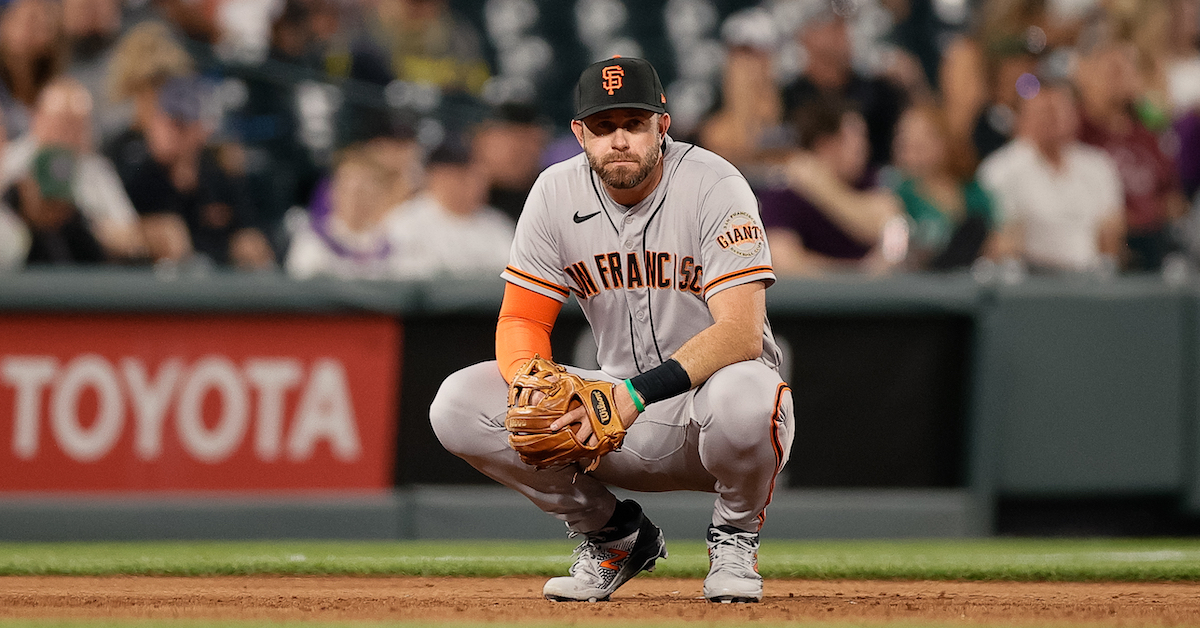
The hot corner got a little hotter in the Valley of the Sun last Friday, as the Diamondbacks topped off a busy holiday season with the acquisition of a new third baseman. Evan Longoria is heading to Arizona on a one-year, $4 million contract with an additional $1 million in incentives. He figures to play most of his games at third base, with opportunities to DH as well.

These two sides are a good fit for several reasons, chief among them that Longoria simply wanted to play in Arizona. Heading into the offseason, he stated that he would only consider offers from the Giants, Rays or Diamondbacks (in other words, places he already had homes). It’s likely he lost some leverage by showing his hand so early — $4 million is a tad low for a player who posted 3.0 WAR over the last two seasons — but it’s hard to imagine Longoria is losing any sleep. He gets to play close to home (one of them, anyway) for a team that will give him a real opportunity to prolong his career. The D-backs aren’t true contenders, but if Longoria plays well enough, he’ll find himself in a new uniform by the trade deadline anyway. Read the rest of this entry »


Now Might Be the Best Time to Trade Evan Longoria

Evan Longoria is the Tampa Bay Rays’ best player in franchise history. That’s not a particularly controversial suggestion: the franchise has only been around for 19 seasons and Longoria has been a mainstay on the team for nearly a decade. His 47 WAR bests Carl Crawford’s sum with club by 10 wins and, with 25 more games, he will secure the record for games played in a Rays uniform. Longoria is still going strong this season, and he has a reasonable contract. There are a lot of reasons not to trade Evan Longoria, but if the Rays were to consider trading him, now might be the best time.

Deciding to trade a franchise player isn’t an easy decision, and for a team that has a solid fan base — by television ratings, if not by attendance — moving a player like Longoria isn’t an easy choice. If Longoria were a pending free agent, the decision might be simpler. The Rays are 37-57 with no shot at the playoffs, and they’re likely to trade a starting pitcher before the deadline — and could sell more if they the deal were right. The team hasn’t played as bad as their record indicates — and, talent-wise, this is a roughly .500 team in need of a few tweaks for contention. In that light, it makes sense to keep Longoria and make a run next season. After all, he’s still producing.

Longoria has averaged over four wins above replacement over the previous three seasons. This season, at age 30, he’s putting together an excellent season, having recorded a 135 wRC+ and 3.8 WAR. That latter figure, plus his rest-of-season projection, places him in range of a six-win season. Given the year he’s having, he seems like a decent candidate to be projected for at least a four-win season next year. On top of that, Longoria has a team-friendly contract that will pay him just $99 million over the next six years, with $11 million deferred, reducing the cost further.

Read the rest of this entry »


Sophomores: The AL East

Over the next few days, we’re looking at sophomore, or second-year, players in the Major Leagues. Today’s post is looking at the American League East division. Yesterday, we looked at the American League Central.

New York Yankees

Ian Kennedy came into the Yankees’ system with a reputation of being a pretty good college pitcher, but he was not quite as highly regarded as he had been coming out of high school (in part because he lost a little bit off the fastball). Despite some grumblings that Kennedy had been an overdraft as a first-round draft pick, the right-hander dominated the minor leagues (He has a career 1.96 ERA in the minors). There is a reason, though, that they call it the “Major Leagues” and Kennedy was hit around in 2008. He posted an 8.17 ERA and allowed 50 hits in just 39.2 innings or work. His walk rate, which was 2.8 BB/9 in the minors, jumped to 5.90 BB/9. Kennedy got off to a solid start in 2009 in four games at triple-A but he then underwent surgery for an aneurysm under his right armpit and will be out until after the All-Star break.

Like Kennedy, Joba Chamberlain was a pretty good college pitcher but he had injuries problems and other teams shied away from him. Big mistake. The Yankees took a risk and have one of the top young arms in baseball, although Chamberlain has still had a few injuries throughout his pro career. In 2008, the right-hander spent time in both the starting rotation and the bullpen. He allowed just 87 hits in 100.1 innings, while posting a 2.60 ERA (2.65 FIP). Chamberlain also posted an excellent strikeout rate at 10.58 K/9. In 2009, he has continued to pitch well, although he has not been as dominant. He has a 3.86 ERA (4.68 FIP) with 56 hits allowed in 63.1 innings of work. His walk rate has risen from 3.50 in 2008 to 4.69 BB/9 in 2009. His strikeout rate has decreased to 8.24 K/9. Chamberlain’s average fastball velocity has decreased each of the past three seasons, from 97 to 95 to 92.4 mph, although part of that can be attributed to spending more time in the starting rotation.

Both Jose Veras and Edwar Ramirez came out of almost nowhere in 2008 to provide much-needed innings for the Yankees’ bullpen. Veras, now 28, allowed 52 hits in 57.2 innings and had a strikeout rate of 9.83 K/9. However, he was just designated for assignment after posting a 5.96 ERA in 2009 and seeing his strikeout rate drop to 6.31 K/9, while also struggling with his control and gopher ball tendencies. Ramirez, also 28, had a 3.90 ERA in 2008 and posted a 3.90 BB/9 rate, as well as a strikeout rate of 10.25 K/9. In 2009, though, he’s regressed to a 5.19 ERA, and rates of 7.79 BB/9 and 8.31 K/9.

Toronto Blue Jays

As far as first-round picks go, David Purcey has been a huge disappointment. Making his MLB debut at the age of 26, the left-hander posted a 5.54 ERA and allowed 67 hits in 65 innings of work, although he showed some improvements as the year progressed. His rates were 4.02 BB/9 and 8.03 K/9. In 2009, he won an opening-day rotation spot but made just five starts before a demotion to triple-A. In those starts, Purcey allowed a 7.01 ERA, 28 hits in 25.2 innings and posted rates of 6.31 BB/9 and 9.12 K/9.

Southpaw Jesse Carlson was a revelation in 2008 and appeared in 69 games as a rookie. He posted a 2.25 ERA (3.80 FIP) and allowed just 41 hits in 60 innings of work. In 2009, though, Carlson’s ERA has risen to 5.22 (although his FIP is just 3.80) and he’s allowed 31 hits in 29.1 innings. His control is OK (3.15 BB/9 in 2008, 2.76 in 2009) but he hasn’t had the same command of his pitches and his strikeout rate has dropped from 8.25 K/9 in 2008 to 5.83 K/9 this season.

Baltimore Orioles

Radhames Liz has a blistering fastball but he’s just one more hard-throwing pitcher that has no idea how to pitch (Daniel Cabrera, anyone?). Liz, 26, was promoted to the Majors in 2008 by the pitching-poor Orioles and was coming off a good half season in the minors, as well as a very good 2007 season at double-A. Liz allowed 99 hits in 84.1 innings, while also posting a 6.72 ERA. He posted rates of 5.44 BB/9 and 6.08 K/9. So far this year, Liz has a 6.09 ERA in triple-A and has a 67.50 ERA in two relief appearances in the Majors. Velocity is not everything.

Another hard thrower, Dennis Sarfate appeared in 57 games for the Orioles as a rookie in 2008. He allowed just 62 hits in 79.2 innings of work and posted rates of 7.00 BB/9 and 9.72 K/9. Sarfate, 28, appeared in just eight games in 2009 and posted an ERA of 6.39 before going on the disabled list with circulation problems in his finger. Right-hander Jim Johnson was also a major contributor to the 2008 bullpen as a rookie. He posted a 2.23 ERA (3.38 FIP) while allowing 54 hits in 68.2 innings of work. In 2009, Johnson, 25, has continued to have success with a 3.07 ERA (3.83 FIP) and 28 hits allowed in 29.1 innings. His strikeout rate has actually risen from 4.98 K/9 in 2008 to 6.14 K/9 in 2009.

Boston Red Sox

A sinker-slider pitcher, Justin Masterson has bounced between the starting rotation and bullpen for the Red Sox during the past two seasons with good success in both roles. The right-hander induces a lot of groundballs and gets his fair share of strikeouts in the process. He posted a 3.16 ERA (4.69 FIP) while allowing 68 hits in 88.1 innings of work in 2008. In 2009, the 24 year old has a 3.88 ERA (3.68 FIP) with 56 hits allowed in 53.1 innings. Masterson has also seen his BABIP allowed increase from .243 in 2008 to .332 in 2009. His walk rate has decreased from 4.08 in 2008 to 3.04 BB/9 this season.

Clay Buchholz burst upon the scene in 2007 but struggled during his rookie season in 2008 by allowing 93 hits in 76 innings of work. He posted a 6.75 ERA and posted a strikeout rate of 4.86 BB/9. He’s really turned things around in triple-A this season, although there is no opening in the Red Sox Major League rotation. Buchholz has a 1.75 ERA (3.27 FIP) in triple-A with 40 hits allowed in 67 innings. His walk rate is just 2.01 BB/9.

Jed Lowrie did a nice job as an injury replacement in 2008 for the Red Sox. He had a triple-slash line of .258/.339/.400 with two homers in 260 at-bats. His strikeout rate of 26.2 K% was a little high for an infielder with modest pop, but he filled in at three positions and provided solid defense. After just five games in 2009 Lowrie required wrist surgery. He’s currently rehabbing.

It was hard for Jacoby Ellsbury to build off his debut in 2007, but he had a solid – albeit unspectacular – first full season in Majors in 2008. He hit .280/.336/.394 with 50 stolen bases in 61 attempts. Ellsbury’s triple-slash line in 2009 is .306/.351/.383 and he’s stolen 25 bases in 31 attempts. He’s also trimmed his strikeout rate from 14.4 to 8.9 K/9, while maintaining almost the same walk rate at 6.1 BB%. Ellsbury is proving to be a very solid player, but he’s probably not a star.

Tampa Bay Rays

Evan Longoria had a huge 2008 season and won the American League Rookie of the Year award. He produced a triple-slash line of .272/.343/.531 and hit 27 home runs. So far this year, Longoria has been even better with a line of .305/.387/.584 with 14 home runs and 58 RBI. His walk rate has increased from 9.3 in 2008 to 11.4 BB% in 2009. His strikeout rate has stayed almost the same at 26.5 K%. Longoria also plays a solid third base. He should be a mainstay in the Rays lineup for many years to come.

Matt Joyce spent the 2008 season with Detroit and hit .252/.339/.510 with 12 homers in 242 at-bats. Traded to Tampa Bay for Edwin Jackson prior to the 2009 season, Joyce, 24, has regressed and has spent most of the season in triple-A. Jackson, though, has had a breakout season for Detroit.


Game of the Week: 5/11-5/17

Quantifying the contributions of a manager is a very difficult task in the world of baseball evaluations. Regardless, even those who feel that managers do very little can agree that one responsibility involves accurately filling out the lineup card prior to a game. Rays manager Joe Maddon seemingly could not handle this responsibility yesterday, leading to a ruling that places Sunday’s Rays-Indians game atop all others this week.

Though Clayton Kershaw and his seven no-hit innings certainly made a solid argument and the three consecutive walk-off wins for the Yankees stated an impressive case, Maddon’s blunder and the results surpassed all others.

For those who have not yet heard, Maddon penciled in both Evan Longoria and Ben Zobrist at third base. The ‘5’ on the lineup card next to Longoria’s name was circled, suggesting he would actually be the designated hitter. After Zobrist played the field in the top of the first, Indians skipper Eric Wedge pointed out the flaw. Thirteen grueling minutes later, the umpires stripped the Rays of their right to use a designated hitter, meaning that Andy Sonnanstine would be their third hitter.

indians-rays

B.J. Upton led off with a walk and promptly stole second base. Carl Crawford then singled him in, bringing Sonnanstine to the plate. Sonny tried to sacrifice Crawford along but ended up reaching first on a fielder’s choice force out.

In the top of the second, Ben Francisco hit a three-run homer to put the Tribe ahead, 3-1. A half-inning later, Jason Bartlett tripled and crossed home plate courtesy of a Gabe Kapler groundout. The game remained 3-2 in favor of the Indians until the bottom of the fourth inning, when the Rays erupted for five runs. Prior to that inning, Sonnanstine had batted again and struck out.

The five-run rally kicked off when Ben Zobrist started the frame with a triple. Bartlett then singled him home to knot the game at three runs apiece. Kapler walked and Akinori Iwamura singled to load the bases with nary an out. Michel Hernandez then delivered a bases clearing double to put the Rays ahead, 6-3. After Upton and Crawford were both retired, Sonnanstine launched a double over the head of the quite shallow Ryan Garko, scoring Hernandez.

Sonnanstine lasted until the sixth inning and left with a 7-5 lead. Though he got the win, he did not necessarily pitch that well. Maybe he took his poor at bats back to the mound with him. The last time this odd ruling came into play was on July 23, 1999, when Mike Hargrove messed up the fielding positions of Manny Ramirez and Alex Ramirez, meaning Charles Nagy had to bat. It isn’t uncommon to see a pitcher record a win while going 1-3 with an RBI at the dish… but it is very odd to see this occur in a league specifically designed to avoid pitchers hitting.


Draft Reviews: Tampa Bay Rays

Welcome to the first edition of the Amateur Draft Reviews. This series will review the past three drafts for each organization for interesting facts and trends. It also serves as a preview for the upcoming MLB Amateur Draft, which takes place on June 9 and 10.

Tampa Bay Rays

2008 Draft Slot: 1st overall
Top Pick: Tim Beckham, SS, Georgia high school
Best Pick: Tim Beckham
Keep an Eye On: Jake Jefferies, C, UC Davis (3rd round)
Notes: Jake Jefferies, a left-handed hitting catcher, has hit well in pro ball and has a good approach. Defensively, the only real question mark is his average arm. He is currently playing in A-ball. Tim Beckham’s older brother Jeremy Beckham was drafted in the 17th round and they are playing together in 2009 at A-ball.

2007 Draft Slot: 1st overall
Top Pick: David Price, LHP, Vanderbilt University
Best Pick: David Price
Worst Pick: Will Kline, RHP, University of Mississippi (2nd round)
Notes: You can’t fault Will Kline for being listed as the worst pick; he had shoulder surgery almost immediately after signing. His last pitch was thrown in 2007 and he was winless in nine starts. The team scored big by finding prep pitchers Nick Barnese (California high school) in the third round and Matthew Moore (New Mexico high school) in the eighth round.

2006 Draft Slot: 3rd overall
Top Pick: Evan Longoria, 3B, Long Beach State
Best Pick: Evan Longoria
Worst Pick: Josh Butler, RHP, University of San Diego (2nd round)
Notes: Perhaps overworked while leading the staff (which included Brian Matusz) at San Diego, Josh Butler has struggled to stay healthy and consistent in pro ball. He was traded to Milwaukee for Gabe Gross (a former 1st round pick of the Jays) in 2008. OF Desmond Jennings (Mississippi CC) looks like a steal in the 10th round. RHP Heath Rollins (Winthrop U) was a nice find – especially value-wise – in the 11th round.

* * *

2009 Draft Slot: 30th
Draft Preference (2006-08): None, the club does not favor college or prep players
MLB Club Need: Relievers, catcher
Organizational Need: First, second and third basemen, Left-handed pitching
Organizational Strength: Outfielders, Shortstops, Right-handed pitching
Notes: It will be interesting to see how Tampa Bay does with one of the last picks of the first round after being at the top of the draft for the life of the franchise. The club has always had a knack for finding solid pitching in the later rounds so that’s a good sign. You can point to TB’s high draft slot as a reason for drafting so well in the first round (David Price, Evan Longoria) but a lot of club’s have buckled under the pressure of owning a top-five pick.