
We Are Closer to the End Than the Beginning
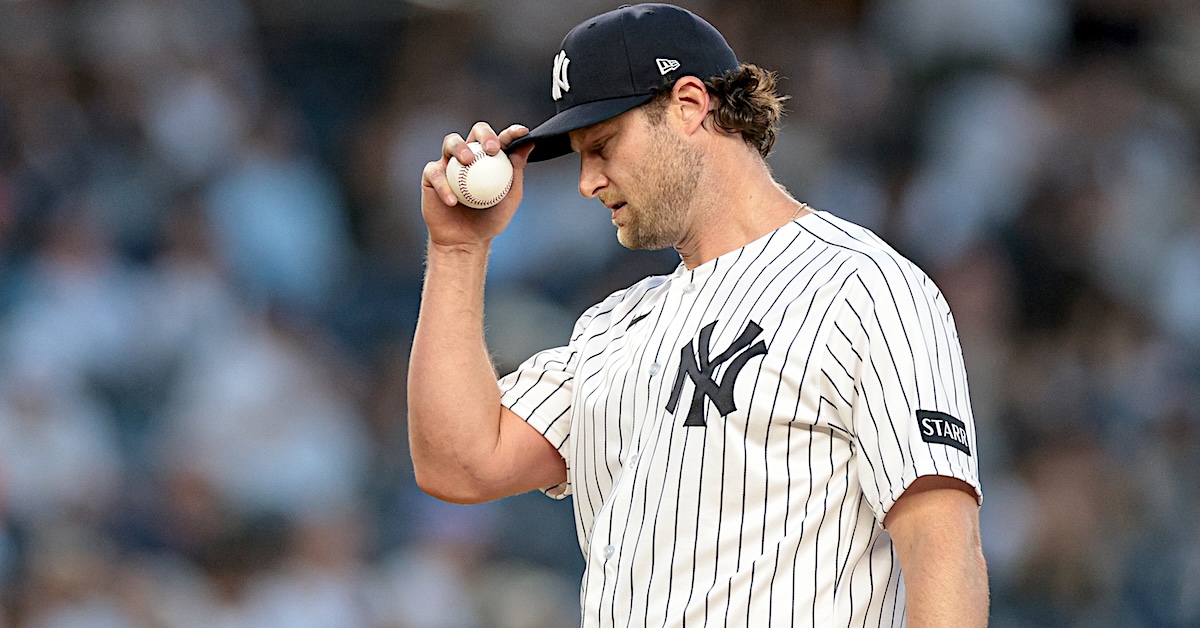
On Wednesday night, Gerrit Cole took his first loss since coming back from Tommy John surgery. After two starts of at least six scoreless innings, Cole got tagged for three home runs against the Guardians. Even so, it’s a promising return for the Yankees’ ace, who’s still throwing in the mid-to-upper 90s. His curveball is still curving, and while his fastball mix has evolved over his career in response to some trend or other, I’m confident he’ll find something that works. He always has.
I got to thinking about Cole in the context of a question I posed earlier this week about Adley Rutschman: Who’s the best draft prospect of the 21st century? Who presented the best combination of high floor and elite upside? The answer to that question is probably not Cole; if you were going for a workhorse college starter, you’d pick Mark Prior, Stephen Strasburg, or Paul Skenes. Or maybe even Carlos Rodón. But Cole definitely fits the bill; there’s a reason he was the top pick in the best draft class of the past 15 years.
And the Pirates’ decision to select Cole has been vindicated. Among players who were drafted and signed in 2011, Cole is third in career WAR, behind Francisco Lindor and Mookie Betts. But in a draft class that includes three Cy Young winners and seven Cy Young finalists (not counting Aaron Nola, who got picked in the 22nd round by the Blue Jays but went to LSU instead), Cole is still the top pitcher of his cohort.
The remarkable thing about Cole has been his reliability. He made 19 starts in his rookie season and 17 in 2024, when elbow inflammation cost him the first two and a half months of the season. In every 162-game season in between, he made at least 20 starts. When he hurt his elbow the first time, he’d missed a total of four starts in the previous seven years. And as memorable as those two crazy seasons in Houston were, it’s just as impressive that Cole has had one season of any length with an ERA over 4.00; he’s had an ERA of 3.50 or better every season since he left Pittsburgh.
He’s implacable. You can take him for granted. That’s why the Yankees made him the richest pitcher ever when they signed him to a nine-year, $324 million contract before the 2020 season. So he could do this for them forever. Nine years… who can even conceive of a time so far in the future?
Well, don’t look now, but we’re most of the way there. I know, it snuck up on me, too, because it’s felt like Cole has been 30 since 2010. But he turns 36 in September, and that nine-year contract has only two and a half years left on it.
That’s shocking, but Cole is far from the only player in this boat. When Bryce Harper signed with the Phillies, the $330 million price tag — a record at the time — was too much for a lot of people to get over. I lost track of how many times I had to explain that the 13-year term of the deal not only watered down the AAV, but inflation and the economic growth of the sport would make Harper’s decline phase relatively cheap. When Jesús Luzardo’s extension kicks in next year, Harper will only be the fifth-highest paid player on his own team, in terms of AAV. And he’ll only have five years left on a contract that seemingly stretched from 2019 until the Rapture.
In baseball history, there have been 41 individual player contracts worth $200 million or more. (I purposely set the bar here to exclude all but the richest pre-arbitration extensions. Those may be fashionable, but they’re a different beast than free agent contracts like Cole’s and Harper’s.) Two of those deals were ripped up (or opted out of) and renegotiated. A further 12 have run their course and expired. That leaves 27 of the 41 richest deals in baseball history still active.
| Player | First Year | Last Year | Total Value |
|---|---|---|---|
| Giancarlo Stanton | 2015 | 2027 | $325 million** |
| Nolan Arenado | 2019 | 2027 | $275 million |
| Christian Yelich | 2020 | 2028 | $215 million** |
| Gerrit Cole | 2020 | 2028 | $324 million |
| Carlos Correa | 2023 | 2028 | $200 million** |
| Kyle Tucker | 2026 | 2029 | $240 million** |
| Mike Trout | 2019 | 2030 | $426.5 million |
| Corbin Burnes | 2025 | 2030 | $210 million*** |
| Bryce Harper | 2019 | 2031 | $330 million |
| Corey Seager | 2022 | 2031 | $325 million** |
| Francisco Lindor | 2022 | 2031 | $341 million |
| Aaron Judge | 2023 | 2031 | $360 million |
| Mookie Betts | 2021 | 2032 | $365 million* |
| Austin Riley | 2023 | 2032 | $212 million** |
| Max Fried | 2025 | 2032 | $218 million |
| Dylan Cease | 2026 | 2032 | $210 million* |
| Manny Machado | 2023 | 2033 | $350 million |
| Xander Bogaerts | 2023 | 2033 | $280 million |
| Trea Turner | 2023 | 2033 | $300 million |
| Shohei Ohtani | 2024 | 2033 | $700 million* |
| Rafael Devers | 2024 | 2033 | $313.5 million* |
| Fernando Tatis Jr. | 2021 | 2034 | $338.3 million |
| Julio Rodríguez | 2023 | 2034 | $209.3 million** |
| Bobby Witt Jr. | 2024 | 2034 | $288.8 million*** |
| Yoshinobu Yamamoto | 2024 | 2035 | $325 million*** |
| Juan Soto | 2025 | 2039 | $765 million |
| Vladimir Guerrero Jr. | 2026 | 2039 | $500 million |
**Not including option years
***Opt-outs
What’s the purpose of pointing all this out? Apart from making everyone feel old because guys we remember as prospects are now on the back nine.
Signing a contract like this is to a baseball player what building a pyramid was to an ancient pharaoh: You’re going to accumulate tons of treasure and have it — along with everyone in arm’s reach — buried with you. Up until about a year ago, it took exceptional circumstances to move a $200 million contract.
As of the start of the 2025 season, that had only happened six times. On three occasions (Alex Rodriguez, Giancarlo Stanton, and the first Nolan Arenado deal), it was a case of a cheap owner biting off more than he could chew and experiencing near-immediate buyer’s remorse. You could lump the Prince Fielder-for-Ian Kinsler trade into that group as well, if you were inclined to be unkind to the late Mike Ilitch. Regardless, that deal was mostly about the contracts, not necessarily the players involved.
The other two $200 million men to get traded (Robinson Canó and David Price) were attached to in-their-prime stars (Edwin Díaz and Betts, respectively), in swaps that were part baseball trade and part salary dump.
In the past 12 months alone, we’ve seen three more of these players move: Devers, Arenado again, and Correa. Plus the Marcus Semien-for-Brandon Nimmo deal; both of those contracts barely missed the cut, but it’s the Fielder-for-Kinsler for the TikTok generation.
None of those trades are themselves novel. The Red Sox either irretrievably botched their relationship with Devers or looked at his declining contact rate, then looked at their balance sheet, and sent him across the country. (Probably a little of both.) The Correa trade was a flat-out salary dump, and the second Arenado deal had less in common with the first than with the Angels cutting the ghost of Albert Pujols in May of his walk year.
Looking at the contracts set to expire over the next few years, I don’t see an obvious trade candidate. Burnes and Tucker have opt-outs. Stanton, Arenado, and Correa seem content to play out the string like Téa Leoni and her dad at the end of Deep Impact. Yelich, Cole, Harper, and Judge are all key players on perennial contenders in cities where they’ve achieved cult hero status. I can’t conceive of a reason for any of them to seek a trade, nor any reason for their current employers to pursue one.
And at any rate, almost all of these deals come with some kind of trade protection, either written into the contract itself or as part of 10-and-5 no-trade rights. Seager is owed $157.5 million over the final five years of his deal. If Trout’s tradable, he is too.
But a team’s vibes can change faster than you’d think. Just ask Devers or A-Rod. Or Trout, who’s been a good soldier for an Angels team that’s in Year 15 of squandering his gifts. If he got fed up and wanted to chase a ring, he’s owed a little under $150 million over the last four years of his contract. That contract is probably underwater, but Kyle Schwarber and Pete Alonso both got $150 million-plus over five years last winter; the Angels might not have to pay down that much to get value back in a trade.
The future is here, and no contract is immovable.
Michael is a writer at FanGraphs. Previously, he was a staff writer at The Ringer and D1Baseball, and his work has appeared at Grantland, Baseball Prospectus, The Atlantic, ESPN.com, and various ill-remembered Phillies blogs. Follow him on Twitter, if you must, @MichaelBaumann.
Don’t know how you accounted for it whether active or expired, but according to various articles, Strasburg is still getting paid this year.
Yeah, he’s basically getting Cole money in 2026. The pinstriped lad gets $36 and Stephen gets $35.
That flag will wave forever.
Won that flag under his previous deal but if you’re saying he deserved to get paid I won’t argue with you. And it’s not like the Lerners have shown any interest in putting money back into the team anyways.
Yelich’s AAVs actually began declining, if only slightly, in 2025. While that extension was probably not “worth it” from a value standpoint — Yelich has averaged 2.5 WAR over its five full seasons and is now relegated to DH duty — it appears surprisingly plausible that his presence in the lineup will remain a net positive through the entirety of the deal. Plus, Brewers’ marketing gets a contemporary franchise icon to help cover up the Braun stink. I’ll take it.
Yelich has a kinda fun career progression going on…
2013-17 (2812 PA)
290/369/432 (122 wRC+)
[solid baseline established with MIA]
2018 1st Half (357 PA)
292/364/459 (123 wRC+)
[baseline maintained with MIL]
2nd Half 2018 to 2019 (874 PA)
342/436/705 (190 wRC+)
[MVP nine month stretch]
2020-22 (1393 PA)
243/358/388 (108 wRC+)
[post-shattered knee cap blues]
2023-present (1,725 PA)
280/366/460 (128 wRC+)
[early thirties return to form]
The Yelich-Ozuna-Stanton Miami outfield is wild to think back on. These guys will always be linked in my mind and have had very interesting career arcs in their own right
Imagine if Miami had the cash/balls and J Fernandez had not taken a bit to much coke. Might have been a long dynasty there.
Correa kind of seems like a good candidate to get moved again? He’s having a bounceback season, his deal is close enough to the end that it’s neither a white elephant, the Astros could probably get some good prospects if they pay it down some, and they even have enough infielders to replace him in the short term. Admittedly Altuve looks to be in his decline phase and they might want to transition him to the bench, but if they bring up a minor league infielder…
(looks at Houston top prospects article)
…on the other hand I can see why Houston might want to hold on to Correa.
Correa is out for the season lol.
oh yeah that’s what happened to their infield logjam
I would still say he’d be a candidate to get traded before the deal is up, but this pretty much rules out this offseason too. Maybe next deadline if the Astros don’t bounce back next year.
If we’re factoring in mainstream interest, Strasburg and Harper are clearly the top two draft prospects of the century and it’s not close.
I agree. I’ve heard Skenes mentioned, but I think that’s revisionist history. It just seems way more common these days for the 1.1 to be somewhat obscure. Many times another player has been a better consensus prospect. What percentage of non-Nationals baseball fans could name last year’s first pick?
Skenes had a huge spike in hype right before the draft with his CWS performance, so I think that might skew things for people a little bit.
But Strasburg and Harper were talked about for much longer from what I remember, although I was only a teenager at the time.
I don’t think any contracts have ever been “immovable,” you just have to be willing to pay them down. That’s always been the case just as it is now.
or trade mike napoli for them
Good point!
Devers, man…
Impossible to have this kind of conversation, especially in the context of the trade(s), and especially in red sox land, but, like, what the hell is going on?
Devers in June: 1-19 with 8ks
.537 Mar/Apr OPS, .18 bb:k
.939 May OPS, .24 bb:k, but 14 doubles, 5 homers, and some absolutely classic devers rockets
on the year: .700 OPS, 17 walks against 81 strikeouts
if it wasnt such a hot button thing (caused partially by his play — he sucks!! hes back!!! he sucks?) this would be an incredibly weird and interesting hitter to talk about. like, what the hell is going on with these wild swings in performance over the past few years? and, how did he go from free swinger to top of the league in walks to whatever this is, and why?
You’re right, such an interesting career. My guess is that because of his lower bat speed (shoulder injuries, age, etc) he guesses more, which leads to more strikeouts. But he still hits the ball very hard when he connects. So high strike out, big power. The big difference between this year and last has been the walks decline. My guess there is that unless he’s on a hot streak pitchers believe now they have a very good chance of striking him out. So they’re no longer nibbling around the corners (plus again, he’s guessing more).
He’s still a dangerous hitter, but he’s super streaky and dangerous, but he’s his metrics are falling and he looks like a player old before his time. Would have thought he’s the exact type player fan graphs would take a look at, but so far no such luck.
It’s amazing and perhaps scary, how many of those players signed to long-term deals have already entered a clear decline phase. 1/3 of a season isn’t a perfect predictor for the rest of the year or the next 10 years, but if you’re a 3 fWAR player now, 2030 is likely to be ugly and 2033 a disaster. There are about 8 Pujols deal there.
Looking selectively at the longest position player deals:
Guerrero Jr 1.1 fWAR
Soto 1.6
Tatis Jr 1.1
Devers 0.0
Turner 0.4
Bogaerts 1.0
Machado 0.3
That’s a lot of guys who might be 2.5-3.5 WAR players at this point getting paid $20-30M plus Soto as a 4.5 WAR player getting $51M which might be “worth it” for 2026 but doesn’t bode well for the next 7+ years at the same salary.
They have shorter deals for a little less money but Tucker and Bregman are off to pretty rough starts too in the first year of their respective contracts.
The Padres are in a pickle to put it mildly.