Author Archive

Mark Trumbo Talks Hitting

Mark Trumbo has always had pluses and minuses as a hitter. He’s consistently hit for power, but at the same time he’s displayed sub-par on-base skills. A free-swinging approach has been the major culprit. The 33-year-old slugger has walked just 299 times in 4,419 big-league plate appearances, largely because of a 50.6% Swing% and a 37.1% 0-Swing%. When he does make contact, he hits bombs. Trumbo has 218 home runs, and that includes a 47-home-run season.

He’s long recognized his limitations. Moreover, he’s owned up to them. An interview that ran here in April 2016 was titled “Mark Trumbo on Home Runs and (Not) Drawing Walks“. How to change for the better has been the issue, and truth be told, Trumbo’s reached a point in his career where that probably can’t happen. Not because he’s incapable of adopting a more disciplined approach — that would actually be a priority now — but rather because his playing days may be coming to an end. Trumbo played in just 12 games with the Orioles this year due to a knee injury, and even if he does return to full health, he’s somewhat of a square peg in a round hole. Today’s game is anything but kind to one-dimensional boppers.

Trumbo talked about the art and science of his craft, including his recent role as a mentor and the likelihood of one day becoming a hitting coach, on the last weekend of the 2019 season.

——

David Laurila: You’re a veteran player on a young team. Do you see yourself as a mentor?

Mark Trumbo: “I enjoy talking hitting. As far as being a mentor, just by age alone there’s probably an element of that. But hitting is the thing I’ve done the longest in life, and it’s what I’m surrounded by the most, so I find myself naturally segueing into conversations that delve into all aspects of it — be it the mental, or physical, component. Adjustments have always been particularly interesting to me. That’s whether they come over the winter, or in-game. Regardless of when that is, there are a lot of things that can allow you get to another level.”

Laurila: Adjustments obviously vary in size and scope.

Trumbo: “Yes. The bigger changes usually happen over the winter. People are making fairly drastic swing changes, or their entire approach becomes different from what it was before. The day-to-day adjustments usually relate more to timing, rhythm, and pitch selection. As someone who has taken quite a few at-bats, I can usually offer insight into those topics.

“That said, I’m very much interested in the mechanics of a swing. I’ve always looked at guys who are getting it done at a highly-consistent level, and tried to see if I can steal some of their moves, so to speak. I’ve tried to figure out what is allowing them to be as productive as they are, in hopes that I can incorporate some of those things into my own game.” Read the rest of this entry »

A Conversation with Red Sox Analytics Department Overseer Zack Scott

Zack Scott is currently one of four people running Boston’s baseball operations department. Along with Raquel Ferreira, Brian O’Halloran, and Eddie Romero Jr, the 16-year member of the team’s front office is keeping a chair warm while the search for Dave Dombrowski’s replacement continues. His core responsibilities remain largely the same. Scott’s title is Senior Vice President/Assistant General Manager, and per the Red Sox media guide, he “oversees the club’s Baseball Analytics and Baseball Systems departments.”

What is the current state of Boston’s analytics department, and how much has it changed since the University of Vermont graduate (B.S. in Mathematics) joined the organization in 2004? I addressed those questions with Scott following the completion of the Red Sox season.

———

David Laurila: How much has the Red Sox analytics department grown over the years?

Zack Scott: “There’s been a lot of growth, not just with us, but in the industry. As you know, there’s been an explosion of data. Throwing out round-number estimates, when I started there were around 10,000 data points, and now it’s more like 10 billion data points. And a lot of that has been the last five years. So the need to grow is apparent; there’s only so much you can do with a short staff.”

Laurila: How many people are currently in the department?

Scott: “We added five new employees last offseason. Overall, our R&D team is 15 people. It’s around half analysts, half software developers/technology-implementation.”

Laurila: There’s a perception that the Red Sox went from one of the top analytics teams in baseball to one that is below the top tier. Is that accurate? Read the rest of this entry »


Sunday Notes: Giants Righty Tyler Rogers is Thriving as a Submarine-Style Sibling

Here’s the lowdown on Tyler Rogers: A 6-foot-5 right-hander from Littleton, Colorado, he’s the twin brother of a left-hander closer, he made his MLB debut this past August, and he’s a submariner. Moreover, he kills a lot of worms. The 1.02 ERA that Rogers put up in 17 games out of the San Francisco Giants bullpen was augmented with a 69.4% ground ball rate.

Unlike his traditional-arm-slot sibling, he’s not a power pitcher. Taylor Rogers — fittingly, a Minnesota Twin — features a 95-mph fastball and an 83-mph slider. Tyler features an 82-mph sinker and a 73-mph slider. The latter pitch, which the atypical hurler throws roughly a third of the time, is atypical in itself.

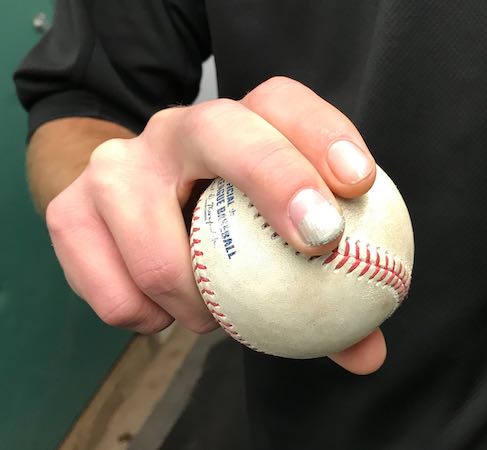
“I call it a slider, but it’s almost a curveball,” Rogers said in September. “I kind of curl it like people do when they throw a curveball overhand. It’s the same thing, I’m just bent over doing it. So yeah, basically it’s just a normal curveball grip that I throw from underneath.”

Rogers began dropping down his freshman year of junior college. He did so at the suggestion of a coach, and from there progressively got lower and lower. The transformation to an actual submarine-style delivery came after the Giants took him in the 10th round of the 2013 draft. Irony being what it is, the genesis of the more-extreme verticality was horizontal in nature. Read the rest of this entry »


For the Nationals, a Bumpy Road Led to a Beautiful Place

The Washington Nationals are World Series bound following Tuesday night’s sweep-completing 7-4 win over the St. Louis Cardinals. They couldn’t be much hotter. Since a September 18 loss to the team they just vanquished, the Dave Martinez-managed Nationals have won 18 of their last 21 games.

How remarkable was their turnaround from the 19-31 start that had Martinez firmly in the crosshairs? The 2005 Houston Astros, the 1973 New York Mets, and the 1914 Boston Braves are the only other teams to have made it to the World Series after being 12 games under .500 at any point during the season.

The Cardinals deserve some credit of their own. The Mike Shildt-skippered squad went 47-27 in the second half, then beat the favored Braves in the NLDS. They simply had the misfortune of running into a pitching-rich Nationals team that has now punched its ticket to the Fall Classic.

Here are perspectives from participants on each side, gathered prior to, and after, Games 3 and 4.

———

Following Game 3, I asked Martinez about team’s confidence level, which is undoubtedly the highest it’s been all season. With the early-season struggles in mind, just how important is confidence to a team’s success? Read the rest of this entry »


Sunday Notes: Rowan Wick Was a Good Story Out of the Cubs Bullpen

Two spring trainings ago I was at the Padres complex in Peoria, Arizona, chatting with Dave Cameron. The longtime FanGraphs frontman had recently joined the NL West club as an analyst, and he had a suggestion. “You should talk to Rowan Wick,” Cameron said of the non-roster invitee whom San Diego had claimed off waivers the previous month. “He’s a good story.”

Indeed he was. Wick entered pro ball as a catcher in 2012, converted to the mound in 2015, and possessed what was later described to me as “one of the shortest, quickest arms I’ve ever seen.” He’d had yet to throw a pitch in the big leagues.

I didn’t get a chance to talk to Wick before departing Arizona, but I remembered Cameron’s suggestion when I returned to the Cactus League this past spring. The right-hander — now with eight-and-a-third MLB innings on his resume — was in camp with the Cubs, a long shot to make the team. A full year after having the bug put in my ear, I wrote about the 26-year-old hurler from North Vancouver, British Columbia.

He proceeded to outperform all expectations. The bulk of his big-league action coming since mid-June, Wick logged a 2.43 ERA and a 2.82 FIP in 31 games out of the Chicago bullpen. Those weren’t even his most-impressive numbers. Opposing hitters slashed a paltry .183/.295/.233 against his overpowering arsenal — one which included a retooled secondary offering.

Wick pointed to just that when asked to explain his breakout campaign. Read the rest of this entry »


History Being More or Less Bunk, the Minnesota Twins Look to the Future

The 16-straight postseason losses is a story hard to ignore. So is the fact that 13 of those defeats — Monday night’s ALDS ousting being the latest in that inglorious stretch — have come at the hands of the Bronx Bombers. October has indeed been a cruel month for the Minnesota Twins.

Remember Prince singing, “Two thousand zero zero, party over”? Since the dawning of the 21st century, Kirby Puckett’s old club has been a playoff piñata.

That’s not going to be the primary focus here. Words will be spilled on the just-completed series — mostly from the mouths of the participants — but let’s not forget that the future is what matters most (not just for the Twins, but for all of us.) As Henry Ford once said, “History is more or less bunk… the only history that is worth a tinker’s dam is the history we make today.”

Back in 2004, with the Red Sox on the brink of elimination in the ALCS, Kevin Millar defiantly told the Yankees: “Don’t let us win today.” With the Twins facing their own lose-one-and-you’re-done scenario, I mentioned Millar’s proclamation to Trevor May in Sunday’s workout day press conference.

”Don’t give us an inch, because we’ll take a mile,” May responded. “That’s been something — when doors have been opened for us all year, we’ve exploded through them. That’s what we’re looking to do.”

That’s not what happened, of course. Monday’s 5-1 loss put Minnesota’s 2019 season in the history books, and what comes next is some meaningful tinkering. Without it, an implosion looms as a possibility. Read the rest of this entry »


Sunday Notes: Bryan Reynolds is Stoically a Very Good Hitter

Bryan Reynolds was a pleasant surprise in a Pittsburgh Pirates season that was anything but. While the frustratingly-frugal team he plays for plodded to a last-place finish in the NL Central, the 24-year-old outfielder put up a .314/.377/.503 slash line. Displaying better-than-expected pop, he stroked 37 doubles and went deep 16 times.

Clint Hurdle wasn’t expecting that kind of production from the switch-hitting rookie when the Pirates broke camp in Bradenton. The since-ousted manager admitted as much when I asked him about Reynolds in the waning days of the season.

“I don’t think I had on the radar that Bryan Reynolds would be hitting .314 on September 25th,” Hurdle said. “From what I’d heard from our scouts, and what I’d seen in the spring, I thought we had a good young player… and it would be interesting to see how he developed. [But] I didn’t have any expectations.”

Nor did a lot of people, although he didn’t exactly came out of nowhere. Reynolds was a second-round pick out of Vanderbilt in 2016, and he came to Pittsburgh from San Francisco as part of the Andrew McCutchen trade. He ranked ninth on our Pirates Top Prospects list coming into this season, with the following commenting his bio standing out: “We keep waiting for Reynolds’ BABIP to regress (it hasn’t).”

Those same words could be written today. His impeccable bat-to-ball skills were no less impressive at the highest level, as Reynolds logged a .387 BABiP in 546 plate appearances against big-league pitching. The approach he brought with him from college played a big role in his success. Read the rest of this entry »


Jake Odorizzi Explains His Velocity Jump and Career Year

Jake Odorizzi heads into the postseason on the heels of a career year. In his second season with the Minnesota Twins, the 29-year-old right-hander has a 3.51 ERA, a 3.36 FIP, and 178 strikeouts in 159 innings. If won-lost records are your cup of tea, Odorizzi boasts a snazzy 15-7 mark going into Saturday’s presumed start against the Yankees in ALDS Game 2. (There’s an outside chance he’ll be held back for Monday’s Game in Minneapolis.)

An uptick of velocity on all of his pitches has played a role in Odorizzi’s success. That’s especially been the case with his heater, which former FanGraphs colleague Sung Min Kim — hired recently by the KBO’s Lotte Giants — called “The best fastball of 2019” back in June.

What was behind Odorizzi’s increased velocity and the improved performances that came with it? I asked him that question when the Twins visited Fenway Park in early September.

———

David Laurila: You’re having your best season. To what do you attribute that?

Jake Odorizzi: “I did a new training program this past offseason. I worked with a gentleman in Plant City, Florida named Randy Sullivan. That was at the Florida Baseball Ranch. Kyle Gibson used him last year. Justin Verlander has done some work with him, as well..

“I’d felt like I was out of whack mechanically. Health-wise I was good, but I needed to get more out of my body, maybe use my mechanics a little bit better, a little bit smoother. I did some weighted-ball stuff; I did a mobility program. I kind of unlocked some more torque in my body. I was able to separate my upper half from my lower half instead being like a one-piece — everything goes at once, and it’s stiff. Read the rest of this entry »


Nelson Cruz Talks Hitting

Nelson Cruz was 25 years old when he made his major league debut in 2005. At the conclusion of the 2008 season, he was 28 years old and had a .743 OPS in 611 career plate appearances. By and large, he was little more than a fringe player with an uncertain future in the game, his third decade on planet earth looming on the horizon.

Since that time he’s been one of the game’s most prolific hitters. From 2009 through this past season, Cruz has slashed .280/.349/.537, with 379 home runs. No player in either league has gone deep more often over that stretch. And he’s showing no signs of slowing down. At age 39, the Fountain of Youth firmly within his grasp, Cruz just banged out 41 home runs, and logged a career-high 1.031 OPS, in his first season with the Minnesota Twins.

Cruz sat down to talk about his career path, and his overall approach to hitting, when the playoffs-bound Twins visited Fenway Park in early September.

———

David Laurila: Is hitting simple, or is it complicated?

Nelson Cruz: “When you do it good, it’s really simple. When you’re struggling, it’s really difficult. In my case, it’s about how my body feels. If I wake up and feel energized and fresh, I know I’m going to have a good day because my swing is going to be fluid. On days where my body isn’t rested enough, I feel like I have to force my swing to go through the zone.

“That said, you do the repetition every day, so even without thinking your swing goes through the same path — it does what you practice over and over. So it’s easy, but at the same time, it can get complicated on you.”

Laurila: Your career didn’t take off until you were in your late 20s. Was the impetus for that breakthrough more mental or physical in nature?

Cruz: “I think everything, but the mental part is the one… just to be able to have an approach every day, to have a routine to follow. You wake up and you know what you’re going to do to prepare for that game. You know what you’re going to be thinking at the plate — you’re going to have an idea of what to expect from the pitchers, and the situations, you’re going to face that day.”

Laurila: Were you an immature hitter early in your career? Read the rest of this entry »


Brian Bannister, Andrew Cashner, and Rick Porcello on Developing Their Changeups

Pitchers learn and develop different pitches, and they do so at varying stages of their lives. It might be a curveball in high school, a cutter in college, or a changeup in A-ball. Sometimes the addition or refinement is a natural progression — graduating from Pitching 101 to advanced course work — and often it’s a matter of necessity. In order to get hitters out as the quality of competition improves, a pitcher needs to optimize his repertoire.

In this installment of the series, we’ll hear from three pitchers — Brian Bannister, Andrew Cashner, and Rick Porcello — on how they learned and developed their changeups.

——

Brian Bannister, Boston Red Sox (VP/Pitching Development)

“Everyone starts that journey of trying to throw it slow, and in that process you choke the grip, you drag your back foot, you curl your toes — you do everything you can to make the pitch slower. But Zack Greinke will talk about how we had a teammate [in Kansas City] named Ramon Ramirez who threw his changeup 90 mph. He didn’t even try to throw it slow. We watched him do it successfully. We watched Felix Hernandez do it successfully. We were always watching James Shields dominate with a power changeup. That’s what we used to call it.

“Once we started realizing that your hand pronates more on a changeup than it can on a two-seamer, we could get the depth of an elite two-seamer by throwing our changeups as hard as possible. It added that element where it was almost a Brandon Webb sinker, but you’re holding it with a changeup grip. Read the rest of this entry »