Archive for 2026 Contemporary Baseball Ballot

The Contemporary Baseball Committee Tabs Kent While Moving Towards Burying Bonds, Clemens, and Sheffield

© Matt Kartozian-USA TODAY Sports

The following article is part of my ongoing look at the candidates on the 2026 Contemporary Baseball Era Committee ballot. For a detailed introduction to this year’s ballot, use the navigation tool above. An introduction to JAWS can be found here.

On an eight-man Hall of Fame ballot featuring three players who were linked to performance-enhancing drugs, and four others who had shortened careers that ended by age 37 due to declines accelerated by injuries, it appeared from the outset of this cycle that Jeff Kent — a former MVP who holds the record for most home runs by a second baseman — had the easiest path to a plaque. Sure enough, when the votes from the 16-member Contemporary Baseball Era Committee were counted at the Winter Meetings on Sunday in Orlando, Kent was the lone candidate elected to the Hall. He’ll be inducted on July 26, 2026 in Cooperstown alongside any candidates elected by the BBWAA.

Meanwhile, in a repudiation that echoed the one that he received from the 2023 edition of this committee, Kent’s former Giants teammate and clubhouse nemesis Barry Bonds again received fewer than five votes. So did Roger Clemens (again) and first-timer Gary Sheffield, the two other candidates connected to PEDs, as well as the late Fernando Valenzuela. Based on a new rule introduced earlier this year, all four are ineligible for consideration on the 2029 Contemporary Baseball ballot, assuming the format goes unchanged; the earliest they can next appear is the 2032 ballot, to be voted on in December 2031. If any of those candidates again slips into the fewer-than-five zone, they will be ineligible for future consideration, period — an aspect of the rule that appears ripe for abuse given the heavy hand the Hall has demonstrated when choosing its committees.

Astute readers of my coverage will note that those four candidates were the ones from this ballot whom I endorsed for election. I argued that Valenzuela, who barely made a dent in two years on the BBWAA ballot (2003–04), should be considered primarily as a modern-day pioneer for serving as a beloved global ambassador and international icon who brought generations of Mexican American and Latino fans to baseball. That’s on top of a very good — but not Hall-caliber — playing career which included six All-Star selections and four top-five finishes in the Cy Young voting, highlighted by his incredible age-20 season, in which he won the NL Rookie of the Year and Cy Young awards, led the Dodgers to their first championship in 16 years, and emerged as the centerpiece of a cultural phenomenon, Fernandomania.

As for Bonds, Clemens, and Sheffield, this was an extension of the support I gave them during their tenures on the BBWAA ballot, first virtually and then once I joined the voting pool starting with the 2021 cycle. All three were among the very best of their day, with Bonds and Clemens perhaps the best position player and pitcher of all time — period. As for their connections to PEDs, I’ve long drawn a distinction between PED use that dated to the time before testing and penalties were in place, when a complete institutional failure prevented the league and the union from adopting a coherent drug policy. This isn’t a fringe view within the BBWAA electorate, either. Particularly once Bud Selig, who as commissioner presided over the game’s steroid mess, was elected to the Hall via the 2017 Today’s Game election, all three received support from a substantial majority of Hall voters, climbing to at least 63% by the end of their runs on the ballot (2022 for Bonds and Clemens, 2024 for Sheffield). Read the rest of this entry »
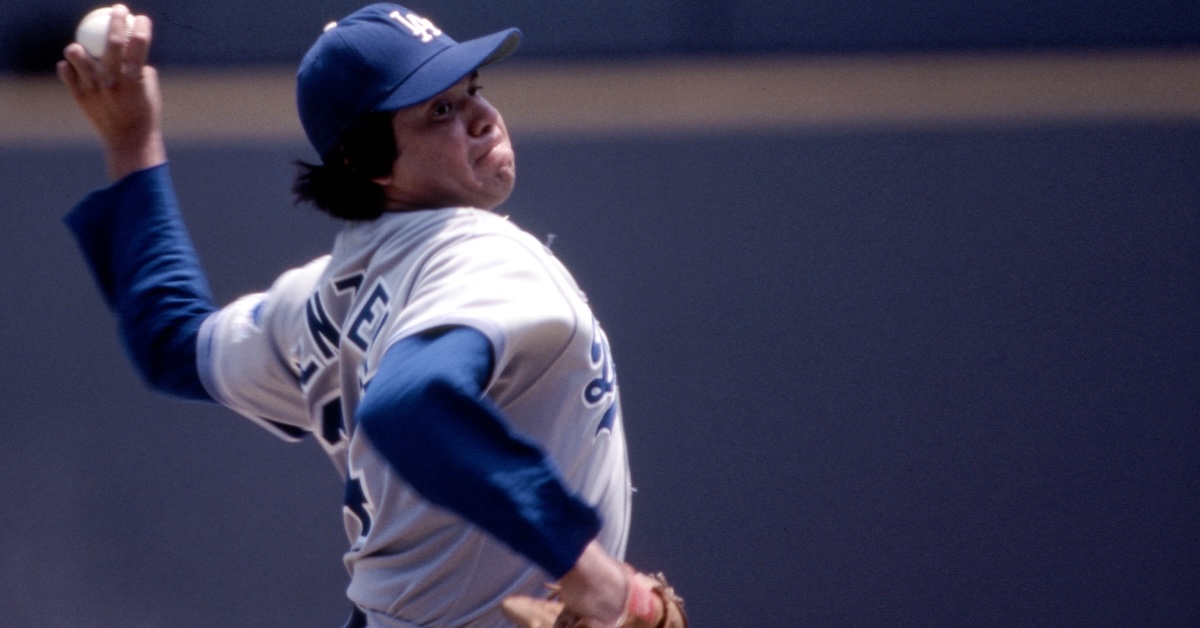
2026 Contemporary Baseball Era Committee Candidate: Roger Clemens

RVR Photos-Imagn Images

The following article is part of my ongoing look at the candidates on the 2026 Contemporary Baseball Era Committee ballot. For a detailed introduction to this year’s ballot, use the navigation tool above. An introduction to JAWS can be found here.

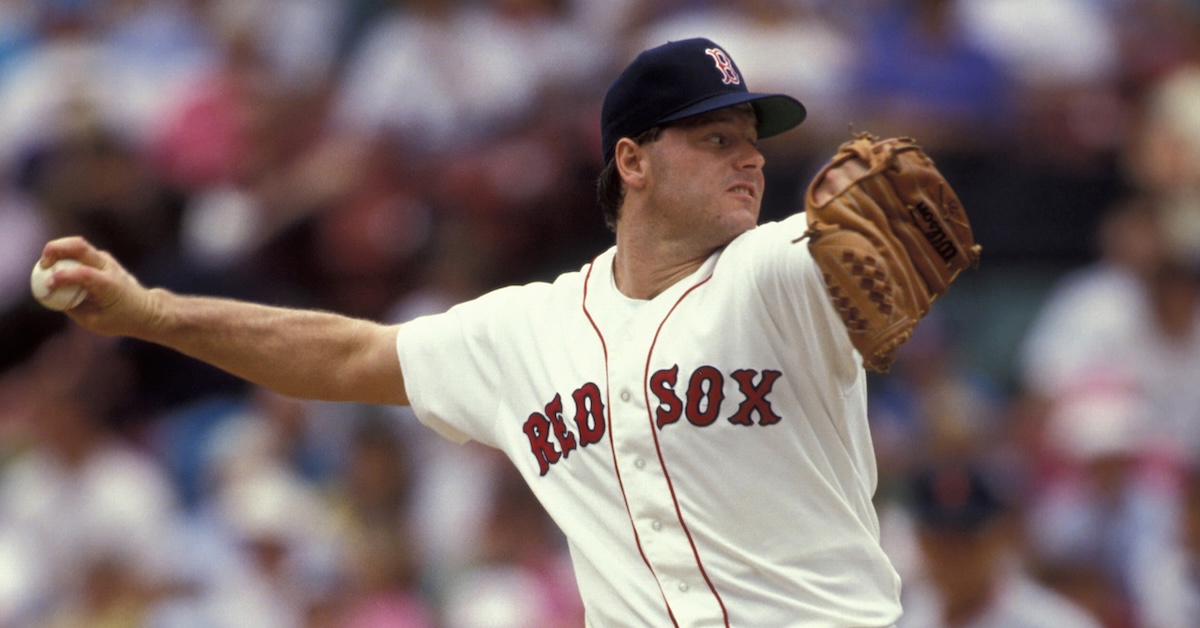
Like Barry Bonds with regards to position players, Roger Clemens has a reasonable claim as the greatest pitcher of all time. Cy Young, Christy Mathewson, Walter Johnson, and Grover Cleveland Alexander spent all or most of their careers in the Deadball Era, before the home run was a real threat, and pitched while the color line was still in effect, barring some of the game’s most talented players from participating. Sandy Koufax and Tom Seaver pitched when scoring levels were much lower and pitchers held a greater advantage. Koufax and 2015 inductees Randy Johnson and Pedro Martinez didn’t sustain their greatness for nearly as long. Greg Maddux didn’t dominate hitters to nearly the same extent.

Clemens, meanwhile, spent 24 years in the majors and racked up a record seven Cy Young awards, not to mention an MVP award. He won 354 games, led his leagues in the Triple Crown categories (wins, strikeouts, and ERA) a total of 16 times, and helped his teams to six pennants and a pair of world championships.

Alas, whatever claim “The Rocket” may have on such an exalted title is clouded by suspicions that he used performance-enhancing drugs. When those suspicions came to light in the Mitchell Report in 2007, Clemens took the otherwise unprecedented step of challenging the findings during a Congressional hearing, but nearly painted himself into a legal corner; he was subject to a high-profile trial for six counts of perjury, obstruction of justice, and making false statements to Congress. After a mistrial in 2011, he was acquitted on all counts the following year, and in March 2015, he settled a defamation lawsuit filed by former personal trainer Brian McNamee for an unspecified amount. But despite those verdicts and resolutions, the specter of PEDs hasn’t left Clemens’ case. Read the rest of this entry »


2026 Contemporary Baseball Era Committee Candidate: Barry Bonds

Tom Szczerbowski-USA TODAY Sports

The following article is part of my ongoing look at the candidates on the 2026 Contemporary Baseball Era Committee ballot. For a detailed introduction to this year’s ballot, use the navigation tool above. An introduction to JAWS can be found here.

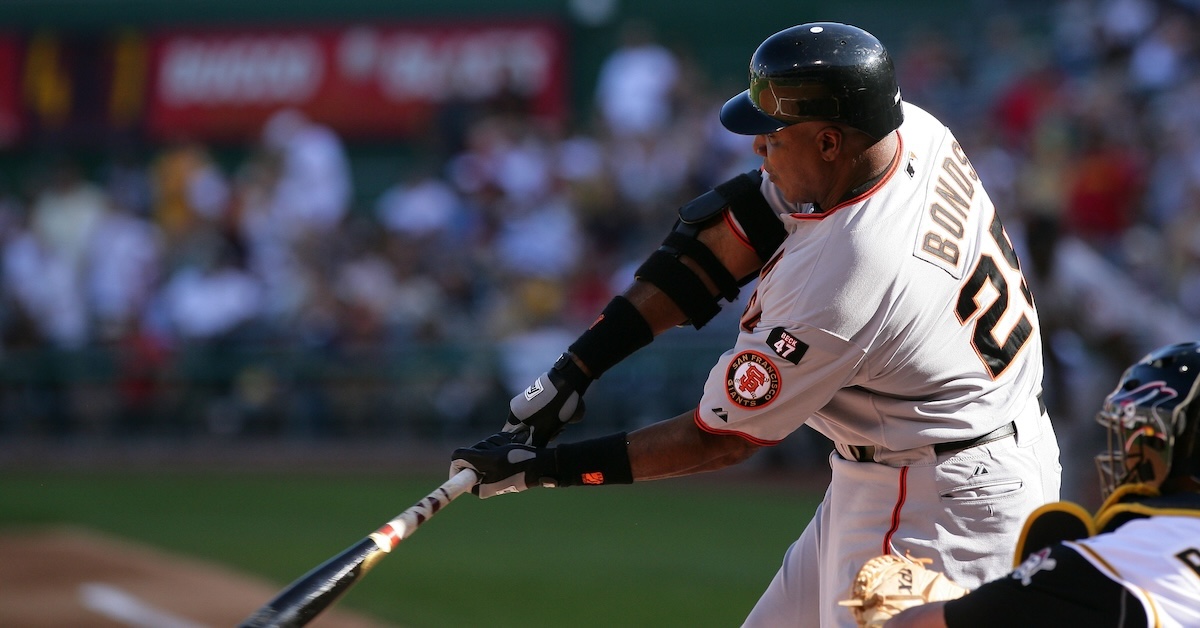
Barry Bonds has a reasonable claim as the greatest position player of all time. Babe Ruth played in a time before integration, and Ted Williams bridged the pre- and post-integration eras, but while both were dominant at the plate, neither was much to write home about on the base paths or in the field. Bonds’ godfather, Willie Mays, was a big plus in both of those areas, but he didn’t dominate opposing pitchers to the same extent. Bonds used his blend of speed, power, and surgical precision in the strike zone to outdo them all. He set the single-season home run record with 73 in 2001 and the all-time home run record with 762, reached base more often than any player this side of Pete Rose, and won a record seven MVP awards along the way.

Despite his claim to greatness, Bonds may have inspired more fear and loathing than any ballplayer in modern history. Fear, because opposing pitchers and managers simply refused to engage him at his peak, intentionally walking him a record 688 times — once with the bases loaded — and giving him a free pass a total of 2,558 times, also a record. Loathing, because even as a young player, he rubbed teammates and media the wrong way (and occasionally, even his manager), and approached the game with a chip on his shoulder because of the way his father, three-time All-Star Bobby Bonds, had been driven from the game due to alcoholism. The younger Bonds had his own issues off the field, as allegations of physical and verbal abuse of his domestic partners surfaced during his career. Read the rest of this entry »


2026 Contemporary Baseball Era Committee Candidate: Fernando Valenzuela

Malcolm Emmons-USA TODAY Sports

The following article is part of my ongoing look at the candidates on the 2026 Contemporary Baseball Era Committee ballot. For a detailed introduction to this year’s ballot, use the navigation tool above. An introduction to JAWS can be found here.

Though he won the Rookie of the Year award, a Cy Young, and a World Series all in his first full season while beginning a six-year streak of All-Star selections — the first of those as the game’s starter — Fernando Valenzuela wasn’t just a star pitcher. He was an international icon, the centerpiece of a cultural phenomenon, and a beloved global ambassador who brought generations of Mexican American and Latino fans to baseball while helping to heal the wounds caused by the building of Dodger Stadium, the very ballpark in which he starred.

Roberto Clemente is ‘The Great One,’ but culturally, Fernando Valenzuela has been more significant in terms of bringing a fan base that didn’t exist in baseball,” José de Jesus Ortiz, the first Latino president of the BBWAA, told author Erik Sherman for Daybreak at Chavez Ravine, a 2023 biography of Valenzuela. Sherman himself described the pitcher as “like a composite of the Beatles — only in Dodger blue. His appeal was universal.”

After excelling in a relief role during a September 1980 cup of coffee with the Dodgers — as a 19-year-old in the heat of a playoff race, no less — Valenzuela took the world by storm the following spring. Pressed into service as the Opening Day starter, he threw a five-hit shutout, then reeled off four more shutouts and six more complete games within his first eight starts, a span during which he posted a 0.50 ERA. Despite speaking barely a word of English, the portly portsider (listed at 5-foot-11 and 180 pounds, but generally presumed to be at least 20 pounds heavier) charmed the baseball world with his bashful smile while bedeviling hitters with impeccable command of his screwball, delivered following a high leg kick and a skyward gaze at the peak of his windup.

Read the rest of this entry »


2026 Contemporary Baseball Era Committee Candidate: Jeff Kent

© Matt Kartozian-USA TODAY Sports

The following article is part of my ongoing look at the candidates on the 2026 Contemporary Baseball Era Committee ballot. Originally written for the 2014 election at SI.com, it has been updated to reflect recent voting results as well as additional research. For a detailed introduction to this year’s ballot, use the navigation tool above. An introduction to JAWS can be found here.

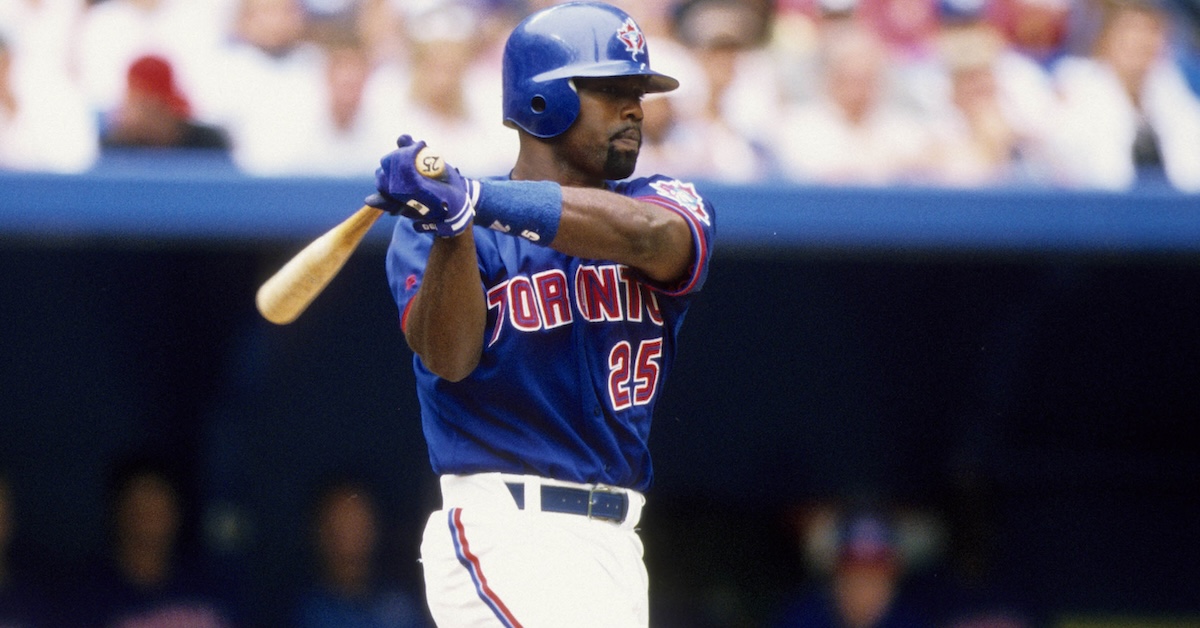
Jeff Kent took a long time to find a home. Drafted by the Blue Jays in 1989, he passed through the hands of three teams that didn’t quite realize the value of what they had. Not until a trade to the Giants in November 1996 — prior to his age-29 season — did he really settle in. Once he did, he established himself as a standout complement to Barry Bonds, helping the Giants become perennial contenders and spending more than a decade as a middle-of-the-lineup force.

Despite his late-arriving stardom and a prickly personality that sometimes rubbed teammates and media the wrong way, Kent earned All-Star honors five times, won an MVP award, and helped four different franchises reach the playoffs a total of seven times. His résumé gives him a claim as the best-hitting second baseman of the post-1960 expansion era — not an iron-clad one, but not one that’s easily dismissed. For starters, he holds the all-time record for most home runs by a second baseman (not counting any other positions) with 351. That’s 35 more than Robinson Canó, 74 more than Ryne Sandberg, 85 more than Joe Morgan, and 87 more than Rogers Hornsby — all Hall of Famers, and in Hornsby’s case, one from before the expansion era. Among players with at least 7,000 plate appearances who spent at least half their time at second base, only Hornsby (.577) has a higher slugging percentage than Kent’s .500. From that latter set, only Hornsby (1.010) and another pre-expansion Hall of Famer, Charlie Gehringer (.884), have a higher OPS than Kent (.855). Read the rest of this entry »
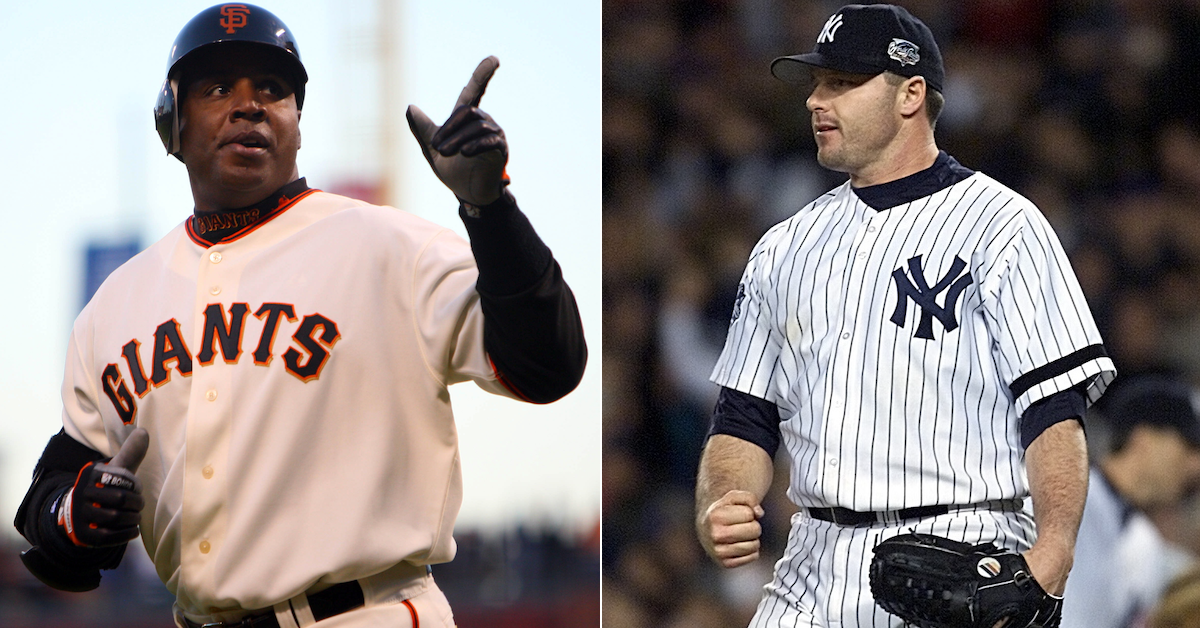

2026 Contemporary Baseball Era Committee Candidate: Gary Sheffield

RVR Photos-USA TODAY Sports

The following article is part of my ongoing look at the candidates on the 2026 Contemporary Baseball Era Committee ballot. Originally written for the 2015 election at SI.com, it has been updated to reflect recent voting results as well as additional research. For a detailed introduction to this year’s ballot, use the navigation tool above. An introduction to JAWS can be found here.

Wherever Gary Sheffield went, he made noise, both with his bat and his voice. For the better part of two decades, he ranked among the game’s most dangerous hitters, a slugger with a keen batting eye and a penchant for contact that belied his quick, violent swing. For even longer than that, he was one of the game’s most outspoken players, unafraid to speak up when he felt he was being wronged and unwilling to endure a situation that wasn’t to his liking. He was a polarizing player, and hardly one for the faint of heart.

At the plate, Sheffield was viscerally impressive like few others. With his bat twitching back and forth like the tail of a tiger waiting to pounce, he was pure menace in the batter’s box. He won a batting title, launched over 500 home runs — he had 14 seasons with at least 20 and eight with at least 30 — and put many a third base coach in peril with some of the most terrifying foul balls anyone has ever seen. For as violent as his swing may have been, it was hardly wild; not until his late 30s did he strike out more than 80 times in a season, and in his prime, he walked far more often than he struck out.

Bill James wrote of Sheffield in the 2019 Bill James Handbook:

“In all the years that I have been with the Red Sox, 16 years now, there has never been a player the Red Sox were more concerned about, as an opponent, than Gary Sheffield. Sheffield was a dynamite hitter and a fierce competitor… When he was in the game, you knew exactly where he was from the first pitch to the last pitch. He conceded nothing; he was looking not only to beat you, but to embarrass you. He was on the highest level.”

Two decades before that, James referred to Sheffield as “an urban legend in his own mind,” referencing the slugger’s penchant for controversy. Sheffield found it before he ever reached the majors through his connection to his uncle, Dwight Gooden. He was drafted and developed by the Brewers, who had no idea how to handle such a volatile player and wound up doing far more harm than good. Small wonder then that from the time he was sent down midway through his rookie season after being accused of faking an injury, he was mistrustful of team management and wanted out. And when he wanted out — of Milwaukee, Los Angeles, or New York — he let everyone know it, and if a bridge had to burn, so be it; it was Festivus every day for Sheffield, who was always willing to air his grievances. Read the rest of this entry »


2026 Contemporary Baseball Era Committee Candidate: Carlos Delgado

RVR Photos-Imagn Images

The following article is part of my ongoing look at the candidates on the 2026 Contemporary Baseball Era Committee ballot. Originally written for the 2015 election at SI.com, it has been expanded and updated. For a detailed introduction to this year’s ballot, use the tool above. An introduction to JAWS can be found here.

Though blessed with as much talent to crush a baseball as nearly anyone in his era, Carlos Delgado had a hard time getting the attention that his performance might have merited. Almost certainly, that owed something to the record numbers of balls flying out of the park during his heyday, with a proliferation of 30- or 40-homer seasons. That he spent the bulk of his prime in Toronto, arriving just after the Blue Jays’ back-to-back world championships but unable to aid in replicating that accomplishment, didn’t help either; not until late in his career would he reach the postseason.

Beyond that, Delgado didn’t fit the mold of what the public has come to expect from professional athletes. The controversies in which he was engulfed weren’t the garden-variety ones of so many other jocks — money, respect, performance-enhancing drugs, off-field lifestyle. No, they were bigger. In an age when most athletes shirk political stances because they can narrow their public appeal and impact their personal brands, Delgado was unafraid to protest against what he felt was wrong, even if his stance was unpopular. He spoke out against the United States Navy using part of his native Puerto Rico for bombing practice, and publicly opposed the war in Iraq. He took a stand by taking a seat (to borrow a headline from The New York Times), refusing to go through the motions during the post-9/11 ritual of “God Bless America” — an action that prefigured San Francisco 49ers quarterback Colin Kaepernick’s kneeling during the national anthem to protest police brutality against people of color in 2016. Delgado was the conscientious slugger.

Deglado’s outspokenness and activism stemmed from his admiration for Hall of Famer and Puerto Rican hero Roberto Clemente. He died six months after Delgado was born, but his legacy of humanitarianism and fighting for social justice left a deep impression on Delgado. He wore Clemente’s no. 21 briefly with the Blue Jays and later with the Mets, and thanks to his charitable endeavors — which included raising money for homeless, underprivileged and handicapped Puerto Rican children, and sponsoring college scholarships through his Extra Bases Foundation, Delgado won the 2006 Roberto Clemente Award. Read the rest of this entry »


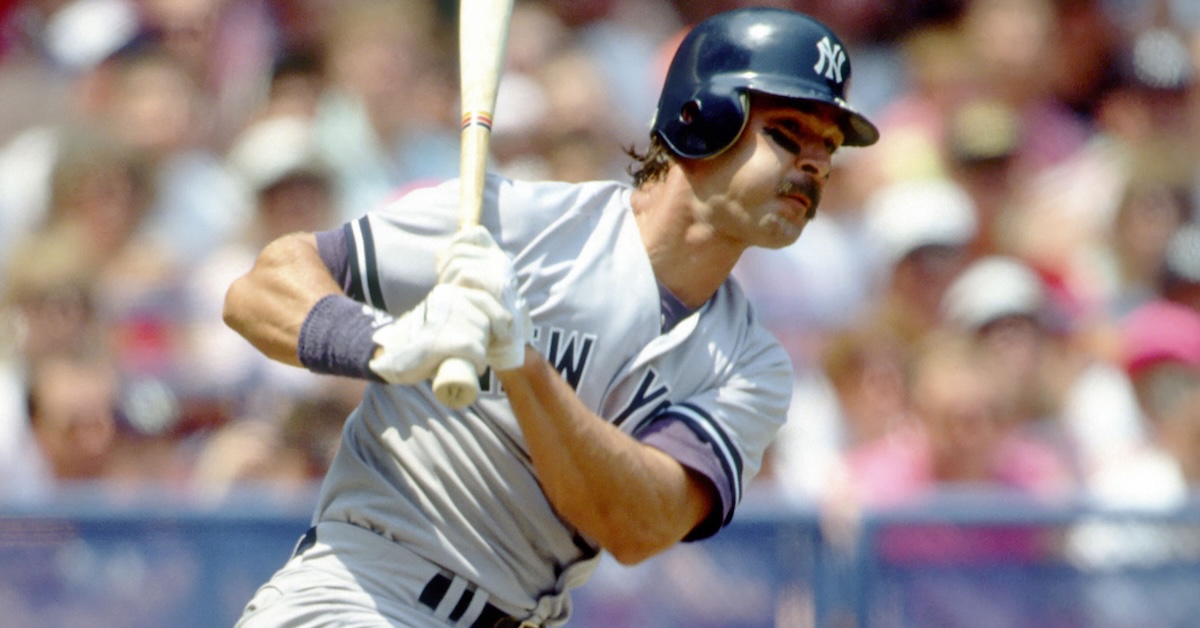
2026 Contemporary Baseball Era Committee Candidate: Don Mattingly

RVR Photos-Imagn Images

The following article is part of my ongoing look at the candidates on the 2026 Contemporary Baseball Era Committee ballot. Originally written for the 2013 election at SI.com, it has been expanded and updated. For a detailed introduction to this year’s ballot, use the tool above. An introduction to JAWS can be found here.

Don Mattingly was the golden child of the Great Yankees Dark Age. He debuted in September 1982, the year after the team finished a stretch of four World Series appearances in six seasons, and retired in 1995 after finally reaching the postseason — a year too early for the franchise’s run of six pennants and four titles in eight years under Joe Torre.

A lefty-swinging first baseman with a sweet stroke, “Donnie Baseball” was both an outstanding hitter and a slick fielder at his peak. He made six straight All-Star teams from 1984 to ’89 and won a batting title, an MVP award, and nine Gold Gloves. Along the way, he battled with owner George Steinbrenner even while becoming the standard bearer of the pinstripes, the team captain, and something of a cultural icon. Alas, a back injury sapped his power, not only shortening his peak, but also bringing his career to a premature end at age 34. At its root, the problem was that Mattingly was so driven to succeed that he overworked himself in the batting cage.

“Donnie was one of the hardest workers I had ever seen and played with. He would go in the cage before batting practice and take batting practice. And after batting practice was over, he’d take batting practice,” former teammate Ron Guidry said for a 2022 MLB Network documentary, Donnie Baseball (for which this scribe was also interviewed).

“I should have learned quicker to not to beat my body up, and if I did less, I could perform better,” said Mattingly for the same documentary. Read the rest of this entry »


2026 Contemporary Baseball Era Committee Candidate: Dale Murphy

Malcolm Emmons-USA TODAY Sports

The following article is part of my ongoing look at the candidates on the 2026 Contemporary Baseball Era Committee ballot. Originally written for the 2013 election at SI.com, it has been expanded and updated. For a detailed introduction to this year’s ballot, use the tool above. An introduction to JAWS can be found here.

It took four position changes — from catcher to first base, then left field, right field, and finally center field — and parts of five major league seasons for the Braves to figure out where the 6-foot-4 Dale Murphy fit. Once they did, they had themselves a franchise centerpiece, a wholesome, milk-drinking superstar whom Sports Illustrated profiled for its July 4, 1983 cover story by proclaiming, “Murphy’s Law is Nice Guys Finish First.”

The title was a reference to the slugger helping the Braves to an NL West title the previous year, their lone playoff appearance during the 1970-90 stretch. “Here’s a guy who doesn’t drink, smoke, chew or cuss,” wrote Steve Wulf. “Here’s a guy who has time for everyone, a guy who’s slow to anger and eager to please, a guy whose agent’s name is Church. His favorite movie is Frank Capra’s It’s a Wonderful Life. He’s a wonderful ballplayer.” Let the record show that Wulf did unearth some dirt on Murphy, noting that he once got a speeding ticket for doing 35 in a 25-mph zone… while running late to speak to a church group.

Murphy won the first of his back-to-back MVP awards in 1982 as well as the first of his five consecutive Gold Gloves, and made his second of seven All-Star teams. He would spend most of the 1980s as one of the game’s best players. Alas, knee problems turned him into a shadow of the player he once was while he was still in his early 30s, and he played his final game in the majors at age 37. Read the rest of this entry »


Election Season: Bonds and Clemens Lead the Contemporary Baseball Ballot

Kyle Terada-Imagn Images and Robert Deutsch-USA TODAY NETWORK

The champagne and tears have barely dried in the wake of this year’s instant-classic World Series, but election season is already upon us. On Monday, the National Baseball Hall of Fame officially unveiled the 2026 Contemporary Baseball Era Committee ballot, an eight-man slate covering players who made their greatest impact on the game from 1980 to the present and whose eligibility on the BBWAA ballot has lapsed. For the second year in a row, the Hall stole its own thunder, as an article in the Winter 2025 volume of its bimonthly Memories and Dreams magazine revealed the identities of the eight candidates prior to the official announcement. The mix includes some — but not all — of the controversial characters who have slipped off the writers’ ballot in recent years, including Barry Bonds and Roger Clemens, as well as a couple surprises. This cycle also marks the first application of a new rule that could shape future elections.

Assembled by the Historical Overview Committee, an 11-person group of senior BBWAA members, the ballot includes Bonds, Clemens, and fellow holdovers Don Mattingly and Dale Murphy, as well as newcomers Carlos Delgado, Jeff Kent, Gary Sheffield, and Fernando Valenzuela. As with any Hall election, this one requires 75% from the voters to gain entry. In this case, the panel — whose members won’t be revealed until much closer to election time — will consist of Hall of Famers, executives, and media members/historians, each of whom may tab up to three candidates when they meet on Sunday, December 7, at the Winter Meetings in Orlando. Anyone elected will be inducted alongside those elected by the BBWAA (whose own ballot will be released on November 17) on July 26, 2026 in Cooperstown. In the weeks before that, I’ll cover each candidate’s case in depth here at FanGraphs.

This is the fourth ballot since the Hall of Fame reconfigured its Era Committee system into a triennial format in April 2022, after a bumper crop of six honorees was elected by the Early Baseball and Golden Days Era Committees the previous December. The current format splits the pool of potential candidates into two timeframes: those who made their greatest impact on the game before 1980 (Classic Baseball Era), including Negro Leagues and pre-Negro Leagues Black players, and those who made their greatest impact from 1980 to the present day (Contemporary Baseball Era). The Contemporary group is further split into two ballots, one for players whose eligibility on BBWAA ballots has lapsed (Fred McGriff was elected in December 2022), and one for managers, executives, and umpires (Jim Leyland was elected in December 2023). Non-players from the Classic timeframe are lumped in with players, which doesn’t guarantee representation on the final ballot. Read the rest of this entry »